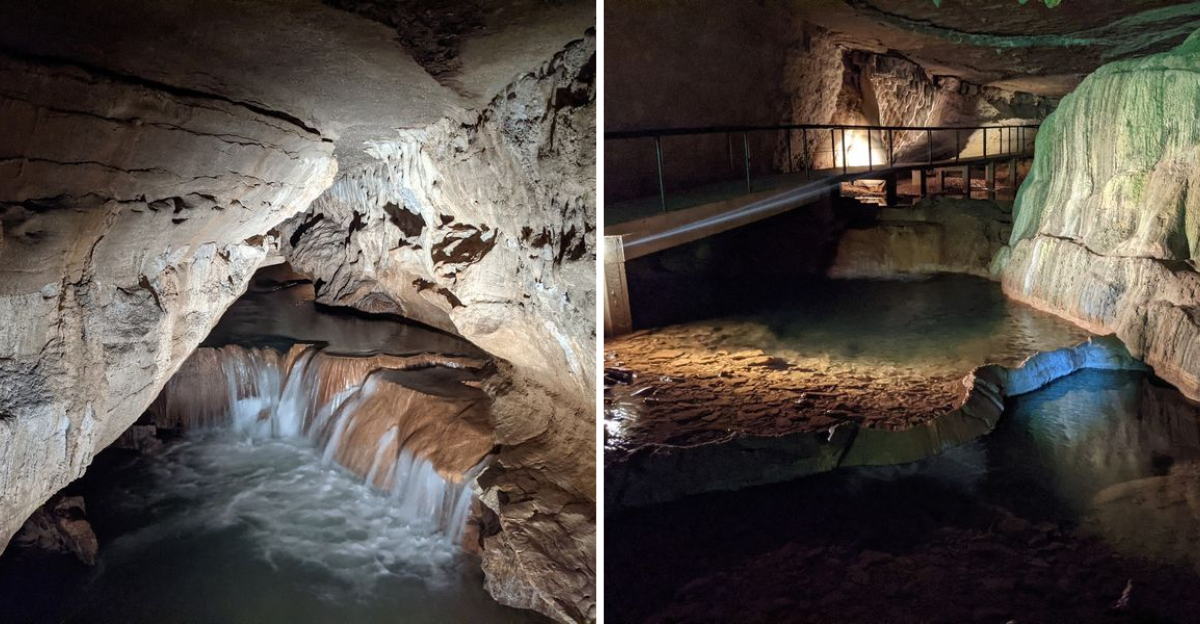
That cave mouth was so wide it looked like the hillside had yawned. I had driven out on a warm afternoon expecting a quick roadside stop, and instead I found cool air rolling out of the dark before I could even see the water.
What surprised me most was how easy the whole thing felt, because the path is smooth concrete the entire way and there is not one stair to climb. That half mile took me past fossils older than anything I can wrap my head around, past initials scratched into stone, and past pale little creatures that have never needed eyes.
I walked out squinting into the Missouri sunlight with the strange feeling that I had just been let in on a local secret. The walkway winds through the hill without any of the crawling or squeezing you expect from a cave tour.
The temperature drops at least twenty degrees within the first few steps, and the sound of dripping water echoes off the walls in a steady rhythm. If you like history and geology served up in the same hour, this place delivers both without asking much of your knees.
The Ten-Story Entrance That Stops You Mid-Sentence
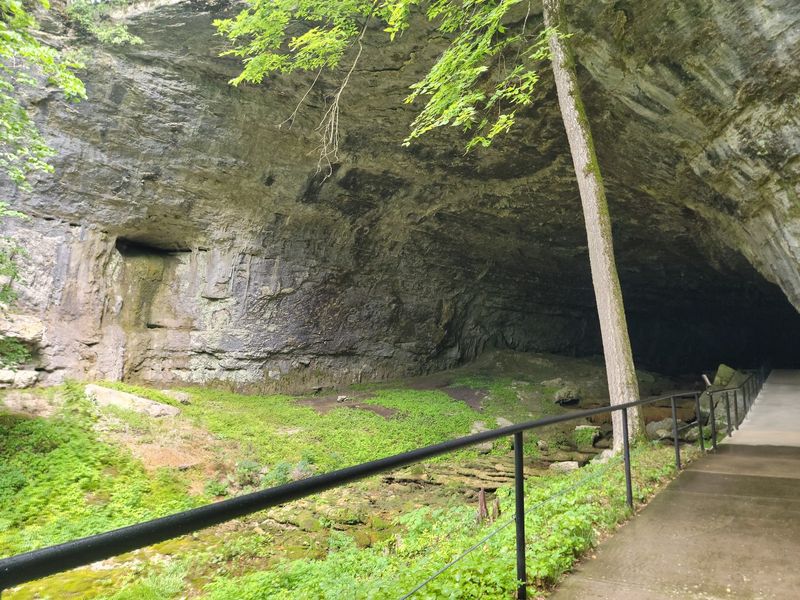
My first reaction was to stop talking. The opening at Smallin Civil War Cave stretches roughly 100 feet across and rises about 55 feet high, which works out to something close to a ten-story arch carved by water and time.
Photos really do not capture it. You need to stand at the bottom of that curve of pale limestone and hear the stream echoing off the ceiling to understand the scale.
Getting there is part of the fun, since a paved trail winds through a shaded pocket of woods before the trees open up and the arch appears all at once. No mud, no scrambling, just a pleasant few minutes of birdsong and dappled light.
The temperature shift hits you before you technically enter anything. Cool air spills out of the mouth like an open refrigerator door, which explains why generations of Ozark families treated this spot as their summer escape.
Bring a light jacket even in July, because the chill settles in fast once you stop moving. I made the mistake of arriving in a thin t-shirt and spent the first ten minutes rubbing my arms while trying to look casual about it.
A Half Mile Of Smooth Concrete And Zero Steps
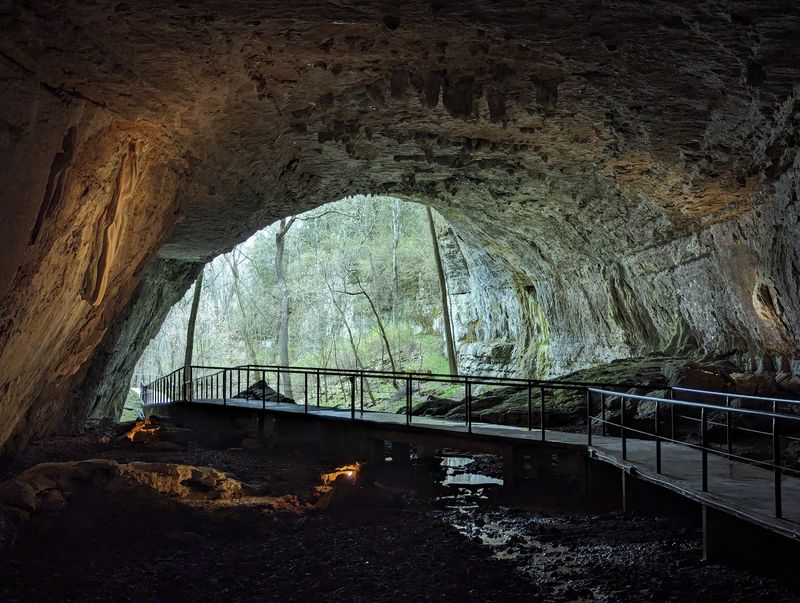
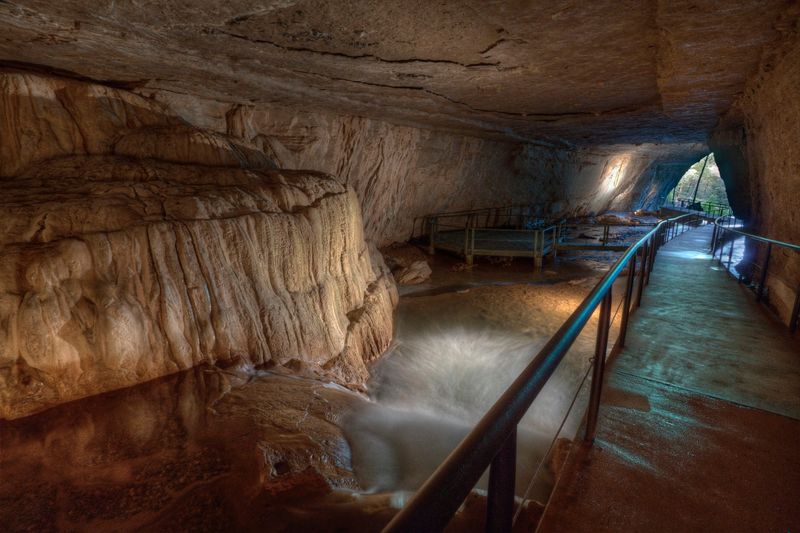
Anyone who has ever ducked, crouched, or crab-walked through a commercial cave will appreciate what happens here. The route runs about a half mile in and back out on flat concrete, with a couple of gentle inclines and absolutely no stairs anywhere along the way.
That single design choice changes everything. Strollers roll through fine, wheelchairs manage the grade, and anyone nursing a sore knee or a healing ankle can keep up with the group.
I noticed how much more I actually absorbed because I was not watching my feet. Instead of calculating my next step, I could look up at the ceiling, sideways at the fossils, and straight ahead into the dark.
A few sections of walkway stay damp year round, so shoes with decent grip are a smart call. Nothing slick enough to worry about, just enough moisture to remind you that a living stream shares this space with you.
Ceiling height stays generous through most of the tour, which matters if tight spaces make you uneasy. Several visitors who describe themselves as claustrophobic still handle this one comfortably, and that says a lot about how the passage is shaped.
Winoca, The Underground Spirit Of The Osage
Long before anyone called it Smallin, the Osage knew this place as Winoca, meaning Underground Spirit. Learning that name completely reframed how I looked at the chamber around me.
The cave was sacred ground, a shelter and a spiritual site, and there is evidence pointing to Cherokee presence here during other periods as well. Henry Rowe Schoolcraft documented the cave in 1818, making it one of the earliest written records of any cave in the Ozarks.
What I appreciated is that the guides do not rush past this history. The site has worked with the Osage to keep the interpretation accurate, and you can feel that care in how the stories are told.
At one point on my tour the lights went out completely. Real cave darkness is a different animal than nighttime darkness, thick and total, and the quiet that follows sticks with you.
Standing in that blackness, listening to water move somewhere below, I understood why people considered this space holy. It is one of the few tourist stops where the human history feels heavier than the rock formations.
Civil War Stories Written In Stone And Rumor
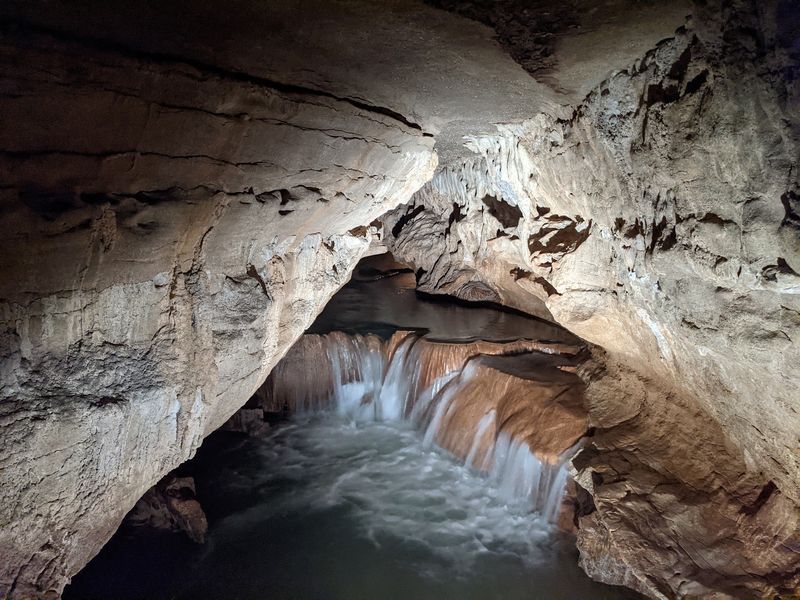
The name is not decoration. Ozark sat in the middle of Union activity during the Civil War, and the Battle of Wilson’s Creek unfolded roughly twelve miles from this hillside.
Local accounts hold that Union forces used the cave to stash ammunition and artillery ahead of that fight. Another story follows John Breazeale, a Union spy said to have sheltered inside during brutal Missouri winters.
Some of it lives in the space between folklore and record, and the guides are honest about which is which. That honesty made me trust the rest of the tour more, not less.
Artifacts found in the surrounding area back up the military connection, including an unspent 69 caliber Union mini ball recovered nearby. Small object, big implication.
Then there is the formation known as the Indian Staircase, where initials were carved by pioneers and, by many accounts, soldiers passing through. Tracing those letters with my eyes was the moment history stopped being abstract.
You leave with the sense that this cave sat quietly through one of the country’s ugliest chapters, keeping whatever secrets it was handed.
Ancient Ocean Fossils Hiding In Plain Sight
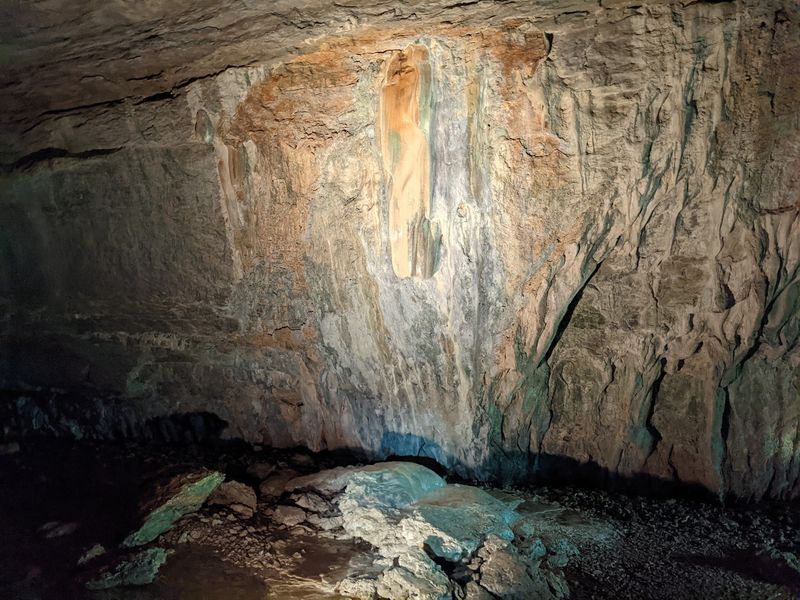
Here is the fact that rearranged my brain a little. The Burlington limestone that forms this cave was laid down beneath a shallow sea, and the walls are studded with fossils from that vanished ocean.
Coral reef remnants sit right there at eye level. Starfish impressions too, pressed into rock that now sits hundreds of miles from any coastline.
Our guide pointed out shapes I would have walked straight past, which is the whole argument for taking a guided tour rather than wandering alone. Once your eye adjusts, you start spotting them everywhere.
Water is still doing its slow work. Mineral formations along the passage vary wildly in texture, some knobby, some smooth and glossy where moisture keeps flowing.
If you want the stream at full volume, spring is the season to come, when snowmelt and rain push water through the cave with real force. Summer visits trade that soundtrack for more insects along the trail.
Reaching out and touching stone that was once seafloor is a strange, humbling little thrill. I kept doing it, then feeling faintly ridiculous, then doing it again.
Blind Creatures Thriving Without A Single Ray Of Light
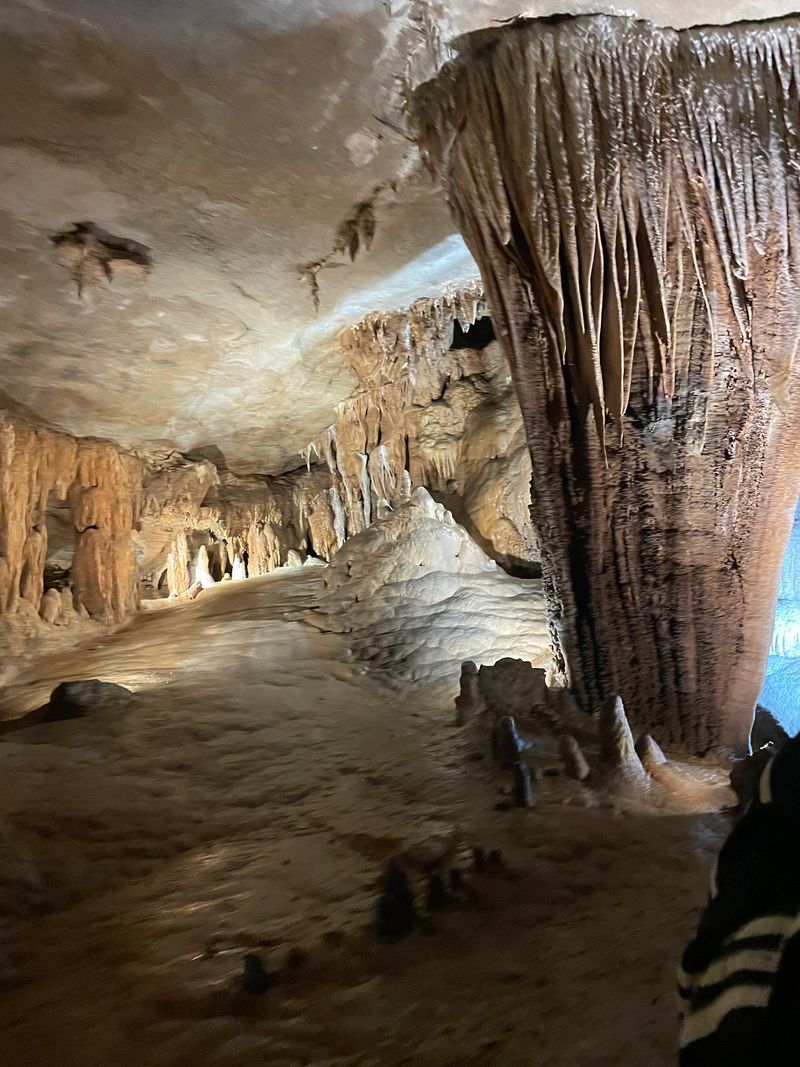
Look closely into the shallow water and you might spot something ghostly. Blind cave crayfish live here, translucent and eyeless, feeling their way through a world that has never seen daylight.
Scientists have been studying this crayfish population since 1898, which makes the cave a genuine research site rather than just a scenic stop. That long record is unusual and worth appreciating.
Pale cave salamanders turn up as well, their skin almost colorless against dark wet rock. Bats roost here at times, and cave crickets cling to the walls in odd little clusters.
Spotting wildlife takes patience and a bit of luck. On my tour we found crayfish quickly and salamanders not at all, which felt like a fair trade.
Everything about the etiquette here is hands off, and rightly so. These animals live on razor thin margins, and a warm human hand is a real hazard to them.
Watching creatures survive with no sun, no seasons, and almost no food shifted how I think about what life needs. Turns out the answer is far less than I assumed.
Lantern Tours, Gem Panning, And A Family Run Welcome
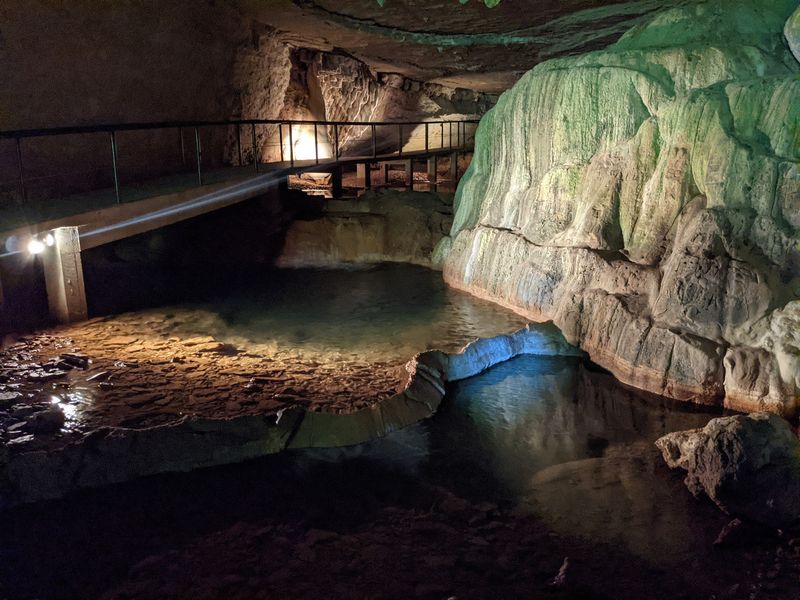
Something I did not expect was how cozy the whole operation feels. The cave is run as a family business, and the warmth shows in small ways, from the tidy grounds to guides who genuinely enjoy answering odd questions.
Standard tours run about an hour, stretched out by storytelling rather than distance. Lantern tours swap electric lighting for hand held flame, and wild cave tours push deeper for visitors who want to get muddy.
Outside, gem panning gives kids something to do with their hands, and they keep whatever they sift out of the trough. There is also a crawling and climbing area that seems designed specifically to burn off leftover energy.
A gift shop and restrooms sit on site, which makes this an easy stop on a longer Ozarks drive toward Branson or Springfield. School groups and homeschool families come through regularly for good reason.
Doors open at 9:30 in the morning Monday through Saturday, with Sunday hours starting at 1 in the afternoon. Booking ahead is smart, and calling 417-551-4545 saves guesswork.
Address: 3575 North Smallin Road, Ozark, Missouri 65721
