
Six hundred and thirty feet of gleaming steel shaped like a giant wishbone. That is Missouri’s most unmissable landmark and a serious workout for your neck.
You step into a tiny tram elevator that feels like a space capsule from the 1960s, and five minutes later you are staring out at the Mississippi River from the top of the world.
The views stretch for miles, the river bends below like a lazy snake, and you suddenly understand why people come from everywhere just to ride that strange little pod.
Locals have done it once. Tourists do it twice.
Everyone agrees the trip up is worth the weird, cramped, rocking sensation. So go ahead, buy your ticket, hold your breath, and see Missouri from way up high.
Just maybe skip the big lunch beforehand. That tram wobbles.
The Arch Rewrote the Skyline
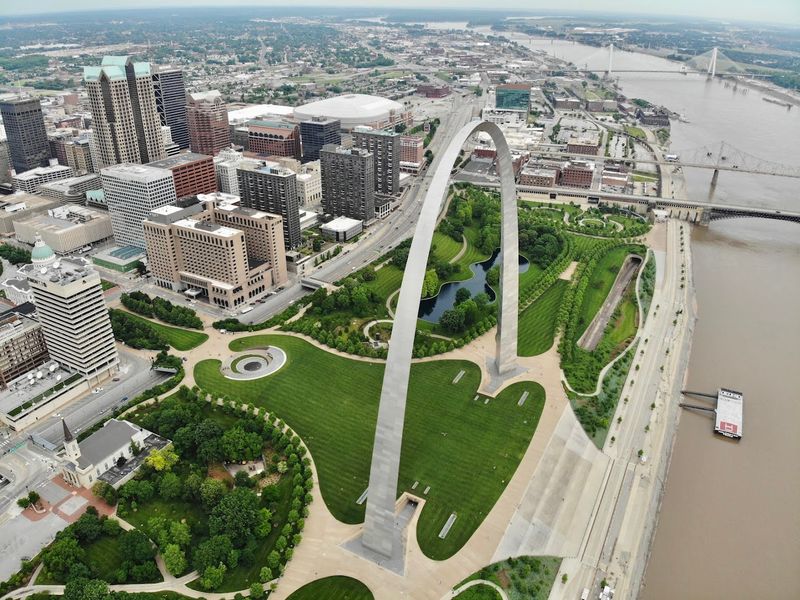
Few structures in the United States command attention the way the Gateway Arch does. Rising 630 feet above the west bank of the Mississippi River in St. Louis, Missouri, this gleaming stainless steel monument is the tallest in the country.
Its perfectly symmetrical curve seems almost too clean, too precise, to be real.
Designed by Finnish-American architect Eero Saarinen, the Arch was selected through a national competition in 1947. Construction began in 1963 and was completed in 1965.
Engineers used a catenary curve shape, which means each leg follows the natural arc that a hanging chain would form under its own weight.
The steel exterior panels reflect sunlight in a way that changes throughout the day. In the morning, it glows warm gold.
By afternoon, it turns a cool silver-white. At dusk, the whole structure seems to catch fire with orange and pink light.
Standing beneath it and looking straight up feels genuinely humbling. The Arch is not just a symbol of Missouri or St. Louis.
It is a reminder of how far human ambition and engineering can reach when given the right vision and enough determination.
A Monument Born from a Big Idea
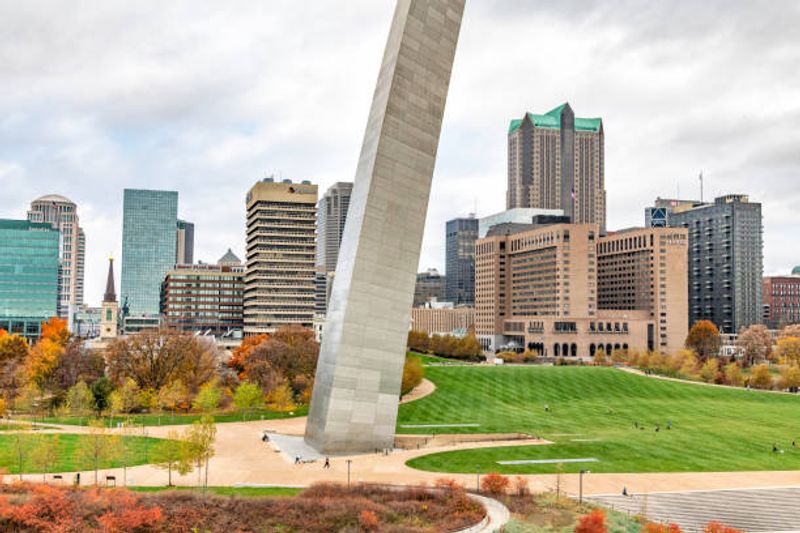
The story behind the Gateway Arch starts with a bold civic dream. In the 1930s, St. Louis civic leaders wanted to revitalize the city’s aging riverfront and honor the role Missouri played as the launching point for westward expansion across America.
They envisioned a monument that would do justice to that enormous chapter of history.
The design competition drew entries from some of the most respected architects in the country. Eero Saarinen’s catenary arch design stood out immediately for its elegance and originality.
What made it even more remarkable was that Saarinen imagined the structure as a gateway, not just a statue or an obelisk, but something you could pass through, both physically and symbolically.
Construction was a feat of precision. Each of the two legs was built separately from the ground up, and the two halves had to meet perfectly at the top within a fraction of an inch.
Steel workers, engineers, and construction crews worked for years to make that happen. The final keystone piece was inserted on October 28, 1965, completing a structure that had been considered nearly impossible.
That moment of connection at the top is still one of the most celebrated engineering achievements in American history.
Riding the Tiny Tram to the Top
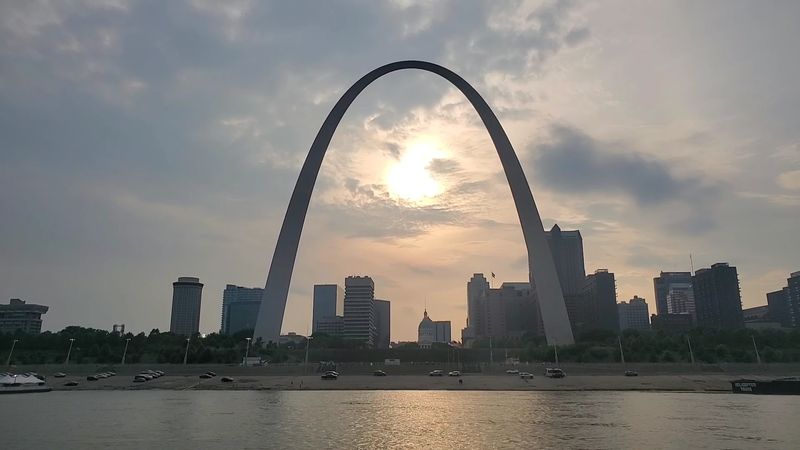
Getting to the top of the Gateway Arch is an adventure before the view even begins. The tram system is unlike anything else in the world.
Each capsule holds up to five people and is shaped like a small egg, just barely big enough to sit upright in. The doors seal shut, and the pod begins its slow, rotating climb through the inside of the Arch leg.
The ride takes about four minutes each way. The capsule tilts and adjusts as it moves along the curved track, which means you feel a gentle rocking motion throughout the journey.
It is not a conventional elevator. It is more like a cross between a cable car and a carnival ride, but much smoother and surprisingly quiet.
People who are nervous about small spaces should know going in that the capsules are genuinely compact. There is no window on the way up, just the hum of the mechanism and the anticipation of what waits at the top.
Booking tickets in advance is strongly recommended, especially on weekends and during summer months. Slots fill up quickly, and walk-in availability can be limited.
The whole ride, from boarding to the observation deck, is an experience worth every second of the wait.
Views That Stretch for Miles
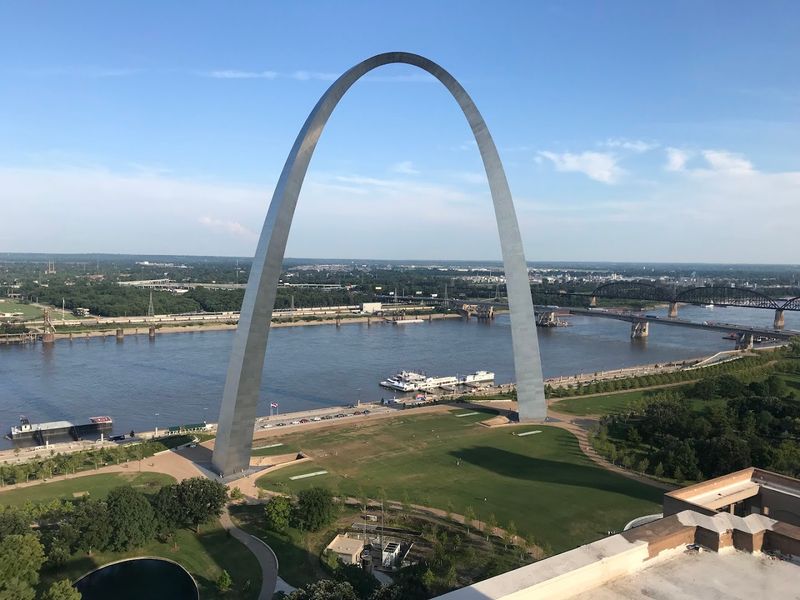
Reaching the top of the Gateway Arch and pressing your face to one of those narrow, curved windows is a moment that is hard to describe without sounding like you are exaggerating.
The Mississippi River spreads out below you to the east, wide and brown and slow-moving, flanked by railroad yards and the flat Illinois landscape beyond.
It looks completely different from up here than it does from the riverbank.
To the west, downtown St. Louis fans out in a grid of streets, buildings, and parks. On a clear day, you can see for up to 30 miles in both directions.
The observation deck at the top is a narrow, curved room with windows on both sides, giving you views both east and west simultaneously.
The space at the top holds around 40 people at a time, and each visit lasts roughly 8 to 10 minutes before the next group rotates in. That sounds brief, but it is actually enough time to soak in the panorama, take photos, and feel the gentle sway of the structure in the wind.
Yes, the Arch does move slightly in strong winds. That is completely by design, and it is part of what makes standing at the top feel so alive and memorable.
The Museum Hidden Beneath Your Feet
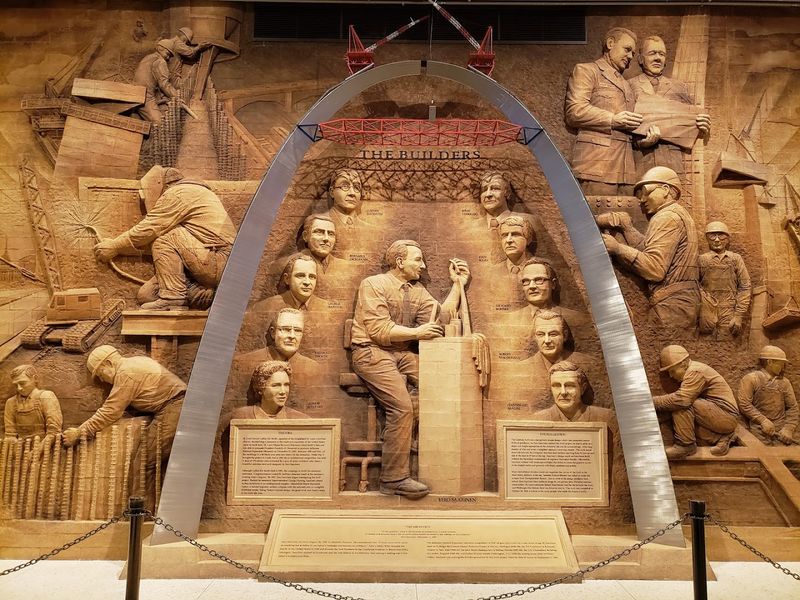
Most people do not realize that one of the best parts of visiting the Gateway Arch in Missouri is actually underground. The Museum at the Gateway Arch sits beneath the monument in a spacious, well-designed space that covers the full history of American westward expansion.
It is free with general park admission, which makes it one of the best deals in St. Louis.
The exhibits are thoughtfully organized and span the era from early Indigenous history through the Lewis and Clark expedition, the fur trade, pioneer migration, and eventually the story of the Arch’s own design and construction.
There are scale models, artifacts, interactive displays, and short documentary films that bring each chapter to life without feeling overwhelming.
One of the most compelling sections covers the engineering and construction of the Arch itself, including the challenges of building two separate legs that had to meet precisely at the top.
Another section addresses the complicated history of westward expansion honestly, including its impact on Native American communities.
The museum does not shy away from difficult truths, and that honesty gives it real weight. Plan to spend at least an hour here.
It is genuinely one of the more engaging history museums I have experienced anywhere in the United States.
The Grounds Along the Riverfront
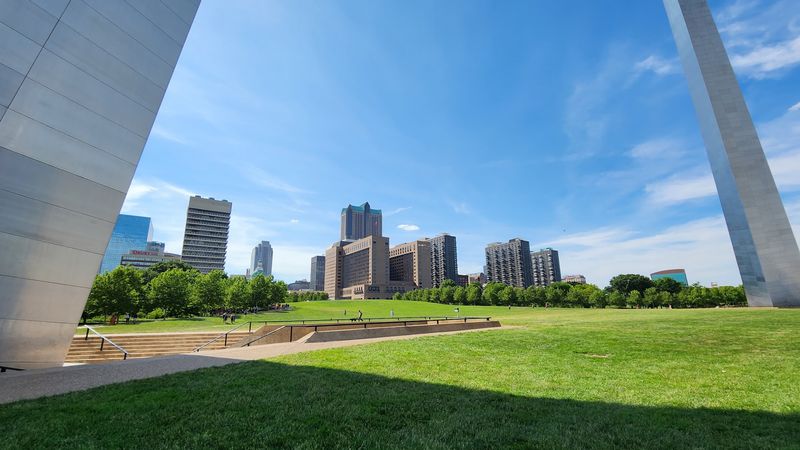
The Gateway Arch does not exist in isolation. It anchors a stretch of riverfront parkland called Gateway Arch National Park, which runs along the west bank of the Mississippi River in downtown St. Louis.
The park itself is a peaceful, open space with wide lawns, walking paths, and direct views of the river. On a clear day, it is the kind of place where time slows down naturally.
The grounds are ideal for a relaxed stroll before or after going up in the tram. The curve of the Arch frames the sky in a way that makes every angle photogenic.
Early morning is especially beautiful, when the light is soft and the crowds have not yet arrived. Sunset is equally stunning, with the stainless steel exterior catching every shade of orange and pink.
The park also connects to the Old Courthouse, a historic federal building just a short walk away that played a significant role in American legal history. Admission to the Old Courthouse is free, and its interior features impressive architecture and informative exhibits.
Together, the Arch grounds, the museum, and the Old Courthouse create a full day of exploration without requiring a car or much planning. Missouri’s riverfront has never looked better than it does from right here.
Engineering That Still Impresses Today
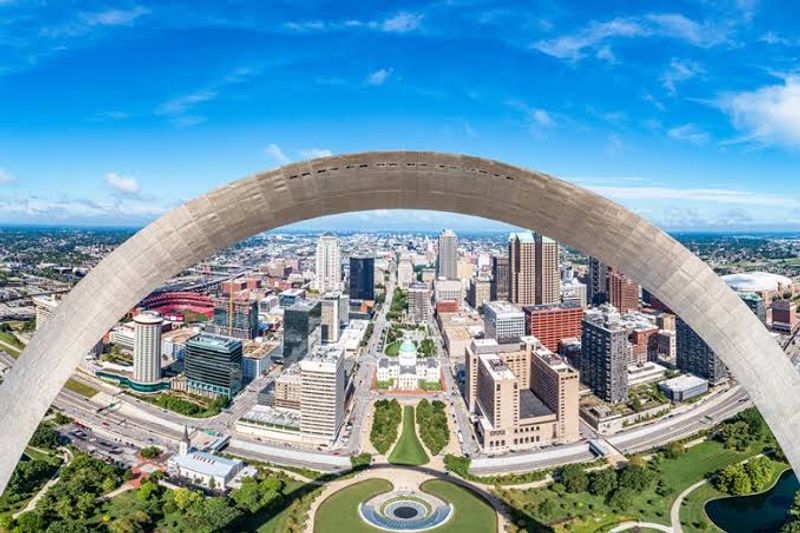
The Gateway Arch is not just tall. It is a masterpiece of structural engineering that continues to impress architects and engineers more than half a century after its completion.
The structure is a weighted catenary arch, meaning its shape follows the natural curve of a chain hanging freely between two points. This shape distributes stress evenly throughout the structure, making it extraordinarily stable.
Each leg of the Arch is an equilateral triangle in cross-section, and that triangular shape gets smaller as it rises toward the top. The outer surface is covered in 886 tons of stainless steel, which was chosen for its reflective beauty and its resistance to corrosion.
The foundation of each leg extends 60 feet into the ground, anchored in bedrock beneath the riverbank.
What makes the engineering story even more remarkable is that the two legs were built simultaneously from opposite ends, and they had to meet at the top within a tolerance of just 1/64th of an inch.
On the day the final piece was inserted, workers had to use hydraulic jacks to slightly spread one leg and allow the keystone to fit.
That precision, achieved without modern computer modeling, is a testament to the skill and dedication of everyone who worked on the project in Missouri.
Best Times to Plan Your Visit
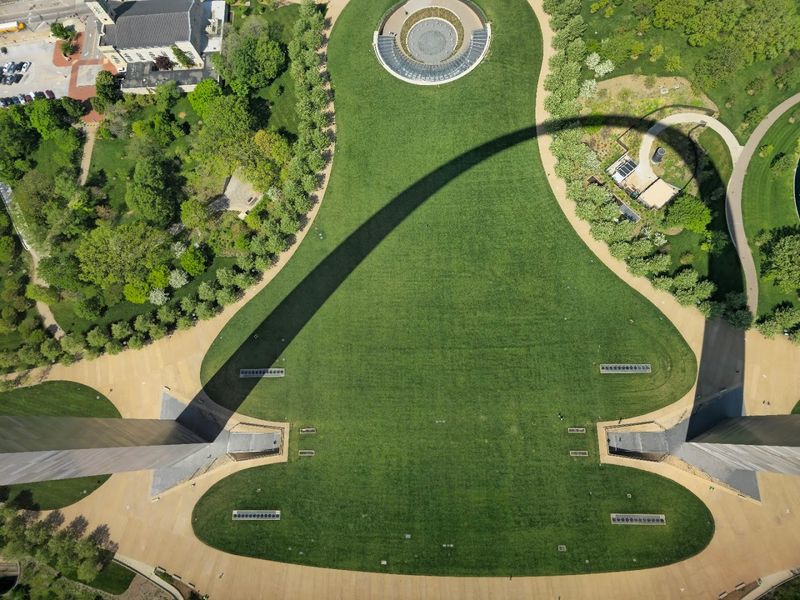
Timing your visit to the Gateway Arch can make a real difference in how enjoyable the experience is. The park and museum are open daily from 9 AM to 6 PM, and the tram operates within those hours.
Summer is the busiest season, with families and school groups filling the grounds from late morning through mid-afternoon. If you visit in the summer, arriving right at 9 AM gives you the best chance of shorter lines and cooler temperatures.
Spring and fall are arguably the most pleasant seasons for a visit. The weather in Missouri is comfortable, the crowds are more manageable, and the natural light for photography is especially good.
Winter visits are quieter and can feel almost magical, particularly when the stainless steel exterior catches the low winter sun. Cold weather means fewer crowds, which can make the tram experience feel more relaxed and personal.
Purchasing tram tickets in advance online is strongly recommended regardless of the season. Tram time slots can sell out quickly on busy days, and walk-up availability is not guaranteed.
The website at gatewayarch.com allows you to book specific time slots. Arriving early also gives you more time to explore the museum and the riverfront grounds before the day gets busy.
Good planning makes the whole visit much more enjoyable.
What the Arch Means to Missouri
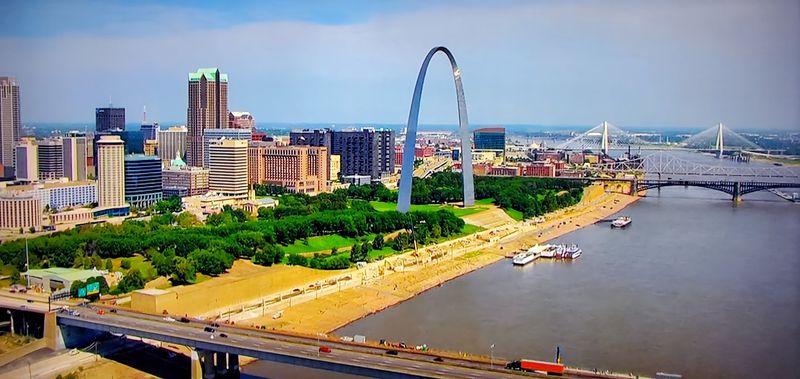
The Gateway Arch is more than a tourist attraction. It is a symbol that carries real cultural and historical weight for the state of Missouri and for the country as a whole.
St. Louis was the city where thousands of pioneers gathered before heading west along trails like the Oregon Trail and the Santa Fe Trail. The Arch honors that legacy and the enormous human story behind it.
Missouri has always occupied a unique position in American history, sitting at the intersection of the East and the expanding West. The Arch captures that in-between identity perfectly.
It is a gateway in the truest sense, a threshold between what was and what was being built. Standing beneath it and knowing that context gives the monument a meaning that goes beyond its impressive size.
The Arch also holds significance for St. Louis as a city. It has appeared on Missouri’s state quarter and on countless pieces of memorabilia, and it remains the most recognizable symbol of the city worldwide.
For many Missouri residents, it is a source of genuine pride, the kind of landmark that makes people feel connected to something larger than themselves. Every time I stand near it, I feel that pull too.
It is impossible not to.
Practical Tips for First-Time Visitors
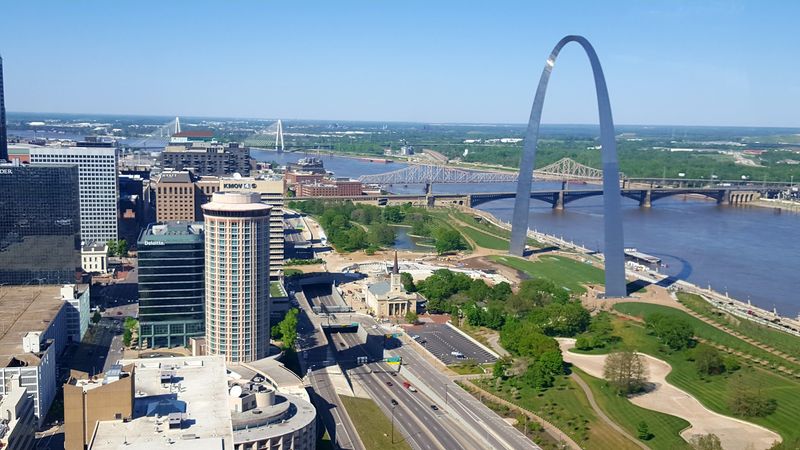
A few practical details can turn a good visit to the Gateway Arch into a great one. First, book your tram tickets online before you arrive.
The website is gatewayarch.com, and tickets can be reserved by time slot. This is especially important on weekends and holidays when availability fills up fast.
Walk-in tickets are sometimes available, but counting on them is a gamble.
Plan for airport-style security screening before entering the building. Bags go through an X-ray scanner and you walk through a metal detector.
The process is efficient, but it adds a few minutes to your arrival time, so factor that in. The museum is free and included with the price of the tram ticket, so there is no reason to skip it.
Street parking near the Arch is nearly impossible to find. The recommended option is to use one of the nearby parking garages, which are a short walk from the entrance.
The Arch is located at St. Louis, MO 63102, and the surrounding area is walkable and well-maintained. Comfortable shoes are a good idea since the grounds involve some walking and a few sets of stairs inside the building.
The whole experience, including the museum and the tram ride, typically takes between one and three hours depending on your pace.
The Old Courthouse Next Door
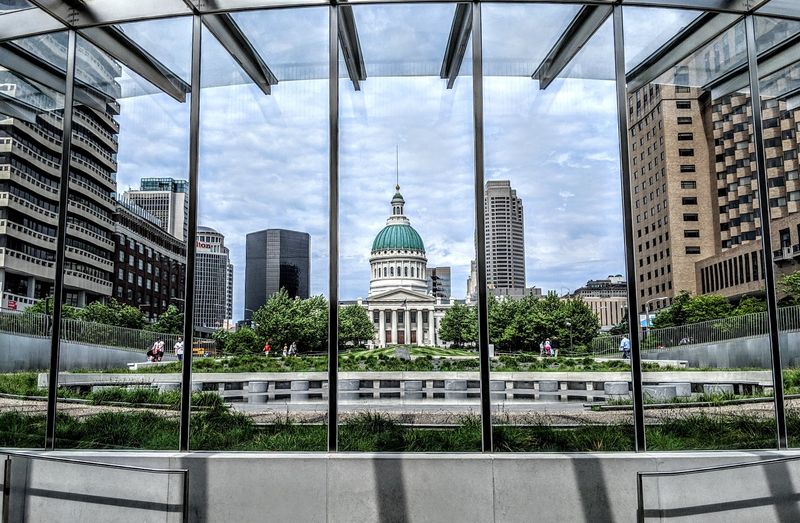
Just a short walk from the Gateway Arch, the Old Courthouse is one of the most historically significant buildings in Missouri. Its green dome is visible from the Arch grounds and has been a part of the St. Louis skyline since the mid-1800s.
The building is free to enter and is part of the Gateway Arch National Park system, making it a natural add-on to any visit.
The Old Courthouse is best known as the site where Dred Scott filed his freedom suit in the 1840s and 1850s, a case that became one of the most consequential legal battles in American history. The exhibits inside cover that story along with other chapters of St. Louis and Missouri history.
The interior architecture is stunning on its own, with a soaring rotunda and detailed period murals that have been carefully restored.
Spending an hour in the Old Courthouse adds significant depth to the overall experience of visiting the Arch. Together, the two sites tell a layered story of American history that includes both its triumphs and its moral struggles.
The contrast between the sleek modern Arch and the classical architecture of the courthouse is visually striking and historically meaningful. It is one of those rare pairings where each place makes the other more interesting.
Why the Gateway Arch Stays With You
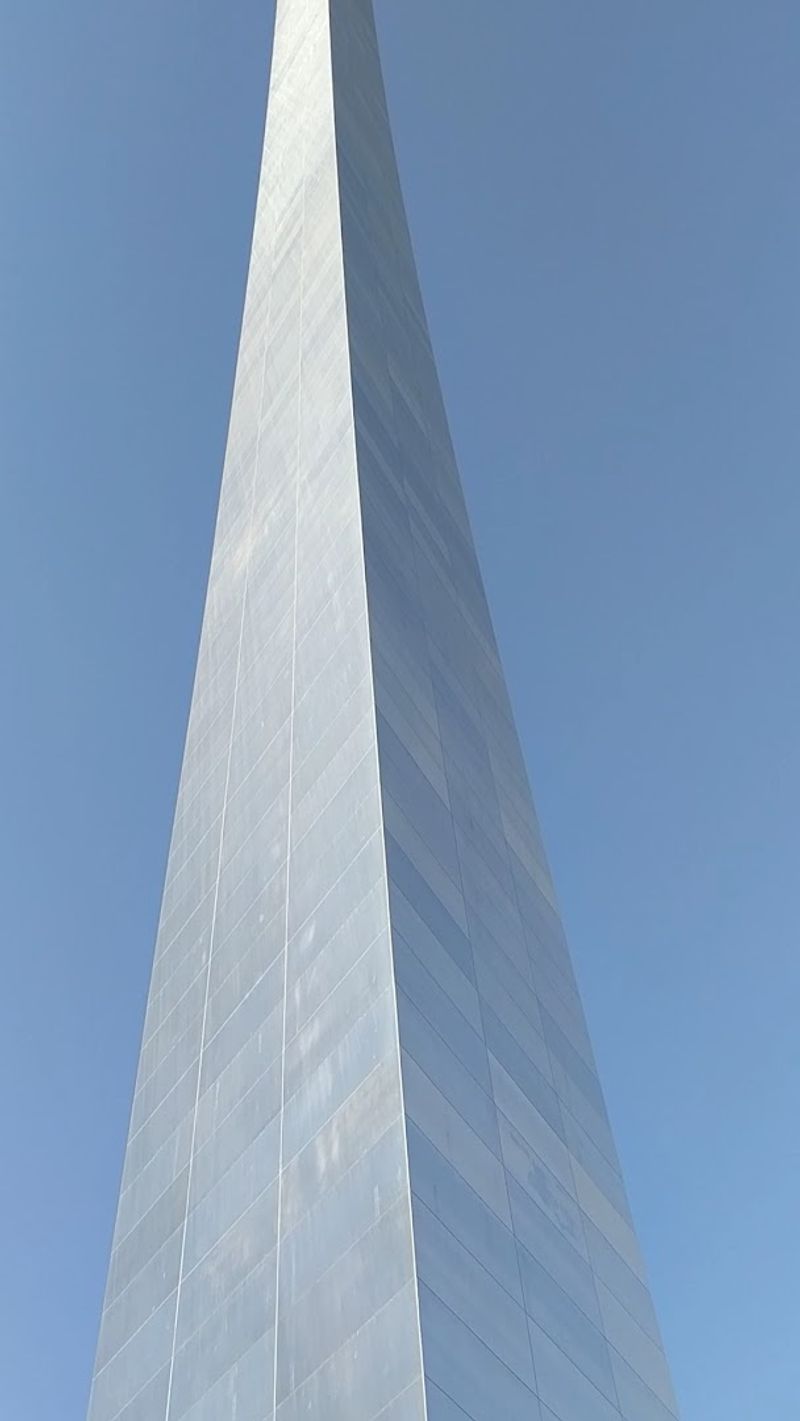
Some landmarks are impressive in photos but feel smaller in person. The Gateway Arch is the complete opposite.
Standing at its base and looking up, the sheer scale of the structure registers in a way that no image fully prepares you for. The legs are enormous up close, each one a massive triangular tower of polished steel that rises far above anything nearby.
The combination of physical scale, engineering precision, and historical meaning gives the Arch a staying power that most monuments do not have. It is not just a big object.
It is a structure that invites you to think about what it represents, how it was built, and what it says about the people and the era that created it. That depth is what keeps it interesting long after the visit ends.
Missouri has no shortage of interesting places to explore, but the Gateway Arch holds a category of its own. It is the kind of place that works equally well for history enthusiasts, architecture fans, families with kids, and anyone who just wants a genuinely memorable afternoon.
The tiny tram ride, the sweeping views, the free museum, and the riverfront setting all come together into something that is hard to replicate anywhere else in the country. Plan the visit.
It earns every bit of the reputation it carries.
