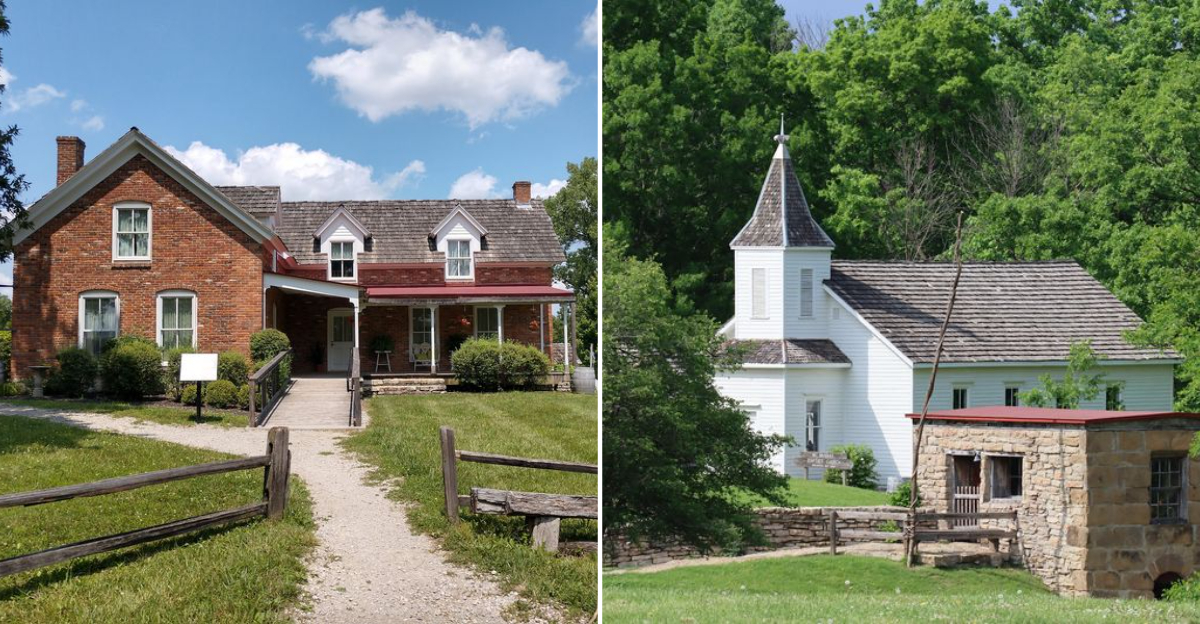
The buildings were scattered across the countryside, each one a fragment of a forgotten era. A one-room schoolhouse from Tracy.
A mercantile from Parkville. A mansion that once held a family of fourteen children.
Piece by piece, they were brought together on eighty acres of Missouri parkland, reassembled to form a village that looks and feels like the nineteenth century.
The church still holds the echoes of its congregation, and the log cabins carry the marks of hands that built them by hand.
Walking through the settlement, you can almost hear the creak of wagon wheels and the murmur of pioneer life. Volunteers in period clothing bring the past into focus during special events, turning the village into a living, breathing history lesson.
Bison graze near the entrance, and the whole place feels like a secret tucked just beyond the city limits. Missouri has a way of preserving its stories, and this village is one of its most dedicated efforts.
A Village Stitched Together From Salvaged History
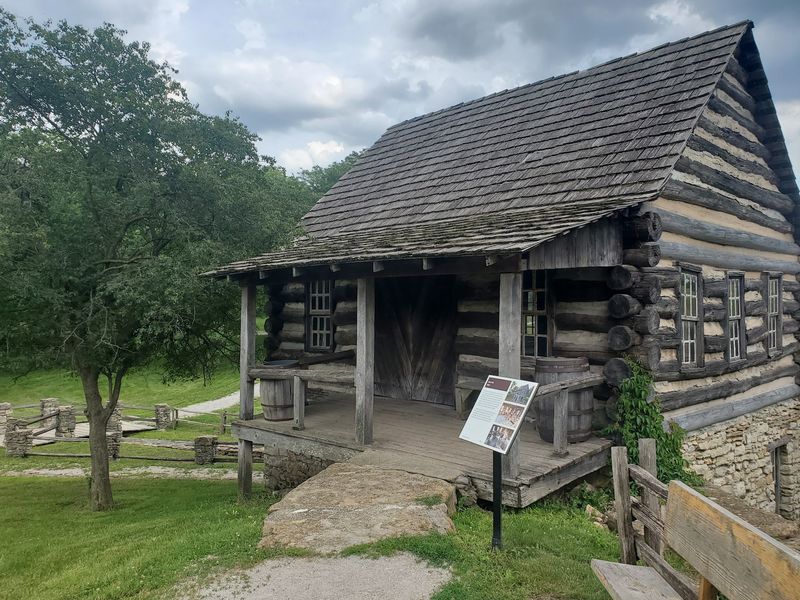
Here is the part that gets me every time, because most historic sites protect one building and call it a day, while this place gathered many of them into a single working village layout. The structures were not built to look old, they actually are old, and they were relocated from various spots around the region before being set back up here.
What that means for you as a visitor is that the proportions feel right in a way that reproductions never quite manage. Doorways sit a little lower, windows are smaller than you expect, and the wood has that soft gray weathering that only comes from generations of weather.
You can walk the loop at whatever pace suits your mood, stopping at whichever building catches your eye first. Nothing pushes you along, and there is no set path you are supposed to follow in order.
If you are the type who likes reading every sign, you will be there a while, and if you would rather just look and wander, that works too. Either way, the village reads like a real community rather than a display case, and that difference is what makes people come back with friends and family in tow.
Where To Point Your Car
Let me get the practical stuff out of the way so you are not squinting at a map later. The place is called Shoal Creek Living History Museum, and you will find it at 7000 NE Barry Road, Kansas City, MO 64156, sitting on the northern side of town away from the busy downtown streets.
Getting there is genuinely easy, which surprises people who assume anything this old must be buried down some unmarked country road. The drive takes you through quiet suburban stretches before opening up into parkland, and the shift in scenery happens faster than you would think.
Parking is straightforward and free of the usual downtown headache, so you can arrive without circling a block three times. Once you step out of the car, the village is right there in front of you rather than at the end of a long hike.
I would suggest comfortable shoes because the ground is a mix of grass and gravel rather than smooth pavement throughout. Bring water in warm months too, since much of the walking happens out in the open where shade comes and goes depending on where you are standing.
Counting The Buildings You Get To See
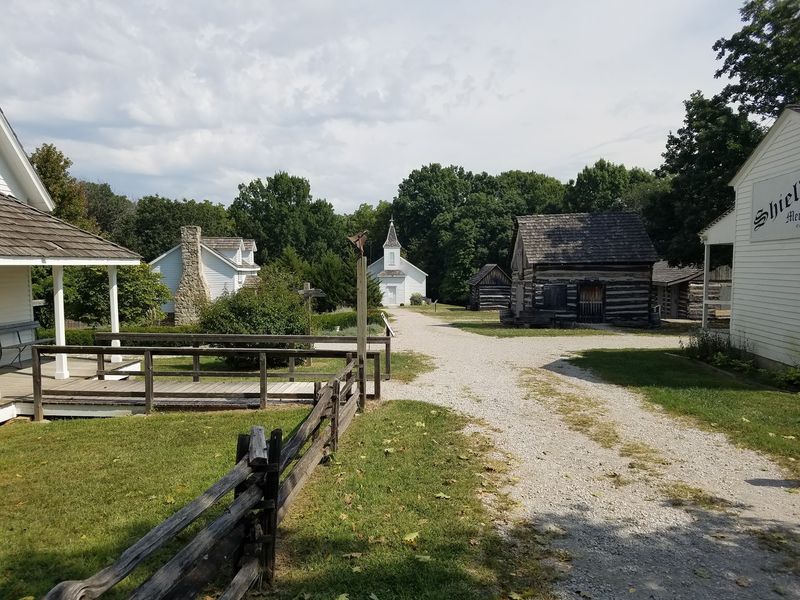
Ever tried to guess how many buildings make up a village before you walk it? Around twenty structures sit on the grounds here, and the large majority of them are authentic nineteenth-century buildings rather than modern additions built to fill gaps.
Some of them reach back to the early part of the eighteen hundreds, which puts them among the older surviving structures in this part of the state. Standing next to something that predates so much of what we consider normal life is a quietly humbling experience.
The variety keeps things interesting as you move through, because no two buildings serve the same purpose or look the same from the outside. You go from rough hewn logs to painted clapboard within a few dozen steps.
Take your time comparing construction styles if you are into that kind of detail, since the differences tell you a lot about who built what and when. Even if the technical side does not grab you, the sheer range of shapes and sizes makes the walk more engaging than a single restored house ever could.
Missouri has plenty of historic sites, but few pack this much variety into one walkable space.
The Church That Anchors The Grounds
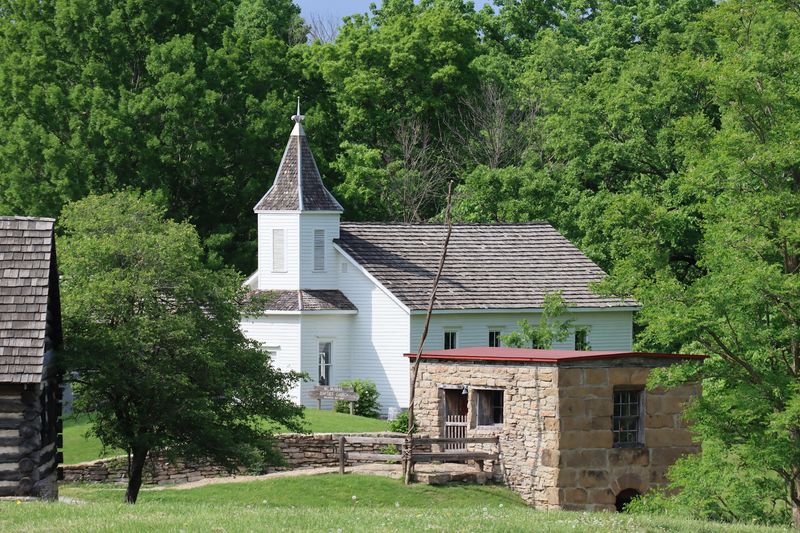
Every old village had a church at its center, and this one is no exception, standing there with the simple lines that rural congregations favored back then. The building has that plain, honest look that comes from being built by people who cared more about function than decoration.
Photographers tend to gravitate toward it because the white walls catch light beautifully in the late afternoon, especially with trees framing the background. If you are bringing a camera, this is probably where you will linger longest.
Small country churches like this one served as gathering spots for far more than worship, since they doubled as meeting halls, schoolrooms and community centers for scattered farming families. Knowing that changes how you see the space.
The scale is what surprises most visitors, because we are used to large modern buildings and this feels almost intimate by comparison. A congregation here would have known every single face in the room.
Weddings and small ceremonies still happen in spaces like this around Missouri, which speaks to how well these old buildings hold up when someone takes proper care of them. It is a nice thought while you stand outside looking up at the steeple.
Grist Mill And Mercantile Territory
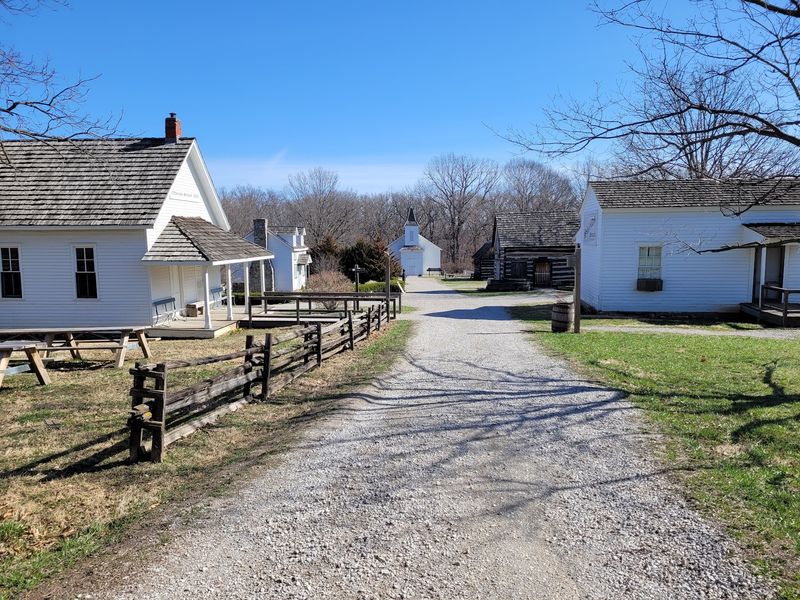
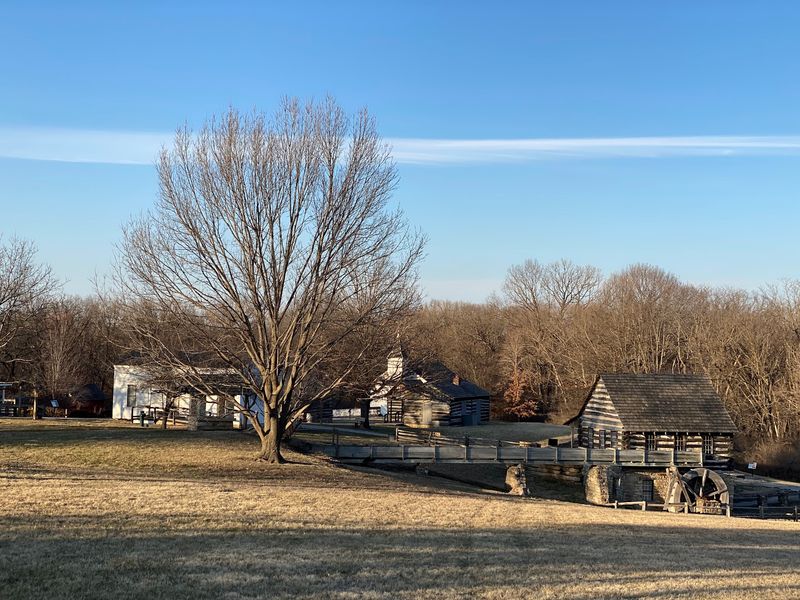
Now here is where the village starts feeling like an actual functioning town rather than a collection of homes. A grist mill and a mercantile both sit among the buildings, and those two structures were the beating heart of any small settlement back in the day.
The mill is where families brought grain to be ground, meaning it was one of the few places everyone in the area passed through regularly. Think of it as the original community bulletin board, except with more flour dust.
The mercantile handled everything else, from tools and fabric to whatever supplies a household could not make for itself. Shopping was not a hobby then, it was a necessary trip you planned around.
Looking at the size of these buildings gives you a real sense of how small the scale of daily commerce used to be. There were no aisles, no shelves stretching into the distance, just what fit in one room.
I find these working buildings more interesting than the houses, honestly, because they tell you how people made their living rather than just where they slept. If you feel the same, budget extra time for this part of the loop.
When Reenactors Bring The Place Alive
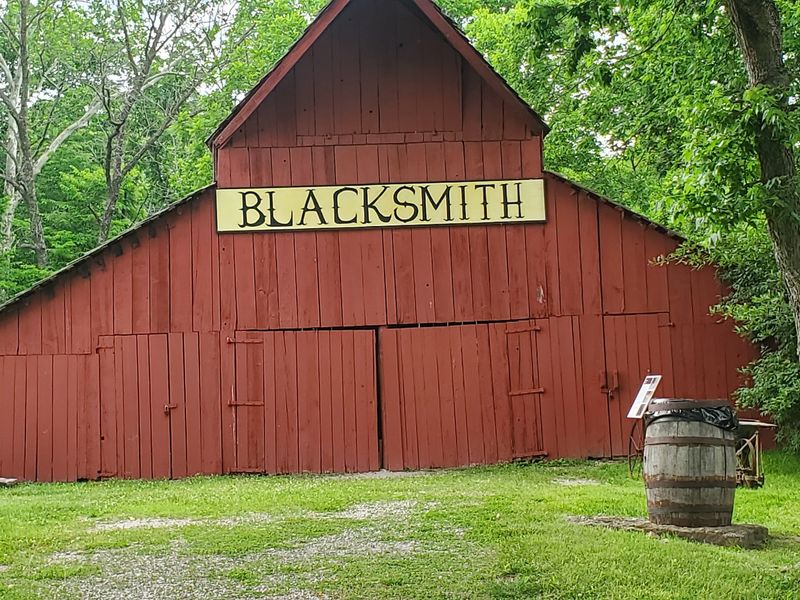
Timing matters here more than at most places you visit, and I want you to know that going in. The grounds stay open for wandering, but the buildings themselves really open up during special events when reenactors show up in period clothing.
That is when you get demonstrations, skits and the kind of hands-on explanation that turns a quiet village into something closer to a lived-in town. Watching someone actually work with old tools beats reading about it on a plaque.
Check the museum schedule before you plan your trip if the full experience is what you are after, because the difference between an event day and a regular day is significant. Both are worth doing, just for different reasons.
Families with curious kids will want to aim for the event days, since children tend to connect much faster with a person demonstrating something than with a building they cannot enter. The engagement level jumps noticeably.
If your schedule only allows a quiet weekday visit, do not skip it, because the peaceful version has its own appeal. Just know there is a livelier side to this Missouri village waiting for whenever you can make it back.
Quiet Self-Guided Wandering From Dawn Till Sunset
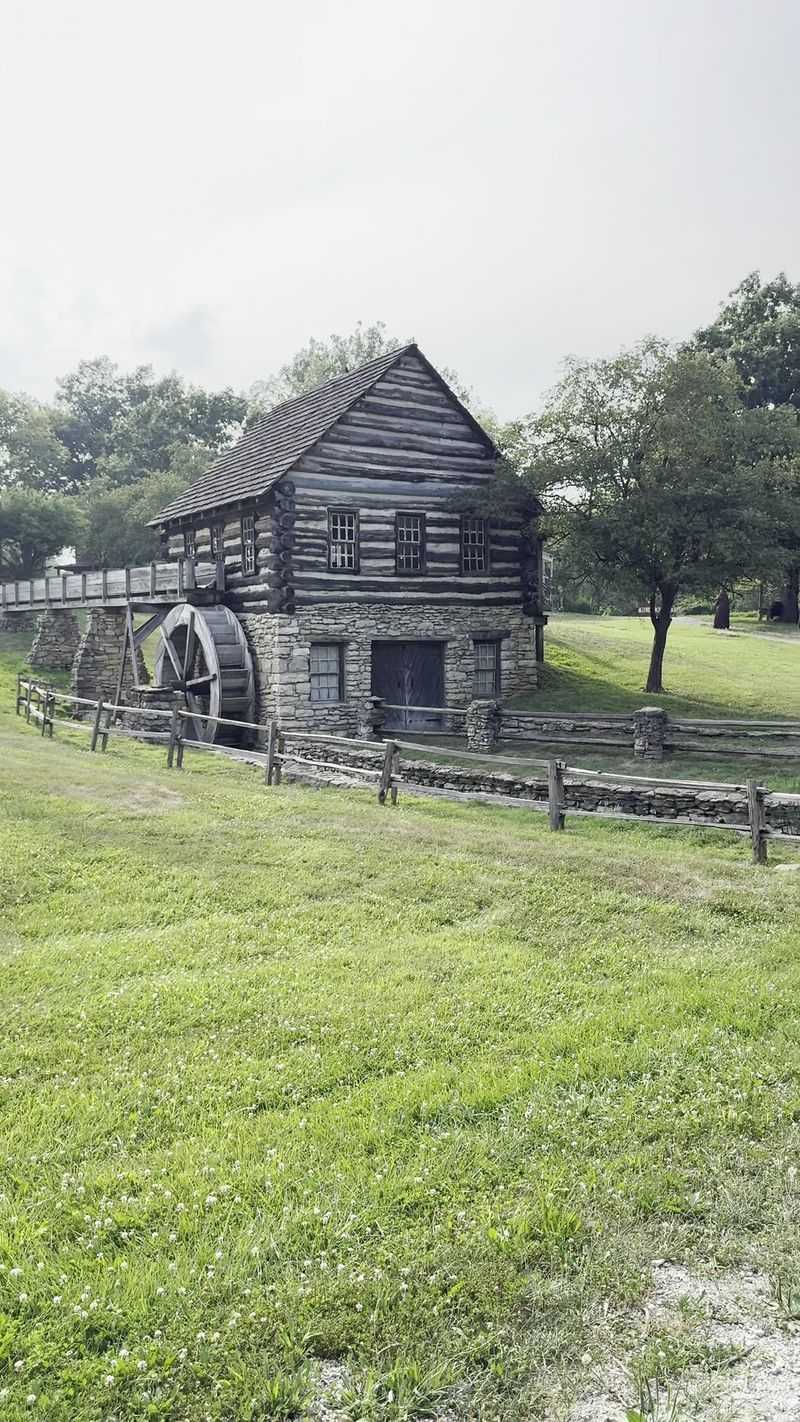
Some days you just want to walk somewhere without being talked at, and this place handles that beautifully. The grounds welcome visitors from dawn until sunset, so you can show up early with coffee or swing by in the golden hour before the light goes.
Brochures are available that walk you through each building, which means you get context without needing a guide standing next to you. Read as much or as little as you like.
Early morning is my recommendation if you want the village mostly to yourself, since the light is soft and the whole area feels genuinely still. Evening works too, with longer shadows stretching between the buildings.
Self-guided visits also mean you control the pace entirely, so you can double back to a building that caught your eye or skip past something that did not. Nobody is waiting on you.
Bring a friend who does not mind comfortable silences, because this is not the kind of place that demands constant chatter. The wandering itself is most of the point, and the buildings do the talking without needing much help from anyone else.
Eighty Acres Inside Hodge Park
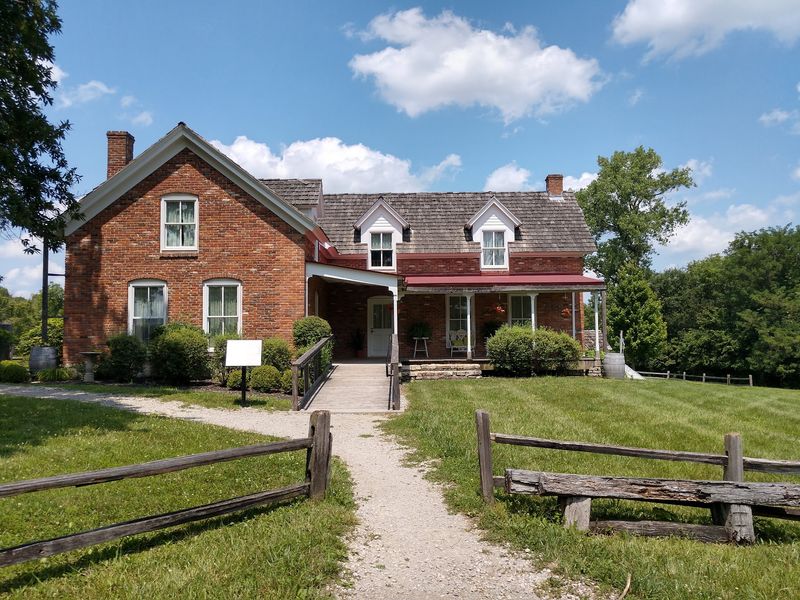
The village does not sit in a parking lot surrounded by strip malls, which honestly makes half the difference. It spreads across around eighty acres inside Hodge Park, so the surroundings are trees, open grass and rolling ground rather than city noise.
That setting lets you turn a short historical walk into a proper afternoon outdoors if you feel like extending the trip. Pack a snack and find a spot to sit for a while.
Seasons change the whole feel of the place too, with spring green and autumn color giving you completely different backdrops for the same buildings. Fall is particularly good if you are chasing photos.
Hodge Park itself gives you more room to roam beyond the village boundaries, which is handy if you brought kids who need to burn energy after all the careful looking. There is space to spread out.
I like that the natural setting matches the era being represented, since these buildings originally stood in open country rather than crowded neighborhoods. Seeing them surrounded by trees and grass feels closer to right than seeing them squeezed between modern structures ever would.
Bison Living Just Down The Way
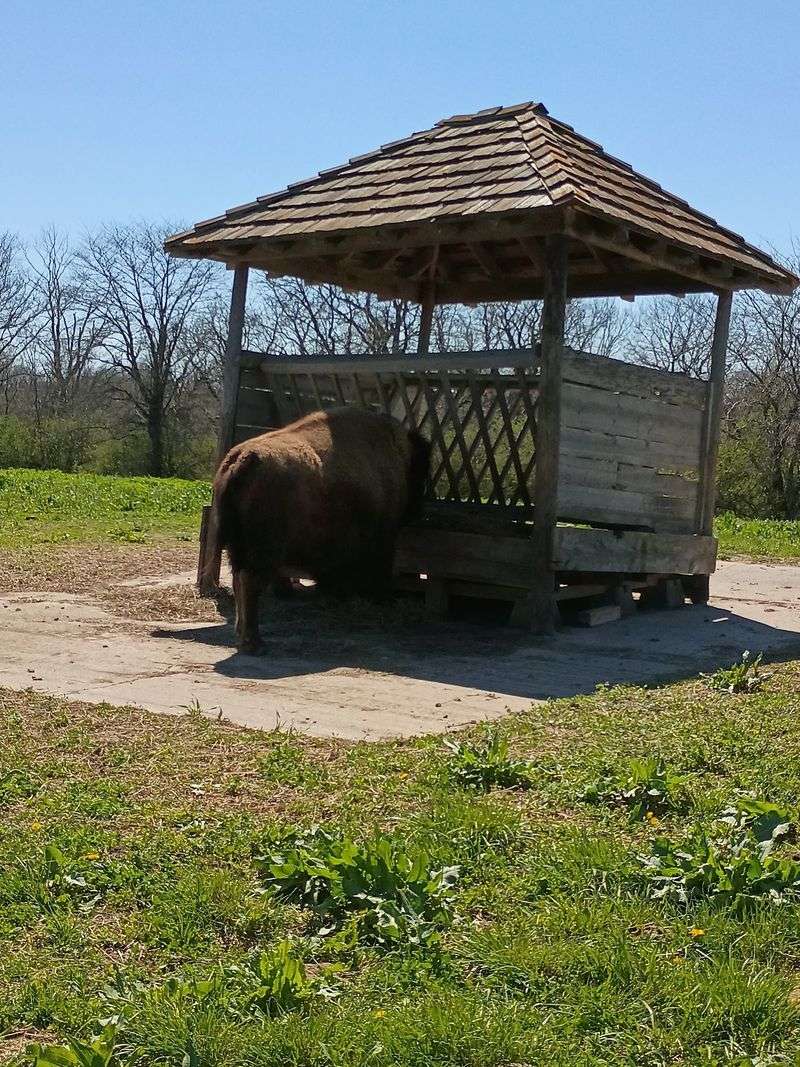
Okay, this next bit sounds made up but it is not. There are bison living in the same park area, which means your history walk can include spotting large shaggy animals grazing behind fencing not far from where you parked.
Seeing bison inside a city park is not something most people expect from a trip to Kansas City. It is the kind of detail that makes a visit stick in your memory long after you leave.
Kids in particular tend to lose their minds a little over this part, so if you have any along, save the animals for after the village walk as a reward. Works every time.
The pairing actually makes historical sense, since bison once roamed across this region in enormous numbers before settlement changed everything. Seeing them near a nineteenth-century village creates a connection that feels intentional.
Bring something to look through if you have it, because the animals may be grazing farther back in the pasture depending on the day. Even from a distance, watching them move around gives you a sense of scale that photographs never quite capture properly.
