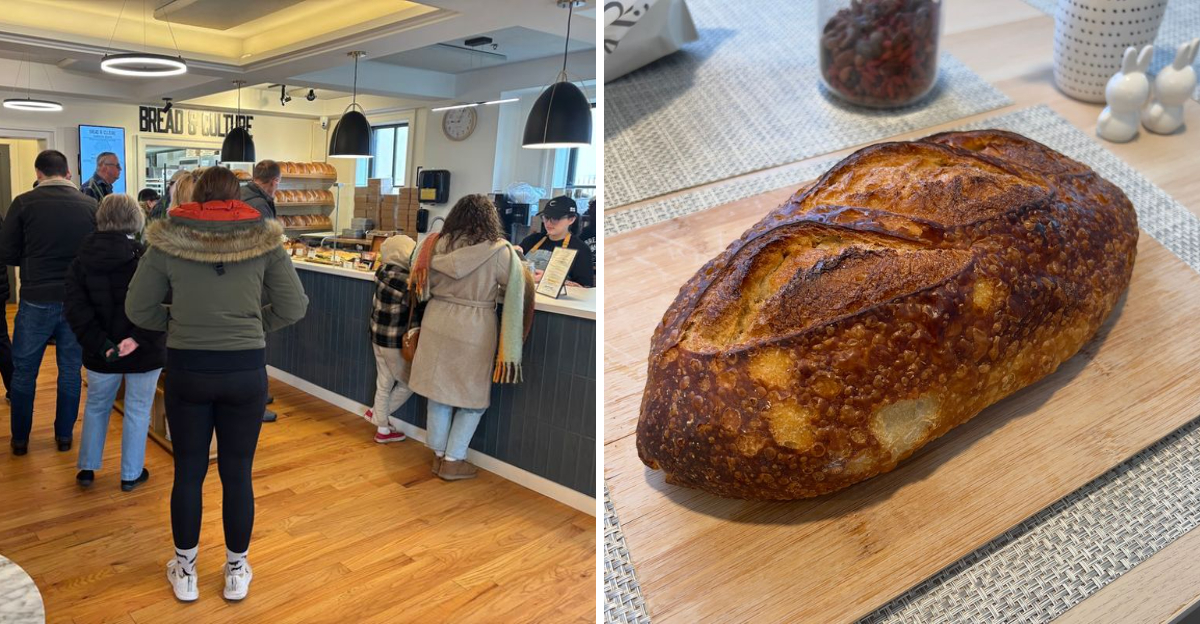
You had me at slow-fermented sourdough. That is how you know this bakery means business.
People line up before the doors even open, and honestly? They know what they are doing.
This New Jersey spot takes three full days to make each loaf, building deep, tangy flavor and that perfect chewy crust.
They use local whole grains and organic stone-milled flours, and it shows.
The olive and herb sourdough is a standout. The sourdough croissants sell out in hours.
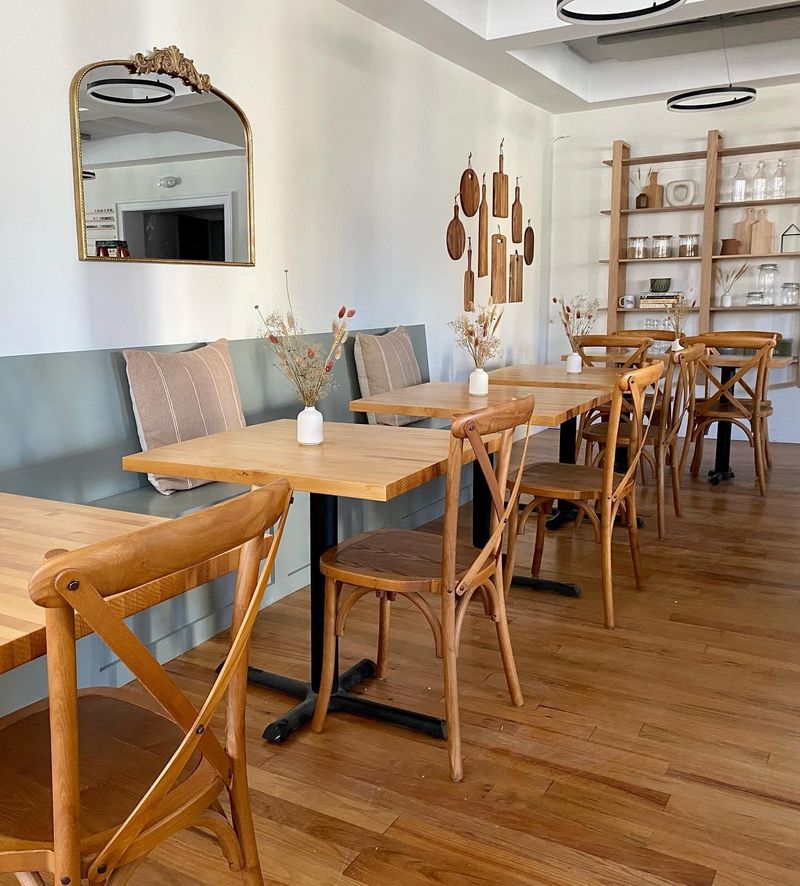
It is a family-run spot with a warm, inviting space and even a porch for seating.
You will walk in for a loaf and leave with pastries, coffee, and a new obsession.
Go early. They do not last.
Trust me, you will knead to go back.
A Small-Batch Bakery That Refuses To Rush
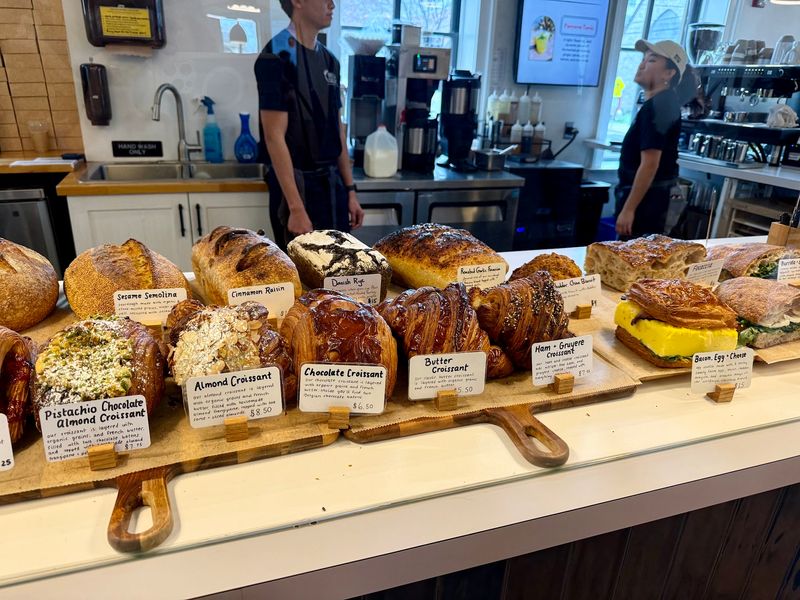
Everything here runs on patience, and you can taste it. Bread & Culture works in small batches, which means the shelves hold what the team could realistically make well, not what a machine could churn out overnight.
Naturally leavened bread sits at the center of the whole operation. No commercial yeast shortcuts, no rushing the clock to fill a display case by sunrise.
The loaves have that slightly uneven, hand-shaped look I always trust more than perfect symmetry. Crusts are dark in places, blistered in others, and the crumb underneath shifts depending on which loaf you grab.
What struck me most is how the pastries follow the same logic. Sourdough croissants, focaccia, muffins, and cookies all come from the same careful mindset rather than sitting off to the side as afterthoughts.
It is a bakery that treats baking like a craft with rules worth respecting. Come expecting bread with real character, and possibly a shorter list of options than you hoped for, because small batches do run out.
Thirty-Six Hours Of Fermentation, Start To Finish
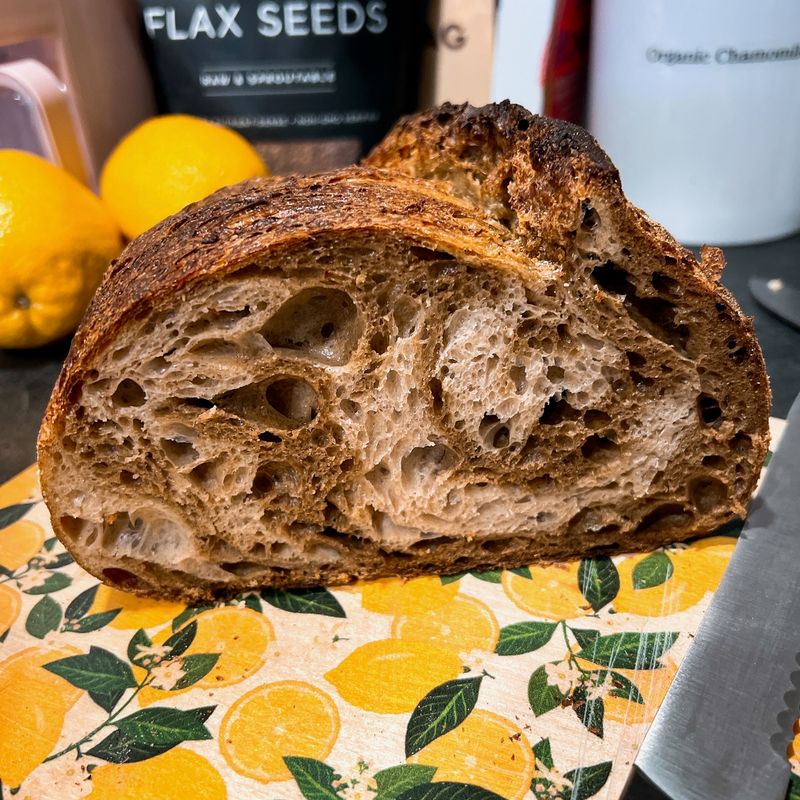
Here is the number that explains almost everything about this place: at least thirty-six hours. That is the fermentation time behind a single loaf of their sourdough, from the first stir of the starter to the moment it leaves the oven.
It begins with a levain, the fermented starter that gets twelve hours to wake up and build flavor. Only after that does the dough get mixed and shaped by hand.
Then comes the cold proof, a slow chill lasting a minimum of fifteen hours. That long, cool rest is where the sour notes deepen and the open, chewy crumb quietly forms.
Slow fermentation is also part of why so many people say this bread sits easier with them. The extended process is often linked to better digestion and nutrient absorption, though everyone’s body has its own opinion.
Knowing the timeline changed how I ate my slice. Bread that takes a day and a half to make deserves more than being eaten standing over the sink.
Ingredients Worth Bragging About
Good bread starts long before the mixer, and this bakery clearly believes that. Organic, stone-milled flours form the base, with local whole grains showing up throughout the recipes.
Milk, eggs, vegetables, and seasonal fruit come from nearby suppliers whenever the season allows. That sourcing shows up as flavor rather than as a marketing line taped to the register.
Butter gets special attention too, with some varieties imported from France for the laminated pastries. You notice it in the croissant layers, which shatter instead of squish.
Reviewers also point out that the kitchen skips seed oils entirely, which matters to a lot of people these days. Fewer shortcuts, fewer fillers.
Seasonal produce means the pastry lineup shifts. Berry fillings in summer, heartier flavors when the weather turns, and specials that come and go without warning.
My honest advice? Ask what just came out of the oven and let the ingredients of the moment decide your order for you.
From Farmers Market Tables To A Main Street Home
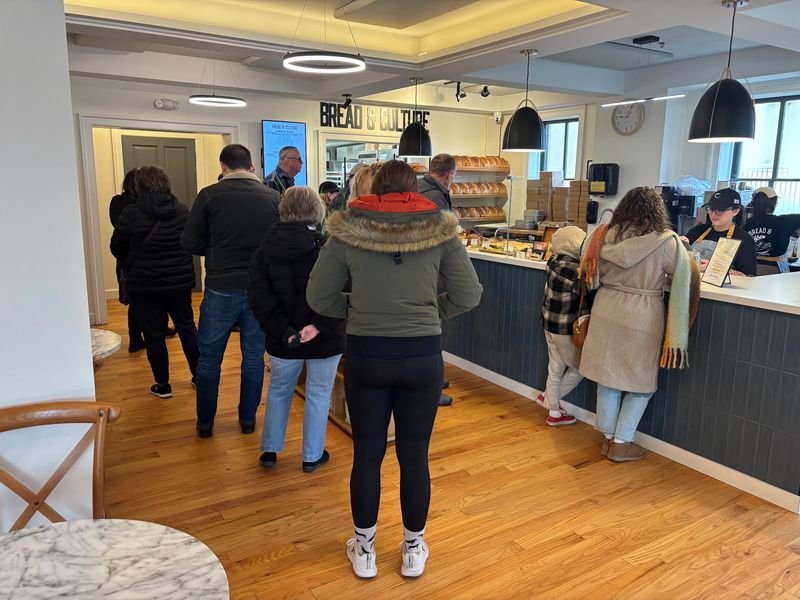
Long before the shop on Main Street, these loaves traveled. The bakery got its start in 2019 selling at farmers markets around New Jersey, stacking bread on folding tables under canopies.
Those early mornings built real relationships with growers and regulars. You can still feel that scrappy, community-minded energy inside the shop.
Some customers told stories of discovering the bread at the West Windsor market on Saturdays, then finally making the drive to Flemington to see the actual bakery. That progression seems common.
The market presence also explains the emphasis on local agriculture. When you spend seasons standing beside vegetable farmers, sourcing locally stops being a concept and becomes a habit.
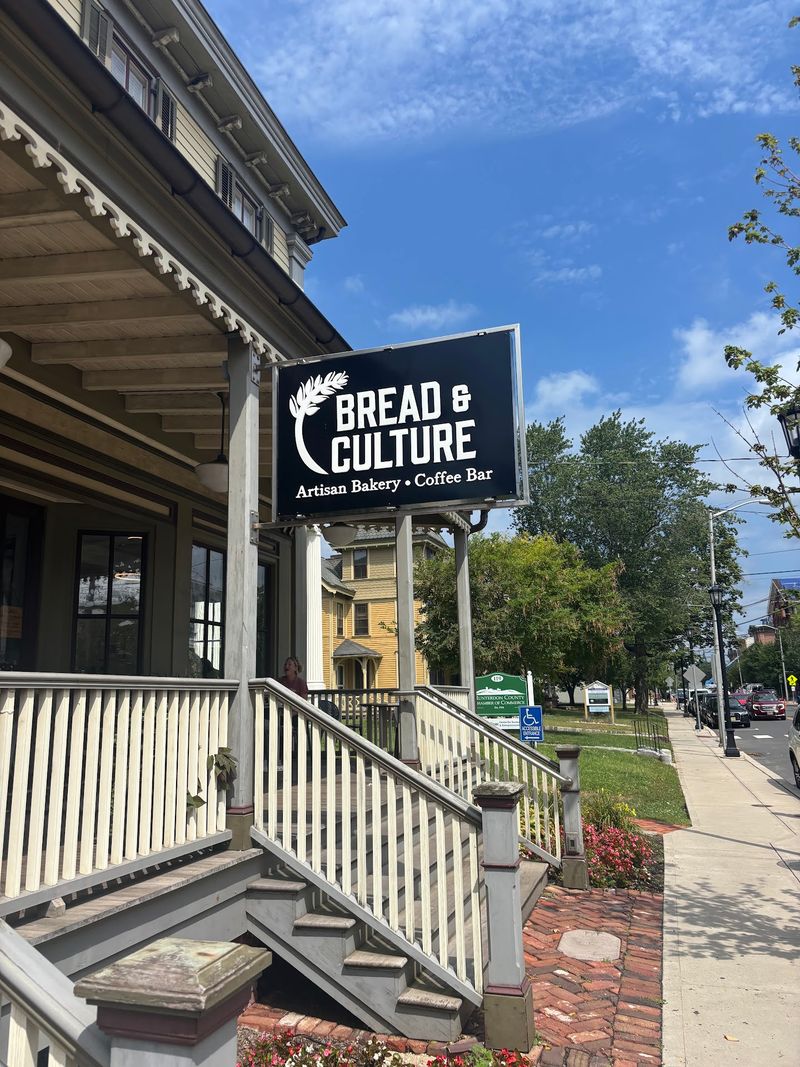
Flemington’s historic main street suits the whole thing nicely, with old buildings, a porch, and steps that fill with people on weekends.
It is the rare shop that feels rooted rather than dropped in. Bread first, community right alongside it, which is a pretty good order of operations.
Loaves With Names You’ll Want To Memorize
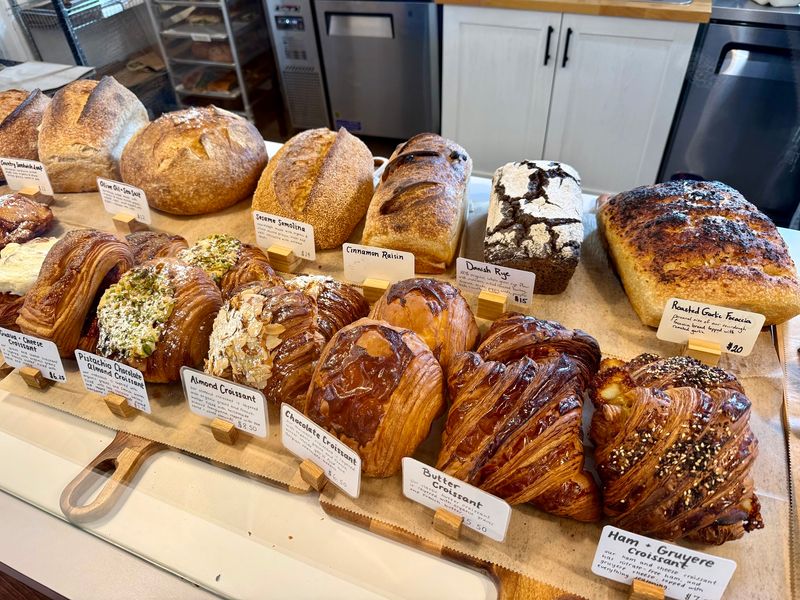
Choosing a loaf here takes longer than you’d expect. The sourdough lineup runs deep, and each one has its own personality.
There is the Country loaf and the Country Sandwich version, plus Olive & Herb for anyone who likes a savory slice. Teo’s Sandwich, Cranberry Walnut, Marbled Rye, the “Wonder” Sandwich, and B & C’s Danish Rye round out the list.
One reviewer mentioned buying an olive oil and herb sourdough to take home after eating on the porch, which sounds like exactly the right move.
The Danish Rye is a full hundred percent rye, dense and deeply flavored in a way that surprises people expecting something soft. Worth knowing before you order.
Cranberry Walnut leans sweet-tart and makes remarkable toast. Marbled Rye handles sandwiches like a champion.
My suggestion is simple: grab one loaf you recognize and one you don’t. That second choice is usually the one you end up talking about later.
Sourdough Croissants, Cruffins, And The Pastry Case Chaos
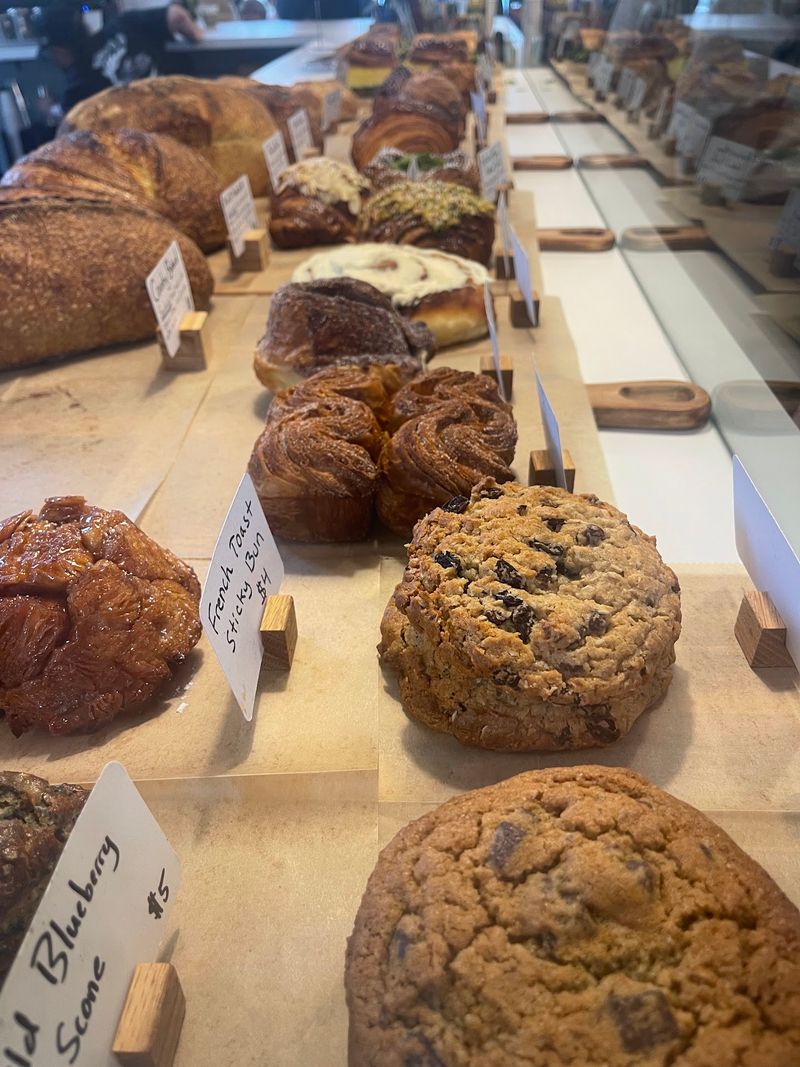
The pastry case is where restraint goes to die. Sourdough croissants are the headliner, noticeably large and shatteringly flaky, with layers that leave crumbs everywhere.
Sweet options include almond croissants that get sliced open and filled generously, guava and cheese, chocolate, and blueberry cruffins. Vanilla cream cruffins have earned genuine devotion from regulars.
Cinnamon rolls come up constantly in reviews, described as unlike anything people had tried elsewhere, with a light topping closer to cream cheese frosting than heavy glaze.
On the savory side there are ham and gruyere croissants, herby cheddar biscuits, and a souffled egg sandwich that seems to sell out fast. Focaccia gets its own fan club.
Coffee and tea are solid too, from cortados to golden milk lattes, so the pastry doesn’t have to travel alone.
A tip worth passing along: several visitors said taking pastries home and warming them briefly brought them back to full glory.
Yes, There Will Probably Be A Line
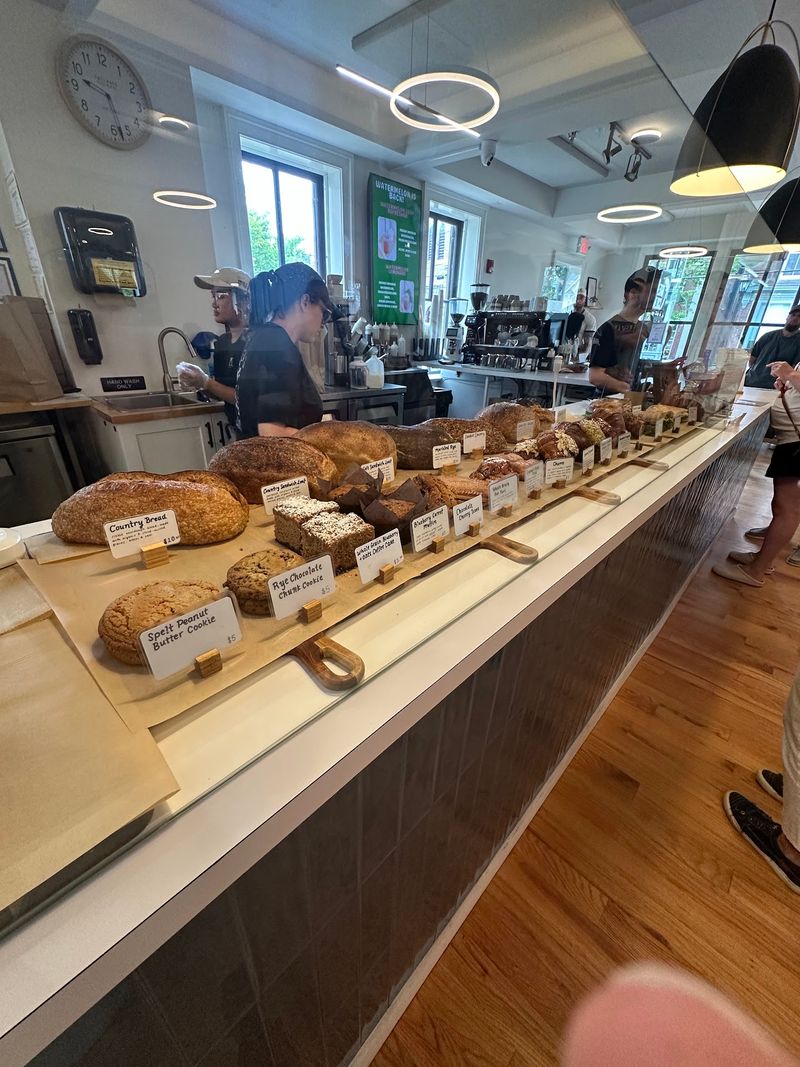
Weekend mornings bring a crowd, and that crowd spills out the door and down the steps. Nobody seems especially bothered by it.
The line moves at a reasonable pace, ebbing and flowing with the morning. Arriving shortly after opening still means waiting, particularly on Saturday and Sunday.
Popular items disappear. The souffled egg sandwich and certain croissants tend to vanish early, so flexibility helps more than a fixed plan.
For drinks only, there is a QR code system that lets you order coffee for pickup without joining the main queue. Handy shortcut.
People drive in from surrounding towns, some thirty minutes or more, specifically for a particular croissant. That tells you plenty.
Seating is limited, with a porch area that fills quickly, so treating it as grab and go is often the smarter play.
Getting there early is the single best piece of advice I can offer. The reward is a fuller case and a shorter wait.
Four Days A Week, And There’s A Reason
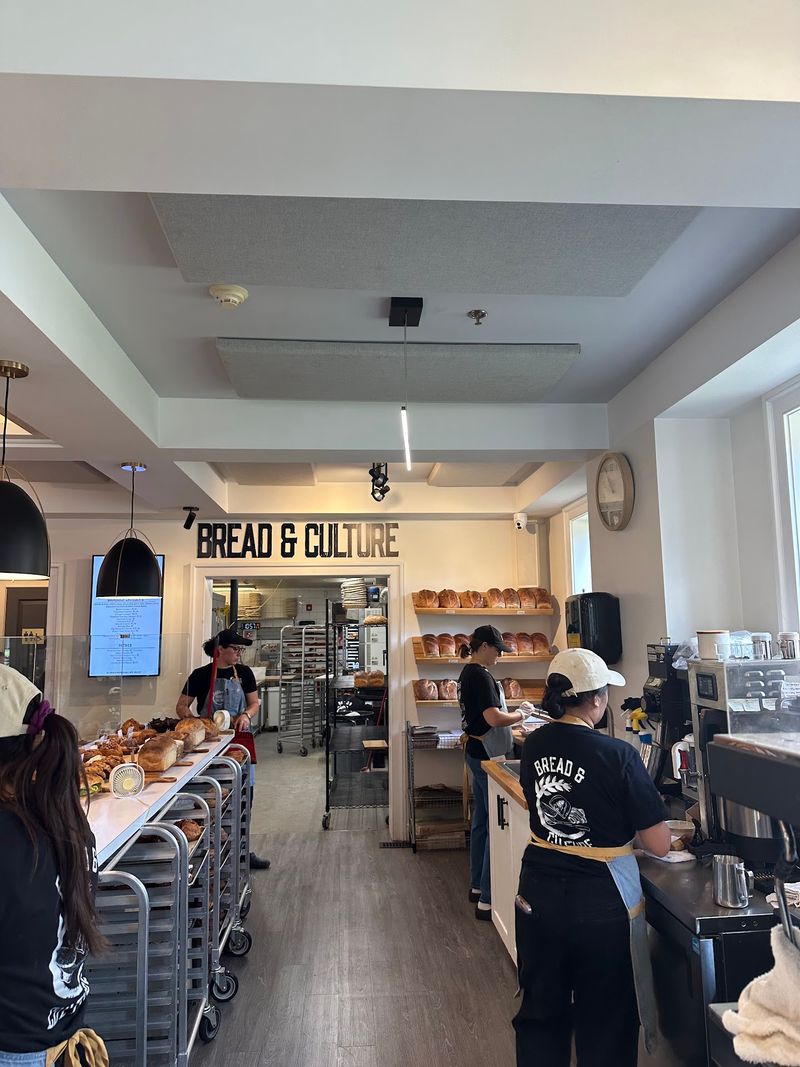
Plan your visit carefully, because the doors only open Thursday through Sunday, from 9:00 AM to 2:00 PM. Monday through Wednesday, the shop stays closed.
Those hours are not about convenience. They exist because sourdough bread and laminated croissants made entirely in-house take days of overlapping work.
A small production team handles mixing, shaping, cold proofing, and baking across multiple days. Something is always fermenting behind the scenes, even on closed days.
Once you understand the thirty-six hour timeline, the four-day schedule makes complete sense. You cannot fake that kind of process with longer hours.
The two o’clock closing also means afternoon visitors risk arriving to a picked-over case. Morning is the window that matters.
I’d suggest checking the day before you drive out, especially around holidays when small bakeries adjust things.
Limited hours, full effort. It is a trade most customers seem happy to make for bread this carefully built.
Keeping Your Loaf Alive At Home
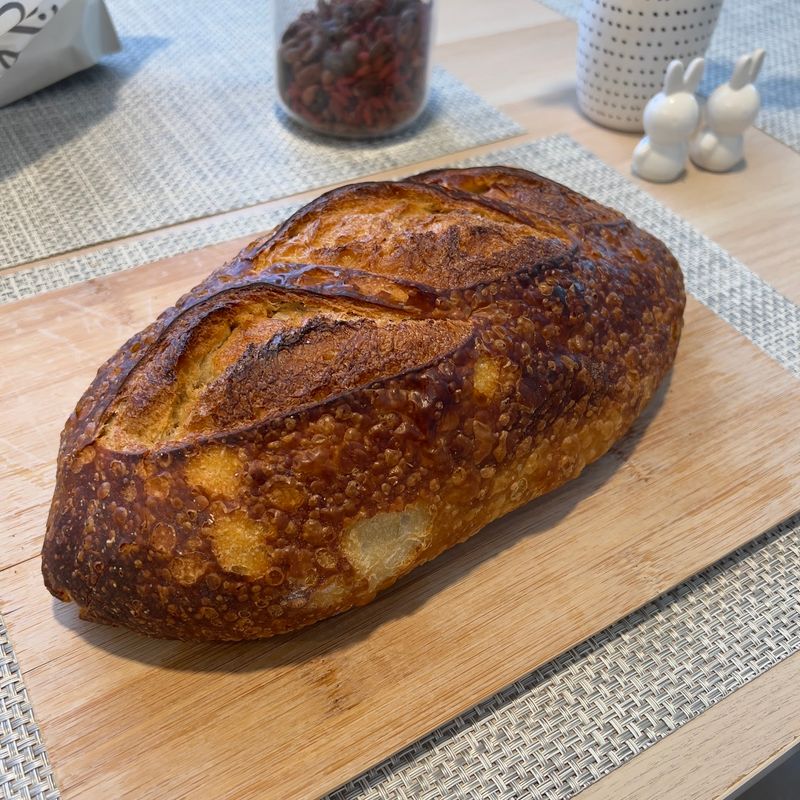
Carrying a beautiful loaf home is easy. Keeping it good for a few days takes a small bit of know-how.
The bakery recommends storing bread in a cotton bread bag or wrapped in a large towel, kept somewhere relatively cool. Plastic on the counter traps moisture and softens that hard-earned crust.
Handled that way, a loaf holds its freshness for roughly four to five days. That is a genuinely long run for bread with no preservatives.
For anything beyond that window, wrap the loaf in cling film and freeze it. Freezing works far better than letting it slowly go stale.
Slicing before freezing makes weekday toast much simpler, since you can pull off exactly what you need.
One more practical note: focaccia comes generously oiled, so bring a container if you’d rather not carry a greasy paper bag across town.
Small habits, big difference. Treat the bread well and it repays you all week long.
Reheating Tricks And A Few Honest Heads-Ups
Day-two bread does not have to be a compromise. The bakery’s own reheating method is refreshingly simple.
Spritz the outside of the loaf with water, then slide it into an oven preheated to 450 degrees Fahrenheit for about ten to twelve minutes. The steam revives the crust while the inside turns soft and warm again.
Pastries respond well to a quick warm-up too, which several regulars swear by after taking croissants home.
A couple of practical warnings before you go. This is not a nut-free kitchen, so anyone with nut allergies should ask questions and use caution.
There are also no gluten-free products available. The focus stays firmly on naturally leavened breads made with traditional flours.
Interestingly, some people who struggle with regular bread report tolerating long-fermented sourdough better, though that is personal and not a guarantee.
Come for the bread, stay for the coffee, and leave with a loaf you’ll ration carefully.
Address: Bread & Culture Artisan Bakery, 123 Main St, Flemington, New Jersey
