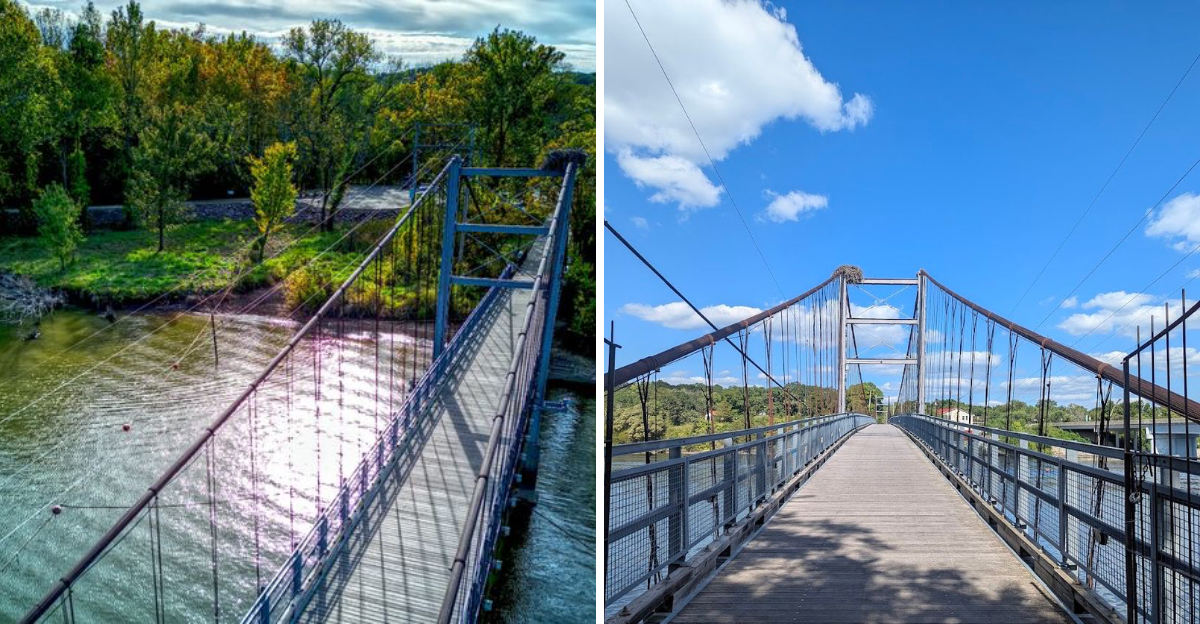
Five hundred feet of bridge that does not trust itself. That is what you get at this Missouri crossing where every step makes the whole structure bounce and sway like it is having a tiny earthquake.
The river churns way below, the wooden planks creak under your feet, and your heart rate climbs with every nervous giggle. Locals cross it for the thrill.
Visitors cross it for the photo. Everyone holds the railings like they are getting paid for it.
So if you are cruising through the Show Me State and see a long, skinny bridge that looks like it might have opinions, go ahead and take a walk. Just maybe leave your phone in your pocket and use both hands for the rails.
You will need them.
The Story Behind the Bridge
Long before Warsaw, Missouri became a destination for lake lovers and outdoor adventurers, this bridge had a job to do.
Built in the early 1930s, the Swinging Bridge of Warsaw served as a genuine transportation link across the Osage River.
Before Truman Lake was created by the construction of Harry S. Truman Dam, the bridge connected communities on both sides of the river.
Cars actually drove across it, one lane at a time, with a stoplight controlling traffic at each end.
Bumper-to-bumper vehicles would cause the bridge to sway and dip, giving drivers an experience they never forgot.
When the dam was completed and the lake filled in, the bridge lost its road-crossing role but gained a new one as a beloved historic landmark.
Missouri has no shortage of beautiful places, but few carry this kind of layered local history in such a walkable, accessible format.
The bridge was preserved rather than demolished, and that decision turned out to be a gift to every generation that has crossed it since.
Reading the historical marker at the entrance gives you real context before your first step.
What the Bridge Actually Feels Like to Walk
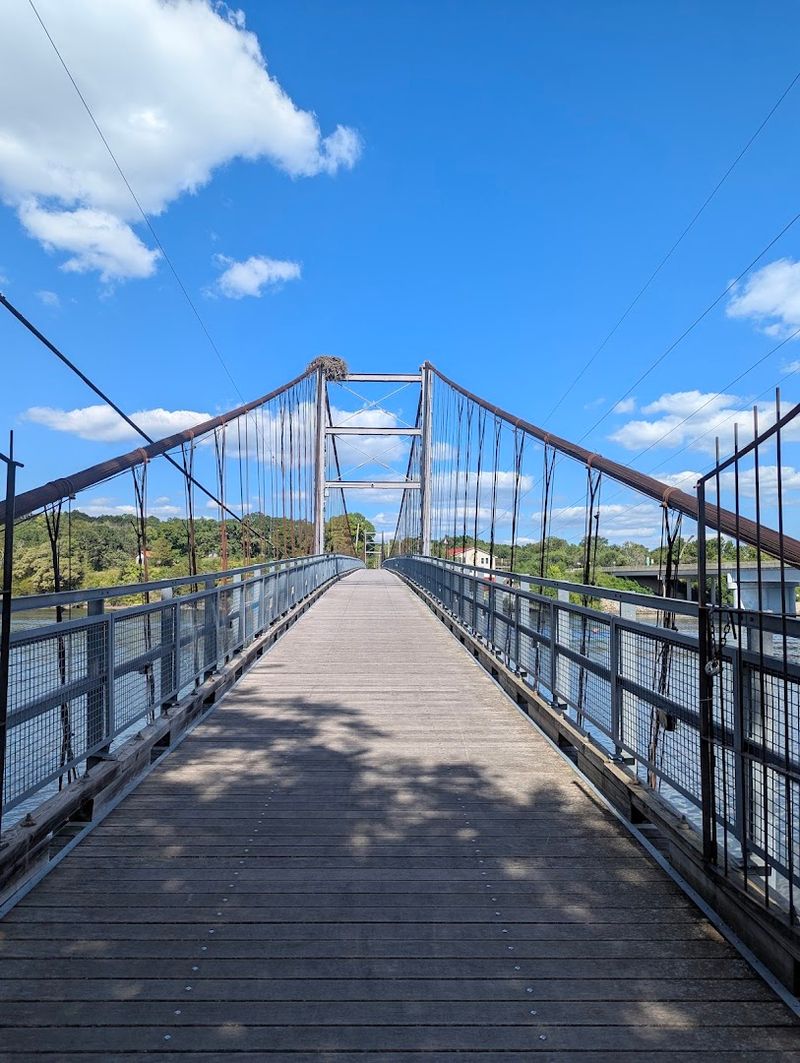
The name says it all, and yet it still manages to surprise you the moment you step onto the planks.
The Swinging Bridge does move, but it is more of a rhythmic sway than a wild swing, which honestly makes it even more interesting.
Each footstep sends a subtle ripple through the cable-supported structure, and if a breeze comes off the lake, you feel that too.
The bridge is wide enough for two people to pass each other comfortably, so there is no awkward sidestep shuffle mid-crossing.
Looking straight down through the gaps between planks at the water below adds an extra layer of excitement to every step.
The total span is over 500 feet, which means you have plenty of time to settle into the rhythm of the bridge and actually enjoy it.
Missouri weather plays a role too. On a calm morning, the crossing feels peaceful.
On a windy afternoon, the movement is more pronounced.
Either way, you arrive at the other side with a grin on your face and a story worth telling.
It is the kind of experience that sounds simple but sticks with you for a long time.
The Views From the Middle Are Stunning
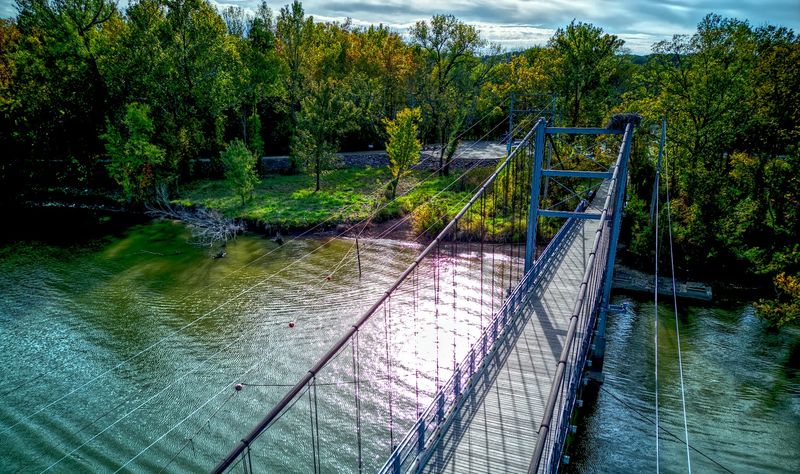
Halfway across the bridge, stop walking for a moment and just look around.
The view from the center of the Swinging Bridge is one of those quiet rewards that you did not fully expect when you parked the car.
Truman Lake stretches out in both directions, its surface shifting color depending on the time of day and the angle of the sun.
The tree-lined shores of Missouri frame the water beautifully, and in the right season, the foliage adds deep greens, golds, and reds to the scene.
On clear days, the sky reflects off the lake in a way that makes the whole setting feel almost surreal.
Early mornings are particularly magical, when mist hovers just above the water and the light is soft and golden.
Sunset crossings offer a completely different mood, with warm orange tones spreading across the lake surface.
Photographers will want to bring a real camera, not just a phone, because the wide-angle views beg for a proper shot.
This is one of those spots in Missouri where the scenery does all the work, and all you have to do is show up and look.
Wildlife You Might Spot Along the Way

One of the best surprises the Swinging Bridge has to offer is not the bridge itself, but what lives around it.
Bald eagles have built a nest right on one of the bridge piers, and during the right season, you can hear eaglets calling from below.
Spotting a bald eagle in the wild, especially this close to a structure you are standing on, is something that hits differently than any nature documentary.
Great blue herons glide low over the water with impressive wingspans, and ducks and geese are regulars in the shallows.
Vultures circle overhead in lazy loops, and if you are lucky, osprey will dive for fish right in front of you.
Missouri sits along important bird migration routes, and the Osage River corridor draws a wide variety of species throughout the year.
Pelicans have even been spotted here during migration season, which feels almost out of place until you see them and realize how spectacular it is.
Bringing a pair of binoculars makes the experience even richer, especially if you plan to linger on the bridge for more than a quick crossing.
The wildlife alone makes a return visit completely worth it.
The Padlock Tradition That Has Grown Organically
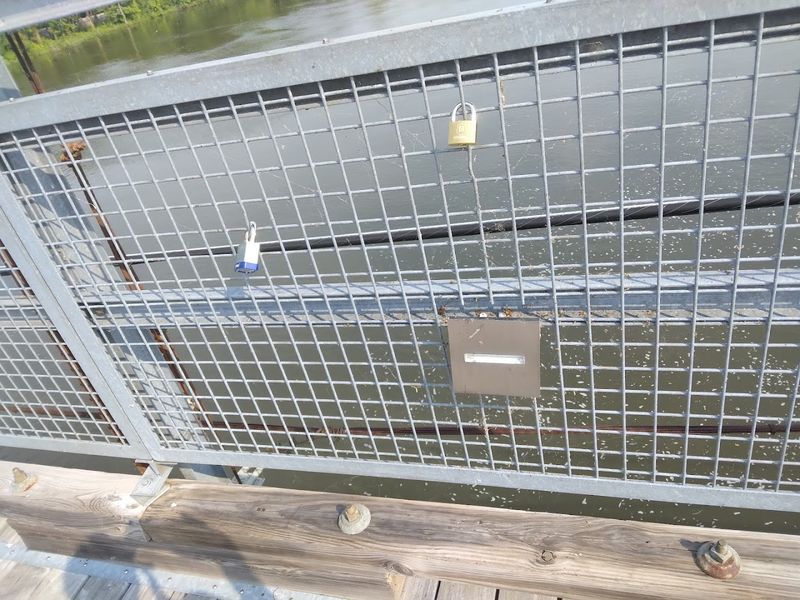
At some point, someone brought a padlock to the Swinging Bridge and attached it to the railing, and the idea caught on in the most charming way.
Now, the bridge railings in certain sections are lined with padlocks of all shapes, sizes, and colors, each one representing a moment, a couple, or a memory someone wanted to leave behind.
Some locks have names scratched into them. Others have dates or short messages.
The tradition is entirely visitor-driven and gives the bridge a personal, sentimental layer on top of its historical identity.
If you are visiting with someone special, bringing a lock along is a genuinely sweet way to mark the occasion.
It is a small gesture that becomes part of something larger, a growing collection of moments shared on this Missouri landmark.
The locks also make for great close-up photography, with the weathered metal and faded paint telling their own quiet stories.
Not every bridge gets to be both a piece of engineering history and a canvas for public sentiment at the same time.
This one pulls it off without feeling forced, because the tradition grew from real affection people have for this place.
Connecting Trails Make It More Than Just a Bridge
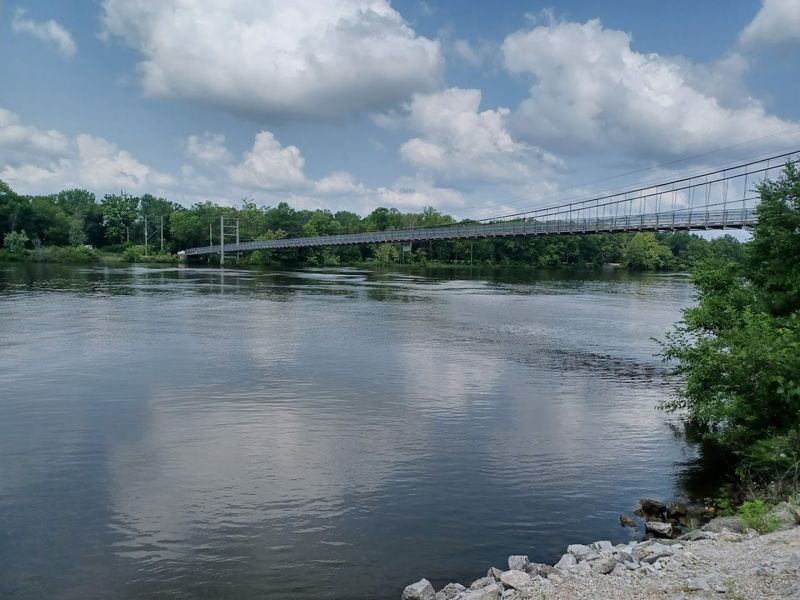
The bridge is just the beginning of what you can explore in this corner of Missouri.
Several trails connect at the bridge, turning a quick photo stop into a full outdoor adventure if you want it to be.
The trail system around the bridge is well-maintained and clean, winding through wooded areas along the lakeshore with peaceful, shaded stretches.
The paths are not enormous in scale, but they are well-kept and genuinely enjoyable for a casual walk or a light run.
Families with young children will find the terrain manageable, and the scenery keeps everyone engaged along the way.
The trails also offer additional wildlife viewing opportunities away from the bridge itself, so you get more chances to spot herons, songbirds, and other local species.
Cyclists show up here too, and nearby bike rentals make it easy to cover more ground without overcommitting to a long hike.
Picnic tables are available in the area, so packing a lunch and spending a full half-day exploring is a genuinely satisfying plan.
Missouri has plenty of grand state parks, but sometimes the smaller, connected spots like this one offer a more personal and unhurried kind of outdoor experience.
Best Times to Visit for the Full Experience
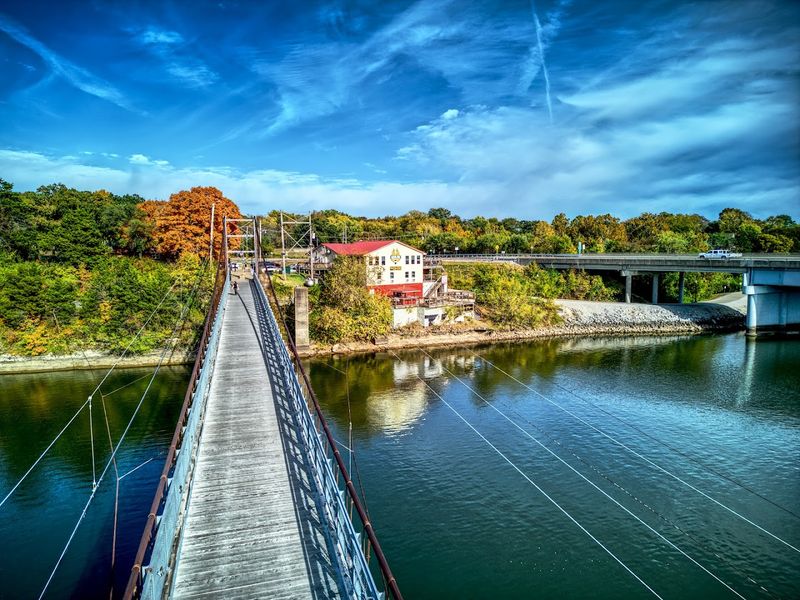
The Swinging Bridge is open 24 hours a day, every day of the week, which means you have real flexibility in choosing your moment.
Early mornings are hard to beat, especially in spring and fall when the air is cool and the light is soft over the water.
Mist sometimes sits low over Truman Lake at dawn, and crossing the bridge in those conditions feels genuinely cinematic.
Fall is arguably the best season to visit, when the surrounding Missouri forest shifts into its full range of warm colors and the bridge becomes part of a stunning landscape painting.
Spring brings migrating birds in large numbers, including those unexpected pelican flocks that show up along the Osage River corridor.
Summer mornings work well before the heat builds, and the lake activity below adds energy and movement to the scene.
Winter visits are quieter and more solitary, with bare trees offering clear sightlines and a stark beauty that is completely different from the other seasons.
Avoiding midday on busy weekends gives you more peace and better light for photography.
No matter when you arrive, the bridge delivers something worth experiencing, which is a rare quality for a free, roadside landmark.
How to Get There and What to Expect on Arrival
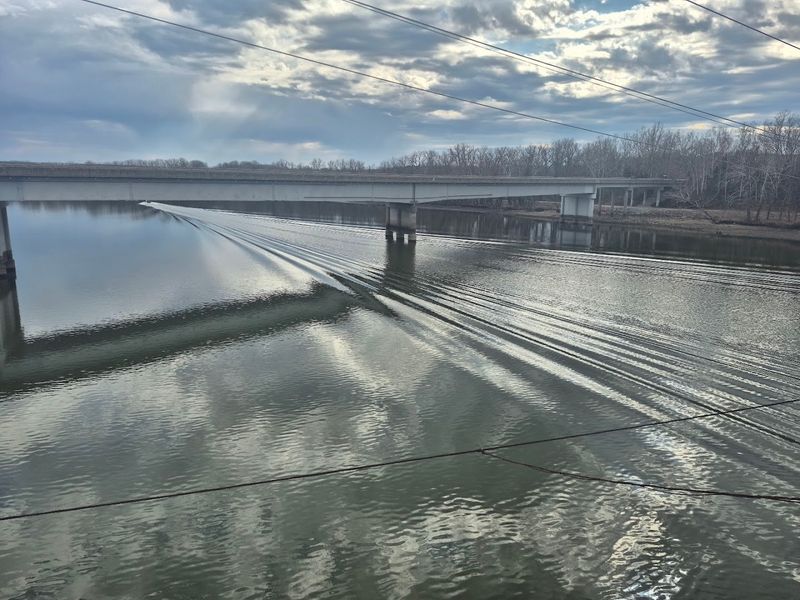
Finding the Swinging Bridge is straightforward once you know what to look for along Old Highway 7 in Warsaw, Missouri.
The address is Old Hwy 7, Warsaw, MO 65355, and plugging it into a navigation app will get you to the parking area without any confusion.
The parking area is modest but functional, with enough space for several vehicles and easy access to the bridge entrance.
A historical marker stands near the entrance, giving you background on the bridge before you set foot on the planks.
There are no entry fees, no tickets, and no reservations required, which makes it one of the most genuinely accessible landmarks in Missouri.
The site is clean and well-maintained, and the approach to the bridge feels welcoming rather than neglected.
A nearby restaurant sits at one end of the bridge, so combining a meal with a bridge walk makes for a natural and easy outing.
The restaurant hours vary, so checking ahead is smart if you are planning to eat before or after your crossing.
The whole setup feels unhurried and laid-back, the kind of place where you can stay for twenty minutes or two hours and both feel equally right.
The Engineering Behind a Century-Old Suspension Bridge
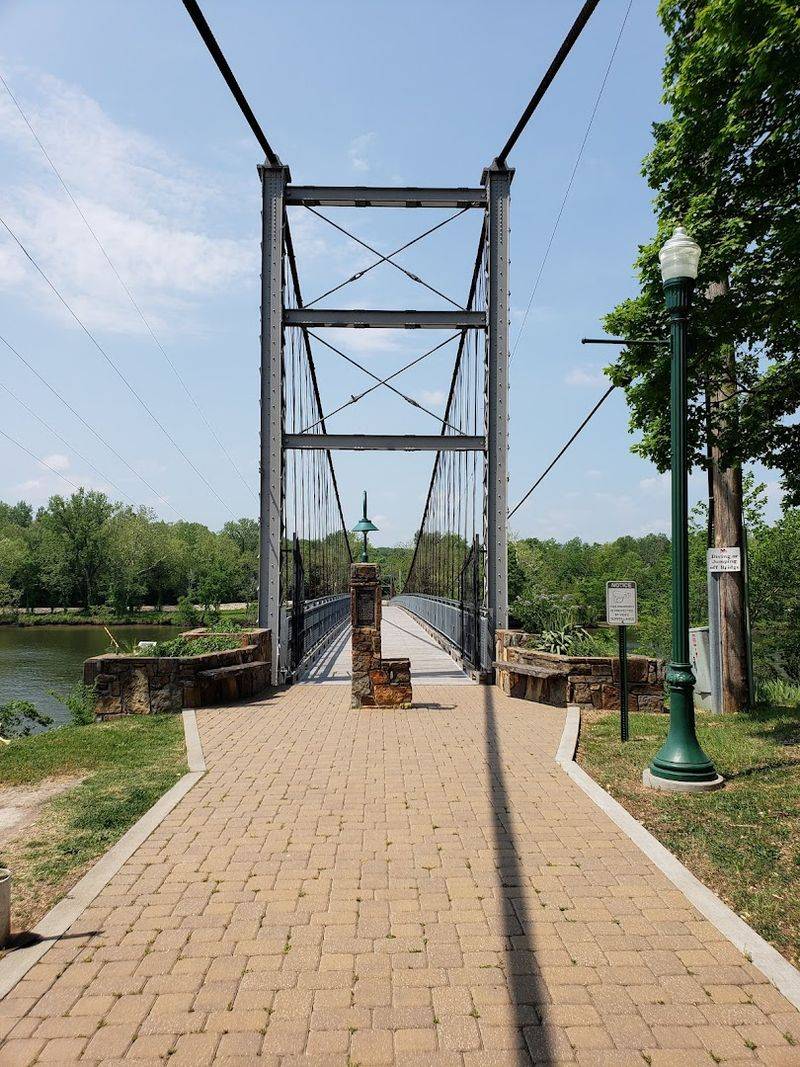
There is something quietly impressive about a bridge that has been standing for nearly a century and still holds up under daily foot traffic.
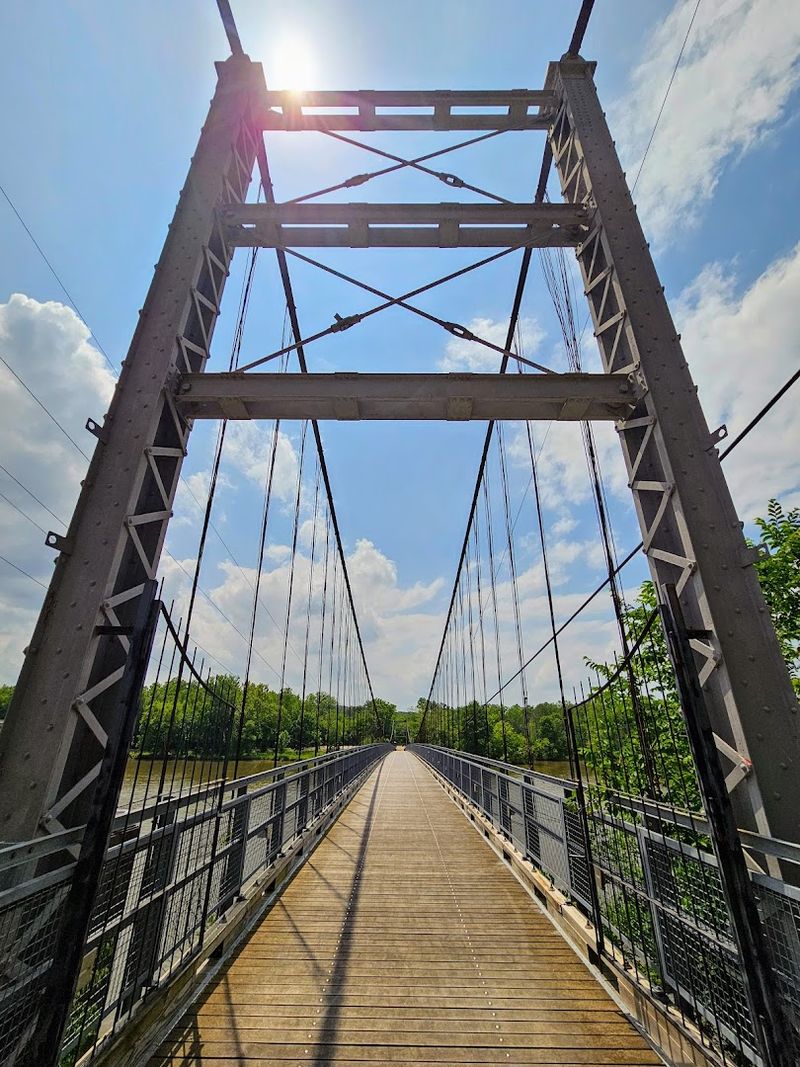
The Swinging Bridge uses a classic suspension design, with steel cables supporting a wooden plank deck that flexes naturally under load.
That flex is not a flaw in the design. It is actually a feature, allowing the bridge to absorb movement from wind and foot traffic without putting damaging stress on the structure.
When the bridge was first built in the early 1930s, this kind of engineering was practical and cost-effective for rural Missouri crossings over wide waterways.
The span of over 500 feet required careful cable tensioning to keep the deck level enough for vehicles to cross safely.
After the bridge was converted to pedestrian use only, maintenance focused on preserving the structural cables and replacing deck planks as needed.
Walking across it now, you can feel the engineering doing its job in real time, the subtle give beneath your feet is the bridge working exactly as designed.
Missouri has preserved this piece of infrastructure not just as a curiosity, but as a working example of early 20th century bridge construction that still functions beautifully today.
Photography Tips for Capturing the Bridge at Its Best
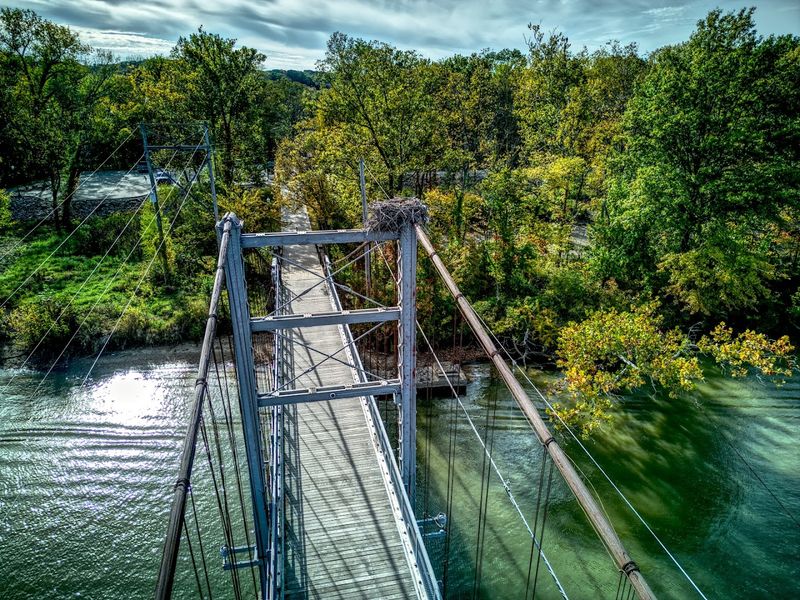
The Swinging Bridge is genuinely photogenic, but getting the best shots requires a little thought about timing and positioning.
The classic angle is from the bridge entrance looking straight down the span, with the cables converging toward the far shore and the lake visible on both sides.
This perspective works best in the early morning or late afternoon when the light is warm and directional rather than flat and harsh.
A wide-angle lens captures the full drama of the crossing and the surrounding Missouri landscape in a single frame.
For close-up shots, the padlocks on the railings offer colorful, textured detail that tells a human story within the larger scene.
Looking straight down through the plank gaps with a camera creates a vertigo-inducing shot that communicates the height and movement of the bridge perfectly.
Wildlife photography from the bridge is also rewarding, especially if you are patient and quiet near the eagle nest on the bridge pier.
Bringing a small tripod allows for long-exposure shots of the water at dawn or dusk, turning the lake surface into a smooth, glassy plane beneath the bridge.
The bridge rewards photographers who slow down and explore multiple angles rather than grabbing one quick shot and moving on.
Why This Bridge Deserves a Spot on Your Missouri Road Trip
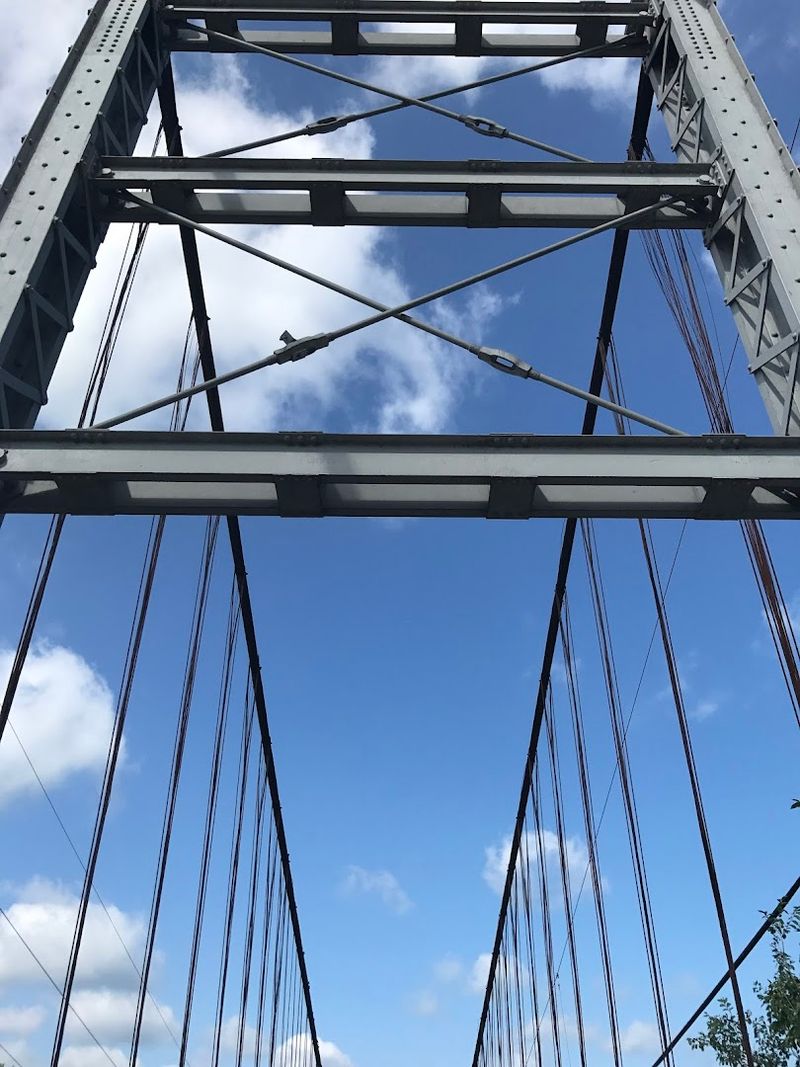
Missouri road trips tend to follow predictable routes, but the Swinging Bridge of Warsaw is the kind of detour that makes the whole journey more interesting.
It costs nothing to visit, takes about 30 to 45 minutes if you walk the bridge and explore the nearby trails, and delivers a surprisingly rich combination of history, scenery, and physical experience.
The bridge sits right off Old Highway 7, making it an easy add-on when passing through the central Missouri lake region.
Warsaw itself is a small, welcoming town with the kind of unhurried pace that feels like a genuine break from highway driving.
Combining the bridge walk with a meal at the nearby restaurant and a stroll through the trail system gives you a satisfying half-day stop without any complicated planning.
The 24-hour access means it fits into almost any travel schedule, whether you are an early riser chasing the morning mist or a late-afternoon traveler looking for one more stop before sunset.
Missouri has a habit of hiding its best experiences along the back roads, and this bridge is a perfect example of that.
Once you cross it, you will understand why people keep coming back.
