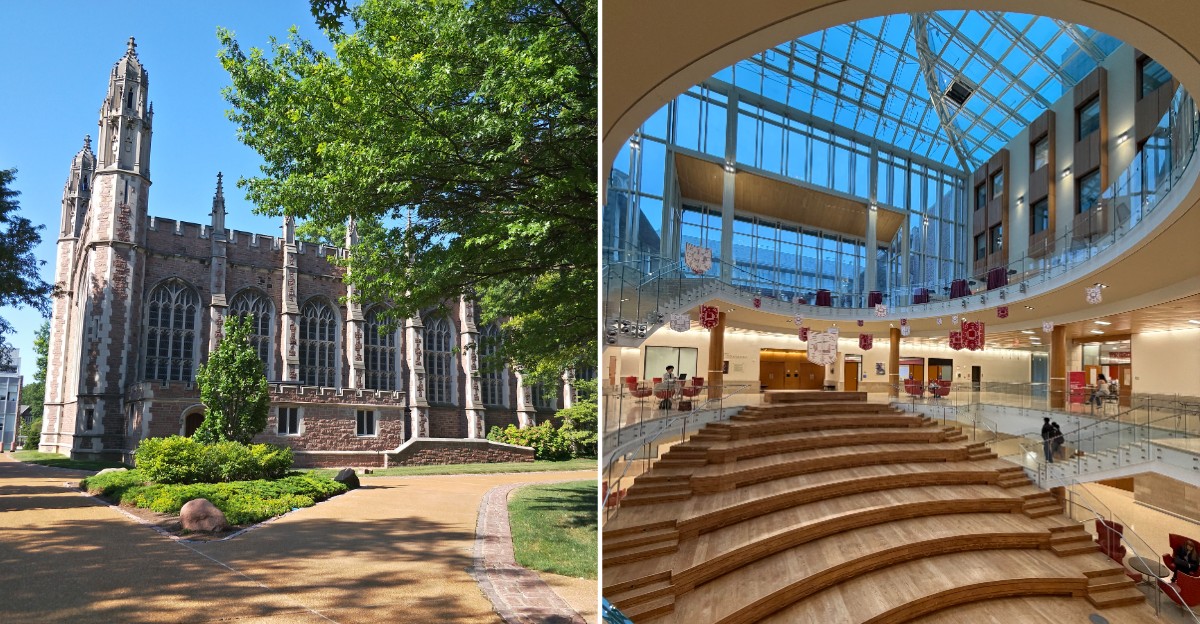
A national ranking can put a university on the radar for students far beyond its home state. This Missouri university has earned a spot among the country’s top twenty, adding another achievement to its long list of academic credentials.
The recognition reflects its strong reputation and the quality of the education it provides across a wide range of fields. It is also part of a campus known for research, innovation, and a lively academic community.
For prospective students, rankings can offer one useful way to compare schools when weighing their options. For everyone else, they are a chance to see which institutions are making an impression nationally.
This Missouri university’s latest recognition gives it another reason to stand out, especially for students looking for a highly regarded school with a strong national profile.
The Ranking News That Started All This
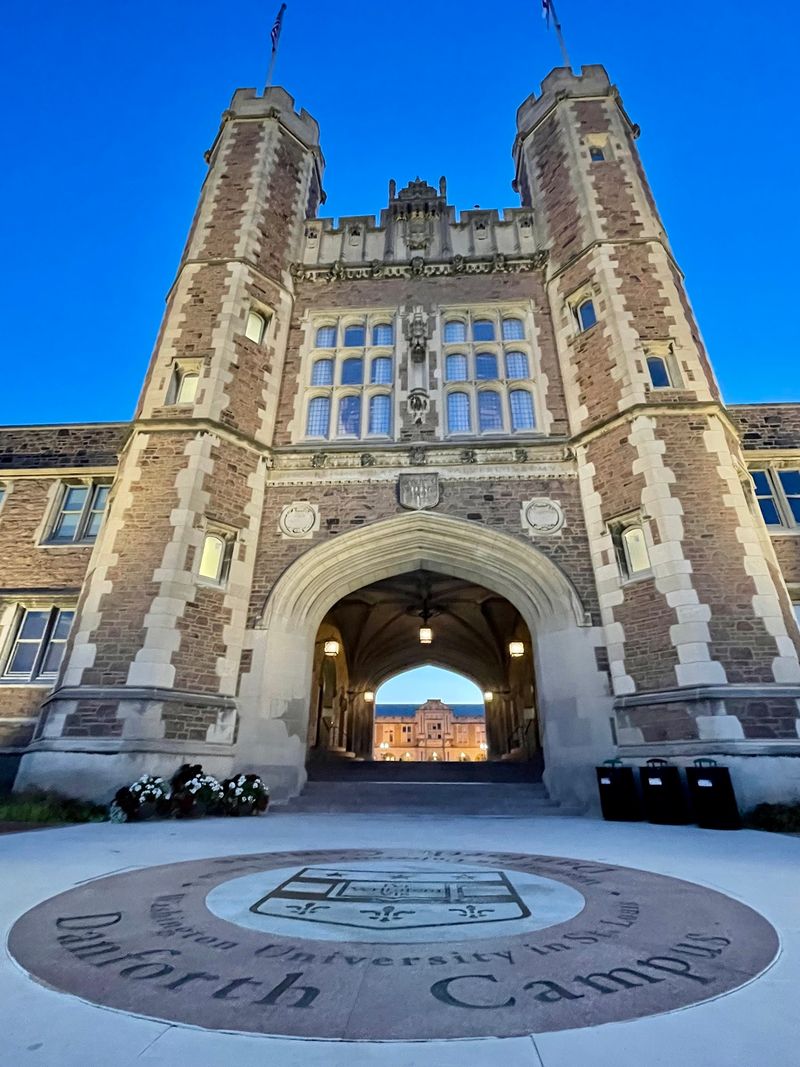
Here is the headline that got everyone in Missouri talking. College Factual recently named WashU the number twenty-four best college in the entire country, which puts it in the top one percent of schools nationally, and it also came out as the number one university in the whole state.
Other ranking outfits tend to place it right around that top twenty line too, so this is not a one-off fluke from a single list. When several different groups keep landing in the same neighborhood, you can usually trust the pattern.
What I find interesting is how that reputation shows up in real life, not just on paper. The buildings are well kept, the lawns are genuinely beautiful, and the whole place feels like somewhere that takes itself seriously without being stuffy about it.
If you have a kid who is starting to think about college, this is worth a look purely because it changes what they picture when they imagine a university. Standing in the middle of a campus like this does something that a website cannot quite match.
And if you are just passing through town, the ranking gives you a decent excuse to go see what all the fuss is about, right?
Brookings Hall And The Danforth Campus
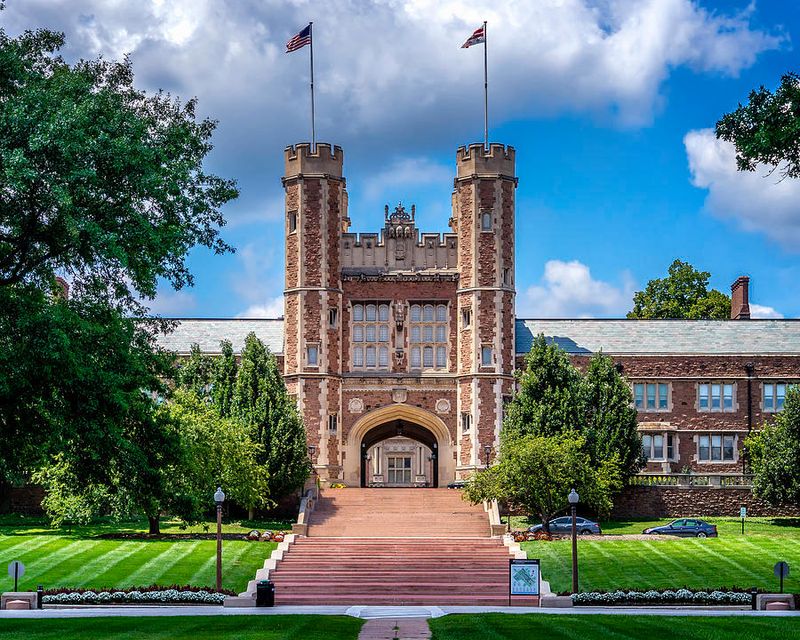
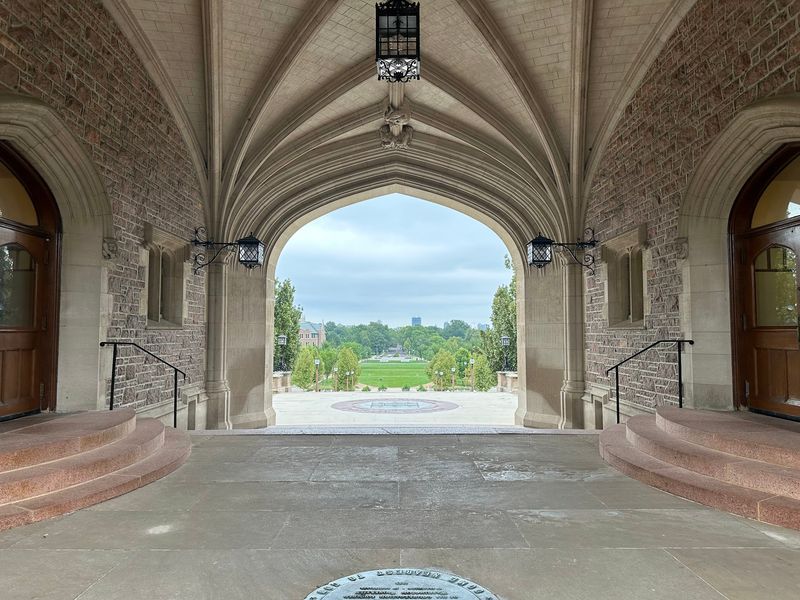
You will know Brookings Hall the second you see it, because it is the building that ends up on every postcard and every admissions brochure. The address is 1 Brookings Dr, St. Louis, MO 63130, and that archway is the traditional front door to the whole Danforth Campus.
The style is called Collegiate Gothic, which basically means red granite walls, pointed arches, and towers that look like they belong to a much older institution somewhere across the ocean. Walking underneath that arch is one of those small moments that makes a campus visit feel worthwhile.
Behind it you get a wide open quad where people sit, study, and throw things around on nice days. It is one of the few spots where you can stand still and take in the scale of the place all at once.
The East End of campus went through a major renovation not long ago, and old parking lots were turned into a proper stretch of green space. That change opened up the views and made the whole east side feel far more inviting than a parking lot ever could.
Bring a camera, because the light on that granite in the late afternoon is really something.
Mildred Lane Kemper Art Museum
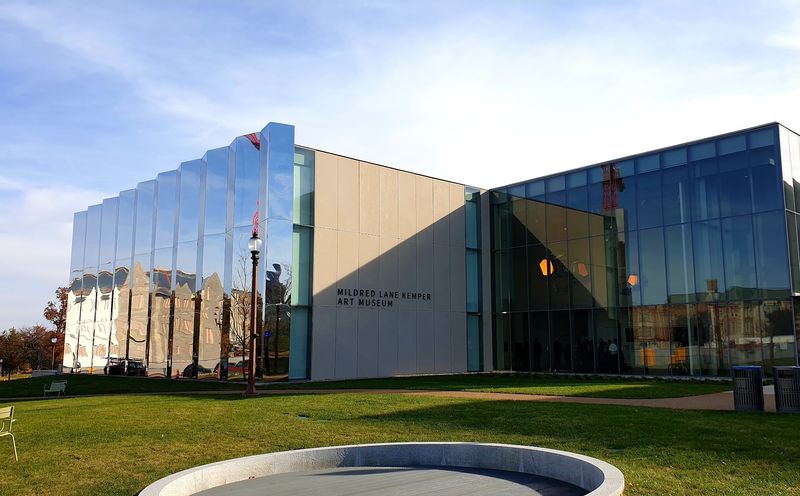
Did you know the oldest art museum west of the Mississippi River sits right on this campus? The Mildred Lane Kemper Art Museum holds that title, which is a pretty great piece of Missouri history to have tucked into a university.
The collection leans heavily into European and American art from the nineteenth, twentieth, and twenty-first centuries, and they have been steadily adding more international work as well. You get a mix of names you recognize and pieces you have probably never seen printed anywhere.
Best part is that admission is free and it is open to the public, so there is no planning or ticket buying involved. You can honestly just walk in, spend half an hour, and walk back out feeling like you did something with your day.
The building itself is worth noticing too, with clean lines and bright gallery rooms that contrast nicely against all that Gothic stone outside. Moving from one to the other in a few steps is part of the fun.
If you only have time for one indoor stop on campus, I would point you here without much hesitation. It is the easiest introduction to what this school is about.
Smaller Galleries Scattered Around Campus
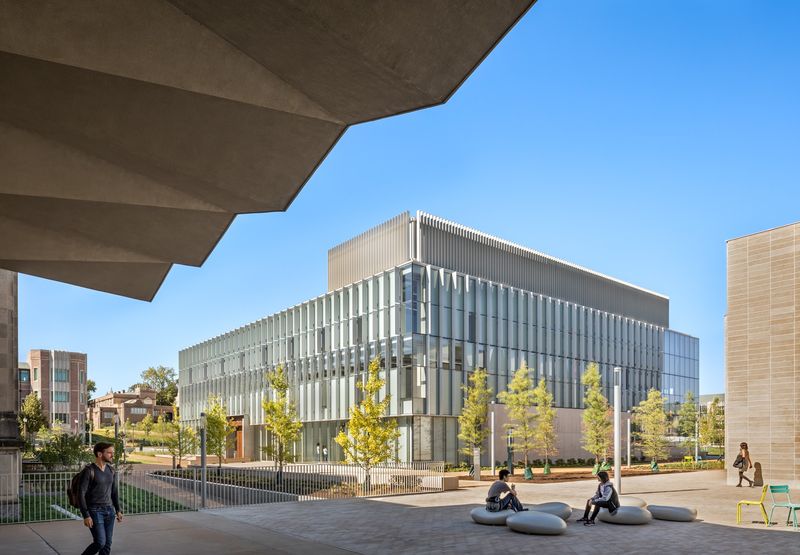
Art here does not stop at the main museum, which I think is the nicer surprise. There are several smaller galleries spread around campus, including the Des Lee Gallery, the Steinberg Gallery, and the Weitman Gallery, each with its own personality.
The Steinberg Hall gallery is a flexible space that frequently hosts student exhibitions, so what you see depends entirely on when you wander in. That unpredictability is part of the appeal, because you might catch work from someone whose name gets big later on.
Design and architecture shows up a lot in these spaces too, which makes sense given how strong those programs are at the school. You will see models, drawings, and projects that feel more like experiments than finished pieces.
Since these are smaller rooms, visits are quick and low pressure, and you can pop into two or three in the span of a walk. It turns a simple campus stroll into something with a few stops built in.
My advice would be to check what is currently on view before you go, since exhibitions rotate and hours can vary between buildings. A little planning saves you from standing at a locked door.
A Serious Research Powerhouse
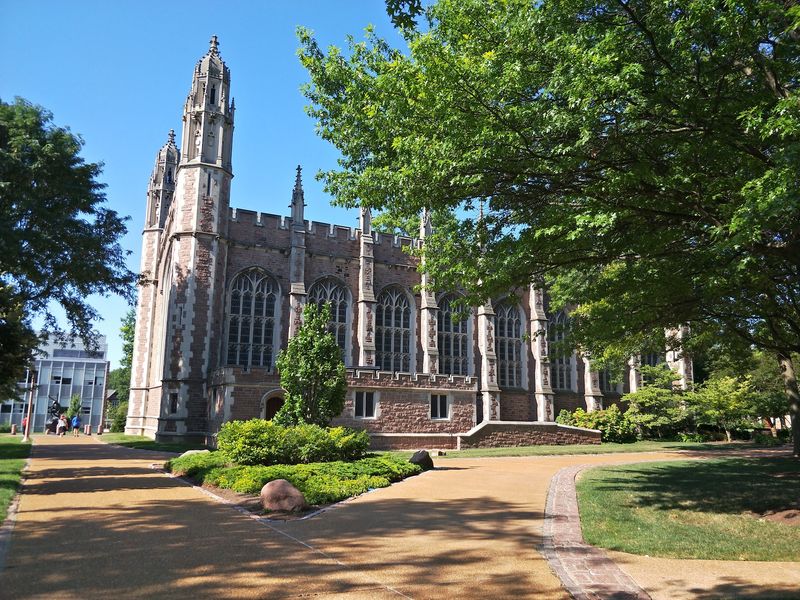
Behind all the pretty stonework, this is a place where a lot of real research gets done. WashU has a long-standing reputation as a research heavyweight, and that shapes the way classes and projects actually work day to day.
The medical school is a huge piece of that story, since it lands near the top of national rankings year after year. Undergraduates get access to research and clinical opportunities there that would be tough to find at many other schools.
What that means practically is that students are not just reading about discoveries, they are often sitting in the rooms where new work is happening. That kind of exposure tends to change what someone believes is possible for their own career.
You cannot exactly tour a working lab as a casual visitor, but you can feel the influence walking around the science and medical areas. The buildings are busy, purposeful, and clearly built for people who are deep in something.
For a curious traveler, the takeaway is context. Knowing that this campus is a genuine engine of research in Missouri makes the architecture feel like more than decoration, and it gives the whole visit a bit of weight.
Dorms That Do Not Feel Like Dorms
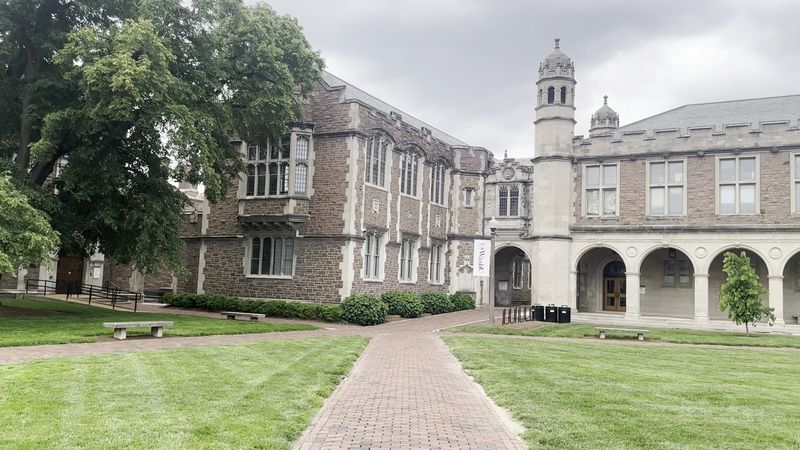
Let me tell you about the housing, because this is the part that surprises parents the most. WashU consistently ranks near the very top nationally for college dorms, including a number two spot on The Princeton Review list.
Most first and second year students live in an area called the South Forty, which functions almost like its own small neighborhood. There is a dining hall, a fitness center, and plenty of shared lounges built specifically to get people talking to each other.
The rooms come with modern touches like memory foam mattresses, which sounds like a small thing until you think about how many nights a student spends there. Comfort adds up over a school year.
What I like about the design is how much of it is common space rather than just bedrooms. Community tends to form in hallways and lounges, and this setup clearly takes that seriously.
You cannot walk into residential buildings as a random visitor, but the exteriors and surrounding paths are easy to see on a campus walk. Even from outside, the South Forty reads more like a small village than a row of standard institutional blocks.
Forest Park Right Across The Street
Here is the detail that makes this location genuinely special. The campuses essentially bookend Forest Park, which is one of the great urban parks in the country and actually larger than Central Park in New York.
Inside that park you have the Saint Louis Art Museum and the Saint Louis Zoo, and both of them offer free admission. That combination of green space and free attractions sitting a short walk from a dorm room is a little hard to believe.
For a visitor, this means you can turn a campus stop into a full day without driving anywhere else. Walk the university grounds in the morning, cross over into the park, and you have museums, trails, and open lawns waiting.
The park also hosts events throughout the warmer months, so there is often something going on beyond the permanent attractions. Checking the schedule ahead of time can add a nice bonus to your plans.
Honestly, this pairing is one of the strongest arguments for St. Louis as a walking city. Very few places in Missouri or anywhere else let you move between a Gothic campus and a world-class park in a matter of minutes.
The Collaborative Vibe People Keep Mentioning
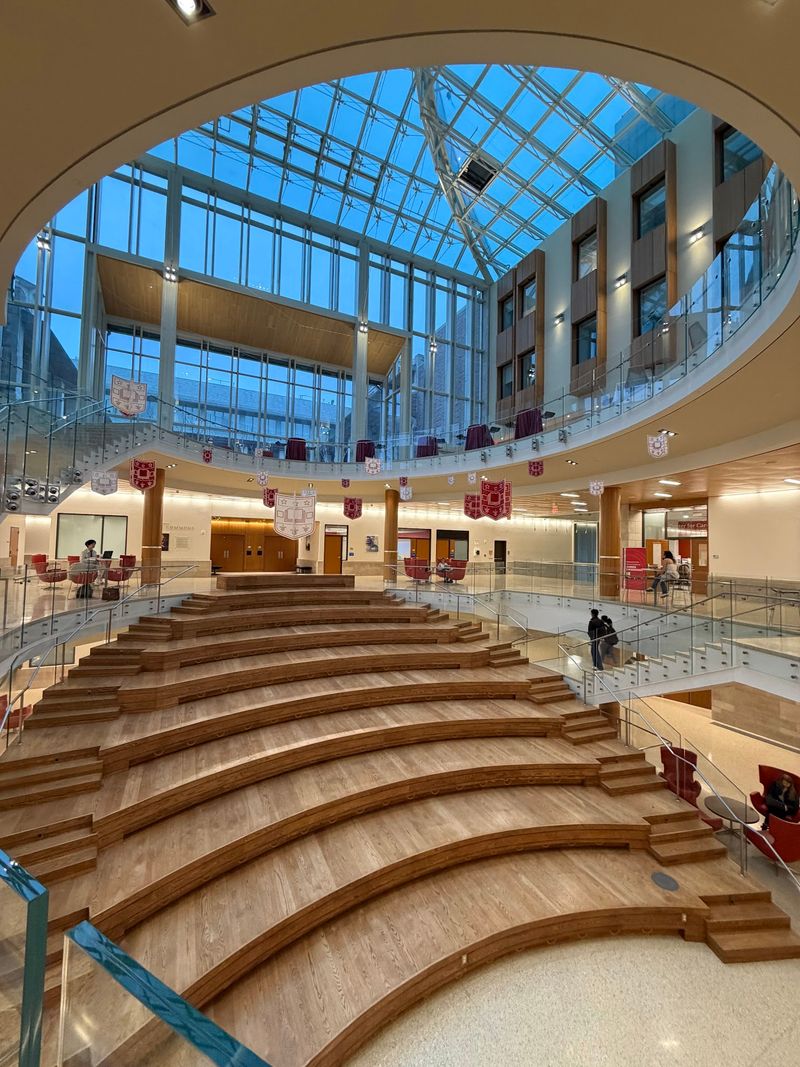
One last thing that comes up constantly in descriptions of this school, and it has nothing to do with buildings. Students here are repeatedly described as kind and genuinely willing to help each other, rather than fiercely competitive with one another.
That reputation matters at a school ranked this high, because top academic environments do not always come with that kind of warmth. Plenty of academic and social support systems exist to back it up too.
You can sort of sense it walking around on a busy afternoon, with people gathered on lawns and in shared spaces instead of scattered off alone. Campus design and campus culture seem to reinforce each other here.
For anyone touring with a prospective student, this is the thing I would pay attention to most. Rankings tell you about resources and outcomes, while atmosphere tells you whether someone will actually be happy living there.
So when you add it all up, the top-twenty recognition, the architecture, the free museums, and the park across the street, you end up with a Missouri campus that is genuinely worth a detour. Go see it and decide for yourself.
