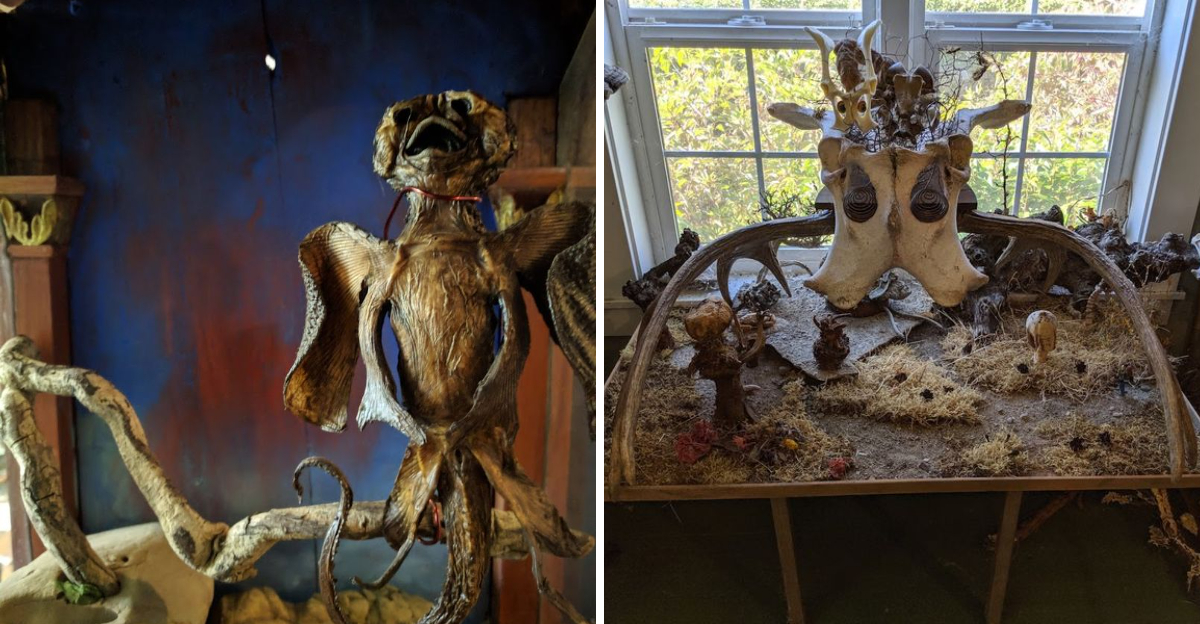
It sits inside someone’s garage, which is your first clue that this is not a typical museum. Oregon has a strange little collection that bills itself as a natural history museum that never actually existed.
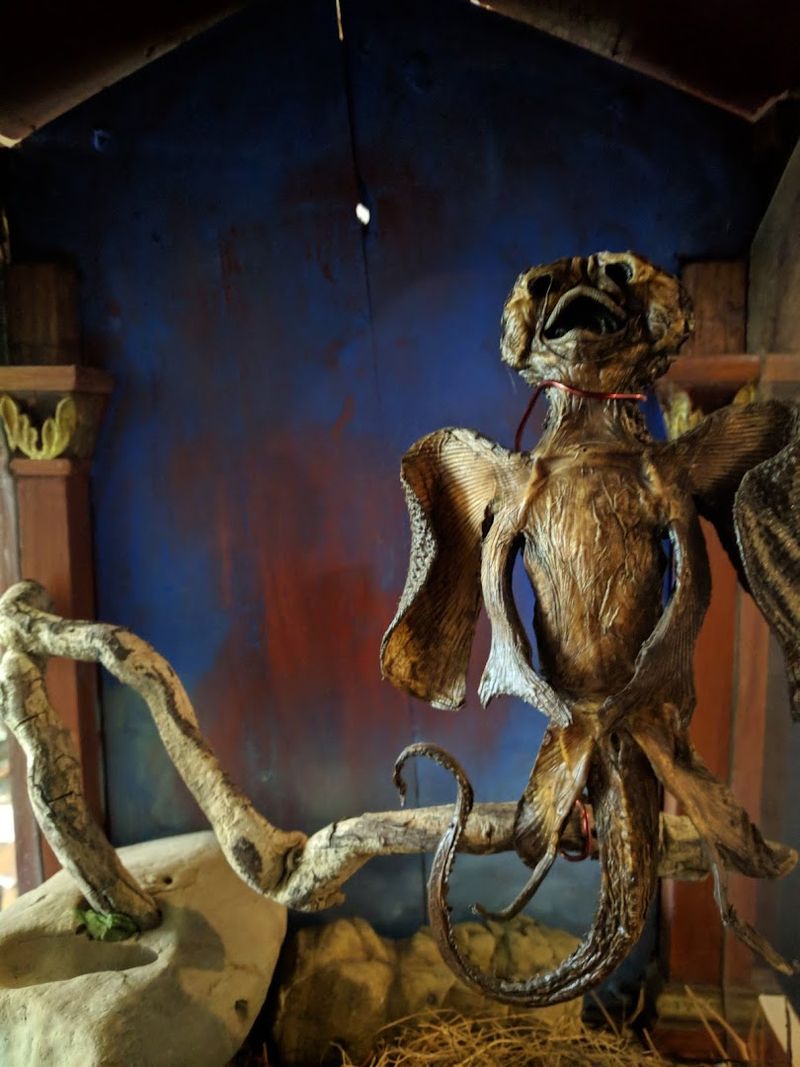
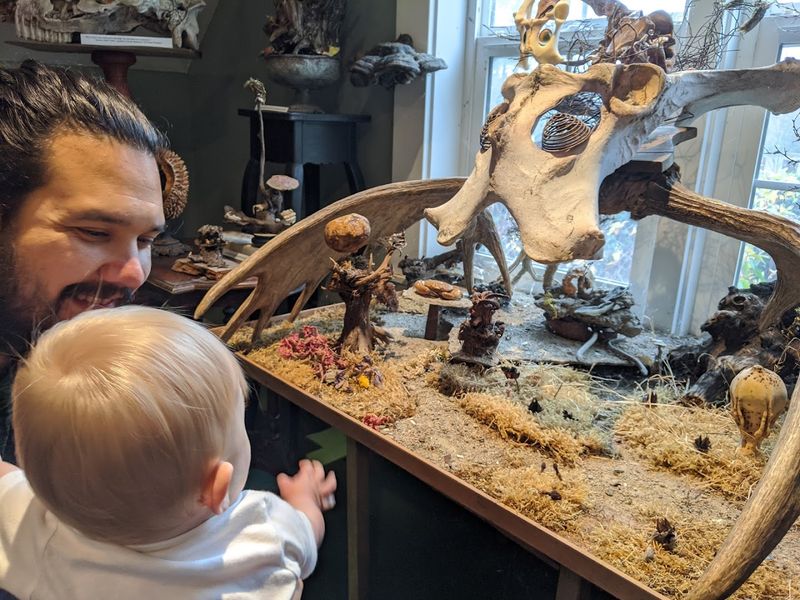
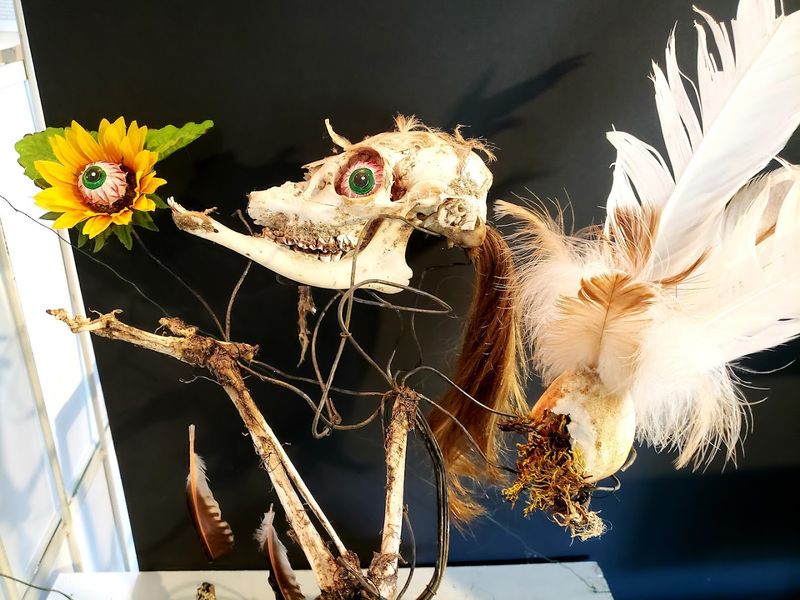
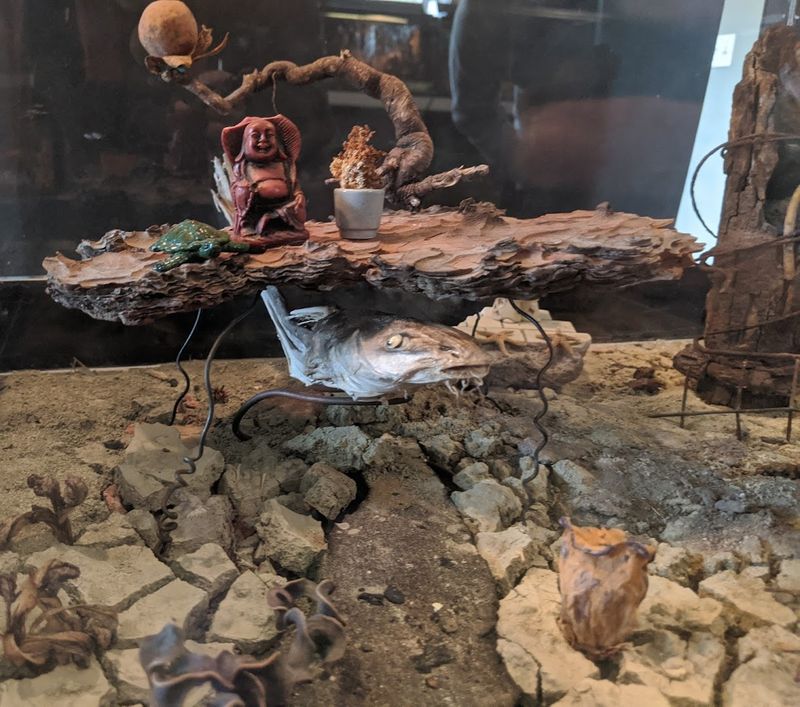
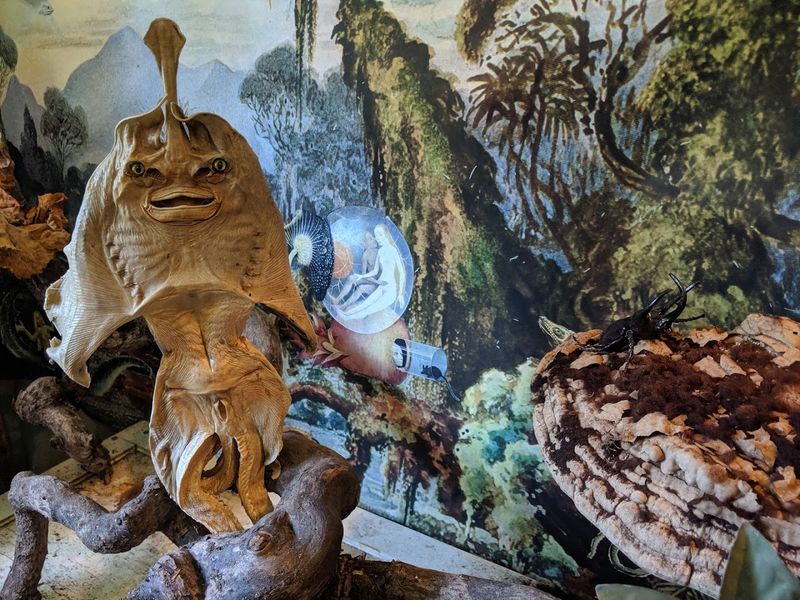
The exhibits feature odd creatures assembled from dried plants, animal parts, and whatever else the creator found lying around. Tiny dioramas show imaginary ecosystems with names that sound scientific but mean absolutely nothing.
You will see a mermaid skeleton made from fish bones and twigs, displayed with complete seriousness. The lighting is dim, the labels are handwritten. The whole place feels like a fever dream imagined by a Victorian naturalist who lost his mind.
No admission fee, just a donation box and a lot of questions about what you just witnessed. The owner might give you a tour if you catch them at the right time.
Kids love the weirdness, adults love the sheer commitment to the bit. You will leave wondering if that was genius or madness, and honestly it does not matter which.
What Exactly Is the Zymoglyphic Museum?
Not every museum needs marble floors or a gift shop the size of a cafeteria. The Zymoglyphic Museum is proof of that.
Housed inside a converted garage at a private home in Southeast Portland, this place describes itself as a museum of natural history that never was. That phrase alone should tell you everything.
The museum was created by a single dedicated individual who built an entire fictional natural world from scratch. There are maps of imaginary regions.
There are specimens from creatures that technically do not exist. Every label, every display case, and every carefully arranged object tells part of a larger invented story.
It is immersive in a way that big museums rarely manage to be. You are not just looking at things behind glass.
You are being invited into someone’s imagination. The whole experience feels personal and strange and oddly moving.
A Garage That Became Its Own Universe
Walking up to the address on SE Alder Street, my first thought was that I had the wrong place. It genuinely looks like a house.
There is no flashy sign or ticket booth. Just a quiet street, a normal-looking structure, and a door that opens into something completely unexpected.
The ground floor functions as a kind of workshop and small shop space. You can browse postcards and books there.
Then you head upstairs, and that is where the real magic begins.
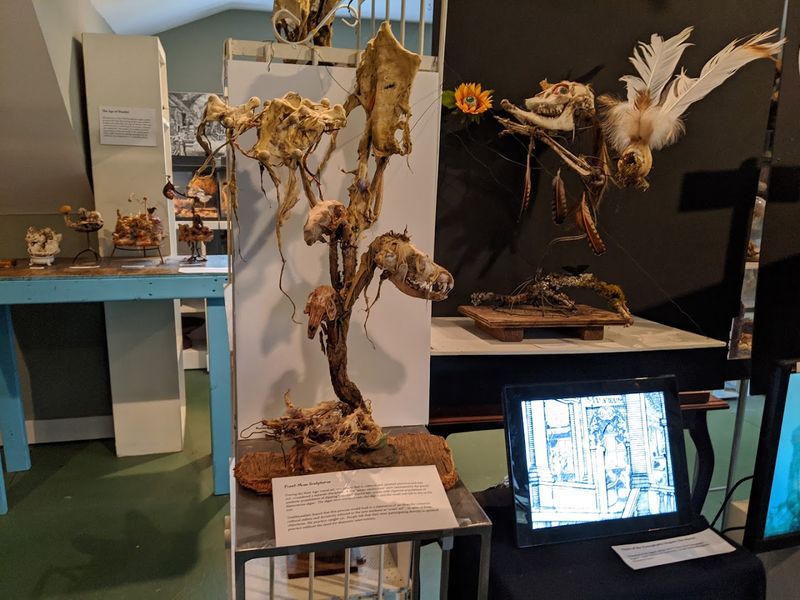
The upper level is packed with displays from floor to ceiling. Every inch of wall space serves a purpose.
Shelves hold glass domes, strange specimens, hand-lettered labels, and objects that make you tilt your head and look twice. The space is small, but it never feels cramped.
It feels intentional. Each item has been placed with care, and that attention to detail is something you feel immediately.
The garage has been transformed into a fully realized alternate world.
The Fictional World Behind the Collection
The Zymoglyphic Museum is not just a collection of weird stuff. There is real lore behind it.
The museum centers on a fictional place called the Zymoglyphic Region, complete with its own geography, history, and natural history. Maps hang on the walls.
Eras are named and documented.
Reading the labels is genuinely part of the fun. They are written in the style of actual natural history museum placards, but they describe things that never existed.
It walks a brilliant line between deadpan humor and genuine academic style. You find yourself nodding along before you remember it is all invented.
This layered storytelling is what separates the Zymoglyphic Museum from a simple oddities collection. It has internal logic.
It has a point of view. The fictional world feels consistent and somehow believable, even when you are staring at a two-headed skeleton under a glass dome.
The Art That Makes You Stop and Stare
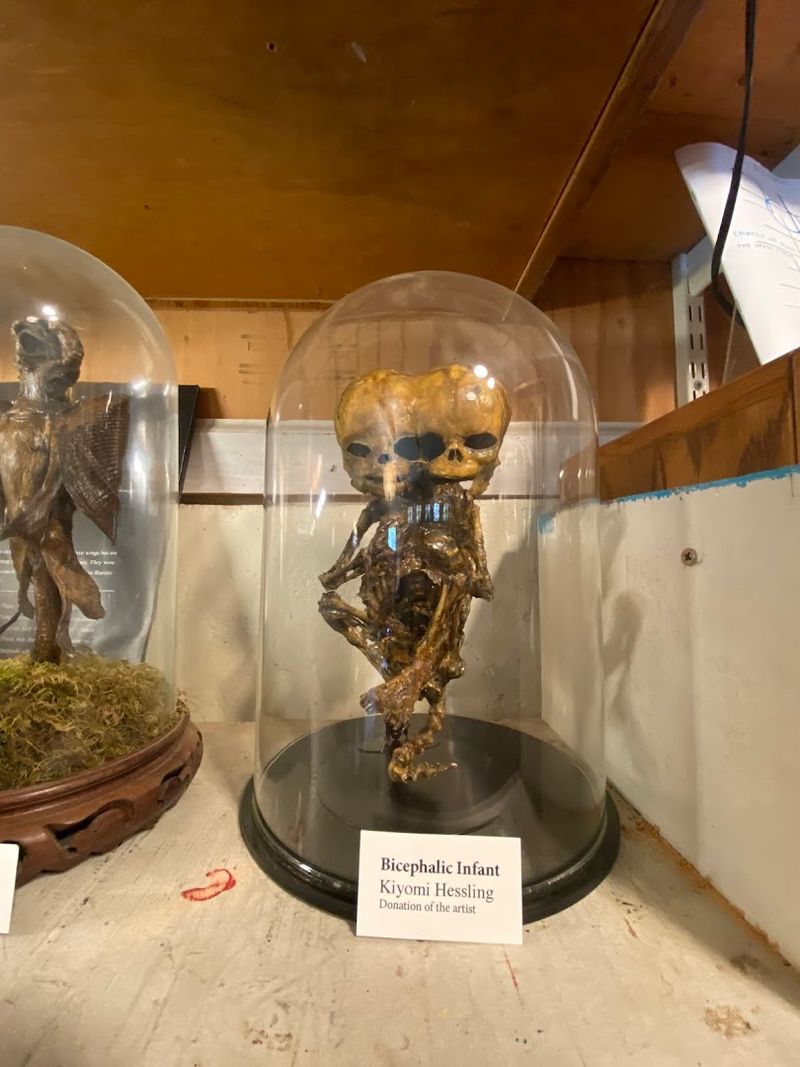
Some pieces here stop you cold. There is a glass dome housing a skeleton of craniopagus twins with a tail, created by artist Kiyomi Hessling.
It sounds unsettling, and honestly, it is a little. But it is also beautifully crafted and genuinely hard to look away from.
Hessling has contributed several pieces to the collection, including mermaid carcasses that look disturbingly convincing. The craftsmanship is remarkable.
These are not prop-shop novelties. They are carefully made art objects that fit seamlessly into the museum’s invented natural history world.
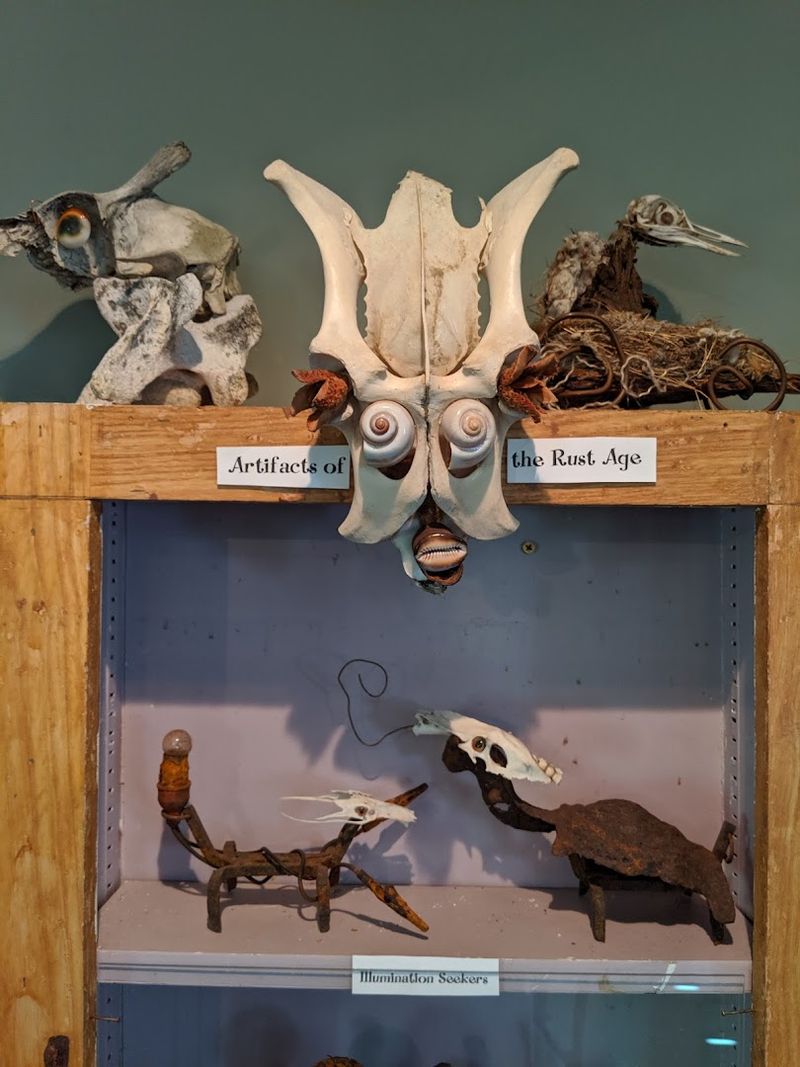
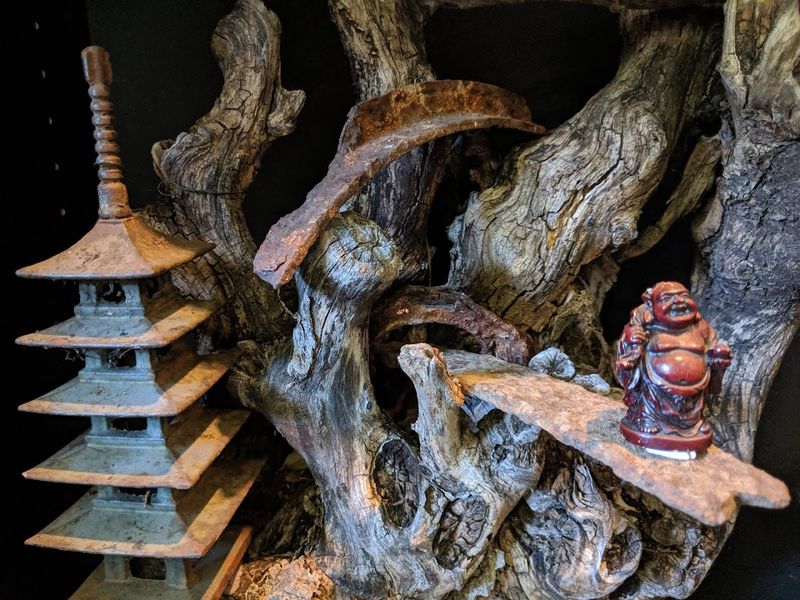
Other pieces throughout the space share that same quality. Found objects, bones, shells, and organic materials are arranged and altered to suggest creatures or specimens from the Zymoglyphic Region.
The line between art and artifact gets deliberately blurry. That blurriness is part of the point.
You start to question what you are looking at, and that questioning is exactly the kind of mental engagement the museum seems designed to provoke.
Free to Enter, Priceless to Experience
One of the most surprising things about the Zymoglyphic Museum is that it costs nothing to get in. Admission is completely free.
For a place this thoughtfully built and carefully maintained, that generosity is genuinely remarkable.
The museum runs on a small gift shop where you can pick up books, postcards, and prints. None of it feels like a hard sell.
Buying something feels more like a thank-you than a transaction. The postcards are genuinely beautiful and make for unusual souvenirs.
Supporting independent spaces like this matters. The person behind the museum has created something truly rare without charging anyone for the privilege of seeing it.
That kind of creative generosity deserves recognition. If you visit, consider picking up a postcard or a book.
It is a small gesture that helps keep a genuinely special place alive. Not many experiences in life cost nothing and give back this much in return.
When and How to Actually Visit
Planning your visit is important because the Zymoglyphic Museum is not open every day. It typically opens on specific Sundays each month, and the schedule can change.
Checking the official website at zymoglyphic.org before you go is the smartest move.
Appointments are also possible. The curator has been known to respond to emails and accommodate visitors outside of regular open hours.
That flexibility is part of what makes the experience feel so personal. You are not just one of thousands of visitors moving through a turnstile.
Parking on SE Alder Street is limited since it sits in a residential neighborhood. Arriving a little early gives you time to find a spot without stress.
Budget at least thirty minutes for your visit, though an hour is better if you want to read every label and really sit with each display. The museum rewards slow looking.
Portland’s Weird Spirit, Perfectly Bottled
Portland has a long-standing reputation for embracing the unusual. Keep Portland Weird is not just a bumper sticker here.
It is a lived value. The Zymoglyphic Museum fits into that spirit so naturally it almost feels inevitable.
But the museum is not weird for the sake of shock value. It is weird in the way that deeply original creative work tends to be.
It follows its own internal rules and has a voice, a vision, and a commitment to the bit that goes far beyond casual curiosity.
Sitting in Southeast Portland’s quiet residential grid, the museum feels like a secret the neighborhood keeps with pride. The surrounding streets are calm and tree-lined.
Nothing about the area hints at what is tucked inside one particular garage. That contrast makes the discovery feel even more rewarding.
Portland has plenty of quirky attractions, but most of them announce themselves. The Zymoglyphic Museum lets you find it, and that quiet confidence is part of what makes it so memorable and so very Portland.
The Person Behind the Museum
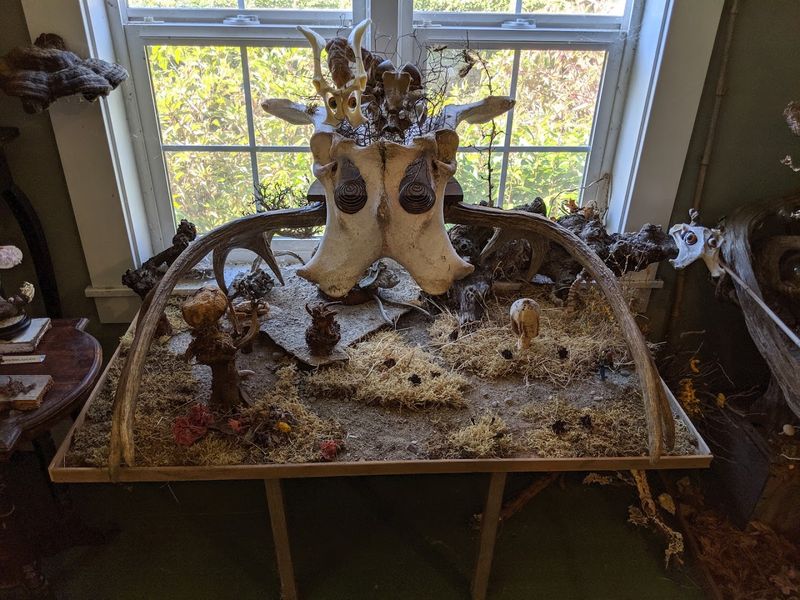
Every great collection has a person behind it. At the Zymoglyphic Museum, the curator is the heart of the whole operation.
Visitors consistently describe him as warm, welcoming, and genuinely passionate about the world he has built.
He greets visitors, points them in the right direction, and lets them explore at their own pace. There is no pressure and no performance.
He simply shares what he has made and gives people space to experience it honestly.
That kind of curatorial generosity is rare. Big institutions often feel anonymous.
Here, you are aware the whole time that a real human being built every inch of this place with care and intention. That awareness adds a layer of meaning to everything you look at.
Knowing someone spent years crafting this imaginary world and then opened it up for free makes the whole experience feel like a gift.
How Long Should You Spend There?
Most visitors spend between thirty minutes and an hour at the Zymoglyphic Museum. That range depends almost entirely on how much you slow down.
Rushing through would take maybe fifteen minutes. But rushing would also mean missing most of what makes it special.
Reading the labels is essential. Each one adds depth to the fictional world around you.
Skipping them is like watching a film with the sound off. You get the visuals, but you lose the story entirely.
The space rewards patience in a way that is unusual for somewhere so small. New details keep appearing the longer you look.
A tiny figure tucked behind a larger specimen. A label you almost missed.
If you go in treating it like a quick stop between other plans, you will leave underwhelmed.
Why This Museum Deserves a Spot on Your Portland List
Portland has no shortage of things to do. The food scene is incredible.
The parks are gorgeous. There are bookshops and markets and art galleries everywhere you look.
But the Zymoglyphic Museum offers something none of those places can replicate.
It is a completely singular experience. No other museum in the world is quite like this one.
The fictional natural history angle is original. The handmade quality is deeply personal.
The free admission makes it accessible to everyone.
Travelers who love the offbeat and the unexpected will find it endlessly rewarding. Even visitors who do not usually gravitate toward art or museums tend to leave genuinely moved by what they saw.
It has that rare quality of appealing to almost anyone willing to walk through the door with an open mind. The Zymoglyphic Museum is not trying to compete with the Portland Art Museum or OMSI.
It is doing something entirely its own, and that is exactly why it deserves a place on your list.
Address: 6225 SE Alder St, Portland, OR 97215
