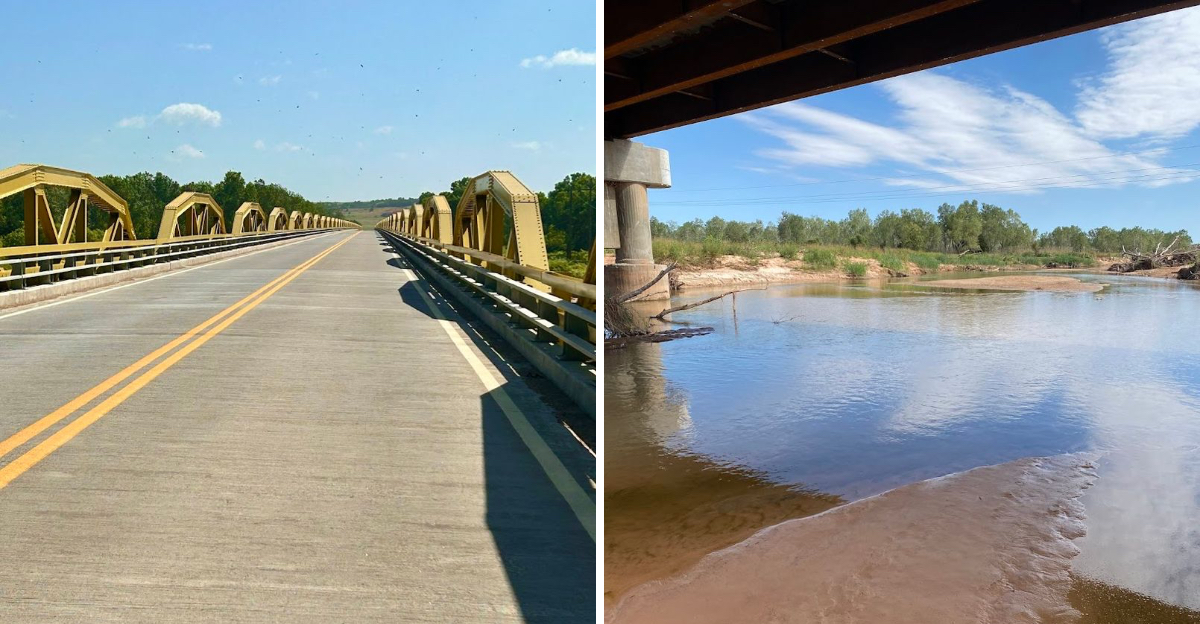
There are roads that take you somewhere, and then there are roads that take you back in time.
Somewhere along a quiet stretch of Oklahoma highway, a nearly 100-year-old bridge crosses the South Canadian River with a kind of quiet confidence that stops you cold.
It has survived the Dust Bowl era, decades of neglect, and a full-scale renovation completed in 2024. The Historic Route 66 Bridgeport Bridge is not just a bridge.
It is a living, drivable piece of American history, and its story is way more fascinating than you might expect.
The Bridge Built During the Great Depression Still Stands Strong
Most things built during the Great Depression were built out of desperation and determination. This bridge was no different.
Completed in 1933, during the Great Depression, it stretches about 3,944 feet (roughly three-quarters of a mile) across the South Canadian River near Hinton, Oklahoma.
Back then, this crossing was a lifeline. It connected travelers heading west on Route 66, giving families fleeing the Dust Bowl a way forward.
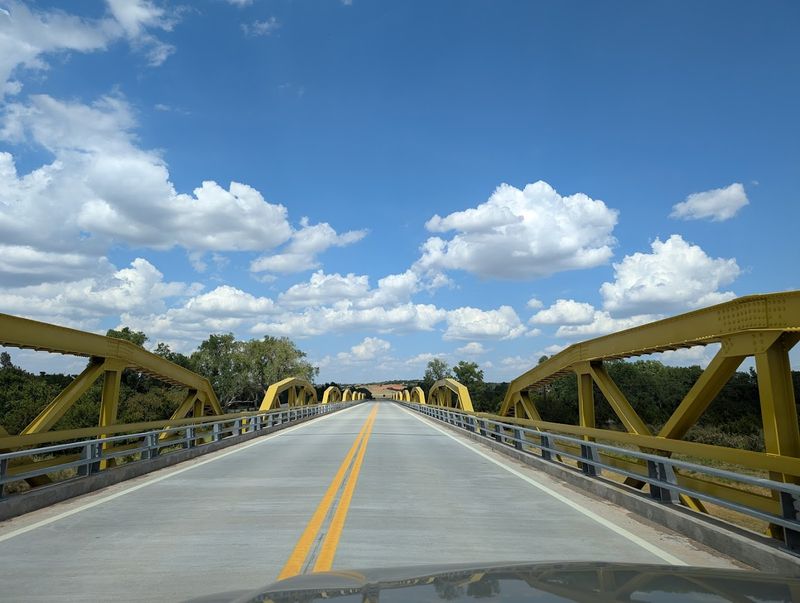
The engineering at the time was bold, using a repeated pony truss design that made the bridge look like it went on forever.
Standing at one end and looking across, the rows of steel arches seem to stretch into the horizon. It is one of those rare moments where old engineering feels almost poetic.
The bridge was never flashy. It was built to work, and work it did.
Decades passed, traffic shifted to Interstate 40, and the bridge quietly aged. But it never fell apart.
The bones stayed solid. That durability is what made it worth saving when preservationists and state officials started paying attention again.
Few structures from that era remain drivable, which makes this one genuinely rare. Driving across it feels less like a commute and more like a small act of time travel.
Oklahoma Spent Big to Save a Piece of Living History
Oklahoma did not just patch this bridge up and call it a day. The state went all in.
As part of a broader push toward Route 66’s centennial in 2026, Oklahoma has invested hundreds of millions in transportation and tourism projects tied to the Route 66 corridor.
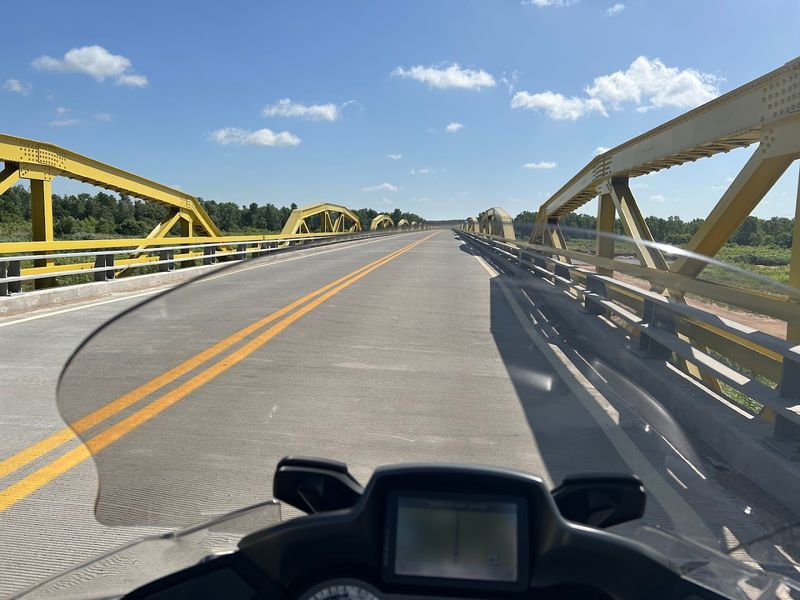
The Bridgeport Bridge project was a centerpiece of that effort. Workers rebuilt the driving surface, strengthened structural elements, and restored the original pony trusses that give the bridge its iconic look.
The goal was to honor the original design while making it safe and functional for modern use.
For a while during construction, the bridge was closed entirely. Visitors who showed up hoping to cross were turned away.
Some were frustrated. But the wait was worth it.
When the bridge reopened in May 2024, it looked sharp, freshly painted, and structurally sound for decades to come.
Oklahoma’s Project 66 Grant Program has also been channeling millions into local communities along the route. Signs, museums, motor hotel restorations, and roadside landmarks have all received funding.
The state clearly understands what it has. Route 66 is not just nostalgia.
It is an economic engine, a cultural corridor, and a road that still has stories left to tell. The investment shows real commitment.
What Makes the Pony Truss Design So Special Here
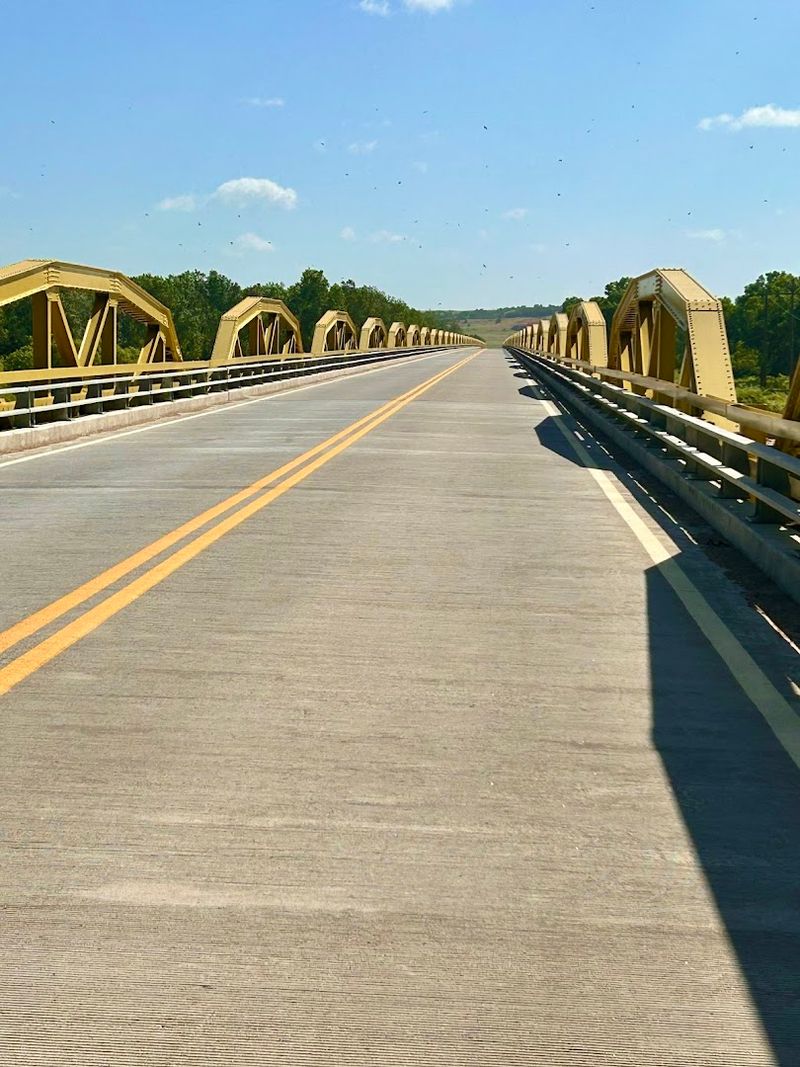
Not all bridges are created equal, and the pony truss style has a personality all its own. Unlike a full through-truss bridge, a pony truss does not have overhead bracing above the road deck.
The steel frames rise on both sides but stay open at the top, giving drivers an unobstructed view as they cross.
On this bridge, the effect is almost hypnotic. The arches repeat in a steady rhythm, frame after frame, for nearly three-quarters of a mile.
It is one of the longest pony truss bridges still in use on Route 66, which makes it a standout even among other historic crossings.
The design was practical for its time. Pony trusses were cheaper to build than full-height truss bridges, and they worked well for moderate-span crossings.
Engineers in the 1930s used this style frequently across Oklahoma and the broader Midwest.
What makes the Bridgeport version memorable is the sheer scale. Most pony truss bridges you encounter are short and forgettable.
This one keeps going and going. Driving across it, you start counting the arches almost instinctively.
You lose count somewhere around the middle, laugh a little, and just enjoy the ride. The design is simple, but the experience it creates is anything but simple.
Crystal Clear Water Below and Open Sky Above
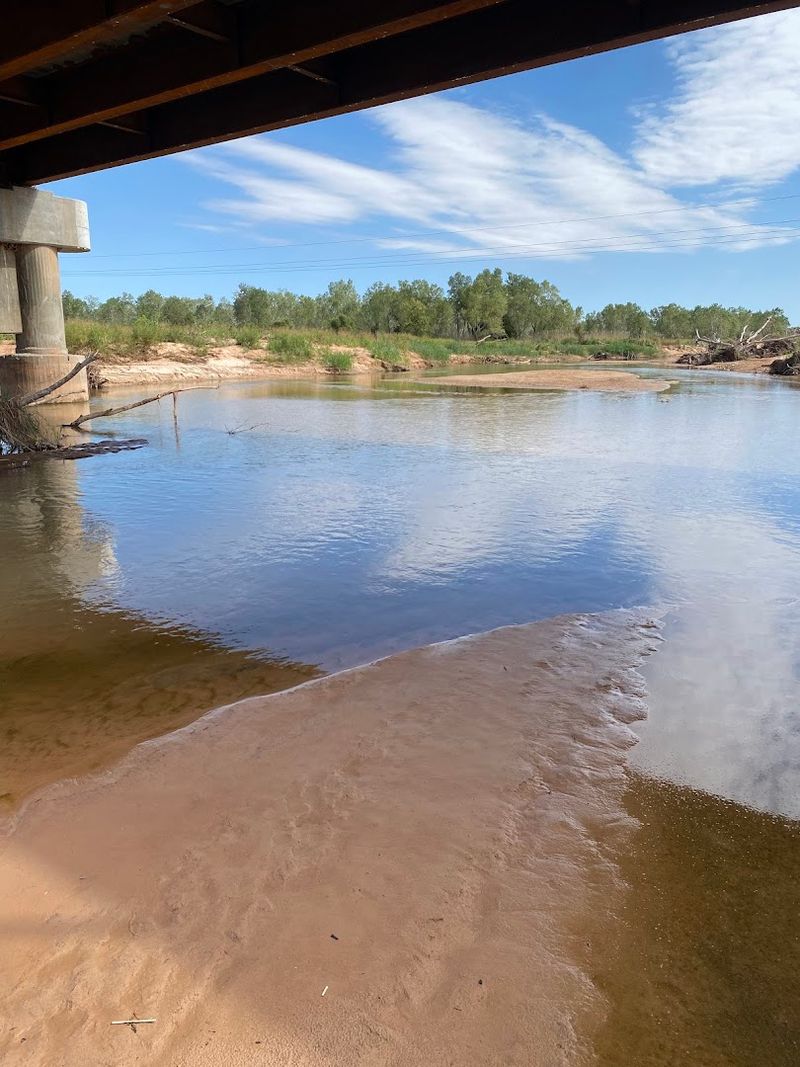
Pull up to the eastern side of this bridge and look down. The South Canadian River runs below with wide sandy channels and shifting water levels.
The water is shallow in many stretches, catching light in a way that makes the sandy riverbed glow. It is the kind of view you do not expect in the middle of Oklahoma.
The surrounding landscape is flat and open, with that wide, unbroken sky the Great Plains does so well. There is a paved pull-out on the north or east side of the bridge with informational signs.
Stop there before you cross. Read a little.
Let the setting sink in.
The contrast between the industrial steel of the bridge and the natural calm of the river below is striking. One is man-made, rigid, and purposeful.
The other is soft, slow, and indifferent to history. Together, they create a scene worth photographing from multiple angles.
Early morning is a great time to visit. The light hits the water at a low angle, and the bridge casts long shadows across the river.
There are almost no crowds at that hour. You might have the whole place to yourself, which feels like a small miracle on a landmark this well-known.
Bring a camera and give yourself more time than you think you need.
A Short Detour Off Interstate 40 With Big Payoff
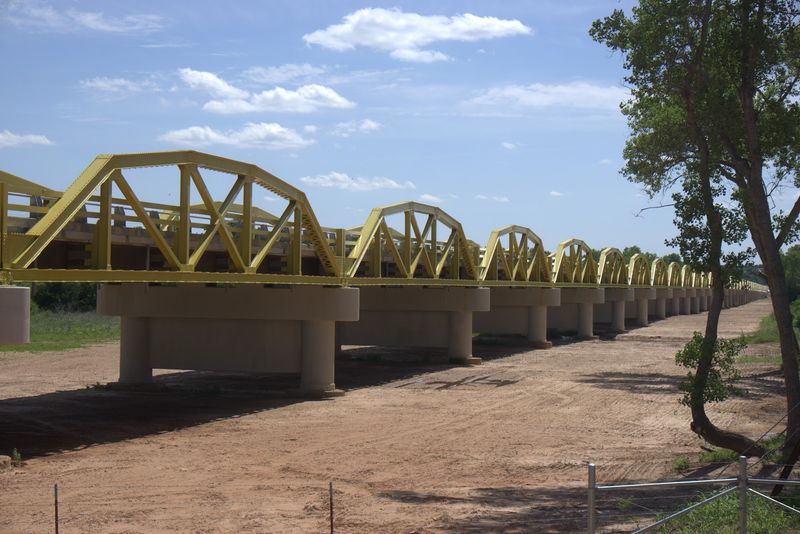
Here is the thing about this bridge: it is incredibly easy to reach. From Interstate 40, the detour is short, well-signed, and completely worth the few extra minutes.
You are not hacking through backcountry to find this one.
The bridge sits along US-281 near Hinton, Oklahoma. You exit the interstate, follow the old Route 66 alignment for a bit, and suddenly there it is.
The bridge appears ahead of you with all its steel arches lined up in a row, looking both ancient and freshly restored at the same time.
For road-trippers doing the full Chicago to Los Angeles run, this is a natural stopping point. It sits roughly between Oklahoma City and Amarillo, making it a perfect mid-morning or mid-afternoon break.
Stretch your legs, walk the pull-out, read the signs, and soak in a piece of road history that most people blow right past on the interstate.
Cyclists should know there is a recommended detour around the bridge rather than crossing it directly, which adds some extra miles. Check current conditions before heading out on two wheels.
For everyone else, the bridge is open and drivable. The round trip from the interstate to the bridge and back takes maybe 15 to 20 minutes, and you will leave feeling like you found something real.
The Freshly Painted Trusses Tell a Story of Survival
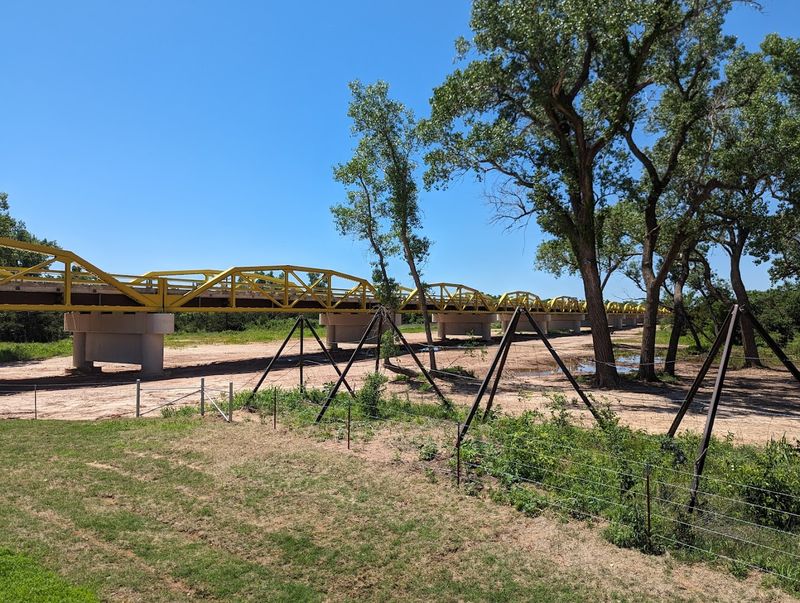
Fresh paint on old steel hits differently when you know the history behind it. After the 2024 renovation wrapped up, the pony trusses on this bridge were repainted and looking sharper than they probably have in decades.
The color pops against the Oklahoma sky in a way that feels both proud and defiant.
For a while during the renovation, some visitors worried the original trusses would be removed entirely. Earlier phases of the project had people concerned.
But the final result kept the historic truss structure intact, using it as both a structural and decorative element alongside the new wider deck. Preservation and progress found a middle ground.
That kind of balance is hard to pull off. Too often, historic structures get stripped down in the name of safety upgrades.
Here, the engineers and planners found a way to respect what came before while still making improvements that will last another generation.
The result is a bridge that looks restored rather than replaced. You can still see the Depression-era bones in the design.
The proportions are original. The rhythm of the arches is original.
The scale is original. Only the surface is new, and honestly, the surface needed it.
Standing beside the trusses and looking up at the clean steel, you feel the weight of what was saved here. It matters.
Route 66 Is Having a Full Comeback and Oklahoma Is Leading It
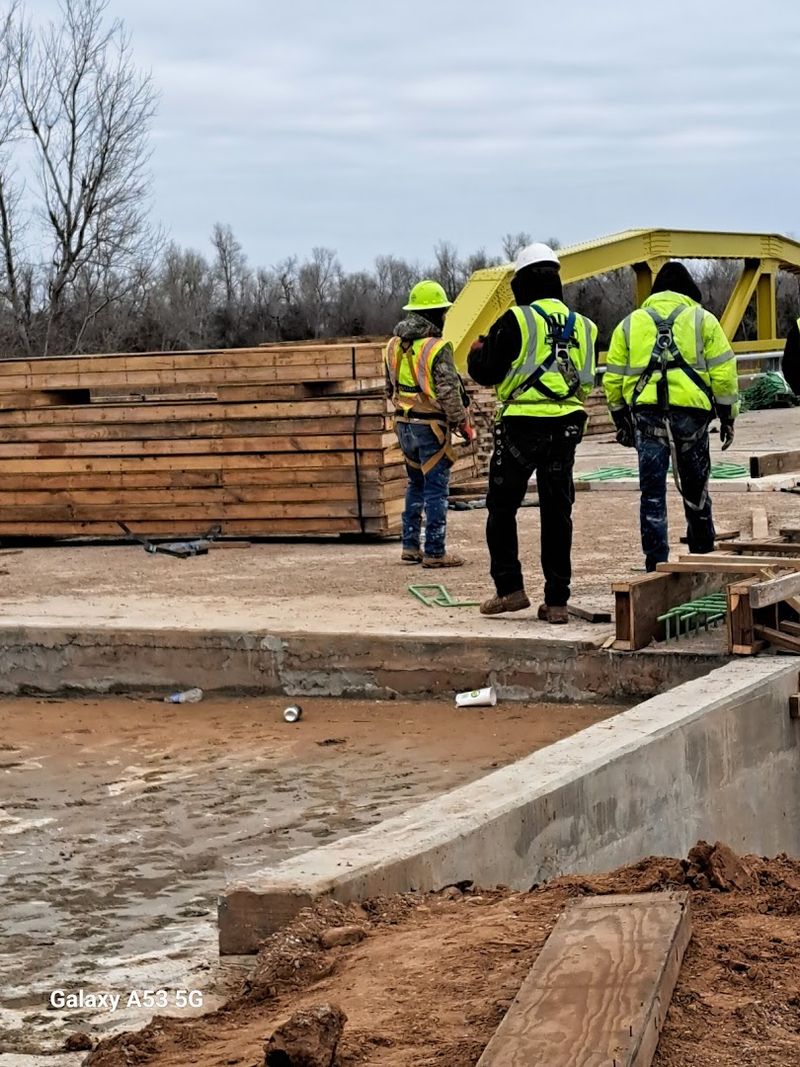
Route 66 is not just coasting on nostalgia anymore. Oklahoma has made it clear that the Mother Road has a real future, not just a celebrated past.
With the centennial of Route 66 approaching in 2026, the state has been moving fast to get its landmarks ready for a new wave of visitors.
The Project 66 Grant Program has been distributing over 6.6 million dollars annually to communities along the route. Motels, museums, signs, and bridges have all benefited.
The Bridgeport Bridge renovation was part of this larger wave of investment, and it shows in the quality of the finished work.
Tulsa is even installing a musical road on its stretch of Route 66, a surface designed to play melodies as vehicles drive over it. That kind of creative thinking signals that Oklahoma sees Route 66 as a living attraction, not a relic.
The state is betting big on the idea that people still want to connect with this road in a meaningful way.
And honestly? They are right.
Road trips along Route 66 have seen a real surge in interest over the past several years. People are craving something slower, more connected, and more honest than a flight and a hotel.
The old road delivers all of that, especially when landmarks like this bridge are maintained with real care and intention.
Practical Tips for Visiting the Bridge and Making the Most of Your Stop
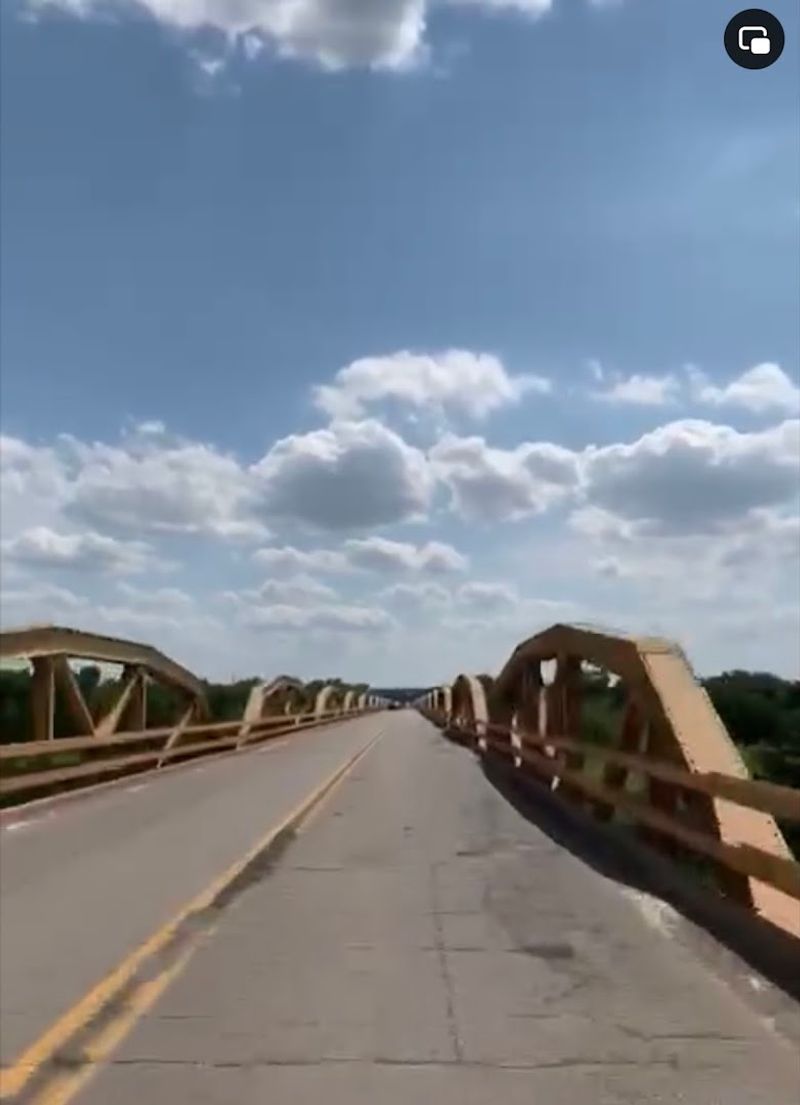
Visiting this bridge is low-effort and high-reward, but a few tips make the experience even better. The paved pull-out on the north or east side of the bridge is your best starting point.
Park there, read the informational signs, and get your bearings before stepping onto the bridge itself.
The bridge is open to vehicle traffic, so you can drive across it. But walking along the edge gives you a much better feel for the scale.
The arches stretch ahead of you in a long, repeating line, and the river below adds a layer of natural beauty to the whole scene. Give yourself time to just stand there and look.
Morning light is ideal for photography. The low sun angle catches the steel trusses beautifully and lights up the river below.
Afternoon works too, but midday light can be harsh and flat. Golden hour at either end of the day is worth planning around if you care about photos.
The full address is US-281, Hinton, OK 73047. The site is free to visit and open to the public.
No tickets, no tours, no fuss. Just a remarkable old bridge on a remarkable old road, sitting in central Oklahoma and waiting for anyone curious enough to make the short drive off the interstate.
Do not overthink it. Just go.
Dear Reader: This page may contain affiliate links which may earn a commission if you click through and make a purchase. Our independent journalism is not influenced by any advertiser or commercial initiative unless it is clearly marked as sponsored content. As travel products change, please be sure to reconfirm all details and stay up to date with current events to ensure a safe and successful trip.
