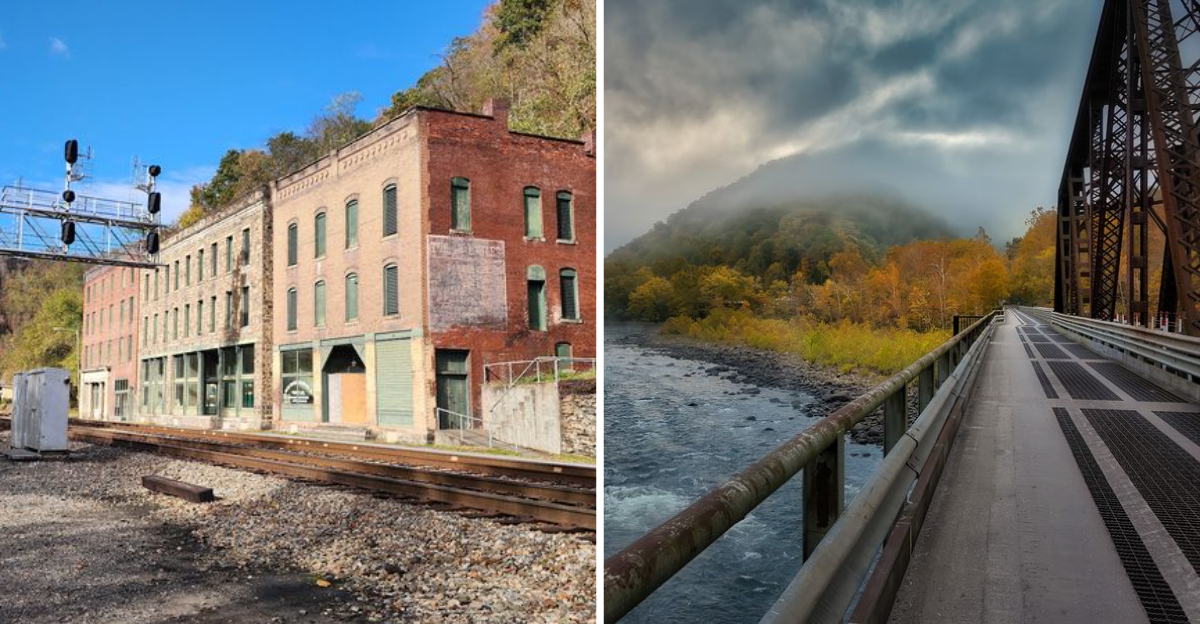
Some places in West Virginia feel like they belong to another century the moment you arrive. Picture a quiet Main Street where weathered brick storefronts line active railroad tracks, and the only sound is the distant rumble of a coal train rolling through the gorge.
It is the kind of hidden spot that catches you off guard, tucked so deep in the mountains that reaching it feels like an adventure all its own. What starts as a simple detour can quickly become the most memorable stop of your whole trip.
A Ghost Town Hiding in the Heart of Fayette County
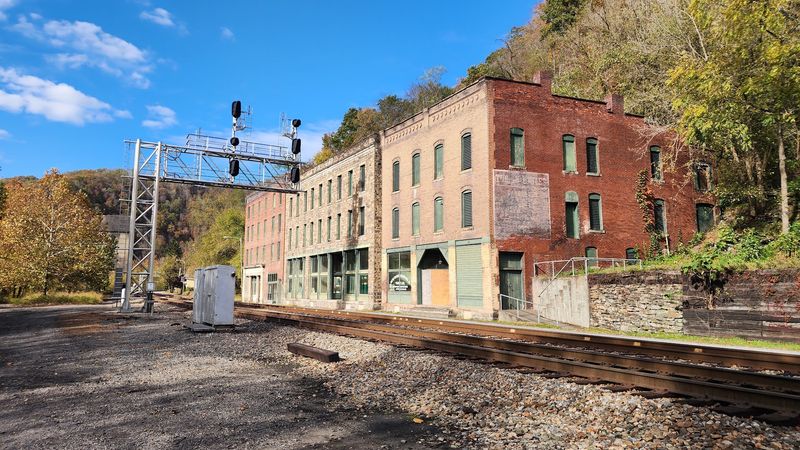
Tucked deep inside the New River Gorge National Park and Preserve, this quiet corner of Fayette County barely registers on most maps. Yet folks who make the winding trip down discover an entire town that time seemingly forgot.
Visitors often describe the feeling of stepping straight into a photograph from another era. The old buildings sit right beside working railroad tracks, and the surrounding mountains wrap the whole scene in a hush that feels both peaceful and a little haunting.
Classified as a historical landmark, the place draws history lovers, photographers, and anyone curious about roads less traveled. Reviewers frequently mention it as one of the most fascinating stops in the entire state, praising how much story sits packed into such a small footprint.
What makes it stand apart is not flashy attractions or gift-shop gimmicks. Instead, it offers the rare chance to walk through a genuine piece of American railroad history that has been carefully preserved rather than paved over.
For travelers passing through the gorge, it is easy to see why so many say the setting alone makes the detour worthwhile.
The Boomtown That Once Out-Earned Bigger Cities
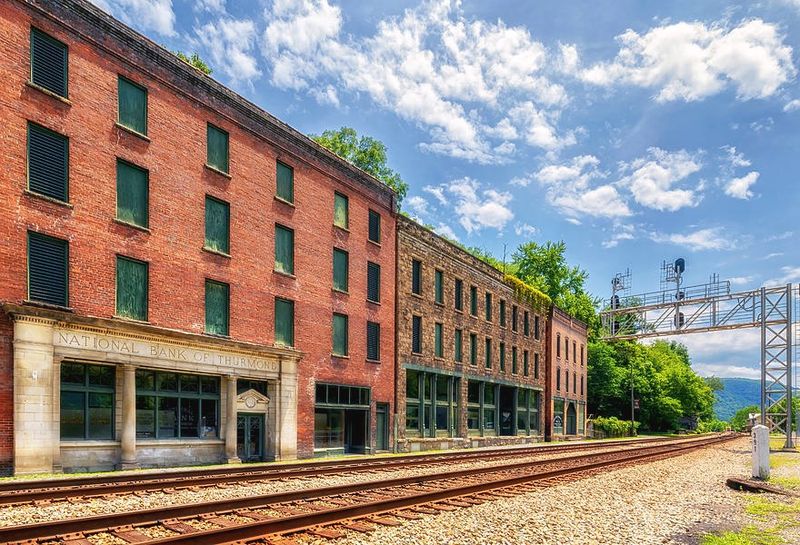
Hard to believe now, but this sleepy spot was once an economic powerhouse. Born from a surveyor’s vision back in 1873, the town exploded into life when the Chesapeake and Ohio Railroad arrived and the Southside Junction railroad bridge went up in the late 1880s.
During its peak in the early 1900s, the little community reportedly generated more freight revenue for the C&O Railway than even larger cities could claim. One visitor noted with amazement that its rail yard was, at one point, said to be busier than Richmond’s.
Money flowed freely here. Local banks were reportedly among the richest in the state, kept flush by the patronage of numerous coal barons who did business along Main Street.
Passengers filled the depot too. Accounts suggest as many as 15 trains pulled in daily, serving tens of thousands of travelers each year.
Hotels, shops, and a crucial steam engine repair facility rounded out a town where nearly all commerce arrived by rail, since cars and paved streets simply were not part of the picture back then.
When the Trains Changed and the Town Grew Quiet
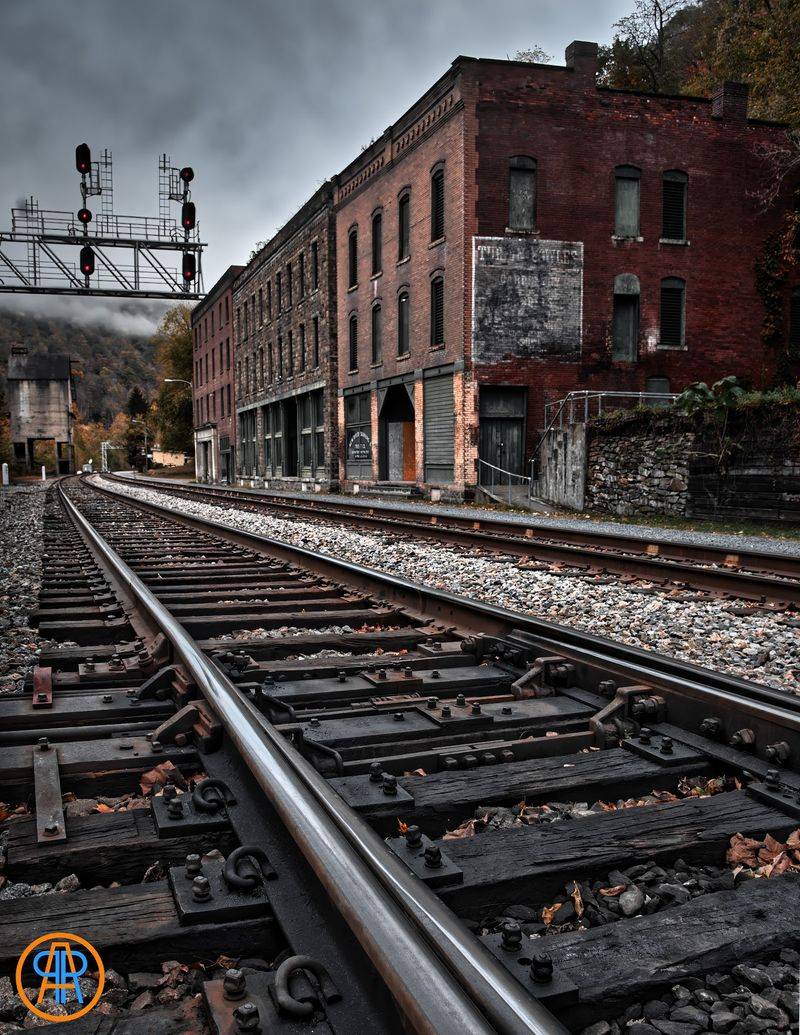
Even the mightiest boomtowns eventually feel the tug of changing times. The first shifts began around 1917, as the growing popularity of the automobile and the spread of new roadways started chipping away at the railroad’s long-held grip.
Setbacks piled up. Devastating fires in 1922 and again in 1930 tore through much of the town’s infrastructure, pushing many businesses to pack up and start fresh elsewhere.
The hardships of the Great Depression only deepened the struggle, closing several local shops for good.
The biggest turning point came with technology itself. When the C&O Railway swapped its steam-powered locomotives for diesel engines through the 1940s and 1950s, the town’s specialized steam-engine repair work and skilled crews suddenly had little purpose.
At the same time, nearby coal mines gradually gave up their last reserves. With both pillars of prosperity fading, the community that rail had built began a slow and steady decline.
Today’s handful of residents stands as a quiet reminder of just how quickly fortunes can turn in these mountains.
The Restored 1904 Depot and Its Friendly Rangers
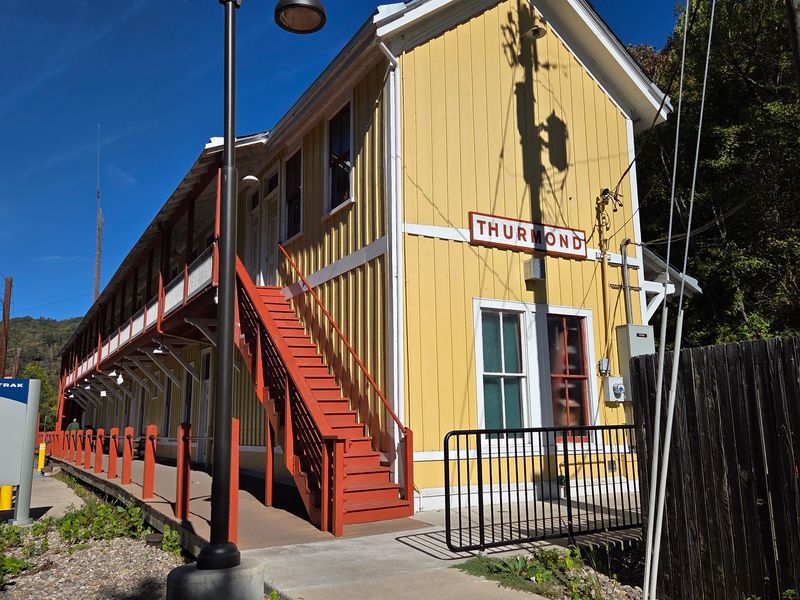
At the center of it all sits the historic depot, originally built in 1904 and lovingly brought back to life. Today it doubles as a seasonal visitor center, and it is easily the beating heart of any trip here.
Step inside and you will often find park rangers eager to share stories. Guests repeatedly praise how knowledgeable and helpful the staff are, always ready to explain the town’s history and the impact of the coal and rail industries.
One highlight tucked inside is a beautifully done replica of the original train station, which several visitors single out as a genuine treat. A small gift shop rounds out the space.
Keep in mind the timing matters. Folks who arrive in the off season or on a Tuesday sometimes find the center closed, though the outdoor sights remain open for wandering.
When it is open, the museum displays and interpretive exhibits earn steady praise for bringing the past vividly to life. For anyone hoping to piece together the full story, catching the depot during operating days makes the whole experience richer.
An Amtrak Stop in a Town With Almost No Residents
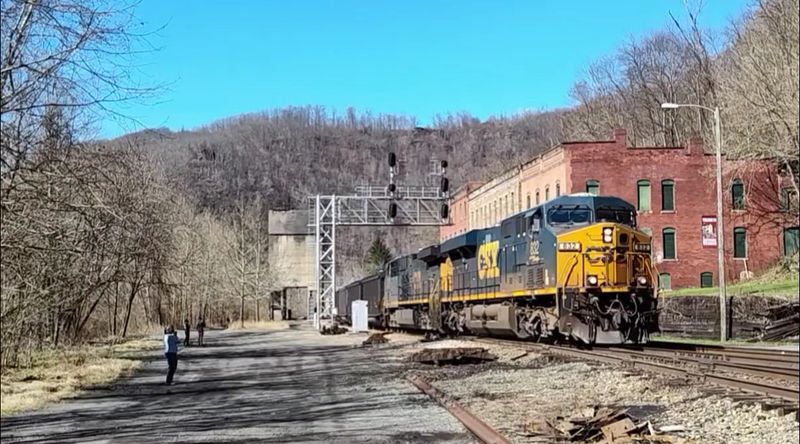
Here is a delightful surprise that stumps nearly everyone: this near-empty town is still an active Amtrak stop. Trains genuinely pull in and pick up ticketed passengers, a charming nod to the grand railroad heritage that built the place.
Visitors love pointing out the irony. Almost nobody lives here, yet you can technically board a passenger train right at the historic depot, which many describe as one of the coolest facts they learned during their stop.
A word of practical caution comes up often in traveler notes. The Amtrak service is strictly for those holding tickets, and there is no ride-share or taxi to rescue you out here.
The advice repeated most is simple: arrive with your own vehicle or a confirmed pickup arranged in advance. Because of the remote location deep in the gorge, there really is no easy way out without one.
Still, watching a train roll through a town that history nearly erased is a small thrill. It keeps the whistle blowing on a legacy that once defined this entire stretch of West Virginia.
Storefront Windows That Bring the Past to Life
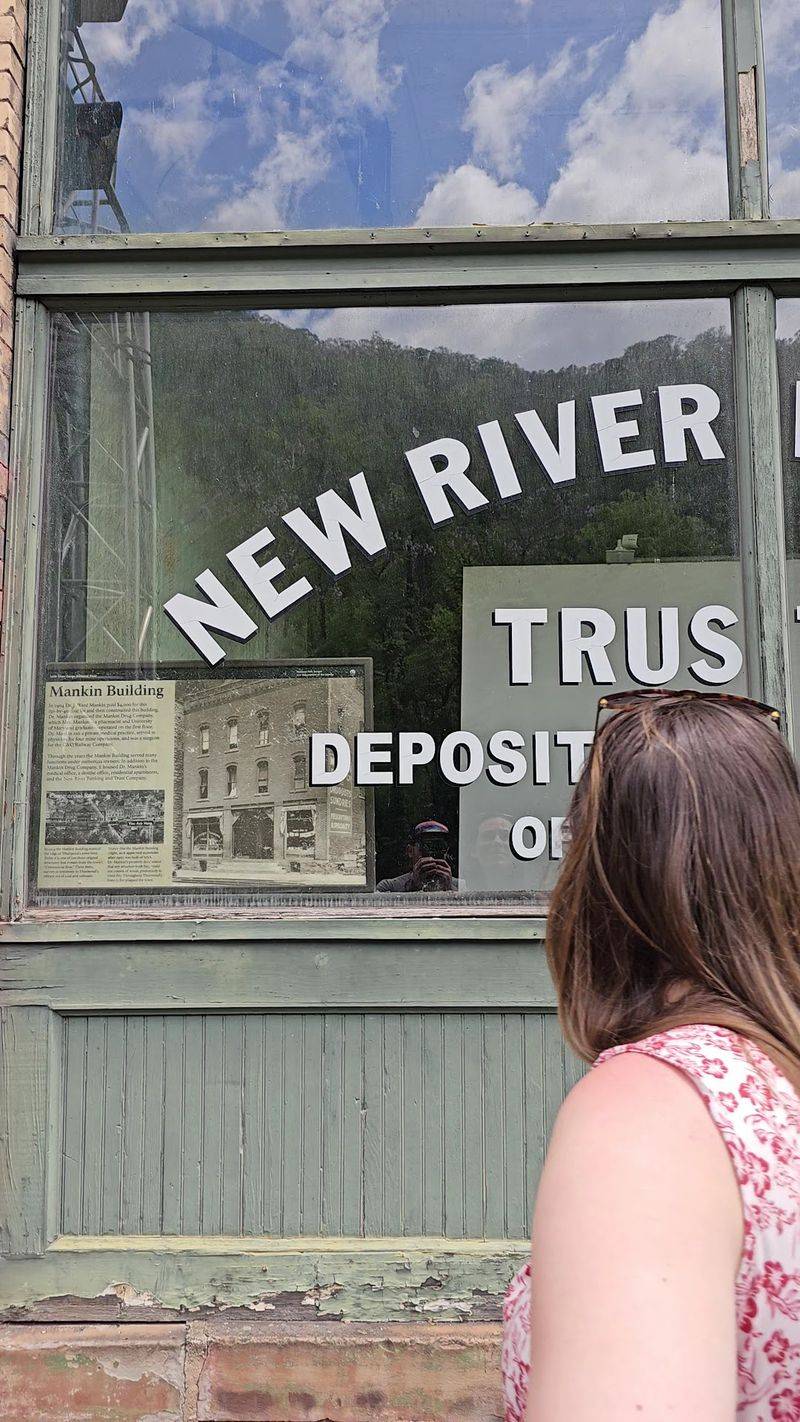
Even though the old buildings stay locked, the town found a clever way to tell its story. Peer through the storefront windows and you will discover historical photographs and detailed timelines mounted right in the glass.
Guests consistently rave about this thoughtful touch. Walking along the weathered brick facades, you can study images of the town during its heyday and imagine the bustle that once filled these very streets.
Several travelers say the photos and timelines truly bring the place to life, transforming quiet ruins into a vivid open-air history lesson. It becomes easy to picture the hotels, shops, and crowds that vanished long ago.
Many visitors admit they lingered far longer than expected, drifting from window to window and soaking up every caption. The self-guided format means you can move at whatever pace suits your curiosity.
For families and history buffs alike, these window displays are a highlight worth savoring. Reading them slowly, with the mountains rising behind you and the tracks stretching ahead, delivers a story that unfolds without a single spoken word.
The Unforgettable One-Lane Bridge Into Town
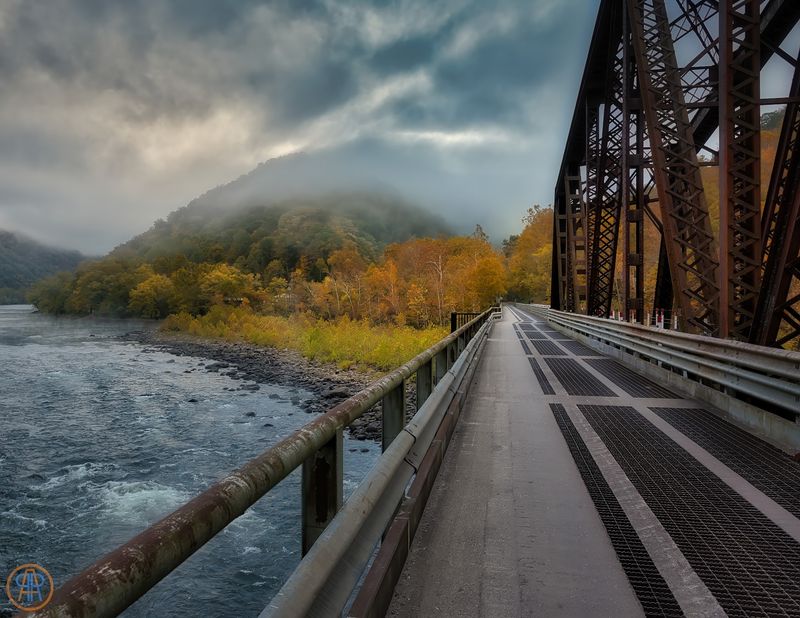
Getting into town is half the adventure, thanks to a memorable one-lane bridge that crosses the New River. Made mostly of metal grate with concrete framing, it feels almost as if it were built for pedestrians rather than cars.
First-timers often describe the crossing as a little unnerving, especially with off-road vehicle traffic sharing the narrow span. Yet nearly everyone agrees the experience is part of what makes arriving here so unique.
Smart travelers suggest doing more than just driving across. Several recommend parking and walking the bridge on foot, since it offers a wonderful vantage point over the town, the tracks, and the river below.
Pedestrian pull-offs along the way let you pause and take in the scenery at your own pace. The views of the water and the historic buildings from up here rank among the most photographed spots in the area.
Just remember that patience helps on such a tight passage. Take it slow, mind oncoming traffic, and enjoy the slightly wild feeling of rolling into a town that time nearly forgot.
The Rare Cantilever Bridge and Weathered Brick Buildings
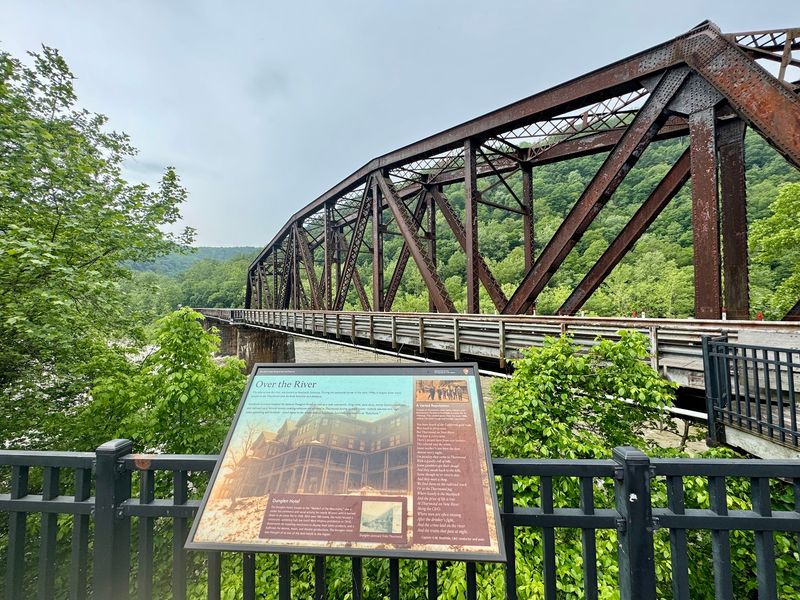
Architecture fans find plenty to marvel at, starting with a striking cantilever bridge that catches nearly everyone’s eye. One visitor admitted they had never seen another quite like it anywhere.
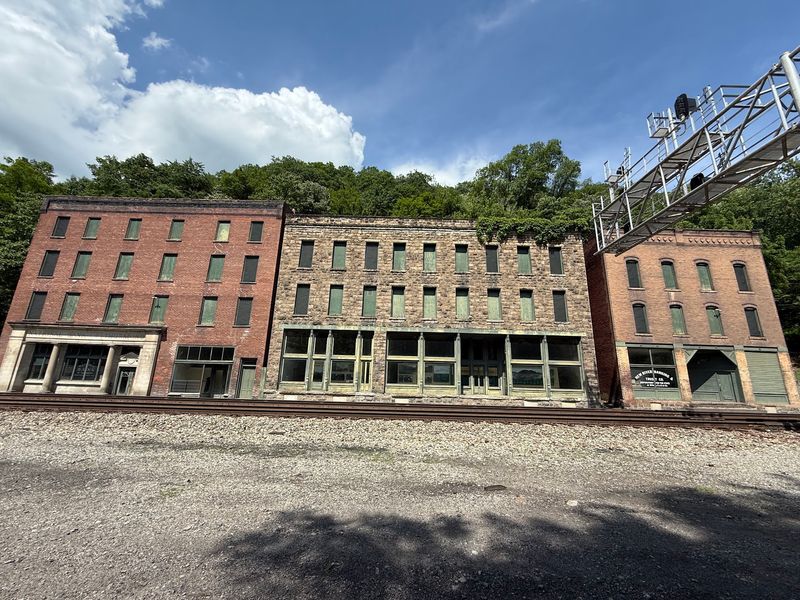
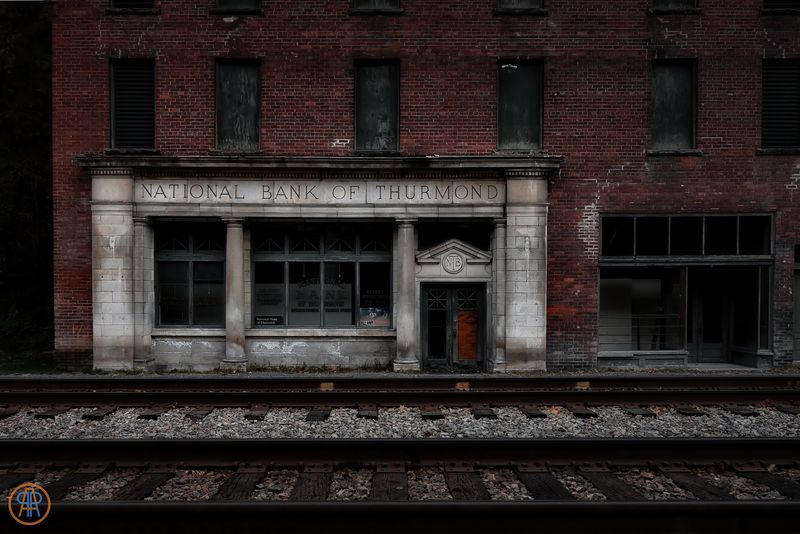
The buildings themselves tell their own tale. The old National Bank structure and its neighbors still stand right along the tracks, their weathered brick faces adding a moody, photogenic charm to the whole scene.
Guests are frequently amazed at how long these structures have endured. Though closed to entry, most remain largely sound, with only a few boarded windows hinting at the wear of passing decades.
Reviewers who love photography call the setting incredibly rewarding. The tracks leading through town, the brick storefronts, and the mountain backdrop combine into compositions that feel plucked from a bygone age.
Wandering among the remaining homes and commercial buildings, you get just enough to piece together what the community must have looked like at full strength. It is the kind of place that rewards slow exploration, where every corner and worn facade carries a whisper of the industry that once thrived here.
Coal Trains, River Views, and Rafters Below
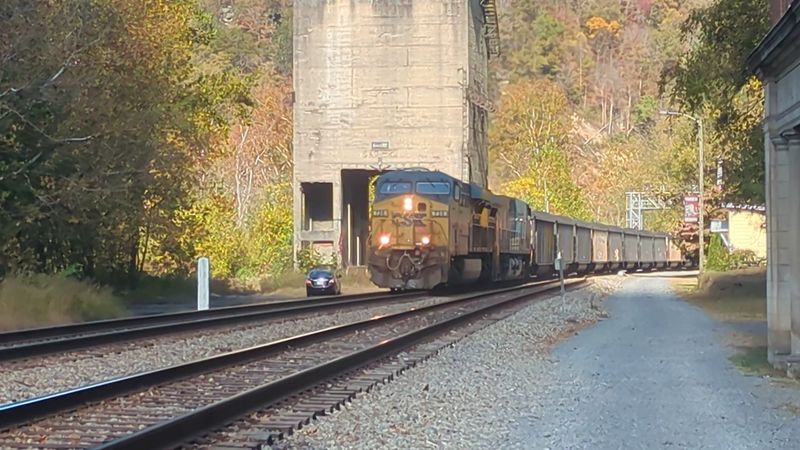
Patience pays off with a bit of live entertainment, courtesy of the still-active tracks. Linger a while and you are likely to watch several coal trains rumble straight through town, a favorite moment for train gazers of all ages.
The setting delivers natural beauty too. From the bridge and the pedestrian vantage points, the New River rolls by in full view, giving photographers and daydreamers alike plenty to admire.
One lucky visitor even caught rafters bouncing through small rapids near town, adding a splash of modern adventure to the historic backdrop. The mix of old railroad grit and lively river action makes the scene feel wonderfully alive.
Wildlife occasionally makes an appearance as well. A traveler exploring on a warm day mentioned spotting a large orb weaver spider and a king snake tucked among the buildings, a reminder that nature has gently reclaimed parts of the town.
Between the passing freight, the flowing water, and the surrounding forest, there is always something to catch your attention. It transforms a quiet history stop into a spot where the gorge itself puts on a show.
Getting There Along Those Famous Winding Roads
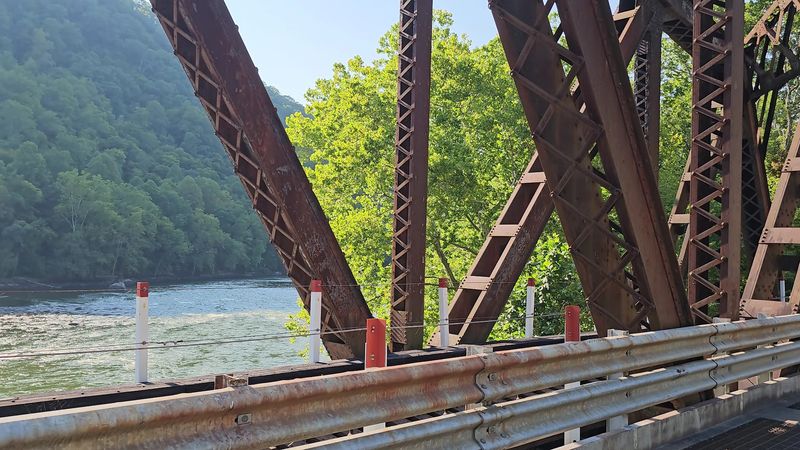
Reaching this hidden town is genuinely part of the story, and the drive earns as much conversation as the destination. The route twists and turns through the gorge, following the railroad tracks down toward the river.
Recent visitors report the road has been repaved, which helps, though it remains narrow with a thin gravel shoulder on one side and plenty of curves. Drivers of oversized vehicles are gently reminded to be courteous on such tight stretches.
Opinions on the drive vary in a charming way. Some found the roads a bit intimidating at first, while others insisted they were no worse than most non-interstate routes across West Virginia, and better than plenty.
Motorcyclists especially seem to adore it, with one calling the ride back a genuine dream. The scenery unfolding along the way keeps the trip engaging from start to finish.
The takeaway from nearly every account is the same: the journey is absolutely worth it. Plan a little extra time to reach town, take the curves slowly, and treat the winding approach as the opening act of your visit.
What to Know Before You Go
A little preparation goes a long way at this remote gem. The historic town is accessible around the clock, and there is no admission charge to walk the grounds, though the visitor center keeps seasonal hours.
Parking is refreshingly easy. Paved spaces sit near the depot, with additional gravel parking across from the center, so finding a spot rarely causes stress even on busier days.
Facilities, however, are minimal. Expect a basic pit-style restroom near the depot with no running water, and understand there is no food, shopping, or other services once you arrive.
Because of that, packing your own snacks and water is wise, especially on hot days when there is little shade for lingering. Sturdy shoes help for the brick pathways and gentle walking.
Some days feature guided tours led by rangers, but you are always free to explore on your own. The website through the National Park Service, listed at nps.gov, is the best source for current center hours and tour schedules.
Above all, arrive with reliable transportation, since there is truly no other way out of this deep-gorge town.
Why This Frozen-in-Time Town Deserves Your Detour
By the time you cross back over that narrow bridge, it is easy to understand why so many travelers say this stop exceeded every expectation. What looks like little at first glance blossoms into something deeply memorable once the history sinks in.
Preserved as part of the New River Gorge National Park and Preserve, the town holds a spot on the National Register of Historic Places. Since 2003, the National Park Service has worked to stabilize over 20 historic structures, keeping this rare snapshot intact for future visitors.
Guests describe it as one of those uncommon places that tells its story without saying a word. The blend of old buildings, active tracks, and mountain quiet leaves a lasting impression on nearly everyone who wanders through.
You do not need hours here to soak it all in, though many admit they happily stayed longer than planned. History lovers, photographers, and curious road-trippers will find it especially rewarding.
For anyone exploring the gorge, the advice rings clear: do not simply drive through. Step out, walk the street, and let this beautifully still corner of West Virginia carry you back in time.
