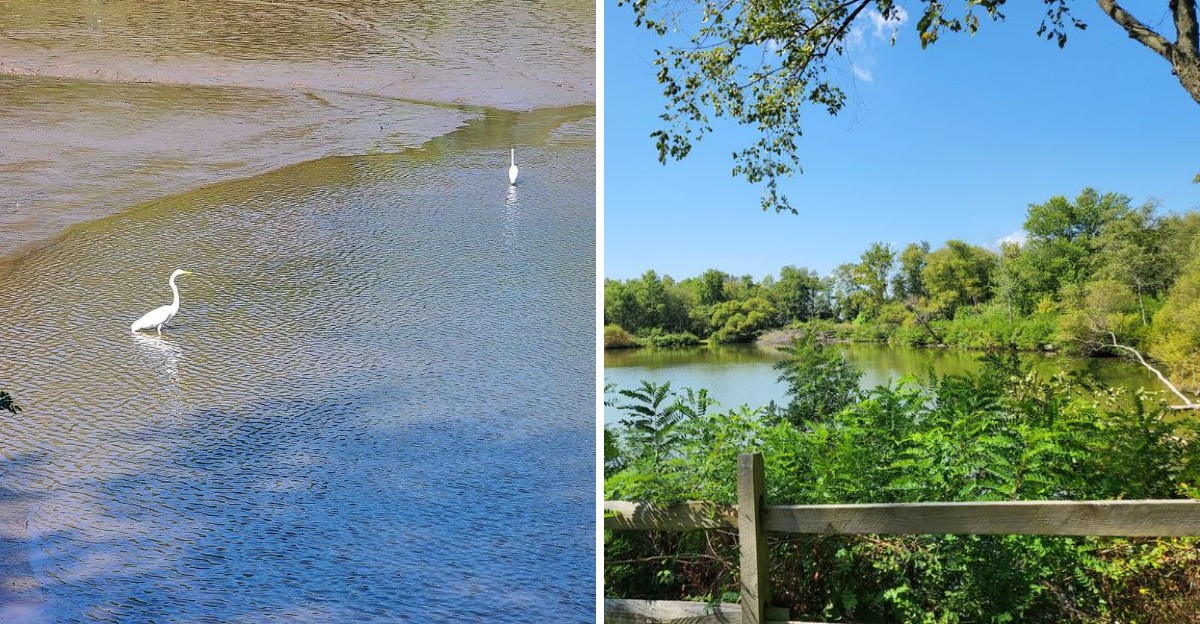
You do not have to travel far to witness something remarkable.
Just a short walk through the woods and you are standing at the edge of a hidden peninsula in New Jersey, where a small island in the harbor becomes a bustling city of great blue herons every spring.
Over one hundred nesting pairs gather there from March through June, building nests, raising chicks, and putting on a show that you will not find anywhere else in the county.
The park itself is a peaceful peninsula with wide, level trails that wind through forest, meadow, and along the river.
You can spot eagles overhead, turtles basking on logs, and deer grazing in the meadows.
The best views are from the southern overlooks, where the rookery comes into full view.
This is the kind of place that reminds you that wildness still exists just around the corner. Bring your binoculars and a sense of wonder.
You will not be disappointed.
Where the Rancocas Creek Meets the Delaware River
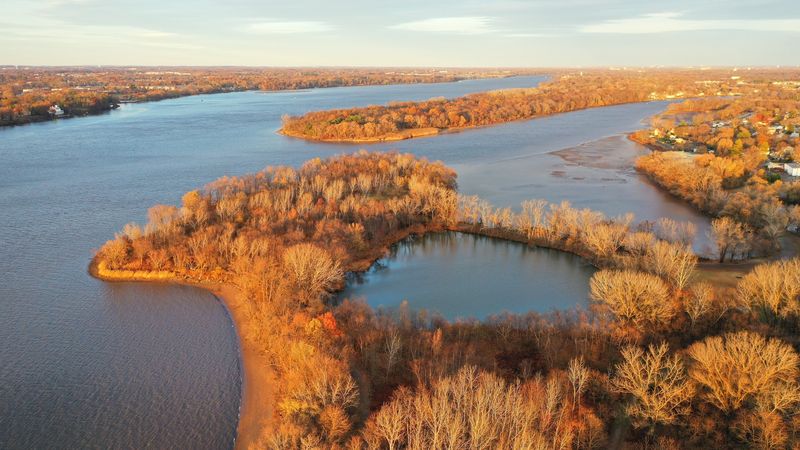
Water surrounds nearly everything here, and that single fact shapes the entire experience. Amico Island Park sits at the point where the Rancocas Creek flows into the Delaware River, a 55-acre stretch of forest, meadow, and wetland in Burlington County.
Despite the name, it isn’t truly an island anymore. A narrow land bridge connects it to the mainland, which makes it a peninsula wrapped by the creek, the river, and Dredge Harbor.
That geography does something special for wildlife. Three different bodies of water meeting in one place creates shallow edges, quiet coves, and feeding grounds that birds and fish clearly appreciate.
For visitors, it means you’re rarely more than a few minutes from a water view. Trails curve toward overlooks, then swing back into the trees, then open up again to another slice of shoreline.
I found the currents oddly hypnotic where the two waterways blend together. You can watch boats slide past while herons cruise overhead, and it never really gets old.
More Than 100 Great Blue Herons Nesting in Spring
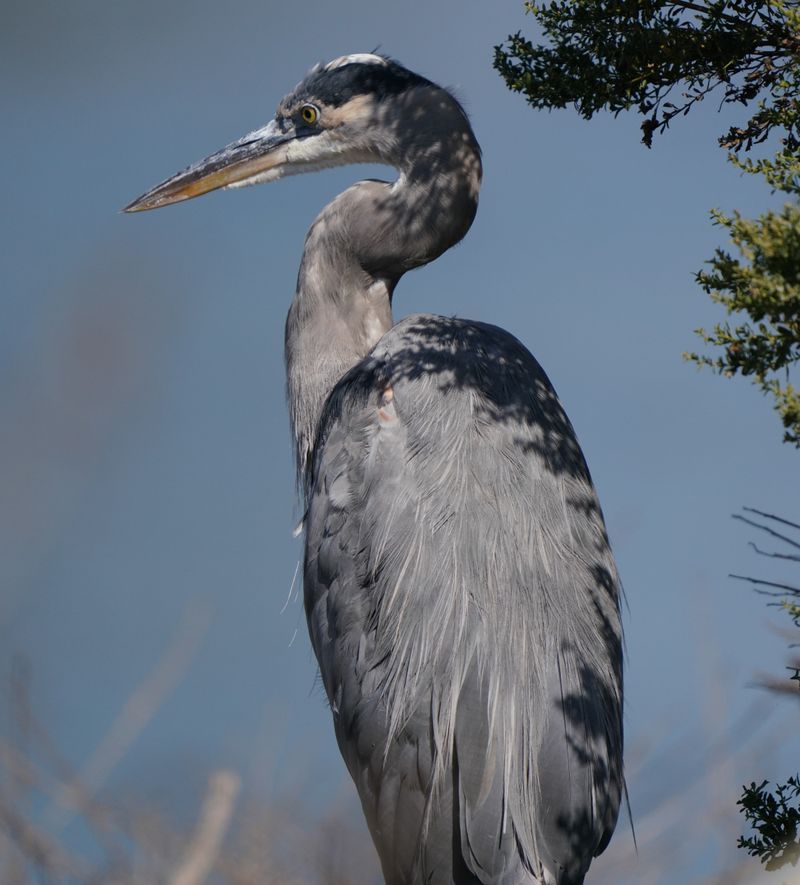
Here’s the headline attraction. On a small island within Dredge Harbor, more than 100 great blue herons gather to nest between March and June, and the whole colony is visible from the park’s south overlooks.
Seeing that many big birds in one cluster of trees does something strange to your sense of scale. Nests sit stacked in the branches like untidy baskets, and the birds move between them with that slow, deliberate wingbeat herons are known for.
Early spring is when things get busiest. Courtship displays, nest repairs, and constant comings and goings turn the island into a nonstop performance.
Bring binoculars. The colony sits across the water, so the naked eye gives you shapes and movement, while a decent pair of binoculars gives you feather detail and behavior.
A rookery of this size is genuinely uncommon, and the fact that you can watch it from a public trail without disturbing a single nest feels like a small gift.
South Overlooks Built for Watching the Rookery
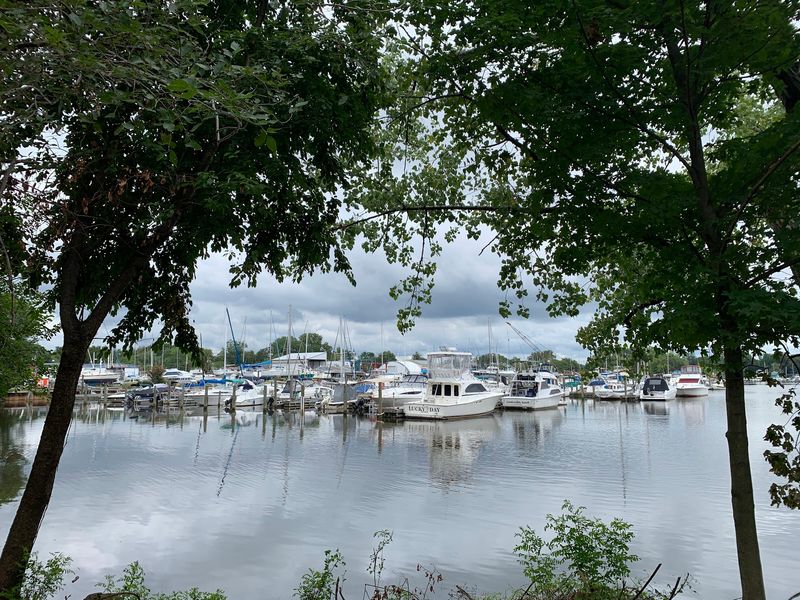
Not every park hands you a front-row seat, but the south overlooks here do exactly that. Positioned facing Dredge Harbor, they line up directly with the heron island, which makes finding the colony almost effortless.
Timing matters more than gear. Mornings tend to be calmer, the light falls better across the harbor, and bird activity picks up before the day warms.
Benches and open sightlines mean you can settle in for a while without craning your neck. Some people stay ten minutes, others linger for an hour watching nest exchanges.
Because the birds are across the water, your presence doesn’t stress them. That’s a rare and valuable balance in wildlife viewing.
Marinas and moored boats fill the background, which creates an odd but likable contrast. Working waterfront on one side, wild nesting colony on the other.
Photographers with long lenses do well here, though honestly even a phone captures the atmosphere better than you’d expect.
Flat Gravel Trails That Loop the Whole Peninsula
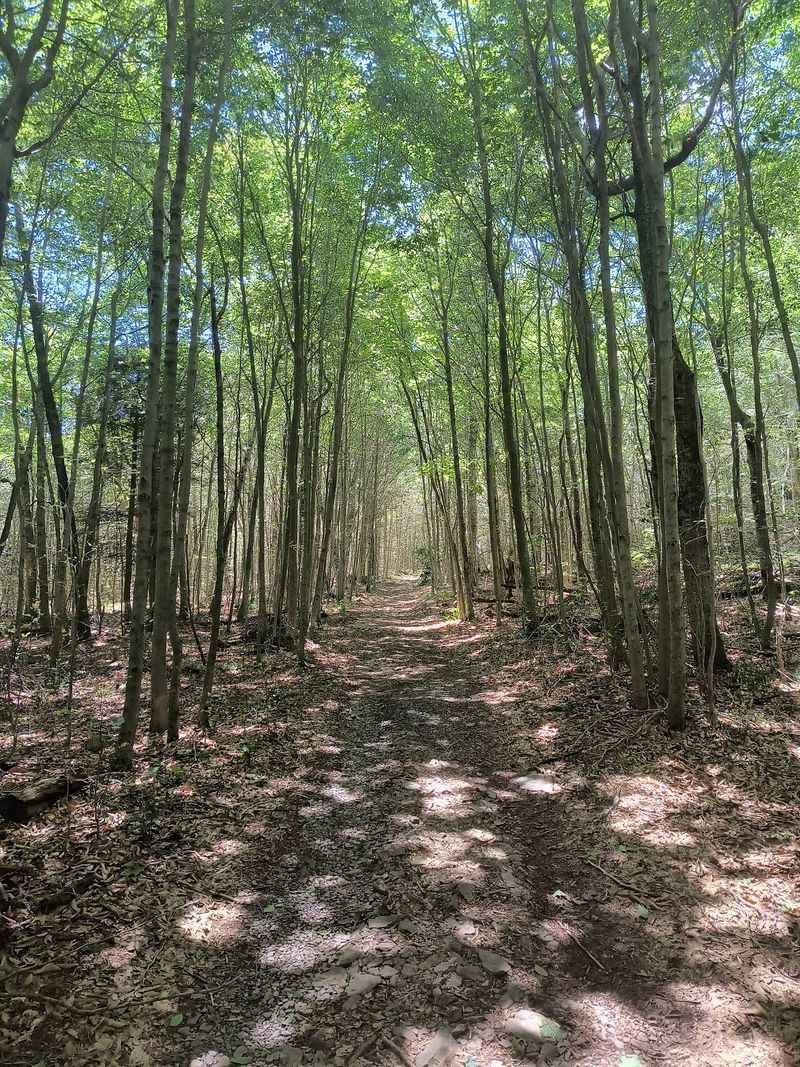
Roughly two miles of trail wrap around the peninsula, and the routes are marked with colors so keeping your bearings is simple. Red, blue, and yellow paths branch and reconnect, letting you stretch a short walk into something longer.
Most of the walking is flat. Wide gravel sections dominate, though narrower dirt paths peel off into thicker woods for anyone who wants a bit more cover.
Families move slowly here and that’s fine. Benches appear at reasonable intervals, and there’s no pressure to finish a loop quickly.
Strollers are the one tricky part. Stones and exposed tree roots make wheeled travel bumpy, so a carrier often works better with very small kids.
After rain, certain stretches turn muddy near the wetter edges. Waterproof shoes solve that instantly and let you keep going without picking your way around puddles.
Bikes are welcome too, and the wider paths handle them comfortably. Getting lost is nearly impossible when water surrounds you.
Over 200 Bird Species Recorded Across the Seasons
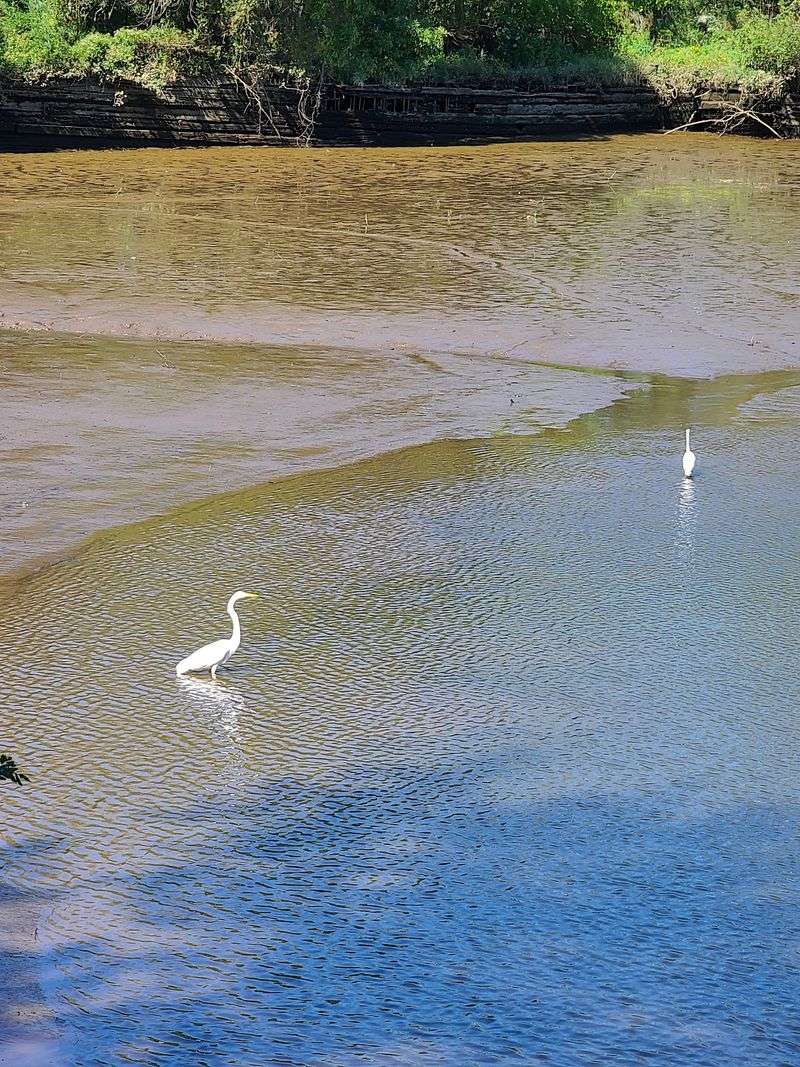
Herons steal the spotlight, but the species list here is remarkable. More than 200 bird species have been recorded at Amico Island Park, giving it the widest variety among the county parks in the area.
Spring migration brings waves of warblers moving through the canopy. Their songs come from everywhere at once, and picking out individual birds becomes a fun puzzle.
Summer belongs to the residents. Yellow warblers and Baltimore orioles show up regularly around the meadow edges, flashing color against the green.
Autumn shifts the mix again with raptors and additional warbler species passing overhead. Migration turns the same trail into a completely different outing week by week.
Winter is quieter but far from empty. Bufflehead, canvasback, and mergansers work the open water of the river and creek.
Bald eagles appear throughout the year, and spotting one soaring above the harbor tends to stop conversations mid-sentence. Keep looking up.
Small Gravel Beaches Along the River Edge
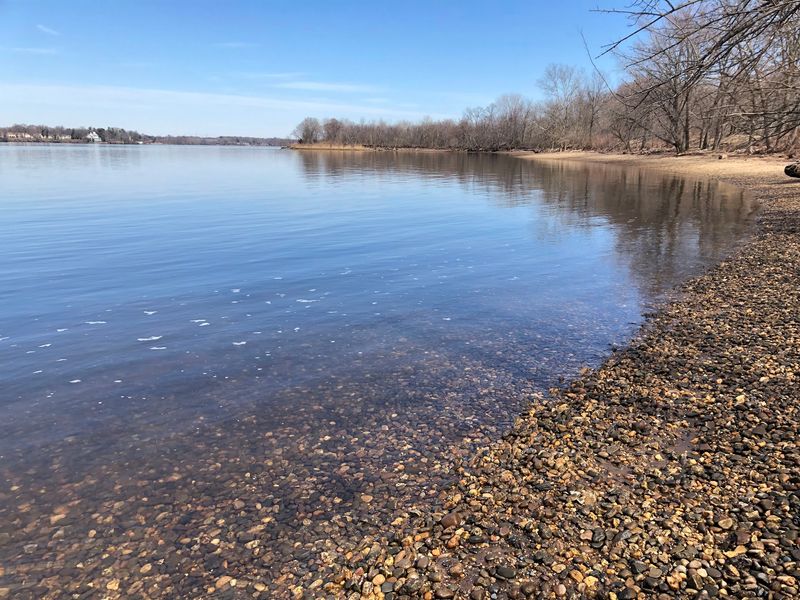
Set along the shoreline are little gravel beaches that feel like a bonus nobody advertised. Shells, smooth stones, and bits of driftwood collect there, and kids tend to lose an hour without noticing.
Swimming isn’t allowed, so treat these spots as places to sit rather than wade. Stone skipping, though, is basically the local sport.
The sound is what stays with you. Water lapping against pebbles, mixed with wind through the trees, makes a surprisingly effective reset button.
On warm days the breeze coming off the river keeps things comfortable even when inland spots feel heavy. Shade from the tree line helps too.
Access points appear along the yellow trail in particular, which is worth knowing if you’re planning your route around beach stops.
Bring a bag for anything you carry in. River shorelines catch drifting litter, and a lot of regulars quietly pack out more than they brought.
Deer, Turtles, and Butterflies Sharing the Trails

Birds aren’t the only residents. White-tailed deer show up often, grazing in the meadows or slipping between trees with barely a sound, and they seem remarkably unbothered by people.
Eastern cottontail rabbits dart through the brush at trail edges. Blink and you miss them.
Freshwater ponds add another layer of life. Turtles line up on logs to soak in sunshine, and dragonflies patrol the surface all summer long.
Meadows fill with butterflies during the warmer months, including tiger swallowtails and viceroys. Their movement gives the open grassy areas a constant flicker of color.
Ticks are part of the deal in wooded New Jersey habitats, so long pants and a quick check afterward are smart moves. A small precaution keeps the day pleasant.
What makes the wildlife here memorable is how ordinary it feels. Nothing is staged, nothing is fenced, and every walk delivers a slightly different cast.
Philadelphia Skyline Views From the Waterline
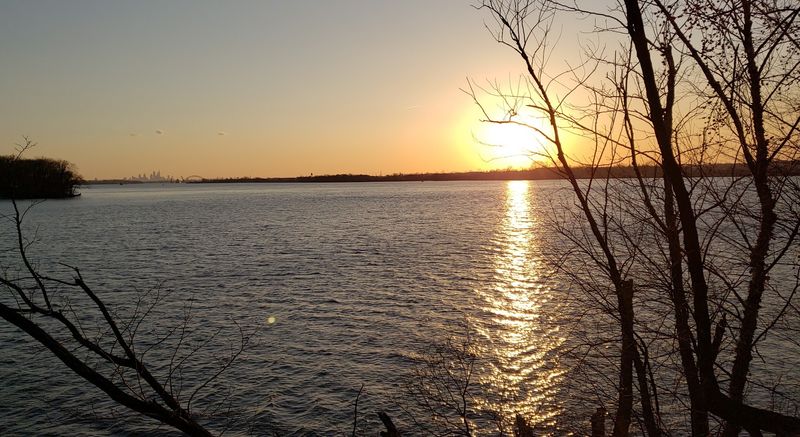
A surprise waits at certain overlooks. Look across the Delaware on a clear day and the Philadelphia skyline rises in the distance, small but unmistakable.
The contrast is what makes it fun. Herons in the foreground, city towers in the background, all in one glance.
Parts of Northeast Philadelphia are visible from some angles too, along with the marinas that hug the nearby shoreline. It’s a reminder of how close this quiet peninsula sits to serious population density.
Late afternoon light tends to flatter the view, especially when the sky clears after rain. Haze can hide the skyline entirely on humid days.
Several vantage points along the river-facing trails deliver the shot, so wandering a bit is worthwhile rather than settling at the first opening.
Standing between wild shoreline and distant skyscrapers is a strange, pleasant feeling. Nature holds its ground here, and the city just watches from across the water.
Picnic Tables, Benches, and Slow Afternoons
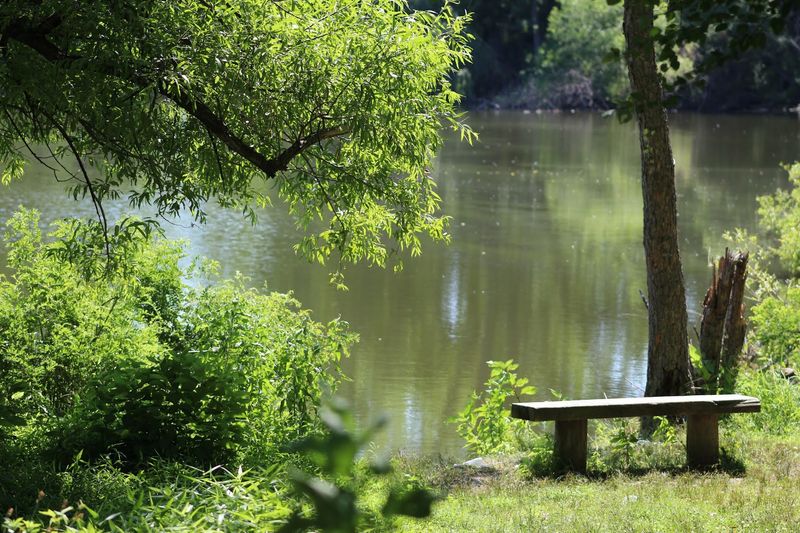
Plan for lingering. Picnic tables sit scattered across the park, some tucked under trees and others positioned where you can watch the water move.
Benches appear regularly along the trails, which matters if you’re walking with young children or anyone who prefers frequent breaks.
Facilities are simple and rustic. A portable restroom sits near the entrance, so most visitors handle that before arriving.
Parking is straightforward and rarely a headache, and there’s a bike rack near the entrance area along with a spot for dog waste disposal.
Dogs are a common sight here. Wide trails give everyone room to pass comfortably, which keeps things relaxed even when several groups overlap.
Packing a lunch turns a short visit into a genuine outing. Sandwiches taste better with river breeze and heron silhouettes in the distance, and nobody’s rushing you off the bench.
Planning the Right Season for Your Visit
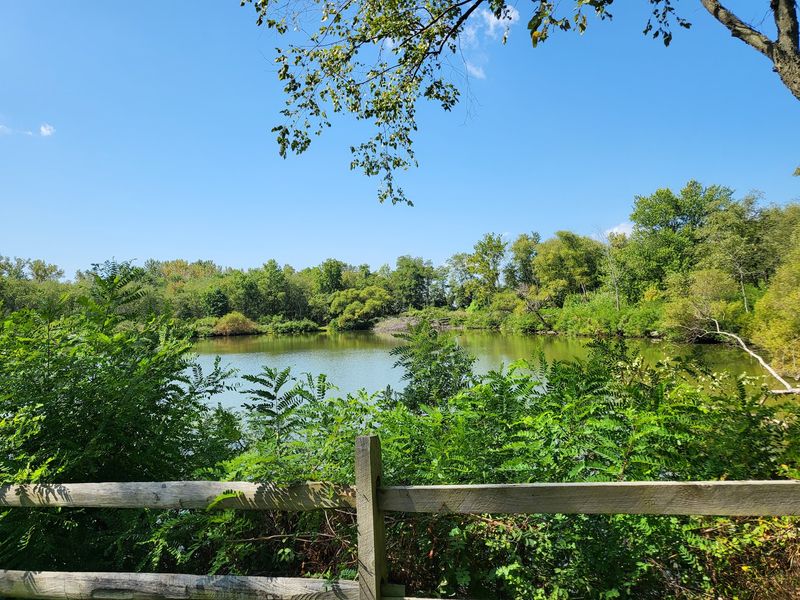
Choosing when to go changes what you’ll see. March through June is the window for heron nesting, and early spring brings the most dramatic activity as the colony courts and builds.
Spring also delivers migrating songbirds, so the trails feel noisy in the best possible way. Two attractions for the price of one walk.
Summer leans lush and green, with orioles, dragonflies, and butterflies filling the meadows. Shade along the wooded sections keeps midday walks manageable.
Fall might be the most photogenic stretch. Foliage colors the peninsula while raptors and late migrants pass overhead.
Winter strips the landscape bare and opens up sightlines across the water, which helps when scanning for waterfowl and eagles. Fewer visitors means more solitude.
Whichever season you pick, Amico Island Park rewards an unhurried pace. You’ll find it at 81 Norman Ave, Riverside, NJ 08075, one of the quieter wildlife escapes in New Jersey.
