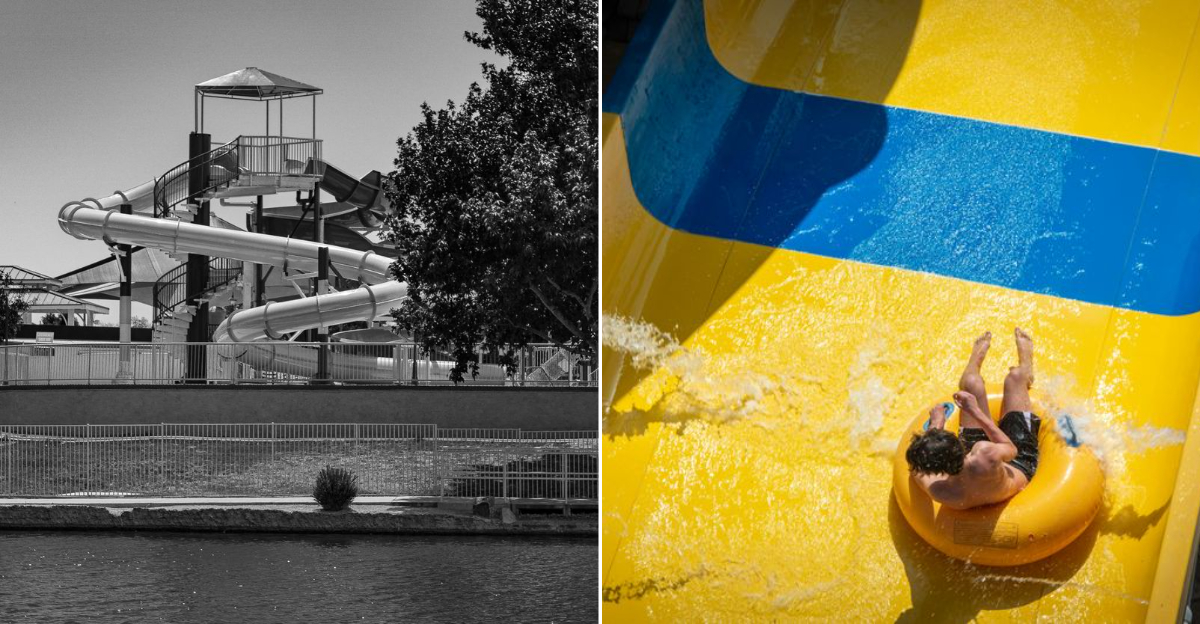
You know how some places refuse to leave the conversation, even when the buildings are gone? That is Peony Park in Omaha, the water soaked memory that keeps splashing back into road trip plans and family stories across Nebraska.
We could cruise through the city and still feel that pull at 78th and Cass, like you can almost hear lifeguard whistles and see sun on the water.
If you want to trace a summer legend, this is the one to chase. People still mark time by it, comparing today’s summers to the ones that smelled like sunscreen and concrete there.
Even now, standing at that corner feels less like looking at a former attraction and more like standing on a paused frame of the city’s past. Some places close, but this one never really packed up and left.
When Omaha Built A Park For Summer Escapes
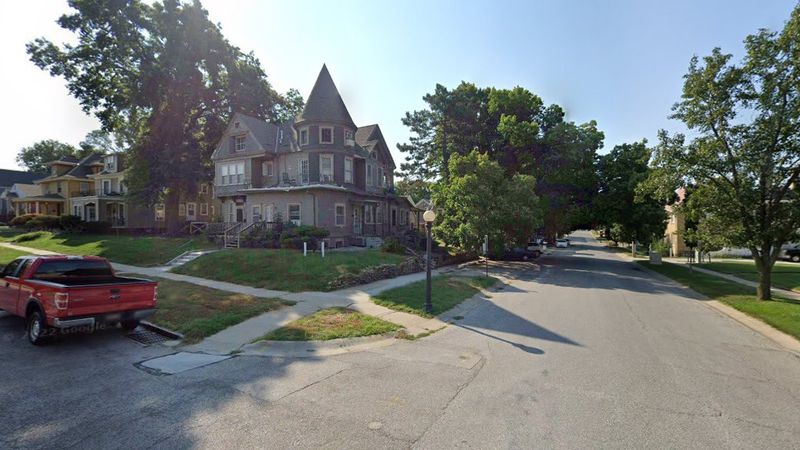
Picture us rolling up to 78th and Cass in Omaha and trying to imagine a giant blue pool shimmering where the parking lots sit now. You would have walked through gates, heard music floating over the water, and seen slides curling into that broad Nebraska sky.
It was the kind of place that turned a regular afternoon into summer.
Back then the pool sprawled across acres, with bleachers, shade umbrellas, and towering structures that framed the horizon. The water caught the light like glass, and the whole scene felt open and friendly.
If you grew up nearby, you probably knew the smell of sunscreen and pavement warming under bare feet.
What I love is how the park stitched itself into city life without trying too hard. People met there, waved across the deck, and settled into a rhythm that felt easy.
Even today, Omaha carries that memory like a tune you can hum.
There was a certain freedom in how time stretched there, measured more by whistles and sunburn than by clocks. Parents lingered at the edges, kids ran dripping from one end to the other, and laughter echoed in a way that felt permanent.
It was loud, bright, and ordinary all at once, which is why it lasted in people’s minds.
We could stand at the corner and line up the past with the present, tracing where the slides once skimmed. The streets tell part of the story, and the rest sits in photos tucked away in family albums.
You can almost point to the exact spot and say, right there, that is where summers cracked open.
Why Peony Park Became A Local Tradition
So why did Peony Park stick the way it did?
At its core, it gave people a place to gather that felt both grand and familiar.
Big enough to feel like an outing, close enough to become routine. ž
You did not have to plan weeks ahead or turn it into a production. You just went, trusting the day to sort itself out once you arrived.
The water was the anchor.
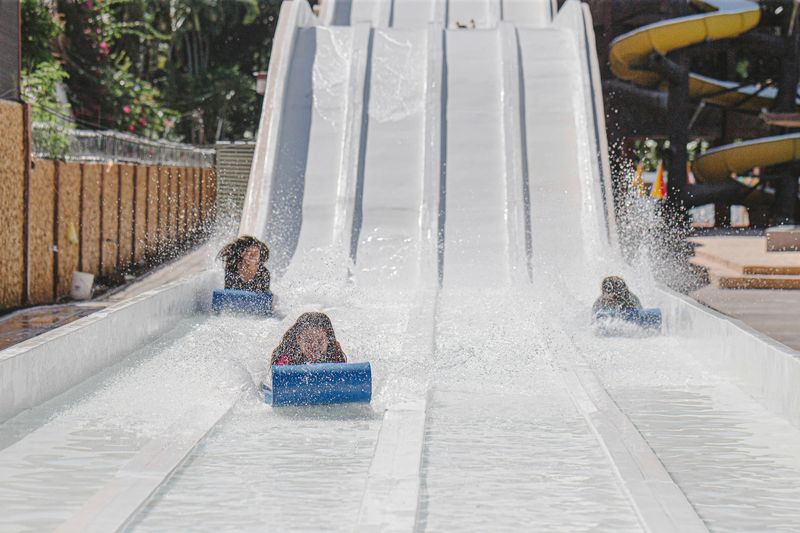
Slides, sprays, and a broad swimming basin stretching under the Nebraska sun.
It made sense to meet there because everyone already knew how to get there.
No directions needed, just a loose plan and maybe a towel over your shoulder.
The water reflected the sky, the noise carried easily, and the whole place felt alive without being overwhelming.
Traditions grow out of repetition, and the park kept a steady rhythm.
After work, on weekends, during school breaks, the gates were open.
Omaha shaped habits around it without noticing. It became the easy answer to “What should we do today?” especially when the heat pressed in and summer days felt long.
Ask around and the stories overlap.
Someone learned to swim there. Someone watched fireworks from the deck.
And someone remembers a silly announcement over the speakers.
These moments stack quietly, becoming shared reference points years later.
What lingered most was how normal it all felt.
Peony Park did not try to impress. It simply showed up, summer after summer, and gave people space to be together.
That kind of consistency turns places into memory, and memory into something a city keeps.
The Pool That Once Drew The Biggest Crowds

That pool was the magnet. You would step onto the deck and feel the air shift cooler from the water and shade.
It was wide, bright, and confidently the center of attention.
Even before you dipped a toe in, your shoulders loosened, like your body understood the assignment.
The day slowed right there at the edge, before anything even began.
The slides rose playfully against the skyline, looping down like ribbons.
Ladders, rails, and platforms formed a kind of geometric sculpture.
Kids traced their paths with their eyes, already picking favorites.
Even in stillness, the place seemed to hum, as if motion was waiting to happen.
What stands out in the stories is scale.
People talk about how it stretched across the eye, how the lanes felt endless, how the shallows opened into deeper blue.
It was more than a swimming spot. It was a landmark.
You did not just swim there, you spent the day there, and time softened around it.
Sound mattered too. Whistles cutting through chatter.
Water slapping concrete.
Flip-flops scuffing, radios playing, a parent calling a name that echoed longer than expected.
Those noises layered into something familiar, a summer language everyone understood.
There were small rituals baked into the space.
Claiming a chair. Laying out towels just right.
Meeting back by the ladder after an hour that somehow vanished.
Now when we drive past, it takes a moment to translate storefronts back into splash and sunlight.
If you pause long enough, you can almost hear it.
A memory does not need water to stay wet.
Family Summers Shaped By One Place

You know those places where the car knows the turn by itself. Peony Park became that for so many families around Omaha and across Nebraska.
The address at 7800 Cass Street got saved in memory like a contact. You did not need directions after the first visit.
You just went.
Parents loved the simplicity of it. Park, settle on a bench, point to the meeting spot, and let the day roll.
The design served the routine without fuss. Shade where you needed it.
Open space where it mattered. Nothing tried too hard, and nothing got in the way of staying all afternoon.
Kids remember height lines and that first brave climb to a slide platform. The pause at the top always felt longer than it was.
Teens remember friendships stretching out like towels on warm concrete. Groups formed, split, and reformed all day without planning.
Everyone remembers the walk back to the car with hair still damp, skin tight from sun and chlorine, and feet dusty again the second they hit the pavement.
There was comfort in how predictable it was. Same entrance.
Same smells. Same sounds greeting you every time.
That kind of repetition builds trust. It tells you that summer is doing what it is supposed to do.
Even though the pool is gone, the shape of those days stays put. You hear it when people list their summer traditions.
Right after parades and ball games, this park still sneaks into the lineup. Not as a place you visit anymore, but as a reference point.
A shared memory. A shortcut to remembering what free time once felt like.
Peony Park did not need to last forever to leave a permanent mark. It already did its job.
How Entertainment Habits Began To Shift
Here is where the story pivots. People started spending weekends differently, and the crowd thinned.
Other attractions pulled attention, and staying home got easier. Air-conditioned malls, cable TV, and backyard pools quietly rewrote what a summer day looked like.
The habit of piling into the car faded a little more each year.
Operating a big water complex takes staff, maintenance, and steady visitors. Lifeguards, ticket booths, pumps, repairs, constant cleaning.
When those lines waver, the numbers stop smiling. A missed weekend hurts.
A soft season lingers. That slow change nudged the park off balance in ways no one could fix with a fresh coat of paint.
It was not a single dramatic moment. No final splash or grand closing weekend that everyone remembers the same way.
Just a gradual drift, one season to the next, until the empty chairs were hard to ignore. You could feel the echo growing as footsteps spread farther apart and familiar voices stopped showing up on cue.
Regulars noticed first. The people who always knew where to sit.
The ones who remembered busier days without trying to. They still came, but the rhythm felt off, like a song played a little too slow.
Nebraska towns all have a version of this tale. A beloved spot that gets outpaced, then outgrown, then out of mind.
Except here, it never really left the conversation. Peony Park lingered as a reference point, a before-and-after marker people used without realizing it.
Even in its quiet years, it stayed present. Mention the corner and someone has a memory ready.
That is how you know a place mattered. It may fade from the calendar, but it does not fade from the way a city remembers itself.
Why The Corner Still Feels Like A Landmark
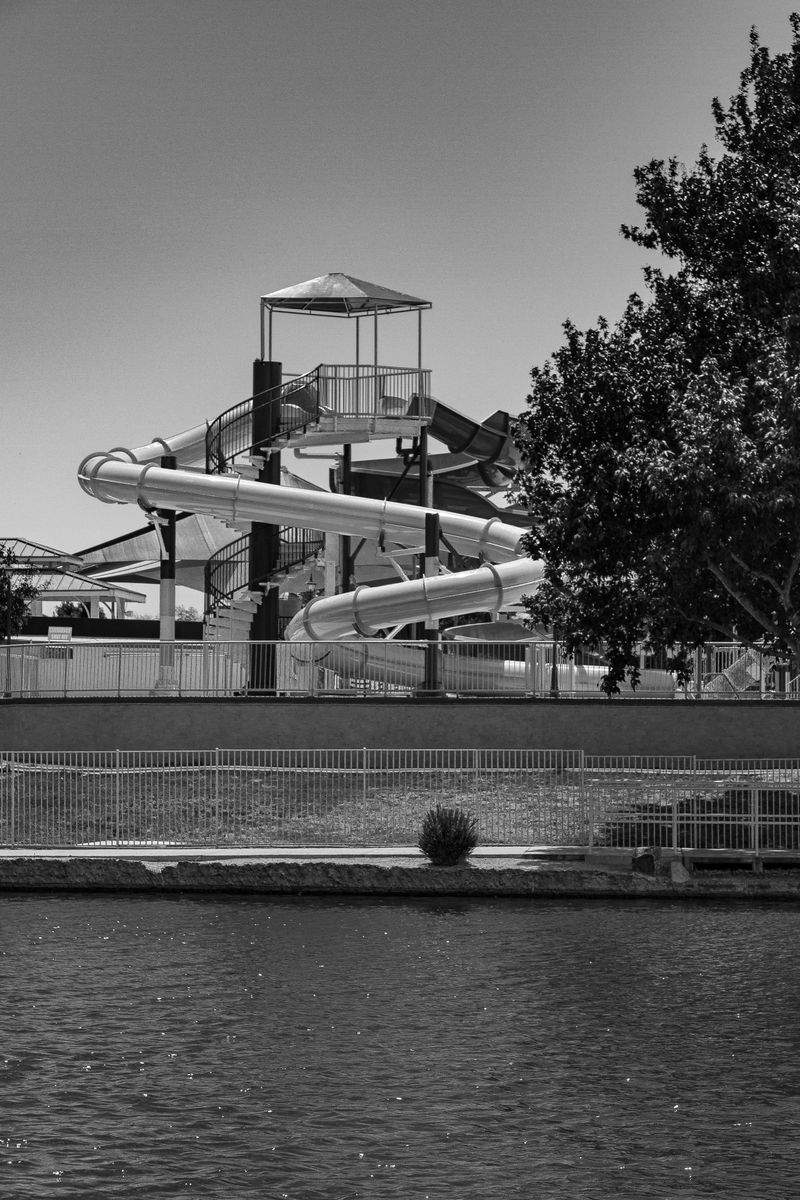
Here’s a tightened version that keeps every sentence as its own paragraph and preserves the quiet, reflective tone, just a little cleaner and more deliberate.
Even with everything gone, that intersection still asks you to slow down.
You might not notice it the first time, but once you know the story, the space feels heavier.
There is nothing visually dramatic left to point at.
No water, no slides, no gates.
Yet people still refer to it by name, not by what replaced it.
Directions get given using the park, not the stores.
Turn where Peony Park used to be.
It is said casually, like the place never left.
That is how landmarks work when they sink into memory instead of stone.
They become mental geography.
You can stand there today and feel how open it once was.
The sky still stretches the same way.
Traffic moves, signs change, buildings rotate in and out, but the footprint lingers.
It is not nostalgia playing tricks. It is familiarity refusing to loosen its grip.
Some corners carry history loudly. Others carry it patiently.
How Peony Park Keeps Showing Up In Everyday Life

Here’s a refined version that keeps the cadence and meaning, just a touch more focused and intentional.
What is surprising is how often the park still slips into conversation.
Not as a story, but as shorthand.
Someone mentions summers being hotter now.
Someone else compares crowds to how busy Peony Park used to be.
Parents describe childhood freedom by referencing it without explanation.
Friends realize they both spent Saturdays there without ever planning to talk about it.
The park became a measuring stick.
For time, and for fun. For what summer felt like when days were less managed.
Even people who never went know what it was.
They absorbed it through stories, photos, and offhand remarks.
That is how places survive past their physical limits.
They embed themselves into language.
Peony Park no longer needs water or whistles to stay present. It already moved into memory.
And memory, once shared enough times, has a way of staying put.
Dear Reader: This page may contain affiliate links which may earn a commission if you click through and make a purchase. Our independent journalism is not influenced by any advertiser or commercial initiative unless it is clearly marked as sponsored content. As travel products change, please be sure to reconfirm all details and stay up to date with current events to ensure a safe and successful trip.
