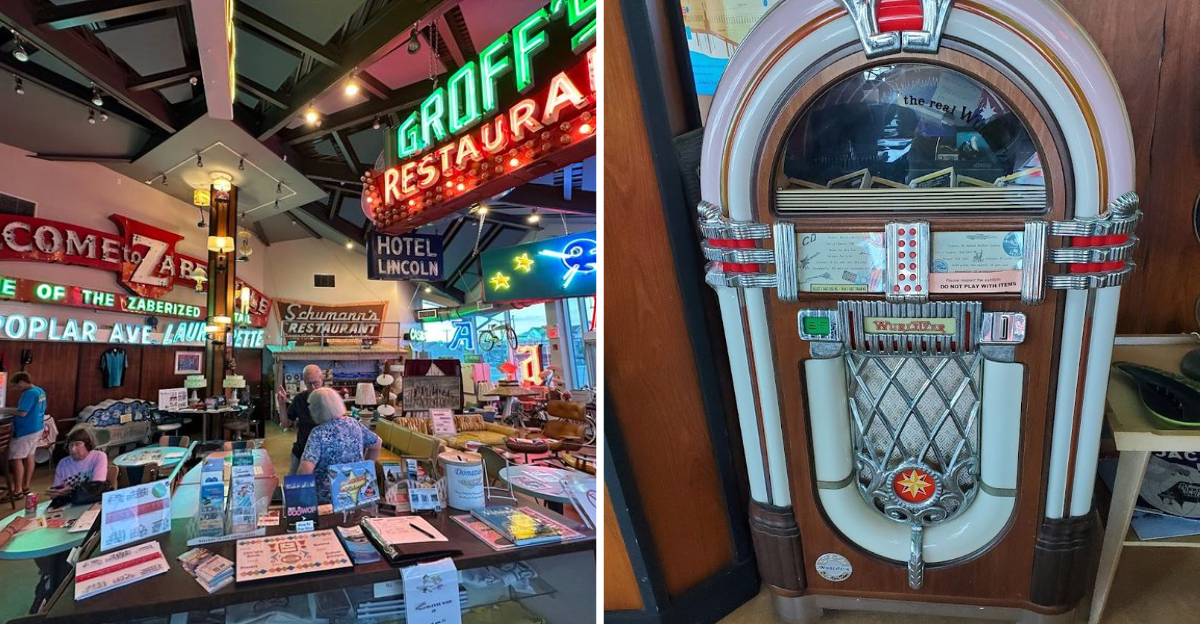
Walk through the doors of this Wildwood gem and suddenly it’s 1959.
Pink neon glows, vintage jukeboxes hum, and those poodle skirts look ready to dance.
Housed in an old diner, New Jersey’s Doo Wop Experience Museum doesn’t just show you the past it hands you a milkshake and says “have a seat.”
Free admission, zero attitude, and enough mid century magic to make anyone grin.
Just try leaving without tapping your toes. We dare you.
The Building Itself Is a Living Time Machine
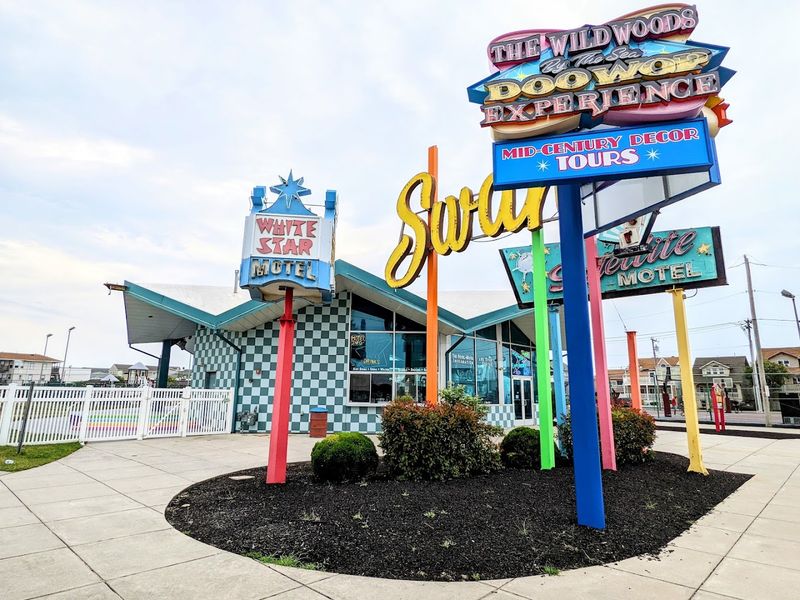
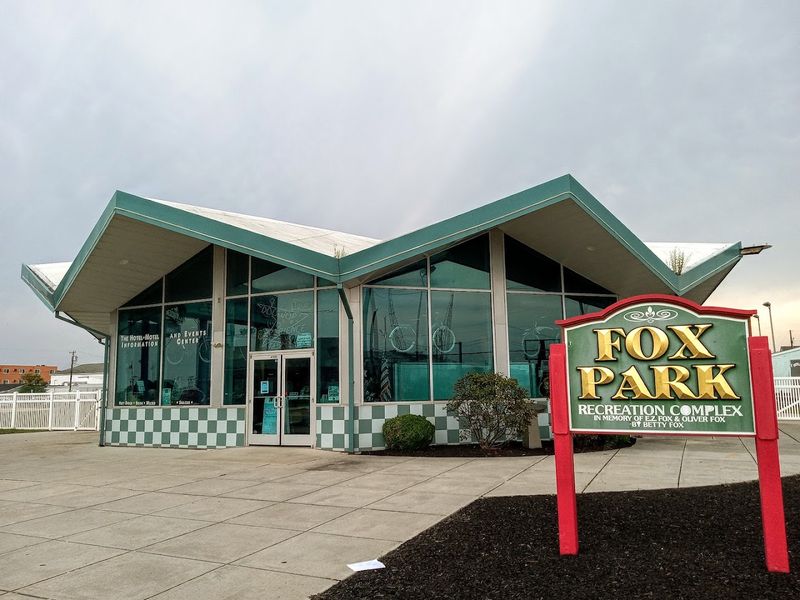
Before you even walk through the door, the building stops you in your tracks. The Doo Wop Experience Museum is housed inside what was originally the Surfside Restaurant, built in 1960.
That dramatic circular shape and the folded plate rooftop are not decorations, they are original features from a time when architects dreamed in bold, futuristic curves.
After the Surfside closed in 2002, the structure was carefully disassembled and rebuilt at its current location on Ocean Avenue in 2007. That level of dedication to preservation tells you everything about how seriously this community takes its architectural heritage.
You are essentially walking into a rescued artifact.
Standing outside and just looking at it feels like flipping through an old magazine and realizing the photos are actually windows. The building holds its era with such confidence that even passersby slow down to take a second look.
It earns every bit of that attention without trying too hard.
Neon Sign Garden That Glows With Wildwood History
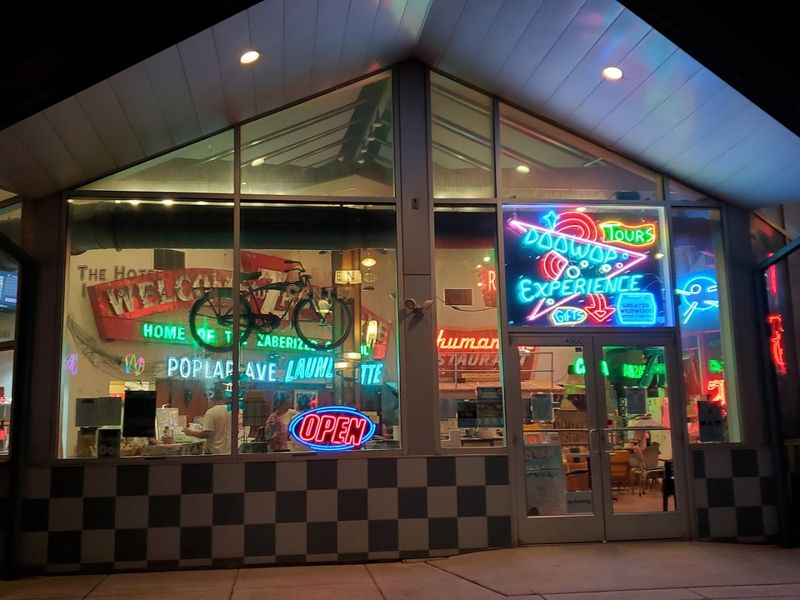
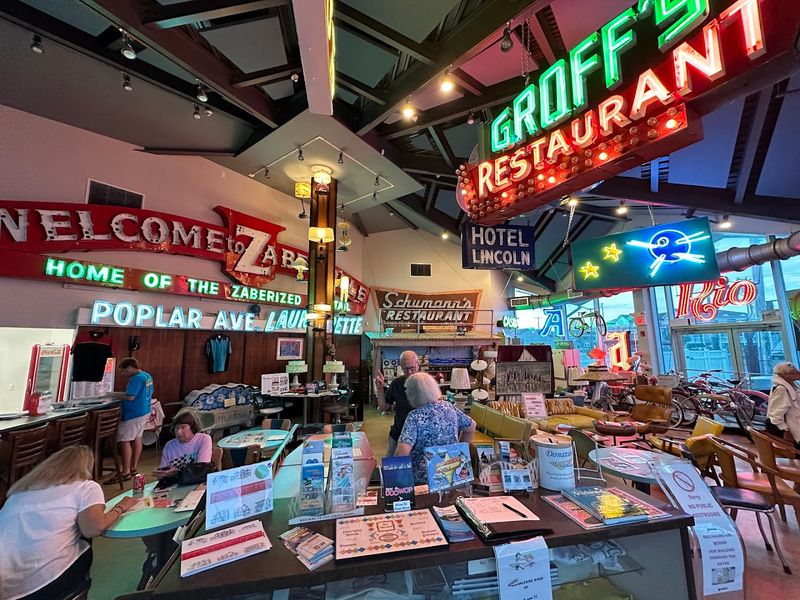
Few things hit you with nostalgia quite like a perfectly restored neon sign glowing in the evening air. The museum’s neon sign garden is a curated collection of rescued signs salvaged from Wildwood landmarks that no longer exist.
Each one carries a story, a motel that once buzzed with summer guests, a diner that served the best milkshakes on the shore.
These signs were not simply collected and stacked in a corner. They were restored with care and arranged so visitors can appreciate both the artistry and the history behind each piece.
The craftsmanship involved in vintage neon work is genuinely impressive up close.
Wildwood has long been recognized as home to the largest concentration of mid-century commercial architecture in the entire country. The neon garden makes that legacy visible in the most colorful way possible.
Bright pinks, electric blues, and warm ambers light up the space and remind you that once upon a time, these signs were the Instagram of their era.
Mid-Century Furniture That Belongs in a Design Museum
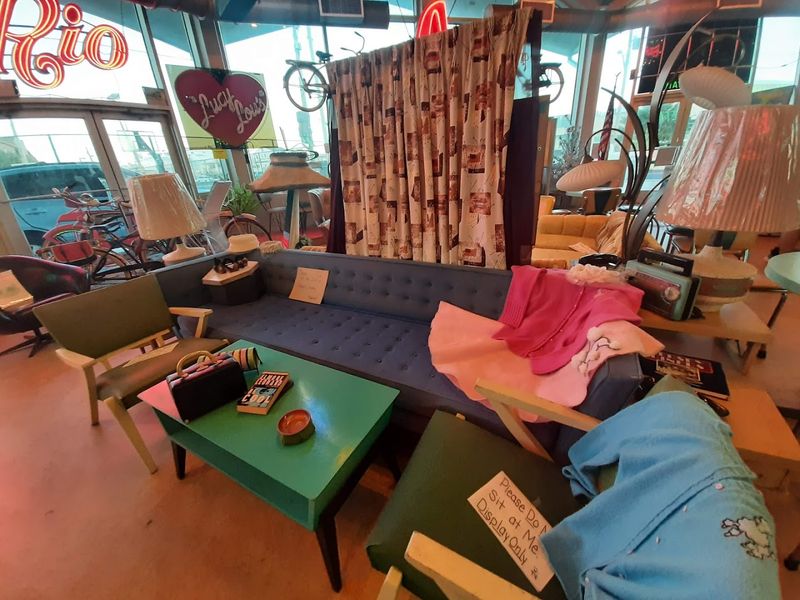
Walking through the interior feels like stumbling into a very stylish living room that someone froze in 1958. The collection includes Heywood-Wakefield furniture, Herman Miller chairs, and selected pieces from designers Ray and Charles Eames.
These are not cheap reproductions either, they are the real thing, preserved and displayed with genuine pride.
Mid-century modern design had a philosophy behind it. Clean lines, functional shapes, and a belief that everyday objects could be beautiful.
Seeing these pieces together in one space makes that philosophy feel alive rather than academic.
For anyone who has ever admired a retro chair in a vintage shop and wondered what it looked like in its original context, this collection answers that question beautifully. The furniture sits alongside atomic-age lamps and curved couches that complete the picture.
It is the kind of room that makes you want to sit down, put on some doo wop, and just exist in that moment for a while.
Jukeboxes and the Soundtrack of an Era
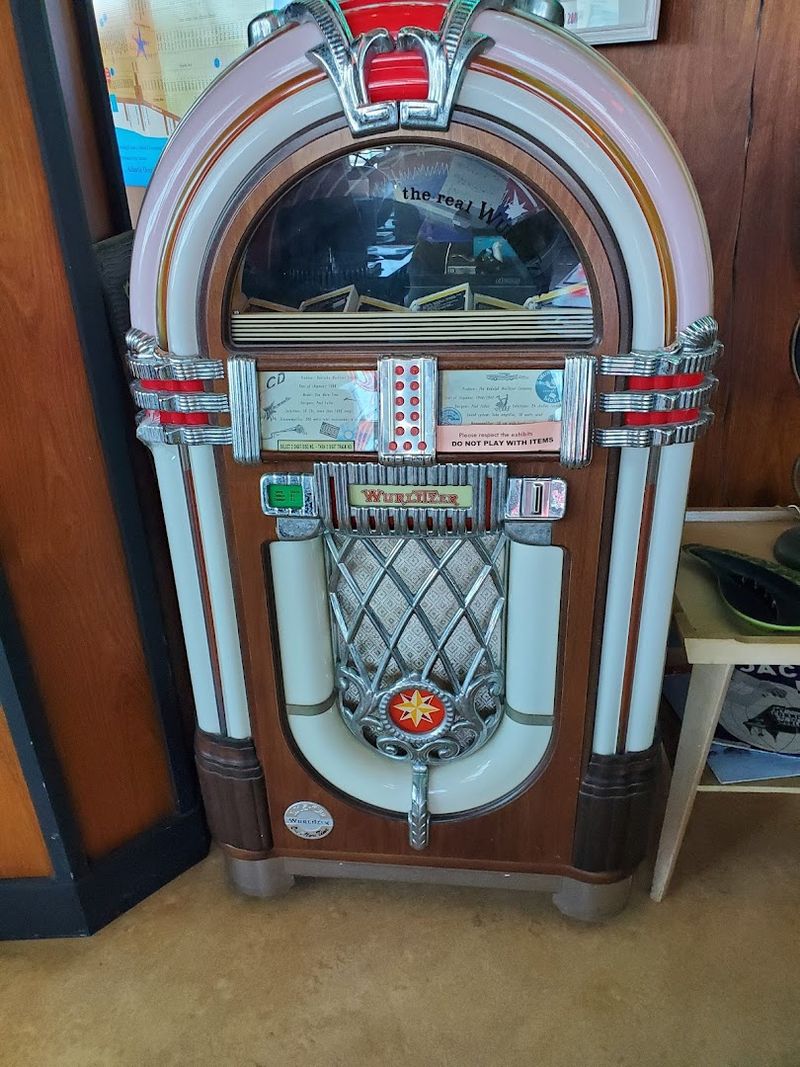
There is something about a jukebox that makes a room feel like it has a heartbeat. The museum features jukeboxes from the era, and they are not just decorative props.
They represent the cultural backbone of the 1950s and 1960s, a time when music was something you gathered around, fed coins into, and shared with whoever was nearby.
Doo wop music itself is woven into the identity of this place. The Wildwoods have deep ties to the history of rock and roll, and the museum takes that connection seriously.
The music of this era shaped an entire generation’s understanding of rhythm, harmony, and joy.
Seeing a jukebox up close, with its curved chrome frame and glowing selection buttons, brings back something primal and warm. Even if you never lived through that era, the design alone communicates something universal about fun and togetherness.
The whole room hums with the energy of a culture that believed music could fix just about anything.
Retro Kitchenware That Makes Cooking Look Glamorous Again
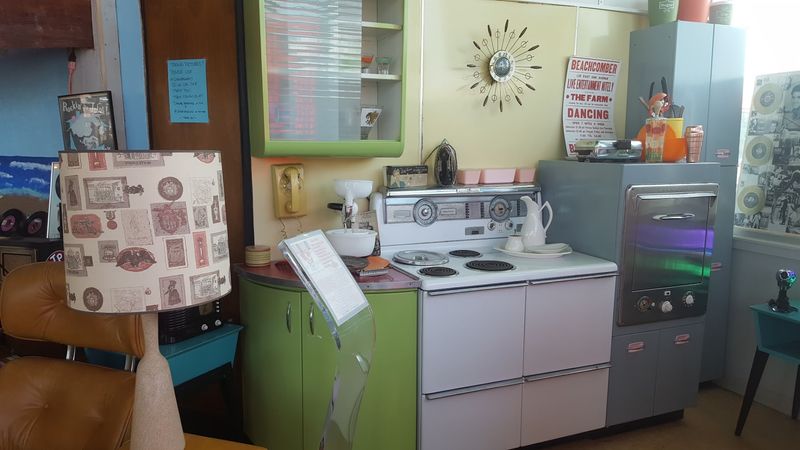
The kitchen of the 1950s was not just a place to cook. It was a design statement, a symbol of optimism, and honestly, one of the most colorful rooms in the house.
The museum’s collection of retro dinettes, atomic-age kitchenware, and vintage appliances brings that spirit back in the most charming way.
Pastel refrigerators with rotating shelves, chrome-edged tables, and patterned dishes line the displays in a way that makes you genuinely reconsider your own kitchen setup. There is a playfulness to mid-century kitchen design that modern minimalism sometimes forgets to include.
Color was not an accident back then, it was a choice made with enthusiasm.
One of the fun details visitors often pause at is the rotating shelf inside a vintage refrigerator, a small engineering touch that feels both clever and delightful. These little moments of discovery are what make the museum feel personal rather than purely educational.
Every object has a story that connects food, family, and the culture of a generation.
The Retro Malt Shop Inside the Museum
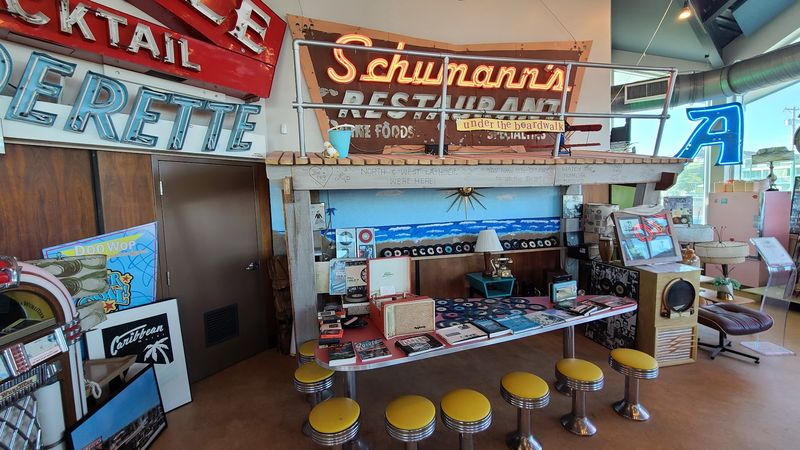
Right inside the museum, there is a retro-style malt shop that feels like the most natural thing in the world given the surroundings.
Ordering something cold and sweet while surrounded by neon signs and vintage furniture is exactly the kind of experience that makes a visit feel complete rather than just informative.
Malt shops were the social hubs of the 1950s. They were where friendships were made, where music was debated, and where the simple pleasure of a cold drink turned an ordinary afternoon into a memory.
Having one inside the museum ties the whole experience together in a way that feels genuinely thoughtful.
The aesthetic of the malt shop matches the rest of the space seamlessly. Vintage stools, a classic counter setup, and the general vibe of a place that values slowing down and savoring the moment all contribute to the atmosphere.
It is the kind of stop that turns a museum visit into something you talk about at dinner long after you have left.
Poodle Skirts, Saddle Shoes, and the Pop Culture Vault
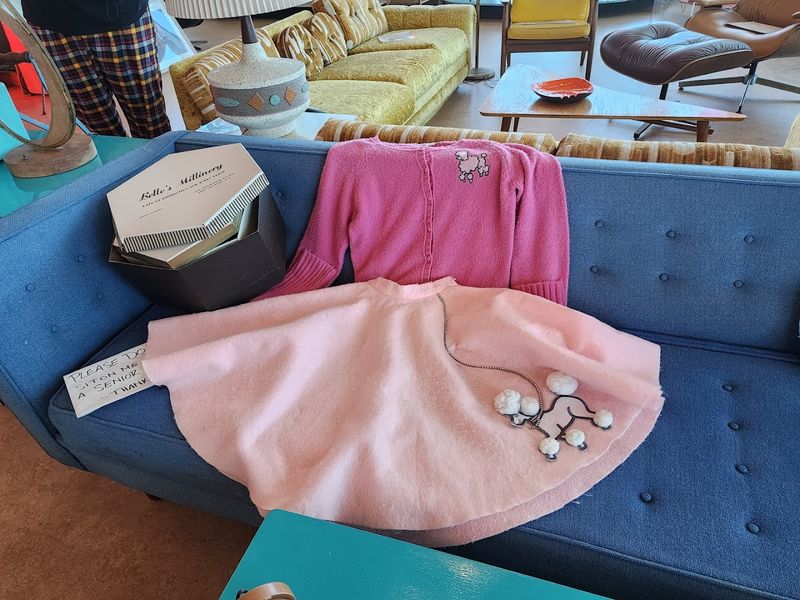
Pop culture from the 1950s and 1960s had a visual language all its own, and the museum speaks it fluently. Poodle skirts, saddle shoes, and the fashion of the era are represented alongside other artifacts that capture the optimistic spirit of post-war America.
This was a time when people believed the future was bright, and the clothes reflected that confidence.
The collection does not just display objects behind glass. It arranges them in a way that tells a story about daily life, about what teenagers wore to sock hops, what families watched on television, and what made Saturday afternoon feel special.
Context is everything when it comes to understanding a culture.
Younger visitors often have genuinely funny reactions to things like rotary phones and cassette tapes, seeing them as ancient mysteries. That gap between generations is actually part of what makes the museum so valuable.
It creates conversations, sparks curiosity, and reminds everyone that every era has its own version of cool.
The Back to the 50s Neon Night Trolley Tour
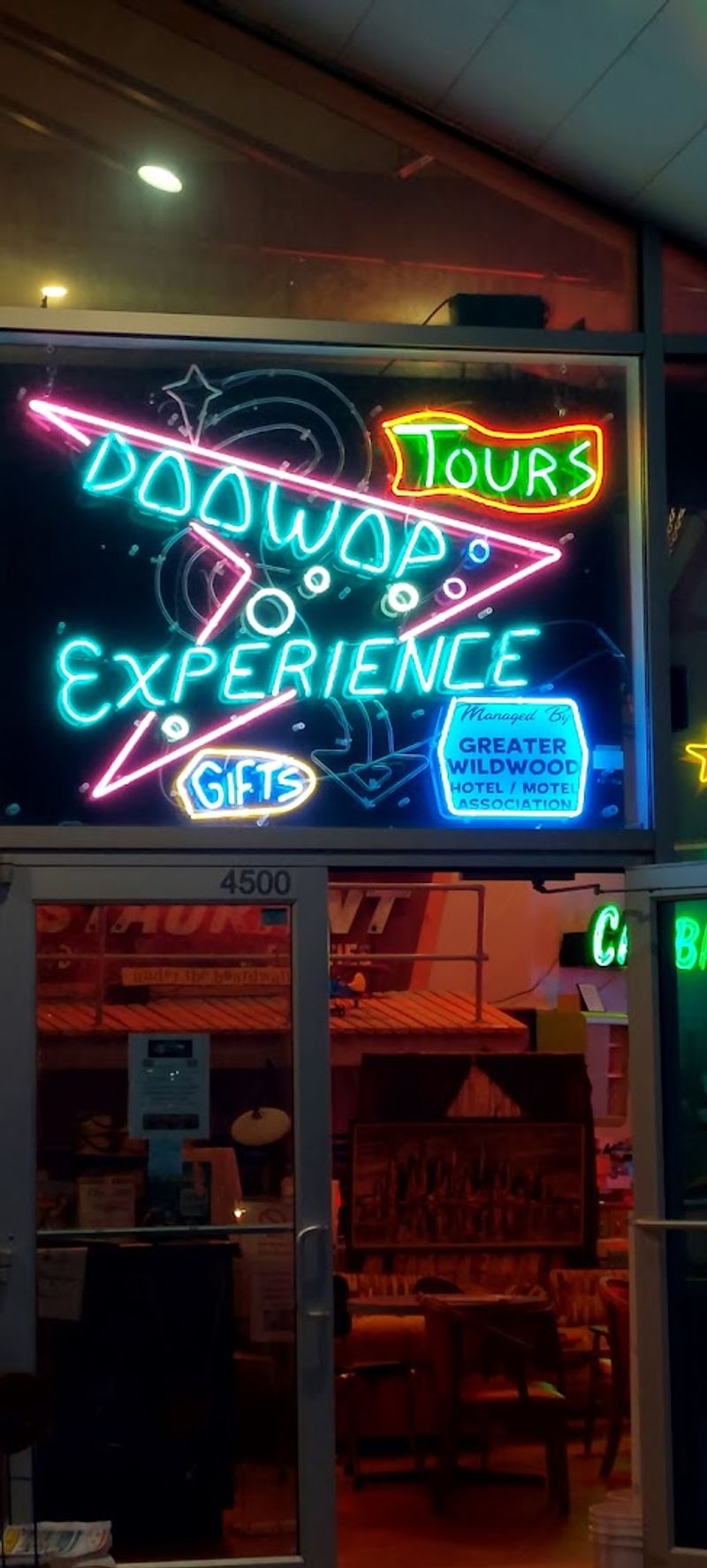
The museum is not just a place to stand and look. It is the starting point for one of the most entertaining guided tours in New Jersey, the Back to the 50s Neon Night and Mid-Century Architecture Tour.
Climbing onto a trolley as neon signs begin to glow in the evening is a genuinely cinematic way to experience Wildwood.
The tour lasts roughly an hour and a quarter, winding through the island and highlighting the Doo Wop architecture that makes this town unlike anywhere else on the East Coast. Narrated commentary covers both the history of the buildings and the music history tied to specific locations.
It is educational in the best possible way, meaning you barely realize you are learning.
Wildwood has more mid-century commercial architecture than any other place in the country. Seeing it all lit up at night from a moving trolley, with era-appropriate music setting the mood, is the kind of experience that sticks with you.
It turns a casual vacation stop into a full-on memory.
The Doo Wop Preservation League and Its Mission
Behind every great museum is a group of people who cared enough to make it happen. The Doo Wop Experience Museum is operated by the Doo Wop Preservation League, a non-profit organization founded in 1997.
Their mission is to promote awareness, appreciation, and preservation of the Wildwoods’ unique cultural and architectural heritage.
The fact that the museum is free to enter, with donations welcomed, says a lot about the spirit behind the whole operation. This is not a commercial venture dressed up as culture.
It is a genuine community effort to protect something irreplaceable before time and development erase it entirely.
The Preservation League has been recognized nationally, earning spots on USA Today’s 10Best Readers Choice Awards for Best Pop Culture Museums in back-to-back years. That kind of recognition validates what locals have known for decades.
Wildwood’s mid-century identity is worth fighting for, and the people running this museum are doing exactly that, one restored neon sign at a time.
Why Wildwood Is the Perfect Home for This Museum
Some places earn their legends honestly. Wildwood, New Jersey holds the title of having the largest concentration of mid-century commercial architecture in the entire United States.
That is not a small claim, and the town wears it with the kind of quiet pride that comes from actually deserving it.
Bright colors, neon lights, futuristic rooflines, angular elements, and space-age imagery define the look of Wildwood’s commercial strips. Driving or walking down Ocean Avenue feels like flipping through an architectural history book, except the pages are three stories tall and sometimes shaped like rockets.
The whole environment supports the museum’s story in a way that no other location could replicate.
Placing the Doo Wop Experience Museum here makes complete sense. The town itself is the exhibit, and the museum is the guide that helps you understand what you are seeing.
Together, they create an experience that is equal parts education, nostalgia, and pure visual delight.
Address: 4500 Ocean Ave, Wildwood, NJ.
