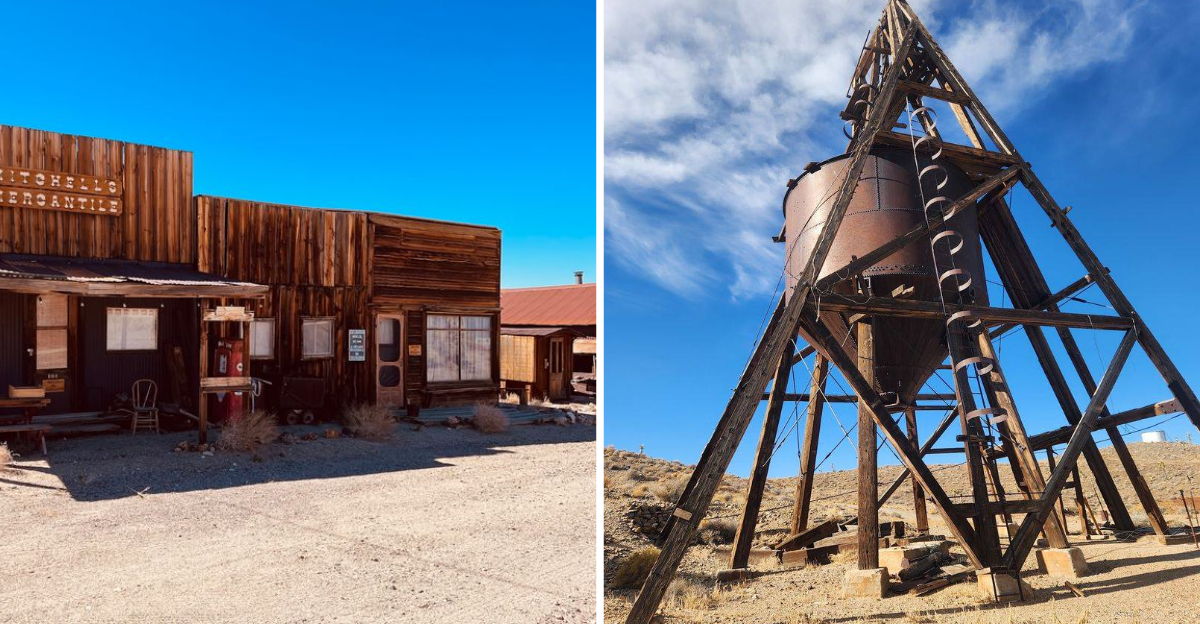
That cluster of weathered wooden buildings appeared against the hills like something left behind by accident, and the silence hit me before anything else did. I had turned off the highway and pointed my car toward a Nevada ghost town, half convinced my map was playing tricks on me.
Sagebrush stretched in every direction, the pavement narrowed, and then the town emerged, a collection of structures from the early 1900s, many of them still standing. What surprised me most is that this place is not empty; a few people actually live here and quietly look after every leaning porch and rusted headframe.
The town was once a booming silver mining camp, founded in the early 1860s, and at its peak it had a population of over a thousand. Now it is a quiet stretch of dirt streets and old signs, with a post office, a saloon, and cabins that still hold the shape of the past.
I spent hours wandering, reading faded advertisements and peeking at mining gear that has not moved in decades. History you can touch instead of read about is exactly what this Nevada spot delivers.
The Drive In Sets the Mood Before You Arrive
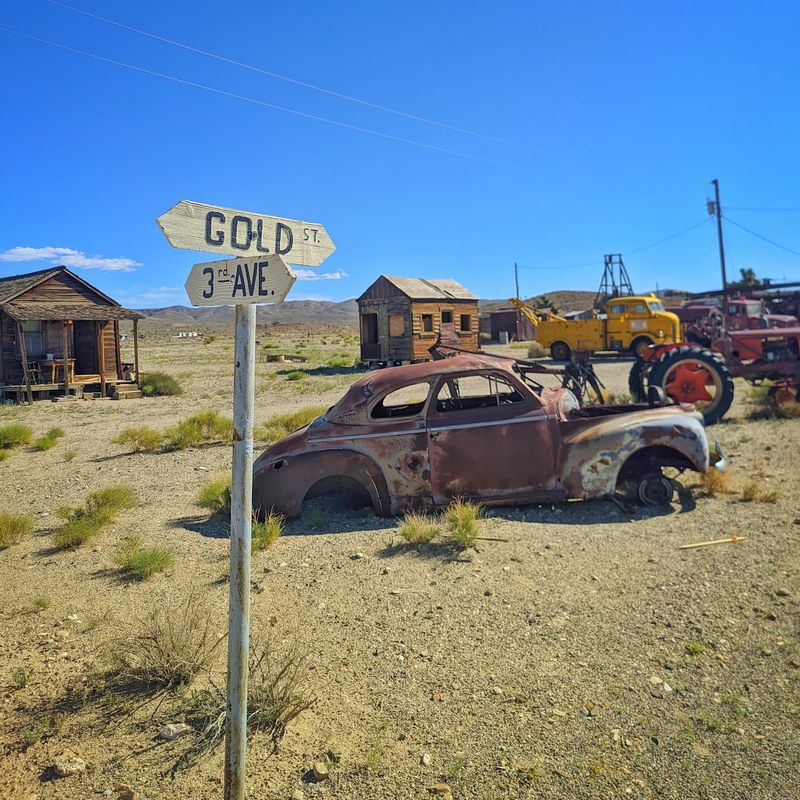
My phone lost signal somewhere past Goldfield, and that is when the trip started to feel like an adventure instead of a drive. The turnoff onto NV-774 is easy to miss if you are not paying attention.
Roughly seven miles of quiet road carry you southwest, with wide open desert on both sides and mountains stacked in layers on the horizon. Passenger cars handle it fine in good weather, so you do not need a truck or four-wheel drive to make the trip.
What you do need is preparation. There is no gas station waiting for you at the end, no convenience store, and no reliable cell service, so fill your tank in Beatty, Tonopah, or Goldfield before heading out.
I packed extra water, snacks, and a paper map, which felt old fashioned until the signal bars vanished. Late spring and early fall bring the most comfortable temperatures, since summer heat out here is no joke and winter can turn bitter fast.
Give yourself daylight hours too. Arriving with the sun still up makes photographing the buildings far easier and safer.
Main Street Looks Like Time Simply Stopped
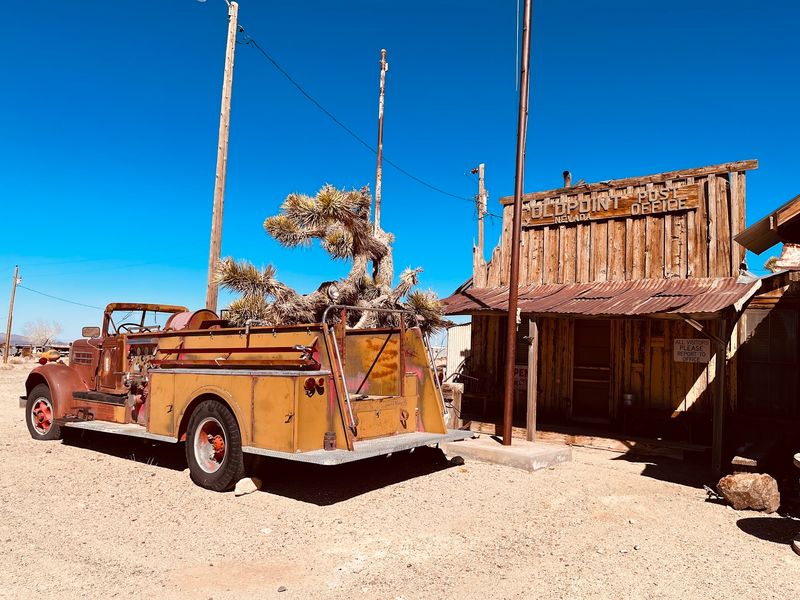
Dust puffs up around your shoes as you walk the main stretch, and the only sound is wind pushing against loose tin. About fifty original structures from the early 1900s still stand here, which is remarkable for a place this remote.
Wooden false fronts lean at odd angles, faded paint clings to boards, and rusted hardware still hangs where somebody left it. The exteriors were deliberately kept weathered while interiors got quiet repairs, so nothing looks polished or fake.
At its peak around 1908, when the town was called Hornsilver, more than 225 buildings, tents, and shacks filled these lots and close to a thousand people lived here. Picturing that crowd while standing in the stillness is a strange feeling.
I kept stopping to look at small details: a doorknob, a nailed-up board, a window frame holding one cracked pane. Those little things tell the story better than any plaque.
Photographers will find endless angles here, especially in golden hour light. Just remember that several buildings are private homes, so admire them from the street rather than the doorstep.
Inside the Horn Silver Saloon, History Fills Every Wall
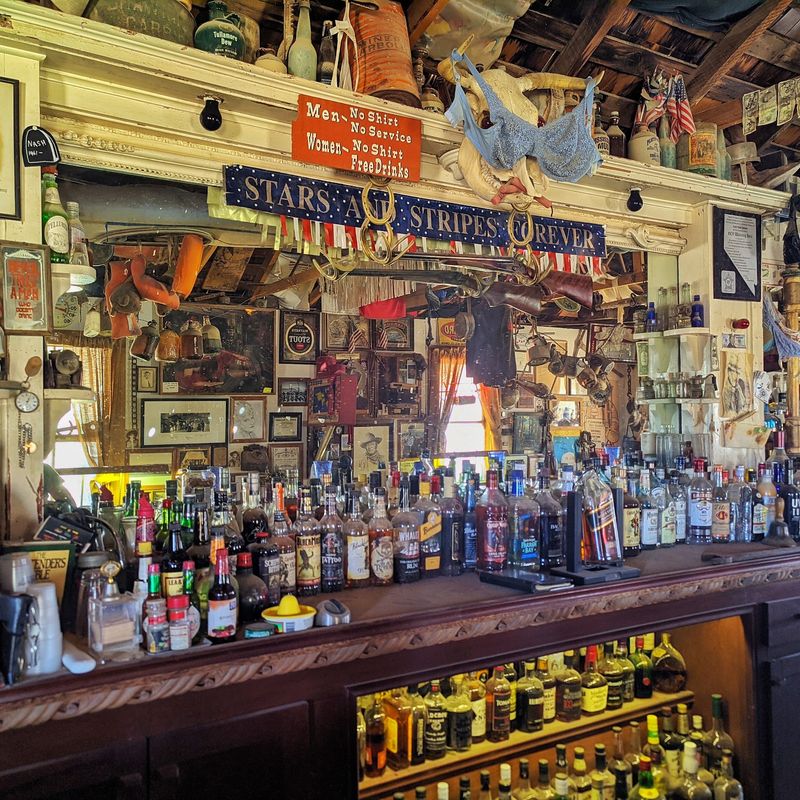
Of everything in town, the Horn Silver Saloon surprised me the most. From outside it reads as another old wooden building, but the inside works like a packed little museum.
A Brunswick pool table dating to 1909 sits in the middle of the room, still solid after more than a century. Nearby you will spot a player piano and a shuffleboard, plus walls loaded with photographs, tools, signs, and mining relics collected over decades.
Hours here are casual rather than scheduled, since the town runs on a handful of caretakers rather than a staff. Calling ahead at 775-482-4635 is genuinely worth doing if seeing the interior matters to you.
When it is open, the atmosphere feels less like a tourist stop and more like being welcomed into someone’s living room. Conversations drift toward mining history, old equipment, and how the buildings were saved.
Bring cash, because there is no internet connection for card machines out here. And take your time looking around; the details reward a slow pace.
The Old Post Office Now Keeps the Town’s Memory
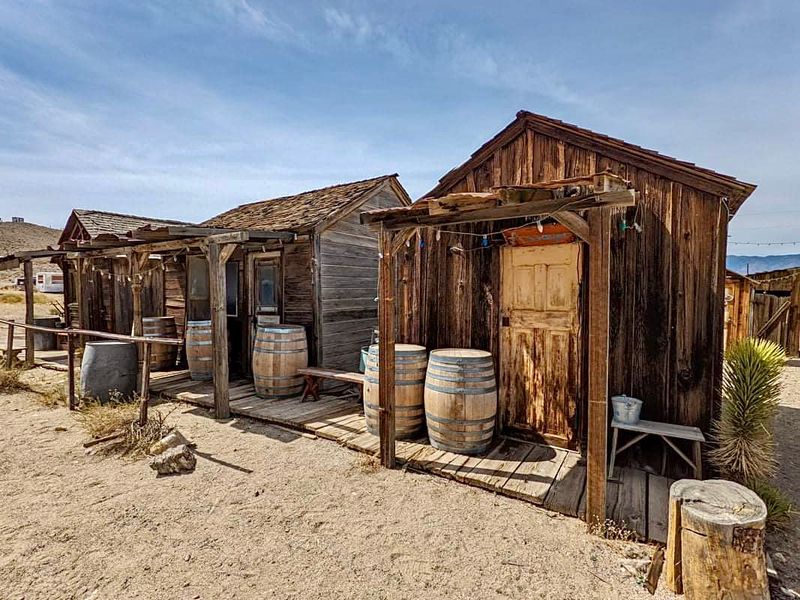
Small buildings often hold the biggest stories, and the old post office proves it. Mail service kept Gold Point, Nevada tied to the outside world during years when the road was rough and neighbors were scarce.
Ora Mae Wiley served as postmistress from 1940 all the way to 1964, working through the wartime mining shutdown and the slow years that followed. Twenty-four years in one tiny desert office is a quiet kind of dedication.
The structure now functions as a museum, holding documents, postal fixtures, and everyday objects from the town’s working years. Peering at old mail slots gives you a real sense of how ordinary life moved here.
Nearby stands the home once belonging to former state Senator Harry Wiley, another reminder that this was a real community with elected officials and family households, not just miners passing through.
I liked that these buildings were saved without being scrubbed clean. The worn wood and sun-faded signs do half the storytelling.
Take a few minutes to read whatever is posted. Context makes the rest of your walk richer.
Rusted Mining Gear Scattered Across the Hillsides
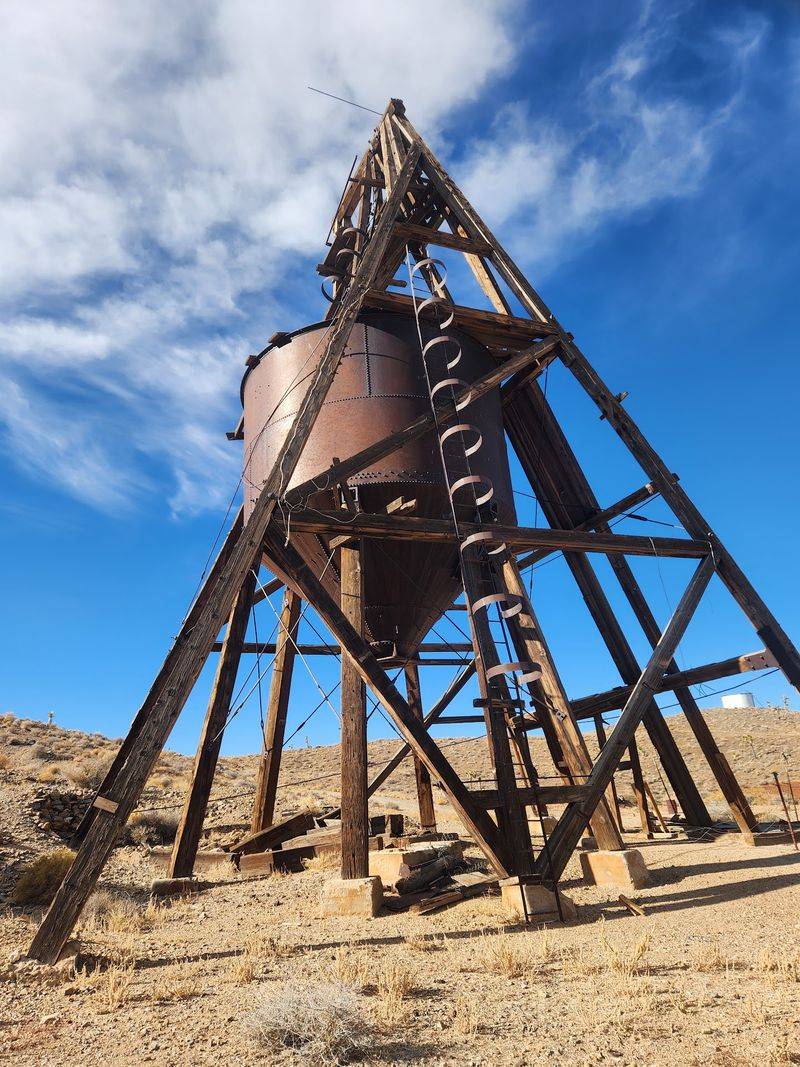
Climb a little rise behind town and the mining story opens up in front of you. A big wooden hoisting mechanism still towers over the ground, built from timbers that have baked in the sun for generations.
Scattered around it are ore carts, cables, tailings piles, and metal parts whose purpose I could only guess at. Silver put this place on the map in 1902, and miner J.W.
Dunfee’s 1927 gold strike changed everything again.
Gold started outproducing silver, which is why the town swapped names from Hornsilver to Gold Point in 1932. History does not usually leave such tidy explanations lying around.
Then in October 1942, wartime orders shut down gold mining as nonessential, and the town never fully recovered. A cave-in at the Dunfee Shaft during the 1960s finished off serious operations for good.
Stay well back from any open shaft or unstable timber, because these are genuine hazards rather than staged props. Sturdy shoes help on the loose rocky ground.
Photos out here at sunset are absolutely worth the short hike.
Restored Miner Cabins Where Guests Can Spend the Night
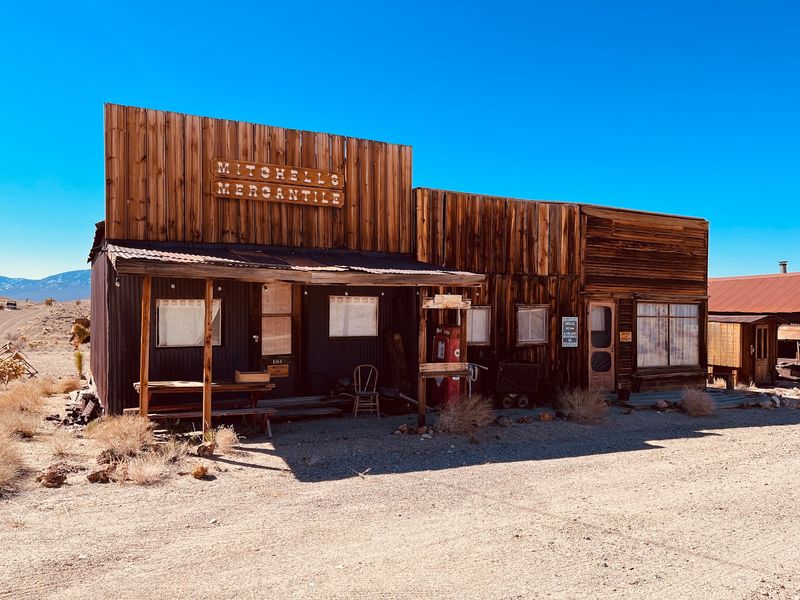
Sleeping in a ghost town sounds like a movie plot, yet several restored miner cabins here have been fixed up for overnight guests. Outside they look as rough as everything else; inside they are clean, comfortable, and full of period touches.
Herb Robbins bought many of the town’s structures after a Las Vegas jackpot and worked alongside partners Walt and Chuck Kremin to bring them back. Their approach kept the weathered shells intact while making the interiors livable again.
Availability shifts depending on the season and who is around, so arranging things ahead through the town’s website or by phone saves disappointment. Some visitors instead set up a dry camp nearby, which means no hookups and packing out everything you bring.
Nighttime is the real reward. With no streetlights and no nearby cities, the sky fills with more stars than most people ever see.
I remember how completely the wind stopped after dark, leaving a silence that felt almost physical. Bring layers, since desert temperatures drop quickly once the sun goes down.
Visiting Respectfully in a Town Where People Still Live
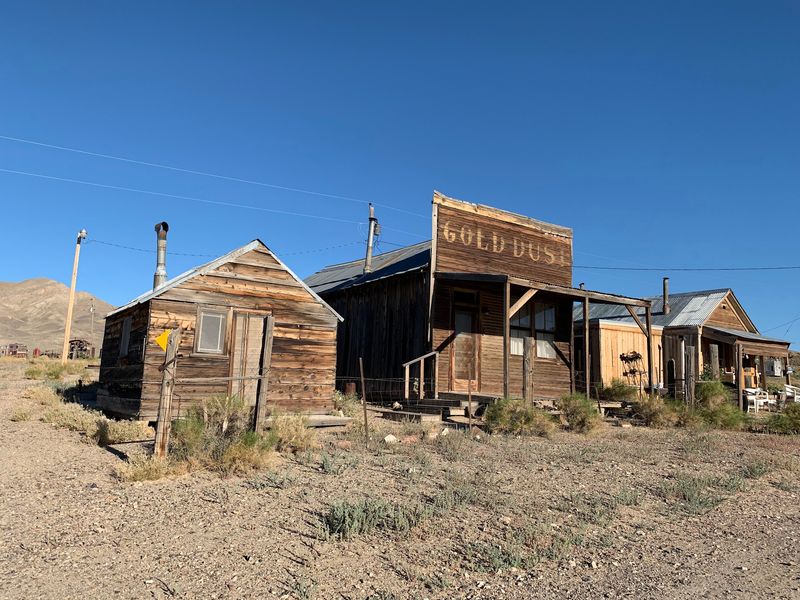
Here is the part that matters most, and it is easy to forget when you are excited about old buildings. Between roughly six and ten people live in Gold Point full time, and their homes sit right alongside the historic structures.
Telling the difference between a preserved relic and someone’s front porch is not always obvious. When in doubt, stay on the road and photograph from a distance rather than wandering onto a property.
Doorways stay closed unless you are invited, and that simple rule keeps everyone happy. The residents are the reason this place still stands, since they handle repairs, upkeep, and preservation themselves.
Holiday weekends such as Memorial Day, Independence Day, and Labor Day sometimes bring special events and a livelier atmosphere, if you prefer company to solitude. Quieter weekdays suit anyone hoping for empty streets and unhurried photos.
Pack out your trash, keep noise down, and do not collect souvenirs from the ground. Small courtesies go a long way in a town this fragile.
The silence here is not empty; it is filled with the weight of a century of stories, and the residents are its quiet guardians.
Address: NV-774, Goldfield, Nevada 89013
