What happens when a gold rush boomtown goes from opera houses and electric lights to empty streets in less than a decade? You get this Nevada ghost town, a place that rose faster than a wildfire and died just as quickly.
At its peak over a century ago, it was the third-largest city in the state, boasting telephones, newspapers, a stock exchange, and even its own opera house. Then the gold ran out, and by 1916, the lights went off for good.
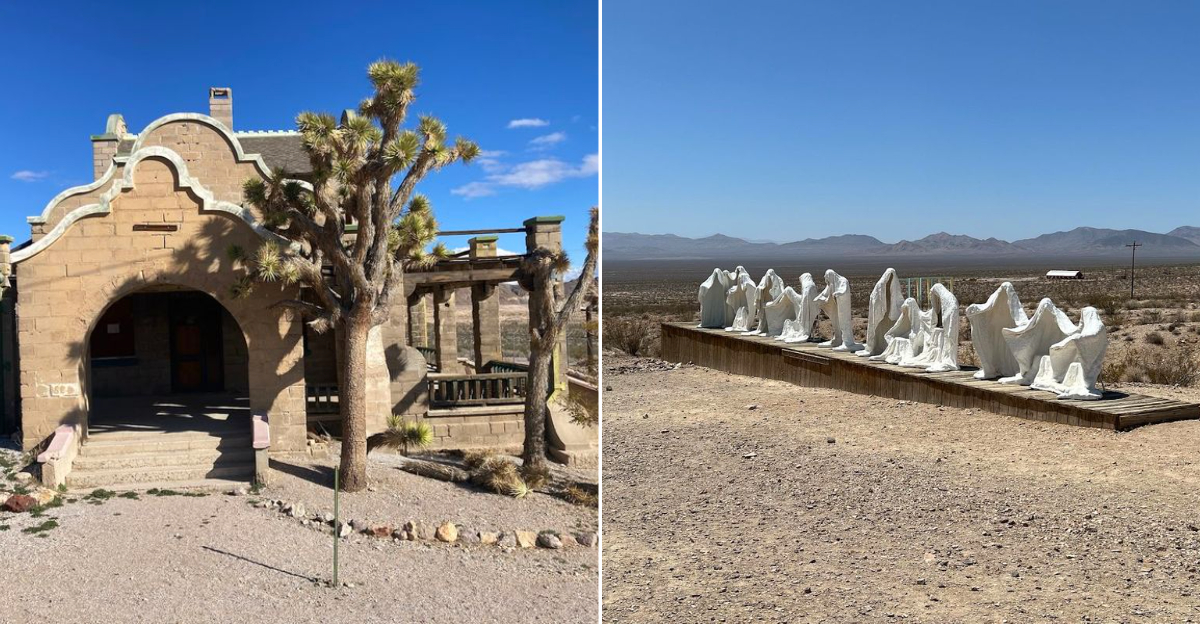
Today, you can walk among the ruins, including a bizarre house built from fifty thousand empty beer bottles. An open-air art museum has placed haunting sculptures among the old foundations, including thirteen ghostly figures seated on a boardwalk.
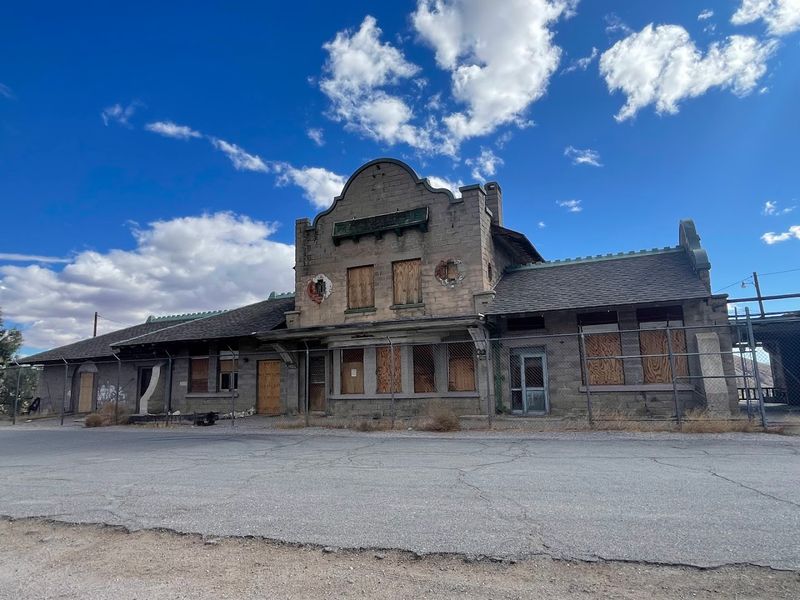
The train station still stands, a beautiful relic of the three railroads that once served this bustling hub. You will need a camera, a sense of wonder, and maybe a little sunscreen. The town may be empty, but its stories are still very much alive.
Prospectors Struck Gold In The Bullfrog Hills In 1904
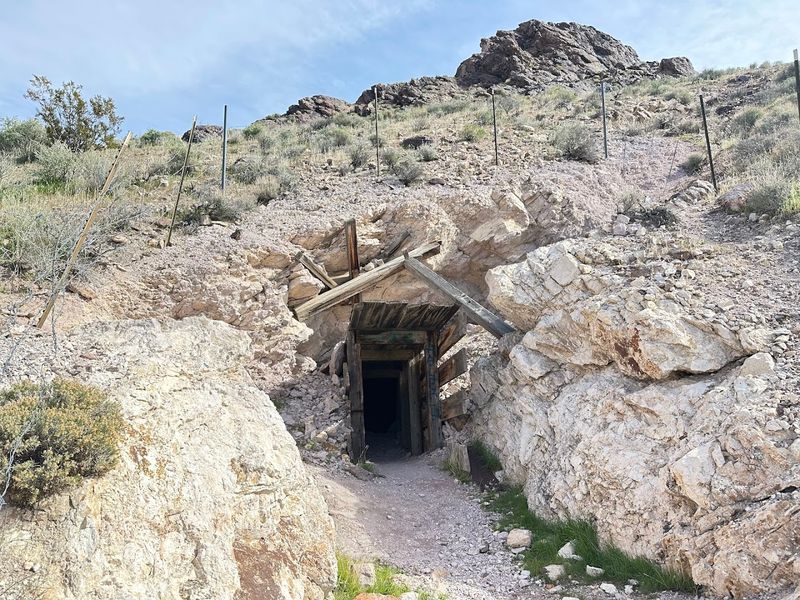
You know that tingle you get when a landscape starts telling a story before anyone opens their mouth? That is how the Bullfrog Hills feel, with the Nevada sun spilling across rocky ribs and the ground freckled with old mine scars that once promised quick fortunes.
Stand still for a minute, and you can almost hear the clink of picks and the soft shuffle of boots deciding where to stake a claim.
What pulled everyone here was the whisper that the earth was ready to pay out, and that whisper turned into a steady chorus. Word traveled, tents appeared, and then the canvas corners gave way to wood, stone, and the kind of stubborn hope that makes a person gamble on a hot afternoon.
It was not just shiny ore that hooked them, it was the idea that luck might finally know their names.
If you look up toward the ridgelines, the colors snap from ash gray to honeyed tan, and the air feels clean enough to iron out your thoughts. The hills are quiet now, but that calm lays over a memory that keeps humming, and you feel it in your chest.
Would you have chased that rumor, hauled water, and slept beside a rattle of wind for a shot at changing everything?
The Town Sprang From A Two Tent Mining Camp In 1905
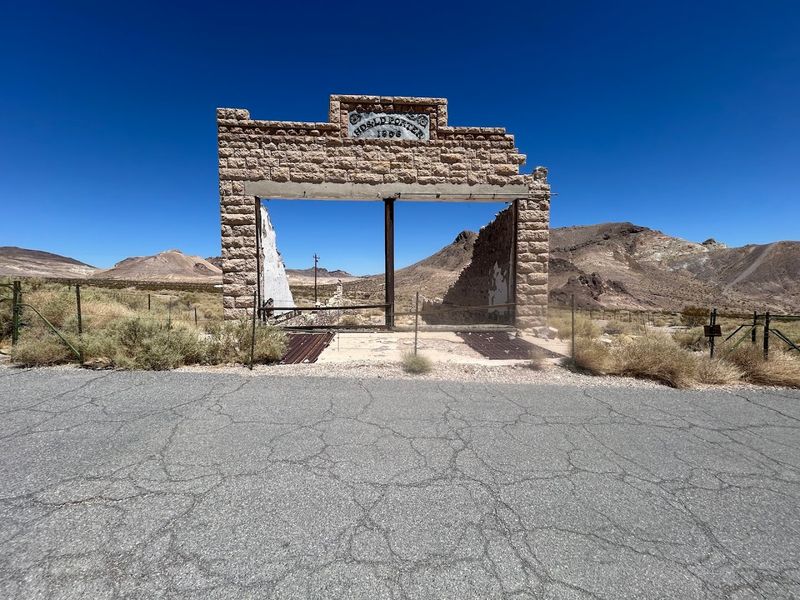
Picture a flat of crunchy desert where two tired tents tried to be a plan, and then picture those tents being outnumbered by boards, bricks, and big talk almost overnight. That is the jump you feel in Rhyolite, where a sketch turned into handwriting, and handwriting turned into a signature stamped across the valley.
I like standing along the old streets and tracing where doorways lined up like teeth in a grin.
There is a rhythm to places that grow fast, and you can hear it in your head while you walk past stone foundations. A store pops up, then another, and suddenly someone is selling fabric while someone else hammers a roofline that promises shade.
The ground keeps crunching underfoot, but your thoughts start sounding like footsteps that refuse to slow down.
What gets me is how quickly practical things become emotional markers. A tent means passing through, a doorway means staying, and a window means imagining yourself on the other side with a plan that actually sticks.
Nevada has a way of testing those ideas, and Rhyolite shows the moments when people believed they could pass the test. Can you feel that hinge point, when a camp decides to call itself a town and says it with real walls?
Over Five Thousand Residents Called This Place Home By 1907
Walk the grid of dust and stone, and it is wild to imagine how many voices once braided through this air. You would have heard deals being argued, train whistles bouncing off the hills, and a piano stumbling through a tune in a bright room with squeaky floors.
The footprints may have faded, but the scale still hangs there like a photograph you cannot quite put away.
Houses filled with the usual mess of life, from work boots drying by a door to paper notes tacked onto a wall with crooked pins. Kids would have raced along plank sidewalks, while adults traded gossip about new shafts and better pay, all of it stitched into the same uneasy faith that tomorrow might surprise them.
Nevada towns learn fast that growth is a mood, not a promise.
When I stand beside the old street alignments, I try to hear the backgrounds, not just the headlines. There were quiet sunrises where steam lifted off kettles and long evenings when the sky turned apricot and everyone pretended the future had already landed.
That is the heartbeat you chase when you visit Rhyolite. Can you picture your own routine sliding into that chorus, shoulder to shoulder with hopeful strangers?
A Railroad Depot, Three Banks, And An Opera House Once Stood Here
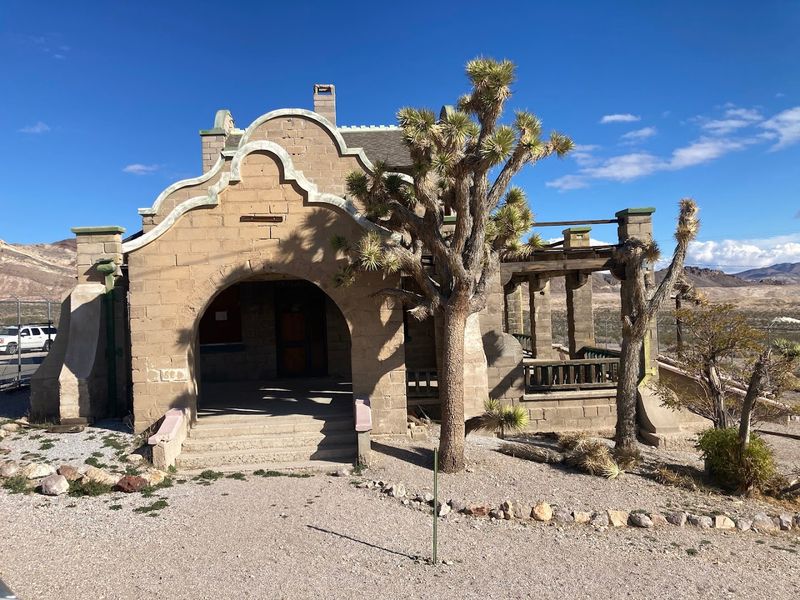
The bones of big ambition are still here, and the depot shows it first with those smooth curves and tidy arches catching late sun. Trains changed the tempo of this valley, turning travel into timing and timing into money, and the town leaned hard into that rhythm.
You can almost hear trunks thumping down and voices calling schedules through the bright doorway.
The banks spoke in stone, tall and sure, making promises that felt as solid as their blocks. That kind of architecture tries to settle your nerves, and for a while it probably worked, steadying hands before the day started biting back.
Across from that, an opera house meant someone believed evenings deserved culture, even when mornings started with dust in your teeth.
Now the pieces are quieter, but they still pose like actors after the curtain has fallen. It is a sobering little theater, the kind that nudges you to picture velvet seats and paper tickets rustling like leaves.
Nevada can hold both velvet and grit in the same palm, and Rhyolite proves it. When you look through the depot windows, with shadow pooling on the floor, do you feel the town inhale before the whistle?
Tom Kelly Built A House From Fifty Thousand Discarded Bottles
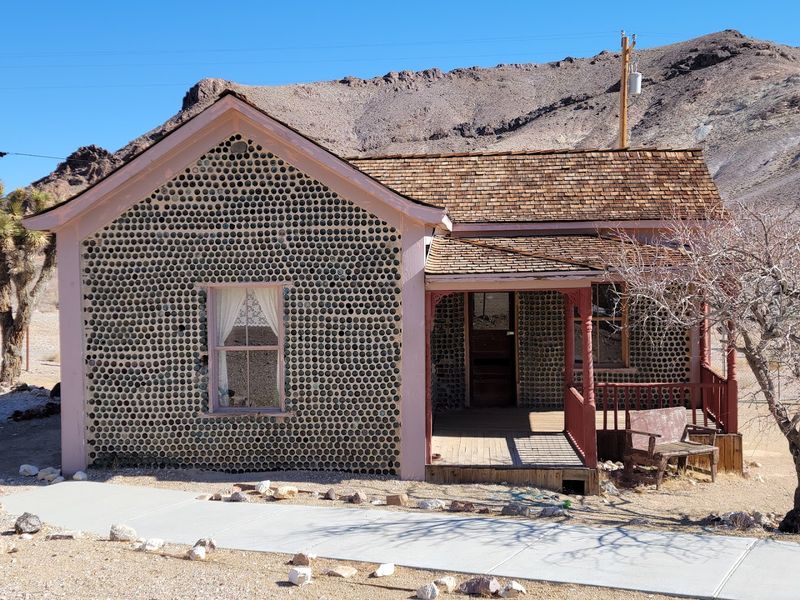
The Bottle House is the exact kind of idea that makes you grin, because it is both clever and a little stubborn. Glass stacked into shimmering walls turns sunlight into a patchwork of sea greens and old ambers, and the whole thing feels homemade in the best way.
Walk around it, and you start rooting for the builder like you would for a neighbor who refuses to quit.
What I love most is how thrift becomes beauty when patience shows up. Discarded bottles turn into light catchers, and mortar turns into a frame for color that moves as the day does.
Nevada homes often bow to wind and heat, but this one leans into them, making shade and glow from the same leftover odds and ends.
Lean close and you can see labels ghosted in the glass, tiny histories pressed into the walls. The house stands like a lesson in practicality that somehow grew sentimental, because the more you understand it, the more it feels personal.
Rhyolite is full of ruins that whisper, but this place talks, friendly and plain. When the sun slips sideways and those bottles flicker, does it feel like the house is winking at you?
The Three Story Bank And The Old Jail Still Stand In Ruins
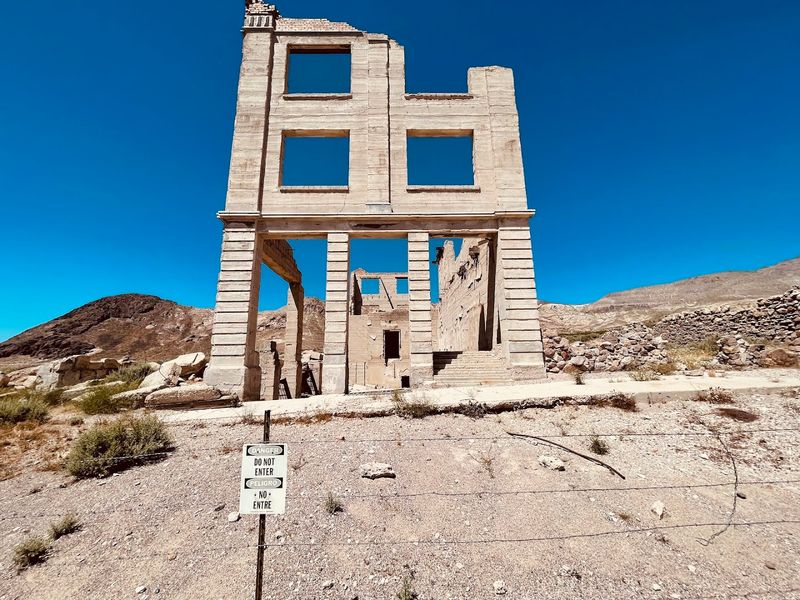
The bank facade is a showstopper even in pieces, with arches that refuse to forget their lines and windows that frame pure sky. Step closer and the concrete looks tired but dignified, like a suit that still fits after a long, rough season.
You cannot help lifting a hand to measure the height, then catching yourself and just breathing in the echo.
Down the way, the jail crouches low and stubborn, built to keep things where they belonged. Its stone cools fast in the shade, and if you press your palm against it, the chill climbs into your wrist as if to remind you who was in charge.
It is not pretty, exactly, but it is honest, and that honesty feels strangely kind.
Rhyolite gives you both the promise and the warning in one stroll, and Nevada never minds a clear lesson. Money dreams towered, consequences squatted, and the space between them is where daily life tried its best.
When the wind threads through the bank windows like a quiet organ, do you hear confidence or caution?
Paramount Pictures Restored The Bottle House For A Silent Film
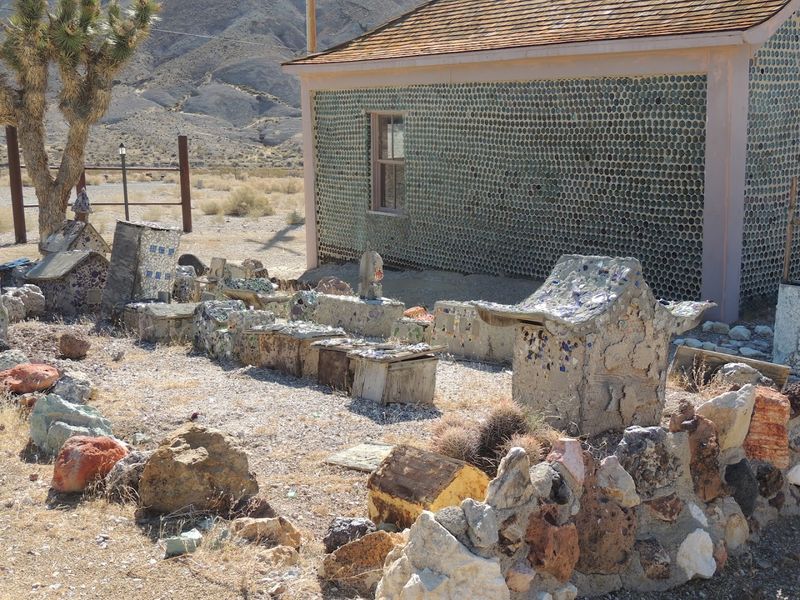
There is a lovely loop to this story, where a quirky house built from throwaways got polished up so a camera could fall in love with it. The restoration was practical for the shoot, sure, but it also felt like a second chance for a place that had already done its job.
You stand there and almost see tripods and quiet hand signals moving just out of sight.
Film can pin a mood to a location, and the Bottle House wears that mood like a jacket that fits just right. The glow off the glass reads as both fragile and stubborn, and the desert keeps the scene clean, nothing extra to distract your eye.
Nevada has starred in plenty of pictures, but this one feels extra local, like a proud nod from the neighborhood.
What sticks with me is how storytelling circles back to rescue the very props it needs. Rhyolite became a set, and the set gave Rhyolite another breath, which is the kind of exchange that makes travel feel wonderfully human.
Do you get that tug, the gentle mix of nostalgia and second chances, when you watch the light seep through those bottles?
The Goldwell Open Air Museum Adds Modern Art To The Desert
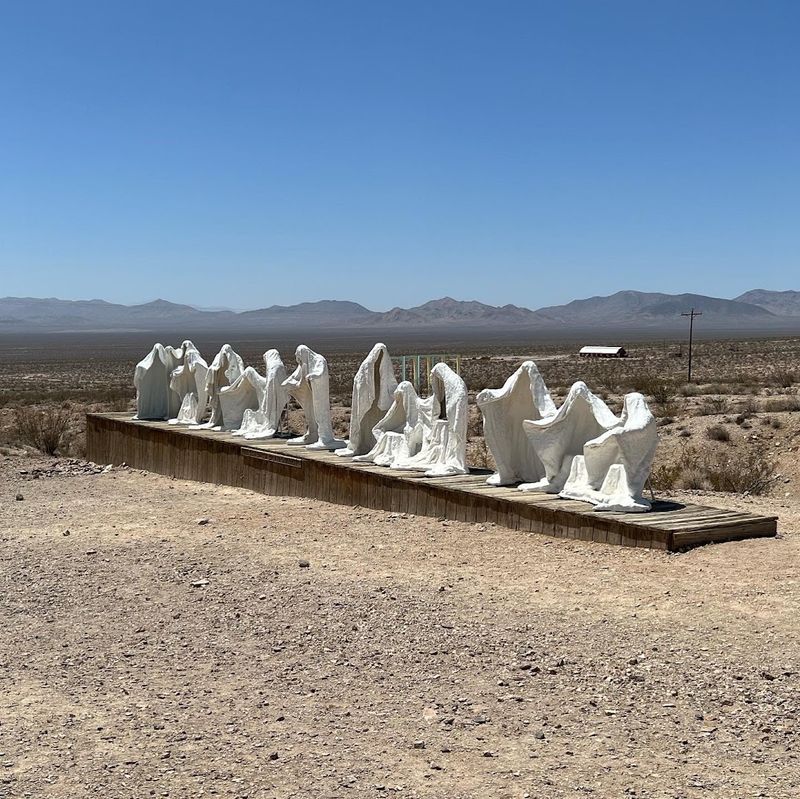
Just beyond the ruins, the desert turns into a gallery that does not make a fuss about itself, and that suits the art perfectly. Pale, draped figures stand like a paused procession, while bright shapes lean into the sky as if conversation is the whole point.
It feels playful and reverent at the same time, which honestly describes this corner of Nevada pretty well.
I like how the pieces sharpen your senses before you wander back through history. You catch color where you expected only dust, and you hear your own footsteps like they matter in the mix.
Art out here is not an indoor hush, it is a weathered handshake that says keep looking, then keep looking again.
When the sun tips, the sculptures throw long, patient shadows that line up with the old roadbeds. The new and the old overlap without elbowing each other, and that balance makes your chest rise a little easier.
Rhyolite gets a new conversation partner, and the gallery gets a backdrop with real grit. Does the breeze feel like it is curating the moment while you stand there and take it in?
Visitors Can Wander The Ruins Without An Admission Fee
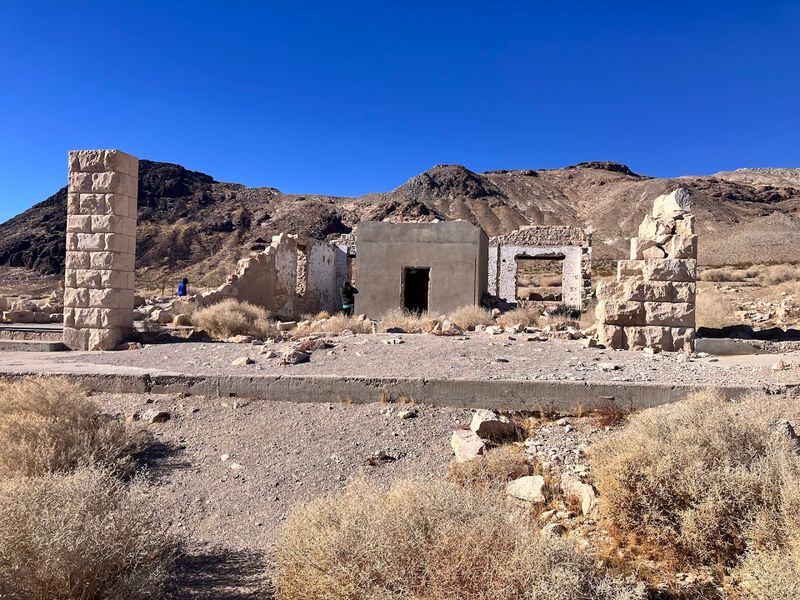
One of my favorite parts of Rhyolite is how easy it is to just show up, park near Beatty, and start walking without a whole checklist. The place meets you where you are, dust on your boots or not, and invites you to set your own pace.
It feels generous, which is not a word I throw around for crumbling walls and empty doorframes.
With open paths and a good horizon, you can wander from the depot to the bank and loop across to the Bottle House without hurry. I like drifting until a detail grips me, then lingering long enough to let the scene write its way into memory.
The desert light edits out the noise, and Nevada puts a steady hand on your shoulder while you look.
Bring a curious mood and some respect for old bones, and you will be fine. The site runs on simple etiquette and common sense, which keeps the experience comfortable and real.
When you pause and listen, the quiet does the heavy lifting. Are you ready to let a place speak first and fill in your questions later?
