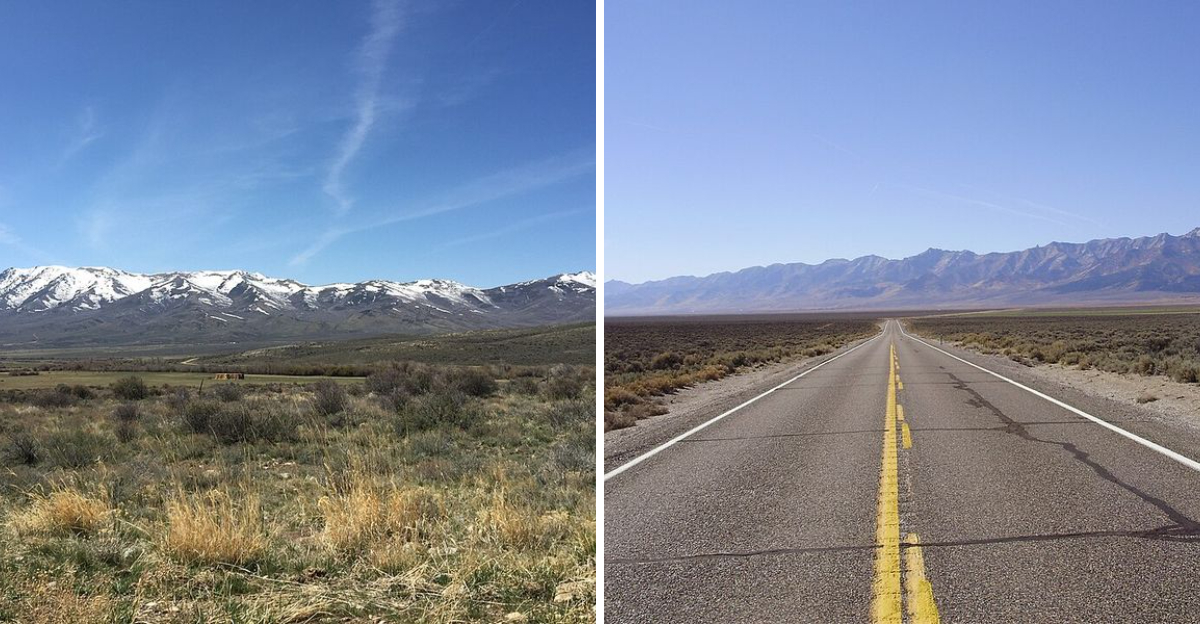
Ruby Valley sits in the heart of Elko County, Nevada, where the landscape stretches so wide and untouched that it feels like stepping into another world entirely.
This unincorporated community rests at the coordinates 40.360207, -115.4475496, surrounded by mountain ranges and sagebrush plains that seem to go on forever without interruption.
Travelers come here seeking the kind of silence and solitude that modern life rarely offers, drawn by the promise of star-filled skies, rugged wilderness, and a connection to the Old West that still lingers in the high desert air.
Ruby Valley represents one of Nevada’s most authentic experiences of emptiness and natural beauty, where history whispers through the wind and the vast openness challenges everything you thought you knew about space and stillness.
The Overwhelming Sense of Space
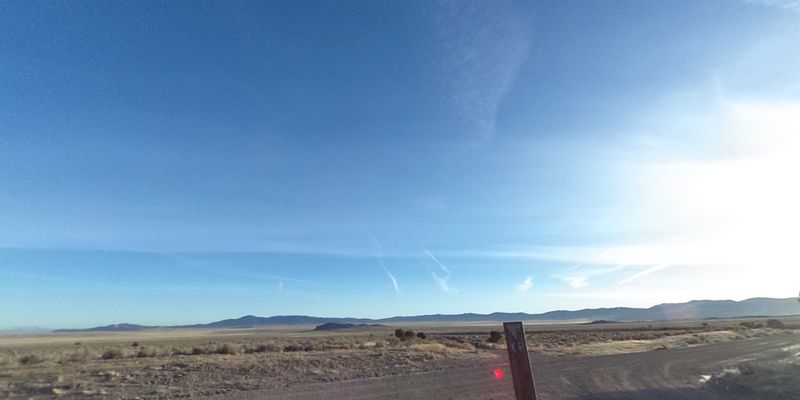
Standing in Ruby Valley for the first time feels like discovering what true emptiness actually means.
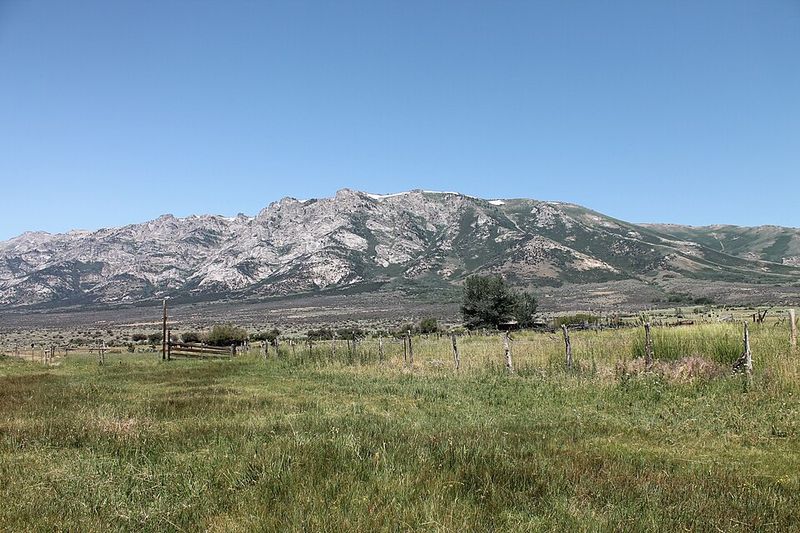
The valley floor spreads out in every direction, bordered by distant mountain ranges that create a natural amphitheater of wilderness.
Sagebrush dots the landscape in scattered patterns, but between these hardy plants lies nothing but earth and sky meeting at impossible distances.
Your eyes adjust slowly to the scale of everything around you.
What seems like a nearby hill might be ten miles away, and what looks like a short walk could take hours on foot.
The air here carries a clarity that sharpens every detail, making the Ruby Mountains to the east appear close enough to touch despite being miles across the valley.
This sense of space does something unusual to your perception of time and distance.
Without the usual reference points of buildings, trees, or crowds, your mind recalibrates to a different scale entirely.
The emptiness here is not barren or lifeless but rather full of subtle textures and colors that reveal themselves slowly.
Golden grasses wave in the constant breeze, and shadows shift across the valley floor as clouds drift overhead.
This landscape teaches patience and observation, rewarding those who take time to notice the small details within the grand emptiness.
Ruby Mountains Rising in the East
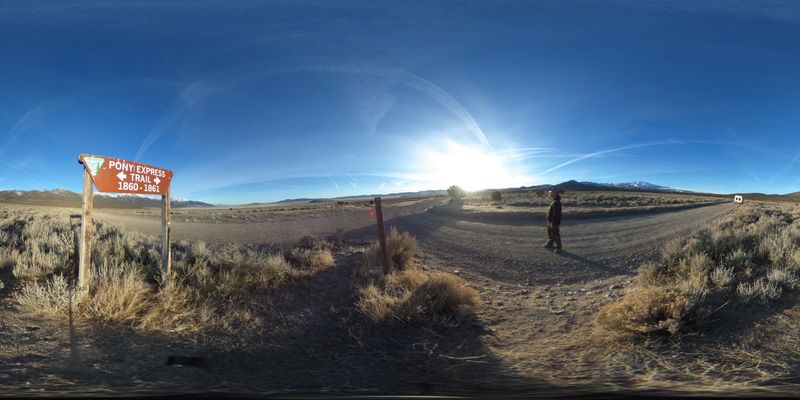
The Ruby Mountains command attention from every vantage point in the valley below.
These peaks rise sharply from the desert floor, creating a dramatic backdrop that changes character with every shift in light and weather.
Early morning bathes the eastern faces in soft pink and gold, while afternoon sun carves deep shadows into the canyons and ridges.
Locals sometimes call them the Swiss Alps of Nevada, and the comparison holds merit despite the vastly different ecosystems.
Alpine lakes hide in the high country, fed by snowmelt that sustains a surprising diversity of plant and animal life.
The contrast between the arid valley floor and the mountain heights creates ecological zones that shift dramatically within just a few miles of elevation gain.
Watching these mountains throughout the day becomes a meditation on light and geology.
Storm clouds gather around the peaks in late afternoon during summer months, building into thunderheads that release brief but intense rainfall.
Winter transforms the high country into a snow-covered wilderness that glows white against impossibly blue skies.
The mountains provide a constant reference point in Ruby Valley, anchoring the emptiness with their solid presence.
They remind visitors that even in the most remote places, nature creates landmarks that orient both body and spirit.
Historical Echoes of the Pony Express
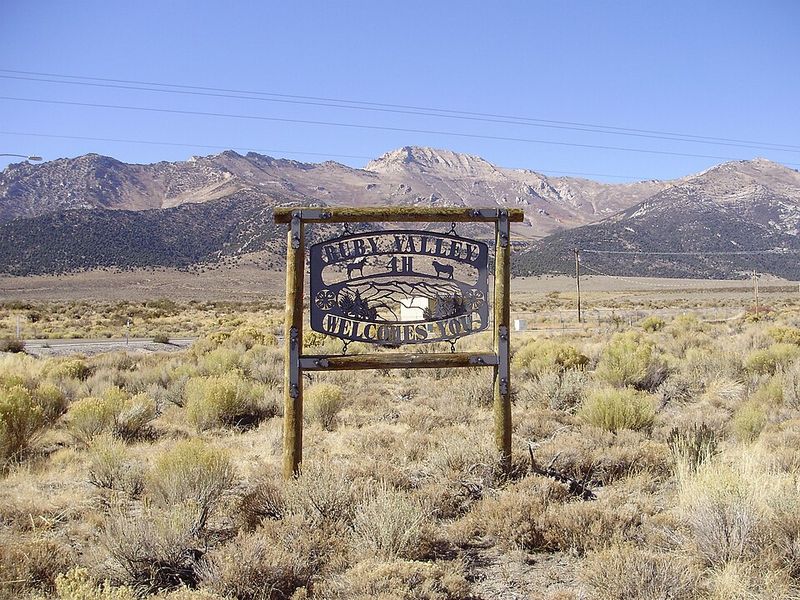
Ruby Valley once served as a vital link in the legendary Pony Express route that connected the East and West coasts in the 1860s.
The Ruby Valley Pony Express Station stood here as a lonely outpost where riders changed horses and grabbed quick meals before continuing their dangerous journeys across the wilderness.
Imagine the isolation those riders and station keepers experienced, living weeks or months at a time with only occasional human contact and constant awareness of the vast emptiness surrounding them.
The original station building no longer stands in its historic location.
It was moved sixty miles north to Elko, where it underwent restoration and earned placement on the National Register of Historic Places.
Still, walking through Ruby Valley today connects you to that frontier history in tangible ways.
The same mountains that guided Pony Express riders still rise in the east, and the same challenging terrain that tested their endurance remains largely unchanged.
This valley witnessed a brief but crucial moment in American communication history when young riders risked everything to carry mail across two thousand miles of wilderness.
The emptiness that makes Ruby Valley feel surreal today is the same emptiness those riders navigated by starlight and instinct.
Understanding this history adds depth to the landscape, transforming empty space into a place where human determination once blazed a trail through impossible distances.
Night Skies Beyond Imagination
After sunset, Ruby Valley reveals perhaps its most spectacular feature.
The night sky here exists in a state of darkness that most people have never experienced, unpolluted by city lights or even distant towns.
Stars appear in such overwhelming numbers that familiar constellations become difficult to pick out against the cosmic backdrop.
The Milky Way stretches overhead like a river of light, its spiral arms clearly visible to the naked eye.
Satellites drift across the heavens in silent procession, and meteor showers put on displays that seem almost theatrical in their brilliance.
On moonless nights, the darkness becomes so complete that you can barely see your hand in front of your face, yet the sky above blazes with countless points of light.
Your eyes adapt after twenty minutes or so, revealing even more stars as your pupils dilate fully.
The silence of Ruby Valley enhances the astronomical experience in unexpected ways.
Without traffic noise, human voices, or mechanical hums, you hear only the wind and occasional animal calls, creating a sensory environment that matches the visual wonder above.
Photographers travel hundreds of miles to capture these skies, setting up equipment for long exposures that reveal colors and details invisible to human eyes.
But even without a camera, simply lying on the ground and watching the stars wheel overhead provides an experience that reconnects you to the universe in profound ways.
Wildlife Adapted to Emptiness
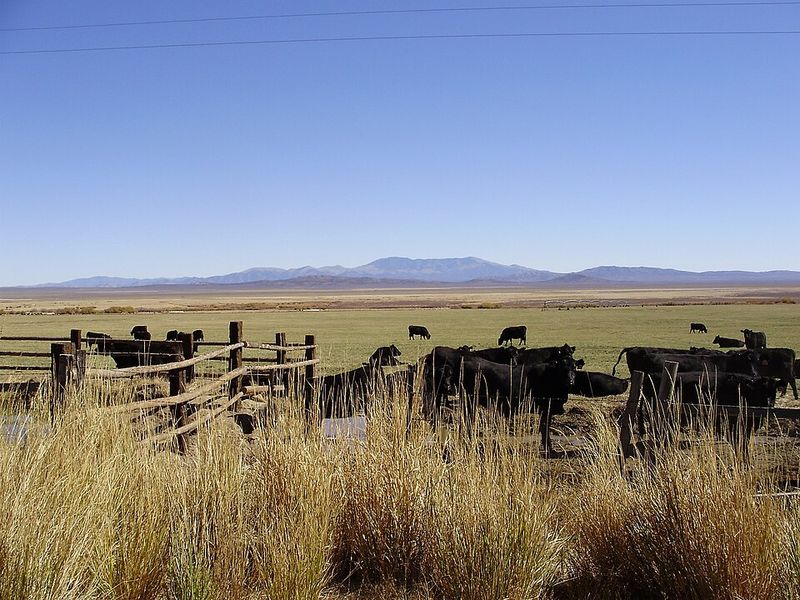
The apparent emptiness of Ruby Valley hides a surprising abundance of wildlife adapted to harsh conditions and vast territories.
Pronghorn antelope move across the valley floor in small herds, their tan and white markings providing camouflage against the sagebrush and grass.
These animals are built for speed and endurance, capable of sustaining runs at forty miles per hour across distances that would exhaust most creatures.
Watching them navigate the landscape reveals how the emptiness actually serves them, providing clear sightlines for spotting predators and open spaces for their legendary running ability.
Mule deer browse in the transition zones where valley meets mountain, their large ears constantly swiveling to catch sounds across the quiet landscape.
Golden eagles soar on thermal currents, hunting for rabbits and ground squirrels that emerge from burrows during cooler morning and evening hours.
Coyotes leave tracks in the dust, their territories spanning miles of valley floor.
At dawn and dusk, their howls echo across the emptiness, a sound that perfectly matches the wild character of this place.
Smaller creatures thrive here too, though they require patience to observe.
Horned larks and sage thrashers nest among the sagebrush, their songs carrying far in the still air.
Lizards sun themselves on rocks, and at night, kangaroo rats emerge to forage for seeds.
The wildlife here demonstrates that emptiness is relative, and what seems barren to human eyes actually supports complex ecosystems adapted to scarcity and space.
Seasonal Transformations of the Valley
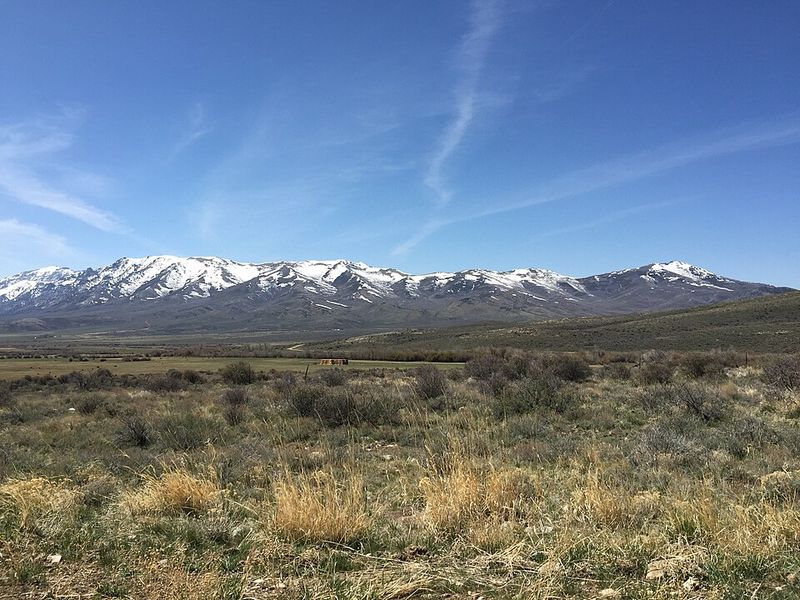
Each season rewrites Ruby Valley’s character completely, transforming the landscape in ways that surprise even repeat visitors.
Spring arrives late at this elevation, usually in May, bringing a brief explosion of wildflowers that carpet sections of the valley floor in yellow, purple, and white.
Lupines, Indian paintbrush, and desert marigolds take advantage of snowmelt and spring rains, creating color where only brown and gray dominated for months.
Summer bakes the valley under intense sun, with temperatures climbing into the nineties during July and August.
The heat shimmers above the ground in visible waves, distorting distant views and adding to the surreal quality of the emptiness.
Afternoon thunderstorms build over the Ruby Mountains, sometimes reaching the valley floor with brief but dramatic downpours that leave the air smelling of wet sage.
Autumn brings perhaps the most pleasant weather, with warm days and cool nights that make outdoor exploration comfortable.
The sagebrush takes on silver tones, and grasses turn golden, creating a subtle palette that glows in the angled light of shorter days.
Winter transforms Ruby Valley into a stark landscape of snow-dusted plains and white mountain peaks.
Temperatures drop well below freezing at night, and the emptiness takes on an even more profound quality when covered in snow.
The silence deepens, and wildlife tracks become clearly visible, telling stories of survival in one of Nevada’s most unforgiving environments.
The Quality of Silence Here
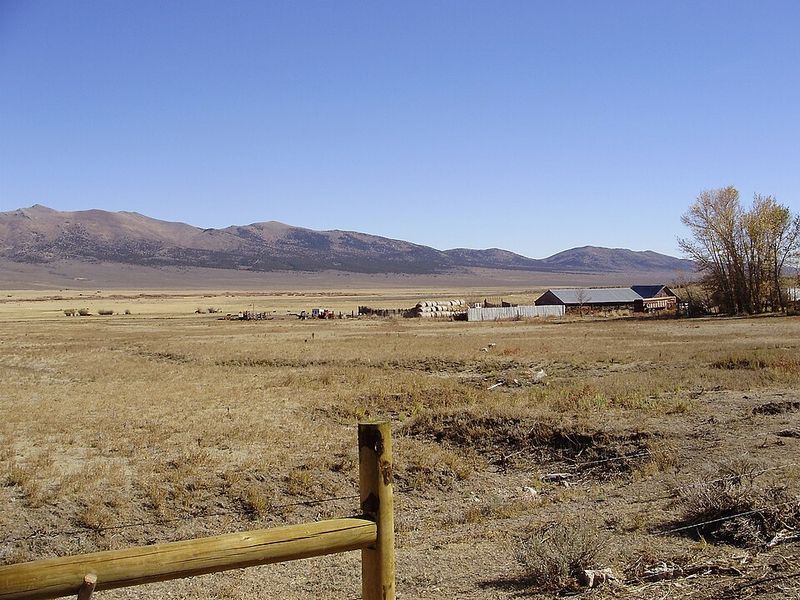
Silence in Ruby Valley exists at a level that urban dwellers find almost disorienting at first.
Without traffic, aircraft, machinery, or human voices, the baseline noise level drops to nearly nothing, allowing you to hear sounds usually masked by modern life.
Your own heartbeat becomes audible in the stillness.
Breathing sounds loud.
The rustle of your clothing as you move seems amplified in the absence of competing noise.
This profound quiet affects people in different ways, some finding it peaceful and restorative while others initially experience it as unsettling or even unnerving.
After spending time here, most visitors report a recalibration of their relationship with sound and silence.
The constant low-level stress created by urban noise pollution becomes apparent only when removed completely.
In Ruby Valley’s silence, minds slow down and thoughts become clearer.
The absence of distraction forces a kind of presence that modern life rarely demands or allows.
Small sounds gain significance in this environment.
A raven’s call carries for miles.
Wind moving through sagebrush creates subtle whispers and sighs.
The buzz of a fly becomes a noticeable event.
This heightened awareness of small sounds connects you to the environment in immediate ways, making you part of the landscape rather than merely an observer passing through it.
The silence here is not empty but rather full of subtle presence that reveals itself slowly to those who listen.
Photography in Extreme Emptiness
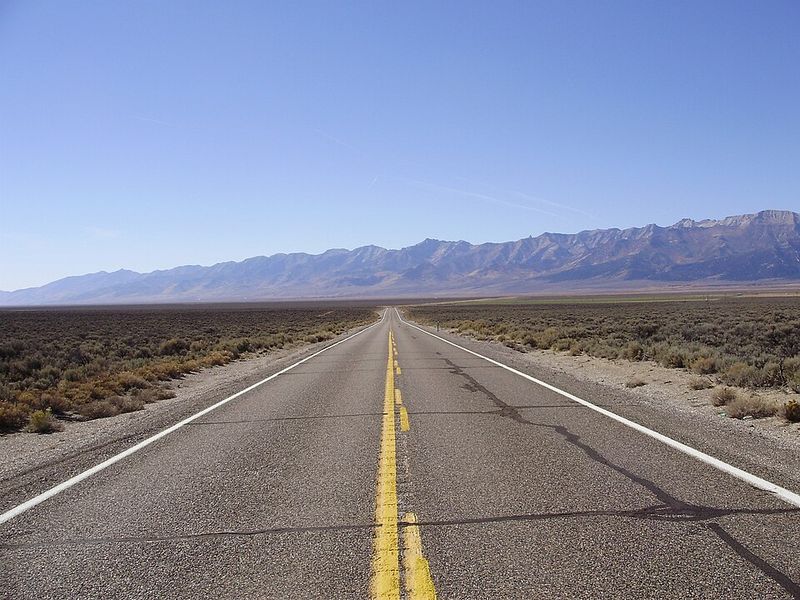
Ruby Valley presents unique challenges and opportunities for photographers drawn to landscapes of extreme emptiness and scale.
The lack of obvious focal points forces creative approaches to composition, pushing photographers to find interest in subtle details, patterns, and the play of light across vast distances.
Wide-angle lenses capture the overwhelming sense of space, but telephoto lenses reveal surprising details in distant mountains and isolated features.
The clear, dry air creates exceptionally sharp images, with details visible at distances that would be obscured by haze in more humid climates.
Light quality changes dramatically throughout the day, offering different moods and colors for the same basic landscape.
Golden hour, that brief period after sunrise and before sunset, paints the valley in warm tones that emphasize textures and create long shadows that add depth to flat terrain.
Midday light can seem harsh and unflattering, washing out colors and flattening contrast.
But even midday offers opportunities for photographers interested in the stark, almost abstract quality of emptiness under bright sun.
Night photography reaches extraordinary levels here, with the dark skies allowing long exposures that capture star trails, the Milky Way, and celestial events with minimal light pollution interference.
The emptiness that makes Ruby Valley feel surreal to the eye translates powerfully into photographs that convey isolation, scale, and the raw beauty of undeveloped landscape.
Images captured here often carry an otherworldly quality that makes viewers question whether such emptiness can truly exist in the modern world.
Solitude as a Travel Experience
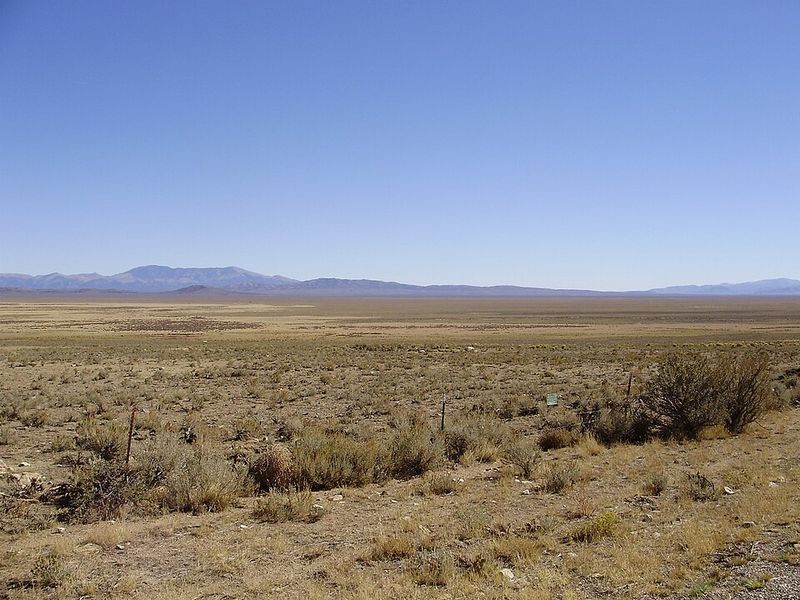
Visiting Ruby Valley offers something increasingly rare in modern travel: genuine solitude and the opportunity to be truly alone with landscape and thought.
Unlike popular national parks where even remote trails see steady traffic, Ruby Valley remains largely unknown and unvisited.
You can spend hours or even days here without encountering another person, an experience that feels both liberating and slightly unsettling for those unaccustomed to such isolation.
This solitude provides space for reflection and perspective that busy lives rarely allow.
Without the distractions of phones, internet, or social obligations, your mind settles into different rhythms and patterns.
Thoughts that seemed urgent fade in importance when measured against geological time and natural processes visible in the landscape around you.
Problems that felt overwhelming become manageable when considered in a place where mountains have stood for millions of years and will continue standing long after current concerns have passed.
The emptiness here acts as a mirror, reflecting back whatever you bring to it.
Some visitors find peace and restoration in the silence and space.
Others confront uncomfortable aspects of themselves that staying busy usually keeps at bay.
Ruby Valley does not judge or comfort but simply exists, offering its emptiness as a canvas for whatever experience you create within it.
This raw, unmediated encounter with landscape and self represents a form of travel that challenges and changes those willing to embrace it fully.
Dear Reader: This page may contain affiliate links which may earn a commission if you click through and make a purchase. Our independent journalism is not influenced by any advertiser or commercial initiative unless it is clearly marked as sponsored content. As travel products change, please be sure to reconfirm all details and stay up to date with current events to ensure a safe and successful trip.
