There is a special kind of happiness that comes from pulling over at a farm stand on a country road. The little wooden building appears out of nowhere, and you never know exactly what you will find inside.
In New Hampshire, I have found ten farm stands that are cozy and welcoming and absolutely worth the stop. They sell warm pies that smell like butter and cinnamon and apples from the orchard down the road.
They sell award winning cheese that local makers have been perfecting for years. I visited one stand that was just a small shed with a cooler and a cash box.
The pies were on a shelf, still warm from the oven. I bought one and ate a slice in the car with my fingers.
Another stand had a tasting counter where I sampled five different cheeses before choosing my favorite. The farmer told me about each one.
The milk came from her own cows. That is the thing about New Hampshire farm stands.
They are not grocery stores. They are the heart of the local food system.
The Jaw-Dropping S-Curve Path That Makes This Bridge Totally Unique
Most covered bridges go straight from one side to the other. Boring, predictable, done.
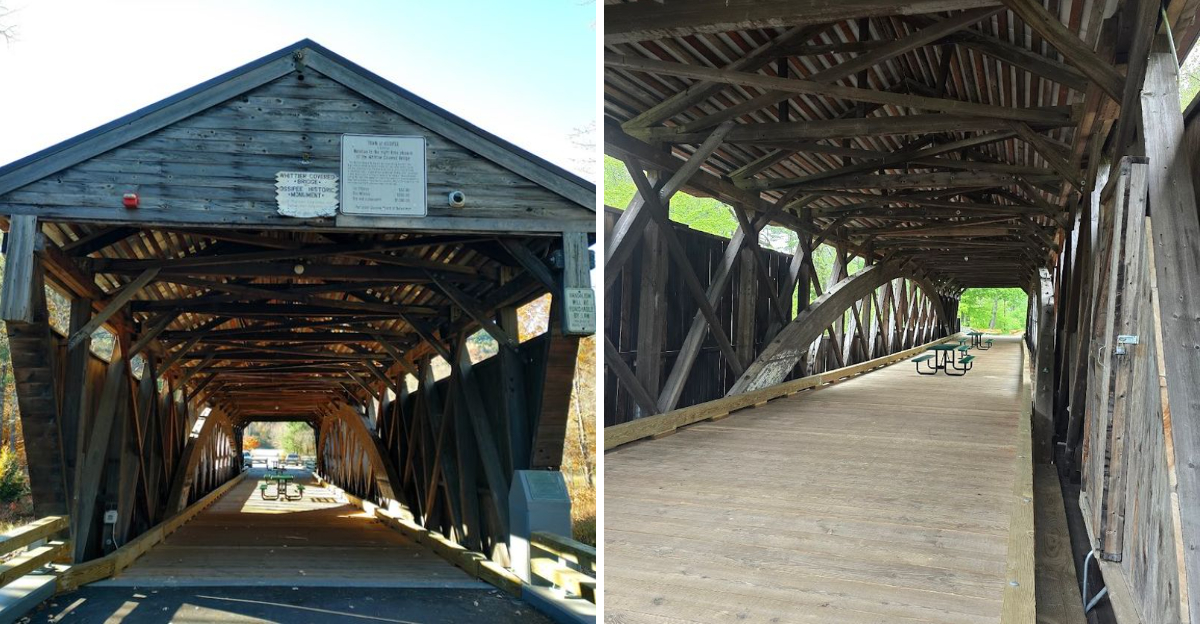
But the Whittier Covered Bridge plays by its own rules, and that is exactly what makes walking through it such a genuinely surprising experience.
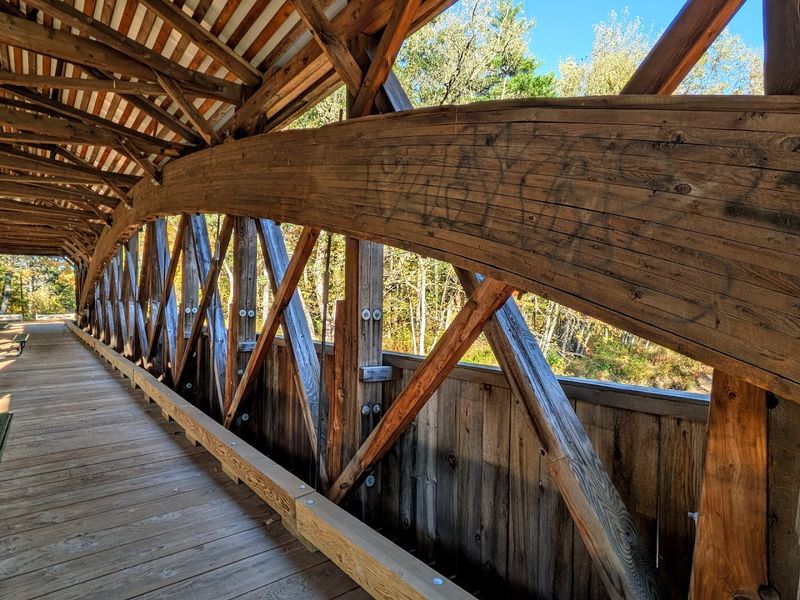
The S-curve path inside the bridge gently bends the walkway in two opposing directions, creating a subtle but unmistakable wave-like route through the wooden structure. You step inside expecting a straight shot and instead get a graceful architectural twist that feels almost playful.
This unusual design is believed to have been a practical response to the angle of the riverbanks and the original road alignment. Engineers and bridge builders of the 1800s were remarkably resourceful, and this curving interior is proof of their ingenuity.
Walking through it today, you feel the shift underfoot as the path gently curves left, then right. The wooden beams frame the view ahead like a living tunnel.
It is one of those small details that transforms a simple walk into a genuinely memorable moment, and it is the single feature most people talk about long after leaving New Hampshire.
A Paddleford Truss Design That Puts Other Bridges To Shame
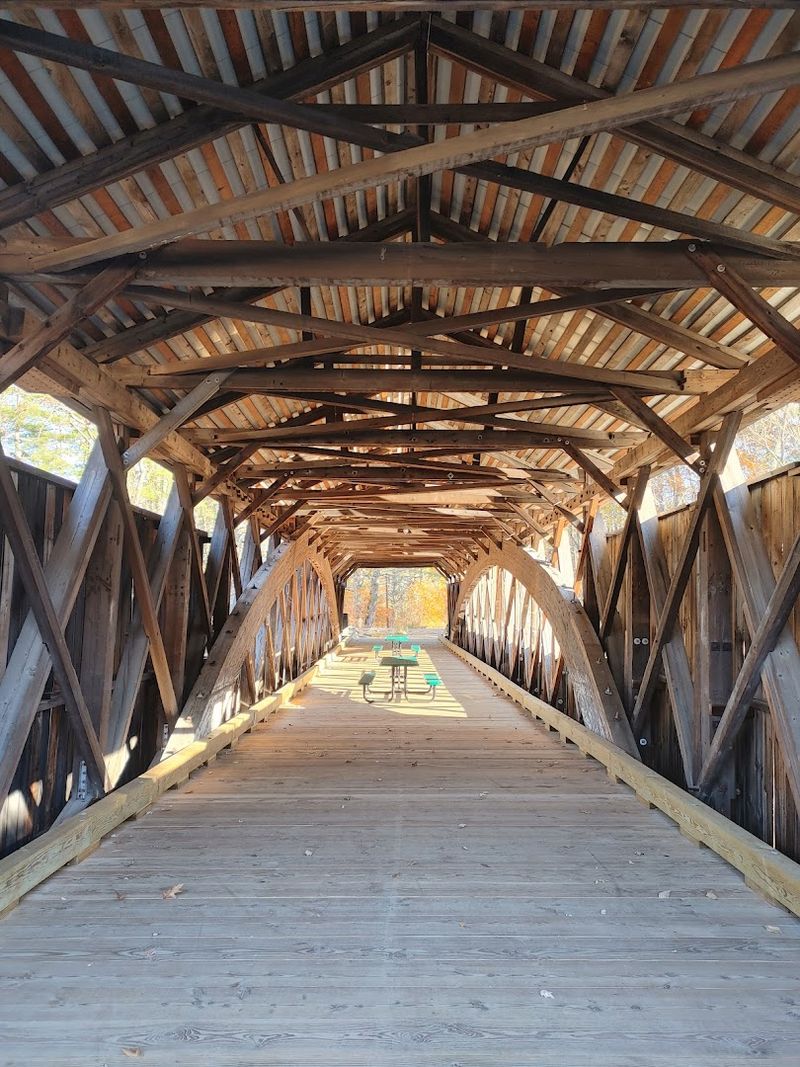
Structural engineering does not usually get people excited, but one look at the Paddleford truss inside this bridge and even the most casual observer starts nodding in serious appreciation. This truss style is considered a genuine New Hampshire innovation, and it is genuinely rare to find it in such well-preserved condition.
The design uses a complex system of long counterbraces and carefully interlocked wooden members to distribute weight across the span. It sounds technical because it absolutely is.
The craftsmanship required to execute this kind of joinery without modern tools or machinery is staggering.
Attributed to builder Jacob Berry around 1870, the bridge showcases what skilled artisans could achieve with timber, hand tools, and a deep understanding of structural forces. Every diagonal brace, every wooden peg, every carefully fitted joint tells a story of patient, precise labor.
New Hampshire has a proud tradition of covered bridge construction, and the Paddleford truss represents the peak of that tradition. Seeing it up close, framed by afternoon light filtering through the open sides of the bridge, is a reminder that engineering can be genuinely beautiful when the right hands are at work.
Built Around 1870 and Still Standing Proud on the Bearcamp River
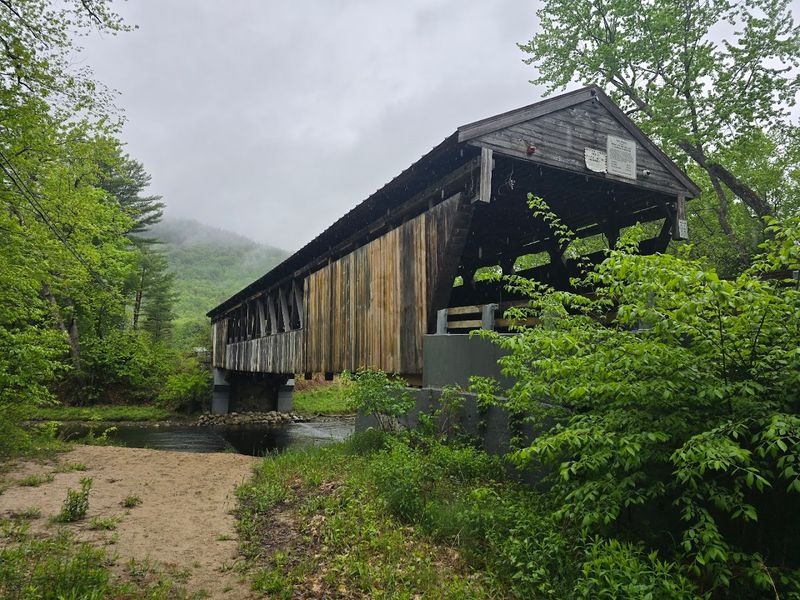
Longevity is earned, not given. The Whittier Covered Bridge has been standing over the Bearcamp River for well over a century, and it shows every bit of that glorious, hard-won age in the richness of its weathered timber and the confident way it sits between its stone abutments.
New Hampshire winters are brutal. Spring floods push rivers beyond their banks.
Summer heat expands and contracts every wooden joint. And yet this bridge has weathered all of it with remarkable resilience, thanks in large part to its thoughtful original construction and dedicated restoration efforts over the decades.
The Bearcamp River below is calm and clear, its surface catching light in ways that make the whole scene feel like a painting you stumbled into by accident. The red-painted exterior of the bridge reflects warmly off the water on sunny days, creating a mirror image that photographers absolutely cannot resist.
Spending time here feels like pressing pause on the modern world. The river moves, the leaves rustle, and the old bridge simply stands there being magnificent, just as it has been doing since the administration of Ulysses S.
Grant.
Named After a Famous Poet Who Loved This Corner of New Hampshire
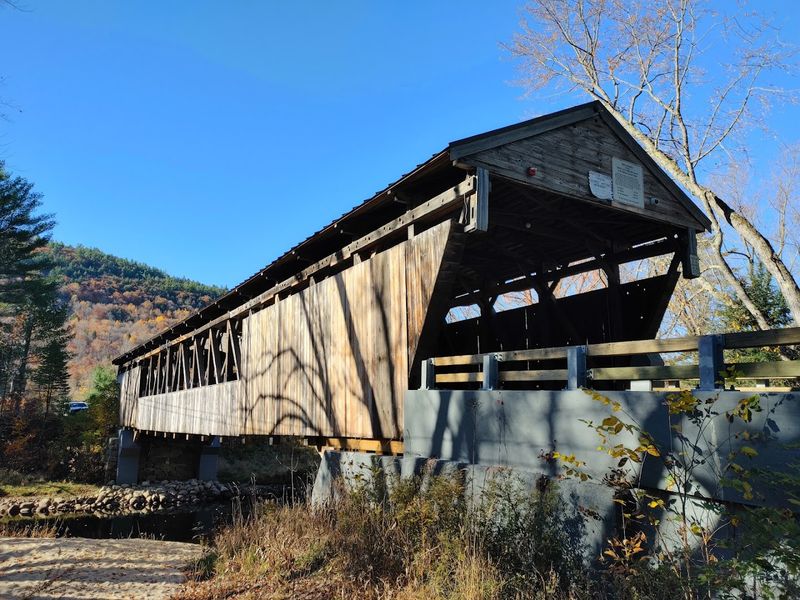
Not every bridge gets named after a literary legend, but the Whittier Covered Bridge earned that honor fair and square. The bridge takes its name from John Greenleaf Whittier, one of the most celebrated American poets of the 19th century, who spent several summers in the 1870s at a nearby hotel in the Ossipee area.
Whittier was drawn to the natural beauty of this part of New Hampshire, and honestly, standing here today, it is impossible not to understand why. The rolling hills, the river light, the quiet forests surrounding the area create exactly the kind of landscape that inspires poetry and deep reflection.
His connection to this place gives the bridge a cultural weight that goes beyond its impressive engineering. It is not just a crossing point over a river.
It is a landmark tied to American literary history, sitting quietly in a meadow in New Hampshire, waiting for curious visitors to discover the connection.
Knowing that a famous poet once wandered these same banks, drawing inspiration from the same river views you are enjoying right now, adds a genuinely moving layer to the whole experience. History feels tangible here in the very best way.
A National Register of Historic Places Landmark Right in Your Backyard
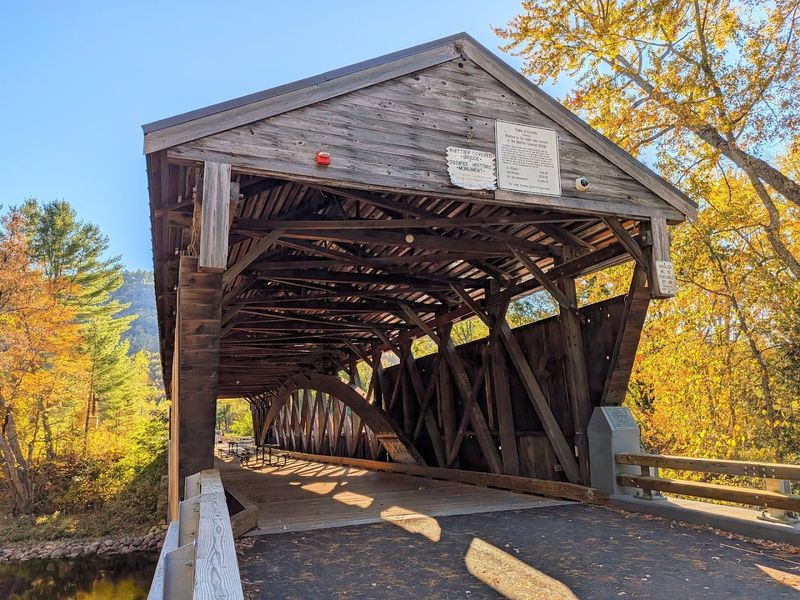
Getting listed on the National Register of Historic Places is not something that happens by accident. It requires documented historical significance, architectural integrity, and a compelling case for why a structure deserves permanent recognition and protection.
The Whittier Covered Bridge earned that designation, and it wears the honor well.
Listed in 1984, the bridge joined a prestigious roster of American landmarks that includes everything from grand plantation houses to humble one-room schoolhouses. What matters is not the size of the structure but the depth of its story, and this bridge has plenty of story to share.
For New Hampshire, covered bridges are a point of serious local pride. The state has made genuine efforts to preserve its remaining historic bridges, and the federal recognition of this particular structure underscores just how special the Paddleford truss design and the bridge’s overall condition truly are.
Visiting a nationally recognized landmark does not always require flying across the country or paying an entrance fee. Sometimes it means pulling off a quiet rural road in New Hampshire, walking across a creaky wooden floor, and feeling the specific thrill of standing inside a piece of certified American history.
The Major Restoration That Brought This Beauty Back From the Brink
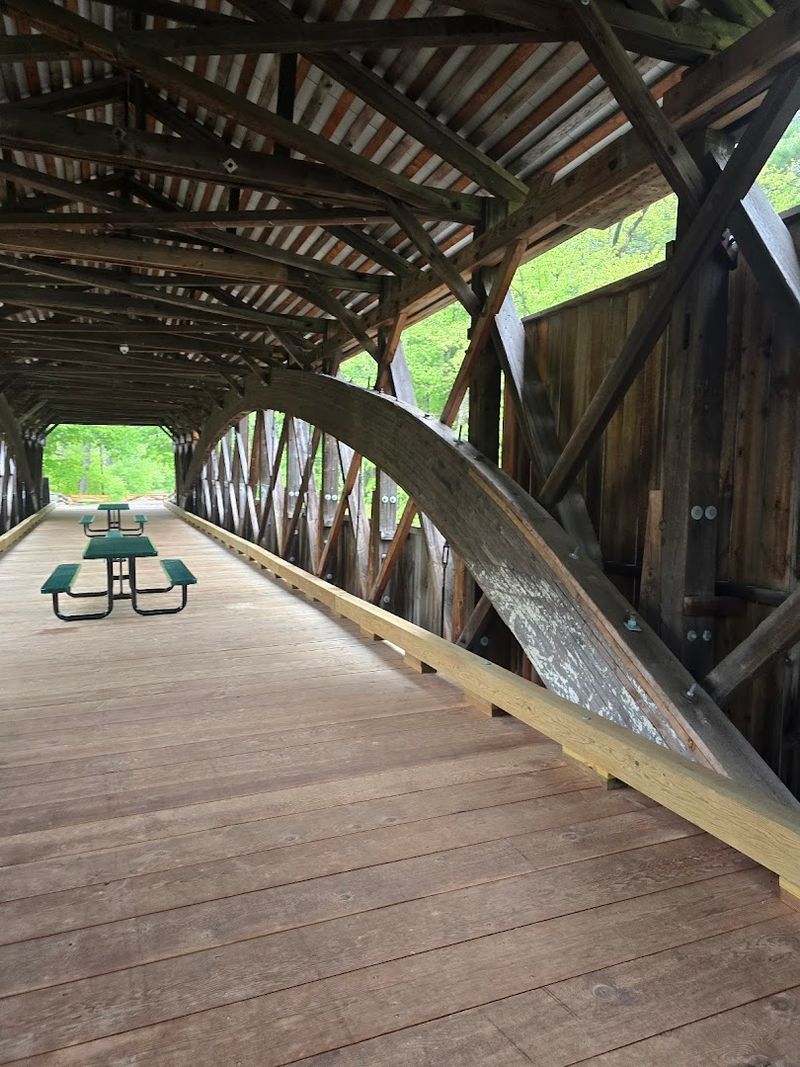
By the late 20th century, the Whittier Covered Bridge had accumulated layers of modifications that obscured its original character. Laminated arches added in the late 1800s and steel supports installed in the 1940s had changed the bridge significantly from its original Paddleford truss form.
Something had to be done.
A restoration in 1983 stripped away those additions and returned the structure closer to its historic form. The full-height siding was replaced with shorter siding, and the sides of the bridge were opened up, letting natural light flood the interior in a way that transforms the experience of walking through it.
Then came the most dramatic chapter. The bridge was removed entirely from its abutments in 2008 for a comprehensive, multi-phase rehabilitation project.
That kind of undertaking requires enormous resources, careful planning, and a genuine commitment to preservation over convenience.
After a remarkable fourteen-year effort, the bridge was returned to its abutments in late 2022. New Hampshire did not rush the job, and the result speaks for itself.
The bridge now stands as a testament to what patient, skilled restoration work can accomplish when a community decides that history is worth fighting for.
Open for Pedestrians and Perfect for a Peaceful Afternoon Stroll
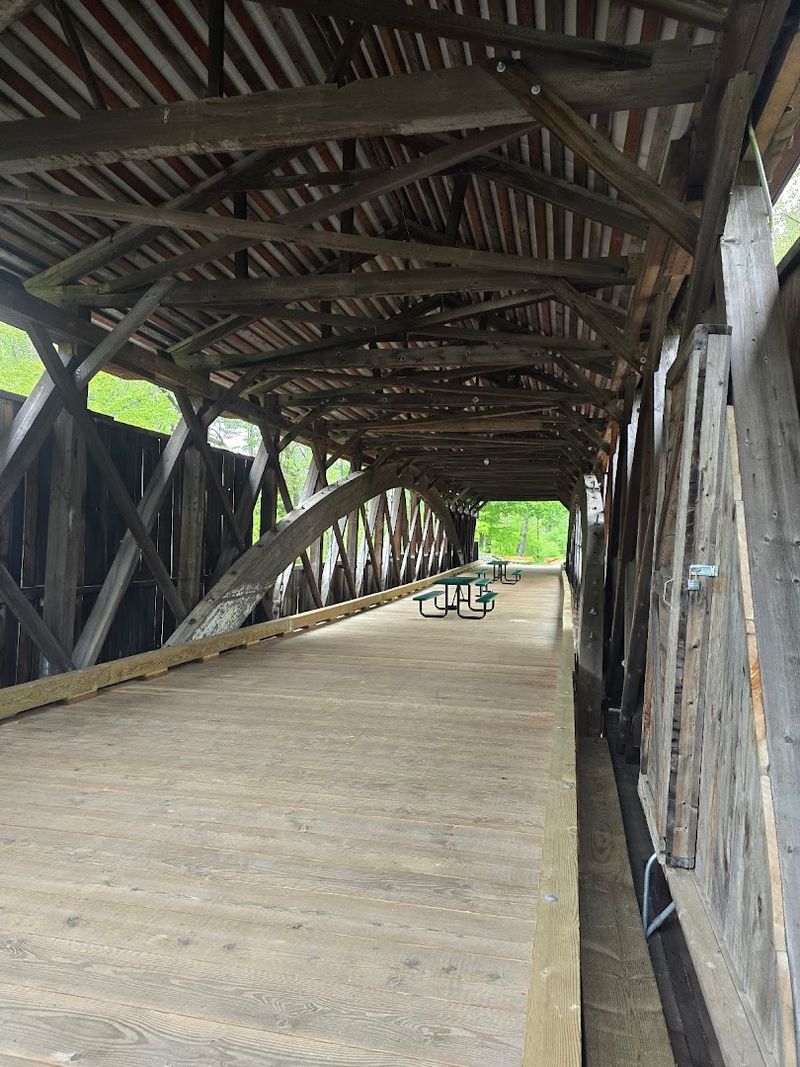
Closed to vehicles since 1989, the Whittier Covered Bridge has found a second life as one of the most charming pedestrian spots in all of New Hampshire. No cars, no engine noise, no exhaust fumes.
Just you, the wooden planks underfoot, and the sound of the Bearcamp River flowing beneath.
Walking through the bridge at a leisurely pace takes only a minute or two, but most people find themselves making the return trip immediately just to experience it again from the opposite direction. The light changes, the view shifts, and the S-curve path offers a slightly different perspective each way.
The open sides of the bridge allow a wonderful cross-breeze on warm days, and the framed views of the river and surrounding landscape are genuinely stunning in every season. Autumn is especially spectacular when the foliage turns the surrounding hills into a riot of orange, red, and gold.
Bringing a camera is absolutely the right call. Every angle offers something worth capturing, from the intricate wooden trusses overhead to the reflections in the water below.
This is the kind of spot that makes you slow down and actually look at the world around you.
Picnic Tables, River Access, and a Setting That Feels Like a Dream
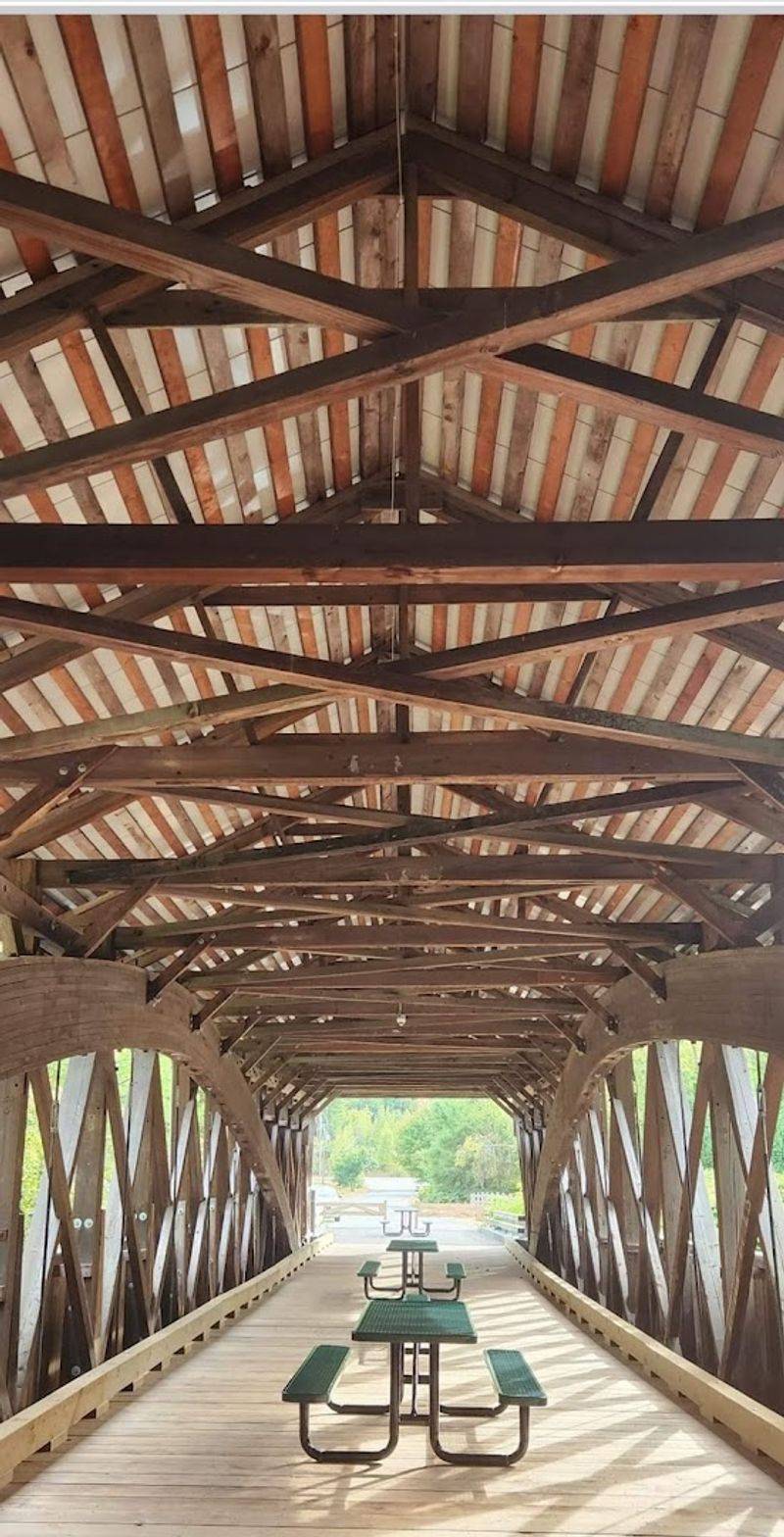
Pack a lunch because the area surrounding the Whittier Covered Bridge has been thoughtfully set up as a genuinely lovely outdoor gathering spot. Picnic tables sit near the riverbank, offering front-row seats to one of the prettiest views in New Hampshire’s Carroll County.
The Bearcamp River is clear and inviting in the warmer months, and the grassy banks provide plenty of space to spread out a blanket and spend a few hours doing absolutely nothing stressful. Wildflowers bloom along the edges of the clearing in spring and summer, adding color and fragrance to the already beautiful scene.
Families with kids will find plenty to keep everyone entertained. The river, the bridge, the open space, and the simple pleasure of exploring a genuinely historic structure make this a much richer outing than a typical park visit.
It feels like discovering something special rather than following a well-worn tourist path.
The combination of natural beauty, historical architecture, and relaxed outdoor amenities is surprisingly rare. Most historic sites feel formal and hands-off.
This one invites you to stay a while, eat your sandwich, listen to the river, and just breathe deeply. New Hampshire does not get much better than this.
Security Cameras and Serious Preservation Protect This Irreplaceable Gem
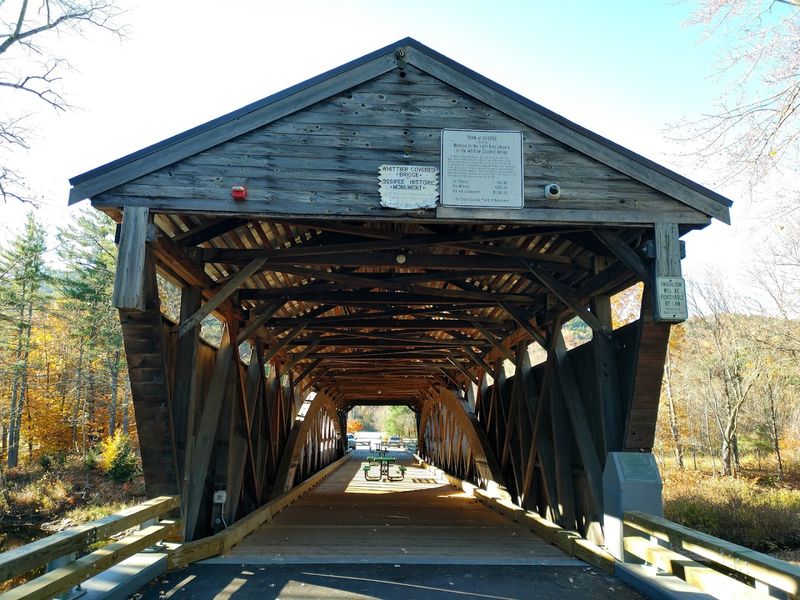
Not every historic bridge gets the level of protection it deserves, but the Whittier Covered Bridge is watched over with genuine care. The site is monitored by round-the-clock security cameras, a detail that speaks volumes about how seriously the local community and preservation authorities take their responsibility to protect this landmark.
After fourteen years of painstaking restoration work, it makes complete sense that nobody wants to see this bridge damaged by vandalism or careless behavior. The cameras serve as both a deterrent and a reassurance that someone is always keeping an eye on things.
Preservation efforts in New Hampshire have historically relied on a combination of state funding, federal historic preservation programs, and passionate local advocacy. The Whittier Covered Bridge has benefited from all three, and the result is a structure that looks and feels genuinely cared for rather than simply left to survive on its own.
Respecting the site is the simplest thing a visitor can do in return. Stay on the designated paths, do not carve into the wood, and treat the bridge with the same reverence you would give any national landmark.
Future generations deserve the chance to walk through it too.
How to Find This New Hampshire Treasure and Plan Your Visit Right
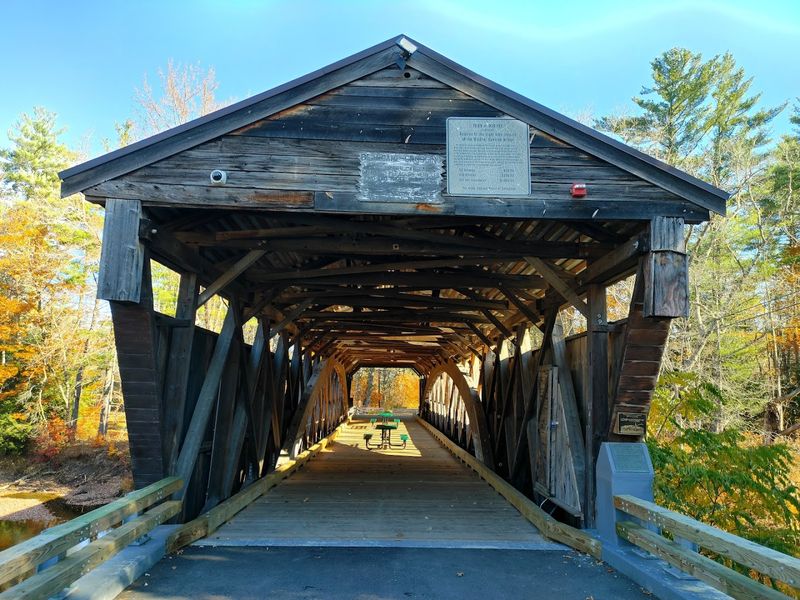
Getting to the Whittier Covered Bridge is part of the adventure. The drive through Carroll County in New Hampshire winds past lakes, forests, and small towns that feel genuinely untouched by the frantic pace of modern life.
Give yourself extra time because you will want to pull over and photograph things along the way.
The bridge sits along Nudd Road and Old Covered Bridge Road in West Ossipee, a quiet corner of New Hampshire that rewards the curious traveler. Parking is limited, with space for just a handful of cars near the bridge, so arriving early in the morning or on a weekday gives you the best chance of having the place mostly to yourself.
Autumn is the peak season for visiting, and for good reason. The surrounding foliage transforms the entire area into something that looks genuinely unreal.
Spring and summer offer their own rewards, with blooming wildflowers and the sound of the Bearcamp River running full and fast after snowmelt.
The official address is 21 Nudd Rd, West Ossipee, NH 03890. Plug it into your navigation, roll down your windows as you get close, and let New Hampshire work its magic on you.
This bridge is absolutely worth every mile of the drive.
