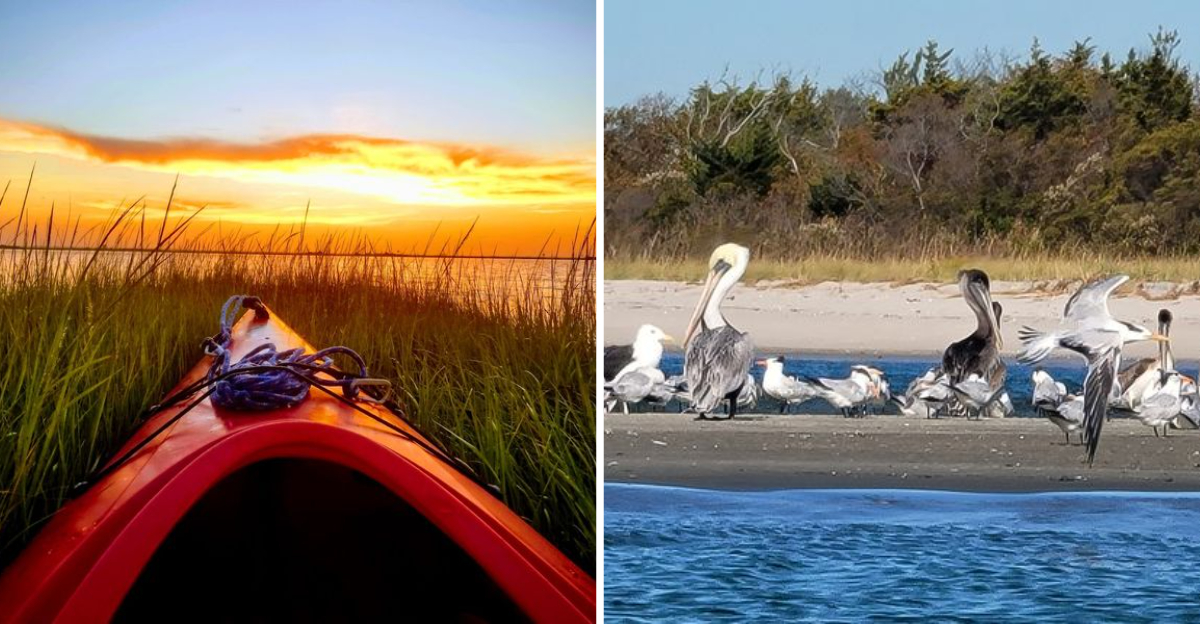
Let us be honest for a second. When someone says “secluded beach in New Jersey,” you probably roll your eyes.
This one is the exception.
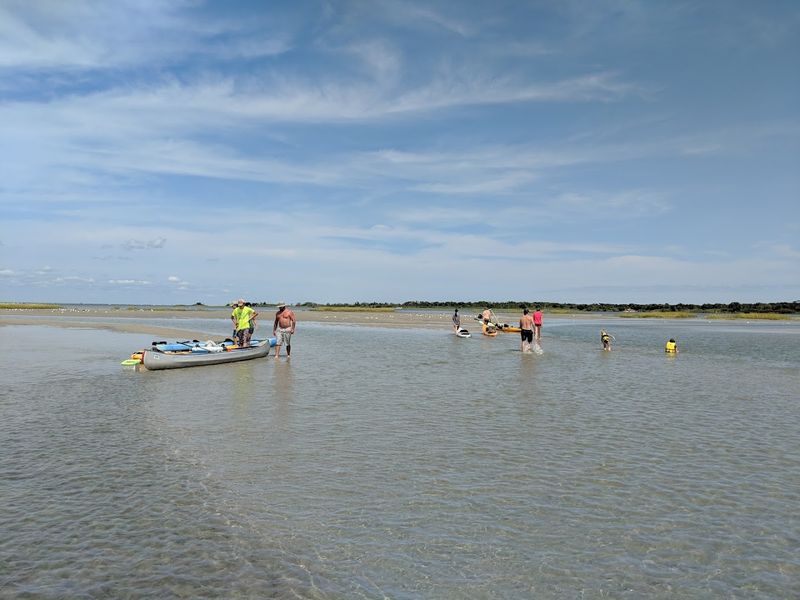
Hidden behind salt marshes and accessible only by boat, this quiet stretch of sand feels less like the Garden State and more like the edge of the world.
The only sounds are the waves, the wind, and the ospreys circling overhead.
Pack a kayak, leave your phone in the car, and prepare to question why you ever tolerated a crowded beach in the first place.
Getting There Is Half the Adventure
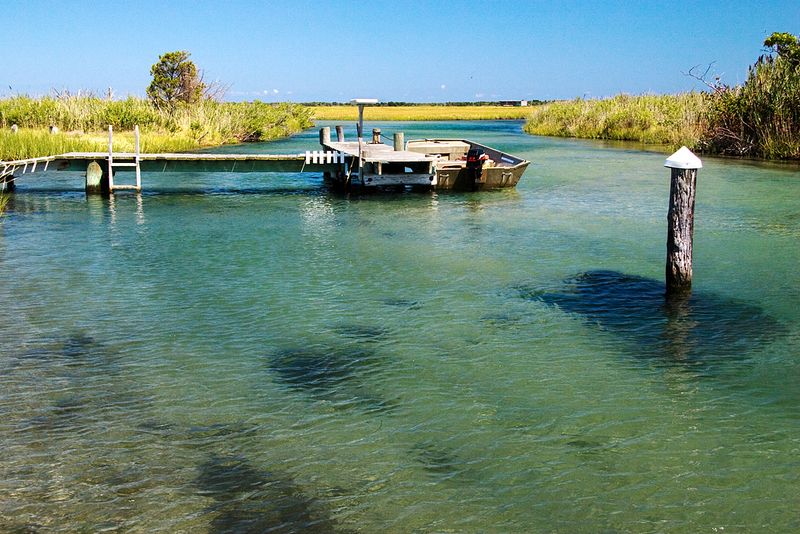
Reaching Sedge Island is not your average beach day commute. The journey starts at Island Beach State Park, where visitors board a 15-minute pontoon boat ride from Sedge Dock.
That short trip across the water feels like crossing into a completely different world.
The boat glides past tidal creeks and waving marsh grass, and somewhere in the middle of that ride, the noise of everyday life just fades. You can feel the shift in the air, saltier, quieter, and surprisingly cool even on warm days.
Because access requires a boat, large crowds simply never show up here. That built-in barrier is actually a gift.
Day tours run through Island Beach Nature Programs, managed by the New Jersey Department of Environmental Protection, and tickets must be purchased a day in advance since sales close at 4 p.m. the evening before.
Planning ahead is essential, but the reward on the other side of that short boat ride is absolutely worth every bit of effort.
Sedge House: A Century-Old Gem with Character
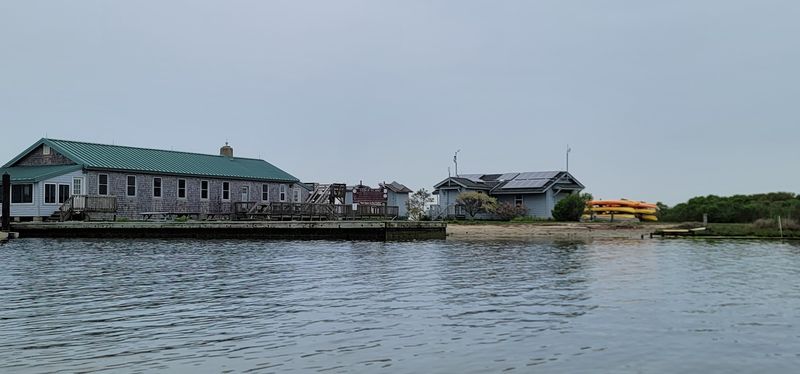
Few buildings carry their age as gracefully as the Sedge House.
Originally built as a duck hunting lodge over a century ago, this weathered structure now serves as an environmental education center at the heart of the island experience.
Walking up to it for the first time, you get this odd but wonderful feeling, like stumbling onto a piece of living history that somehow survived every storm and season without losing its soul. The wood is worn, the setting is raw, and the whole thing feels completely honest.
Programs here are designed for participants aged 12 and older, covering topics like clamming, conservation, fishing, and salt marsh ecology.
Residential stays are available, and booking months ahead is strongly recommended because space is genuinely limited.
Spending a night in a place this off-grid, with no commercial distractions anywhere nearby, resets something in you that you did not even realize needed resetting.
The Sedge House is not just a building. It is a mood.
Packing Your Own Food Is Part of the Fun
There are zero restaurants, zero snack stands, and zero vending machines on Sedge Island. That might sound like a dealbreaker, but it is actually one of the most freeing parts of the whole trip.
You get to decide exactly what your island meal looks like.
Packing food here becomes a small ritual. Think hearty sandwiches, fresh fruit, trail mix, homemade wraps, or anything that travels well and tastes even better when you are sitting on a dock with marsh views in every direction.
Eating outside surrounded by nature just makes everything taste sharper and more satisfying.
Bringing enough water is non-negotiable since the island runs entirely off-grid. A good cooler and reusable containers make the whole experience smoother.
There is something genuinely joyful about eating a meal you packed yourself in a place this remote. No menus to overthink, no waiting on service, just food and fresh air and the occasional osprey circling overhead like it owns the whole sky.
Which, honestly, it kind of does.
Osprey Colony: New Jersey’s Most Spectacular Aerial Show
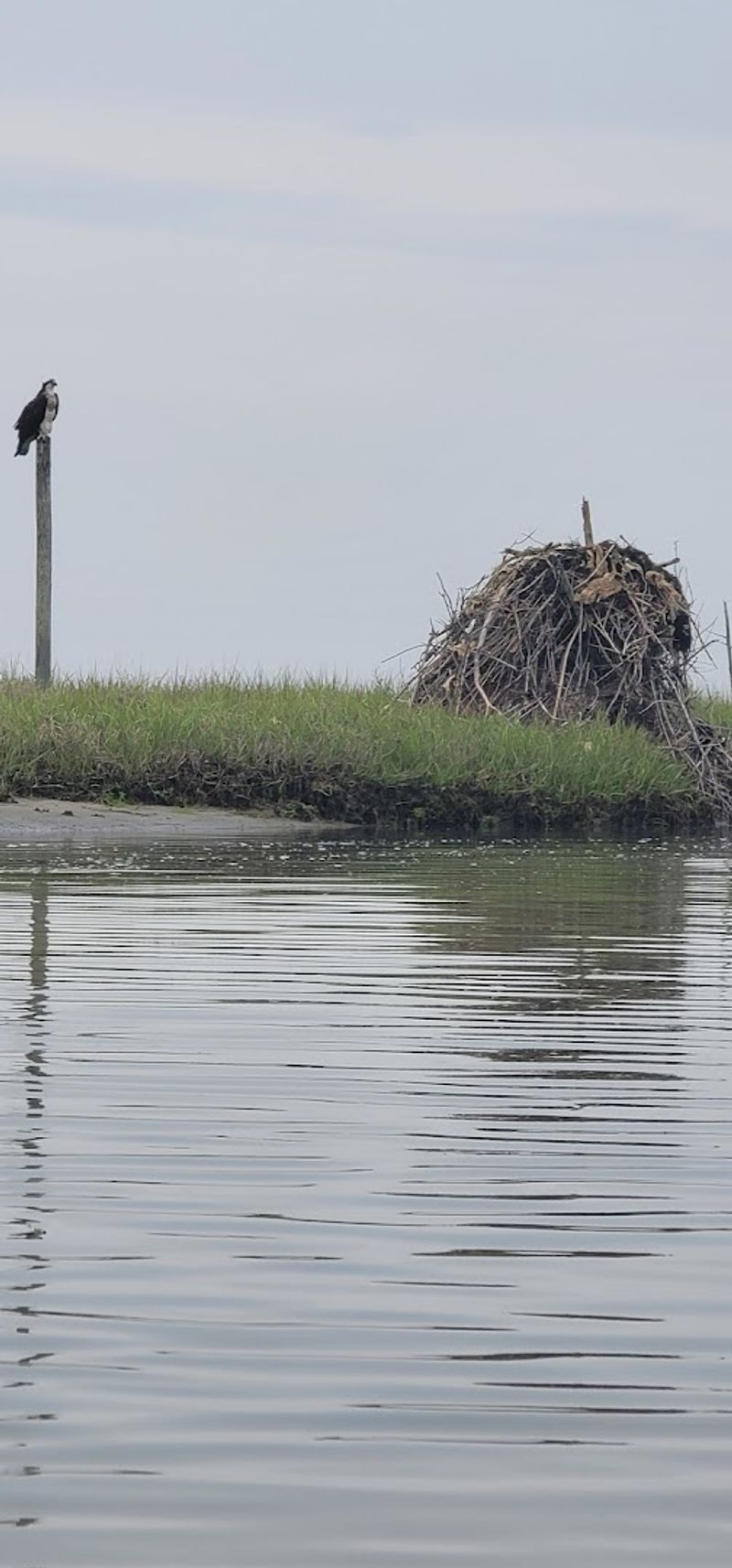
Sedge Island is home to New Jersey’s largest osprey colony, and seeing them in action is nothing short of jaw-dropping. L
ate March through May is the prime window for watching these birds, and if you time your visit right, the sky above the marsh becomes a full-on wildlife spectacle.
Ospreys are dramatic hunters. They hover, they dive, and they hit the water with a precision that makes every catch feel like a highlight reel moment.
Watching one pull a fish clean out of a tidal creek from just a few feet away is the kind of thing that sticks with you for years.
Bring binoculars if you have them, though honestly even without them the colony is impossible to miss. Nests are built on platforms throughout the island, and the birds are remarkably unbothered by visitors who keep a respectful distance.
This is one of those rare wildlife encounters that feels completely unscripted and wonderfully real, the kind you cannot manufacture no matter how many nature documentaries you have seen.
Kayaking Through the Salt Marsh Maze
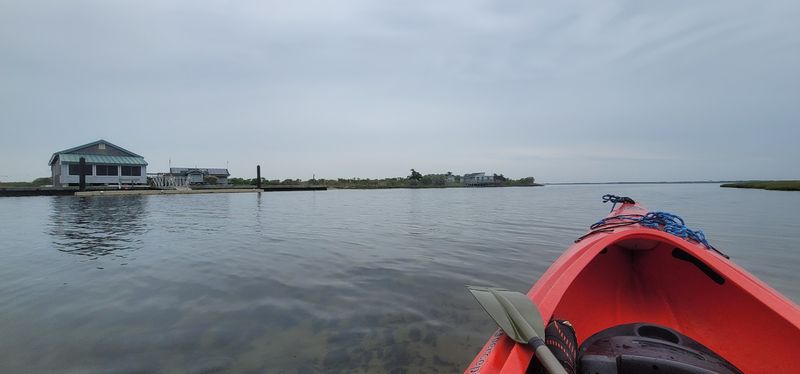
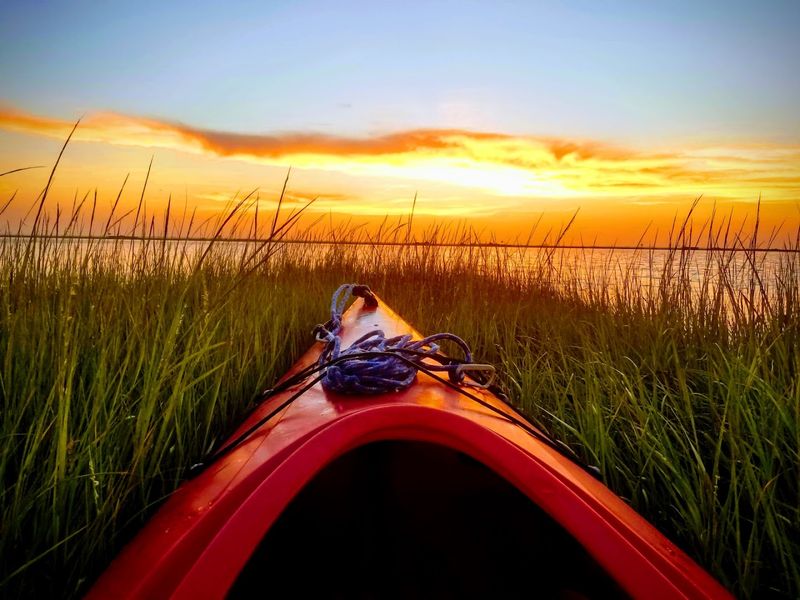
Kayaking around Sedge Island is one of those experiences that sneaks up on you.
You set out thinking it will be a pleasant paddle, and two hours later you are completely absorbed in a labyrinth of tidal creeks, wondering how something this beautiful exists so close to the Garden State Parkway.
The salt marsh network around the island covers roughly 1,600 acres of tidal marshes, creeks, ponds, and open water.
Paddling through it feels exploratory in the best possible way, like each bend in the creek reveals something new, a great blue heron standing perfectly still, a diamondback terrapin slipping off a muddy bank, or a school of small fish darting beneath your hull.
Guided kayaking trips are available through Island Beach Nature Programs, which is a great option for first-timers who want context and direction. Experienced paddlers can cover more ground on their own.
Either way, the pace of kayaking matches the pace of this island perfectly. Slow, deliberate, and completely present in whatever is happening right in front of you.
Clamming: The Most Satisfying Hands-On Activity You Did Not Expect
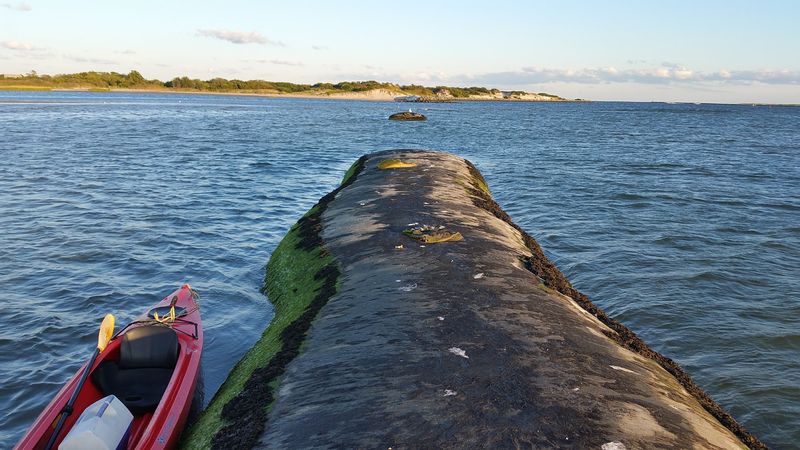
Clamming is one of those activities that sounds simple until you are actually ankle-deep in a tidal flat, digging around in the mud with your hands and genuinely excited about finding a clam.
It is surprisingly addictive and deeply satisfying in a way that is hard to explain until you try it.
Guided clamming trips at Sedge Island are part of the environmental education programs offered through Island Beach Nature Programs.
Instructors walk participants through the process, explaining tidal patterns, clam behavior, and the ecological role these shellfish play in keeping the marsh healthy.
You leave knowing more than you expected and somehow proud of a skill you did not have that morning.
The hands-on nature of clamming connects you to the landscape in a way that just watching never quite does. There is mud involved.
There is patience required. And there is a real thrill when your fingers close around a hard shell buried just below the surface.
Even if you have never done it before, this is absolutely worth adding to your itinerary for the day.
Wildlife Beyond the Birds: What Else Calls This Island Home
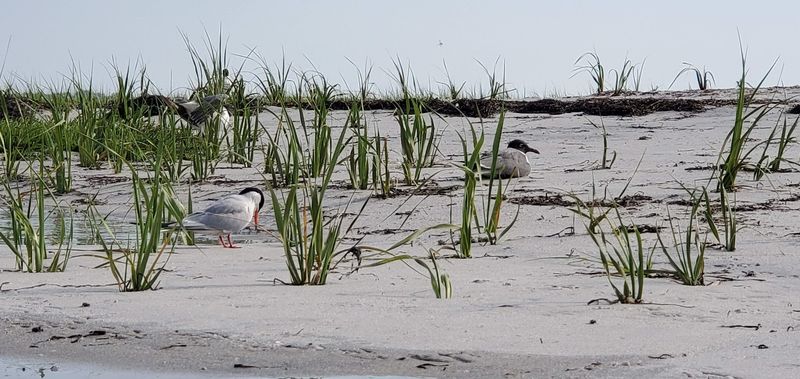
The osprey get most of the attention, but Sedge Island supports a surprisingly rich cast of wildlife that rewards patient and curious visitors.
Northern diamondback terrapins are a particular highlight, and spotting one basking on a muddy bank feels like a small personal victory.
Rays glide through the shallower tidal channels, especially during warmer months, and their movement through the water is both eerie and mesmerizing.
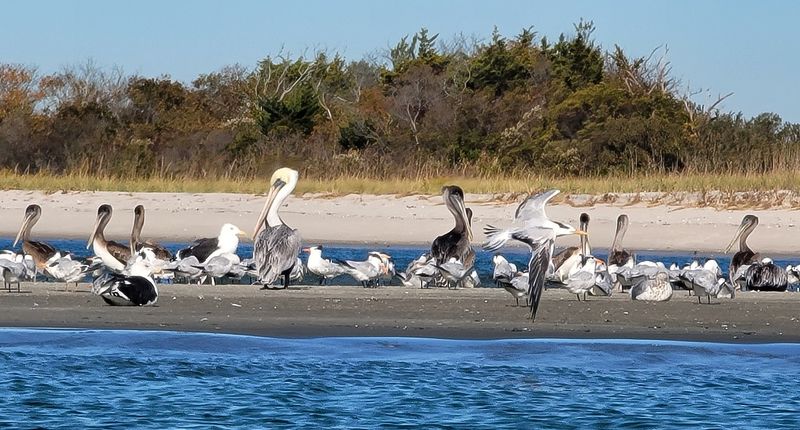
American oystercatchers, with their bold orange bills and loud personalities, patrol the shoreline with an air of absolute authority.
Shorebirds of all kinds pass through during migration season, making the island a genuinely exciting stop for birders.
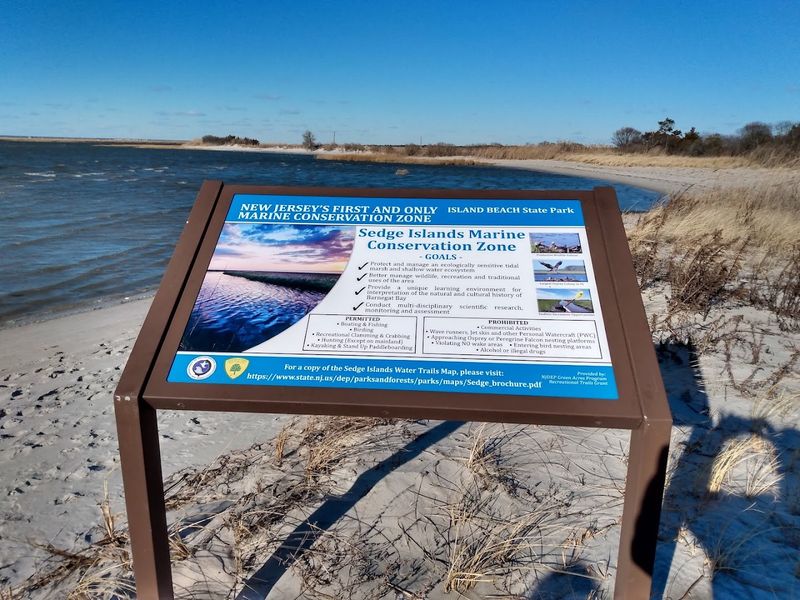
The Sedge Islands Marine Conservation Zone designation means all of this habitat is actively protected. That legal protection is part of why the ecosystem feels so intact and vibrant compared to more accessible spots along the Jersey Shore.
Every creature here exists within a functioning, healthy system, and being present in that system, even briefly, gives you an appreciation for what wild spaces can look like when they are genuinely left alone.
Fishing in One of New Jersey’s Most Productive Waters
Anglers who make the trip to Sedge Island quickly understand why this area has a reputation for productive fishing.
The tidal creeks and open water surrounding the island sit within the Sedge Islands Marine Conservation Zone, and that protected status has allowed fish populations to remain healthy and plentiful.
Striped bass, flounder, and weakfish are among the species that move through these waters depending on the season.
The marsh environment creates ideal feeding conditions, with nutrients constantly cycling through the tidal system and keeping baitfish populations strong.
Fishing here feels less like a competition and more like a conversation with the water.
Guided fishing experiences are available through Island Beach Nature Programs for those who want some local knowledge before casting a line. Even without a guide, the setting alone makes fishing here feel different from any crowded pier or busy beach.
The quiet is real. The water is clear enough to watch fish move.
And there is absolutely no one fighting you for the best spot along the bank, which is a luxury that is increasingly rare along the Jersey Shore.
Environmental Education That Actually Sticks
Most environmental education programs feel like a classroom with a better view. The programs at Sedge Island feel nothing like that.
Being fully immersed in an off-grid island environment, with no distractions and no escape route back to the mainland, changes the way information lands in your brain.
Residential programs are available for participants aged 12 and older and cover topics including salt marsh ecology, clamming, conservation practices, and fishing.
The curriculum is built around the landscape itself, meaning every lesson is illustrated by something you can actually see, touch, or wade into within a few steps of the Sedge House.
Booking months in advance is necessary given the limited capacity, but that scarcity is also what makes the experience feel so intentional and worthwhile.
Students and adults alike leave with a deeper understanding of how tidal ecosystems function and why protecting them matters.
It is the kind of learning that does not fade after the test, because it was never about a test to begin with. It was about being present in a place that teaches by simply existing.
Planning Your Visit: What You Need to Know Before You Go
Sedge Island rewards people who plan ahead and gently humbles those who do not. The island has no shops, no food vendors, and composting toilets as the primary bathroom option.
That is not a complaint, just a heads-up that preparation makes the whole experience significantly more enjoyable.
Day tours run through Island Beach Nature Programs and must be booked at least a day in advance, since ticket sales close at 4 p.m. the day before the tour. For residential programs, reaching out months early is the smart move.
Space is limited, and the programs fill up quickly once the season gets going.
Pack everything you need for the day: food, water, sunscreen, bug spray, and comfortable shoes that you do not mind getting muddy. Binoculars are a great addition for the wildlife viewing.
Arriving at Island Beach State Park with enough time to navigate to Sedge Dock before the boat departs is important. The island itself is located within Island Beach State Park in New Jersey.
Address: Island Beach State Park, Seaside Park, New Jersey.
