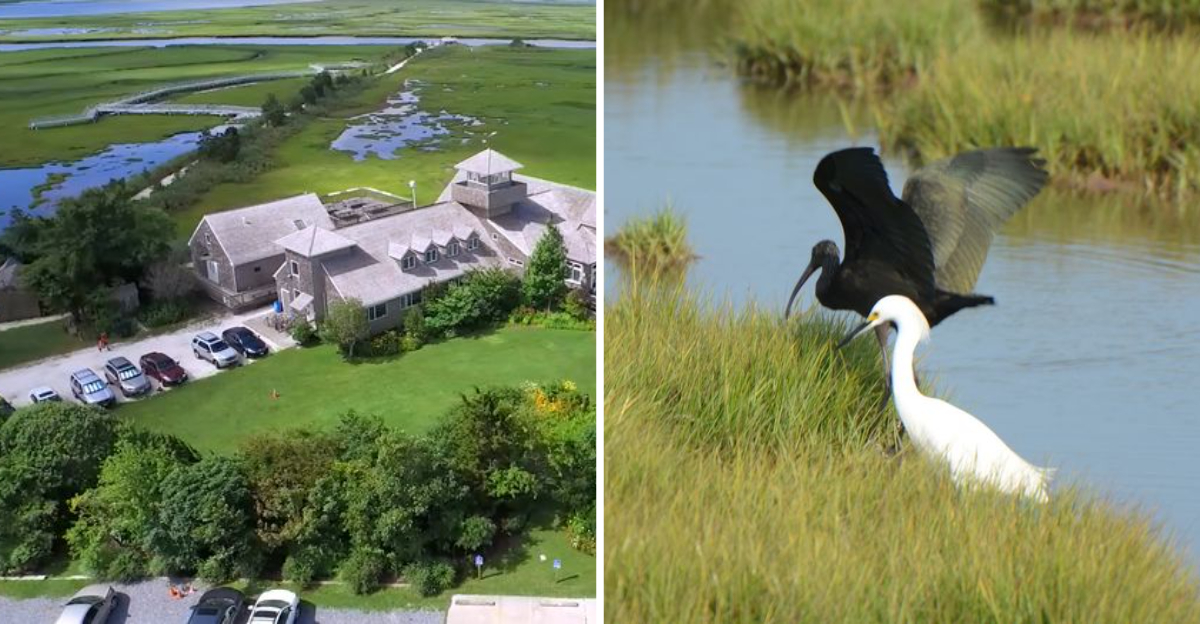
Here’s something I never thought I’d say: New Jersey’s boardwalks aren’t just about funnel cakes and Ferris wheels; they’re also gateways to salt marsh safaris.
Here, you can swap arcade tokens for binoculars and discover a jackpot of herons, fiddler crabs, and marsh grasses swaying like nature’s own dance floor.
It’s the kind of place where every step feels like a backstage pass to Mother Nature’s show.
So if you thought Jersey was only about pork roll and boardwalk fries, prepare to add “eco-adventure hotspot” to the list.
The Salt Marsh Safari Experience
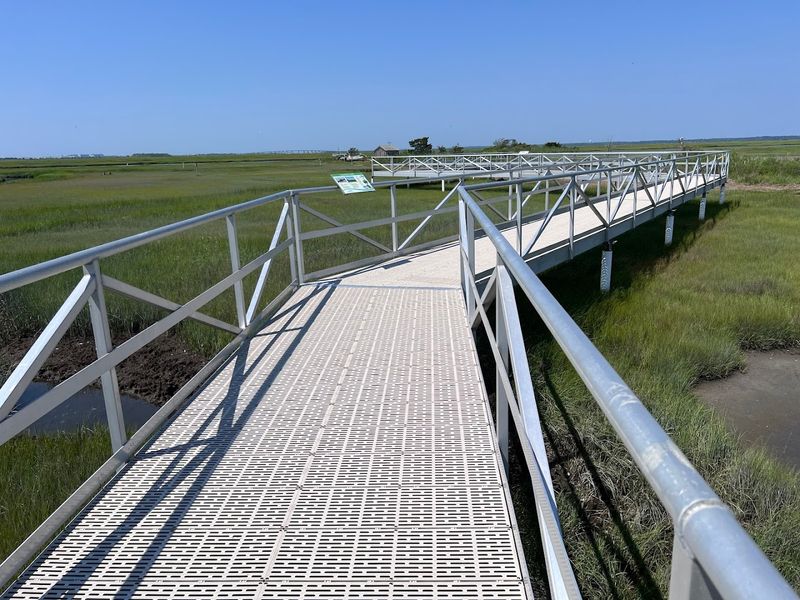
Stepping onto the elevated walkway feels like entering a completely different world. The Salt Marsh Safari at The Wetlands Institute is one of those rare programs that manages to be thrilling, educational, and surprisingly funny all at once.
It begins with a screening of the award-winning film “Secrets of the Salt Marsh” inside Marsh View Hall, setting the stage for everything you are about to see outside.
After the film, a guide leads the group along the elevated walkway, the salt marsh trail, and out to the dock overlooking Scotch Bonnet Creek. Every step reveals something new.
Fiddler crabs wave their oversized claws, great blue herons stand perfectly still like feathered statues, and the grasses sway in the breeze with a kind of quiet drama.
The safari runs multiple times daily and is included with general admission. Wearing water-friendly shoes is genuinely good advice here.
The marsh does not care about your clean sneakers, and getting a little muddy is basically part of the fun.
The Elevated Boardwalk Trail
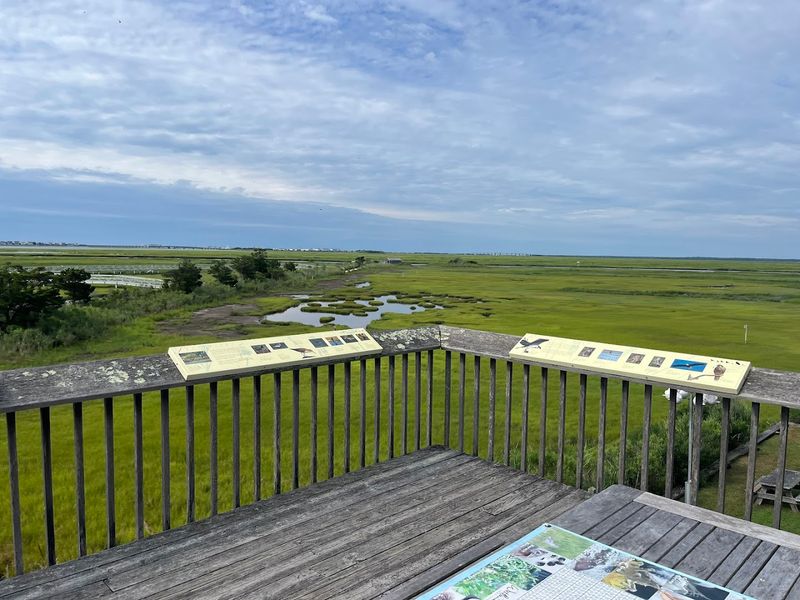
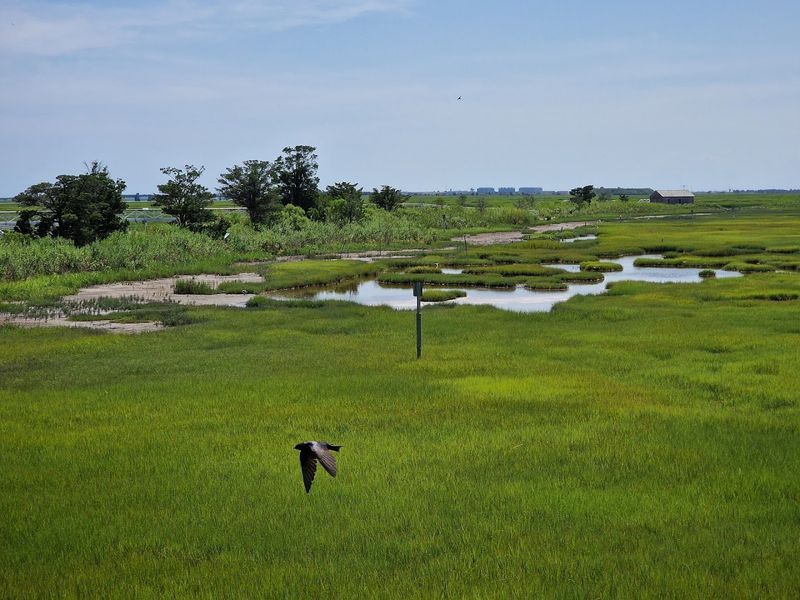
There is something almost meditative about walking above a marsh on a raised wooden path. The boardwalk trail at The Wetlands Institute lifts you just high enough to feel like you have a front-row seat to the whole ecosystem without disturbing a single blade of cordgrass.
It is the kind of path where you slow down without even deciding to.
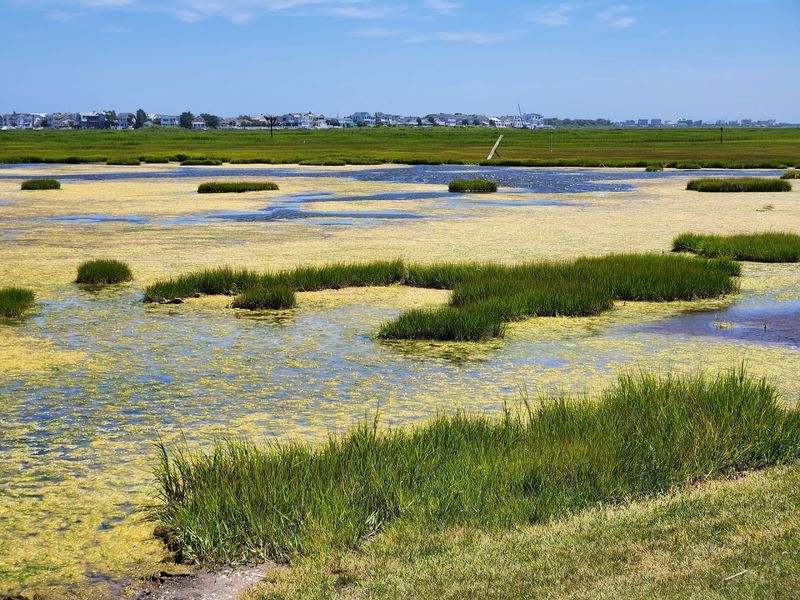
From up top, the view stretches out over a tapestry of greens, browns, and shimmering water channels. When the tide pulls back, you can actually hear the marsh drain, a soft, gurgling soundtrack that sounds nothing like anything you would hear in a city.
Ospreys circle overhead, occasionally diving toward the water with impressive precision.
The trail is accessible and stroller-friendly, which makes it a genuinely welcoming experience for families with young kids. Even solo visitors find themselves lingering longer than planned.
Bring binoculars if you have them. The birds out here do not always cooperate with a smartphone zoom lens.
The Aquarium Exhibits Inside
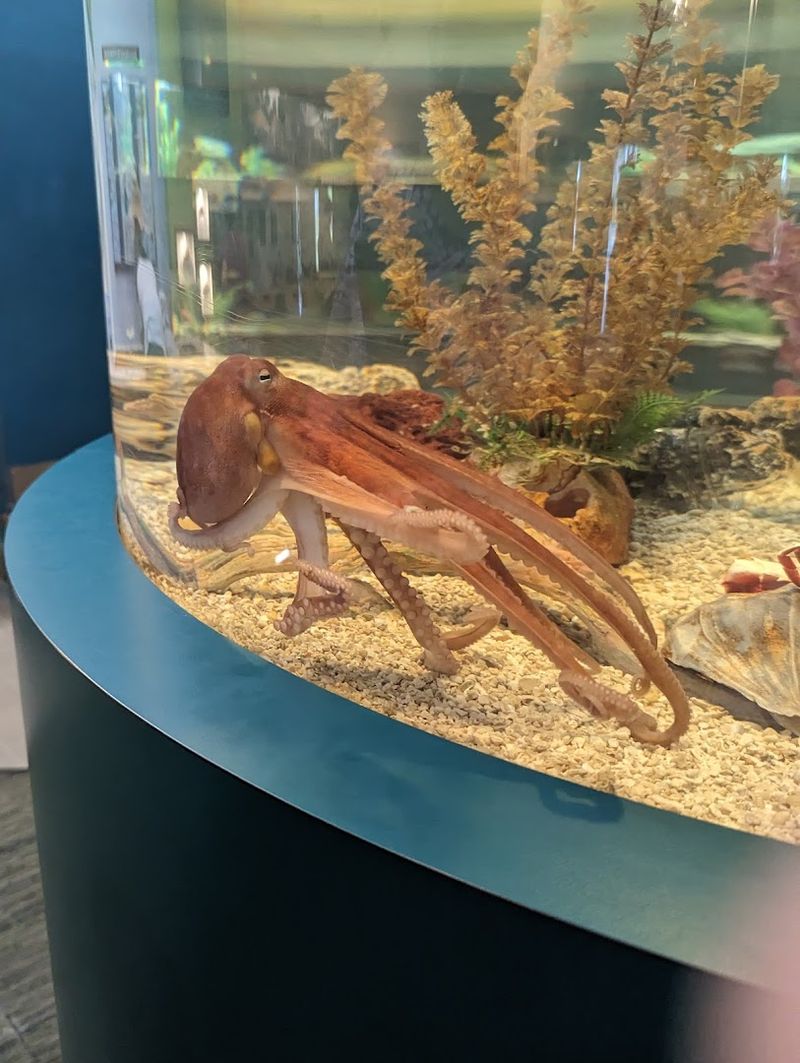
Walking into the aquarium building feels like a total sensory shift from the open marsh outside. Thirteen tanks line the space, each one holding a different slice of coastal New Jersey marine life.
Eels slide through the water with unsettling grace. Seahorses hover like tiny mythical creatures.
A resident dogfish shark makes slow, deliberate laps that somehow command the whole room.
The star of the show, without question, is the octopus. Watching it rearrange itself and interact with its environment is genuinely mesmerizing.
It has a personality that is hard to explain but impossible to ignore. Kids press their faces against the glass and adults do the same, just with slightly more self-awareness.
Every tank comes with clear, engaging information about the species inside and its role in the local ecosystem. Nothing feels dry or textbook-heavy.
The whole exhibit is designed to spark curiosity, and it absolutely delivers. Plan to spend more time in here than you think you will.
The octopus alone is worth the visit.
Terrapin Turtle Conservation
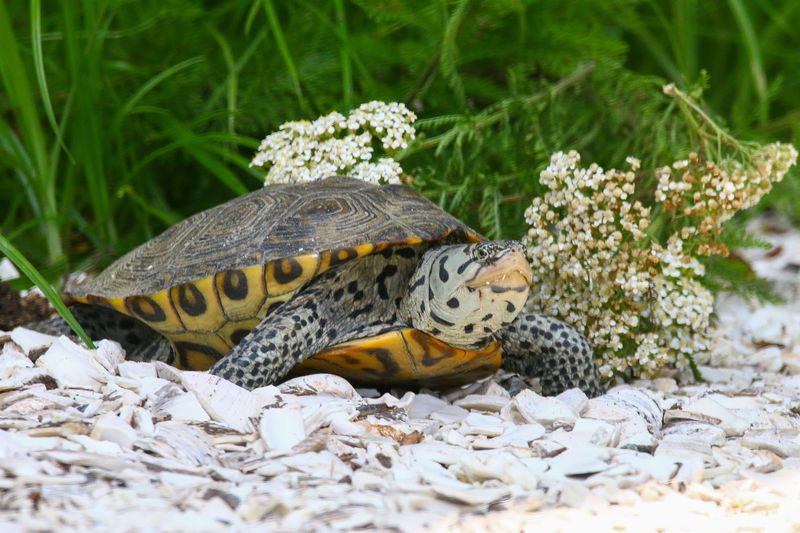
Few things at The Wetlands Institute hit as hard emotionally as learning about the diamondback terrapin turtle program. These small, beautifully patterned turtles are native to coastal salt marshes and have faced serious population pressures over the years.
The Institute has made their protection a central part of its mission, and it shows in every corner of the facility.
The discovery area dedicated to terrapins is packed with hands-on information, real specimens, and conservation context that actually makes you care. Lucky visitors during nesting season have spotted baby terrapins making their very first journey from land to marsh.
That is the kind of moment that stays with you for years.
Staff members are deeply knowledgeable about terrapin biology and genuinely enthusiastic about sharing it. The program also involves monitoring nesting sites around the property, which adds a layer of real scientific work to the visit.
It is not just display cases and placards. It is active conservation happening right in front of you, and that energy is contagious.
The Observation Deck and Rooftop Views
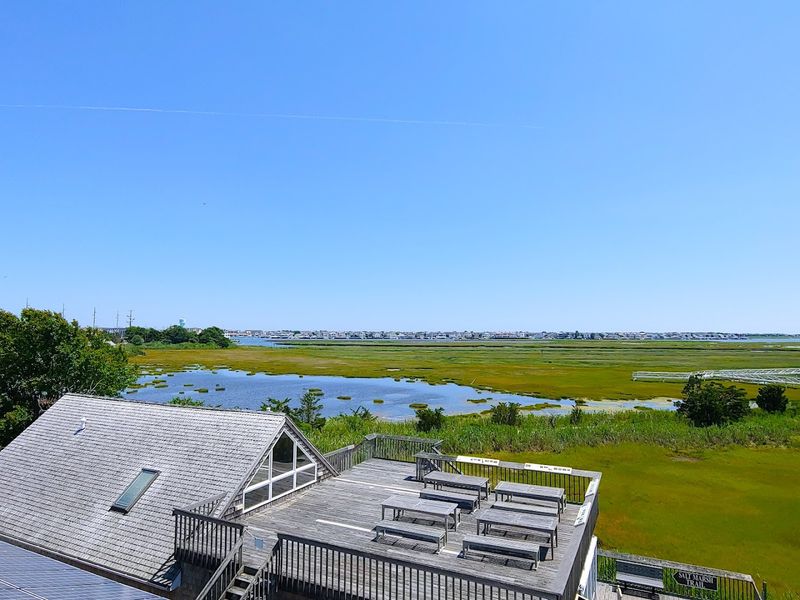
Climbing to the observation deck at The Wetlands Institute is one of those small physical efforts that pays off immediately and completely. The spiral staircase is steep, and it gives absolutely no hints about what is waiting at the top.
Then you step out and the whole marsh opens up beneath you in every direction.
From up there, the scale of the wetlands becomes real in a way that the boardwalk trail only hints at. You can trace the winding tidal channels through the grass, spot ospreys nesting in the distance, and get a sense of just how vast and alive this ecosystem actually is.
It is the kind of view that makes you want to stand quietly for a while.
Photographers especially love this spot during the golden hour before closing. The light hits the marsh grasses in a way that looks almost unreal.
Even if you are not carrying a camera, the view alone is worth every step of that spiral staircase. Go up.
You will not regret it for even a second.
The Skimmer Eco-Boat Tours
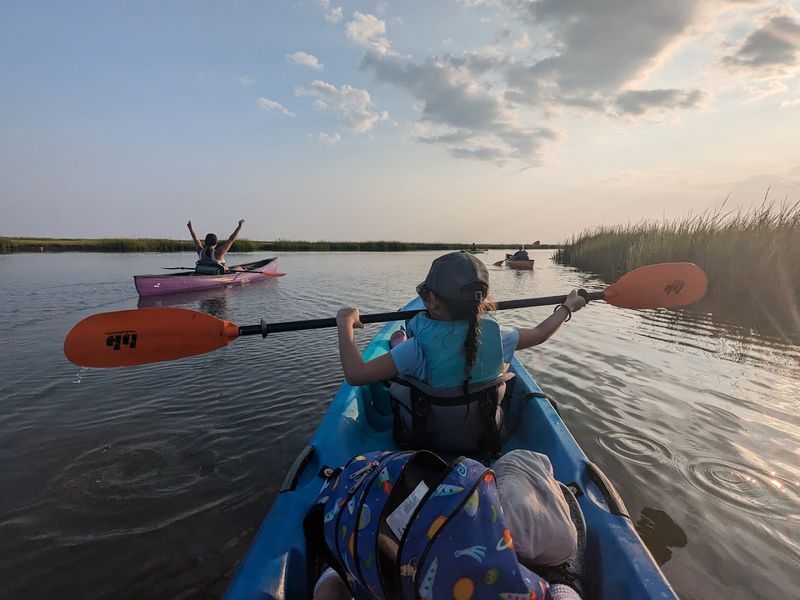
Getting out on the water changes everything. The Skimmer eco-tours operate through the back bays of Cape May County, taking visitors through the same tidal channels and marsh habitats that look so captivating from the boardwalk.
Being at water level makes the whole experience feel more immediate and alive.
Ospreys are practically guaranteed sightings on these tours. They nest throughout the area and are completely unbothered by boat traffic, which means you can get surprisingly close without disturbing them.
Guides share information about bird behavior, marsh ecology, and the seasonal patterns that shape life out here in ways that feel genuinely conversational rather than scripted.
Kids who take turns at the helm during certain parts of the tour tend to remember it for a long time. That small moment of steering a boat through a real salt marsh is the kind of hands-on experience that no classroom can replicate.
The tours are great for families, couples, and solo visitors alike. Comfortable shoes and a good attitude are the only real requirements.
Horseshoe Crab Discovery Zone
Horseshoe crabs are older than dinosaurs, and spending five minutes in the discovery zone at The Wetlands Institute will make that fact feel genuinely wild. These ancient creatures have barely changed in 450 million years, which is either deeply comforting or mildly unsettling depending on your perspective.
Either way, learning about them here is endlessly fascinating.
The exhibit covers horseshoe crab biology, their critical role in the coastal food web, and their surprising importance to modern medicine. Their blue blood has been used in pharmaceutical testing for decades, a fact that tends to stop visitors mid-step.
The hands-on materials let you get up close to shells and specimens in a way that feels interactive rather than museum-stiff.
Fiddler crabs also get significant attention nearby, and understanding how these tiny creatures engineer the marsh soil is one of those details that quietly rewires how you see the landscape outside. The whole discovery area is designed for all ages, but adults consistently leave having learned things they never expected.
That is a genuine compliment to how well it is all put together.
Birding Along the Marsh Trail
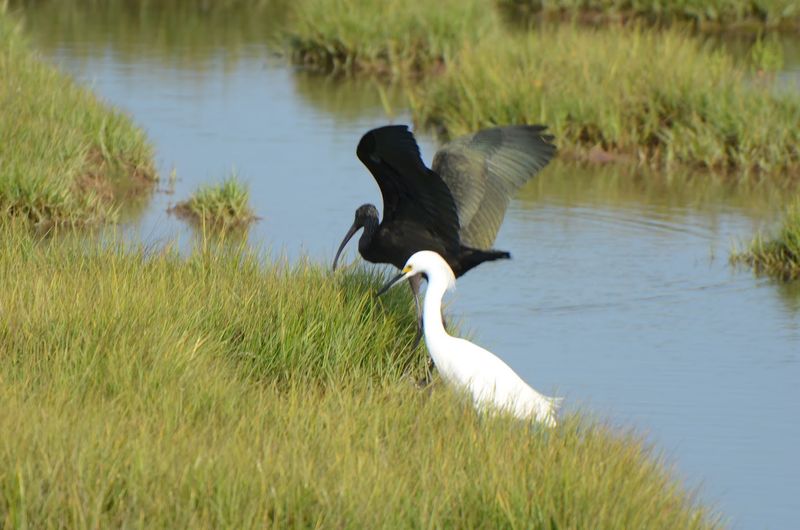
For serious birders, The Wetlands Institute is something close to a pilgrimage site. The location along the Atlantic Flyway means that during migration seasons, rare and unexpected species show up with enough regularity to keep the local birding community genuinely excited.
Fall migration in particular draws visitors who know exactly what they are looking for.
Even casual visitors who have never picked up a pair of binoculars tend to leave with a new appreciation for what is flying overhead. Ospreys are the headliners, dramatic and photogenic in equal measure.
Great egrets, herons, willets, and various shorebirds fill out the supporting cast throughout the warmer months. The marsh trail provides excellent sightlines without requiring you to wade through anything.
The Institute provides binoculars during certain programs, which is a thoughtful touch for first-timers. Bringing your own is always a good idea if you have them.
The elevated walkway and dock area over Scotch Bonnet Creek are particularly productive spots for spotting birds in action. Early morning visits tend to reward the most patient observers.
Hands-On Programs and Animal Feedings
Some of the best moments at The Wetlands Institute happen when the scheduled programs begin. The animal feedings draw crowds for good reason.
Watching the resident octopus respond to feeding time is one of those experiences that somehow manages to be both scientific and deeply entertaining at once. It is hard to look away.
Seining activities let kids and adults pull nets through shallow water and sort through what comes up. Small fish, crabs, shrimp, and other creatures get identified before being carefully returned.
It is messy, exciting, and educational in the best possible way. By the end, even the most reluctant participants are enthusiastically poking around in the net.
Wader sessions at the end of certain days allow visitors to put on rubber waders and help collect creatures to feed the animals on site. That kind of direct participation is rare at nature centers and makes the whole visit feel participatory rather than passive.
Summer programming is especially rich, but there is always something happening regardless of when you visit. Check the schedule before arrival.
Planning Your Visit to The Wetlands Institute
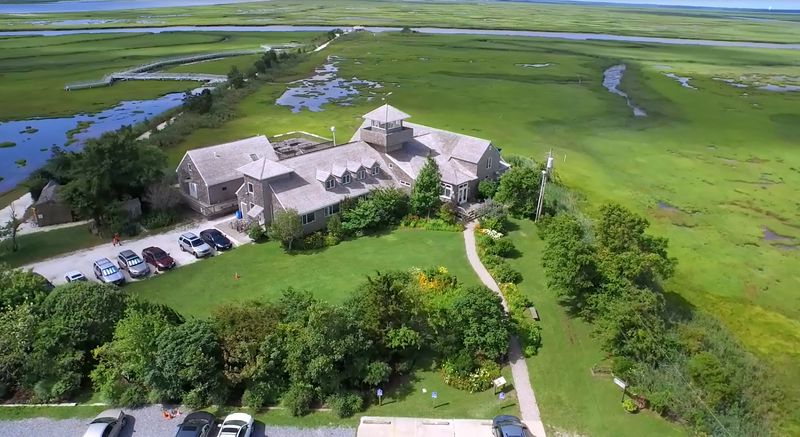
Getting the most out of a visit here comes down to a little bit of planning and a willingness to slow down. The Wetlands Institute is open on weekends from 9:30 AM to 4:30 PM, which makes a morning arrival the smartest move.
Arriving early means catching the first Salt Marsh Safari of the day and having plenty of time to explore both the indoor exhibits and the outdoor trails without feeling rushed.
Wearing shoes you do not mind getting muddy is practical advice that the Institute genuinely means. The salt marsh trail does not stay clean, and embracing that is half the fun.
Bug spray and sunscreen are equally important, especially during summer months when the marsh is at its most active and its most buggy.
A small gift shop on site carries nature-themed books, toys, and accessories that make for meaningful souvenirs. Every admission fee goes directly back into the Institute’s conservation and education work, which makes spending money here feel genuinely good.
The whole experience is one of the most rewarding half-days you can spend anywhere along the Jersey Shore.
Address: 1075 Stone Harbor Blvd, Stone Harbor, NJ
Dear Reader: This page may contain affiliate links which may earn a commission if you click through and make a purchase. Our independent journalism is not influenced by any advertiser or commercial initiative unless it is clearly marked as sponsored content. As travel products change, please be sure to reconfirm all details and stay up to date with current events to ensure a safe and successful trip.
