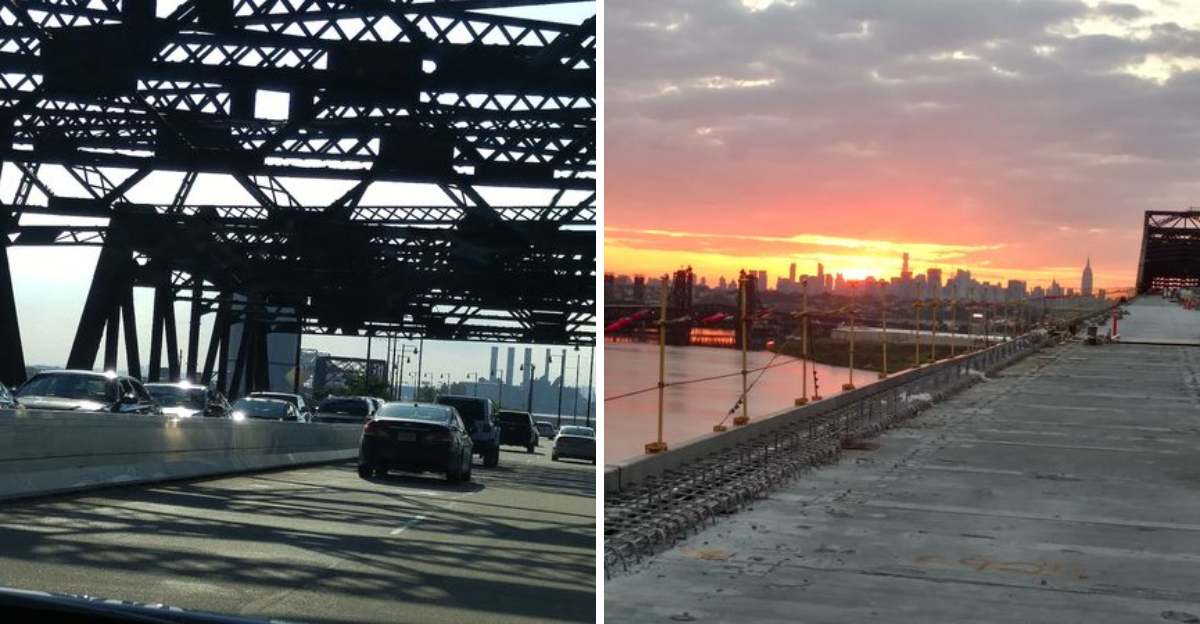
The first time I drove across this bridge, my hands gripped the steering wheel a little tighter than usual.
There are no shoulders, no escape routes, and the drop on either side reminds you that this bridge means serious business.
Built in 1932, this 3.5-mile elevated steel giant connects Jersey City and Newark in a way that feels both thrilling and oddly historic.
I had heard stories about it before my trip, but nothing quite prepares you for the real thing.
Whether you are a curious traveler, a local commuter, or someone who just loves roads with a bit of personality, this bridge has something genuinely unforgettable to offer.
A Bridge Born From Ambition: The History Behind the Skyway
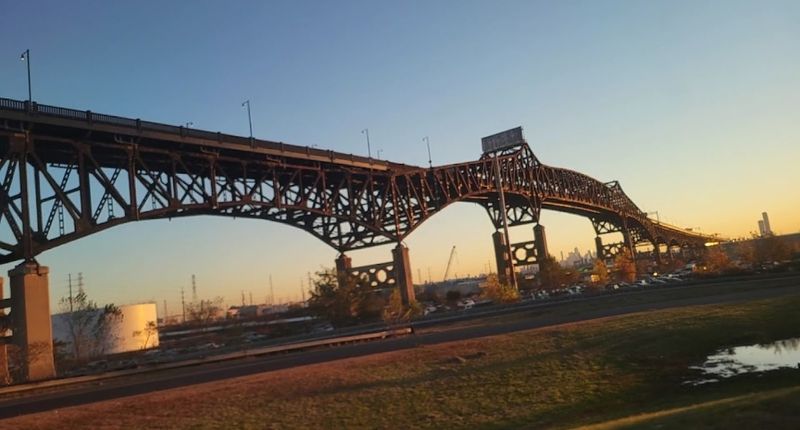
Few bridges in America carry as much historical weight as the Pulaski Skyway. When it opened on November 24, 1932, it was considered an engineering marvel, stretching 3.5 miles across the Passaic and Hackensack Rivers between Jersey City and Newark.
Named after Casimir Pulaski, a Revolutionary War hero, the bridge was built during a time when America was pushing the limits of what modern infrastructure could achieve. It was one of the first major elevated highways in the United States, a bold statement from New Jersey’s engineering community.
The construction involved thousands of workers during the Great Depression era, making it not just a transportation project but also a lifeline of employment. Steel trusses soar high above the rivers below, giving the structure a dramatic skyline presence that has barely changed in nearly a century.
Driving across it today, you can almost feel the weight of all those decades pressing down through the roadway. It connects two major New Jersey cities in a way that feels almost defiant, like the bridge itself refuses to be forgotten.
History does not get much more tangible than this.
No Shoulders, No Mercy: What Makes This Drive So Intense
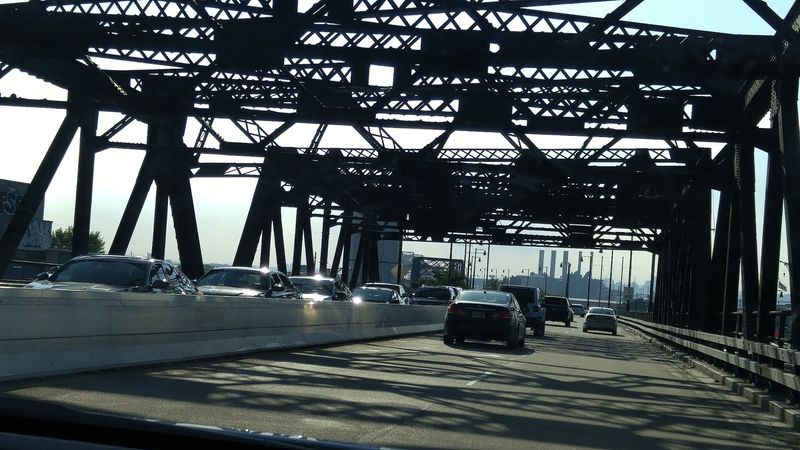
Pulling onto the Pulaski Skyway for the first time is a genuine wake-up call. The lanes are only 11 feet wide in each direction, and there is absolutely no shoulder to pull over on if something goes wrong.
That detail alone sets it apart from almost every modern highway in the country. If your tire blows or your engine sputters, you are essentially stuck in traffic until help arrives.
There is no easing onto a shoulder and calling for a tow truck like you would on a normal road.
The guardrails feel uncomfortably close when a truck passes beside you. The height of the bridge adds another layer of awareness, and the lack of any buffer zone between your car and the edge keeps your focus razor-sharp the entire time.
Some drivers find the experience genuinely stressful. Others describe it as oddly exhilarating, like a driving test you did not sign up for.
The Skyway demands your full attention in a way that modern roads rarely do anymore.
There is something almost refreshingly honest about it. No illusions of safety, just you, the road, and a whole lot of open air on both sides.
The Rehabilitation That Gave It a Second Life
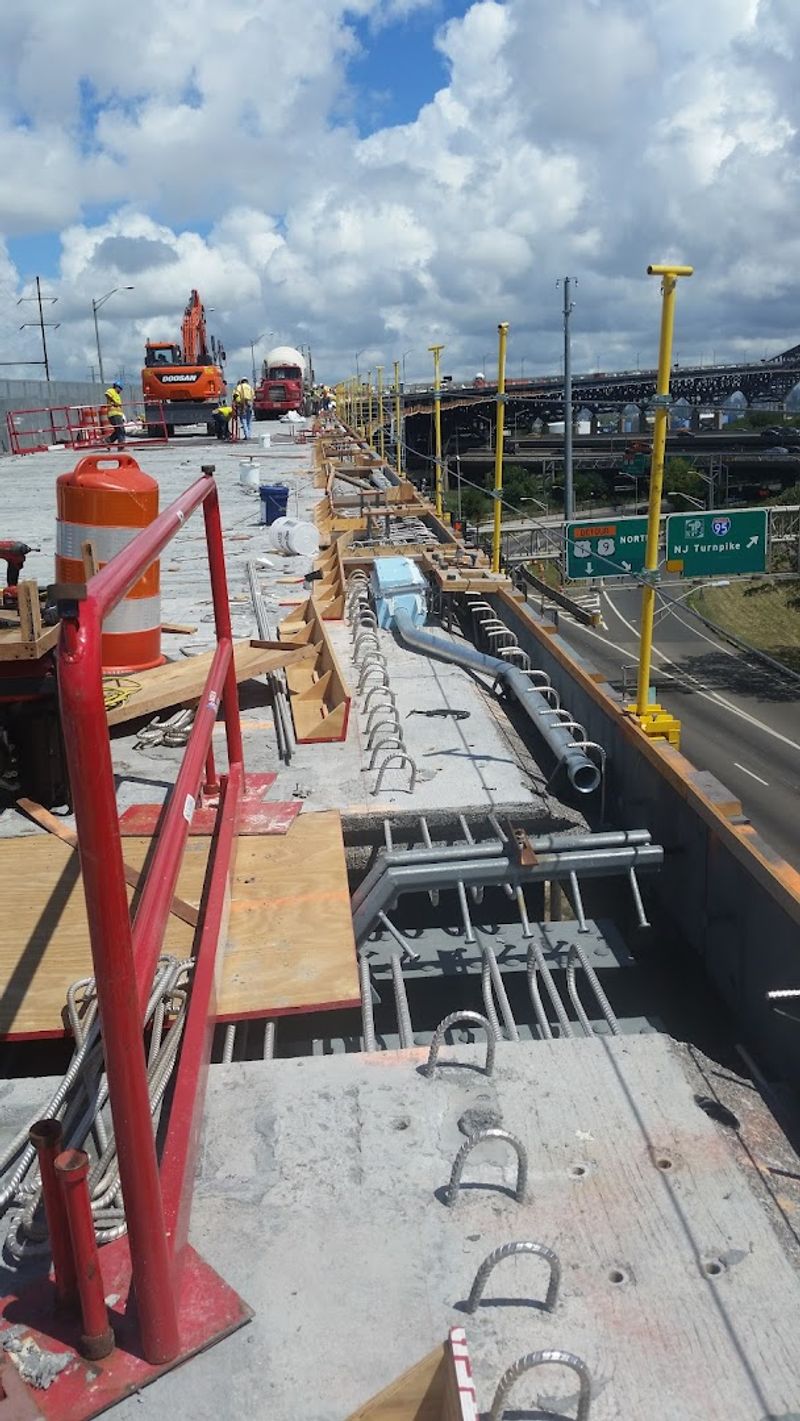
By the early 2000s, the Pulaski Skyway was showing its age in ways that could not be ignored. Structural deficiencies had accumulated over decades, and state officials knew that a serious rehabilitation was long overdue.
In 2014, a major reconstruction project finally began. The focus was on replacing the bridge deck entirely and reinforcing key structural elements that had deteriorated over time.
It was one of the most ambitious bridge rehabilitation projects in New Jersey’s recent history.
The project wrapped up in 2018 after four years of careful, staged construction. Workers had to manage the challenge of keeping traffic moving while rebuilding a bridge that thousands of commuters depend on every single day.
That kind of logistical puzzle is impressive on its own.
The result is a Skyway that feels structurally sound while still retaining every bit of its original character. The lanes are still narrow.
The shoulders are still absent. The height is still dizzying.
But the bones of the bridge are now modern and reliable beneath that vintage exterior.
Knowing that the infrastructure underneath you has been updated makes the drive feel just a little less intimidating. Just a little.
The Skyway still keeps you on your toes, renovation or not.
Commuter Culture: Who Actually Uses This Bridge Every Day
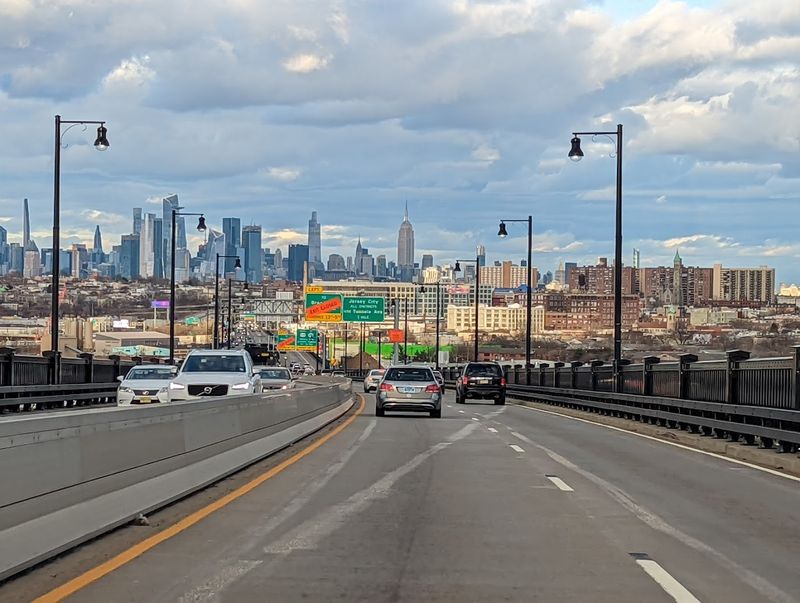
Every morning, thousands of commuters roll across the Pulaski Skyway as part of their daily routine. For many of them, the bridge is not a novelty or a tourist attraction.
It is simply the fastest way between Jersey City and Newark.
Route 1 and Route 9 both use the Skyway as a key link, making it a critical piece of the regional transportation network. Trucks, buses, and everyday passenger cars share those narrow lanes in a rhythm that locals have perfected over years of repetition.
There is something oddly charming about watching experienced drivers navigate the Skyway with total calm. Where a first-timer might white-knuckle the steering wheel, a seasoned commuter will casually sip their morning coffee while crossing 135 feet above the Passaic River.
Practice does make perfect, apparently.
The bridge also serves as an important connector for workers traveling between the two cities, supporting economic activity across Hudson and Essex Counties. It is easy to overlook infrastructure until it is gone, but the Skyway has been quietly holding this commuter corridor together for nearly a century.
Locals have a genuine affection for the bridge despite its quirks. It is part of their daily landscape, and that familiarity breeds a kind of pride that outsiders can instantly sense.
Food Stops Worth Planning Around Your Skyway Drive
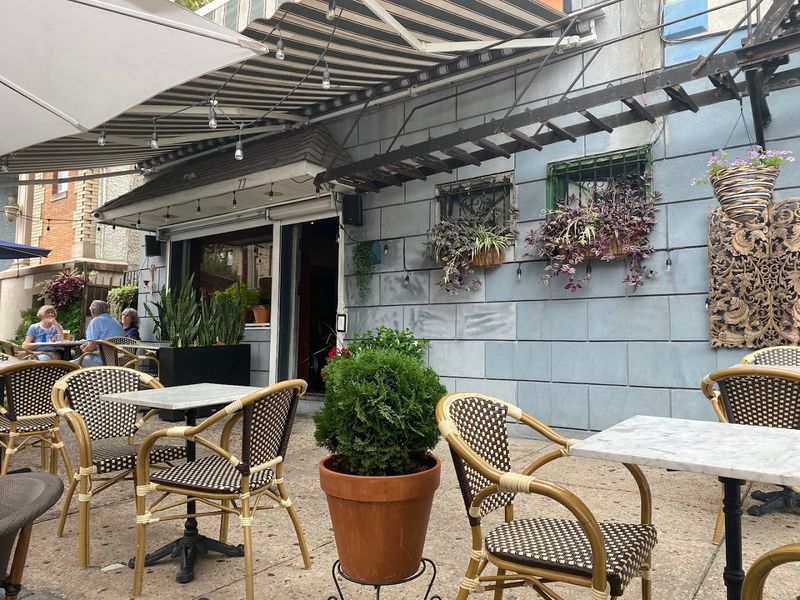
One of the best parts about driving through the Newark and Jersey City corridor is the food waiting on either end of the Skyway. This stretch of New Jersey is quietly one of the most diverse and delicious food destinations in the entire state.
Newark’s Ironbound neighborhood sits just minutes from the Skyway’s eastern end, and it is a destination that serious food lovers should not overlook. The area is famous for its Portuguese and Brazilian restaurants, where the food arrives in generous portions with bold, satisfying flavors that make you want to linger at the table for hours.
Jersey City, on the western side of the bridge, offers its own incredible mix of cuisines. From Filipino bakeries to Colombian lunch spots and classic New Jersey diners, the options feel almost overwhelming in the best possible way.
After a nerve-wracking drive across the Skyway, nothing feels better than sitting down to a proper meal. The adrenaline from navigating those narrow lanes actually makes the food taste even better, at least that has been my experience.
Planning your meals around the drive turns the whole trip into a proper adventure. The bridge is the centerpiece, but the food on either end is what makes the day truly memorable.
Views From the Top: What You See When You Cross
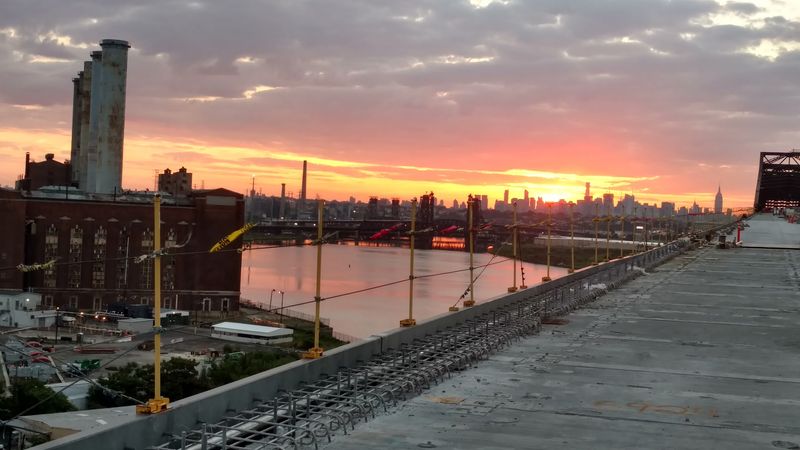
There is a moment, somewhere near the peak of the Pulaski Skyway, when the view opens up in a way that genuinely surprises you. The Newark skyline fills one side of your window while the distant shimmer of New York City appears on the other.
The Passaic and Hackensack Rivers stretch out below, flanked by industrial landscapes that have their own gritty kind of beauty. Freight yards, warehouses, and waterways create a panorama that feels distinctly New Jersey in the most authentic sense possible.
Sunsets from the Skyway are something else entirely. The light catches the steel trusses and turns the whole structure golden, while the rivers below reflect the colors of the sky in long, shimmering streaks.
It is the kind of view that makes you wish you could pull over, except you absolutely cannot.
That inability to stop is actually part of what makes the view feel so precious. You get maybe 90 seconds of this panorama before the bridge deposits you back at ground level.
It forces you to pay attention in a way that most scenic overlooks never do.
The Skyway does not let you linger. It gives you something beautiful, then sends you on your way.
That feels very New Jersey, honestly.
Should You Drive It? Everything a First-Timer Needs to Know
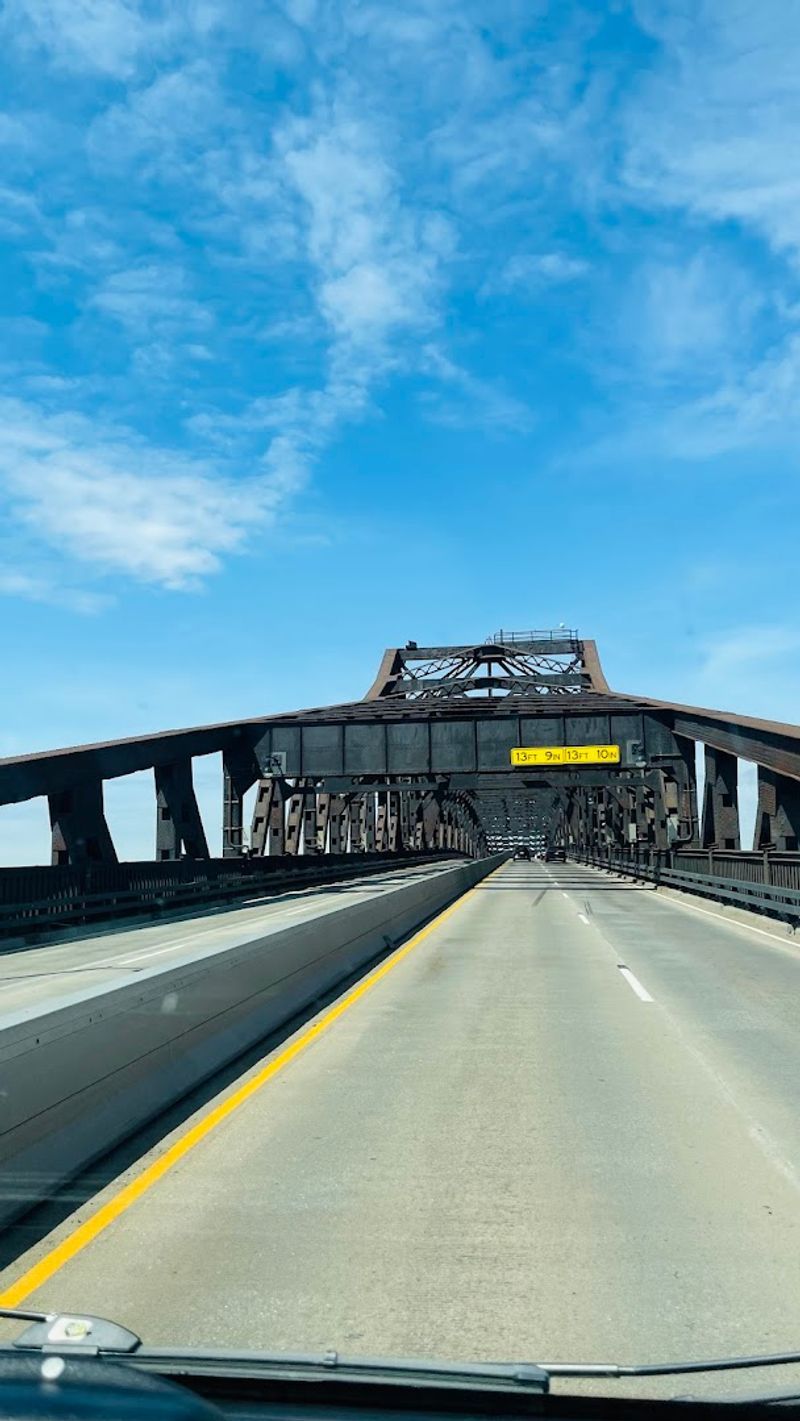
If you are thinking about driving the Pulaski Skyway for the first time, a little preparation goes a long way. The most important thing to know upfront is that there are truly no shoulders on this bridge.
None. If something goes wrong mechanically, your best option is to keep moving slowly and carefully until you reach the other end.
Check your tire pressure and fuel level before you get on. Those are basics that most drivers skip, but on a bridge where stopping is not an option, they matter more than usual.
The speed limit is 45 miles per hour, which actually feels appropriate given the narrow lanes. Do not tailgate.
Give yourself room to react, because the lane width leaves almost no margin for error if someone ahead of you brakes suddenly.
Morning and evening rush hours bring heavier traffic, so if you want a more relaxed first crossing, try a weekend mid-morning when volume is lower. The experience is still intense, but at least you are not sandwiched between delivery trucks.
Most importantly, enjoy it. The Pulaski Skyway is genuinely one of a kind, a piece of living history that still does its job every single day.
Address: Pulaski Skyway, New Jersey, USA
Dear Reader: This page may contain affiliate links which may earn a commission if you click through and make a purchase. Our independent journalism is not influenced by any advertiser or commercial initiative unless it is clearly marked as sponsored content. As travel products change, please be sure to reconfirm all details and stay up to date with current events to ensure a safe and successful trip.
