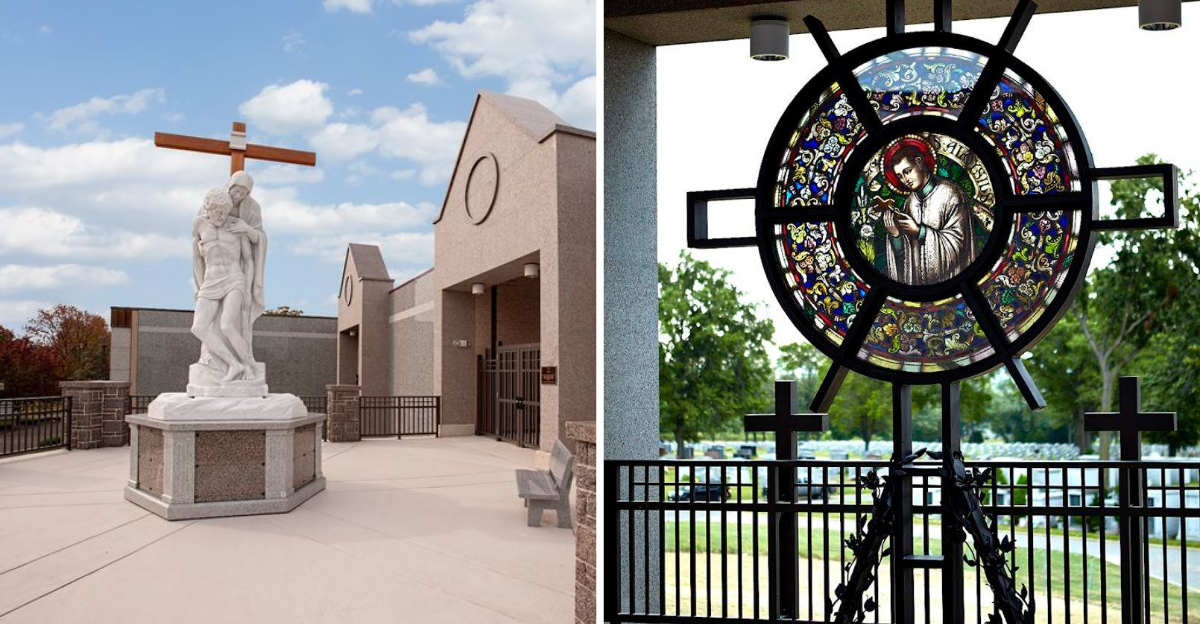
A cemetery is probably not the first place you would think to go for an art tour.
But this New Jersey landmark flips that expectation, transforming a resting ground into an unexpected museum of sacred beauty.
Hidden within its grounds is a mausoleum holding breathtaking sculptures, intricate mosaics, and stunning stained glass crafted with incredible detail.
Towering marble statues, lifelike carved figures, and mosaic work rival some of the great cathedrals of Europe.
It feels more like a grand gallery than a burial site, with every corner revealing something new to admire.
Peaceful, awe-inspiring, and utterly unexpected.
New Jersey has a way of surprising you, and this site proves that art and history can be found in the most unlikely places.
A Catholic Cemetery Unlike Any Other in the Nation
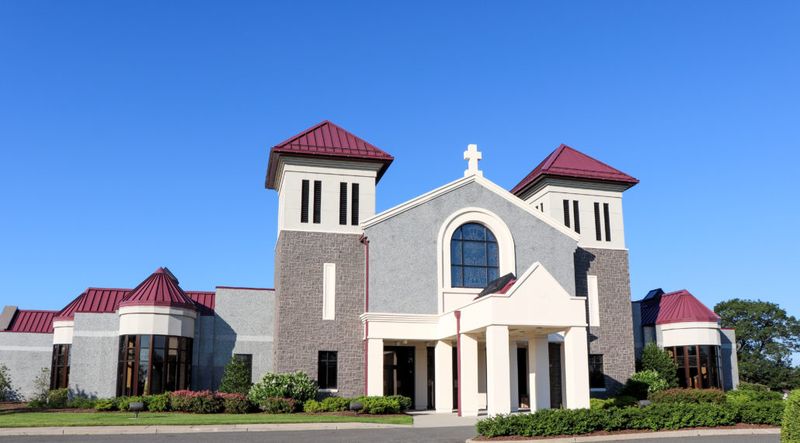
Established in 1915 and overseen by the Archdiocese of Newark, Holy Cross Cemetery and Mausoleum has quietly grown into something far beyond a typical burial ground.
The grounds sit along Ridge Road in North Arlington, New Jersey, and carry more than a century of history within their borders.
What makes this place genuinely extraordinary is its ambition. The mausoleum here is on track to become the largest Catholic mausoleum in the entire country once construction is fully complete.
That is not a small claim for a cemetery tucked into a New Jersey neighborhood.
Construction of the mausoleum began back in 1979, and expansion has continued steadily ever since. When finished, it is projected to hold 35,747 interment spaces.
The grounds are immaculately maintained, and the overall atmosphere manages to feel both peaceful and awe-inspiring at the same time. Visiting feels less like paying respects and more like stepping into a living, breathing work of sacred art.
Over $5 Million Worth of Art Waiting Inside
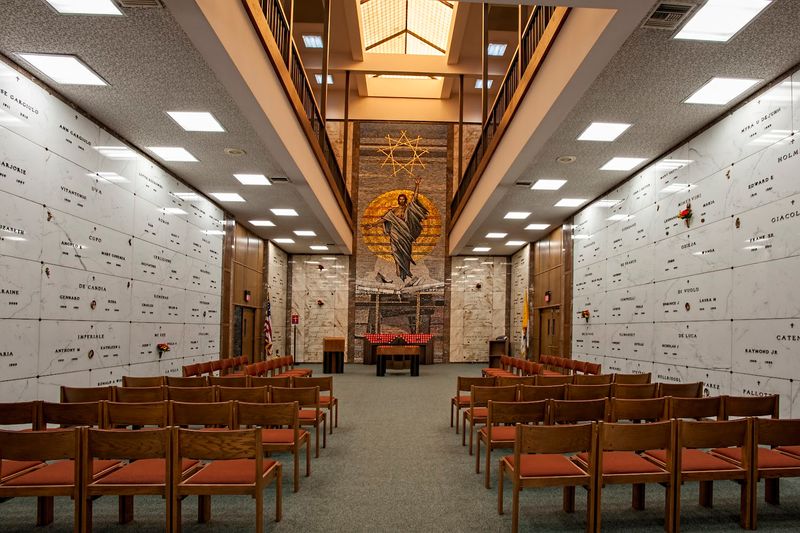
Walking into the mausoleum at Holy Cross, the first thing that hits you is the sheer scale of the artwork. The collection is valued at over five million dollars and includes 90 major works spread throughout the building.
It is the kind of art that stops you mid-step.
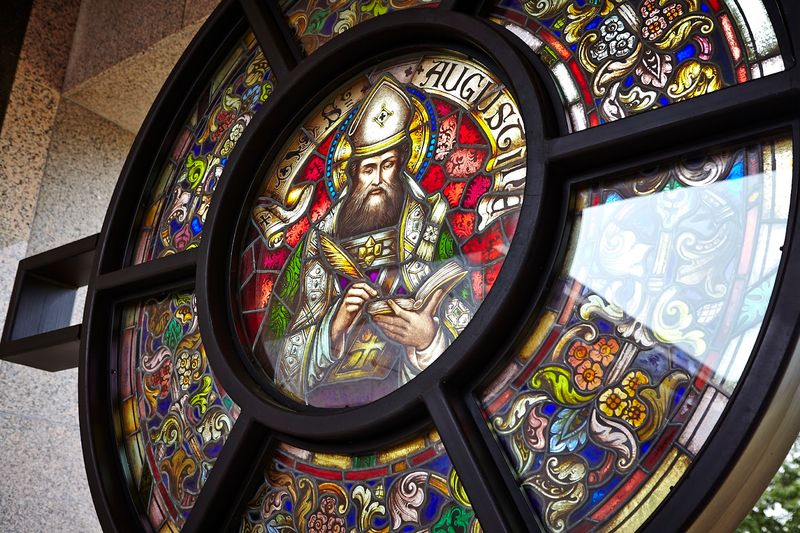
The collection spans floor-to-ceiling mosaics, bronze sculptures, marble carvings, and stained-glass windows that are nearly a century old. Each piece feels intentional, placed with purpose rather than decoration.
The curators have set the space up like a museum, making it genuinely family-friendly and accessible to visitors of all ages.
What is remarkable is how cohesive everything feels despite spanning different eras and artistic styles. Nothing feels out of place.
Every corridor offers something new to take in, a different texture, a different saint, a different story carved or painted into stone and glass. It rewards slow, attentive exploration rather than a quick walk-through.
Budget more time than you think you need.
Six Monumental Mosaics That Redefine Sacred Art
Six massive mosaics line the mausoleum walls, and each one is genuinely breathtaking up close.
Created in 2013 by artists Alexander and Daniela Mandradjiev, these works reimagine the biblical Days of Creation using Venetian Smalti tile, gold glass, and stones painted with 24-karat gold.
The craftsmanship is extraordinary.
Standing in front of them feels almost meditative. The colors shift depending on the light, and the gold catches even the softest glow in a way that feels alive.
These are not decorative tiles slapped onto a wall. Every piece was individually placed with artistic intention.
The Mandradjiev duo brought a European mosaic tradition into a distinctly American sacred space, and the result is something genuinely rare.
Venetian Smalti is a specific type of glass known for its depth of color and texture, and seeing it used at this scale is an experience most people only get in ancient European churches.
Finding this level of artistry in New Jersey is a wonderful surprise that most locals have no idea exists.
New Sacred Mosaics Unveiled in the Open-Air Mausoleum
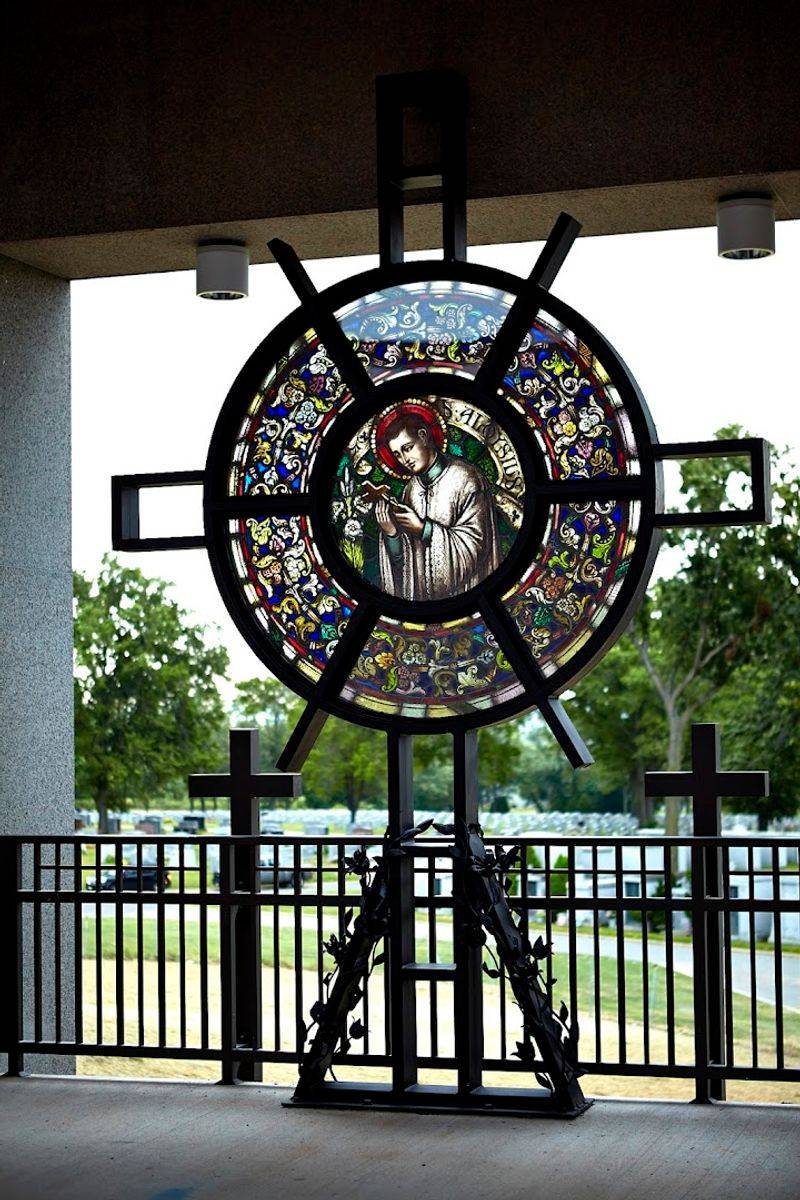
In October 2025, nine brand-new sacred mosaics were unveiled in the Open-Air Mausoleum of the Holy Spirit, adding another stunning chapter to this already impressive collection.
The series depicts Symbols of the Holy Spirit and was again created by Alexander and Daniela Mandradjiev, commissioned in 2024.
These newer mosaics are composed of thousands of individual pieces of Venetian glass, precious stones, and 24-karat gold leaf. The outdoor setting adds a completely different dimension to experiencing them.
Natural light plays across the surfaces in ways that indoor lighting simply cannot replicate.
Seeing these alongside the older indoor mosaics gives a fascinating sense of how the artists have evolved while maintaining a consistent spiritual vision. The open-air setting also means fresh air and a sense of openness that contrasts beautifully with the more enclosed indoor galleries.
This newest addition cements Holy Cross as a place that is still actively growing its artistic identity rather than simply resting on what it already has. It feels like a living project rather than a finished one.
Marble Statues of Saint Anthony and Saint Teresa
Tucked into the east and west corridors of the mausoleum stand two white marble statues, one of Saint Anthony and one of Saint Teresa. Both are 87 years old and carved with the kind of detail that makes you want to look twice.
Their placement in separate corridors creates a quiet sense of balance throughout the building.
White marble has a luminosity that no other material quite matches. These statues seem to glow softly in the corridor lighting, drawing the eye from a distance before you even realize you are walking toward them.
They feel less like decorations and more like presences.
Saints Anthony and Teresa are among the most beloved figures in Catholic tradition, and finding them rendered in aged marble inside a New Jersey mausoleum is a genuinely unexpected pleasure. The statues have a stillness about them that suits the space perfectly.
Whether you visit with religious devotion or pure artistic curiosity, these two figures are among the most memorable stops in the entire mausoleum experience. Give yourself time to appreciate them properly.
A Bottacino Marble Altar With the Story of Adam and Eve
One of the most talked-about pieces in the collection is the altar crafted from Bottacino marble, a warm cream-toned Italian stone known for its subtle veining and elegance.
Commissioned from an Italian sculptor, the altar features the story of Adam and Eve carved along its base in remarkable detail.
It is the kind of work that demands a slow, close look.
Bottacino marble comes from the Brescia region of northern Italy and has been used in sacred architecture for centuries. Seeing it here in New Jersey, shaped into something this specific and narrative-driven, feels like a small miracle of craftsmanship and logistics.
The altar anchors its space with real authority.
The Adam and Eve carvings along the base tell a complete story in stone, with figures that feel both ancient and immediate. The sculptor captured movement and emotion in a medium that does not naturally lend itself to either.
This altar alone would justify a visit to the mausoleum, and it sits as one of the clearest examples of how seriously Holy Cross has approached building its art collection over the decades.
Lindenwood Sculptures and Bronze Saints Throughout the Halls
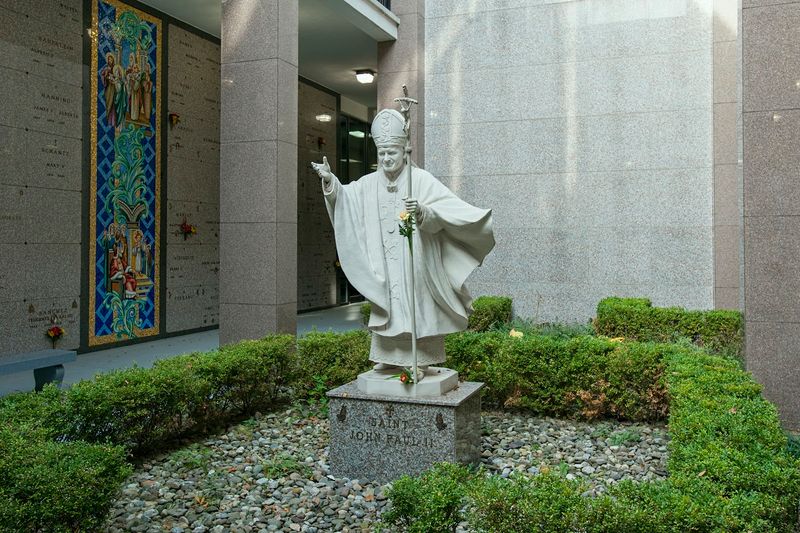
Beyond the mosaics and marble, the mausoleum collection includes lindenwood sculptures of four church mothers, a medium that brings a completely different warmth and texture to the space.
Lindenwood carving is a centuries-old European tradition, and the organic grain of the wood gives these figures a humanity that stone sometimes cannot.
Alongside the lindenwood pieces stand bronze statues of Saint Frances and Saint Kateri Tekakwitha. Bronze has a weight and permanence that feels appropriate for figures of this spiritual significance.
The contrast between the carved wood and cast metal creates an interesting visual conversation as you move through the corridors.
Saint Kateri Tekakwitha is particularly notable as the first Native American to be canonized by the Catholic Church, making her inclusion here a meaningful gesture of representation within the collection.
Finding her in bronze alongside traditional European saints reflects a broader understanding of who the Catholic community encompasses.
These sculptures together give the mausoleum a richness of material and meaning that goes well beyond what most visitors might expect from a New Jersey cemetery.
The Chapel Mausoleum of Our Lady and Its Italian Mosaic Centerpiece
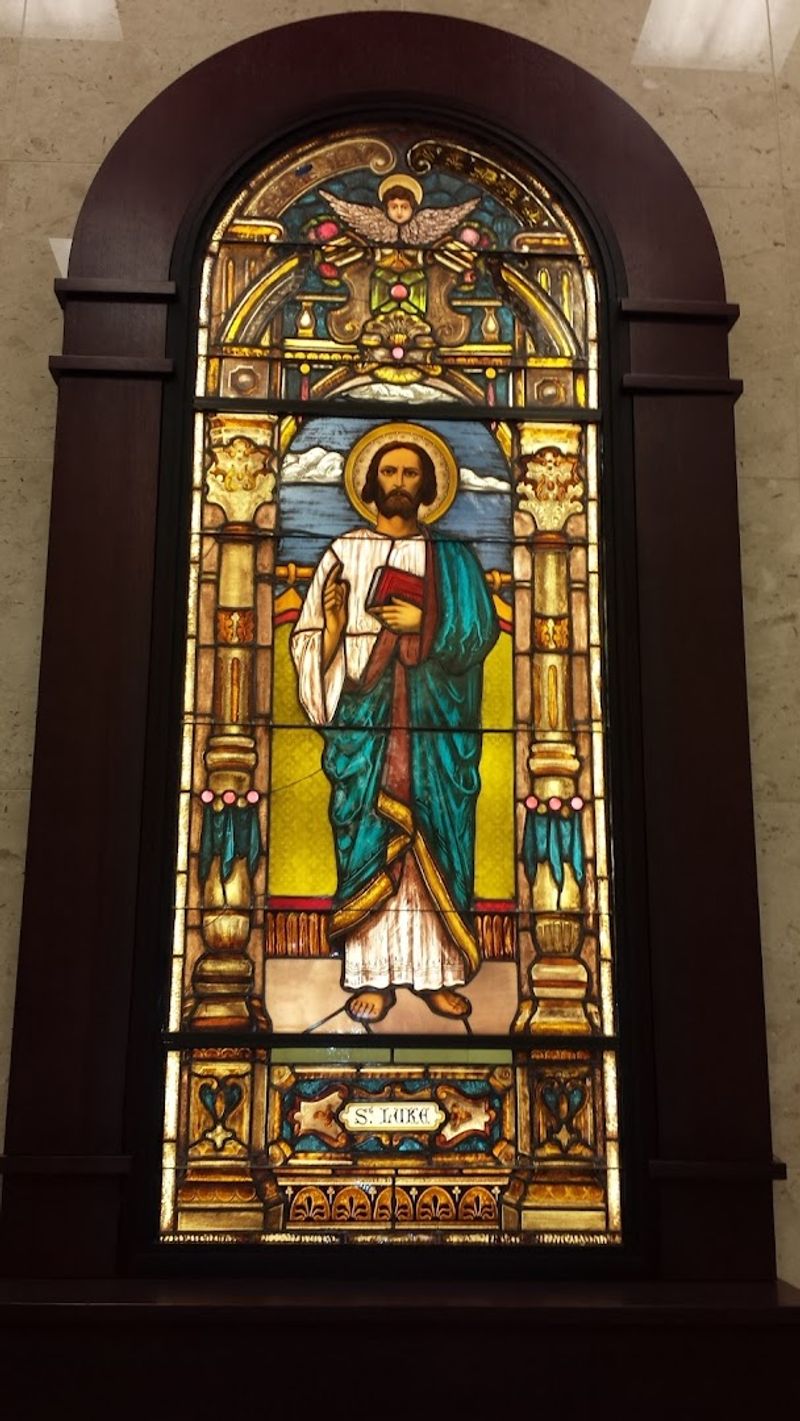
Among the newer additions to the Holy Cross complex is the Chapel Mausoleum of Our Lady, a space that manages to feel both intimate and grand at the same time. The chapel boasts priceless stained-glass windows that fill the room with colored light during the right hours of the day.
The effect is genuinely transportive.
At the center of the chapel sits an original Italian mosaic centerpiece that serves as the visual and spiritual anchor of the entire space.
Italian mosaic work carries centuries of tradition behind it, and this piece brings that heritage directly into a New Jersey setting in a way that feels earned rather than borrowed.
The Chapel of Our Lady offers a quieter, more contemplative experience compared to the main mausoleum corridors. It is the kind of space where you naturally slow down, lower your voice, and simply absorb what surrounds you.
Visitors looking for a moment of genuine stillness within the larger complex tend to find this chapel particularly resonant. It rewards patience and a willingness to simply sit and look.
A September 11 Memorial That Stops You in Your Tracks
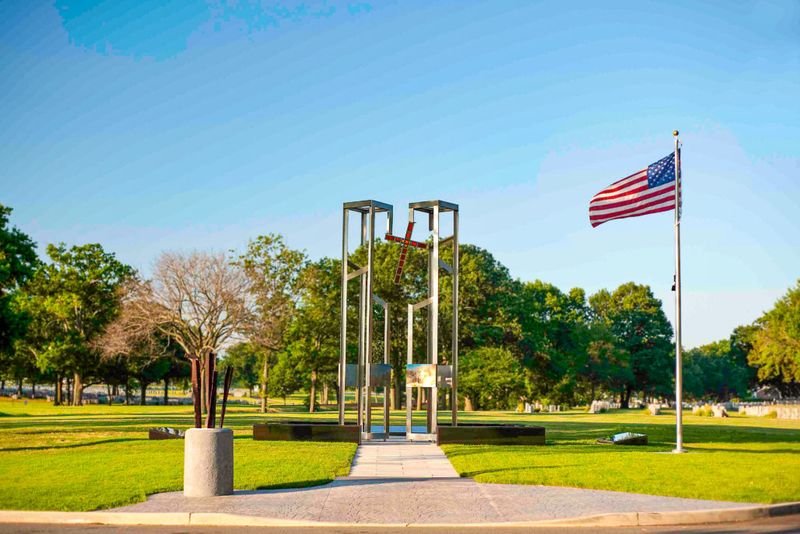
Somewhere on the grounds of Holy Cross, a September 11 memorial stands in quiet tribute to a day that changed everything. Two metal frames, deliberately evocative of the Twin Towers, are connected by a stained-glass cross.
Four etched titanium panels surround the sculpture, each bearing photographs from that morning in 2001.
The path leading to the memorial is laid out in the shape of a cross, a detail that only becomes fully apparent when you step back and take in the whole design. That kind of intentionality in design speaks to how much thought went into this tribute.
It is not a generic monument.
Coming across this memorial unexpectedly during a walk through the grounds is a genuinely emotional experience. It does not announce itself loudly.
It simply stands there, solid and considered, asking you to stop and remember. In a place already dedicated to memory and reflection, this memorial adds a layer of civic grief that connects Holy Cross to a shared national story.
It is one of the most quietly powerful things on the entire property.
Address: 340 Ridge Rd, North Arlington, NJ
