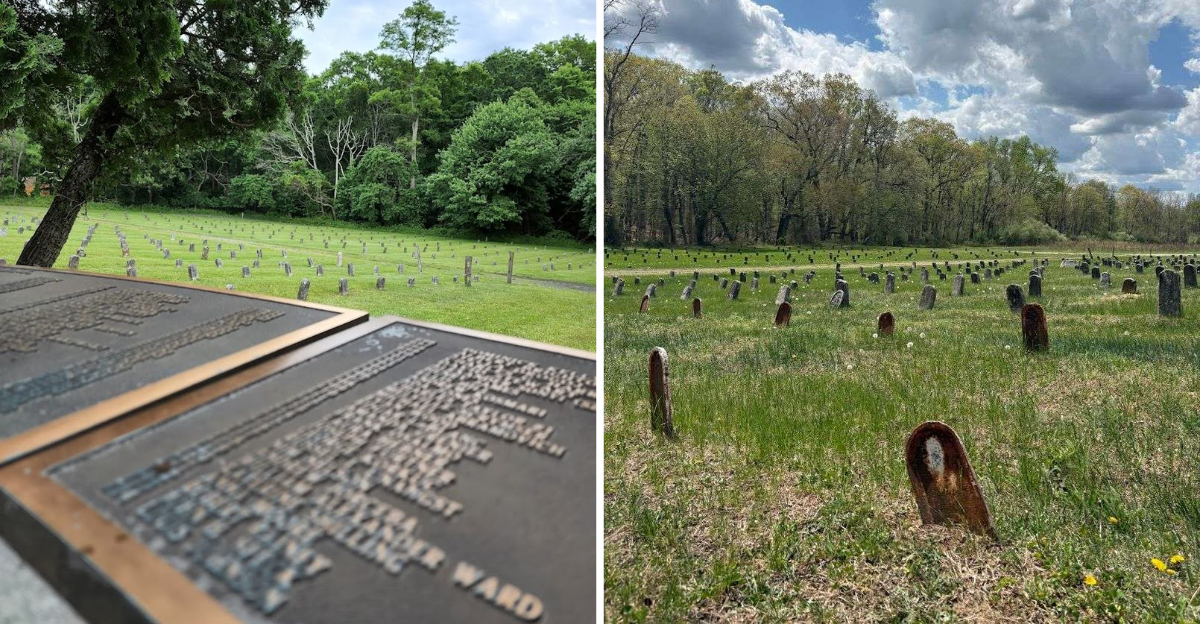
Some places give you the creeps for all the right reasons, and this New Jersey cemetery is a perfect example.
It holds 900 souls behind simple numbered markers with no names and no grand stones, just quiet rows and a heavy sense of mystery.
Paranormal teams love investigating here, history nerds cannot stop talking about it, and even hardcore skeptics tend to go silent.
You should visit at least once, but maybe not alone after dark.
924 Numbered Graves and the Stories They Don’t Tell
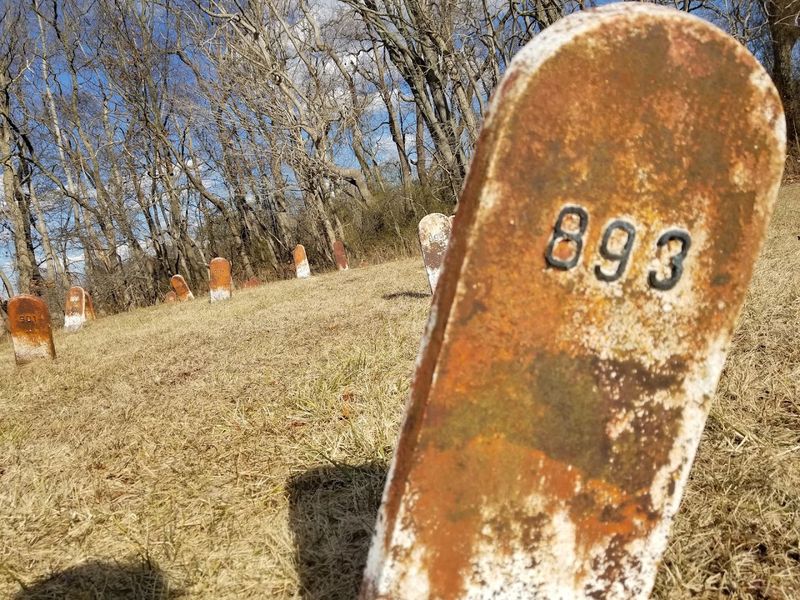
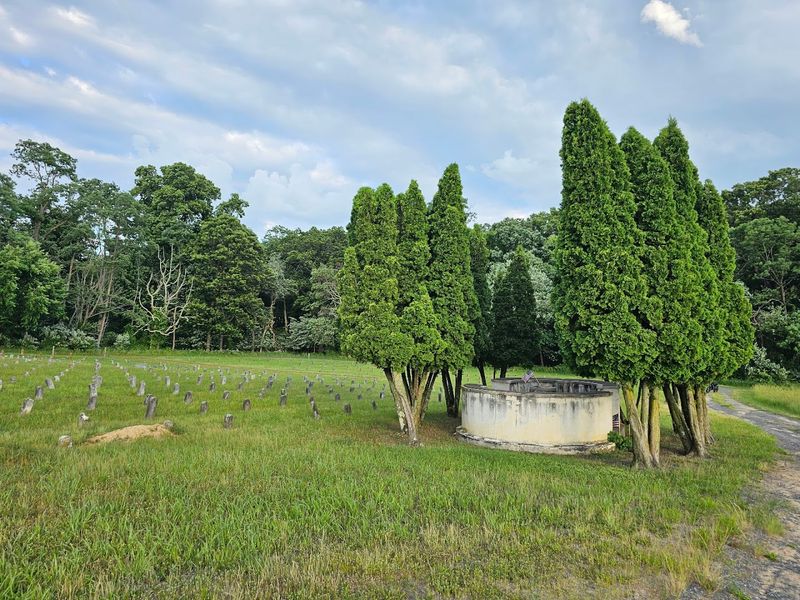
Walking through a cemetery where every single marker shows only a number feels like stepping into a puzzle with no solution.
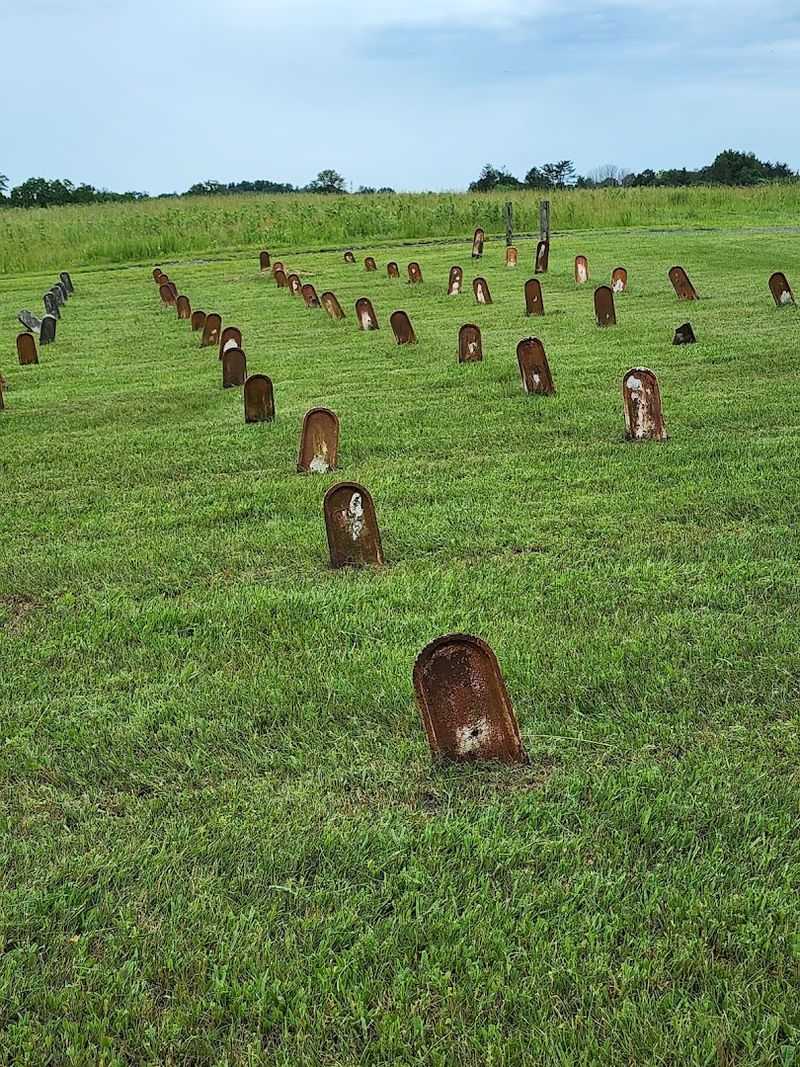
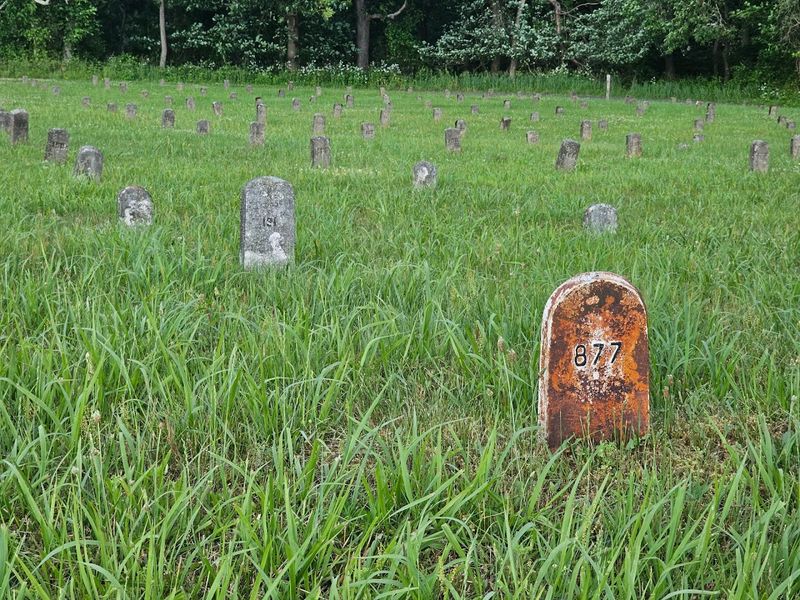
There are 924 graves here, each one identified by nothing more than a digit stamped onto a small cement or metal headstone.
No names. No birth years.
Just numbers lined up in quiet rows.
The system was put in place because many patients who died at the former Marlboro Psychiatric Hospital had no family to claim them or provide a private burial. It was a practical solution to a heartbreaking problem.
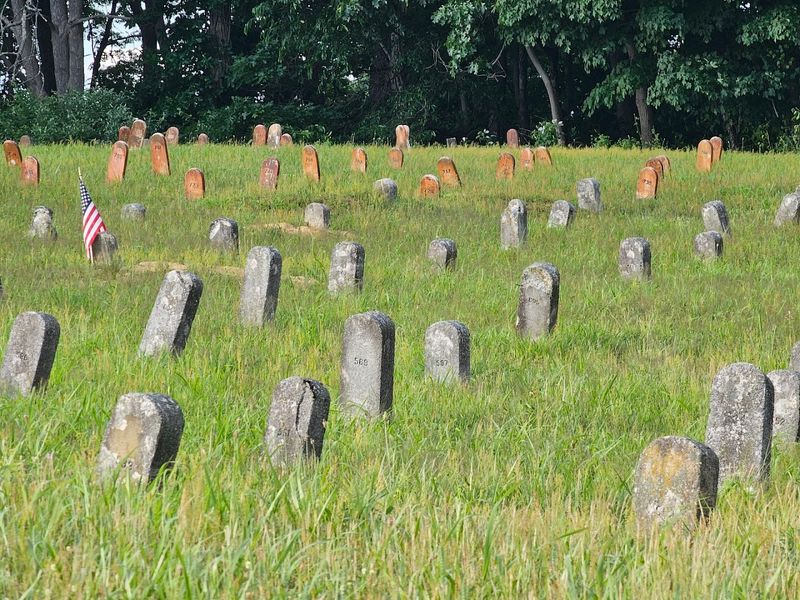
The markers are modest, some made of metal, others of cement, and all of them weathered by decades of New Jersey seasons.
What makes this place so striking is the scale of it. Nearly a thousand people lived and died within the walls of that hospital, and this field is all that remains of their time on earth.
Standing here, you feel the weight of that history pressing gently but firmly against your chest.
The Memorial Pavilion Built to Restore Dignity
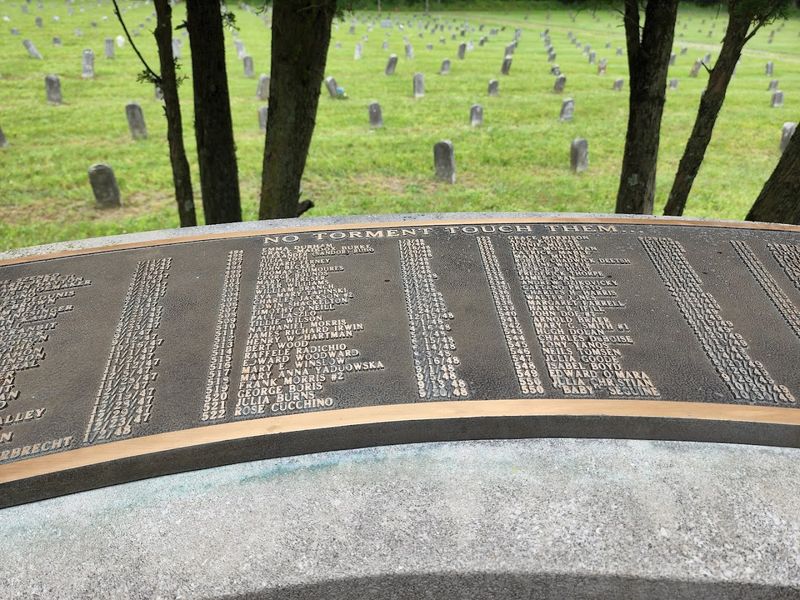
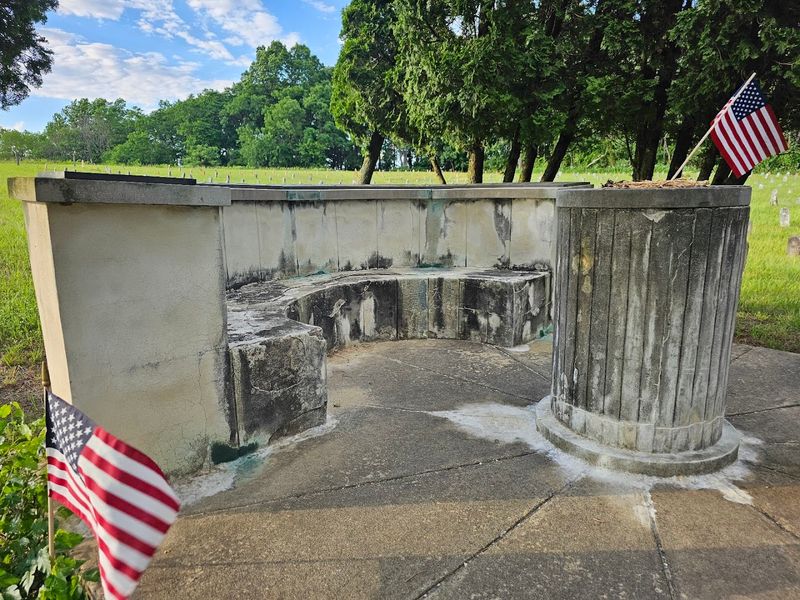
Back in 1991, someone decided that numbers alone were not enough. A memorial pavilion was constructed right inside the cemetery, and it changed everything about how visitors experience this place.
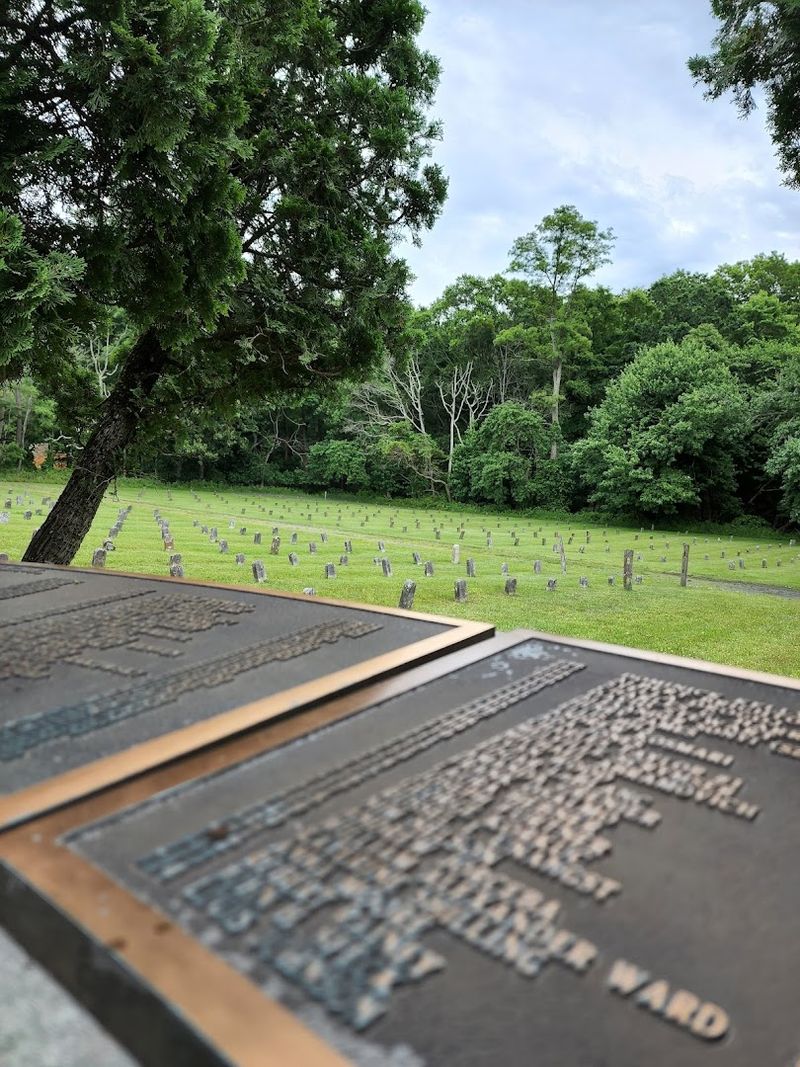
The pavilion holds bronze plaques that cross-reference each numbered marker with an actual name and date of death.
For the first time, the people buried here had their identities formally acknowledged in a public and permanent way. The plaques connect the cold logic of numbered stones to real human lives, and that connection is surprisingly moving.
You can stand at a numbered grave, walk to the pavilion, and find out who that person actually was.
The first person buried in this cemetery was Martino Zambetto, who died on April 4, 1931. The last was patient number 924, laid to rest in April 1960.
That span of nearly three decades represents an enormous amount of human experience, all of it quietly catalogued on those bronze surfaces under a simple roof in Marlboro Township.
Marlboro Psychiatric Hospital and Its Complicated Legacy
The cemetery didn’t exist in a vacuum. It was born alongside the Marlboro Psychiatric Hospital, which began construction in 1929 and opened in 1931 on a sprawling 468-acre property in Monmouth County.
At its peak, the hospital housed between 500 and 800 patients at a time, making it one of the larger state-run psychiatric facilities in New Jersey.
The hospital operated for nearly 70 years before finally closing its doors in 1998. During that time, it served thousands of patients who needed mental health care, and for many of them, the hospital was the only home they knew.
That long history carries both moments of genuine care and chapters that are much harder to reflect on.
Allegations of neglect and abuse emerged over the decades, and an undercover investigation in 1987 brought serious public attention to conditions inside. The buildings were eventually demolished between 2014 and 2015.
Today, the land is being transformed into a park, though the cemetery remains as a permanent and deeply meaningful reminder of everyone who lived there.
Dorothy R. Henson and the One Named Stone
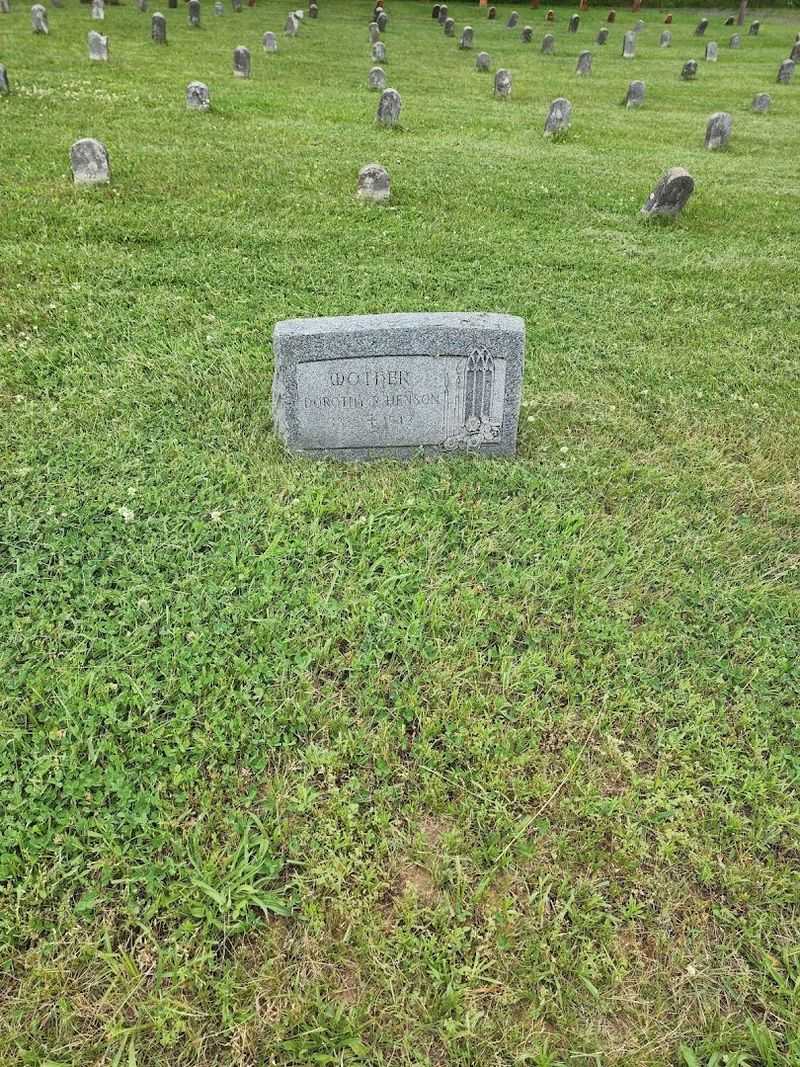
Among 924 graves, there is exactly one that breaks the pattern. A single headstone bears a name rather than a number, and that name is Dorothy R. Henson.
Nobody knows with certainty why her grave received this distinction while everyone else was given only a number.
That mystery adds a quietly haunting layer to an already emotional place.
The memorial pavilion’s bronze plaques list her name slightly differently, as Dorothy R. Hensan, which creates a small but intriguing discrepancy that visitors sometimes pause over.
Whether that difference is a clerical error or something else entirely is unclear. Either way, her stone stands out immediately when you walk the grounds.
There’s something both comforting and melancholy about her named marker. It suggests that someone, at some point, cared enough to provide a more personal farewell.
At the same time, it raises the question of why only one person received that gesture. Dorothy’s stone quietly holds that question open for every visitor who finds it.
Ghost Hunters and the Paranormal Pull of This Place
Few places in New Jersey attract paranormal investigators quite like this cemetery. The combination of tragic history, forgotten identities, and the sheer emotional weight of the location makes it a magnet for ghost hunters and curious visitors alike.
It’s been featured in Weird NJ lore more than once, and its reputation keeps growing.
Paranormal investigators have visited the grounds and reported recording electronic voice phenomena, commonly known as EVPs. Whether you believe in that kind of thing or not, the atmosphere here is undeniably charged with something that’s hard to name.
Even skeptics tend to get quiet when they walk among the numbered stones after dark.
Shadow figures, unexplained sounds, and strange photographs are all part of the stories people bring back from visits here. The idea that nearly a thousand souls rest in this field, many of whom suffered during their lives, creates a powerful energy that some visitors describe as overwhelming.
The cemetery sits at the intersection of history, grief, and the unexplained in a way that’s genuinely rare.
What It Feels Like to Walk the Grounds
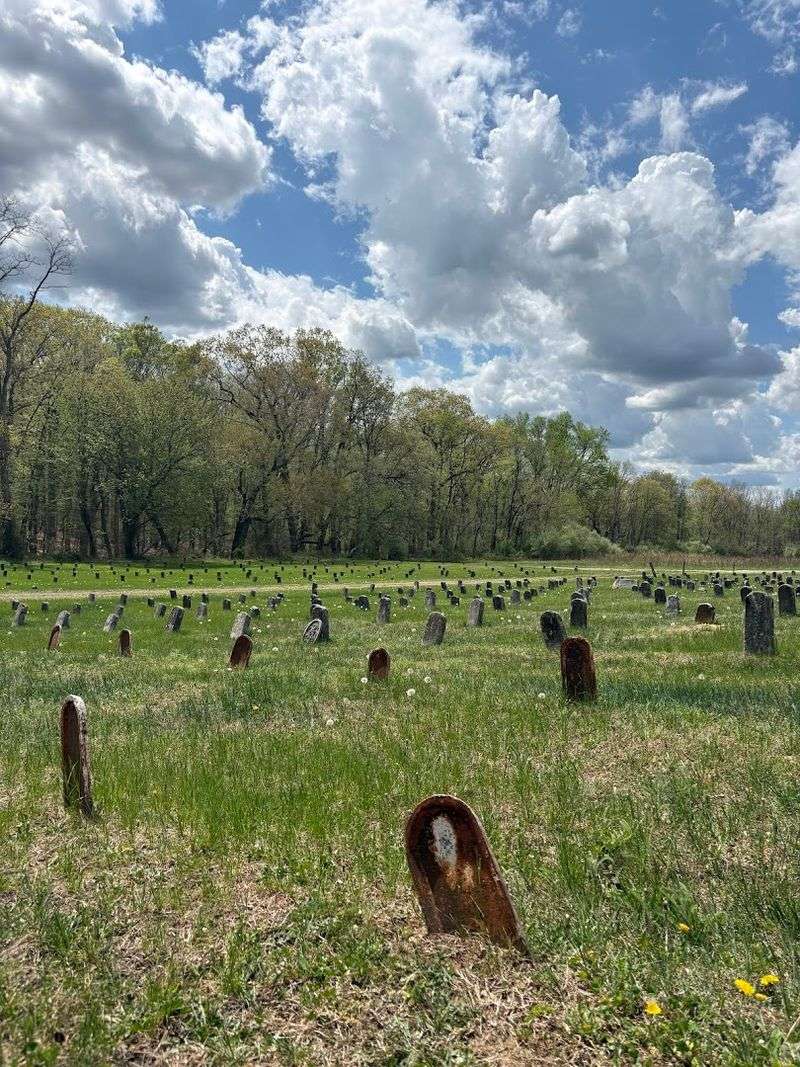
Visiting this cemetery is not like visiting most historic sites. There are no audio guides, no gift shops, and no crowds.
Just a quiet field, a modest pavilion, and row after row of small stones that demand your full attention. The place has a way of slowing you down without asking you to.
The cemetery is publicly accessible, which means anyone can visit during reasonable hours. Most people who come here do so with a sense of respect, moving slowly and reading the numbers as they pass.
Some visitors bring flowers or small tokens and leave them at graves that seem particularly weathered or forgotten.
The grounds are simple but well-maintained, and the pavilion provides a focal point for reflection. Standing inside it and reading the names on the bronze plaques while knowing each one corresponds to a numbered stone outside is a deeply human experience.
It’s the kind of visit that stays with you long after you’ve driven back down County Route 520 and returned to ordinary life.
The 1987 Investigation That Changed Everything
One moment in the hospital’s history stands out as a turning point that would eventually lead to its closure.
In 1987, State Senator Richard Codey conducted an undercover investigation into conditions at the Marlboro Psychiatric Hospital and came away with deeply troubling findings.
His report described what he called inhumane care and treatment of mental patients, and the state took notice.
The investigation didn’t immediately shut the hospital down, but it set off a chain of events that would shape its final decade of operation. Public pressure mounted, oversight increased, and the institution’s reputation never fully recovered.
By 1998, the hospital closed permanently after nearly 70 years of serving the state’s psychiatric population.
For visitors to the cemetery today, that 1987 investigation adds a layer of context that makes the numbered graves feel even more significant. Many of the people buried here lived through the years when conditions were at their worst.
The pavilion and its bronze plaques feel, in part, like an acknowledgment of all that those patients endured during their time at the hospital.
From Hospital to Park: How the Land Is Changing
After the hospital closed in 1998, the 468-acre property sat largely abandoned for years. The buildings fell into disrepair and became a destination for urban explorers and paranormal enthusiasts who wandered the decaying halls looking for remnants of the past.
Eventually, demolition began in 2014 and wrapped up in 2015.
The plan for the land is to convert it into a public park, which feels like a meaningful transformation. Open green space replacing the site of so much suffering carries a kind of symbolic weight that’s hard to ignore.
The community in Marlboro Township stands to gain a significant recreational area from this redevelopment.
Through all of this change, the cemetery has remained exactly where it has always been, right across the road from where the hospital’s main entrance once stood.
It serves as a permanent anchor to the history of the place, ensuring that even as the land evolves, the memory of the patients who lived and died there is not erased.
The cemetery is the part of this story that will never be demolished.
Weird NJ and the Cultural Life of a Haunted Cemetery
New Jersey has a rich tradition of celebrating its strange and overlooked places, and few publications have done more to champion that tradition than Weird NJ.
The magazine and its associated books have been documenting the Garden State’s most unusual sites for decades, and the State Hospital Cemetery has earned a prominent spot in that catalog.
Being featured in Weird NJ lore does something interesting for a place like this. It brings visitors who might never have found it otherwise, people who are genuinely curious about history and the paranormal rather than simply looking for a thrill.
The cemetery benefits from that attention in a way that keeps its story alive and circulating.
Local legends and personal accounts shared through publications like Weird NJ help build a kind of living archive around places that official history might overlook. For a cemetery full of anonymous graves, that kind of cultural attention is actually a form of remembrance.
Every person who reads about this place and decides to visit is, in a small way, honoring the people buried beneath those numbered stones.
Why This Cemetery Deserves More Than a Ghost Tour
It would be easy to reduce this place to its spooky reputation and move on. But the State Hospital Cemetery is so much more than a paranormal destination.
It’s a physical record of how society treated its most vulnerable members for much of the twentieth century, and that record deserves serious attention.
The 924 numbered graves represent real people who had real lives before illness brought them to Marlboro. Some had families who simply couldn’t be found.
Others were forgotten by the outside world entirely. The cemetery stands as both a memorial and a quiet challenge to anyone who walks through it, asking what responsibility the living have toward those who were left behind.
Visiting with that mindset transforms the experience completely. The numbered stones become less about ghost stories and more about human dignity.
The pavilion’s bronze plaques feel less like a curiosity and more like a long overdue act of justice. This cemetery earns its reputation not because of what might haunt it, but because of the undeniable humanity it holds within its modest borders.
Address: CR-520, Marlboro Township, NJ
