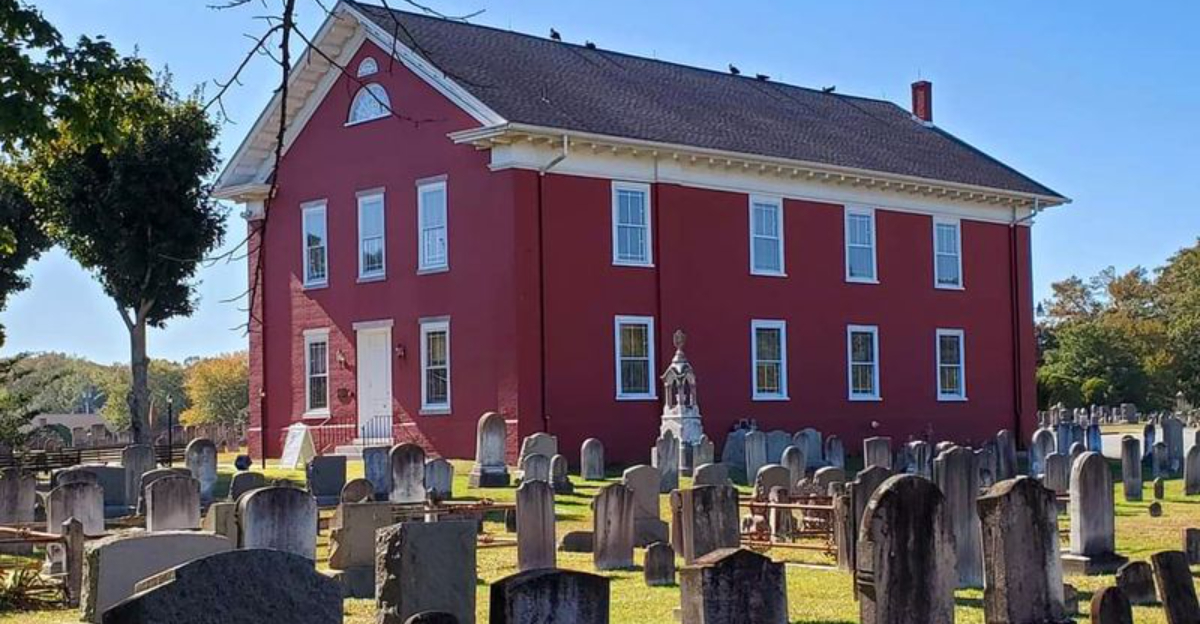
Before the Revolutionary War, before the nation existed, this New Jersey church was already gathering souls under its roof.
The cemetery beside it holds graves from the 1700s, limestone markers so old the names have nearly faded into whispers.
But the stories are sharper than ever. Tales of pirates, preachers, plague, and perseverance.
Some say you can feel the past pressing against your shoulders when you walk between the rows.
History does not just live in books. It sleeps here in the cold ground, waiting for someone to remember.
Founded Before America Was Even a Country
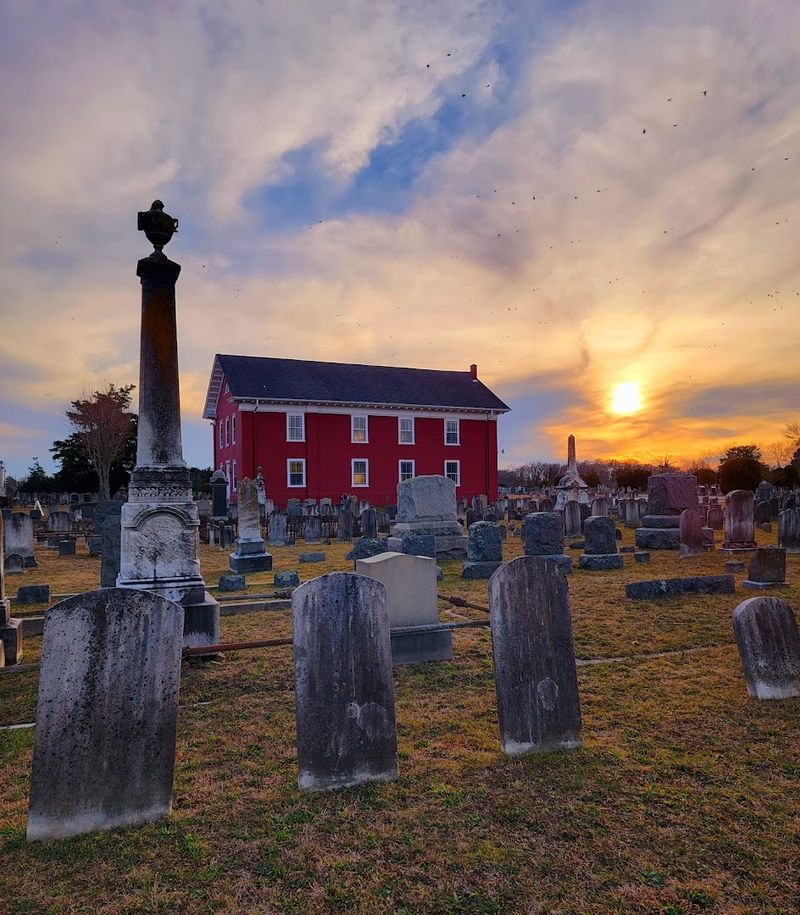
Some places earn their reputation over decades. Cold Spring Presbyterian Church earned its place in history over three centuries.
Founded in 1714, this congregation predates the United States by more than 60 years, making it one of the oldest continuously active churches in all of New Jersey.
Walking onto the grounds, you get the feeling that the land itself remembers things. The church started as a simple log meetinghouse in 1714, which was replaced by a frame and shingle building in 1764.
That second structure eventually gave way to the current “Old Brick” building, constructed in 1823.
What makes this founding story even more impressive is the unbroken thread of community worship stretching from colonial times right up to today. Sunday services still happen here.
The congregation still gathers. Three hundred years of faith in one spot is not something you encounter every weekend road trip.
This place quietly carries a weight that hits you the moment you step through the gate.
Old Brick: The Church Building With a Famous Architect
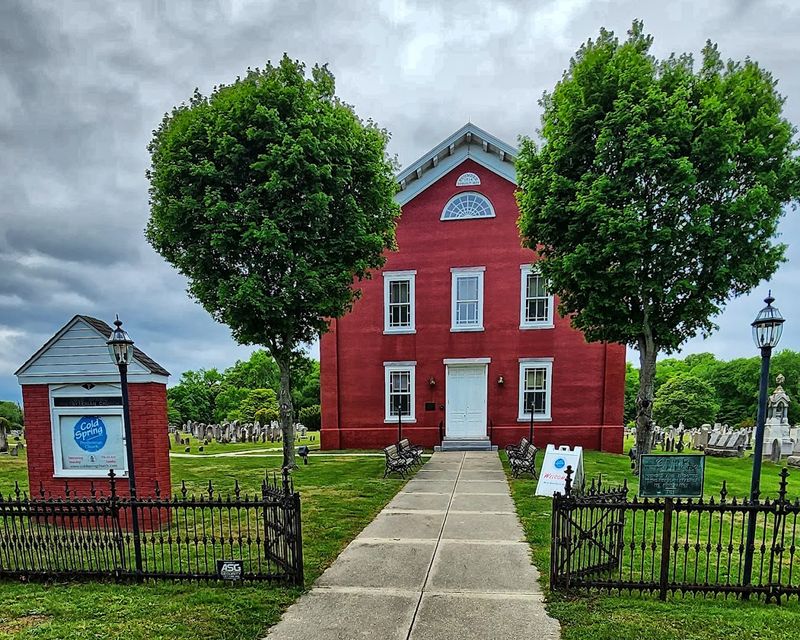
The current church building has a name that suits it perfectly: Old Brick. Built in 1823, this sturdy red brick structure replaced a wooden building that had served the congregation for nearly 60 years.
There is something deeply satisfying about a building that has stood for 200 years and still looks like it means business.
What makes Old Brick even more fascinating is the man behind its design. Architect Thomas H.
Hughes, who also designed the iconic Congress Hall in Cape May, was responsible for bringing this building to life. That connection to Congress Hall gives Old Brick a kind of architectural celebrity status in the region.
The building sits with quiet confidence on Seashore Road, its red bricks weathered but dignified. The proportions feel honest and deliberate, nothing showy, just solid craftsmanship built to last.
Visiting feels less like touring a museum and more like stepping into a building that simply refused to stop being useful. That kind of staying power deserves serious respect from anyone passing through Cape May.
A Cemetery That Stretches Back to 1742
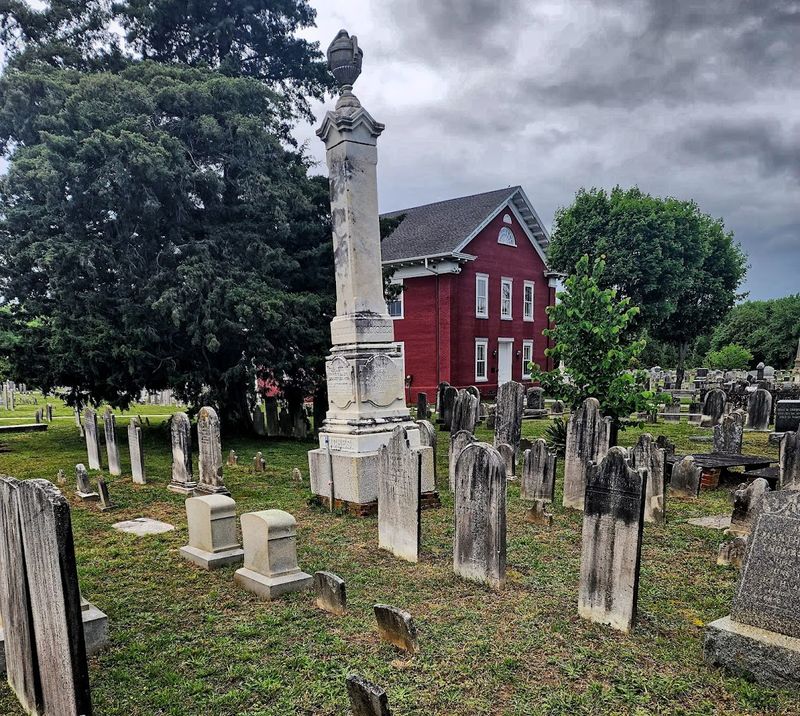
Most cemeteries tell stories. This one tells an entire chapter of American history.
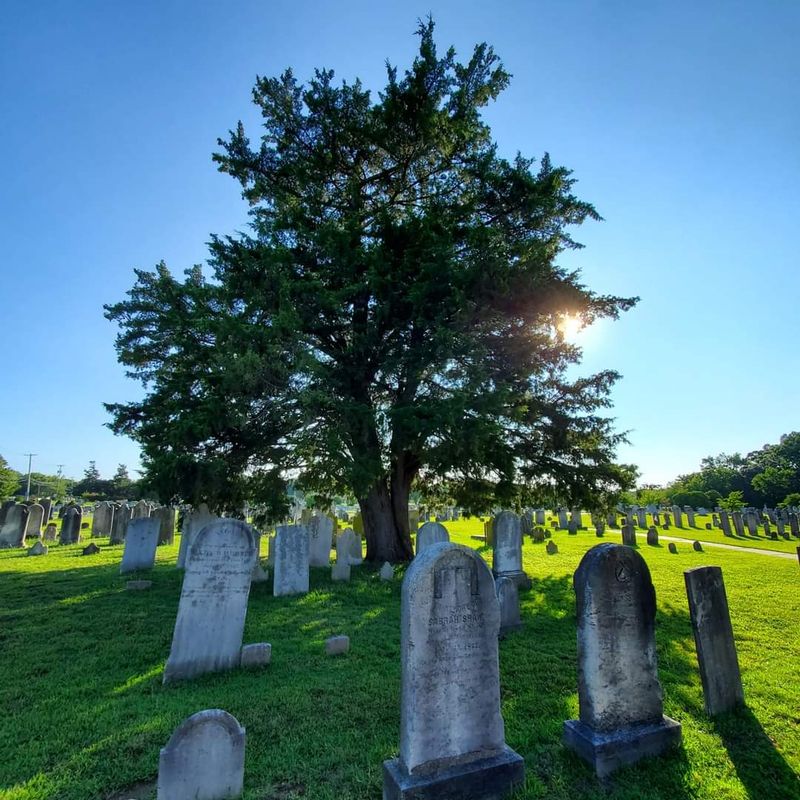
The Cold Spring Presbyterian Cemetery holds graves dating as far back as 1742, and wandering among those stones gives you a real, physical sense of how long people have been calling this corner of New Jersey home.
The oldest confirmed grave belongs to Sarah Eldridge Spicer, and her stone stands as a quiet anchor for everything that followed. Hundreds of other markers fill the grounds, each one a small window into a life lived long before electricity, cars, or the internet existed.
What strikes you most is not the age of the stones but the variety of stories they represent. Farmers, soldiers, mothers, and merchants all rest here side by side.
The cemetery is well maintained, which makes the experience feel respectful rather than eerie. It is the kind of place where you slow down naturally, read the names carefully, and find yourself genuinely curious about the people behind each carved inscription.
History feels very close here.
More Mayflower Descendants Than Almost Anywhere Else
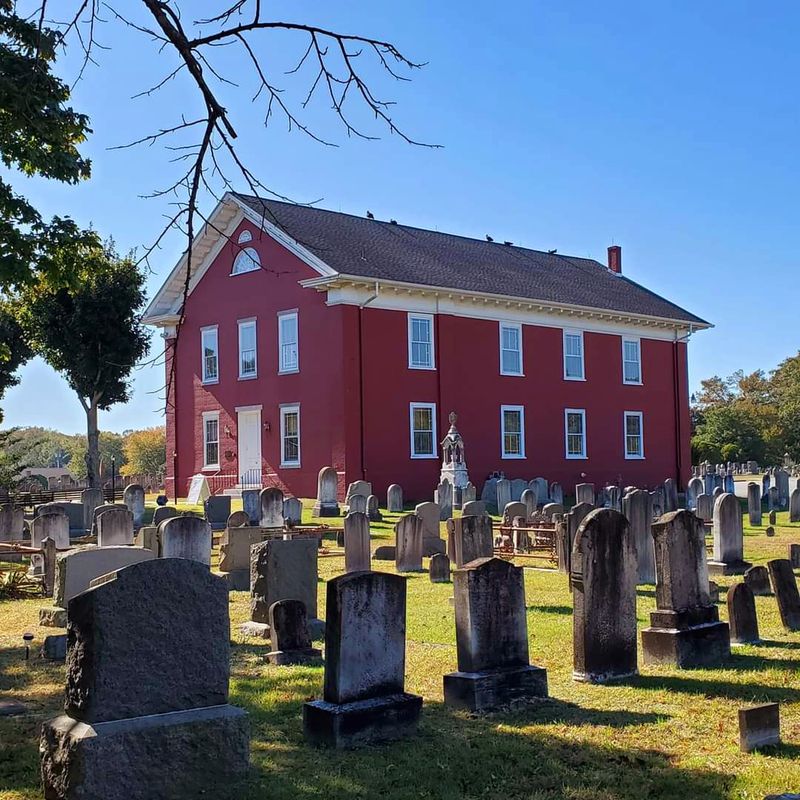
Here is a fact that stops most visitors in their tracks: the Cold Spring Presbyterian Cemetery is home to more Mayflower descendants than any other cemetery outside of Massachusetts. That is not a small claim.
The Mayflower landed in 1620, and tracing family lines from that voyage all the way to a Cape May cemetery is remarkable.
These are families whose roots stretch back to some of the earliest European settlers in North America. Over generations, those bloodlines spread down the Eastern Seaboard and eventually put down roots in southern New Jersey.
The cemetery became their final resting place, and that concentration of Pilgrim ancestry here is genuinely extraordinary.
For genealogy enthusiasts, this fact alone makes the trip worthwhile. Families have come from across the country searching these stones for ancestors they only knew through old documents and family stories.
Finding a name carved in stone that matches a name in a family tree is a powerful experience. Cold Spring offers that possibility in a way that very few places outside New England can honestly claim.
A Revolutionary War Hero Buried on the Grounds
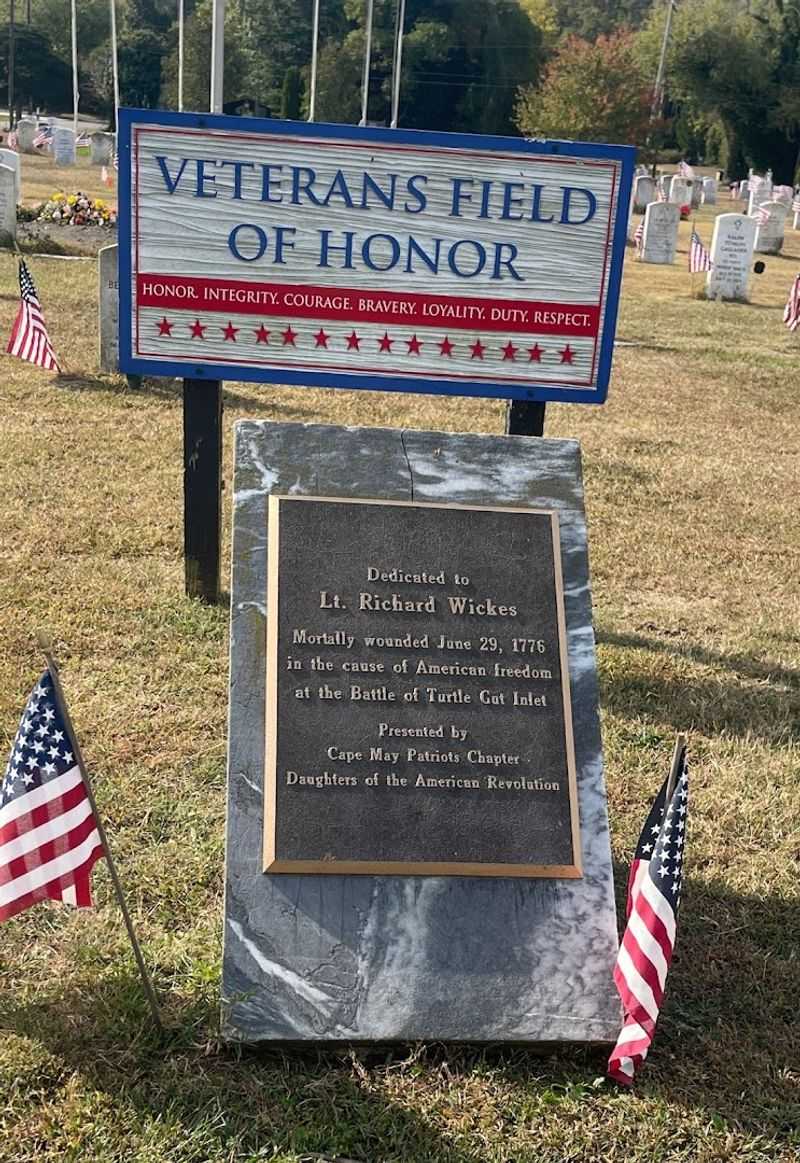
Not every cemetery has a Revolutionary War soldier buried within its gates, but Cold Spring Presbyterian does. Lieutenant Richard Wickes rests here, and his story is one worth pausing over.
He died on June 29, 1776, during the Battle of Turtle Gut Inlet, just days before the Declaration of Independence was signed.
Think about that timing for a moment. Wickes gave his life fighting for a country that would not officially exist until July 4th of that same year.
His grave sits in the cemetery’s Veterans Field of Honor, a designated section that pays tribute to those who served in conflicts from the Revolutionary War onward.
Standing near his marker, it is hard not to feel the weight of that sacrifice. The battle he died in took place not far from Cape May, making this a deeply local piece of Revolutionary history.
The Veterans Field of Honor section as a whole is carefully maintained and quietly moving. It is one of those spots where the ground beneath your feet feels genuinely meaningful rather than just decorative.
Listed on the National Register of Historic Places
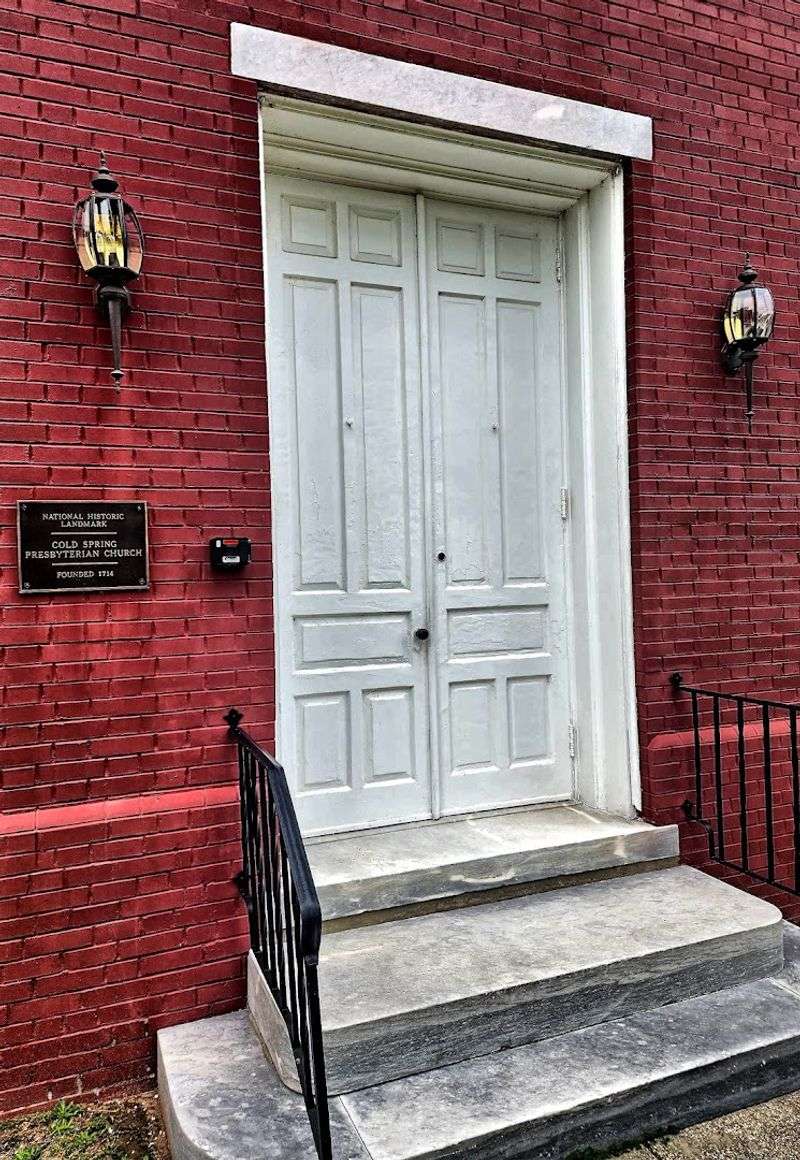
On June 14, 1991, Cold Spring Presbyterian Church received one of the highest recognitions a historic site can earn in the United States. It was officially added to the National Register of Historic Places.
That designation covers four categories: settlement, architecture, religion, and government, which tells you just how layered this place really is.
Getting listed on the National Register is not a casual honor. It requires documented historical significance, architectural integrity, and a clear connection to broader American history.
Cold Spring checks every one of those boxes with room to spare.
The recognition also helps ensure that the property is preserved for future generations. Visitors who come today benefit from decades of careful stewardship, and the National Register listing is part of what makes that ongoing care possible.
Knowing that a federal body formally recognized this church as historically significant adds another dimension to the visit. It is not just a local treasure.
Cold Spring Presbyterian Church is officially part of the American story, and the certificate to prove it has been on the books for over 30 years.
Three Hundred Years of Community Worship
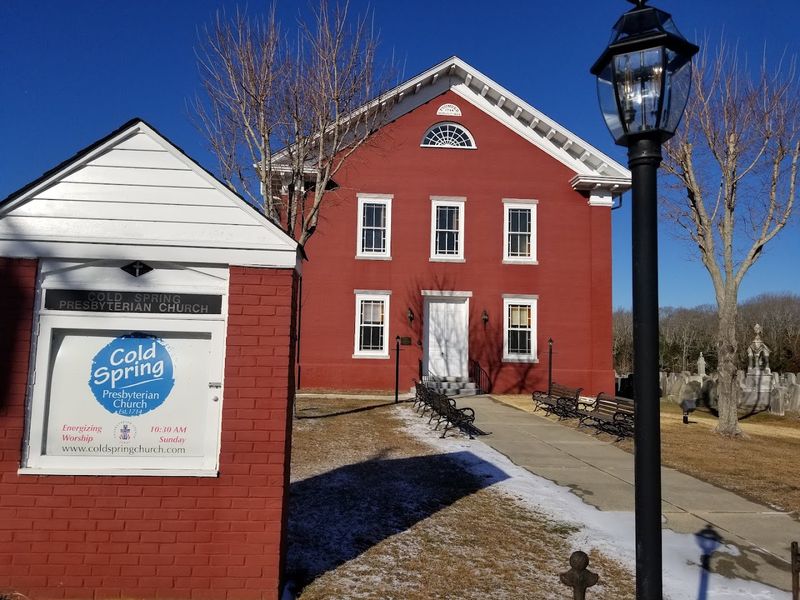
Three centuries of unbroken worship is not something most congregations can claim. Cold Spring Presbyterian has gathered its community through wars, storms, economic hardships, and cultural shifts without ever closing its doors permanently.
That kind of continuity is genuinely rare and worth celebrating.
Sunday services still take place in Old Brick, and the congregation that fills those pews carries on a tradition started by colonial settlers who built a log meetinghouse in 1714. The rhythm of weekly worship has continued here without a significant gap for over 300 years.
That is a staggering thought when you sit with it.
Visitors who attend a service often describe the experience as both deeply traditional and genuinely welcoming. The blend of historic surroundings and living community creates something that purely touristy attractions simply cannot replicate.
You are not just visiting a preserved relic. You are stepping into an active, breathing congregation that has outlasted empires, revolutions, and centuries of change.
That living quality is what separates Cold Spring from a museum and keeps it feeling relevant today.
The Veterans Field of Honor: Remembering Those Who Served
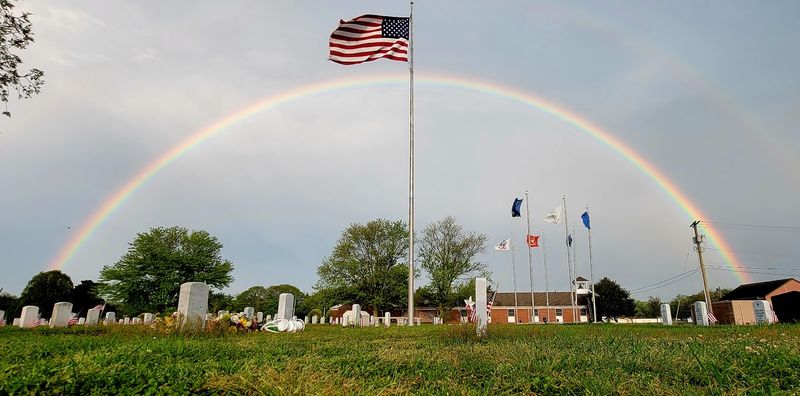
One section of the Cold Spring Presbyterian Cemetery carries a particularly solemn energy. The Veterans Field of Honor is dedicated to the men and women from this community who served in the armed forces across multiple generations of American conflict.
Walking through it feels different from the rest of the cemetery.
The section includes markers representing service from the Revolutionary War era all the way through more recent conflicts. Lieutenant Richard Wickes is the most historically notable figure here, but he is far from alone.
Dozens of veterans rest in this part of the grounds, their service acknowledged with care and dignity.
Small flags and maintained markers give the area a sense of active remembrance rather than forgotten history. Someone still cares.
The community still honors these individuals by name. For visitors who have family members who served, or who simply appreciate the cost of American freedom, this section of the cemetery offers a moment of genuine reflection.
It is understated, sincere, and quietly powerful in a way that large formal monuments sometimes fail to achieve.
Planning Your Visit to Cold Spring Presbyterian Church
Getting to Cold Spring Presbyterian Church is straightforward, and the experience is worth every mile of the drive. The church sits at 780 Seashore Road in Cape May, easily accessible whether you are coming from the shore or heading inland.
The grounds are open and welcoming for visitors curious about history.
Office hours run Monday through Friday from 9 AM to 1 PM, and Sunday services begin at 10:30 AM. Arriving on a weekday morning gives you peaceful time to explore the cemetery without crowds.
The grounds are well maintained, and the quiet atmosphere makes it easy to take your time reading markers and soaking in the surroundings.
Bringing a camera is a genuinely good idea because the combination of old brick, weathered stones, and mature trees creates beautiful natural framing at nearly every angle. Comfortable walking shoes help too, since the cemetery grounds have uneven terrain in places.
Whether you are a history enthusiast, a genealogy researcher, or simply someone who appreciates places with real depth, Cold Spring Presbyterian Church rewards every visit with something new to discover.
Address: 780 Seashore Rd, Cape May, NJ
