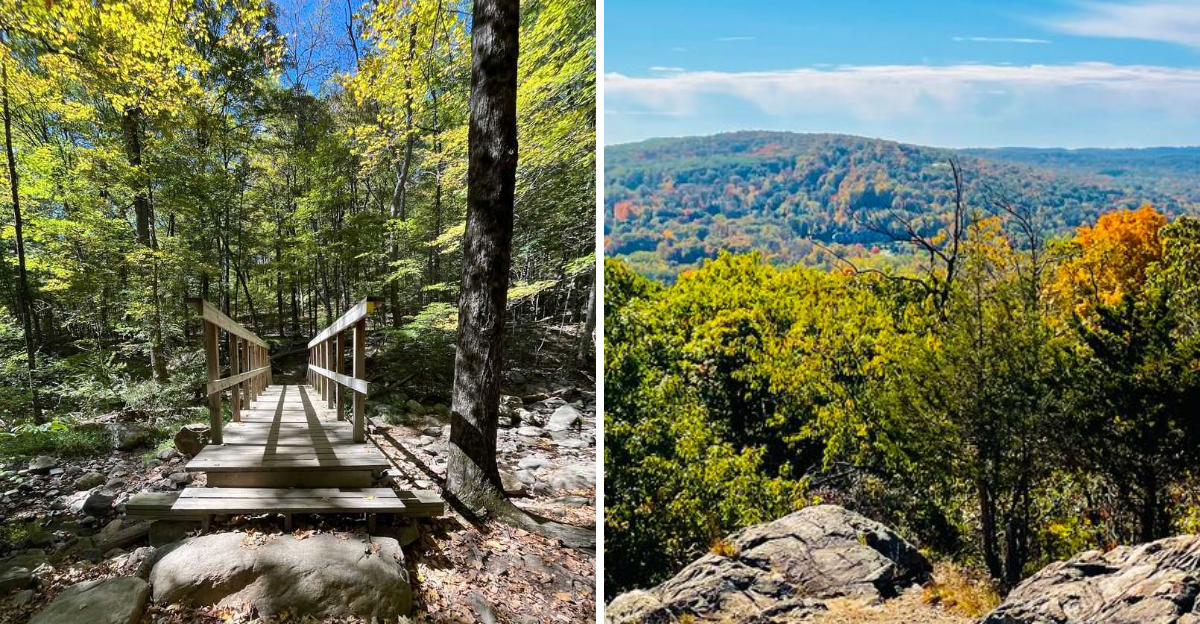
A gentle stroll around a pond. Then the trail laughs and shows you what it is really made of.
Rocks, ledges, and a climb that makes you earn every step. Just when your legs start to complain, the trail opens up to a view that makes it all worth it.
A skyline in the distance. A reservoir below. A waterfall hidden in the woods.
It is the kind of hike that starts easy and gets wildly different once you reach the woods.
You will scramble over rocks, catch your breath at the top, and wonder why you do not do this more often. The contrast is part of the magic.
You start by the water, calm and flat, and end up standing on a ledge that feels like the top of the world. This is where New Jersey proves it can still surprise you.
Lace up and find out.
The Wide Welcome Near the Entrance
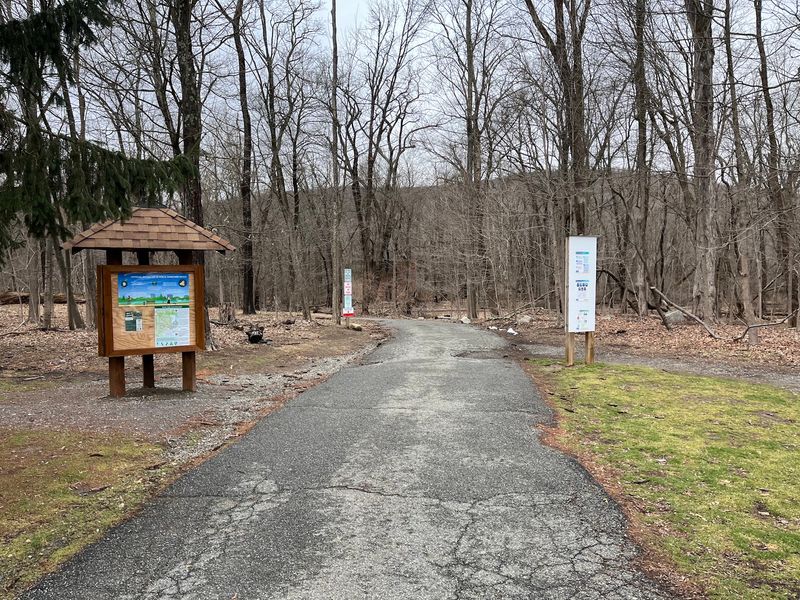
The parking lot sits right off a busy road, so the switch from traffic noise to birdsong happens fast. Within a minute of leaving the car, the pavement fades and a broad crushed stone path takes over, flat and forgiving under your feet.
Dog walkers dominate this stretch, leashes taut, tails going. Families stroll side by side without anyone needing to walk single file.
Trash bins line the main route, picnic benches sit tucked near the trees, and portable restrooms are available close to the lot. It all feels tidy and easygoing, which is exactly why so many first-timers assume the whole park will stay this mellow.
Arrive early if you can. The lot fills up quickly on weekends and can close once it reaches capacity, while weekday mornings usually leave plenty of space.
Entry and parking cost nothing, which makes a spontaneous visit simple. Give yourself a few extra minutes here, because this calm opening sets the rhythm for everything waiting deeper inside.
Crossing the Steel Bridge Over the Ramapo River
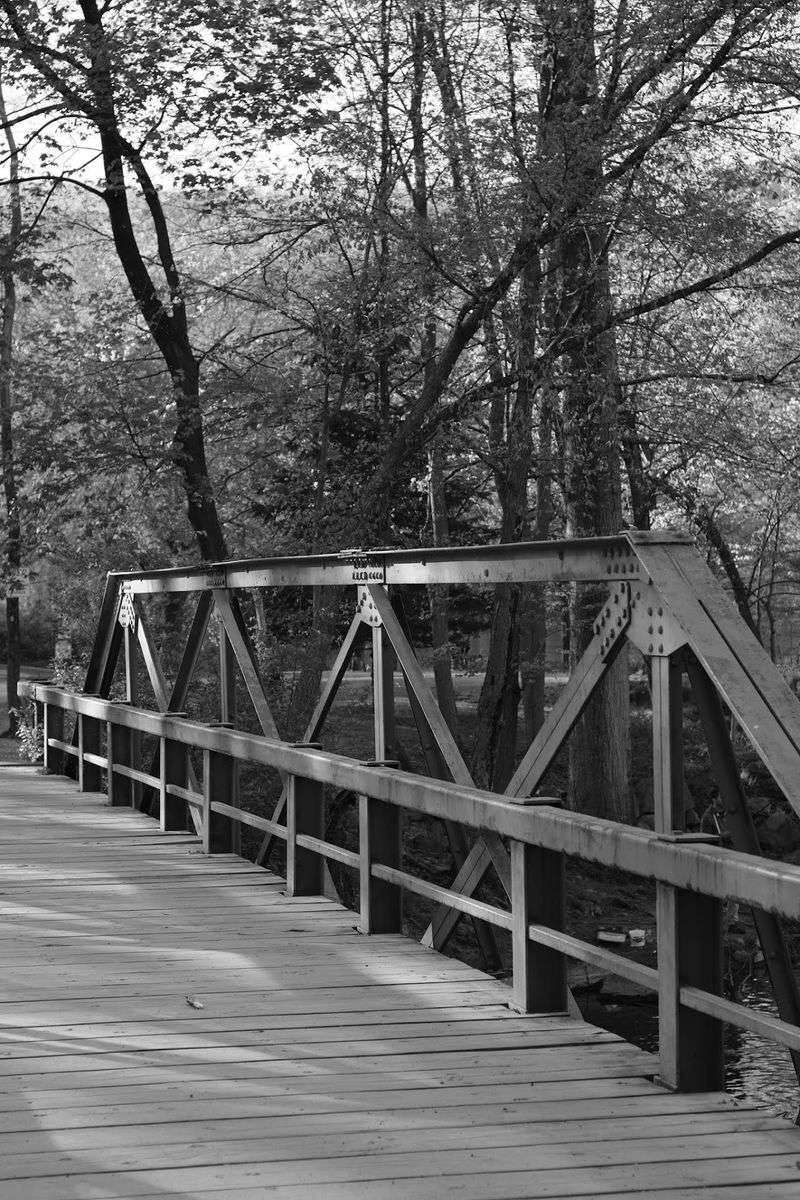
A steel truss footbridge appears almost immediately, and it is far more impressive than most park bridges. Below it, the Ramapo River slides along at an unhurried pace, catching light between the branches.
People stop here. Every single time.
Kids lean over the railing looking for fish, photographers frame the water, and anglers cast for trout along the banks nearby. The sound of moving water does something to your shoulders, loosening them before the real climbing begins.
Spring runoff makes the river louder and fuller, while late summer often slows it to a lazy trickle over the stones. Both versions have their own charm, and the light filtering through the trees changes the whole scene hour by hour.
Pause long enough to notice the tree line on the far bank, because that green wall is where the trail eventually leads you.
Cross over and the path stays wide and friendly, still keeping its secret about the terrain ahead.
Scarlet Oak Pond and Its Mirror Surface
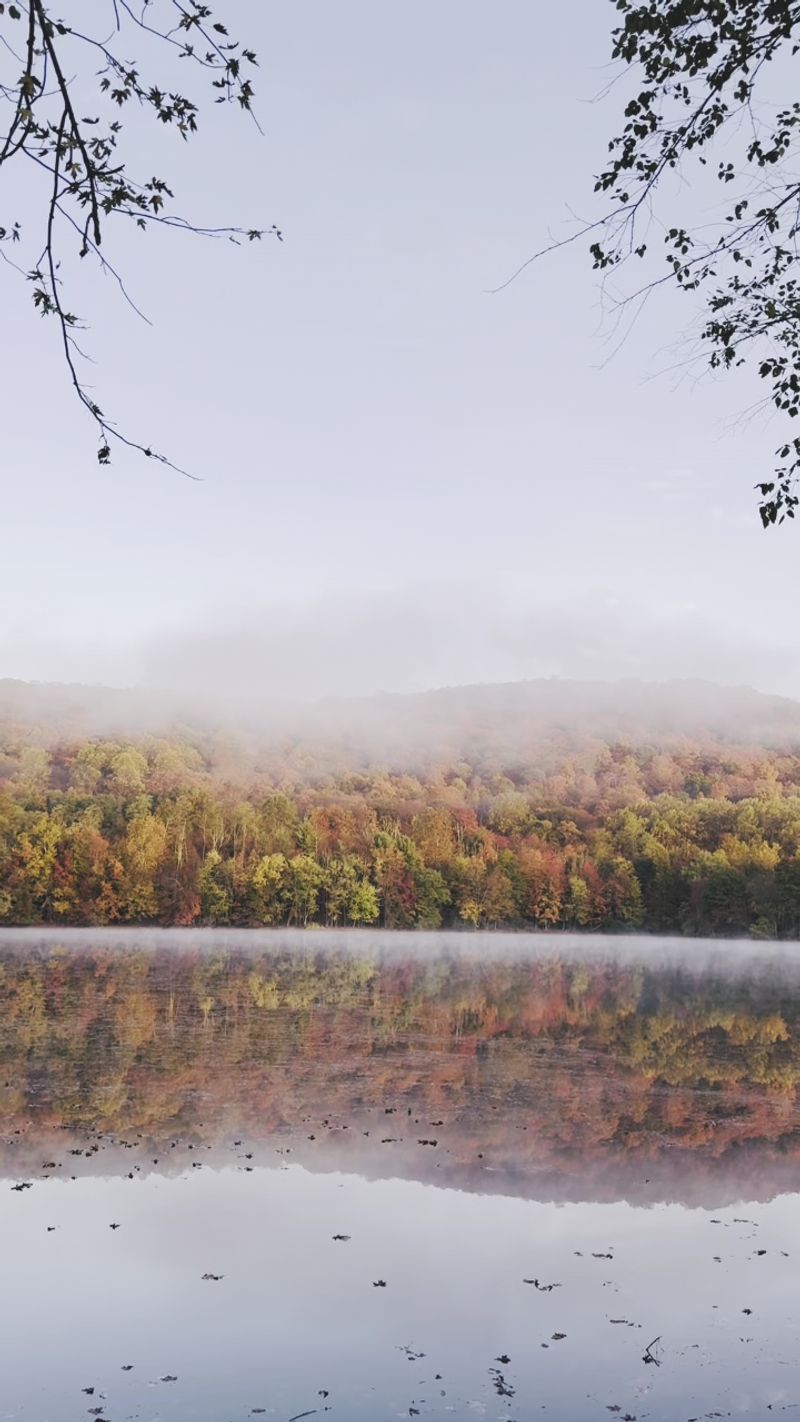
Just past the bridge, the trees open up and Scarlet Oak Pond spreads out like a sheet of glass. On still mornings the reflection is so clean it takes a second to figure out where the water ends and the sky begins.
The path skirting the shoreline stays wide and level, and it is easily the most photographed stretch of the whole reservation.
Benches invite you to sit. Herons and other birds work the shallows, which makes this a favorite spot for anyone who carries binoculars.
Fog sometimes settles over the surface at dawn, turning the entire scene soft and slightly unreal. Autumn brings a completely different show, with color reflected across the water in layers.
Camping is available near the pond by reservation, which surprises visitors who assume this is only a day-use park.
Plenty of people turn around right here and call it a good outing. Nothing wrong with that, though the best part is still ahead.
Where the Path Narrows and the Climb Begins
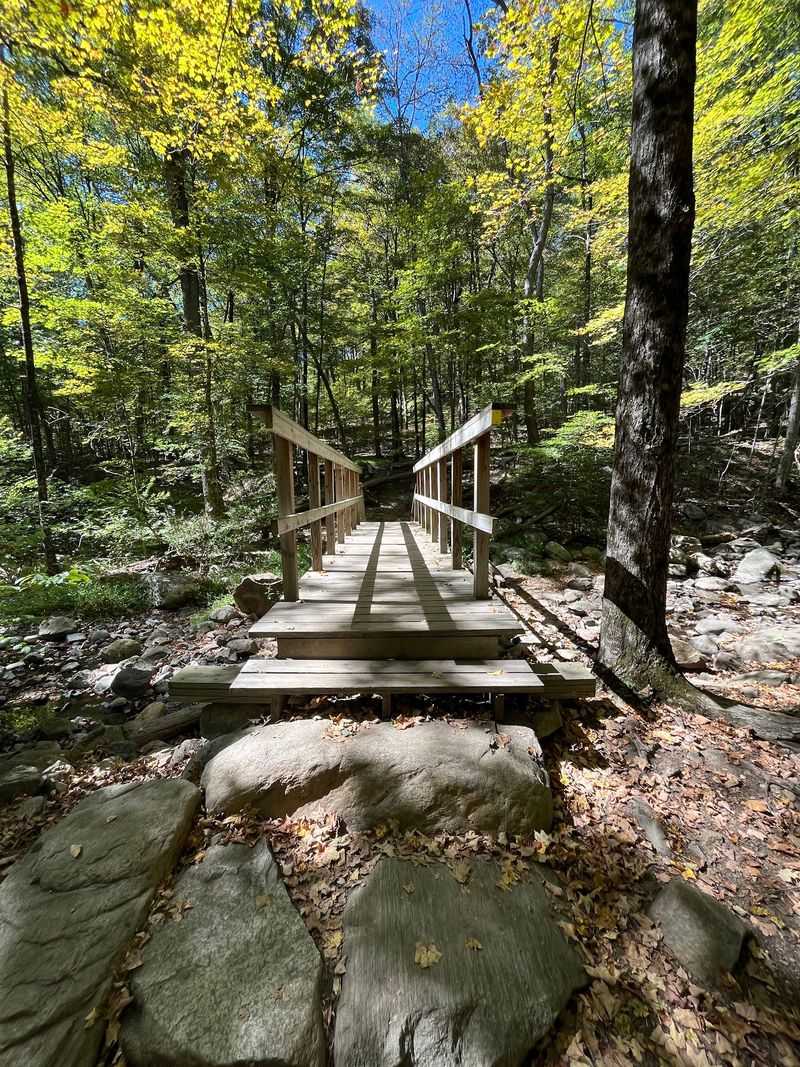
Somewhere past the pond the character of the walk flips without warning. Gravel turns to packed dirt, the trail narrows to single file, and roots start crossing the path like tripwires.
The incline builds slowly at first, then commits.
Trees crowd in on both sides, the temperature drops a few degrees, and road noise disappears entirely. Your breathing changes before your brain fully registers that this is now a real hike.
Footwear matters from this point on. Sneakers with worn soles will slide on loose stone, and sandals are a genuinely bad idea.
Water matters too, especially in summer, because there is nowhere to refill once you are up in the hills. Ticks are worth thinking about in warm months, so staying on the marked path is the smart move.
Bears live in these woods, and sightings do happen even on busier routes. Make some noise, keep your distance, and let them move along.
The transition is abrupt, and that is precisely what makes it fun.
Following the Yellow Blazes of the Vista Loop
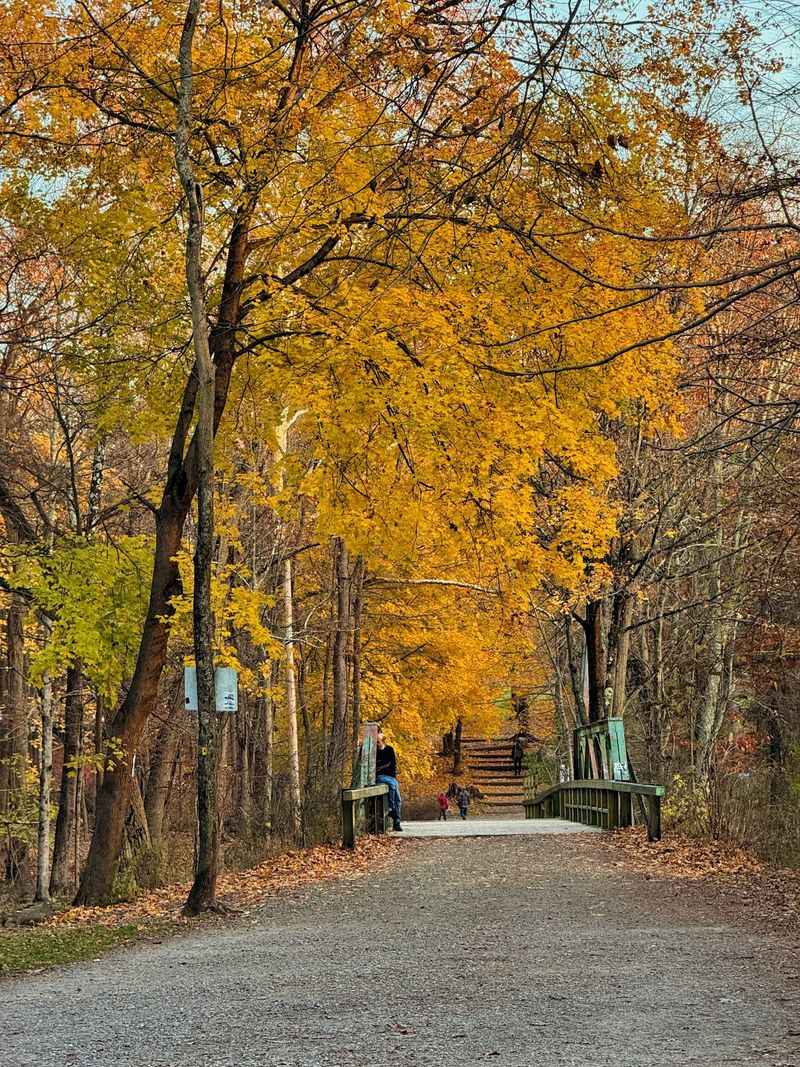
Yellow paint on tree trunks becomes your best friend once the woods thicken. The Vista Loop is the route most people talk about, and the blazes appear often enough to keep you honest, though a few junctions can be confusing.
Downloading an offline map before you arrive is genuinely useful. Cell signal drops out in sections of the park.
The terrain rolls rather than climbing in one long push, mixing short steep bursts with flatter recovery stretches. Rock ledges poke through the dirt, and the canopy overhead scatters sunlight into shifting patterns.
Hikers run this loop in both directions, so passing others is normal and usually comes with a nod or a quick trail greeting.
Half the loop takes a couple of unhurried hours for most people, and a shortcut partway through lets you head back toward the lot early.
Mark your starting point on your phone before you set off. Simple habit, big peace of mind.
Hawk Rock and the Skyline Surprise
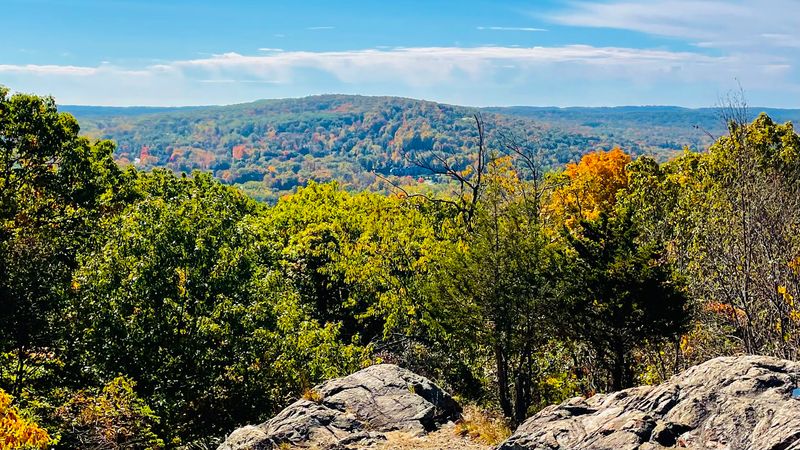
Effort pays off suddenly at Hawk Rock. One moment you are boxed in by trees, the next you step onto exposed stone with the whole valley laid out below.
The drop-off is real, so watch your footing near the edge.
On clear days the Manhattan skyline shows up as a faint cluster of shapes far off on the horizon, which feels almost absurd given how remote the woods behind you seem. Winter, with the leaves gone, tends to give the sharpest sightlines.
People sprawl out here to eat a snack, catch their breath, and let the wind do its thing. It is easily the most rewarding pause on the entire route.
Bring a layer even in mild weather, because the exposed rock catches breeze that the forest blocks.
Photographs never quite capture the depth of it. The scale only lands when you are standing there squinting at the distance, realizing how far your legs carried you.
Cactus Ledge, the Oddest Stop on the Route
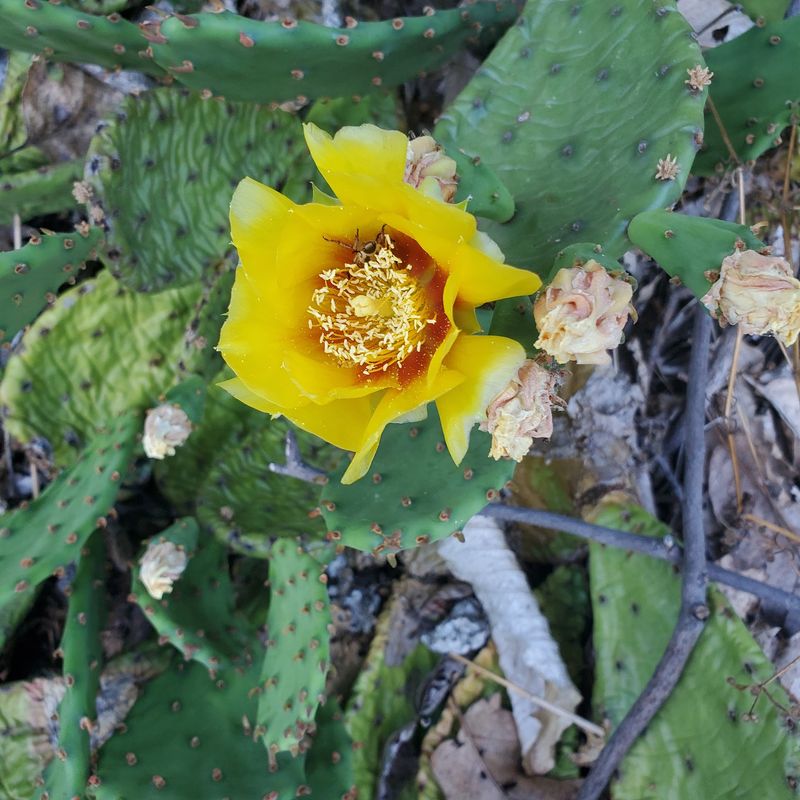
Cactus in New Jersey sounds like a joke until you are standing over a cluster of prickly pear paddles sunning themselves on a warm rock ledge. Eastern prickly pear is native to the region, though almost nobody expects to meet it on a wooded ridge.
The contrast is wonderfully strange.
Deciduous forest surrounds the spot, all maples and oaks, and then this scrubby desert plant thrives on a dry, sun-baked outcrop where thin soil and full exposure suit it perfectly. Yellow blooms appear in early summer for anyone timing a visit right.
Look, do not touch. Those tiny hair-like spines are far worse than the big obvious ones.
Cactus Ledge also serves as a useful landmark, since a shortcut near here loops hikers back toward the parking area without finishing the full circuit.
Kids get a real kick out of this section, and honestly so do adults. It is the sort of detail that turns a nice hike into a story worth retelling.
The Waterfall Below the Dam
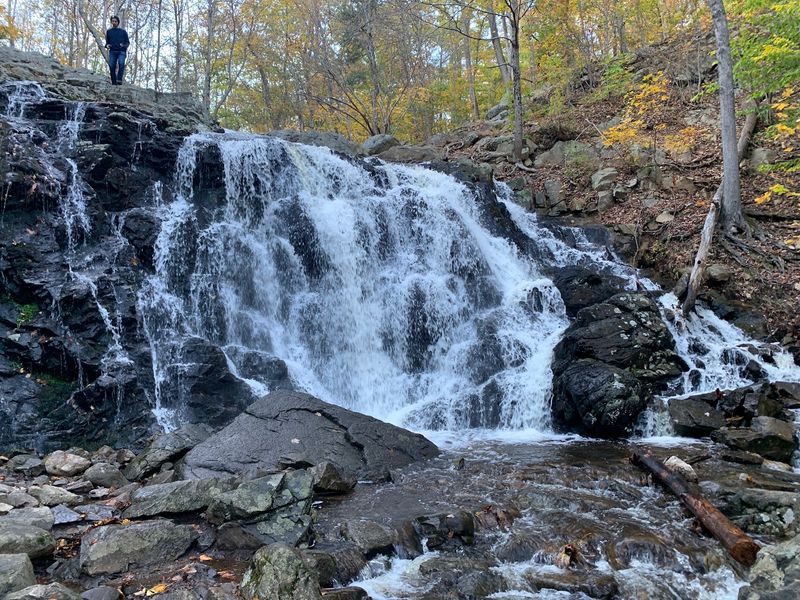
You hear it before you see it. Water rushing over stone carries through the trees, and the sound pulls you forward faster than any trail sign could.
The falls spill down from the MacMillan Reservoir over a jumble of boulders, forming natural steps that hikers scramble beside.
Timing changes everything here. After heavy rain the flow is full and loud, sending spray into the air, while dry spells reduce it to thin ribbons trickling between rocks.
Winter has its own reward, since cold snaps can leave the cascade partially frozen into strange sculpted shapes. Photographers show up specifically for that.
Wet rocks near the base get slick, so move carefully and skip the temptation to climb where the moss is thick.
It is one of the most talked-about features in the whole reservation, and standing near the mist for a few minutes feels like a genuine reset button. Take the break.
Your legs will thank you for the descent ahead.
MacMillan Reservoir Sitting Quiet in the Hills
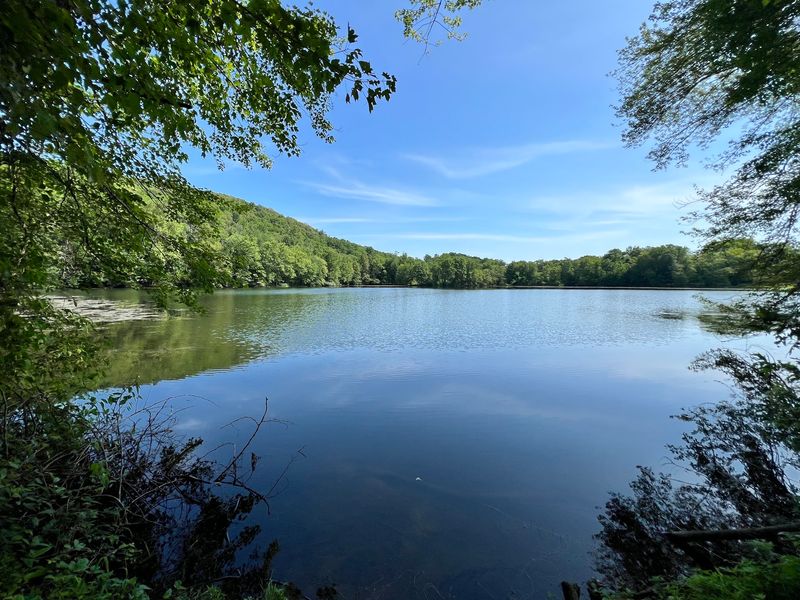
Above the waterfall sits MacMillan Reservoir, a broad stretch of still water ringed entirely by forest. The climb up to it follows a wide path with a gradual incline, so it is manageable even if hills are not your favorite thing.
Take breaks. Nobody is timing you.
The water sits so calm on quiet days that the tree line doubles itself across the surface. Trails tracing the shore give you shifting glimpses between trunks, revealing the reservoir in pieces rather than all at once.
MacMillan Brook feeds the area, and the paths running alongside it are among the prettiest in the park, with small rapids and mossy stones the whole way.
Sitting on a rock near the edge here makes the road you drove in on feel impossibly far away.
Wildlife shows up often, from turtles sunning themselves to frogs disappearing into the shallows with a plop. Keep your eyes open and your voice low.
Heading Back Down and What Sticks With You
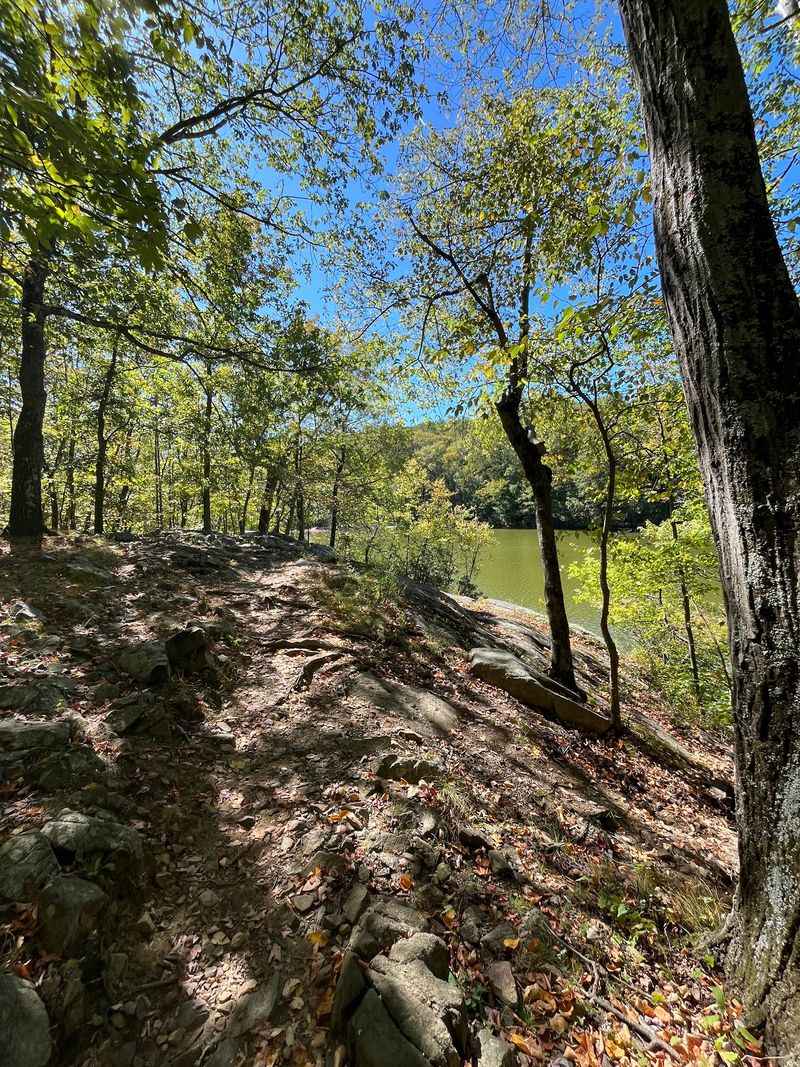
Descending turns out to be its own challenge. Loose stone, awkward root steps, and steeper pitches mean your knees do more work than expected, and rushing is how people twist ankles.
Trekking poles help a lot on this stretch if you carry them.
Eventually the grade eases, the trail widens, and the sound of the river returns like an old friend. That final flat walk back past the pond feels almost ceremonial after everything the woods threw at you.
Covering roughly three thousand acres, the reservation packs river, pond, ridge views, cactus, waterfall, and reservoir into a single outing, which is a lot for one afternoon in New Jersey.
Go early, pack water and snacks, wear grippy shoes, and keep dogs leashed as required.
Fall foliage is spectacular, though every season delivers something worth the drive.
You can find Ramapo Valley County Reservation at 608 Ramapo Valley Rd, Mahwah, NJ 07430, United States, open daily from 7 AM.
