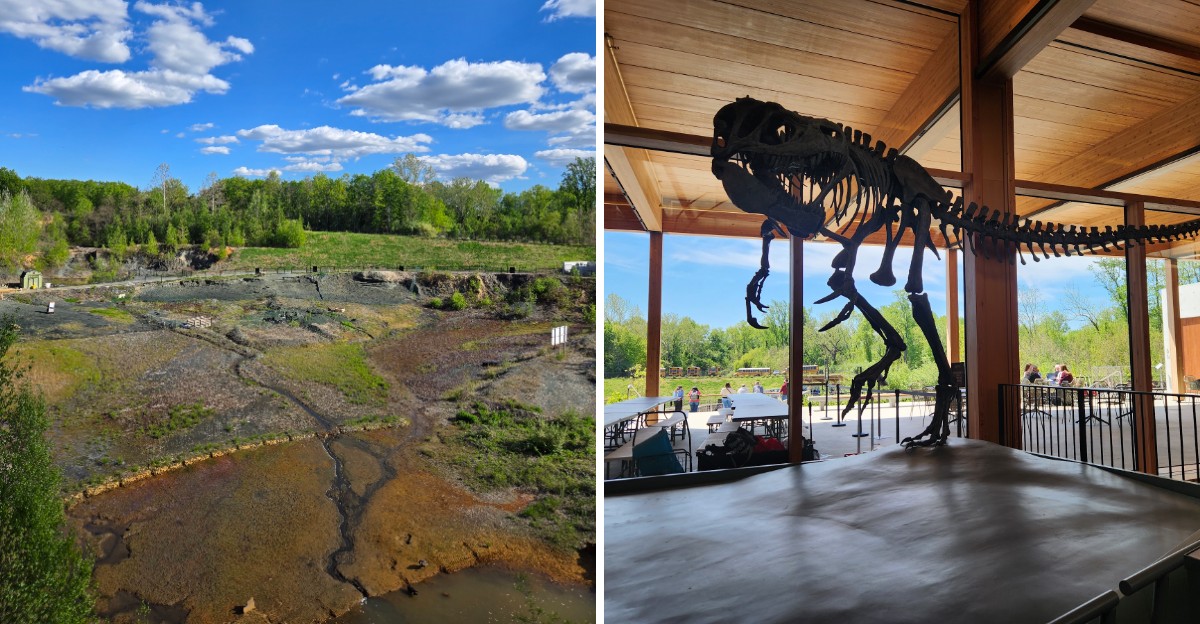
Well, this certainly beats staring at fossils through a glass case and calling it a day. Here, the prehistoric story begins beneath your feet.
New Jersey has a museum built beside a fossil-rich quarry preserving evidence from roughly 66 million years ago, near the end of the Cretaceous Period.
Inside, full-scale dinosaurs, interactive exhibits, live animals, and hands-on displays turn deep time into something much easier to grasp.
Visitors can even add a guided quarry experience and search for real fossils.
The fascinating twist is that this region looked wildly different back then.
Much of southern New Jersey was covered by a shallow sea, with mosasaurs and other creatures occupying a world almost impossible to recognize today.
Turns out you don’t need a time machine. Comfortable shoes and a little curiosity will do.
Ground That Holds Deep Time
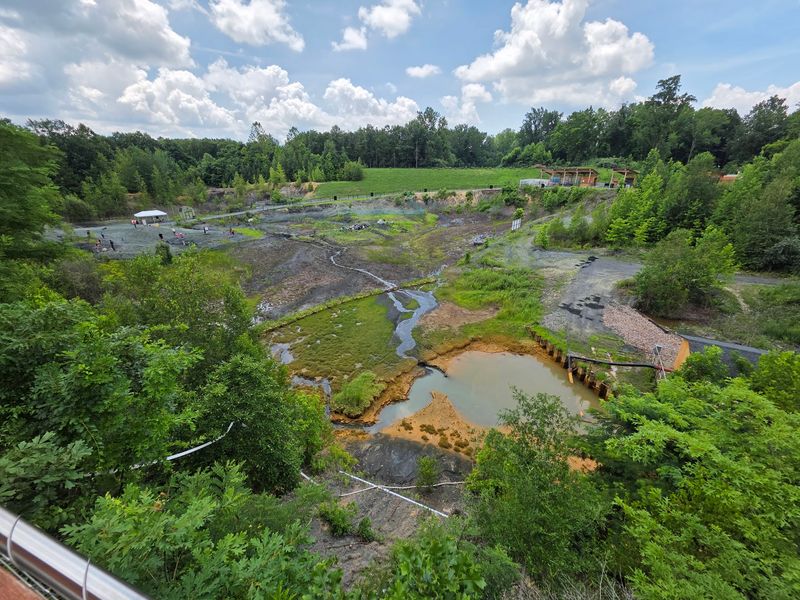
Honestly, the backyard here is the real showstopper. Behind the modern building sits a former marl quarry, a pit of greenish, crumbly earth that has been giving up fossils for years.
The layers inside date back about 66 million years, to the very end of the age of dinosaurs.
Back then, this whole area sat under a shallow, warm sea. Sharks cruised the water, sea turtles paddled past, and giant marine reptiles hunted for their next meal.
When those animals died, many settled into the soft seafloor and slowly turned to stone.
Scientists from Rowan University still study this ground today, which means the park is a working research site and not just a pretty display. I love that.
New finds keep adding pieces to a puzzle about how life on Earth changed so suddenly.
Keep your eyes on the quarry from the windows and patio during your visit. It might look like an ordinary dirt pit at first glance.
Give it a minute, though, and the idea of an ancient ocean floor right there starts to feel pretty wild.
The Day the Asteroid Hit
Sixty-six million years ago, a space rock slammed into Earth and changed everything. Roughly three out of every four species vanished, including all of the non-bird dinosaurs.
The quarry here holds a record of that moment, known to scientists as the K-Pg boundary.
What makes the spot so special is a thick bed of fossils sitting right at that boundary layer. Researchers think it may capture a snapshot of sea life at the very end of the Cretaceous.
By comparing fossils below and above it, they can study which creatures disappeared and which ones hung on.
The museum turns this heavy topic into something easy to follow. Signs use plain language, and the story moves in a clear order from a thriving world, to disaster, to recovery.
Kids pick it up fast.
My tip is to read the boundary displays slowly instead of rushing toward the big sculptures. Once the extinction story clicks, every tooth and shell in the building suddenly carries more weight.
It turns a fun outing into a real lesson about how fragile, and how tough, life can be.
Life-Size Giants in the Main Gallery
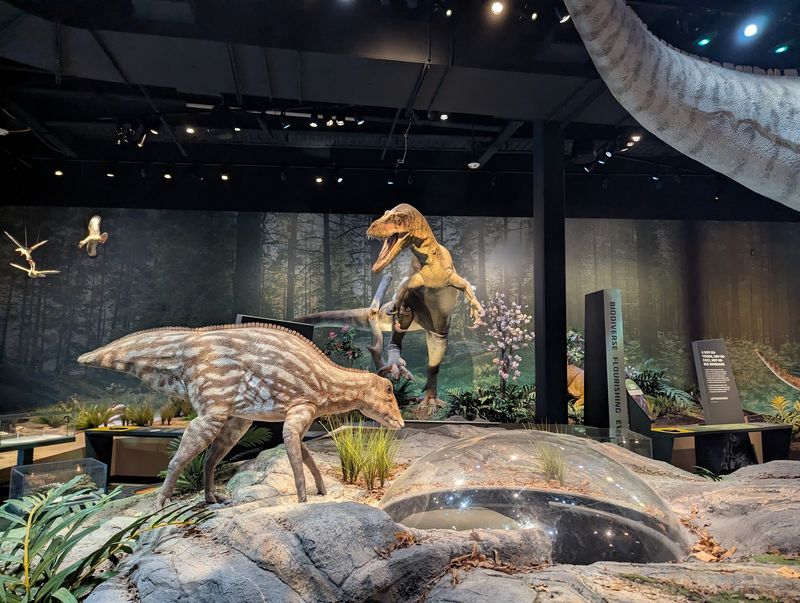
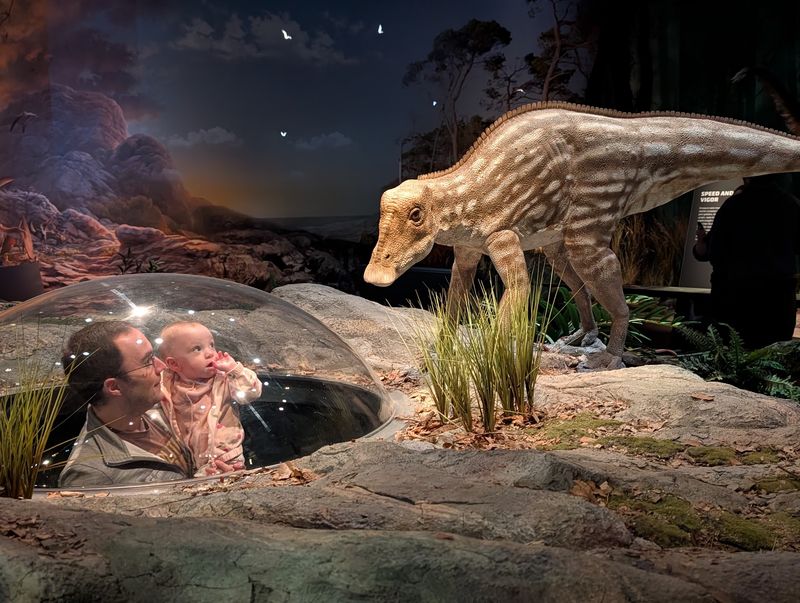
First impressions matter, and the Edelman Fossil Park & Museum knows it. Skeletons of a marine reptile and a dinosaur greet guests near the start of the galleries.
Full-scale sculptures nearby show what those bones looked like wrapped in skin and muscle.
The creatures are posed in action, hunting, guarding, or sizing each other up. That choice makes a big difference.
Instead of staring at stiff statues, visitors get a sense of how these animals may have moved and behaved.
Many of the species on display connect back to fossils found in this region, which gives the whole room a hometown feel. Signs sit below each figure with quick facts that younger readers can handle on their own.
I think that balance of wow factor and real science is hard to pull off.
Bring a camera, obviously, and maybe a sketchbook too, since the detailed models make great drawing subjects. Try crouching low for a photo looking up at the biggest figures, and the scale becomes almost comical.
Nobody leaves this room without feeling just a little tiny.
Monstrous Seas and a Mighty Mosasaur
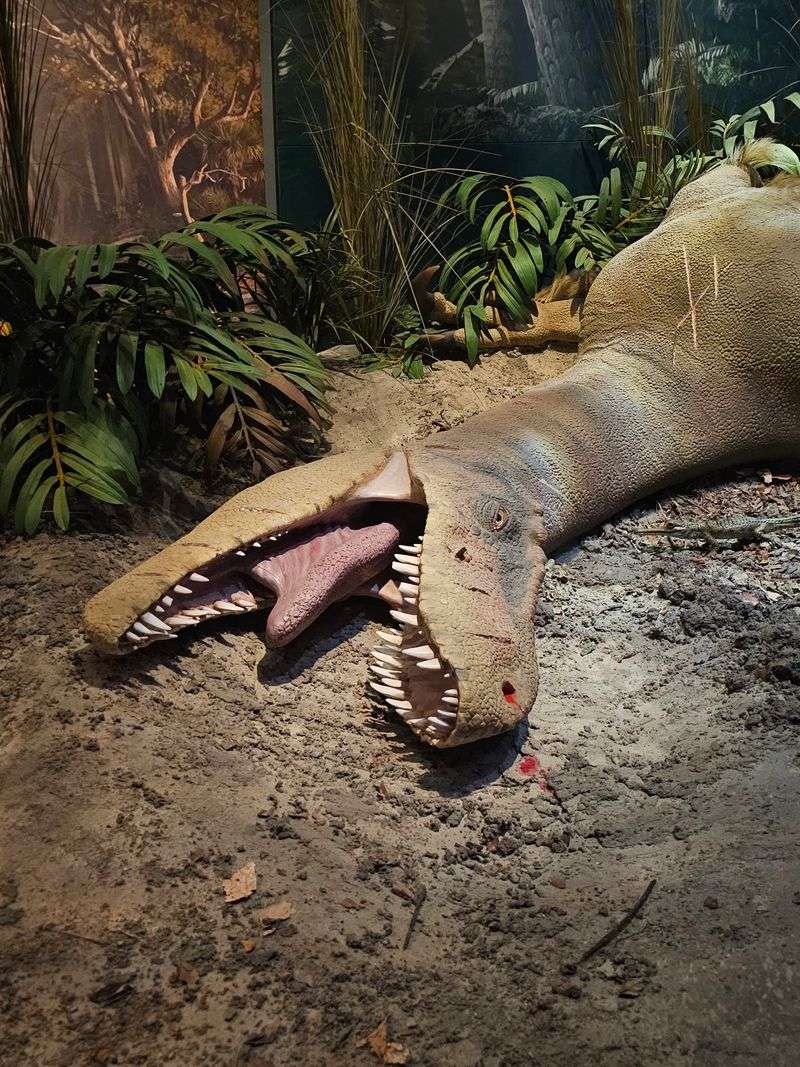
Picture a lizard the length of a school bus with flippers and a mouth full of hooked teeth. That was the mosasaur, and it ruled the ancient seas that once covered this land.
The ocean-themed gallery puts this predator front and center.
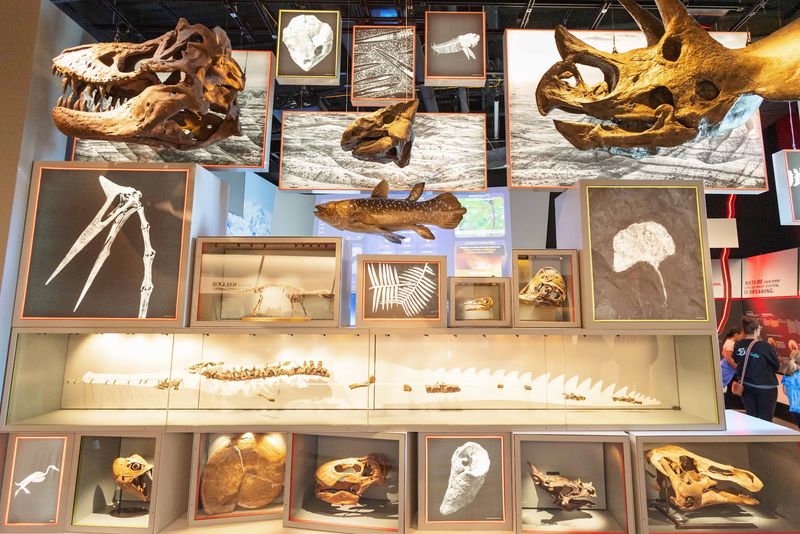
Around it, the rest of that lost marine world fills in. Sharks, bony fish, sea turtles, and prehistoric crocodiles all appear, many tied to fossils pulled from the quarry outside.
Seeing the actual teeth and bones next to reconstructions helps connect the dots between a tiny fragment and a whole animal.
Interactive screens around the space respond to the digital pass handed out at check-in. Tapping it lets visitors collect virtual fossils while they explore, which turns the gallery into a gentle scavenger hunt.
Kids love it, and adults secretly do too.
Take a moment to notice the shark teeth on display, because they are some of the most common finds here. Once you know what they look like, you might spot one yourself later in the dig.
That little bit of homework pays off surprisingly well.
Digging for Real Fossils in the Quarry
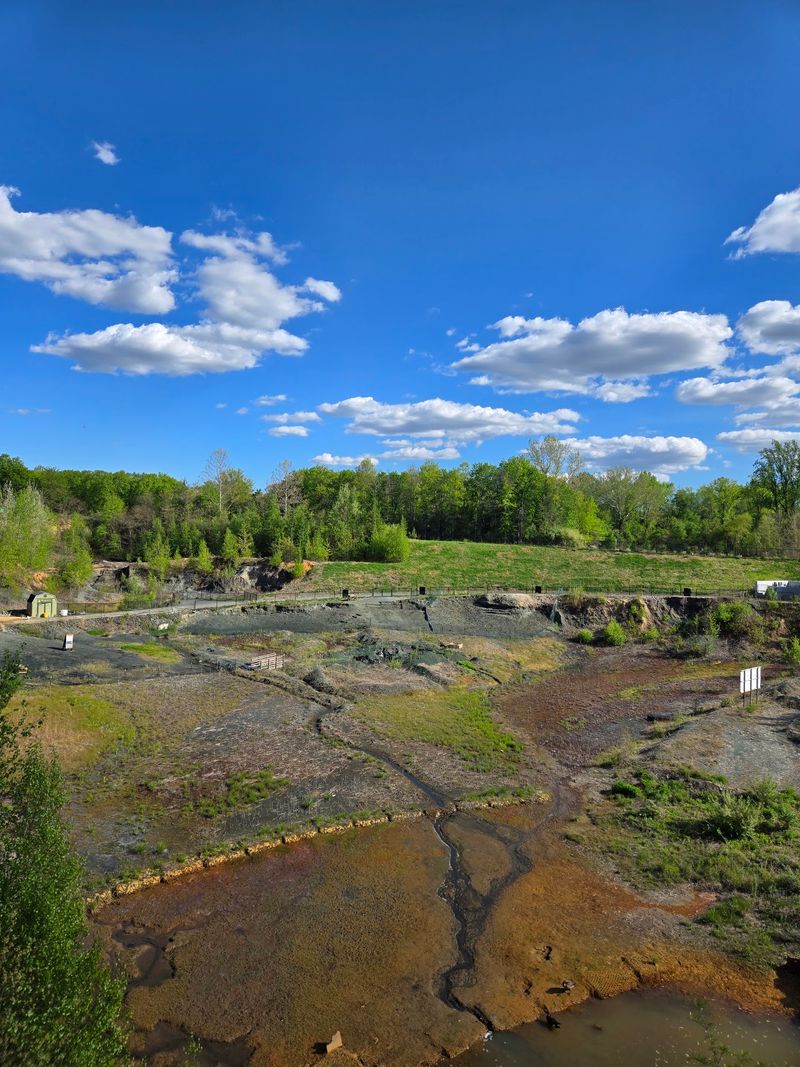
Few museums hand you a bucket and say go find something 66 million years old. Here, the quarry dig does exactly that.
It is an extra, timed experience, so booking ahead is a smart move.
Guides lead small, friendly groups into the pit and show everyone how to search the greenish sediment. Common finds include shark teeth, shells, and bits of ancient sea life, and diggers usually get to take their discoveries home.
Truly rare pieces may stay behind for science, which honestly feels like a fair trade.
Wear closed-toe shoes and clothes that can handle some dirt. The ground can get muddy, especially after a good rain.
A hat and water bottle help on sunny days too.
Patience matters more than speed out there, since slow, careful looking tends to reveal the smallest treasures, like a shiny tooth tip poking out of the dirt. Very young kids may lose interest before the guides finish checking finds, so plan around nap times and snack breaks.
For dinosaur fans of any age, though, this is the moment that sticks.
A Peek Inside the Fossil Lab
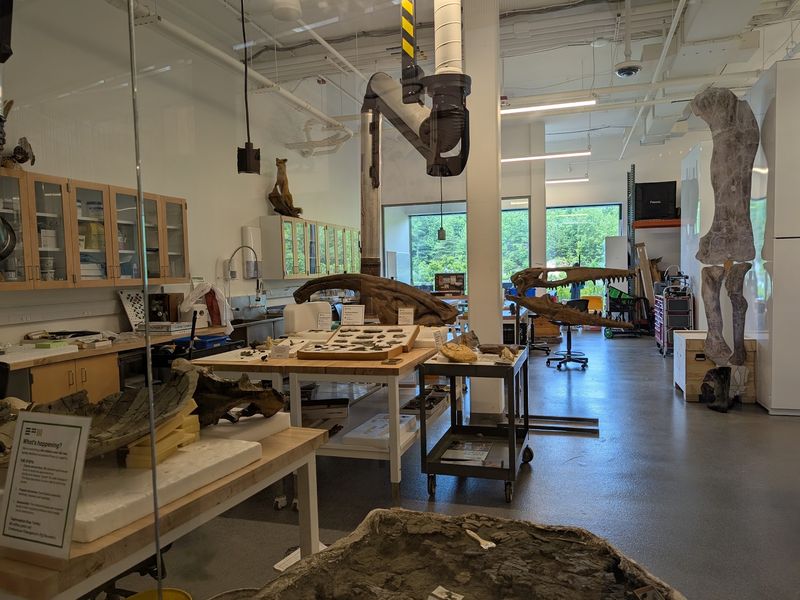
One of my favorite details is a room most guests can only peek into. Behind large glass windows, the fossil preparation lab shows scientists and trained workers cleaning and piecing together specimens.
It is real work happening in real time.
Fossils rarely come out of the ground looking neat or museum-ready. They often arrive still wrapped in rock or sediment, and freeing them takes steady hands, tiny tools, and a lot of patience.
Watching that slow process explains why a single bone can take so long to prepare.
The lab sits on the lower level, near other hands-on spaces, so it is easy to fit into a visit. Sometimes the team is busy on a big project, and other times the room looks quiet.
Either way, the tables, tools, and trays tell a story all their own.
I think this spot quietly teaches the biggest lesson in the building. Science is not magic.
It is careful, repeated effort, and every polished display upstairs started as a lump of dirt on a table like the ones behind that glass.
Critter Cove and the Touch Tank
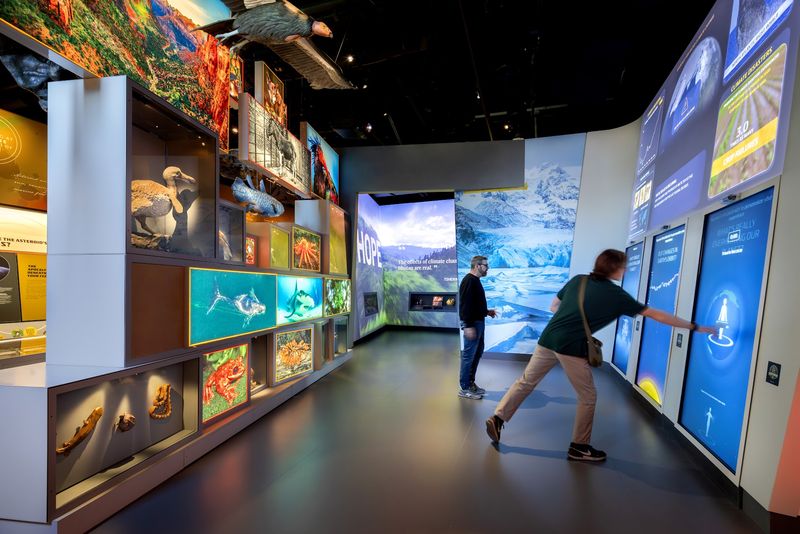
Not everything here has been dead for millions of years. Downstairs, a space called Critter Cove holds live animals and a touch tank.
It gives the fossil story a living twist, and a pretty charming one.
Gently touching a live sea creature or watching small animals up close connects modern life to the ancient world upstairs. The idea is simple and surprisingly smart.
Plenty of animal groups made it through the great extinction, and their relatives are still around today.
The room is cozy rather than huge, so it works best as a short, relaxed stop between bigger exhibits. It pairs nicely with the fossil lab windows on the same level.
Families with toddlers may find the lower floor calmer, which makes it a handy spot to slow down.
Follow any posted guidelines at the tank and keep every touch light. Washing hands afterward is always a good call, even for the bravest explorers.
The best part might be the moment kids realize that the ocean they just learned about in the galleries still has wild, weird residents today.
Goggles On for a Prehistoric Adventure
Goggles on, and suddenly the Cretaceous is all around you. The museum offers a free-roaming virtual reality experience that lets guests move through a digital prehistoric world.
Like the dig, it is an add-on with timed sessions.
Free-roaming means you are not stuck in a chair. Participants walk around inside the experience, which makes it feel more like an adventure than a movie.
Expect a few gasps from your group, and maybe from yourself.
The VR works as a great bridge between the galleries and the quarry. After seeing bones and sculptures, stepping into a moving, breathing version of that ancient landscape helps everything make sense.
It is fun, but it is also some very sneaky learning.
Booking both the dig and the VR on the same day is doable, though spacing them out helps avoid feeling rushed. Check any posted age or height guidelines before your trip if you are bringing young children.
I would also suggest going after the main galleries, since the background knowledge makes the virtual world richer, and you will recognize creatures you just met.
A Fossil Museum Without Fossil Fuels
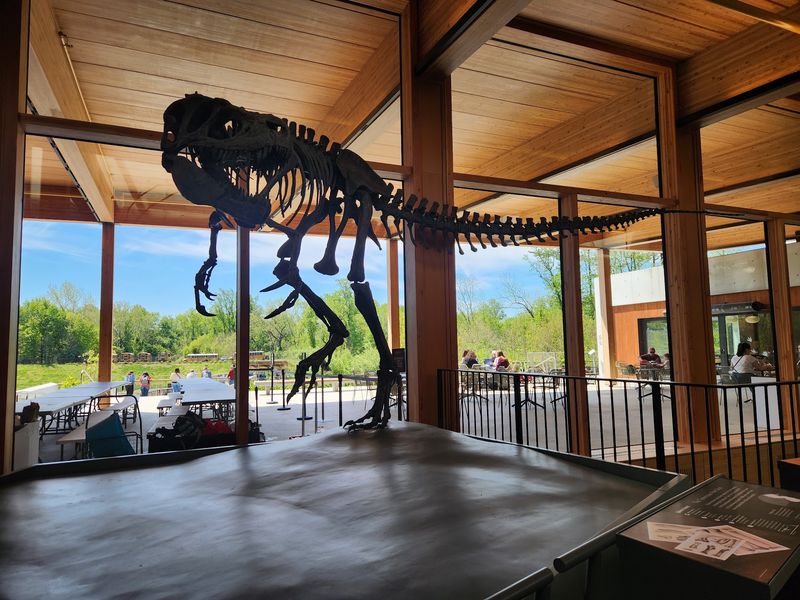
A fossil museum that runs without fossil fuels has a nice ring to it. The building is known as New Jersey’s largest public net-zero building, meeting its energy needs through green power and renewable energy made on-site.
Geothermal systems help with heating and cooling, and a solar field soaks up sunshine nearby.
Inside, the design feels warm and open. Heavy timber, bamboo, and exposed concrete mix with skylights that let natural light pour across the spaces.
Some materials from the site itself were reused in the construction, which is a clever nod to the land’s history.
The museum’s story ends by linking the ancient extinction to today’s planet. It asks visitors to think about how our choices shape the future of wildlife and wild places.
That message lands harder after seeing what happened 66 million years ago.
Plan for a few unhurried hours, arrive close to the 10 AM opening, and save some energy for the trails and the gift shop. The Edelman Fossil Park & Museum of Rowan University sits at 66 Million Mosasaur Way, Mantua Township, NJ 08080.
