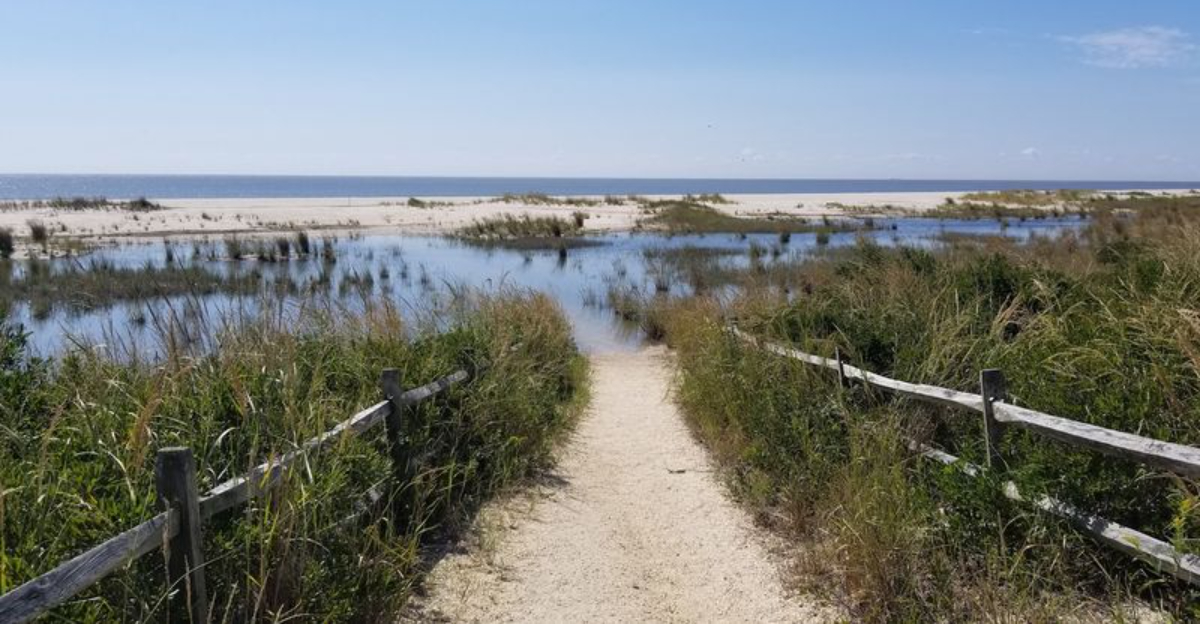
Some places leave you speechless, not because of what stands there, but because of what no longer does.
This nature preserve is one of those spots.
Beneath the tall beach grass and winding trails lies the foundation of a vanished seaside community, slowly swallowed by the sea decades ago.
It is a quiet, almost eerie experience to walk these paths and realize families once lived, laughed, and built their lives right where you are standing.
Today, it is a sanctuary for birds and a peaceful escape for humans. The blend of natural beauty and lost history makes it unforgettable.
New Jersey, you have a coastline full of ghostly whispers and stunning views.
The Ghost Town Beneath Your Feet
Walking into South Cape May Meadows Preserve feels completely ordinary until you realize the ground beneath your sneakers was once a grid of streets, front porches, and Victorian-era summer homes.
The borough of South Cape May was officially incorporated in 1894, built on low-lying marshland that developers thought would become a booming seaside resort destination.
The town featured a boardwalk, a trolley line, and ambitious architectural dreams inspired by Spanish and Mediterranean styles. It attracted summer visitors who wanted the glamour of a seaside escape.
But building a town on marshy coastal land turned out to be a gamble the sea was never going to let anyone win.
By 1945, the borough officially dissolved after repeated storms made the land uninhabitable. Another powerful storm in 1950 erased whatever structures remained standing.
The land quietly returned to wetlands and meadows, eventually becoming a protected preserve. Knowing that history changes every step you take here into something unexpectedly profound.
How Storms Erased a Victorian Dream
South Cape May was not taken down by one single dramatic moment. It was worn away slowly, storm by storm, over several decades.
A fierce Nor’easter in 1936 wiped out many beachfront homes, sending a clear warning that the town’s location was dangerously exposed.
Then came November 1944. The Great Atlantic Hurricane delivered the finishing blow, submerging nearly the entire town under water.
Six blocks from Beach Avenue to Sunset Boulevard went under. Homes became uninhabitable overnight, and the borough’s already-small population had no real path forward.
The borough officially dissolved in April 1945, with remaining dry land absorbed back into Lower Township. A 1950 storm swept away the last physical traces of South Cape May, returning the area to its natural marshy state.
What the storms left behind was actually something remarkable: a coastal landscape free from further development, ready to become a sanctuary. Nature had essentially reclaimed what it was always meant to hold onto.
From Cattle Grazing to Conservation
After the last buildings disappeared in 1950, the former townsite did not immediately become the lush preserve it is today. For several decades, the land served a much simpler purpose: cattle grazing.
Cows roamed the same ground where Victorian visitors once strolled along boardwalks, which is honestly a fascinating image to sit with.
That all changed in 1981 when The Nature Conservancy stepped in and acquired roughly 212 acres of the former townsite. Their goal was clear: protect this coastal land from future development and establish it as a refuge for migratory birds traveling along the Atlantic Flyway.
The transformation from grazing land to a globally recognized birdwatching destination took vision, resources, and serious long-term commitment. Restoration efforts involving the U.S.
Army Corps of Engineers and the New Jersey Department of Environmental Protection helped shape the preserve’s beaches, dunes, and freshwater wetlands into the thriving ecosystem visitors experience today.
The upgrade from cow pasture to conservation landmark is one of the more satisfying glow-ups in New Jersey history.
A Prime Spot on the Atlantic Flyway
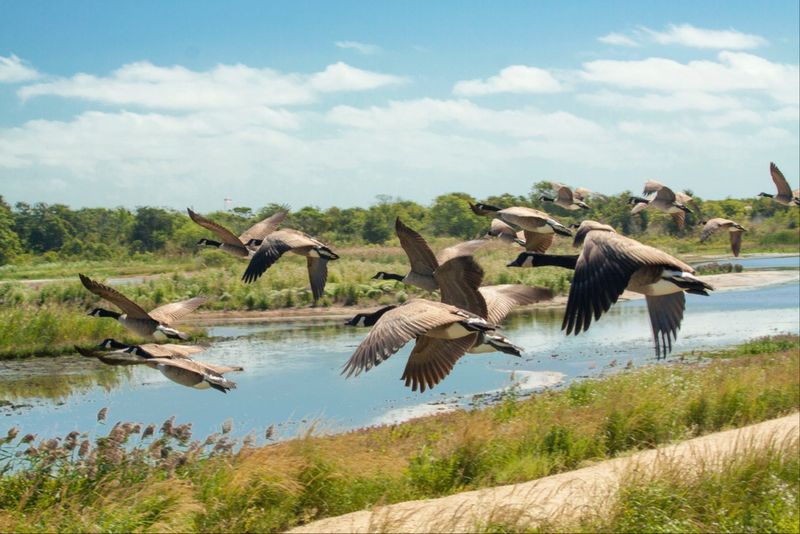
Few places in the northeastern United States hold the kind of birdwatching status that South Cape May Meadows Preserve has earned over the years.
Sitting directly along the Atlantic Flyway, the preserve acts as a critical refueling stop for birds making their long seasonal migrations up and down the East Coast.
Spring and fall are peak seasons for witnessing something genuinely spectacular.
Warblers, vireos, shorebirds, herons, egrets, ospreys, and raptors all pass through at different times of year, making each visit feel like a completely different experience depending on the season.
The preserve is globally recognized as one of the premier birding locations along the entire flyway.
Rare sightings happen here with surprising regularity. Piping Plovers nest on the beach in carefully protected zones.
Soras and Virginia Rails appear in the meadows during fall migration. The variety of habitats packed into roughly 200 acres creates the kind of biodiversity that serious birders plan entire trips around.
Casual visitors tend to leave as accidental birdwatching converts.
Trails That Reward Every Kind of Walker
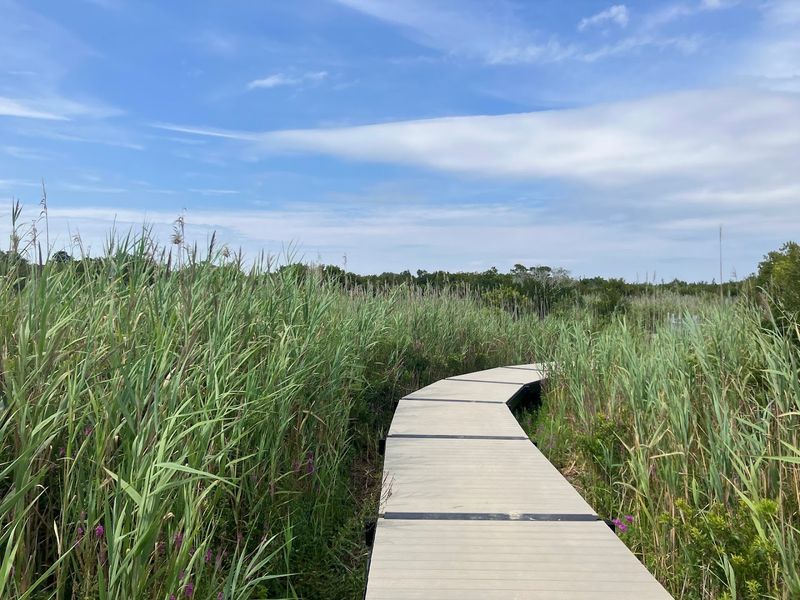
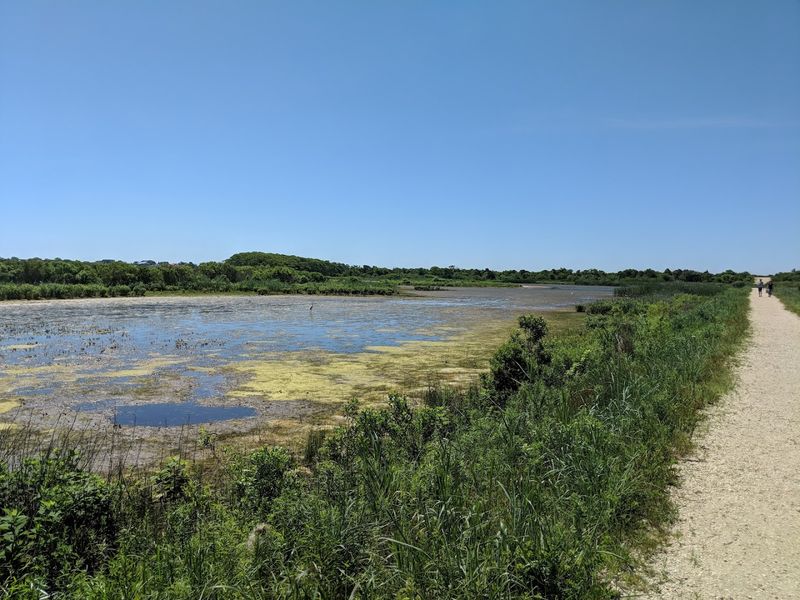
Over two miles of walkable trails wind through the preserve, and the variety packed into that distance is genuinely impressive. The main loop circles around freshwater ponds, offering open views of the water and surrounding meadows.
Side paths branch off toward the ocean, through the dunes, and alongside the marsh, giving walkers plenty of options depending on how much time they have.
The trails are well-marked and well-maintained, which makes navigation easy even for first-time visitors. Benches and observation platforms are scattered throughout, giving tired legs a rest and curious eyes a chance to scan the water and sky without feeling rushed.
A connector trail links the preserve to Cape May Point State Park, extending the adventure for those who want more ground to cover.
The loop is manageable for most fitness levels, including families with young children. Early morning visits tend to be especially rewarding, when the light is soft and the preserve feels almost entirely yours.
Multiple trips are genuinely needed to experience everything the trail system has to offer.
The Elevated Boardwalk Through the Marsh
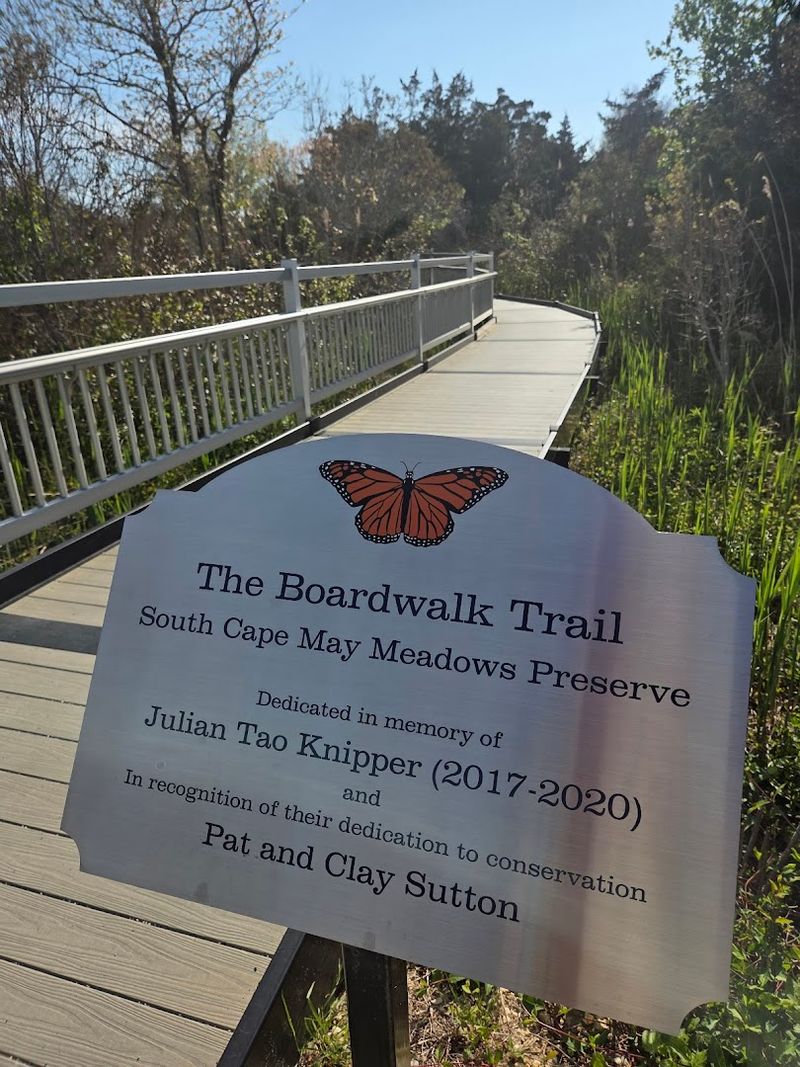
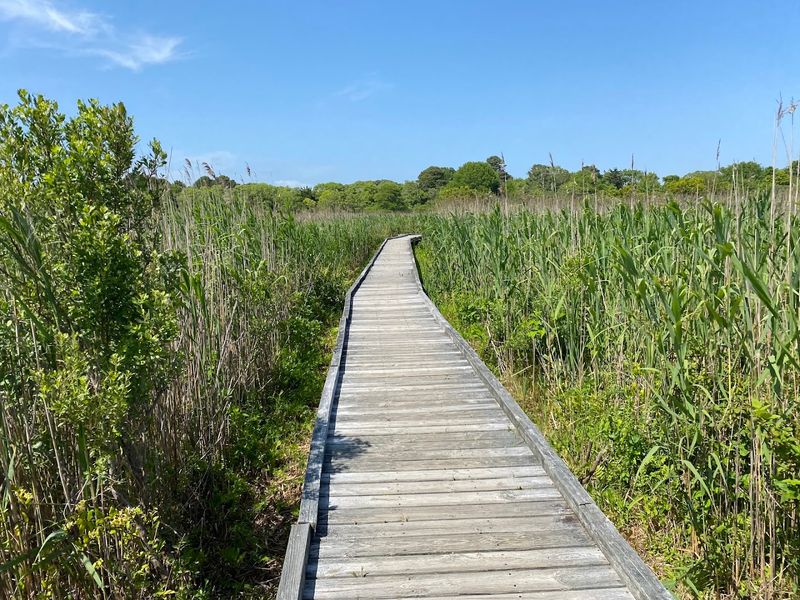
The elevated boardwalk section of the preserve is genuinely one of its most memorable features. It lifts you above the marsh and lets you move through the wetland habitat in a way that feels almost like floating.
Pullout areas along the boardwalk offer spots to pause, look around, and take in the reeds, the water, and whatever birds happen to be hunting or resting nearby.
The boardwalk is ADA-compliant, which means it is accessible to a wide range of visitors. That kind of thoughtful design matters a lot in a natural space where the terrain can otherwise be uneven and challenging.
The preserve takes accessibility seriously, and the boardwalk reflects that commitment clearly.
At the far end, the boardwalk reconnects with the main trail loop between two of the freshwater ponds, or continues south toward the trail leading to the Cape May Lighthouse. Walking it slowly and quietly tends to produce the best wildlife sightings.
The marsh has a particular stillness to it that feels genuinely restorative, even on a busy Cape May weekend.
Freshwater Wetlands Right Next to the Ocean
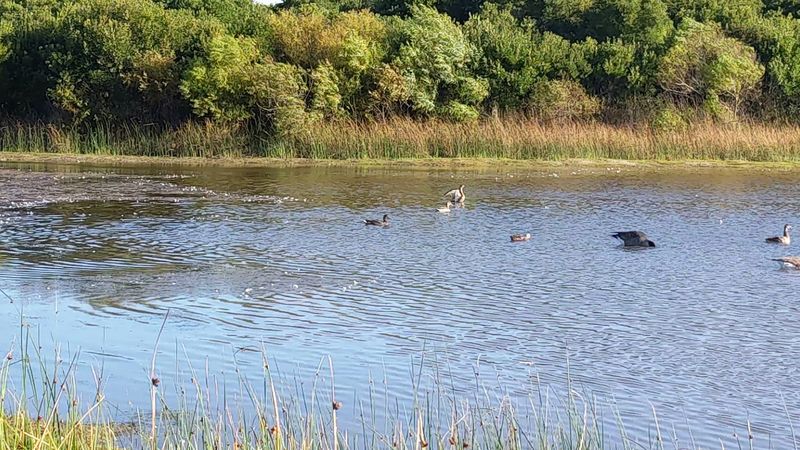
One of the genuinely rare things about this preserve is how it places freshwater wetlands immediately adjacent to the Atlantic Ocean.
That combination is ecologically unusual along the Jersey Shore, and it creates a richness of habitat that draws an extraordinary range of wildlife into a relatively compact area.
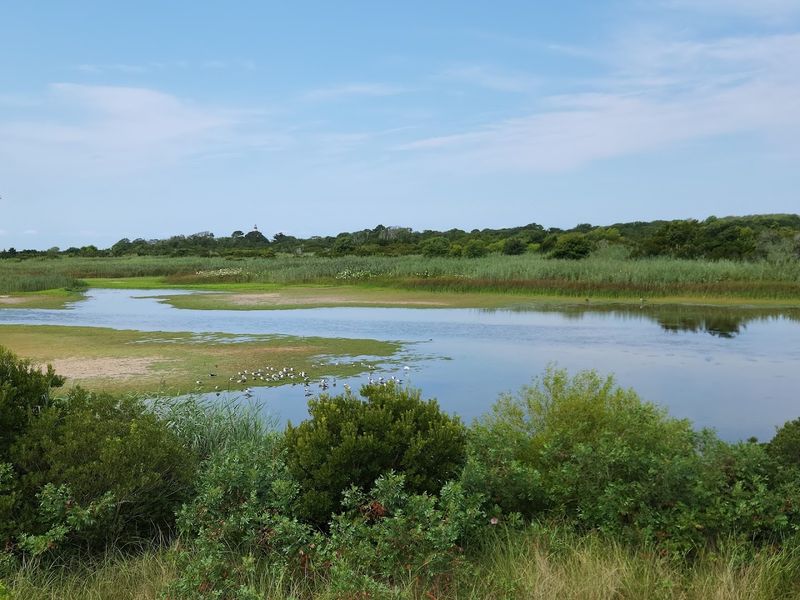
The freshwater ponds support wading birds, diving ducks, and a rotating cast of migratory species that rely on inland water sources during their long journeys.
Observation towers positioned near the ponds give visitors elevated vantage points for scanning the water without disturbing what is happening below.
A bird blind near one of the ponds offers close-up views of shorebirds and waterfowl in a sheltered, quiet setting.
Free binoculars are available at raised viewing platforms, which is a genuinely thoughtful touch for visitors who arrive without their own gear. The ponds change character significantly with the seasons, hosting different species and reflecting different light depending on the time of year.
Returning visitors consistently find something new worth stopping for, which is a big part of the preserve’s lasting appeal.
Beach Access and Dune Exploration
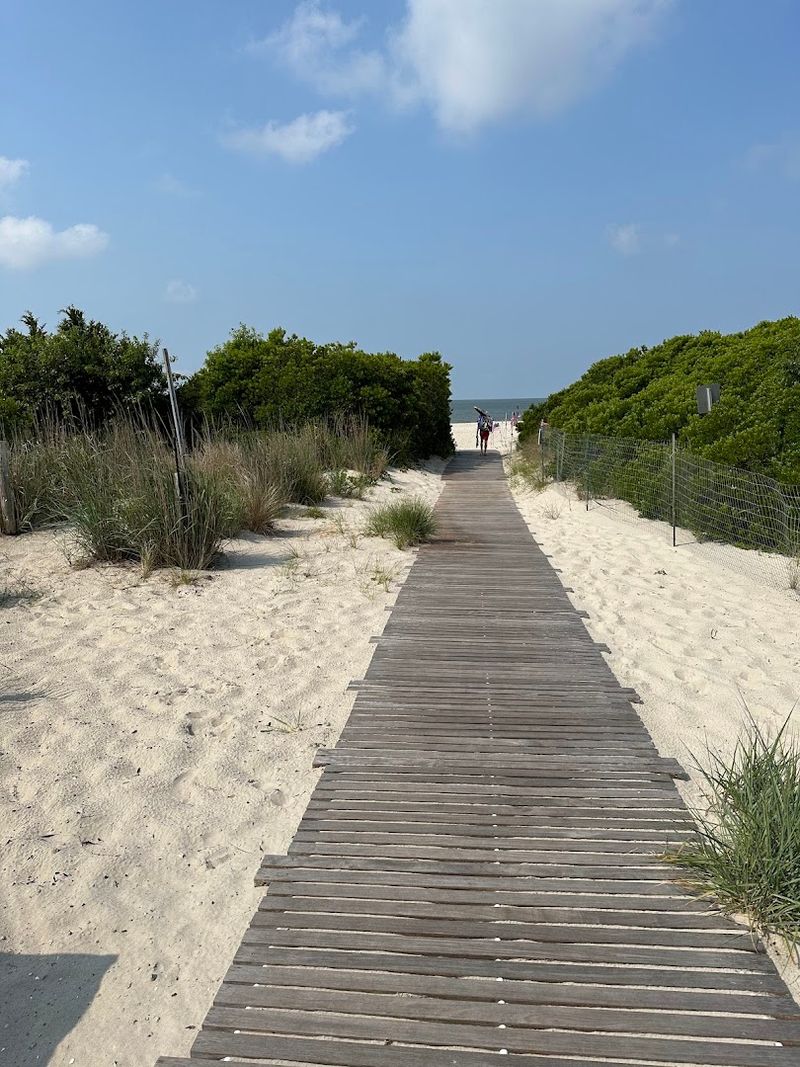
The preserve does not stop at the meadows and wetlands. Trails extend outward through the dunes and connect directly to the Atlantic Ocean beach, giving visitors the full coastal experience within a single visit.
Walking from the freshwater ponds through the dunes and onto the open beach is one of those transitions that genuinely stops you mid-step.
The beach here feels different from the typical Jersey Shore experience. It is quieter, less developed, and bordered by natural dune vegetation rather than boardwalk concessions.
Piping Plovers nest in carefully sectioned-off areas during breeding season, and those protected zones are clearly marked so visitors can enjoy the beach without disturbing the nesting birds.
The dune landscape itself is worth exploring slowly. Native grasses anchor the sand and create a textured, windswept scenery that photographs beautifully in morning or late afternoon light.
The connection between the ocean beach and the inland wetlands tells the whole story of this preserve in a single short walk, from the Atlantic’s edge all the way back through the meadows where a Victorian town once stood.
The Welcome Center and Interpretive Signage
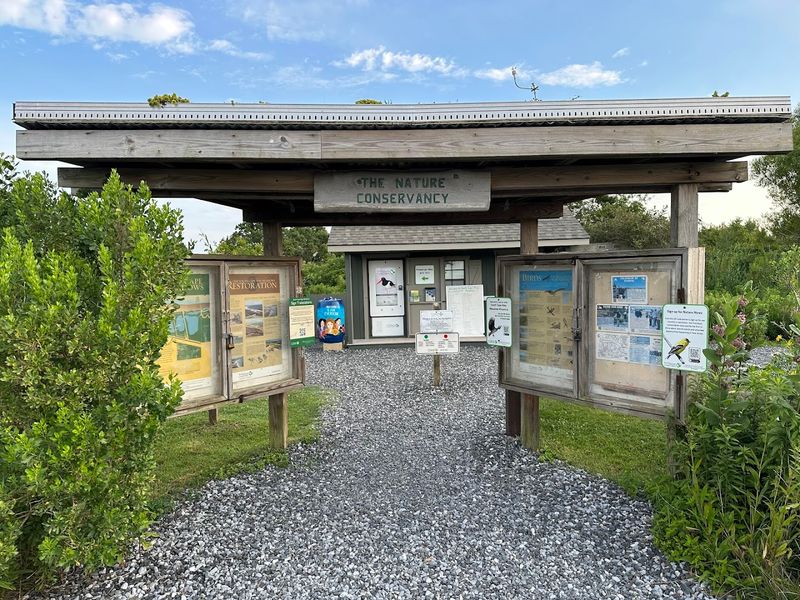
Arriving at the preserve for the first time, the welcome area immediately sets an informative and inviting tone.
An interactive kiosk at the welcome center gives visitors context about the preserve’s ecology, history, and the species they are most likely to encounter depending on the season.
It is the kind of information that genuinely enriches the walk before you even take your first step on the trail.
Interpretive signage is posted throughout the preserve, explaining the different habitat zones, the migratory patterns of key bird species, and the ongoing conservation work happening on-site.
A whiteboard near the entrance often lists recent bird sightings sourced from eBird, which is an incredibly practical touch for anyone trying to know what to look for that particular day.
The educational elements here feel integrated rather than intrusive. Nothing interrupts the natural experience of being in the preserve, but the information is always there when you want it.
First-time visitors and seasoned naturalists alike tend to find the signage genuinely useful rather than redundant. The preserve opens daily at 6 AM, making early morning arrivals especially peaceful and productive.
A Living Reminder of What Coastal Land Can Become
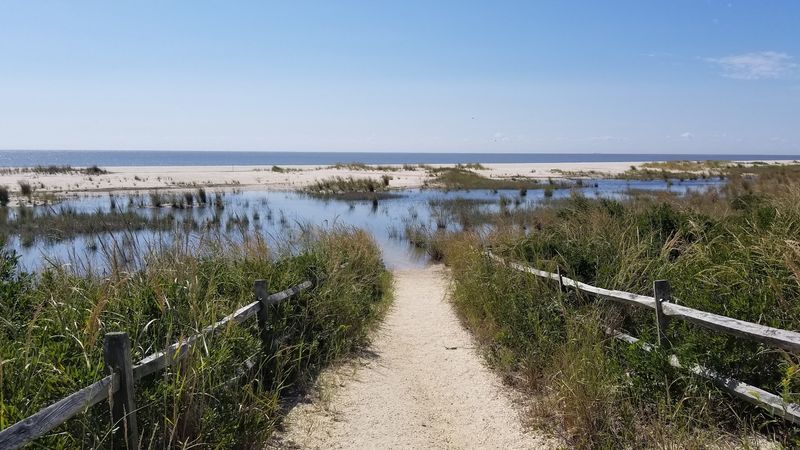
There is something quietly powerful about standing in the middle of the South Cape May Meadows Preserve and knowing the full arc of what this land has been through.
A Victorian resort town, a series of catastrophic storms, decades of cattle grazing, and finally a conservation success story that draws visitors from around the world.
That is a lot of history packed into 200 acres.
The preserve represents what becomes possible when development pressure gives way to ecological restoration. Freshwater wetlands, coastal dunes, ocean beach, and open meadows now coexist in a space that was once platted into streets and building lots.
The biodiversity that has returned is measurable, observable, and genuinely moving for anyone paying attention.
Visiting here feels like participating in something ongoing rather than just sightseeing. The trails, the birds, the seasonal changes, and the layered history all combine into an experience that is hard to replicate anywhere else along the New Jersey coast.
Address: 692 Sunset Blvd, Cape May, NJ
