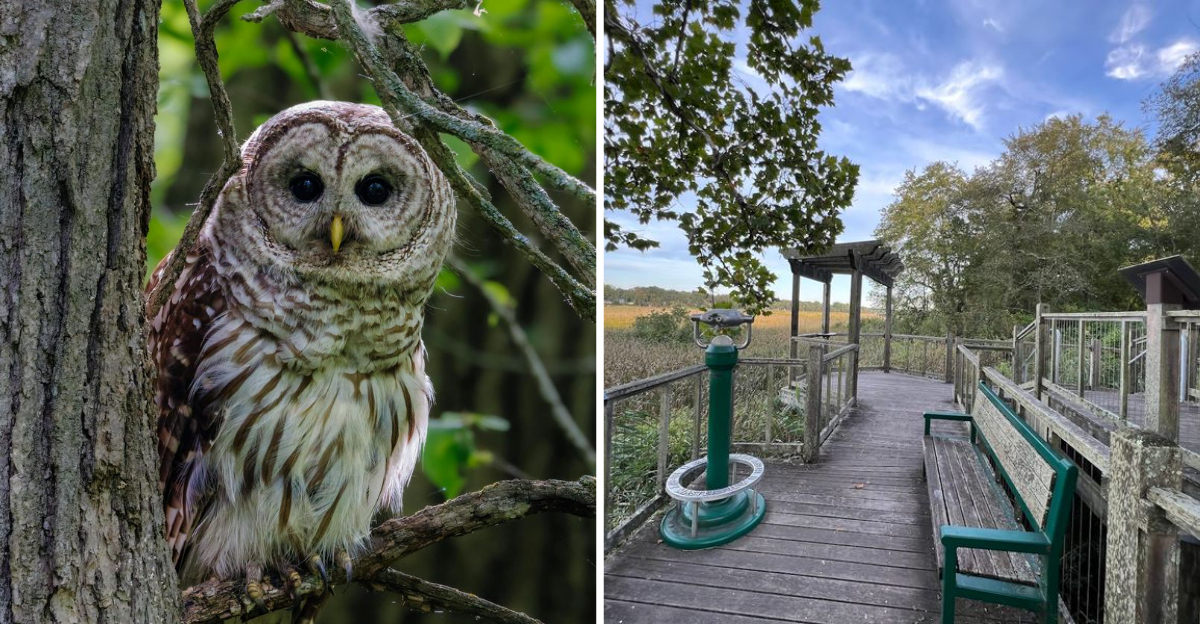
Who says boardwalks are just for souvenir shops?
This New Jersey spot swaps saltwater taffy for owls and warblers. (Spoiler: the birds are way less sticky.)
Follow a raised wooden path to a clever bird blind, where you can spy on feathered drama queens without a single muddy boot.
Nature watching for the gloriously lazy: all the wildlife, zero swamp ankles.
The Bird Blinds That Change Everything
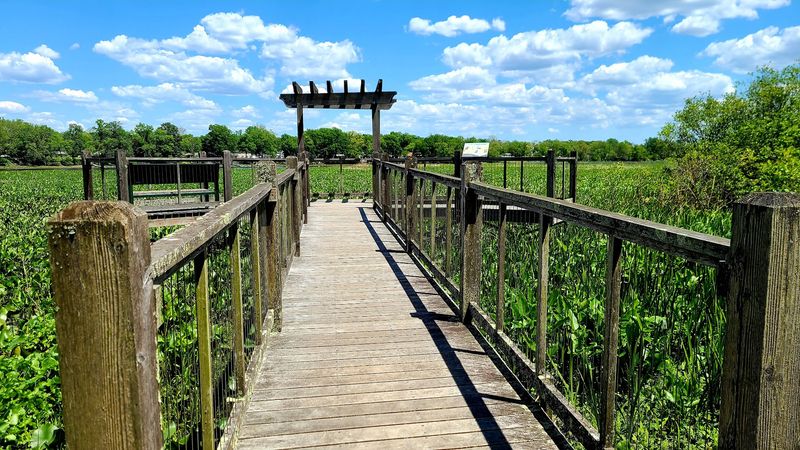
Most people walk right past a bird blind without knowing what it does, and that is genuinely their loss. At Boundary Creek, the bird blinds are the whole point.
Tucked at the ends of boardwalk trails, these simple wooden structures let you peek through narrow openings into a world that would otherwise scatter the moment it heard your footsteps.
Sitting inside one feels oddly exciting, like the whole marsh is performing and you have front-row seats without a ticket. Great Blue Herons wade slowly through the shallows.
Ospreys circle overhead with quiet authority. The beaver lodge at the end of one boardwalk trail is visible right through the blind, close enough to feel like a secret you were not supposed to find.
Even first-time birders walk away from these spots feeling like pros. The blinds create a natural pause in the visit, a moment to slow down and actually look.
Bring binoculars and patience. Both will reward you here more than anywhere else on the trail.
Warblers Along the Forest Edge in Spring
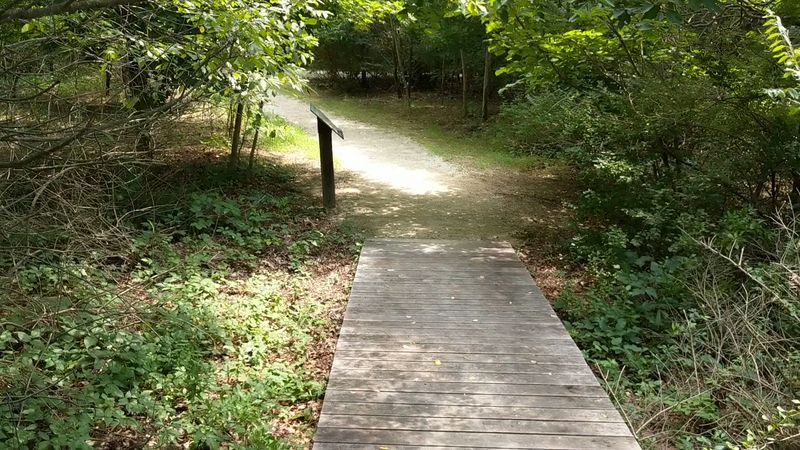
Spring migration at Boundary Creek turns the tree line into something almost electric. Tiny, fast, and brilliantly colored, warblers move through the park in waves during April and May, and the forest and field edges along the trail are prime spots to catch them mid-journey.
Yellow Warblers are summer residents here, which means you do not have to time your visit perfectly to find one. They nest near the wetland areas and sing constantly, which makes them easier to locate even without binoculars.
Blue-winged Warblers also pass through, and spotting one feels like winning a small, feathered lottery.
The key is walking slowly and stopping often. Warblers rarely announce themselves loudly, but they do move constantly through the shrubs and low branches.
Early morning visits in May give the best chance of catching multiple species in a single loop around the trail. A field guide tucked in your bag makes the whole experience even more satisfying and surprisingly addictive.
Owls Hidden in Plain Sight
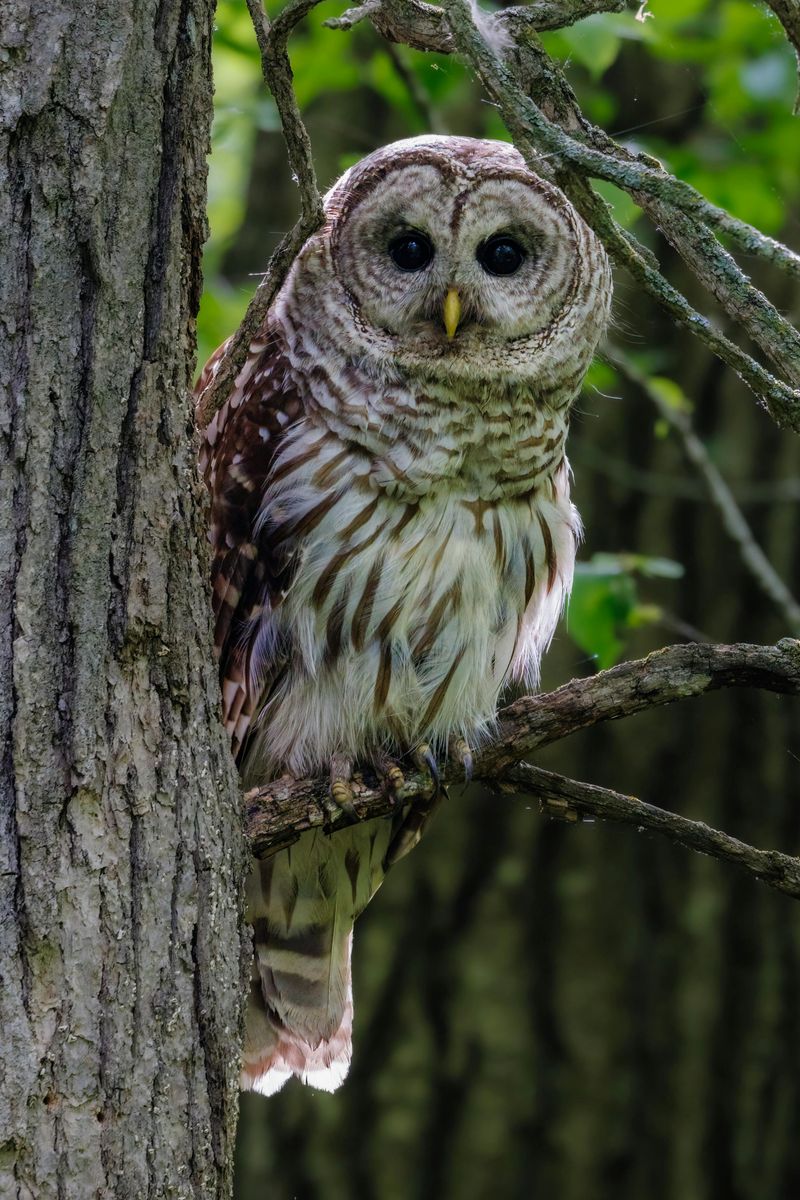
Owls at Boundary Creek are not guaranteed, but that is exactly what makes spotting one so thrilling.
The park’s mix of upland forest and lowland wetland creates ideal habitat for several owl species that roost quietly in the tree canopy during daylight hours.
The trick is scanning branches slowly and looking for shapes that do not quite fit. An owl sitting still in a tree looks almost like a knot in the wood until you realize it has eyes.
Early morning visits and dusk walks offer the best chances, especially along the wooded sections of the perimeter loop where the canopy stays dense and cool.
Barred Owls are known to inhabit similar New Jersey habitats, and the creek corridor here provides exactly the kind of sheltered, forested edge they prefer. Hearing one call before you see it is half the fun.
The park’s quiet atmosphere, no loud crowds, no traffic noise, makes listening just as valuable as looking when owl hunting is the goal.
The Boardwalk Trail Experience
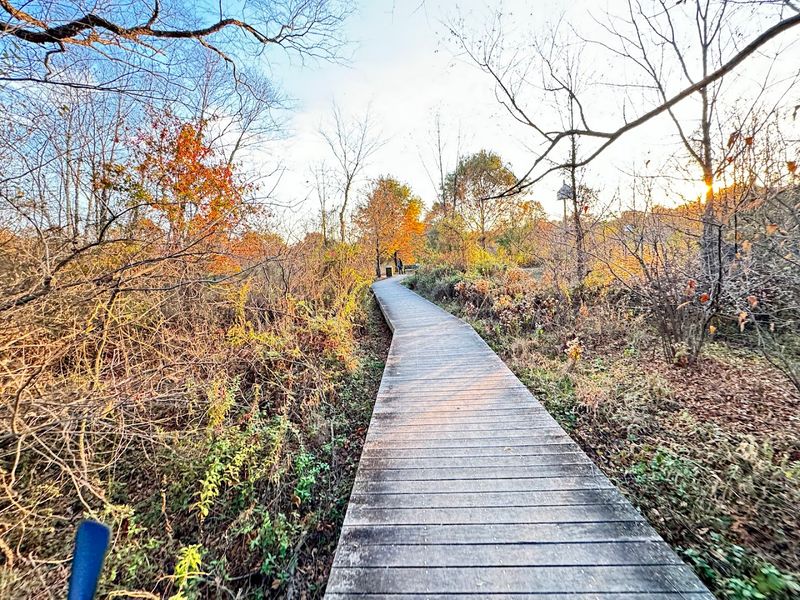
Walking the boardwalk at Boundary Creek feels different from a regular hiking trail almost immediately. The wood planks rise slightly above the marsh floor, giving a floating sensation as the cattails and creek water appear on both sides.
It is the kind of path that slows you down naturally, and that is entirely the point.
The boardwalks branch off from the main loop trail and lead to observation platforms and bird blinds at the water’s edge. Each offshoot feels like a small discovery, a quieter pocket of the park where the only sounds are water, wind, and birds.
The planks are wide enough for strollers and comfortable for anyone who prefers level ground.
One boardwalk leads directly to a view of the Rancocas Creek, where waterfowl drift through the open water with impressive calm. The informative plaques posted along the trail add context without feeling like a lecture.
By the time the boardwalk loops back to the main path, the whole experience feels less like exercise and more like an afternoon well spent.
Rancocas Creek and Its Waterfowl Parade
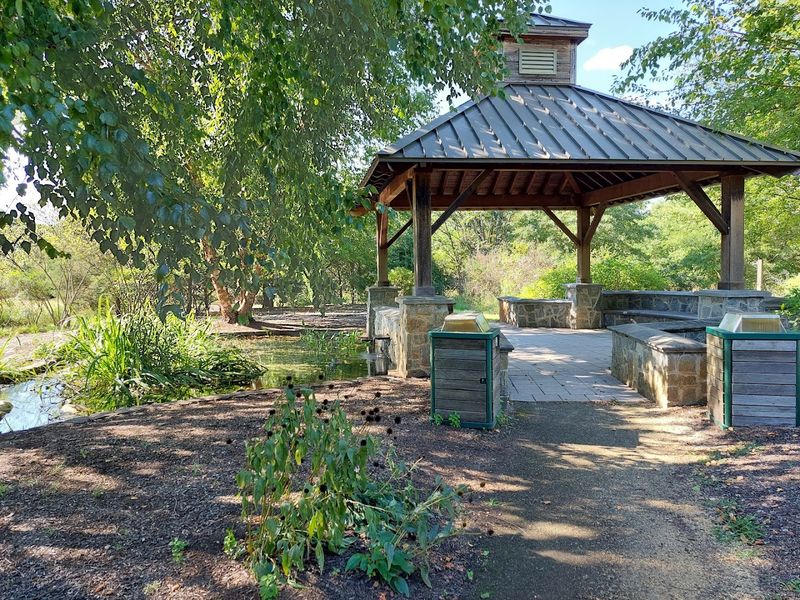
Rancocas Creek runs along the edge of the park and quietly steals the show for anyone who makes it out to the observation platforms.
The open water draws a rotating cast of waterfowl depending on the season, and there is almost always something worth stopping for.
Ospreys are a regular highlight, circling above the creek before diving with startling precision. Herons stand frozen at the water’s edge like they are posing for a painting.
Ducks move through in loose groups, and during migration season the variety increases dramatically. The creek provides a completely different visual experience from the wooded trail sections, open sky, reflected light, and constant movement.
The observation platforms overlooking the water have benches, which is a small detail that makes a big difference. Sitting quietly for ten or fifteen minutes near the creek often produces better sightings than actively walking the trail.
The tidal wetlands connected to the creek add habitat variety that keeps the bird list growing across every season and every visit.
The Beaver Lodge You Did Not Expect to Find
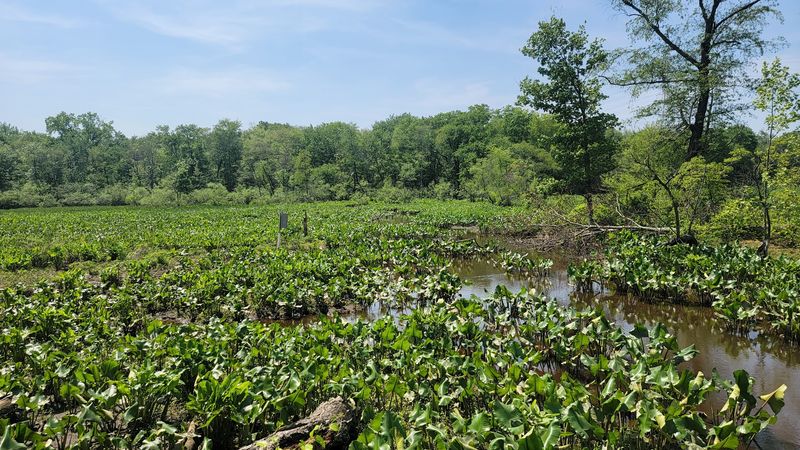
There is something genuinely surprising about turning a corner on a boardwalk trail and finding a full beaver lodge sitting in the water like a small, industrious island.
At Boundary Creek, the beaver lodge is visible right through the bird blind at the end of one of the boardwalk offshoots, and it stops almost every visitor cold.
Beavers are famously difficult to spot in person since they are most active at dawn and dusk. But the lodge itself is always there, a permanent and impressive structure built entirely from branches and mud.
Knowing a family of beavers engineered that thing without any tools makes it oddly humbling to stand in front of.
Kids especially love this moment. The lodge looks like something from a storybook, and the bird blind framing the view makes it feel like a secret discovery rather than a tourist stop.
Whether or not an actual beaver makes an appearance, the lodge alone is worth the walk down the boardwalk. Plan extra time here because leaving quickly feels wrong.
A Park Designed for Quiet and Accessibility
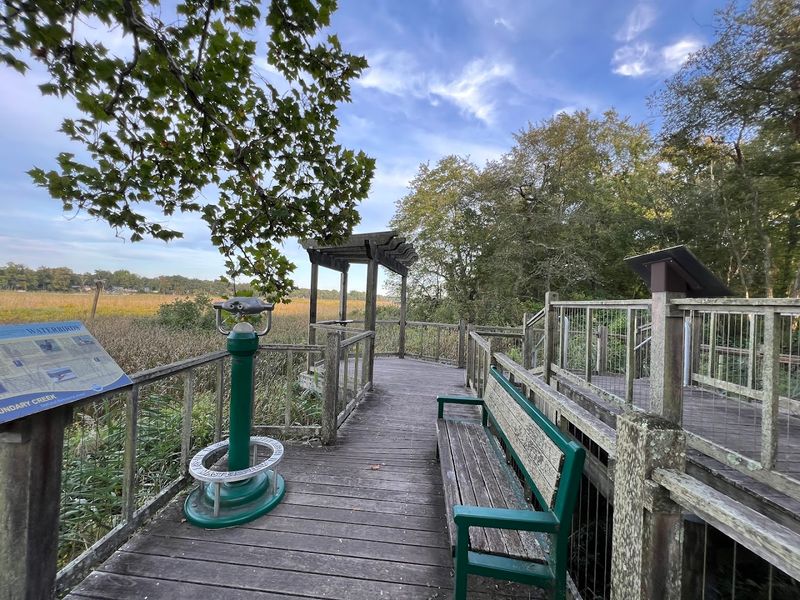
Not every nature park feels genuinely welcoming to everyone, but Boundary Creek seems to have been designed with that goal in mind from the start.
The main loop trail is flat, wide, and packed with a firm gravel surface that works well for strollers, wheelchairs, and anyone who prefers a walk that does not require serious footwear.
Benches appear at regular intervals along the trail, which is the kind of thoughtful detail that makes a real difference for families with young children or visitors who just want to sit and absorb the surroundings.
The park also has restrooms at the trailhead, including heated facilities in winter, which earns it serious bonus points.
The shaded portions of the trail make summer visits comfortable even in the middle of the day. Trail maps are posted at the entrance, and informational plaques along the route explain the local ecology in plain, interesting language.
The whole experience feels considered and calm rather than rushed or overwhelming. Boundary Creek genuinely earns its reputation as one of the most accessible nature spots in Burlington County.
The Diversity of Habitats That Drives the Birding
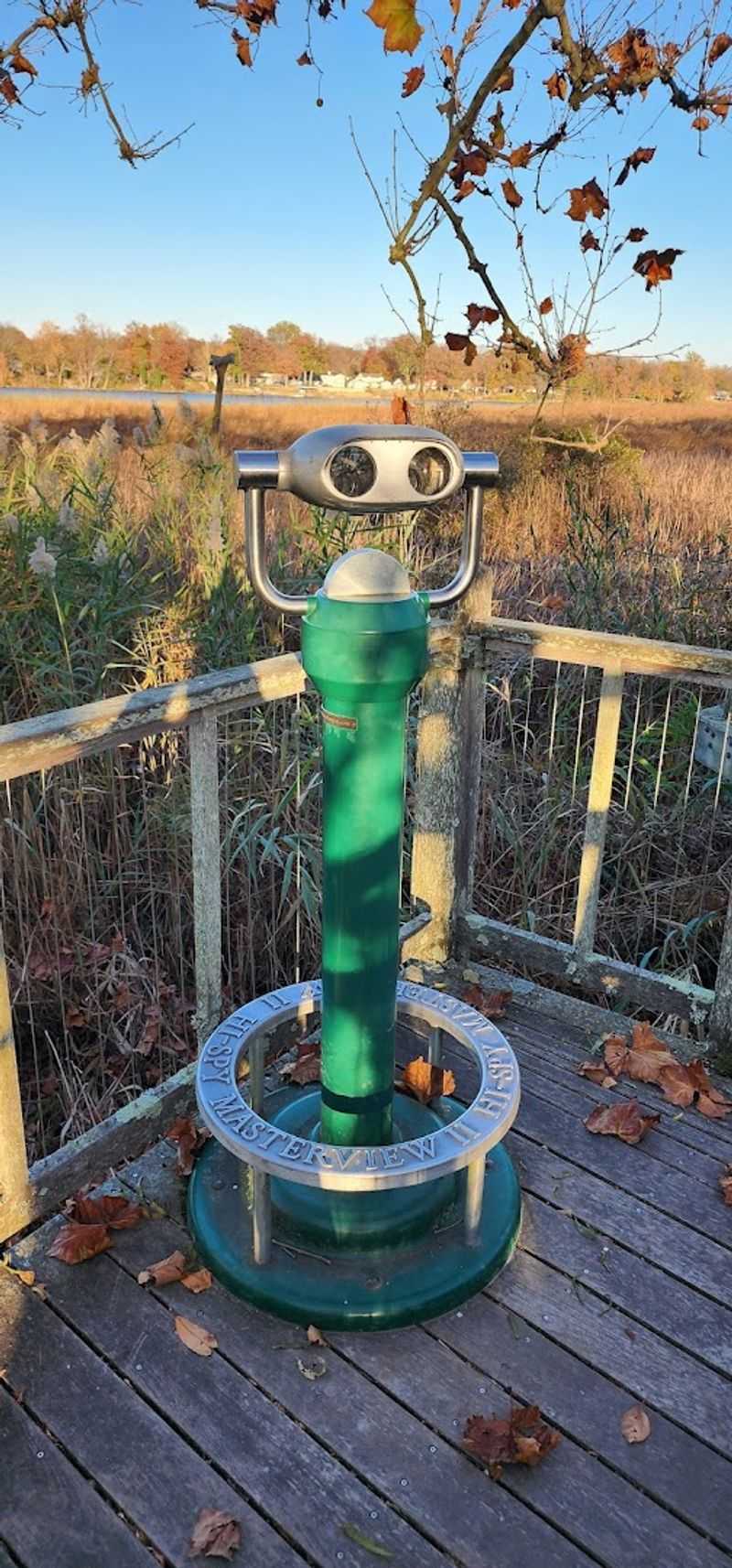
Thirty-four acres does not sound enormous until you start walking and realize the park packs in an impressive number of distinct habitat types.
Upland forest, lowland forest, open fields, tidal wetlands, and the open water of Rancocas Creek all exist within the loop trail, and each one attracts a different group of birds.
That habitat variety is the main reason Boundary Creek has been recognized as a legitimate birding destination within Burlington County. Over 30 resident bird species call the park home year-round, and the seasonal arrivals during migration push those numbers significantly higher.
Fields attract birds of prey circling overhead. Wetland edges pull in herons and rails.
Forest interiors hide woodpeckers and thrushes in the canopy.
Visiting multiple times across different seasons genuinely changes what you find here. A winter walk along the same trail that produced warblers in May might turn up a short-eared owl or a flock of cedar waxwings instead.
The park rewards repeat visits in a way that few small green spaces manage to pull off. Bring a checklist and keep adding to it.
Wildlife Beyond the Birds
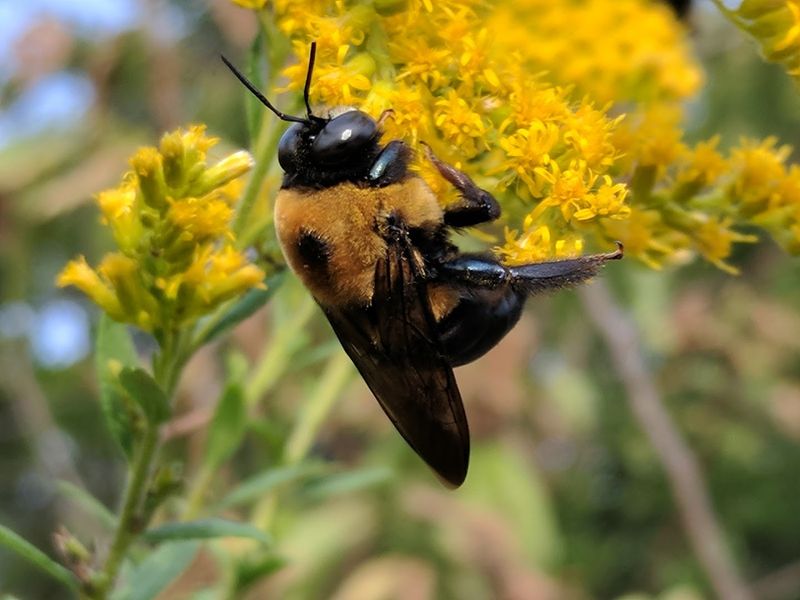
Boundary Creek is marketed as a birding destination, and it absolutely delivers on that promise. But the wildlife experience extends well beyond what is flying overhead.
White-tailed deer are spotted with enough regularity that encountering a small group on the trail feels almost routine, though it never quite stops being magical.
Frogs are abundant near the wetter sections of the trail, and the sound of them calling on a spring evening is genuinely impressive in volume. Snakes make occasional appearances in warmer months, usually slipping off the trail edge before most visitors even register they were there.
Butterflies are common enough that the park installed an electronic information kiosk specifically dedicated to local butterfly species, which is a quirky and genuinely useful addition.
The overall wildlife experience at Boundary Creek feels layered in a way that rewards patience and attention. Something is always moving somewhere along the trail.
The park never feels empty or static, even on a quiet weekday afternoon in late autumn. Keeping eyes open at ground level, not just in the canopy, doubles what you end up seeing.
Planning Your Visit to Boundary Creek
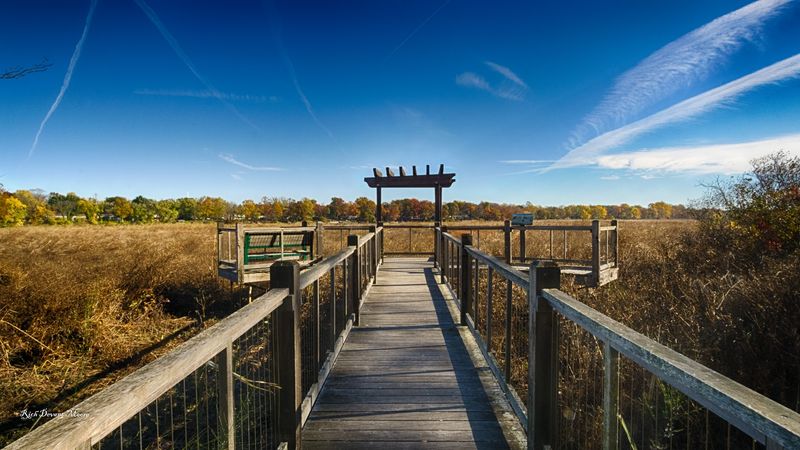
Getting to Boundary Creek is straightforward, and the park is open every day of the year around the clock. The parking area holds around 20 vehicles, and on busy spring weekends it fills up faster than expected.
Arriving early in the morning solves both the parking problem and the birding problem simultaneously, since dawn is peak activity time for most species.
The grassy lawn next to the parking area doubles as a casual picnic spot. Bringing a blanket and some food to spread out after the walk turns the visit into a full afternoon rather than a quick loop.
Picnic tables are also available near the trailhead for anyone who prefers a proper setup.
Bug spray is worth packing from late spring through early fall, especially near the wetland sections. Binoculars make a significant difference in the quality of wildlife sightings.
The park is dog-friendly, and leashed dogs are a common sight on the trail. First-time visitors should plan for at least 90 minutes to explore the main loop and all the boardwalk offshoots comfortably.
Address: 515 Creek Rd, Moorestown, NJ
