Honestly, I had no idea a single road could hold this much personality.
Route 206 cuts through New Jersey like a highlight reel of everything the state does best, from misty mountain ridges up north to the eerie, pine-scented silence of the south.
The first time I pulled onto it from I-80, I thought I was just passing through. Spoiler: I was not just passing through.
Nearly 130 miles later, I had blueberry stains on my shirt, a camera full of Revolutionary War battlefields, and a deep respect for a highway that most people only know from a traffic report.
The Gateway to the Highlands: Netcong and Lake Musconetcong
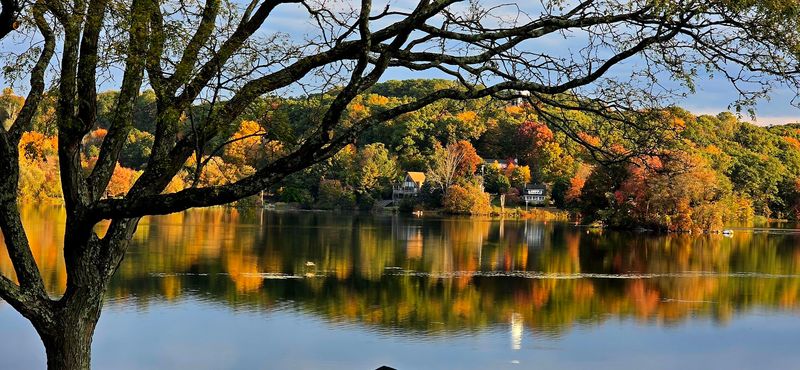
There is something almost theatrical about the moment Route 206 peels away from the chaos of I-80 and suddenly drops you into the quiet of the Highlands. The air changes first, cooler and greener, before the road curves and Lake Musconetcong appears like a reward for getting off the interstate.
The lake shimmers alongside the road just long enough to make you want to pull over, and honestly, you should. A short detour into the nearby Stanhope historic district reveals rows of 19th-century buildings that have held their shape remarkably well.
Brick storefronts and narrow sidewalks give the place a lived-in dignity that newer towns simply cannot fake.
Netcong itself is one of those small borough stops that does not try too hard. It sits at the edge of Morris County with a quiet confidence, the kind of town that has been here long before road trips were a thing people wrote about.
The transition from highway noise to lakeside stillness is jarring in the best possible way. Starting a Route 206 adventure here sets the right tone, unhurried, visually rich, and full of small surprises that reward a slow pace.
The Historic Streets of Chester
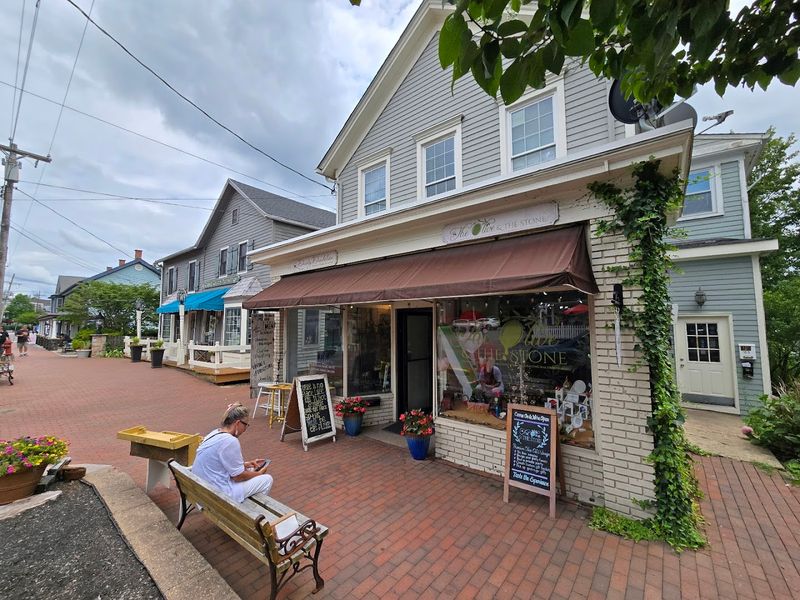
Chester has the kind of Main Street that makes you instinctively slow down, not because traffic demands it, but because your eyes need more time. Just a quarter-mile off Route 206, the red-brick sidewalks and tightly packed independent shops feel like a different century entirely.
Small candy shops with handwritten signs sit beside antique dealers stacked floor to ceiling with curious objects.
What makes Chester genuinely special is that it does not feel like a tourist production. The shops are real, the people are local, and the pace is refreshingly unhurried.
Wandering here without a plan turns out to be the best possible plan.
The real unexpected discovery, though, is Alstede Farms, tucked just outside town and offering seasonal fruit picking that draws families from across the region. Depending on the time of year, you might be picking strawberries, peaches, or pumpkins the size of a small boulder.
There is something deeply satisfying about pulling your own food from the earth and then driving off with a paper bag full of it. Chester earns its place on this route by being authentically charming without even trying to perform it.
The Hidden Canyons: Peapack-Gladstone and the Lime Kilns
The road does something unexpected as you roll into the Somerset Hills near Peapack-Gladstone. The elevation drops sharply, the trees close in overhead, and suddenly Route 206 feels less like a state highway and more like a passage through something older and wilder.
It is one of the most dramatic visual shifts on the entire route.
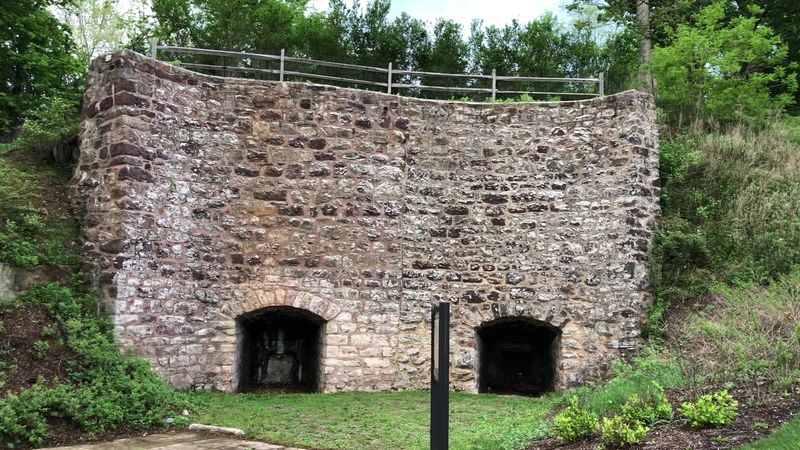
Hidden just off the road are the Peapack Lime Kilns, stone structures built in the early 1800s that now look convincingly like ancient ruins. Moss covers the curved walls, and the openings gape like dark mouths pointed at the sky.
Finding them on a map feels like stumbling onto a secret, which is exactly what makes them worth the small detour.
The kilns were used to process limestone into agricultural lime for local farms, a practical purpose long forgotten by the landscape that has since swallowed them whole. Today they stand as quiet monuments to an industrial era that left its bones behind.
Peapack-Gladstone itself carries an old-money quietness, with horse farms and stone fences lining the roads. But the kilns are the real draw here, proof that Route 206 hides its best surprises just slightly off the beaten path.
The Royal Grounds of Duke Farms in Hillsborough
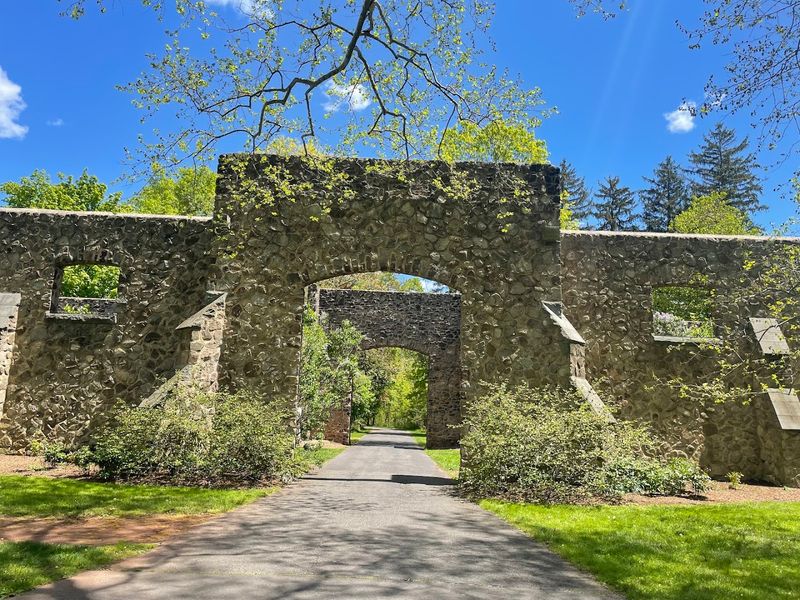
Pulling into Duke Farms feels slightly unreal, like the road has accidentally delivered you onto the grounds of a European estate. The 2,700-acre property that once belonged to Doris Duke now operates as a public conservation area, and the scale of it still catches people off guard.
Wide meadows stretch in every direction, and the paths between them are lined with trees that have been growing here for well over a century.
The Orchid Range is a highlight that surprises most first-time visitors. Hundreds of orchid varieties bloom in a climate-controlled greenhouse that feels otherworldly compared to the surrounding New Jersey farmland.
It is the kind of place that makes you stop mid-step and just look.
The ruins of the Old Mansion are equally striking. Stone walls and ornamental foundations sit open to the sky, creating a hauntingly beautiful photo opportunity that feels more like a European countryside than central New Jersey.
The contrast between the grandeur of what once stood and the wildflowers now growing through the cracks is genuinely moving. Duke Farms rewards patience, the kind of stop where two hours disappear before you realize you have not even seen the far fields yet.
The Revolutionary Crossroads of Princeton
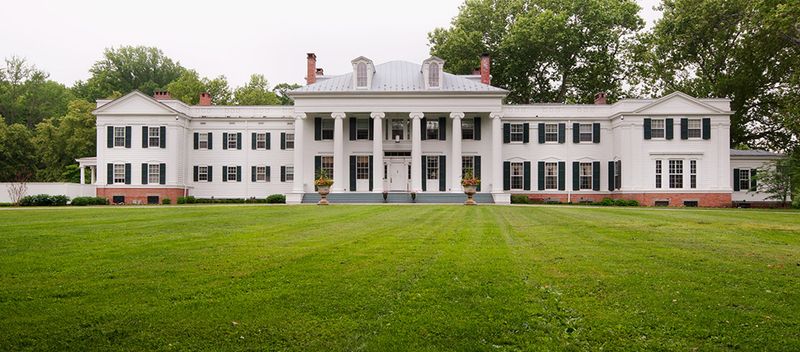
Princeton has a way of making you feel slightly underdressed just by being there, and Route 206 passes right through the thick of it. The road skims the edge of Princeton University’s campus, where Gothic stone buildings peer through iron fences with a kind of quiet authority.
It is impossible to drive through without slowing down to take it all in.
Two landmarks sit directly on the highway that most drivers pass without a second glance. Drumthwacket, the official Governor’s Mansion, occupies a graceful stretch of land that looks more like a country estate than a government building.
A short distance away, the Stony Brook Friends Meetinghouse stands in simple, unadorned contrast, a small stone structure that has been holding Quaker meetings since 1709.
The juxtaposition of grand political power and quiet spiritual simplicity, both visible from the same stretch of road, is one of those details that makes Route 206 endlessly interesting. Princeton rewards even a slow drive-through with layers of history stacked on top of each other.
For those who stop and walk, the town offers bookshops, cafes, and campus paths that feel like they belong in a film set rather than central New Jersey.
The Battlefield Echoes of Princeton Battlefield State Park
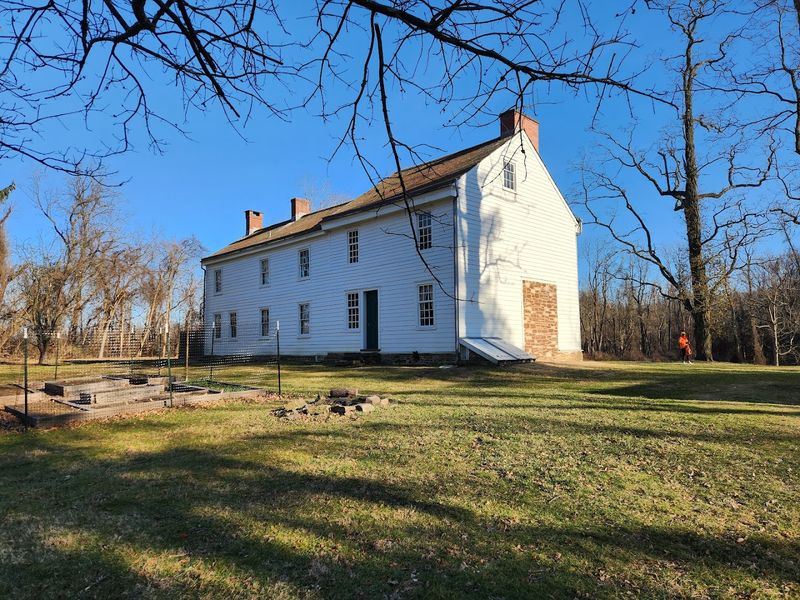
Most battlefields have been built over, paved around, or squeezed between strip malls. Princeton Battlefield State Park has somehow managed to stay exactly as open and unhurried as the land probably felt in January of 1777.
The rolling fields stretch wide and uninterrupted right off Route 206, making it one of the most visually honest Revolutionary War sites in the country.
The Thomas Clarke House still stands at the edge of the field, a plain farmhouse where General Hugh Mercer was carried after being mortally wounded in the battle. It has been preserved with restraint, which makes it feel more real than polished.
Walking the grounds around it, you get a genuine sense of how exposed and brutal that winter morning must have been.
Perhaps the most quietly moving detail is the Mercer Oak offspring, a young tree grown from an acorn of the original Mercer Oak under which the general reportedly fell. The original tree stood for nearly 300 years before dying in 2000.
Its descendant now grows on the same battlefield, carrying the same story forward. This is the kind of unexpected discovery that Route 206 keeps delivering, history presented without fanfare, just standing there in a field, waiting to be found.
The Ghost Town of Atsion Village in Shamong
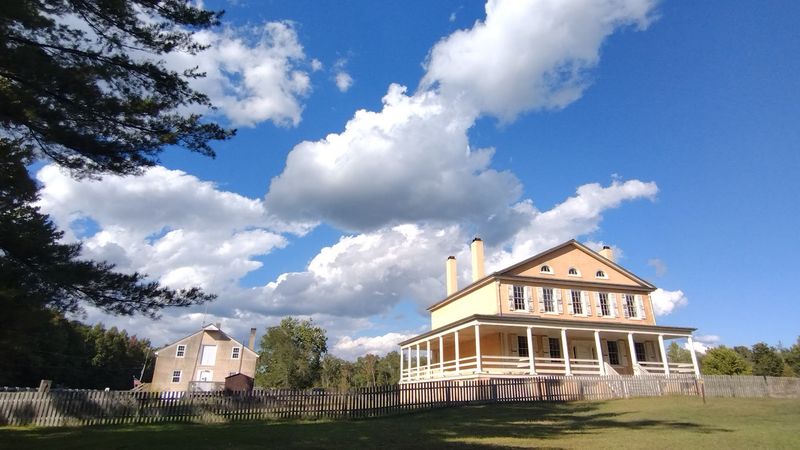
The Pine Barrens announce themselves before you even see them. The trees tighten on both sides of Route 206, the sky narrows to a strip of blue overhead, and the silence takes on a different quality, deeper, older, and slightly unsettling in the best possible way.
By the time the Atsion Village sign appears, you are already somewhere that feels far removed from the rest of New Jersey.
The Atsion Mansion is a Greek Revival structure that has no business looking this grand in the middle of the woods. Built in 1826, it once served as the centerpiece of an iron-making community.
Now it stands alone, its white columns slightly worn, surrounded by the kind of quiet that makes you speak in lower tones without deciding to.
Atsion Lake sits nearby, its water stained a deep cedar-tea color by the tannins from surrounding trees. It looks almost amber in afternoon light, which is striking against the white sand shore.
The combination of the mansion, the lake, and the encroaching forest creates a visual that feels more like a film location than a public recreation area. Atsion is one of those places that rewards visitors who are willing to sit with the strangeness of it rather than rushing through.
The Gorilla in the Pines: Mighty Joe’s Roadside Landmark
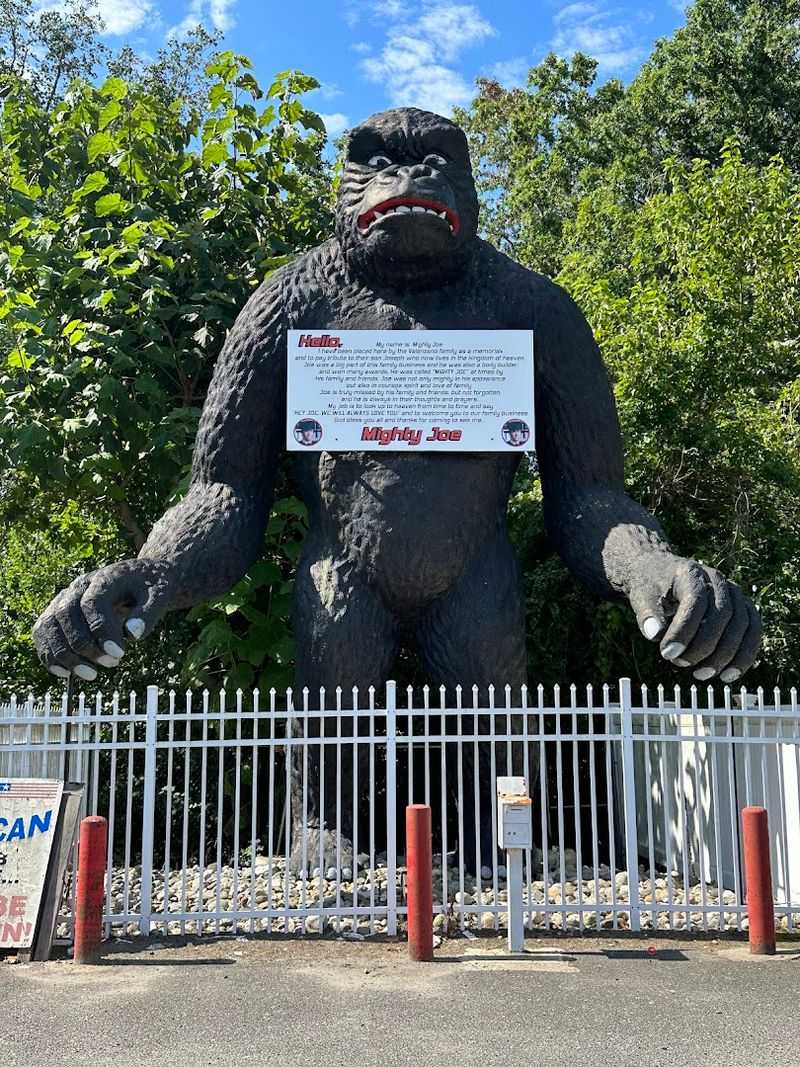
You are deep in the Pine Barrens, the trees have been pressing in for miles, and then suddenly a 25-foot fiberglass gorilla holding a car tire appears on the side of Route 206. It is not subtle.
It is not trying to be. And somehow, it is exactly what this stretch of road needed.
Mighty Joe’s has been a legendary roadside landmark for South Jersey drivers for years. The gorilla stands outside a gas station in Shamong with the kind of unironic confidence that only truly great roadside attractions can pull off.
Pulling over for a photo feels less like a tourist move and more like a rite of passage.
There is something genuinely joyful about the way this giant creature punctuates an otherwise dense and mysterious forest drive. After miles of cedar-stained lakes, ghost towns, and pine-filtered light, the gorilla lands like a punchline to a joke the landscape has been setting up for the last twenty miles.
It signals that you have reached the deep south of the route, far from the estates and battlefields of the north. Route 206 has a sense of humor, and Mighty Joe’s is the proof.
Do not skip it.
Address: US-206, New Jersey
The End of the Line: Hammonton, the Blueberry Capital
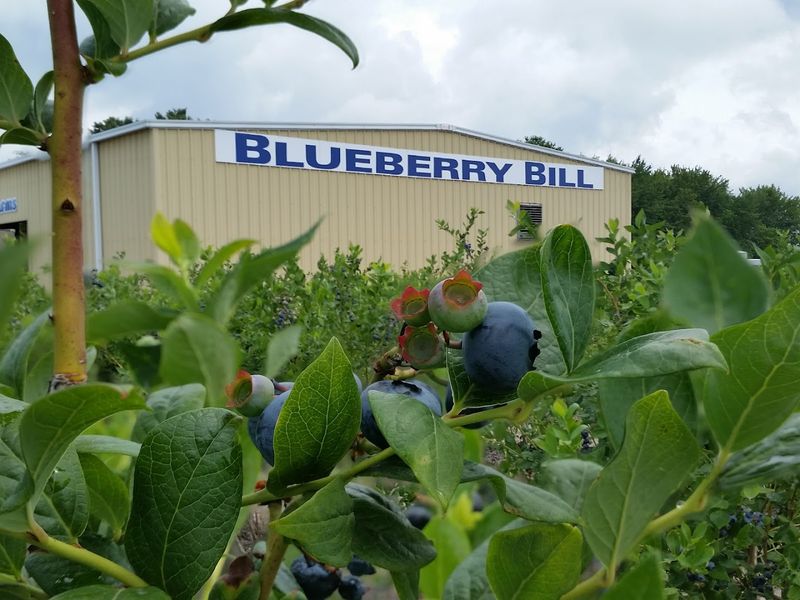
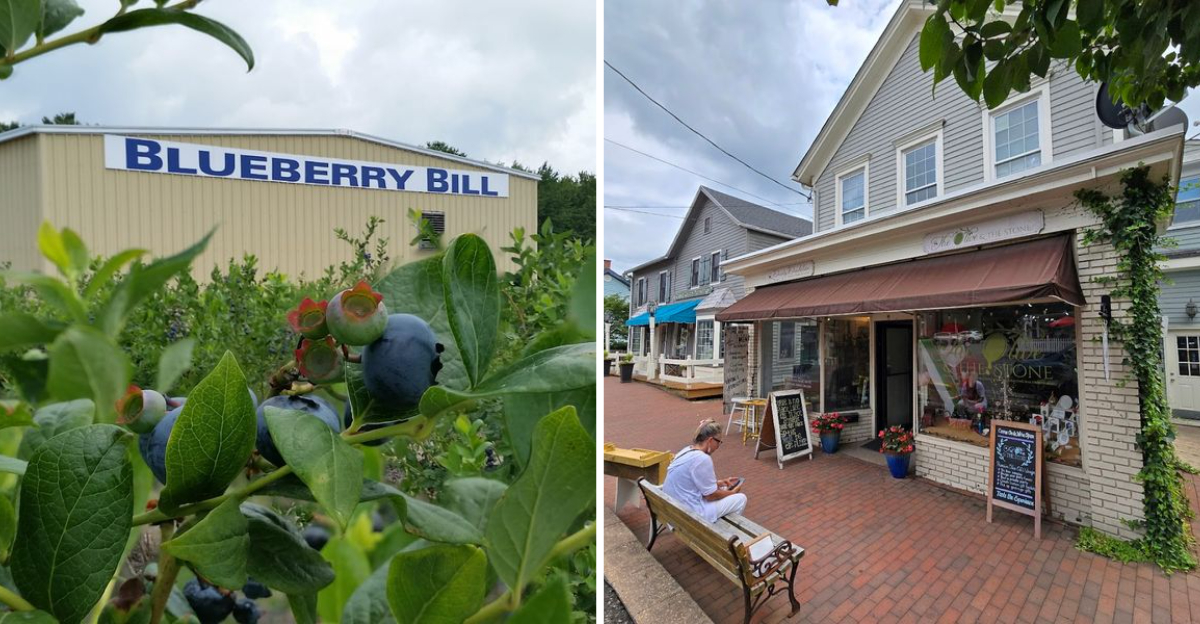
The forest breaks open all at once as Route 206 rolls into Hammonton, and the shift is almost cinematic. After miles of pine-filtered shadow, the fields of Atlantic County spread wide and bright, rows of blueberry bushes stretching toward the horizon like something out of an agricultural dream.
Hammonton earns its title as the Blueberry Capital of the World without a hint of exaggeration.
The downtown area carries a strong Italian heritage that shows up in the murals painted across building facades throughout the historic district. Bright scenes of community life and cultural pride cover walls that might otherwise be forgettable.
Walking the streets here feels like reading a colorful, locally authored history book one block at a time.
Hammonton is the kind of ending that a road trip like this deserves, warm, unhurried, and full of flavor. From June through August, local farms open for blueberry picking, and the fruit is extraordinary fresh off the bush, sweet and cold and slightly dusty from the morning air.
The contrast between this sun-soaked agricultural town and the misty mountain start of Route 206 in Netcong is almost hard to believe. Nearly 130 miles of New Jersey, and every single one of them worth driving.
Dear Reader: This page may contain affiliate links which may earn a commission if you click through and make a purchase. Our independent journalism is not influenced by any advertiser or commercial initiative unless it is clearly marked as sponsored content. As travel products change, please be sure to reconfirm all details and stay up to date with current events to ensure a safe and successful trip.
