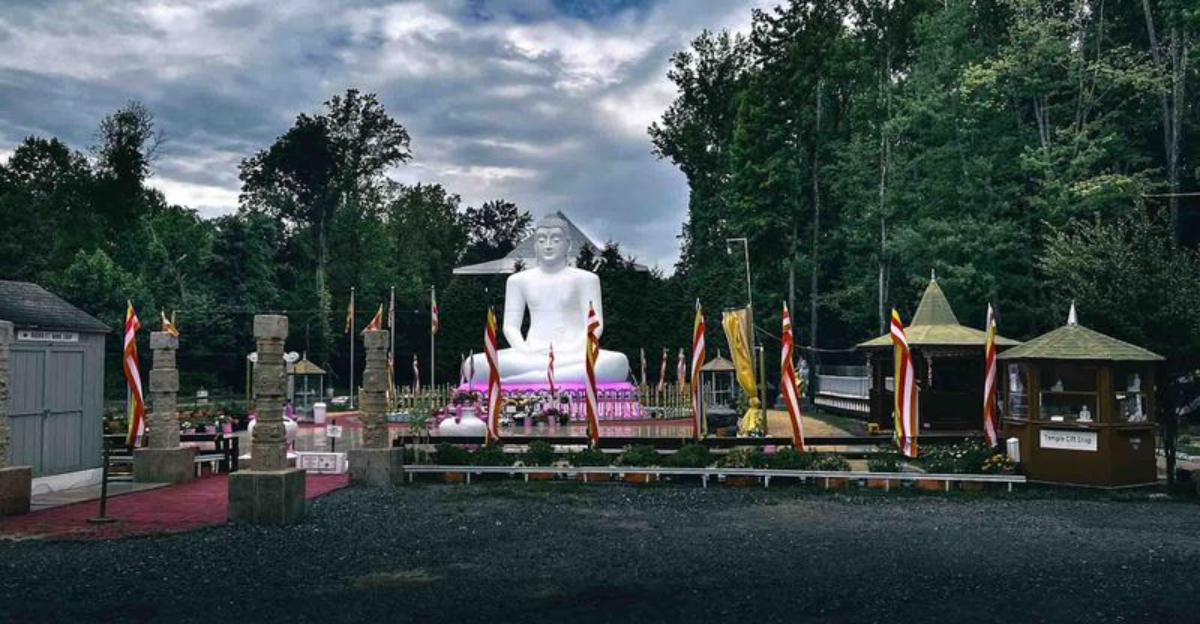
You do not expect to find a 52 foot tall golden Buddha when you are driving along a quiet New Jersey road.
But there it stands, peaceful and massive, surrounded by green lawns and blooming flowers.
The statue rises above the treetops like a gentle giant watching over everyone who visits.
Inside, the air smells of incense and soft chanting plays from speakers.
Visitors remove their shoes and walk slowly, feeling the stress of the week fall off their shoulders.
No need to travel across the world for a moment of real calm.
This hidden treasure offers silence, beauty, and a golden figure that leaves you speechless.
When was the last time something truly stopped you in your tracks?
The 30-Foot Samadhi Buddha Statue That Stops Traffic
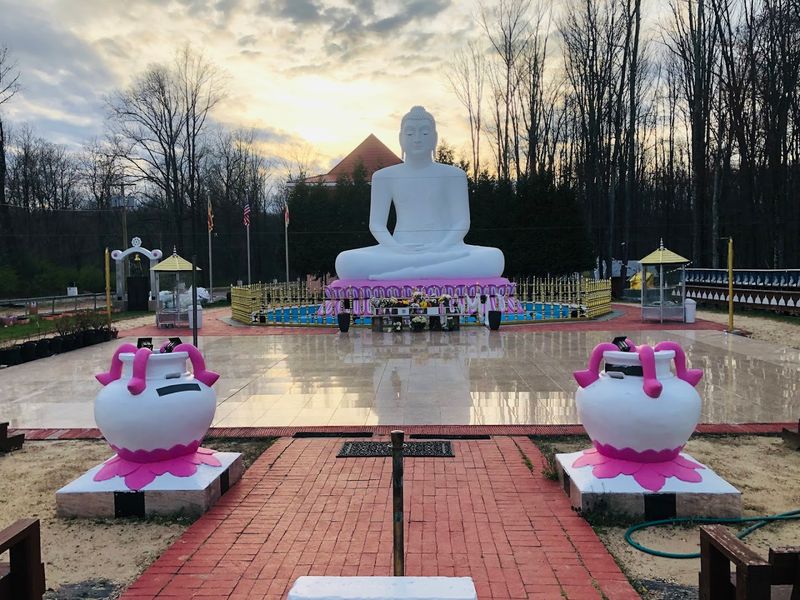
You round a bend on Route 27 and suddenly there it is, a 30-foot Samadhi-style Buddha rising calmly above the treetops like it has always been there, completely unbothered by the passing traffic below. The sheer scale of it is the first thing that grabs you.
Then the stillness of its expression pulls you in even deeper.
This statue depicts the Buddha in a seated meditating posture, which is the essence of the Samadhi tradition.
It is considered one of the largest Buddha statues in the entire United States and is believed to be the largest Samadhi-style Buddha in the Western Hemisphere.
That is not a small claim, and standing at its base, you absolutely believe every word of it.
The statue was unveiled in September 2009 and was built from a combination of cement, brick, and steel. Up close, the craftsmanship feels deeply intentional.
Every curve of the face radiates a kind of quiet authority that makes even the most restless visitor slow down and breathe.
A Vision That Became Reality in Franklin Township
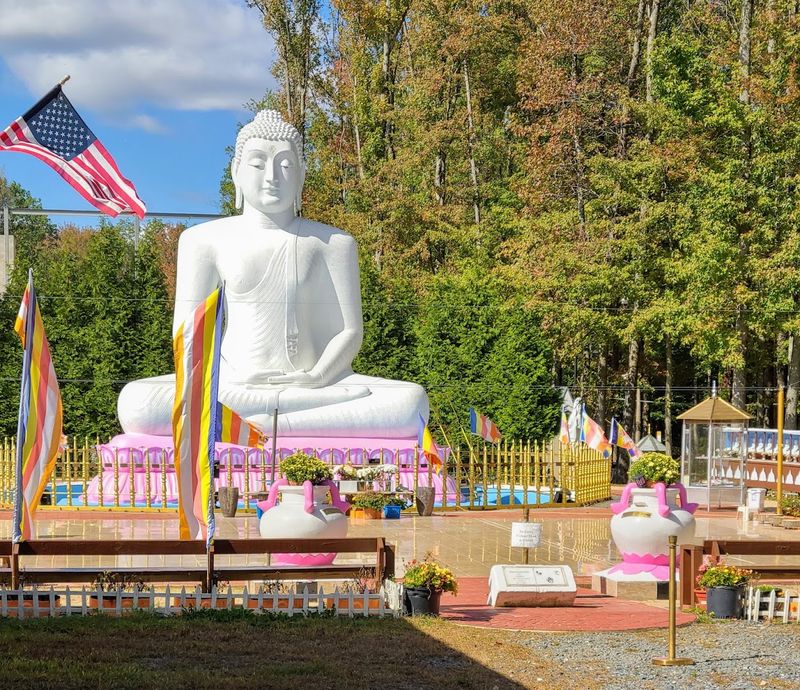
Back in 2003, someone had a truly ambitious dream: build a Buddhist center in central New Jersey that would welcome everyone, regardless of faith or background.
That someone was Sri Lankan monk Venerable Hungampola Sirirathana Nayaka Thero, and what he built on a 10-acre property just off Route 27 is genuinely remarkable.
The New Jersey Buddhist Vihara and Meditation Center grew from that founding vision into a full spiritual community.
It sits in Franklin Township, close enough to Princeton to feel connected to the wider region but peaceful enough to feel worlds away from the bustle of university town life.
The property has that rare quality of feeling both purposeful and unhurried.
From its earliest days, the center was designed to be a public shrine rather than a private retreat, which makes it unusual among Buddhist centers across the country. Anyone can walk in, look around, sit quietly, and feel genuinely welcome.
That open-door spirit is woven into every corner of the grounds.
Theravada Roots With an Interfaith Heart
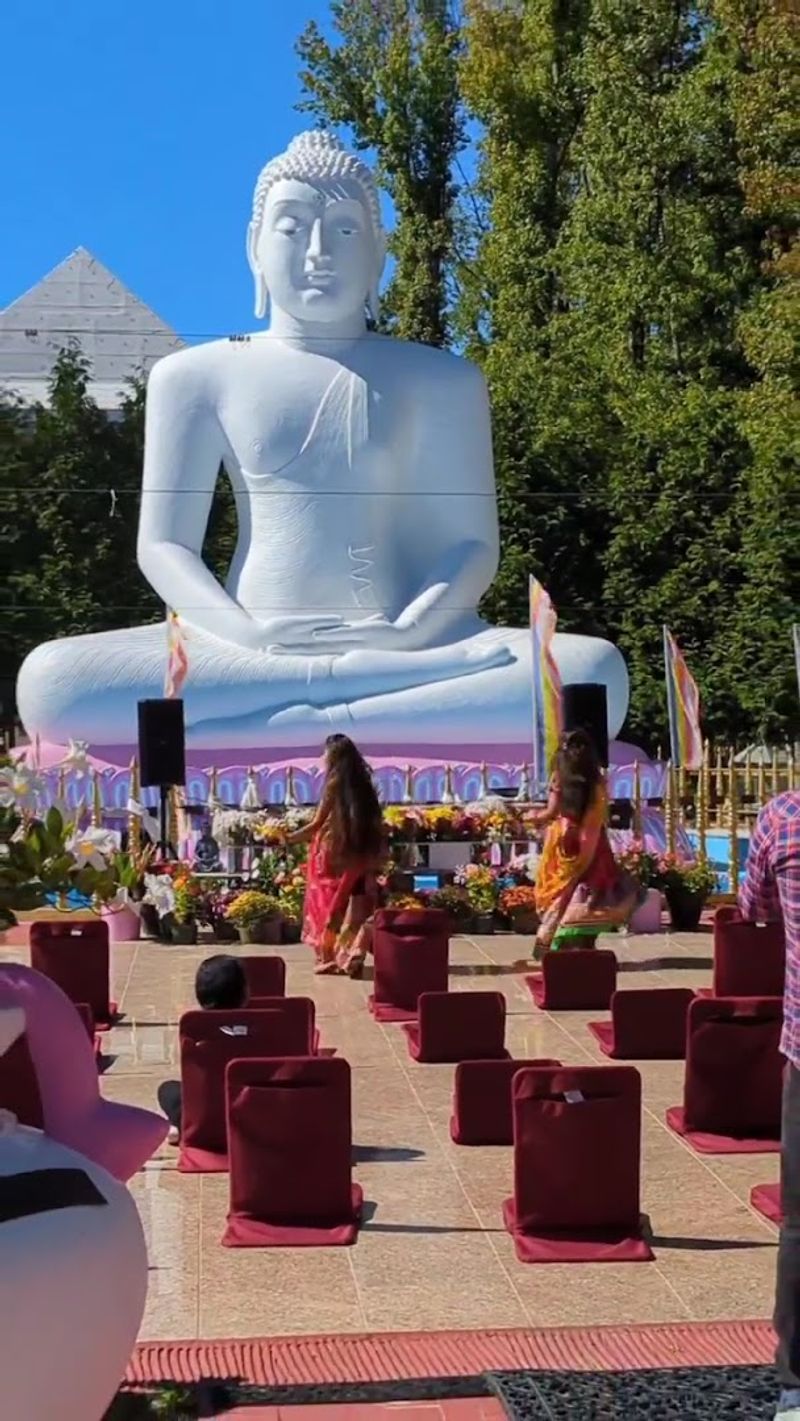
Most people assume a Buddhist temple is exclusively for Buddhists, and then they visit this one and quietly rethink everything. The New Jersey Buddhist Vihara primarily follows Theravada Buddhism, one of the oldest surviving schools of Buddhist thought.
But the welcome mat here stretches far beyond any single tradition.
Buddhists, Hindus, and Christians have all found a spiritual home within these grounds. The founding monk built this place with a specific mission: to unite people of all faiths under one roof, or in this case, under one very large statue.
That kind of intentional inclusivity is rare, and it genuinely changes the feeling of the air when you step onto the property.
The center has become a hub for interfaith efforts in the region, hosting gatherings and events that bring different communities together. Visiting here does not feel like stepping into someone else’s sacred space.
It feels like stepping into a space that was always meant to include you, whoever you are and wherever you come from.
The Kuan Yin Statue and the Peace Garden
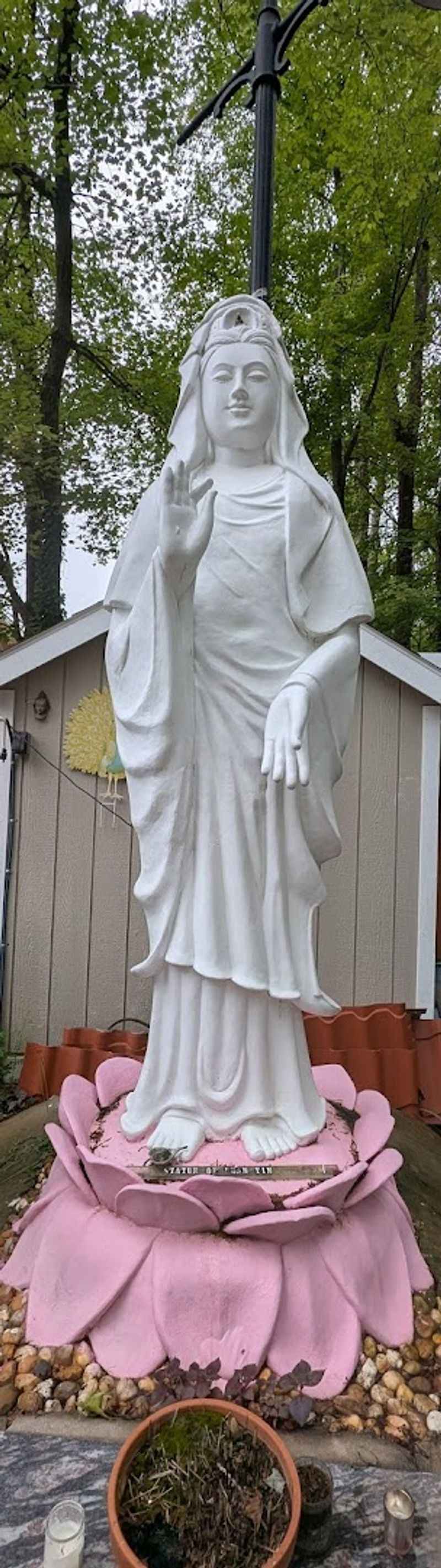
Beyond the towering main Buddha, there is another figure on the grounds that quietly commands attention.
A statue of Kuan Yin, the Buddhist goddess of compassion, stands with a gentle presence that feels like a counterpoint to the grand scale of the Samadhi Buddha nearby.
She is smaller, more intimate, and somehow just as powerful.
The peace garden surrounding these statues adds another layer of calm to the whole experience.
Walking through it feels less like touring a religious site and more like wandering through a place where someone has put genuine thought into how a person might feel at every step.
The landscaping, the pathways, and the quiet corners all seem designed with intentionality.
Pair the Kuan Yin statue with the interfaith mural painted by local students and you start to understand just how community-rooted this place truly is.
That mural, created by young people from the surrounding area, brings a burst of color and local identity to the grounds.
It is a beautiful reminder that sacred spaces grow richer when the whole community has a hand in shaping them.
Meditation Trails That Actually Make You Slow Down
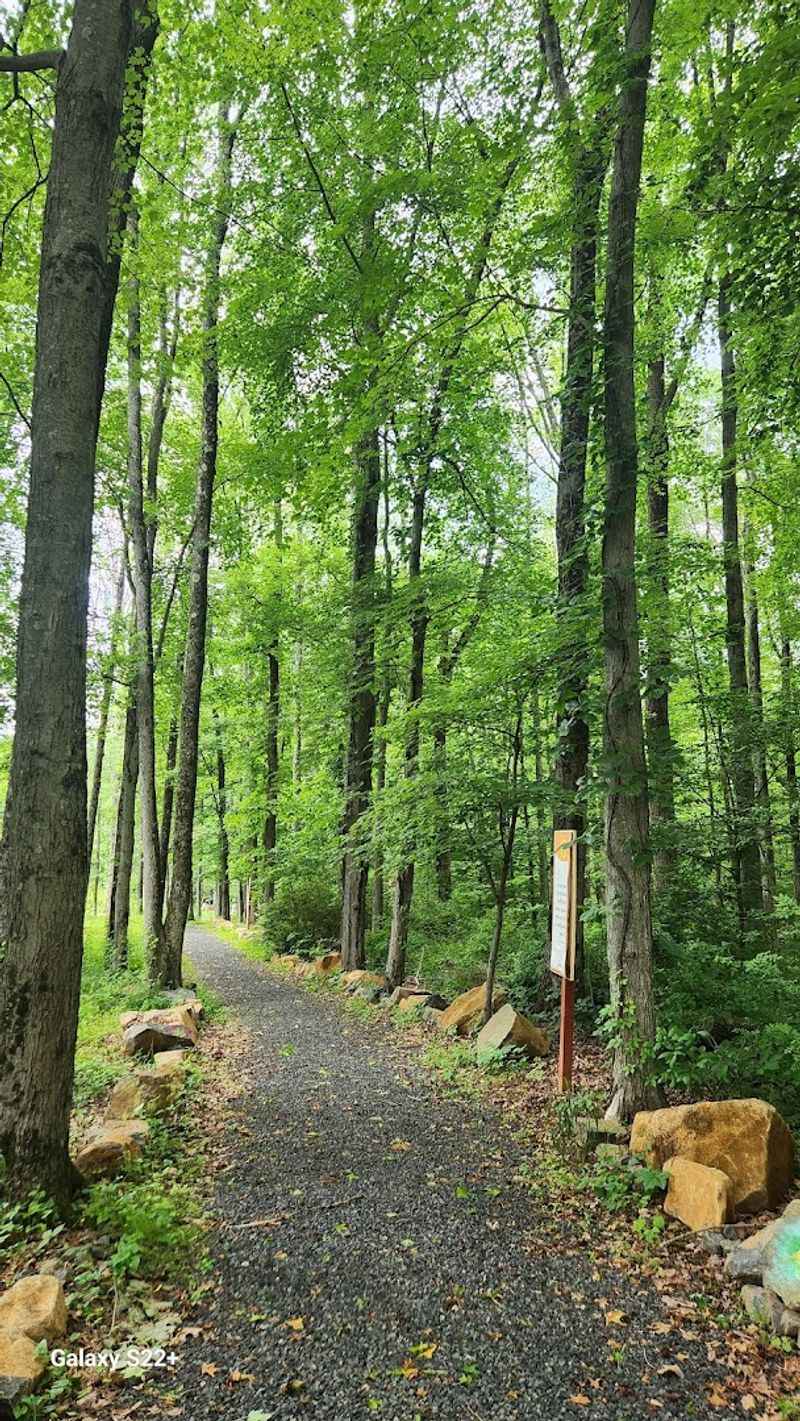
There is a trail on the property that does something sneaky: it makes you forget you are in New Jersey. The path winds through shaded trees, marked with leaf paintings and inspirational quotes at just the right intervals to keep you moving without rushing.
It is the kind of walk that starts as a casual stroll and ends as something that feels almost meditative.
The trail is well-marked and easy to follow, which makes it accessible for visitors of all ages and fitness levels. Shade covers most of the route, which is a genuine blessing on a warm afternoon.
The quotes along the way range from Buddhist teachings to broader reflections on peace and kindness, giving each step a little something to think about.
One small practical tip worth mentioning: if you visit after a rain, bring bug spray for the back section of the trail. A few mosquitoes like to hang out near the footbridge area when things get humid.
That small inconvenience aside, the trail is one of the most genuinely restorative short walks in the entire region.
The Expanding Campus Taking Shape Since 2017
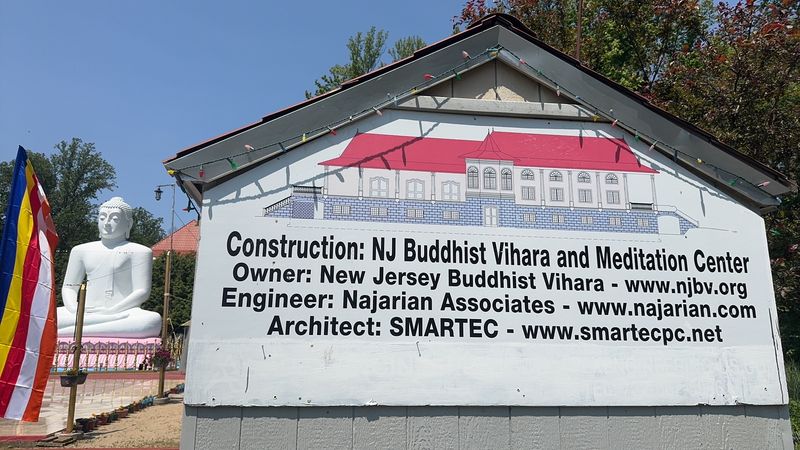
When a place is actively growing, there is an exciting energy about it that finished, polished destinations sometimes lack.
The New Jersey Buddhist Vihara has been in the middle of a significant expansion since May 2017, and the vision behind it is genuinely impressive.
An 11,000-square-foot building is nearing completion, designed to house a library, a meditation hall, clergy residences, and spaces for community gatherings.
Alongside the new building, the expansion includes new meditation trails, a footbridge, and freshly landscaped gardens.
Each addition seems carefully chosen to deepen the contemplative experience of the site rather than simply add square footage.
There is a real sense that every new element is being built with the same intentionality that brought the original statue to life.
Visiting during this period of growth has its own kind of charm. You are seeing a living, evolving spiritual community in the process of becoming something even greater.
Coming back in a year or two to see the finished campus will feel like watching a long-running story reach a satisfying new chapter.
Free and Open to Everyone, Every Day
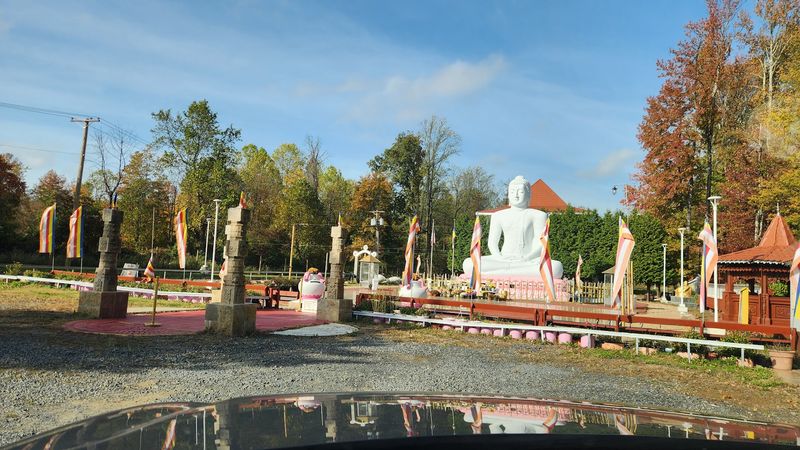
Free admission at a place this special feels almost too good to be true, but here we are. The New Jersey Buddhist Vihara is open to the public every single day of the week, from 9 AM to 9:30 PM, and there is no entry fee.
You simply pull into the parking lot, step out, and start exploring at your own pace.
That accessibility is a big part of what makes this place so beloved. There is no barrier between you and the experience.
A friendly monk may come out to greet you when you arrive, not to sell you anything or enforce rules, but simply to let you know that you are genuinely welcome and that the space is yours to enjoy.
The center does accept donations to support its ongoing construction and community programs, and dropping something in the collection jar feels like a natural and meaningful gesture after spending time in such a thoughtfully maintained space.
Generosity seems to be the operating principle here, and it is contagious in the best possible way.
Removing Your Shoes Before the Statue
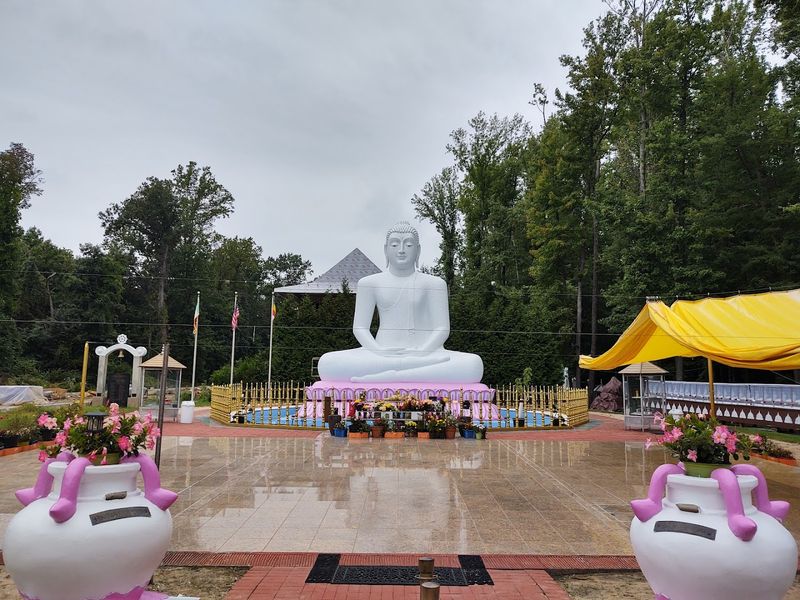
Before you step into the worship area near the main Buddha statue, there is one simple rule: take off your shoes.
It sounds small, but the moment your feet touch the marble floor and you feel the temperature shift underfoot, something genuinely changes in how you carry yourself.
The act of removing your shoes is one of those rituals that works on you before you even realize it is happening.
The marble floor beneath the statue is cool and smooth, and standing there barefoot with a 30-foot Buddha looking serenely down at you is one of those experiences that is hard to put into words without sounding dramatic. But it is dramatic.
In the best, quietest way possible.
Phones and photography are also respectfully asked to be set aside within the worship area. That boundary, far from feeling restrictive, actually deepens the experience.
Without the instinct to document everything, you end up actually being present in the moment. It turns out that being fully present in front of one of America’s tallest Buddha statues is its own reward.
A Spiritual Landmark That Draws Visitors From Across the Region
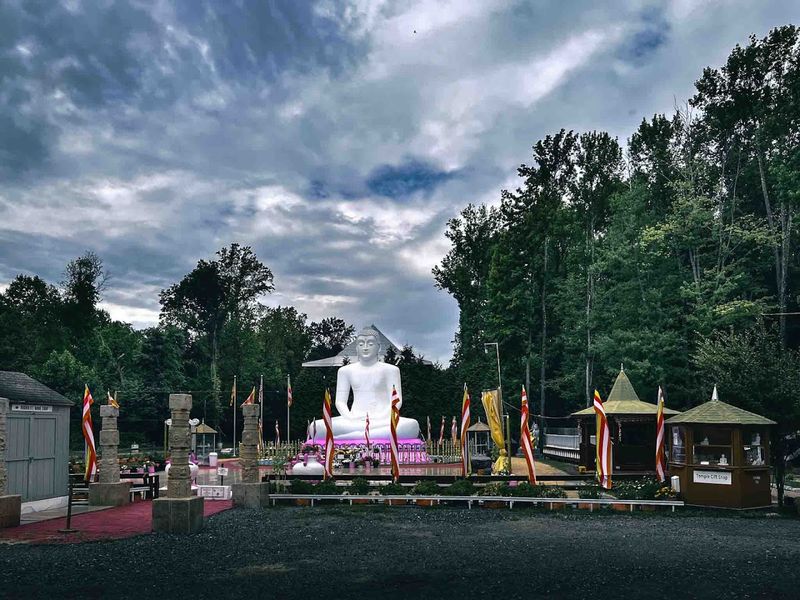
Word travels fast when a place feels genuinely special, and this one has been drawing visitors from well beyond central New Jersey for years.
People make the drive from New York City, from Philadelphia, and from communities across the tri-state area specifically to stand at the base of that statue and feel whatever it is that place makes you feel.
Calm is probably the closest word.
For the local Sri Lankan Buddhist community, this center is a true spiritual home, a place where cultural traditions and religious practices are honored and kept alive far from the places they originated.
For visitors from completely different backgrounds, it is a window into a tradition that is both ancient and very much alive in the present moment.
The combination of a landmark-scale statue, welcoming grounds, and an active community makes this more than just a tourist stop. People come back, sometimes annually, sometimes more often.
There is something about the rhythm of this place that makes return visits feel less like repetition and more like checking in with something that matters.
Planning Your Visit to the New Jersey Buddhist Vihara
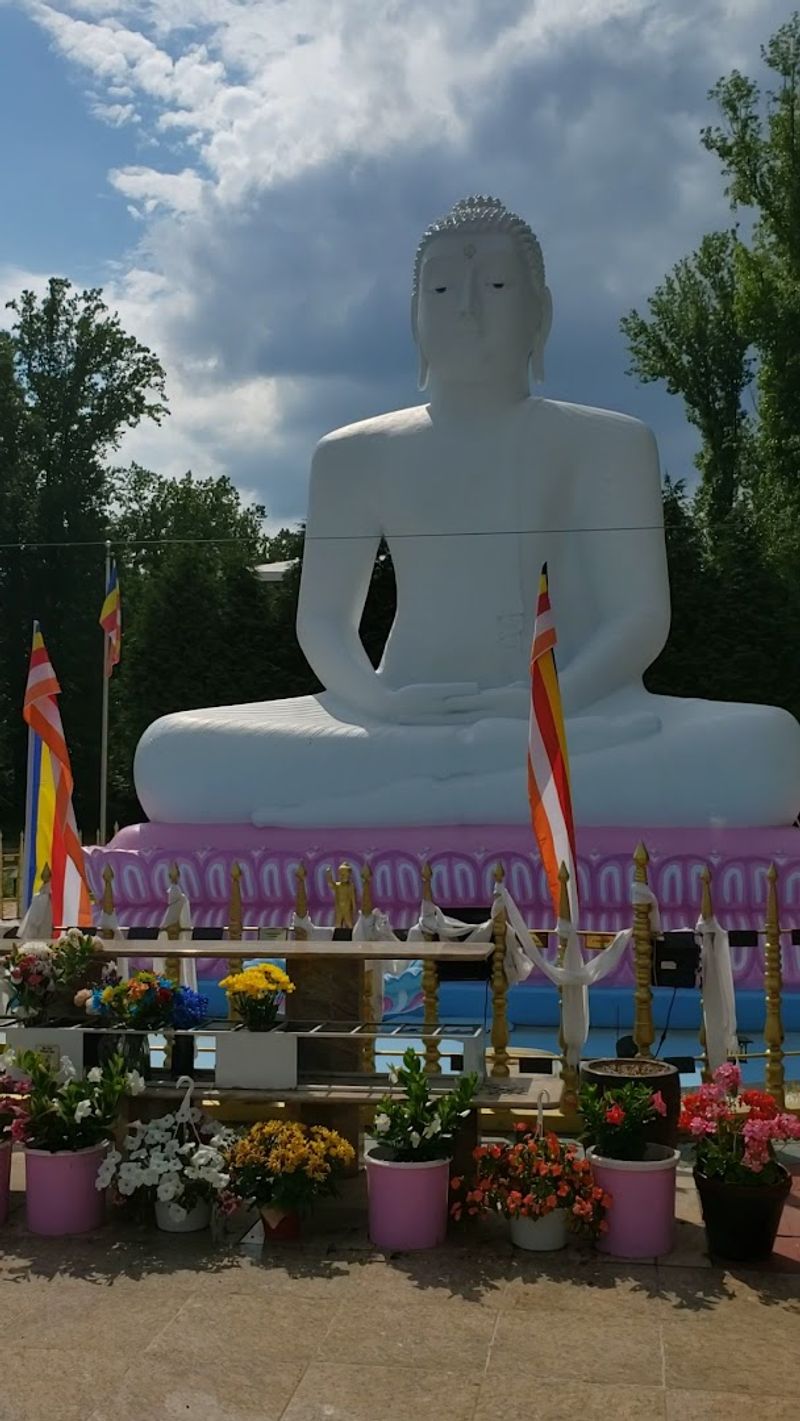
Getting here is straightforward. The temple sits right on Route 27, and the Buddha statue is visible from the road, so you are unlikely to miss it even if you are not looking for it.
On-site parking is available on the gravel lot, which fits a comfortable number of vehicles without feeling crowded on most days.
Weekdays tend to be quieter, which is ideal if you want the trails and garden areas mostly to yourself. Weekends bring a bit more activity, which adds its own kind of warmth to the atmosphere.
Either way, the grounds are large enough that you can always find a quiet corner to sit and think for a while.
Wear comfortable shoes that slip off easily, bring a little cash if you want to leave a donation, and consider bug spray if rain has been recent. The center is open daily from 9 AM to 9:30 PM.
Address: 4299 NJ-27, Princeton, NJ.
