Butcher’s cleaver marks are still visible on benches inside a peaceful Quaker meeting house. Yep, cleaver marks.
British troops reportedly turned the building into a commissary during the Revolutionary War.
That’s the detail I can’t get over. A quiet place of worship once doubled as a meat counter for an occupying army.
And the scars are still sitting right there.
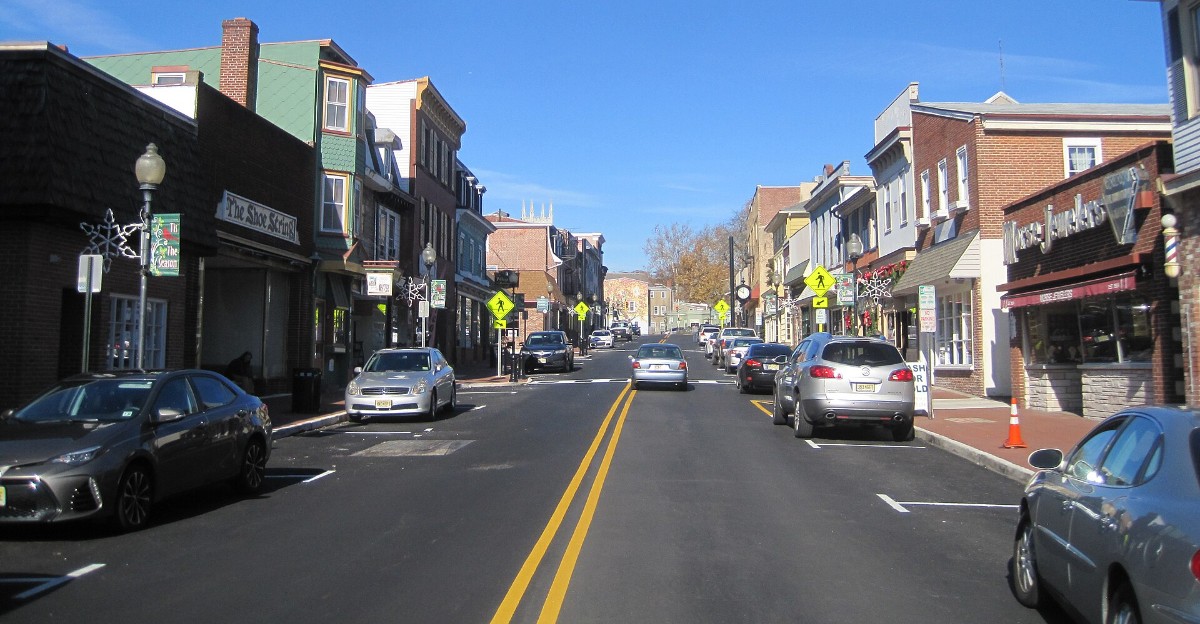
The rest of this small New Jersey town keeps the surprises coming. A jail designed by the architect behind the Washington Monument stands on the main drag.
A log cabin stayed hidden inside another house for centuries before anyone noticed.
I have to admit, that’s a lot of history for a town you can cross on foot in an afternoon. Every block seems to have one more story it hasn’t told you yet.
Good luck stopping at just one.
Those Cleaver Marks Are the Weirdest Souvenir of the Revolution
Quakers built their meeting houses for silence and simple reflection. In Mount Holly, New Jersey, one of them picked up a much louder past.
The Friends Meeting House stands as a calm, plain building that fits the Quaker style. Inside, though, the benches carry marks from a butcher’s cleaver.
British troops reportedly used the building as a commissary during the Revolutionary War.
Think about that for a second. Soldiers chopped meat for rations in a room meant for quiet worship.
Those cuts never got sanded away, so the story stays right where it happened.
Mount Holly itself traces back to Quaker settlers in the late 1600s. That roots the meeting house deep in the town’s identity.
It wasn’t just a church building but a center of early community life.
The marks make history feel personal in a way a textbook can’t. You aren’t reading about an occupation from far away.
You’re looking at physical damage left by real people in a real moment.
Fair warning, this spot sets a high bar for the rest of town. Once you’ve seen Revolutionary War evidence on a wooden bench, plain plaques feel a little tame.
Lucky for you, Mount Holly has plenty more where that came from.
A Jail With Washington Monument Bloodlines Waits on High Street
Robert Mills is famous for designing the Washington Monument. Before that tall obelisk, he drew up plans for a jail in a small South Jersey town.
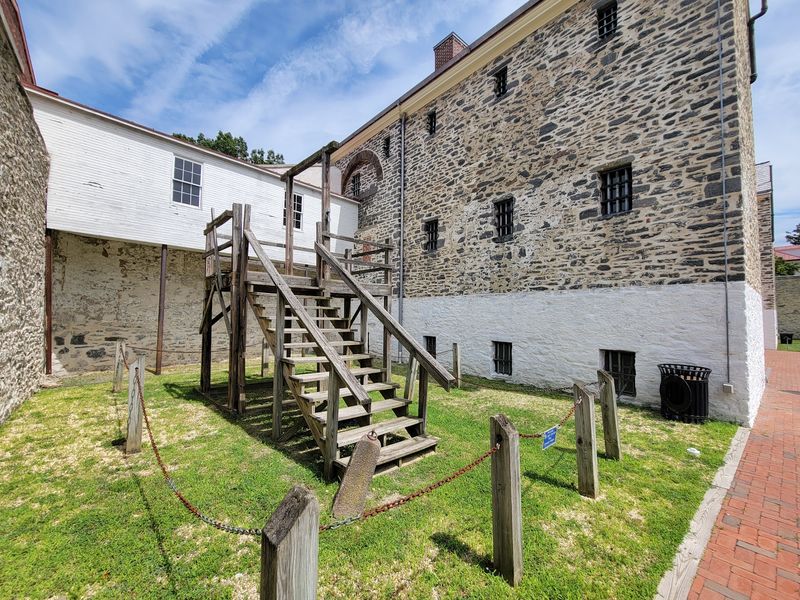
The Burlington County Prison Museum sits at 128 High Street, Mount Holly, NJ 08060. Mills designed it in 1811, and it was built to be nearly fireproof.
Vaulted concrete ceilings and heavy brick and stone made that possible.
Here’s the wild part. The prison stayed in use until 1965.
That means inmates were locked up in this building for more than 150 years.
Today the museum lets you walk the halls and peek into the cells. The thick walls and narrow spaces tell you a lot about how prisons worked long ago.
It’s history you can feel in your shoulders as you move through.
And yes, it has a spooky reputation. Stories describe a tall male figure in uniform, with odd activity reported on the third floor.
Whether you believe in ghosts or not, the tales add some extra chills.
Check the museum’s schedule before you go, since hours can vary by season. Bring a curious friend, too.
Some hallways are just more fun with somebody to nervously laugh with.
The Battle That Distracted the Hessians at Just the Right Moment
Small battles sometimes matter more than their size suggests. The Battle of Iron Works Hill in December 1776 proves that point beautifully.
Also called the Battle of Mount Holly, this clash pitted a smaller American militia against Hessian troops. Colonel Carl von Donop led the Hessians, and he followed the militia into town.
That move pulled his forces away from Trenton.
The Hessians then stayed in Mount Holly for several days. Historians have long speculated that the reason was more romantic than military.
Rumor points to a local widow who caught the colonel’s eye.
Meanwhile, George Washington crossed the Delaware and struck Trenton on December 26. Von Donop’s troops were too far away to help.
Talk about bad timing for one side and great timing for the other.
Mount Holly also served as a temporary capital of New Jersey during the war. That gives the town a bigger spot in the Revolution than most people realize.
It wasn’t just a bystander.
The hill itself is still part of town today. Standing near it helps you picture how close the Revolution came to this quiet place.
A little geography lesson and a love story, all in one stop.
A Courthouse With Philadelphia Connections Anchors the Old Downtown
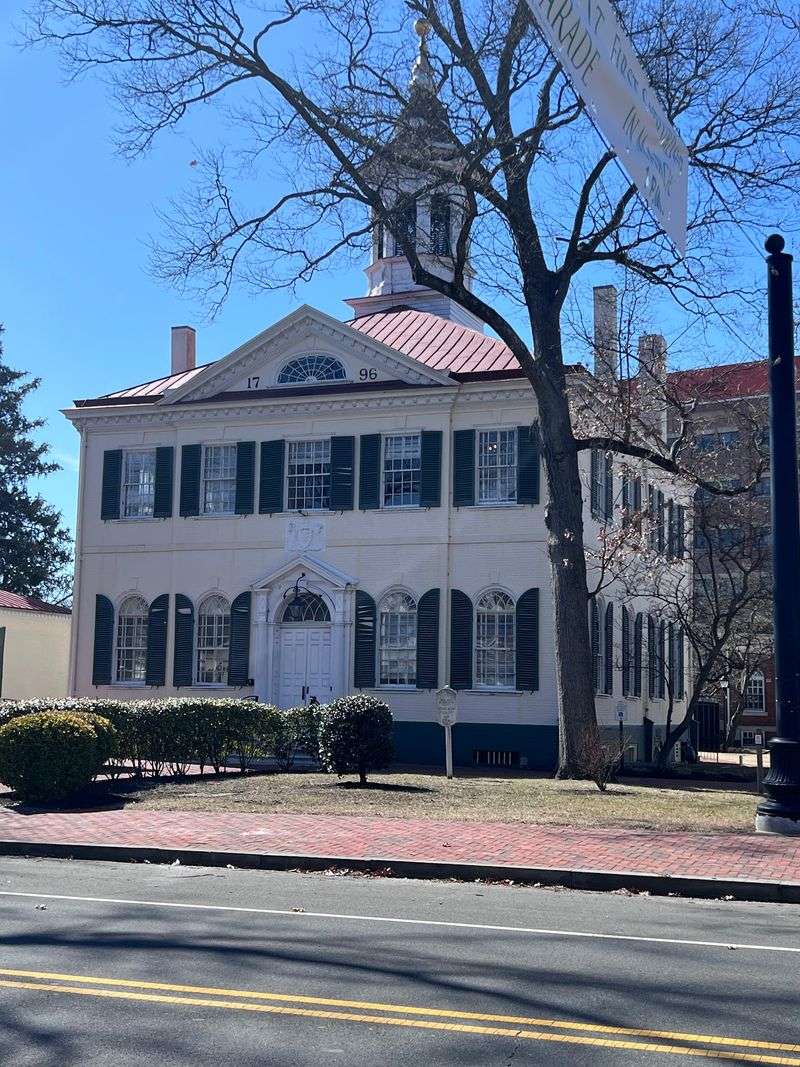
Mount Holly became the Burlington County seat in 1795. Important buildings followed fast, and many of them are still standing.
The star is the Old Courthouse, built in 1796. Samuel Lewis designed it, and he also worked on Philadelphia’s Congress Hall.
So a county courthouse in New Jersey shares design DNA with a national landmark.
I’d say that’s a pretty fancy pedigree for a local government building. The courthouse shows off classic early American style.
Its balanced shape and brick walls look like they stepped out of a history book.
The courthouse is part of a much bigger picture. The Mount Holly Historic District covers about 260 acres.
It’s listed on the National Register of Historic Places for its many 18th and 19th century buildings.
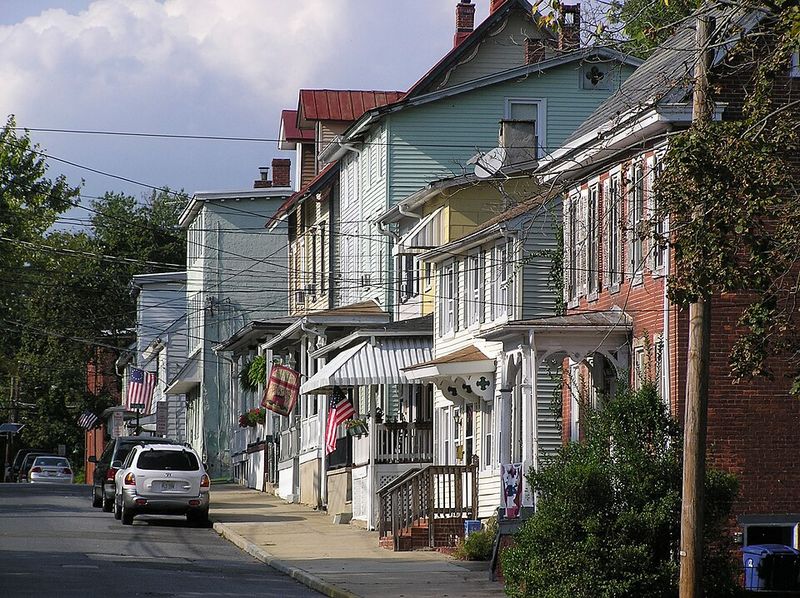
Wander a few streets and you’ll notice the mix of styles. Some homes date back to the early 1700s.
Others show off details from later decades, giving each block its own flavor.
A good tip is to look up as you stroll. Rooflines, windows, and doorways often hold the best details.
You’ll start spotting old craftsmanship everywhere once your eyes get used to it.
Somebody Found a Whole Log House Hiding Inside Another Home
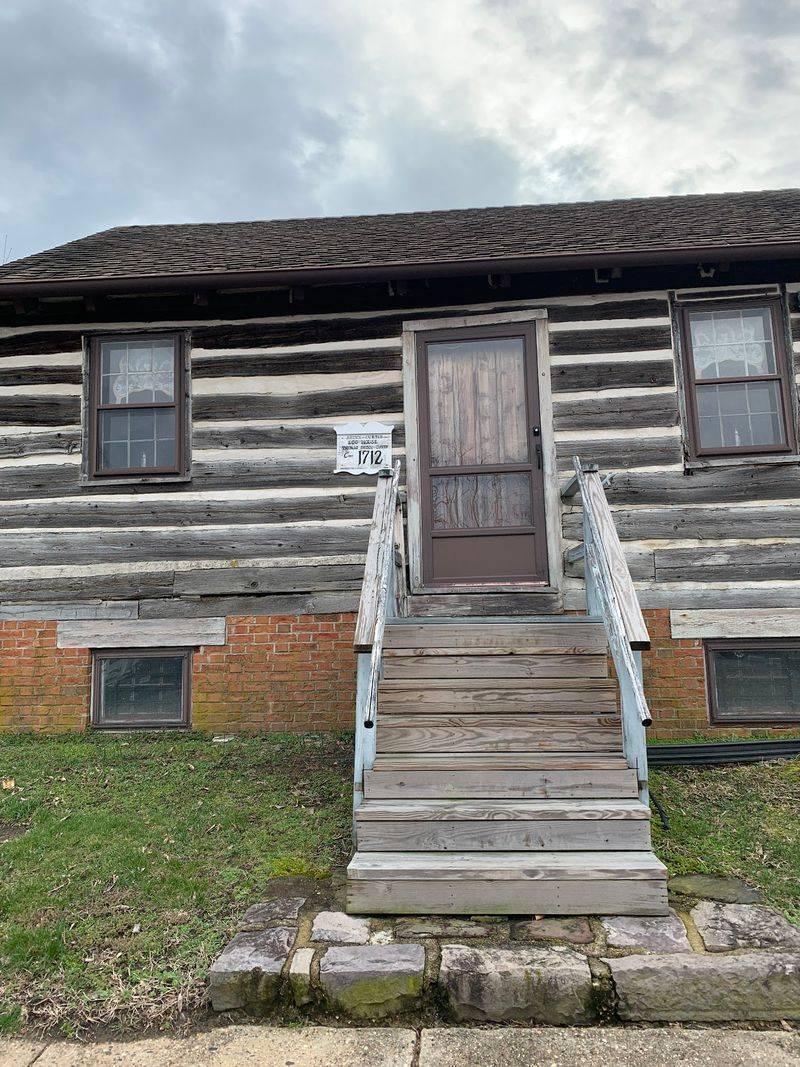
Demolition crews in 1967 got a big surprise. When they tore down an old house, they found a log house built inside it.
The Shinn-Curtis Log House dates to around 1712. Its hand-hewn logs had been wrapped inside a later structure for many years.
Nobody knew it was there until the outer walls came down.
Okay, that’s impressive. Imagine living in a house and never realizing a colonial cabin is hiding in your walls.
It sounds like a mystery novel, but it really happened in Mount Holly.
Today the Mount Holly Historical Society maintains the log house as a museum. It offers a rare look at how early settlers lived.
Small rooms and simple materials show just how different daily life was.
Kids especially tend to like seeing a real log home up close. It turns pioneer stories into something solid and touchable.
Adults get a kick out of the rediscovery story too.
Visits often depend on special open days or tours. Check with the historical society before planning your trip.
Once you see it, you might start wondering what secrets your own house is keeping.
Class Has Been in Session at This Spot Since 1759
Long before school buses and lunch trays, kids in Mount Holly learned in one small room. That room is still standing on its original site.
The Old Schoolhouse, also called the Brainerd School, dates back to 1759. It’s recognized as the oldest surviving one-room schoolhouse in New Jersey on its original location.
That’s a big title for a modest building.
One room meant students of different ages learned side by side. Older kids often helped the younger ones.
It was a very different kind of classroom than most of us know.
The building is a reminder of how much colonial towns valued learning. Families worked together to make education possible.
Mount Holly clearly took that seriously from early on.
Seeing it in person puts modern school complaints in perspective. No Wi-Fi, no gym, and probably drafty winters.
Suddenly that long math homework doesn’t sound so rough.
It’s a great stop for families with school-age kids. Pair it with the log house for an easy look at colonial daily life.
Together they paint a clear picture of how people lived, worked, and learned here more than 250 years ago.
A Royal Charter and Revolutionary Officers Share One Churchyard
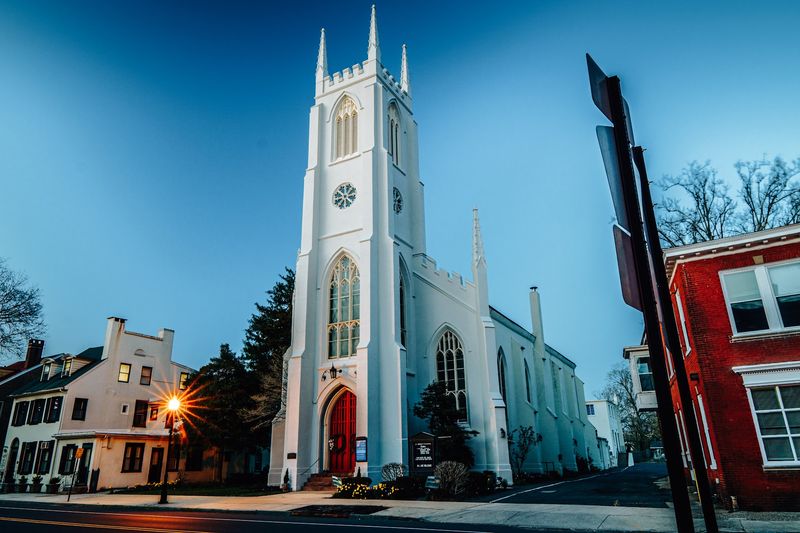
King George III signed off on a church here in 1765. Just a few years later, the colonies were fighting his army.
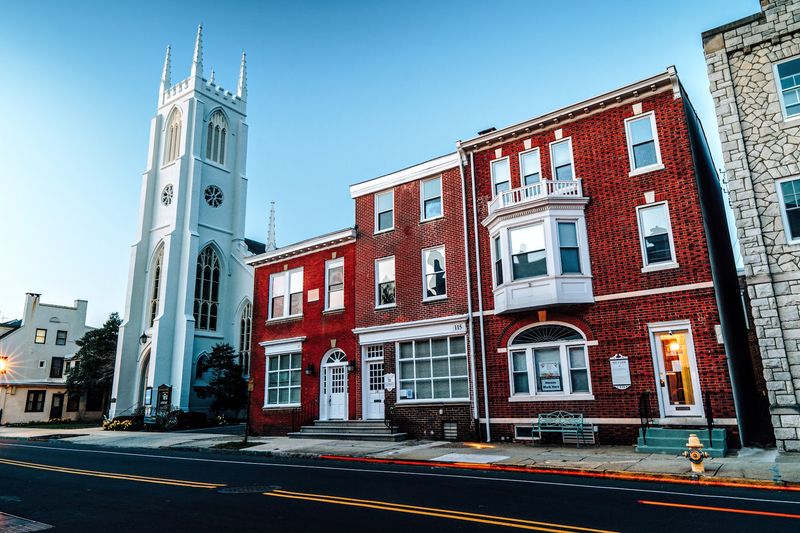
St. Andrew’s Episcopal Church received that Royal Charter while William Franklin served as Governor of New Jersey. He was Benjamin Franklin’s son, which adds a famous family link.
The current church building went up in 1844.
Nearby, St. Andrew’s Cemetery on Pine Street holds Revolutionary-era officers and other people from that time. Old headstones show names and dates that connect straight to the founding years.
Reading them feels like flipping through a stone history book.
The cemetery also sits right beside the Iron Works Hill battle site. That closeness makes the past feel very real.
The fight and the people who lived through it share the same ground.
Please visit respectfully, of course. Walk the paths, read the markers, and keep voices low.
It’s a peaceful place that rewards a slower pace.
History fans will enjoy matching names to stories they’ve learned elsewhere in town. It’s a quiet stop, but a meaningful one.
Few churchyards connect a royal charter and a revolution so neatly.
Firefighters Here Have Been Answering Calls Since 1752
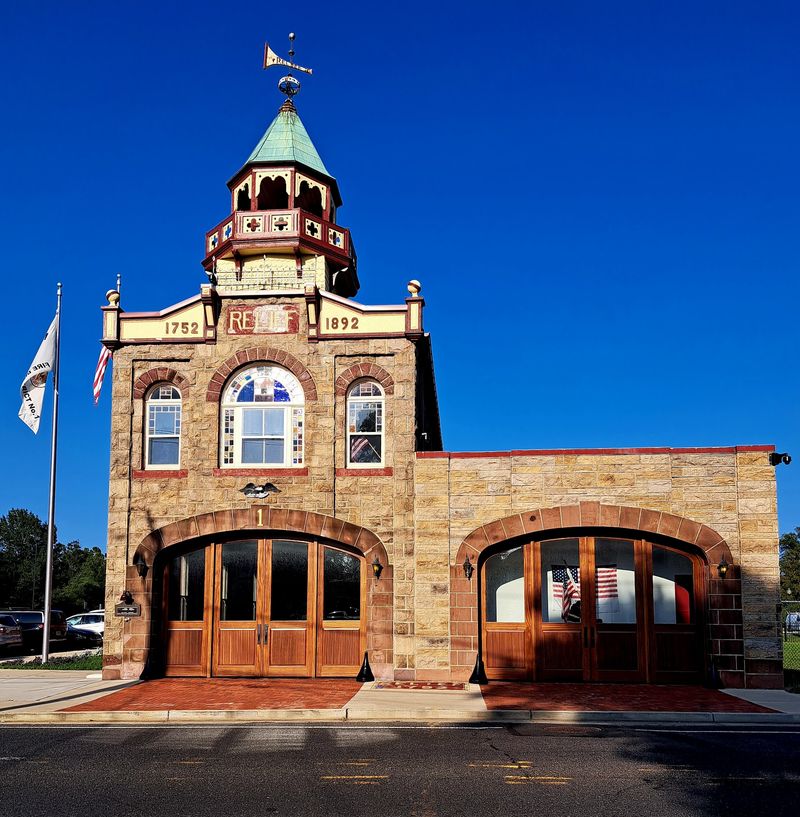
When the Britannia Fire Company formed in 1752, the colonies were still loyal to Britain. The name eventually changed, but the mission never did.
Today it’s known as Relief Fire Company No. 1. It’s considered one of the oldest continuously active volunteer fire companies in the United States.
That’s more than 270 years of neighbors helping neighbors.
Think about how much has changed since then. Buckets gave way to engines, and horses gave way to modern trucks.
Yet volunteers in Mount Holly kept showing up through all of it.
That long record says a lot about the town’s character. History here isn’t only buildings and battle sites.
It’s also people who keep old traditions alive by doing the work.
The name switch from Britannia makes sense, given what happened in 1776. Still, it’s fun to know the company started under British rule.
It ties into the same layered story you’ll find all over town.
Keep an eye out as you walk around downtown. Spotting the firehouse adds a living piece to your history tour.
Not every landmark sits behind glass, and this one still answers the call today.
Save Your Energy for a Stroll Down High Street and Beyond
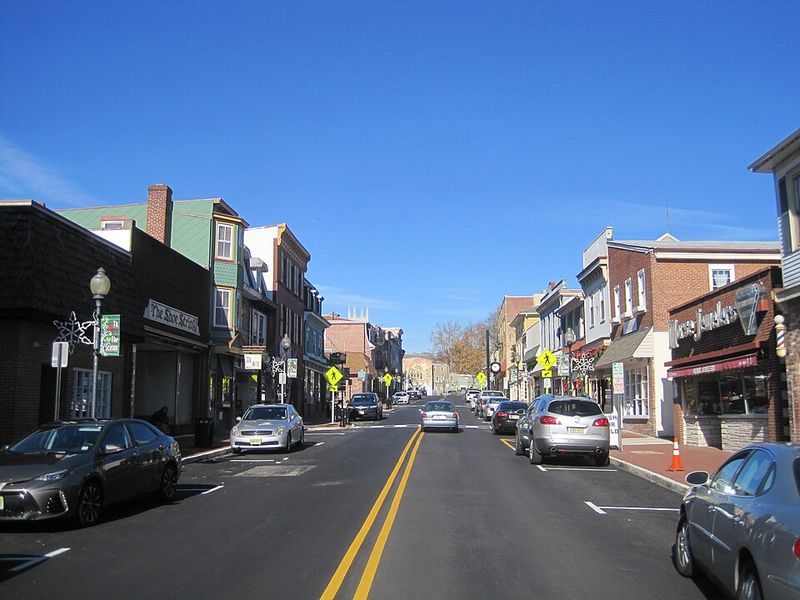
Good news for anyone who hates hunting for parking twice. Mount Holly is small enough that most of the good stuff sits within easy walking distance.
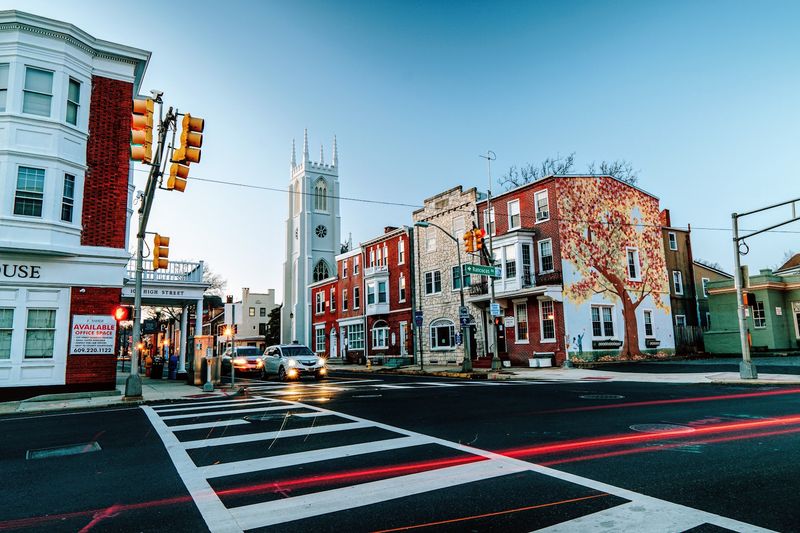
Downtown blends historic storefronts, colorful murals, and independent businesses. High Street ties a lot of it together.
You can wander from the prison museum to shops and old homes without much fuss.
The Mill Street Tavern, once called the Three Tun Tavern, dates to around 1723. It’s considered the oldest standing building in Mount Holly.
It reportedly housed British soldiers in 1776 and 1778 and later hosted the Court of Admiralty.
The town also keeps the calendar busy. Main Street Mount Holly promotes seasonal events, including the Fire and Ice Festival.
Haunted history tours bring the spookier legends to life after dark.
There’s even an annual reenactment of the Battle of Iron Works Hill. Watching it helps the December 1776 story click into place.
Check local event pages ahead of time for dates.
Wear comfy shoes and leave room in your schedule. Mount Holly, New Jersey rewards people who slow down and look around.
One more block usually means one more story worth hearing.
