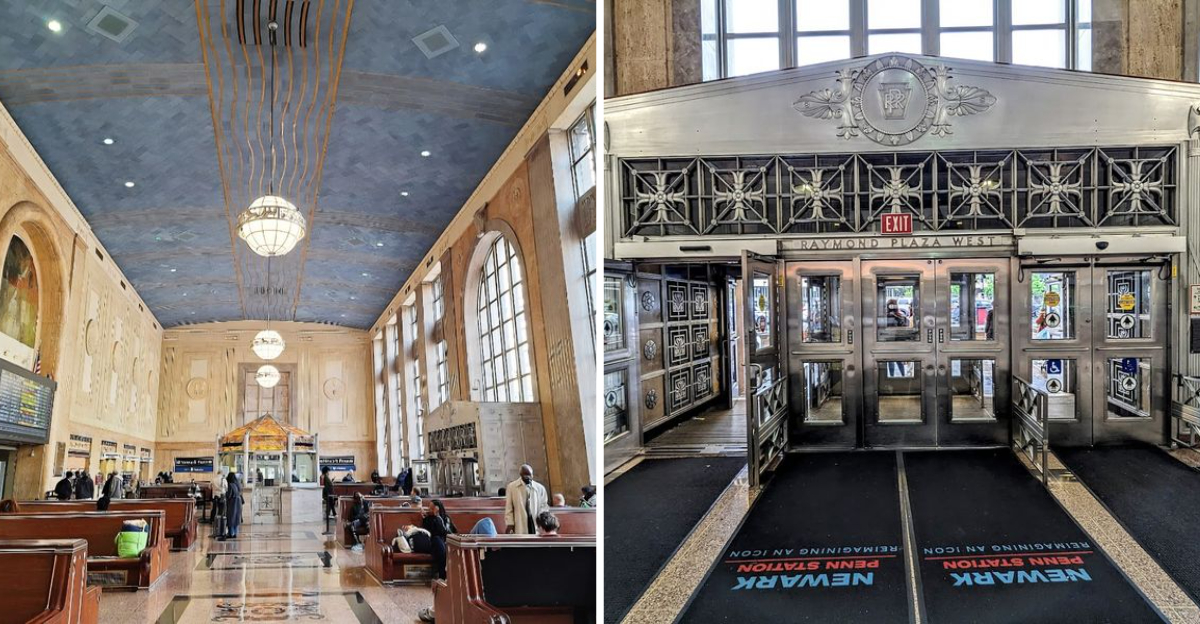
Can a train station actually feel like a cathedral? This one absolutely does.
The soaring ceilings, the intricate terrazzo floors, and the stunning stained glass windows make every commute feel like a sacred experience.
Designed in the 1930s as a grand Art Deco masterpiece, this transit hub is a celebration of travel and craftsmanship.
The attention to detail is staggering, from the brass fixtures to the elegant lighting that casts a warm glow across the main concourse. It is not just a place to catch a train.
It is a destination in itself, a reminder of an era when public spaces were built to inspire awe.
New Jersey has a transit hub that doubles as a work of art, and it is absolutely worth a visit even if you are not going anywhere.
A Grand Entrance Built From Indiana Limestone
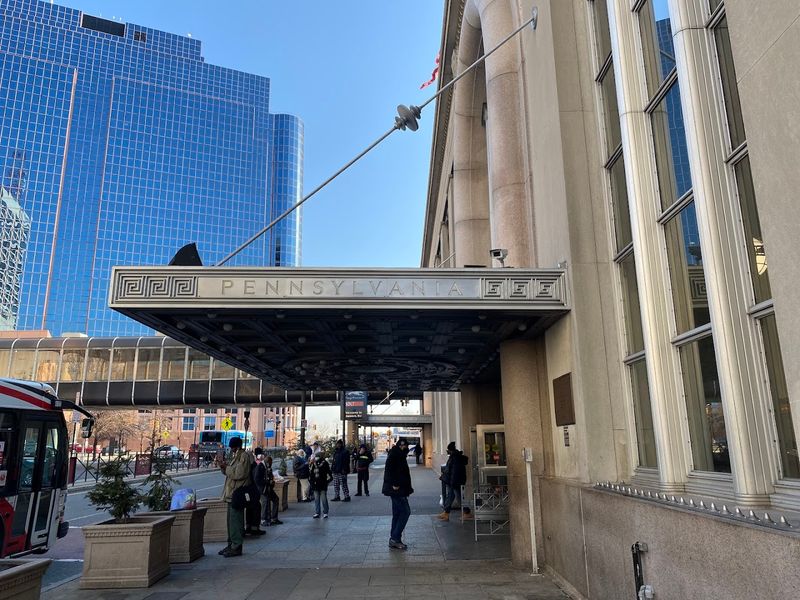
Walking up to this station for the first time, the sheer scale of the limestone facade stops you mid-stride. The building is clad in light grey Indiana limestone, subtly trimmed with pink granite at its base, giving it a dignified, grounded presence.
Above the archways, the railroad’s name is carved directly into the stone in large, confident letters.
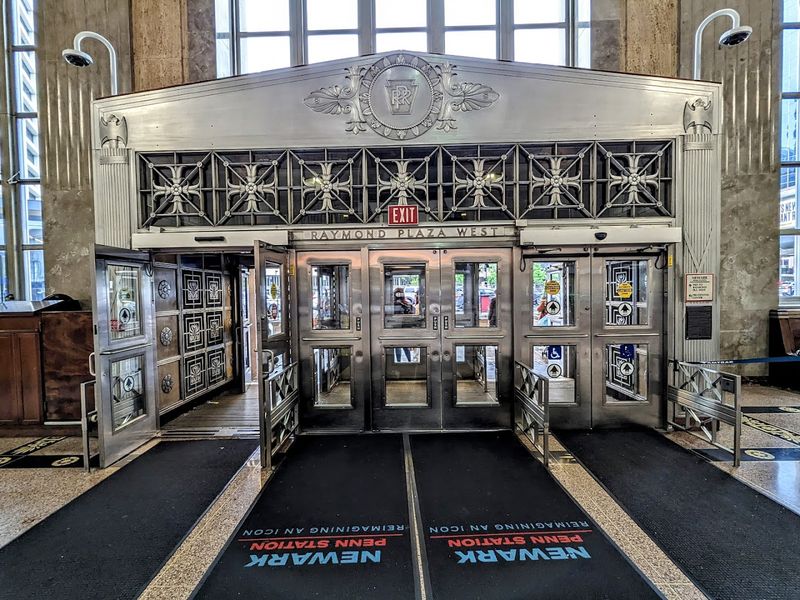
Two tall entrance archways frame the main doors, one topped with a clock and the other decorated with a stylized zodiac motif. These details make the entrance feel ceremonial rather than purely functional.
It sets the tone before you even step inside.
The horizontal proportions of the building feel civic and generous, more like a courthouse or museum than a transit stop. Every carved detail was deliberately chosen to blend classical structure with Art Deco ornamentation.
Arriving here feels like being welcomed into something historically significant, a building that was designed with real intention and civic pride behind every chisel mark.
Zodiacal Globe Chandeliers Suspended in Time
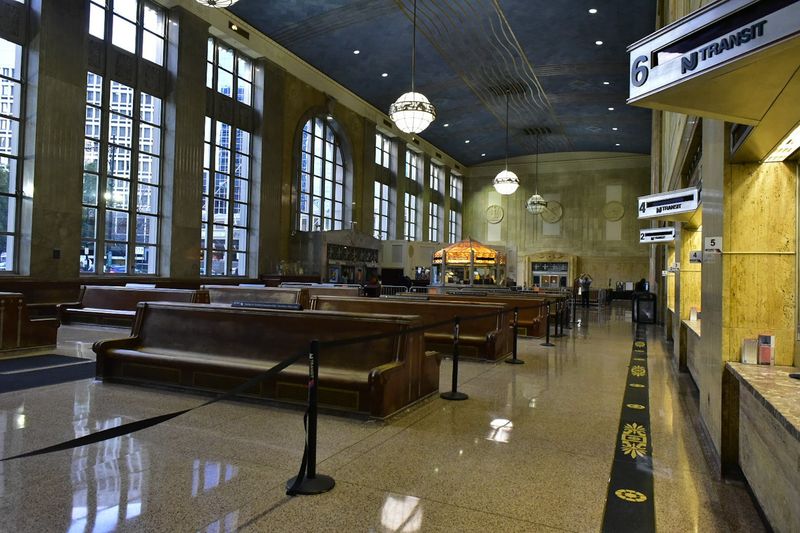
Four enormous globe chandeliers hang from the waiting room ceiling, and they are genuinely hard to stop staring at. Each one is crafted from opal glass, diffusing light in a soft, creamy glow that warms the entire room.
Two of the globes are original fixtures; the other two are careful reproductions made to match them exactly.
Encircling each globe is a white-bronze band intricately engraved with the signs of the zodiac. The astrological theme connects back to the zodiac motif carved into the building’s exterior archway, creating a satisfying visual thread that runs from outside to inside.
These are not just light sources; they are sculptural centerpieces.
The cosmic artistry of these chandeliers perfectly captures the Art Deco love of blending the decorative with the functional. Gazing up at them, it feels less like waiting for a train and more like standing inside a planetarium designed by someone with exceptional taste.
They are easily one of the most memorable design elements in the entire station and well worth a long, unabashed stare.
Terrazzo Floors That Deserve Their Own Exhibition
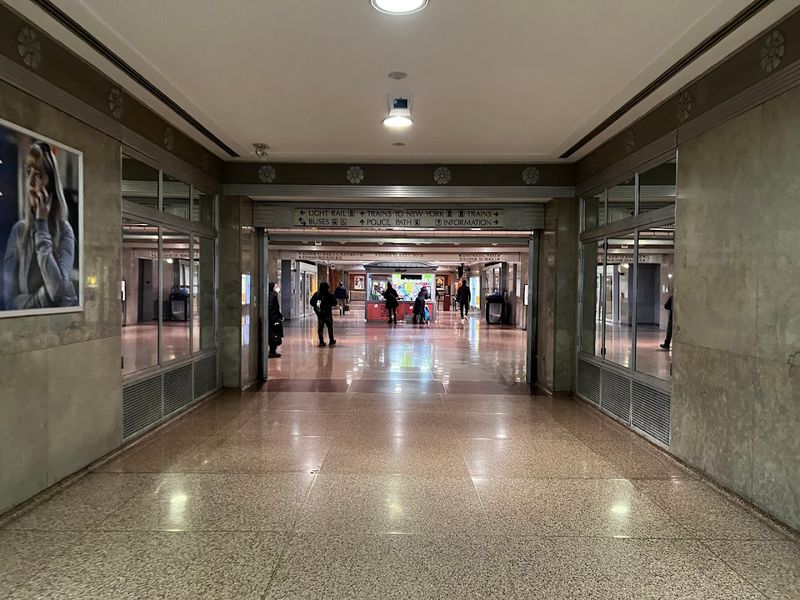
Most people rush across these floors without a second glance, which is honestly a shame. The terrazzo is a striking red base, decorated with black and yellow floral patterns that are outlined with brass insets.
The detailing is meticulous, the kind of craftsmanship that takes real skill and patience to execute properly.
These floors echo the stylized floral motifs found in other parts of the station, creating a cohesive decorative language from ceiling to ground. The brass trim catches the light from the globe chandeliers above, adding tiny sparkling accents underfoot.
It is one of those details that rewards the people who actually slow down long enough to appreciate it.
Terrazzo floors of this quality are increasingly rare in public spaces. The ongoing restoration efforts at the station have focused on preserving and cleaning these surfaces, which speaks to a genuine commitment to honoring the original design vision.
Walking across them feels oddly ceremonial, like you are participating in something that has been carefully maintained for nearly a century just for moments like this one.
The Waiting Room’s Cathedral Ceiling
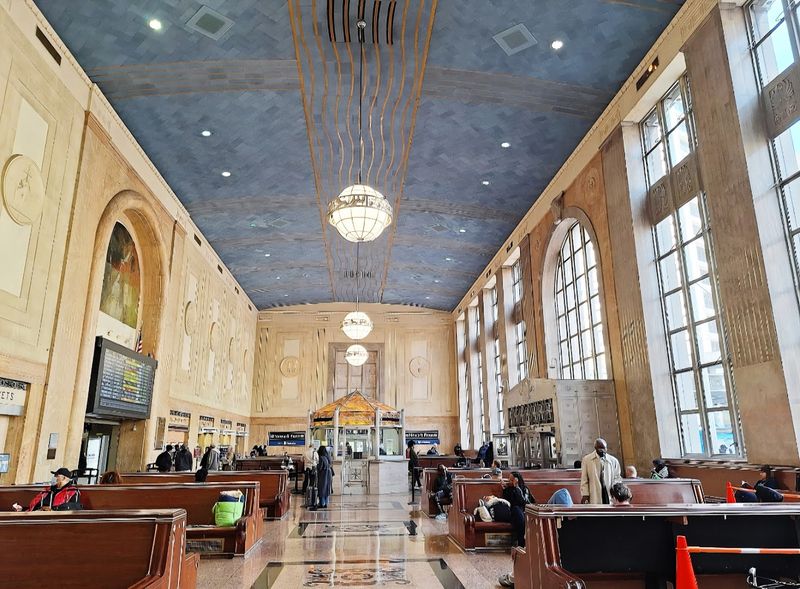
The moment you step into the main waiting room, your eyes go straight up. The ceiling is a rich, deep blue, gently bowed in shape, with long wavy gilded lines running along its length.
Those golden lines create a sense of graceful motion, like ripples frozen mid-flow across a night sky.
Bands of straight horizontal lines span the width of the room, intersecting with the curved ceiling in a way that feels both mathematical and poetic. Natural light pours in through tall windows, brightening the space and making the gilded accents glow warmly.
The overall effect is genuinely breathtaking, the kind of ceiling that makes you wish you had a longer layover.
This is one of the most visually arresting transit interiors on the entire East Coast. The scale is generous without feeling cold, and the decorative choices feel intentional rather than decorative for decoration’s sake.
Standing here, even briefly, gives you a sense of what train travel once meant as a grand, aspirational experience worth dressing up for.
Relief Medallions Narrating Transportation History
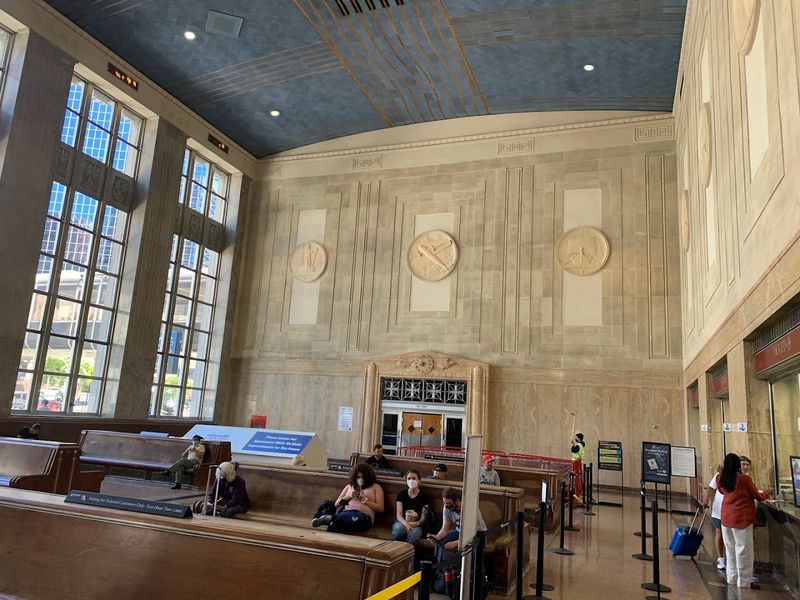
High on the waiting room walls, a series of relief medallions tell a story that most commuters speed past without ever reading.
These carved panels depict transportation throughout human history, starting with canoes and covered wagons, moving through steam locomotives, and eventually arriving at electric trains and airplanes.
The sequence is genuinely fascinating once you stop to follow it.
Originally, these panels were painted in color, but they now appear in a plain stone hue that gives them a classical, timeless quality. The level of detail in each medallion is impressive, with figures, vehicles, and landscapes all rendered in crisp Art Deco relief style.
They function almost like a comic strip running around the upper perimeter of the room.
This kind of narrative public art is rare in transit spaces today. Most modern stations prioritize digital displays and efficiency over storytelling through architecture.
The fact that these medallions still exist, still intact after nearly ninety years of heavy daily use, is a quiet testament to the durability and foresight of the people who built this remarkable station.
The Octagonal Information Booth With Its Orange Glass Roof
Right in the middle of the waiting room stands a detail that catches your eye before you even realize why.
The central information booth is octagonal in shape, a deliberate geometric choice that feels very much in keeping with the Art Deco design vocabulary throughout the station.
But the real surprise is the roof: a vivid orange glass cap that glows like a lantern.
That burst of orange is unexpected and playful, a warm contrast against the blue ceiling above and the red terrazzo below. It anchors the room visually while also serving a practical purpose, marking the spot where travelers can get help quickly.
The combination of function and flair is exactly what makes Art Deco design so enduringly appealing.
Details like this are what separate truly thoughtful architecture from buildings that are merely large and expensive. Someone made a deliberate choice to top a help desk with a glowing orange glass roof, and nearly a century later, it still works beautifully.
It is a small gesture that adds enormous warmth to an already spectacular space, and it is very easy to love.
Original Curved Benches With PRR Inlaid Emblems
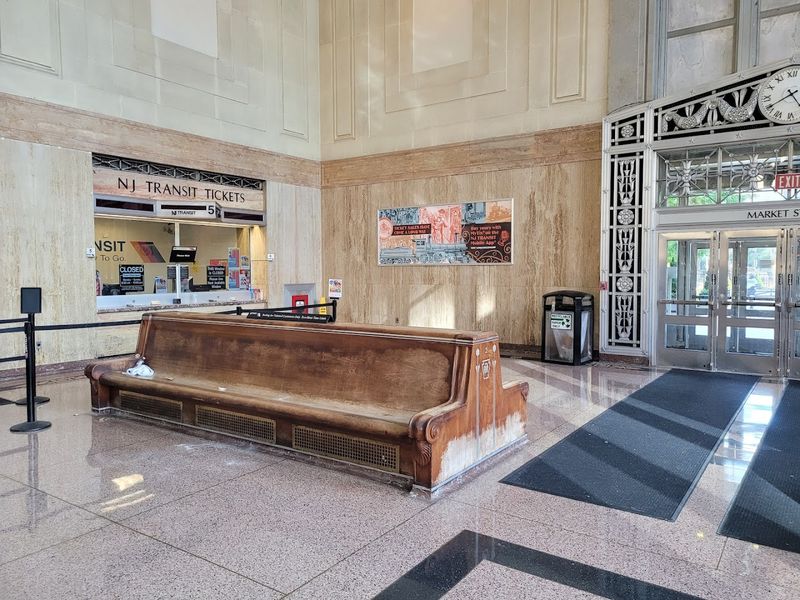
Not everything historic has been replaced or modernized here, and that is genuinely worth celebrating. The original curved benches in the waiting room are still in use, crafted from grey walnut and detailed with inlaid aluminum.
Each one carries the PRR emblem of the Pennsylvania Railroad, along with stylized flower motifs that match the decorative language used throughout the building.
Sitting on one of these benches is a small but real connection to the station’s past. Travelers in the 1930s and 1940s sat in these exact same seats, waiting for trains to destinations across the country.
The aluminum inlay has a cool, silvery quality that contrasts beautifully with the warm walnut grain.
These benches are functional antiques, still doing exactly what they were built to do nearly ninety years ago. The fact that they have survived decades of heavy daily use is a credit to both their construction quality and the ongoing preservation efforts at the station.
They serve as a quiet, tactile reminder that great design does not have an expiration date, and sometimes the best seat in the house is also the oldest one.
The Ongoing Modernization and Its Promise for the Future
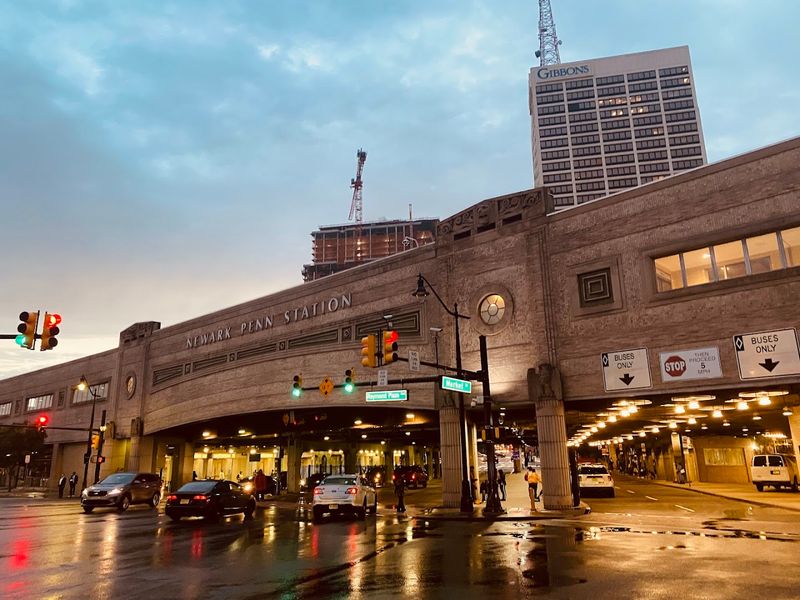
Newark Penn Station is not sitting still. A major modernization project worth roughly 190 million dollars is actively working to enhance the station while carefully protecting its historic character.
The cleaned limestone exterior already looks sharper and more impressive than it has in years, and the restored original benches feel fresh without losing any of their original charm.
Brighter lighting has been installed throughout, which makes the Art Deco details pop even more than before. Historic tile restoration in the stairwells is bringing back surfaces that had faded under decades of use.
Updated bathroom facilities and expanded elevator access are also part of the ongoing improvements, making the station more comfortable and accessible for everyone.
Looking ahead, plans include new dining and shopping experiences, enhanced pedestrian entranceways, and improved public address systems. The vision is to meet the needs of a modern transit hub while honoring the extraordinary architectural legacy already in place.
This balance of preservation and progress is exactly the right approach for a building this significant, and the results already visible are genuinely encouraging for anyone who cares about great public spaces.
Address: 1 Raymond Plaza West &, Market St, Newark, NJ
