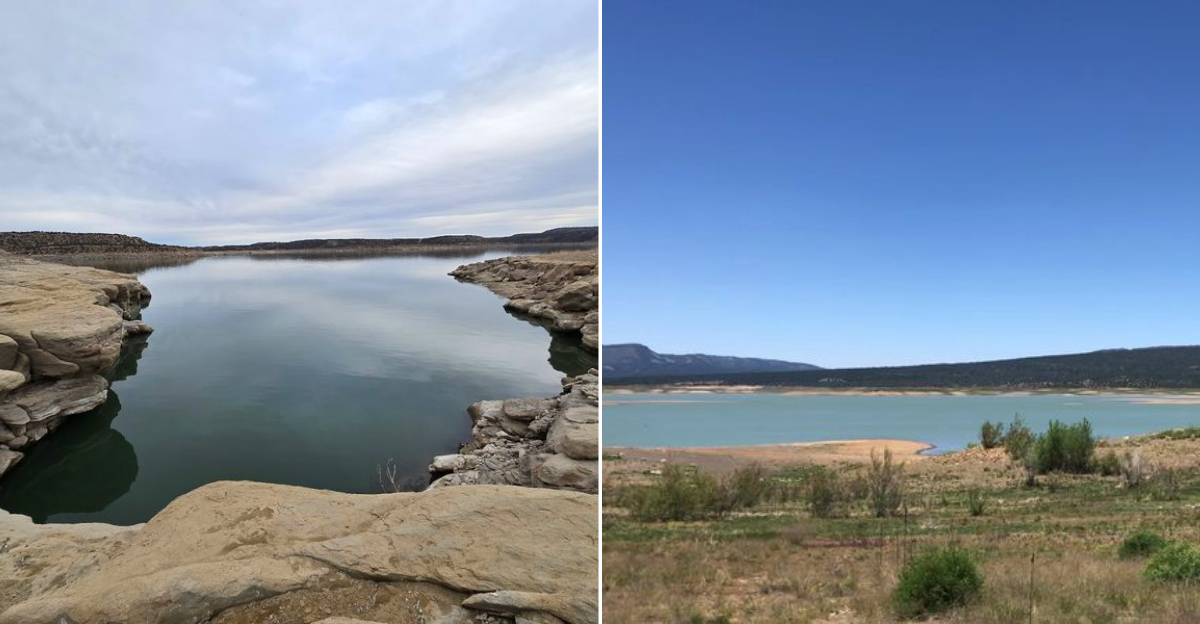
A covered bridge, two historic towns, and one of the Navajo people’s most sacred sites all lie beneath the waters of this New Mexico recreation area. The lake was created in 1962 when a massive earth?filled dam rose 400 feet high, flooding valleys that had been home to communities and landmarks for generations.
Today, the reservoir spans over 15,600 acres and offers 150 miles of shoreline that stretch across New Mexico and Colorado. It serves as the primary water source for a vast irrigation project, nourishing 110,000 acres of farmland on the Navajo Nation.
Below the dam, a three-and-a-half mile stretch of the San Juan River has become a world-class fishery, famous for producing trophy-sized rainbow trout. Anglers come from across the country to cast their lines, but few realize they are fishing above drowned history.
You can boat, camp, and hike along the shores, but every so often, when the water is low, locals swear you can almost see the ghost of that covered bridge peeking through the surface.
Two Towns Submerged Beneath The Lake
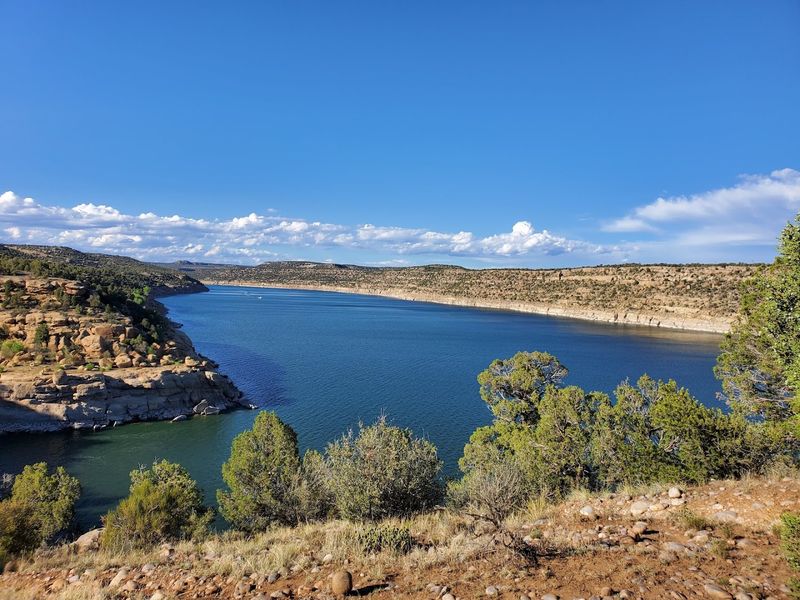
Here is the part that hits you once you hear it said out loud. Beneath this wide water, two small communities went quiet, and their streets turned into a map only the fish could follow.
You would not guess it from the breeze or the sparkle on the surface, yet there is a whole neighborhood story resting under these ripples.
Walking the overlook, you picture porches, a post office, tools left on a sill, and a covered bridge that once framed wagons and laughter. New Mexico has a way of holding memory in its light and in its dust, and this lake feels like both at once.
You look across the coves and think about how change can be generous and hard in the very same breath.
If you want a gentle place to start, try the main marina and let the docks set the rhythm. Listen for the way the wind threads through the masts like it is stitching a story together.
Then ask yourself, would you have stayed, or would you have packed everything you owned and watched the water rise?
The 1962 Completion Of Navajo Dam
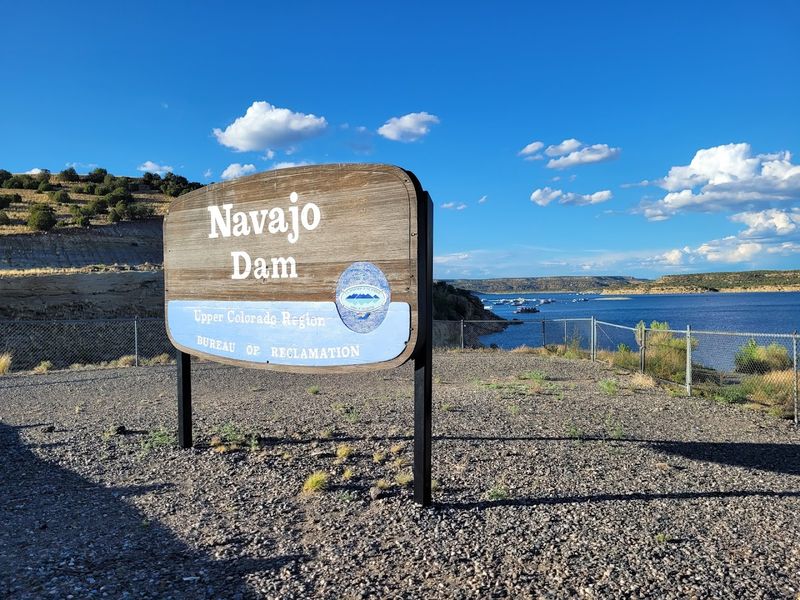
You stand on the rim and look toward the dam, and the whole scene feels steady, like a spine holding two landscapes together. New Mexico sun on the concrete makes the air shimmer and you catch yourself quieting down because big projects have that effect.
They do not ask for attention, they just occupy space with calm authority.
It is weirdly personal, though, to trace the shoreline and think of the choices that shaped it. A wall holds back water, and a lake arrives, and then a park grows around it with campgrounds, marinas, and trails braided through pinon and juniper.
You feel the tradeoffs landing in your chest while boats hum and swallows loop under the cliffs.
If you walk the viewpoint near the visitor center, the overlook lays out both sides like a split screen. On one side there is movement and sparkle, and on the other there is the dry sweep of New Mexico sandstone.
You look from one to the other and feel how the whole region decided to turn a corner, right here.
Rosa And Los Arboles Lost To The Deep
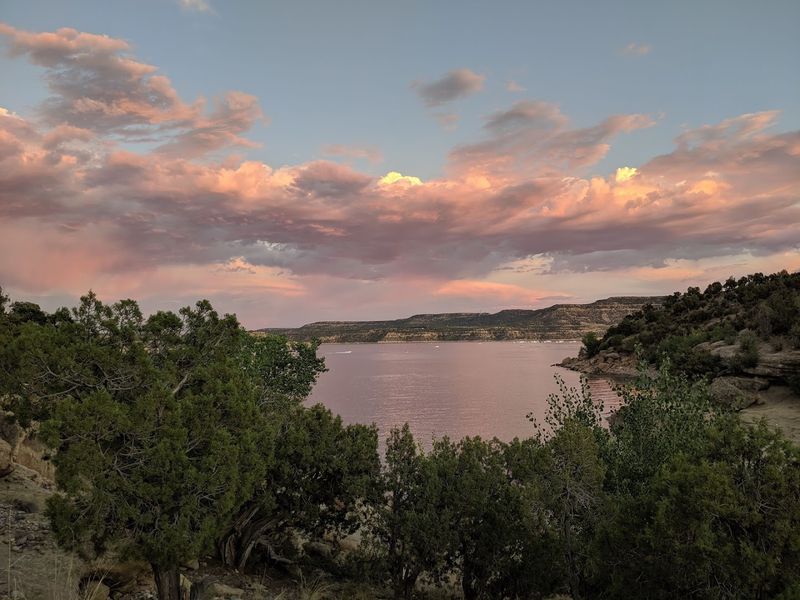
Say the names out loud for a second, Rosa and Los Arboles, because names help places stay human even when the map gets rewritten. Standing at the waterline, you picture a main street, garden fences, and laundry snapping in a dry New Mexico breeze.
Then you listen to the quiet and feel how the lake draped itself over daily life.
I like to imagine door handles still cold from winter mornings and worn steps polished by small routines. You see a small bell in your mind and hear it carry across the cottonwoods that once traced the banks.
Memory does that, it keeps ringing even when everything looks different.
If you paddle a kayak along the coves, you move slow and let the shoreline do the talking. Little swallows dip and rise, and the water carries a faint, hollow echo near the rocks.
For a moment you hold both towns in your head, then you realize the lake is holding them all the time, and that feels both tender and enormous.
Nearly Two Hundred Families Displaced
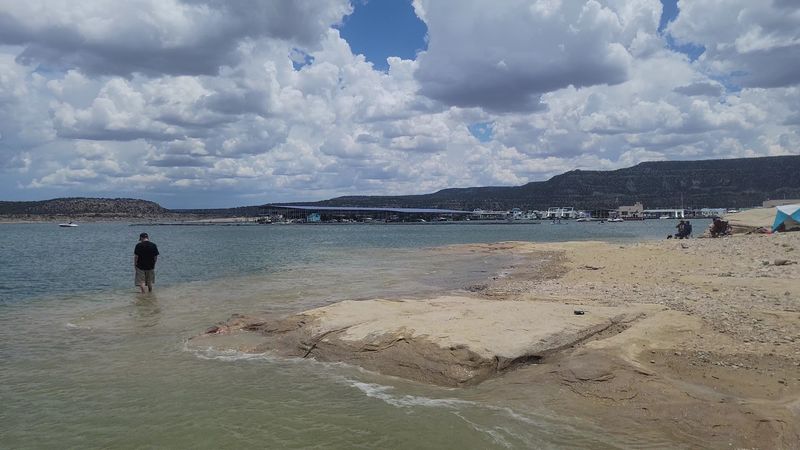
When you think about families, the story changes from abstract to close, like somebody just set a photo album in your hands. Picture boxes loaded into the backs of trucks, last glances at porch railings, and a slow drive away as the horizon feels stubbornly familiar.
New Mexico roads carry that kind of weight, and the sky tends to keep the secrets.
Out here, the park is friendly, but it also invites a pause. You watch the lake breathe against the shore and try to imagine the decisions that brought people to a new start.
There is a soft kind of courage in that, the kind most folks never get asked to find.
If you camp above the marina, early light drifts through the tent walls and makes the day feel generous. Walk down with coffee and let the morning loosen your shoulders.
Somewhere under that shine are living rooms and gardens, and the reminder that communities can move, even if their voices keep talking from underwater.
The Narrow Gauge Railroad Connection
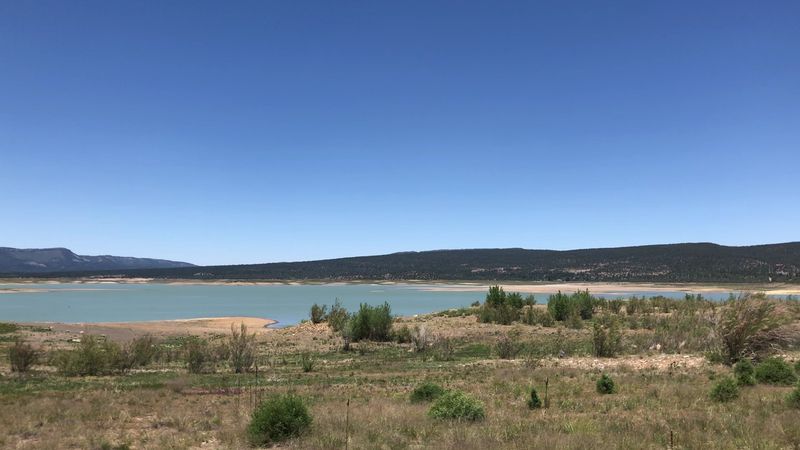
Here is a twist you might not expect. Before the lake, a narrow gauge line stitched this part of New Mexico to markets and mining camps, carving a path that still shows up if you know where to look.
Stand on a raised berm near the water and the alignment feels like a whisper from another era.
You can trace gentle curves and imagine a small locomotive pulling mixed cars through bright mornings and dusty evenings. The rhythm would have matched the land, not rushed it, with stops that felt more like conversations than schedules.
That thread is still here, even if the rails sleep under silt and cottonwood roots.
Hiking along the old grade near the park, you get those satisfying vantage points where lake, mesa, and sky trade places in the frame. The story sits right beside the present, not behind it, and the air smells like sage and hot stone.
It is an easy way to let history into the day without turning the day into homework, which I love.
A Church And School Under The Water
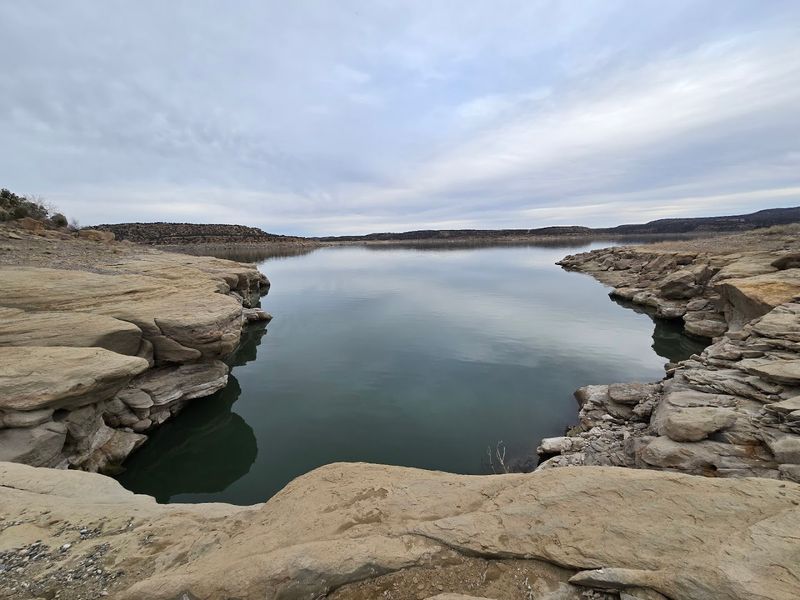
This part always makes me lower my voice a little. A church and a school once gathered people here, and now the lake holds those rooms like folded letters.
You can almost hear choir practice drifting across cottonwood leaves, and then a recess bell spooling kids into the yard.
When you stand at the edge of the water, think about the chalk dust that never settled and the hymn notes that kept ringing. The rooms are gone, but the habits they shaped live on in the families who moved up the valley and started fresh.
New Mexico communities are good at carrying their centers with them, even without a steeple or a flagpole.
If you want to feel that continuity, visit on a weekday morning when the lake is calm. Watch a few boats nose out and leave tidy wakes that stretch like underlines on the surface.
It feels like a small, durable promise, the kind you can keep without even saying it out loud.
Low Water Years Reveal Old Foundations
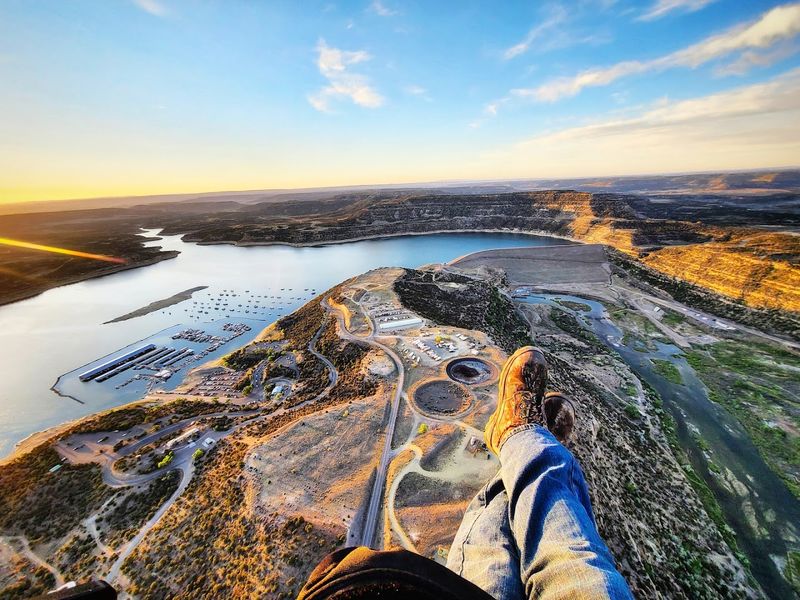
Every so often the lake steps back and shows a little of what it keeps. Low water pulls the curtain and you spot squared stones, straight lines, and the ghost of a road leading nowhere.
It is not dramatic, just quietly certain, like the land clearing its throat.
Walk those edges and you will see how foundations hold on, even after roofs and doors vanish from the script. Patterns appear in the dirt and pebble fields, and you notice how right angles fight their way through the curves of shoreline.
New Mexico light loves to outline those shapes, so the late afternoon is the time to go look.
Bring patience and good shoes, because the ground can feel slick or gummy along the mud flats. Give yourself time to let the images settle, the way a photograph appears in a tray.
Then step back and watch the lake claim it all again, as if to say, I remember, and I am not done holding this.
Drought Exposes A Slice Of The Past
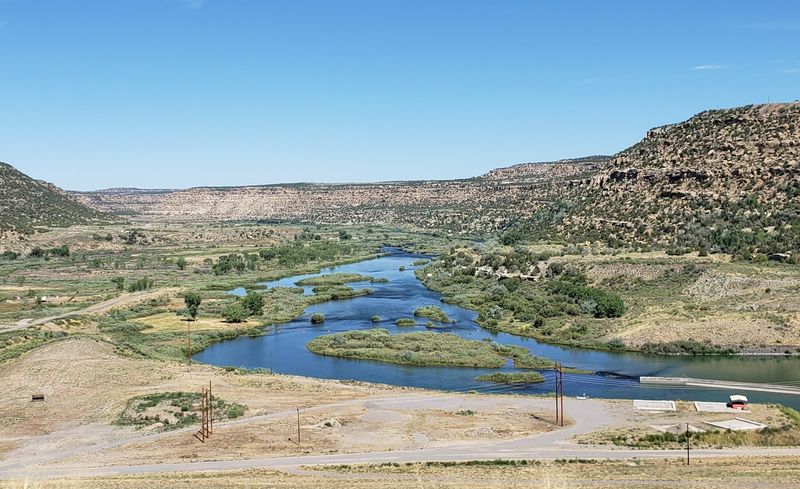
When the shoreline pulls away, the place turns into a living archive. You get these thin pages of the past laid open along coves and peninsulas, and you can read them if you do not rush.
The lake does not reveal everything, just a careful slice, like a curator who trusts you to pay attention.
There is a quiet thrill to it, the kind that makes you slow your steps without thinking. You find a squared corner or a straight berm and your brain starts building rooms out of air.
New Mexico has that way of mixing absence and presence until they feel like the same thing.
I like to stand for a minute, then move on, then look back and let the scene rearrange itself. Light shifts, shadows lengthen, and the shoreline redraws ideas you were sure about a moment ago.
It is not dramatic, but it lingers, and you carry it into the rest of the day without trying.
One Last Look Before The Lake Rises
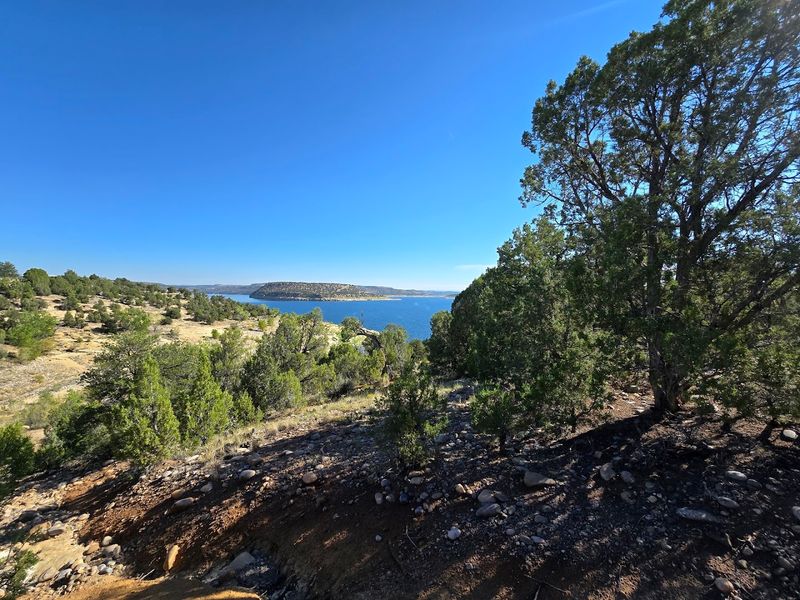
Before you drive out, take a slow walk to the overlook and let the evening wind smooth everything down. The lake holds its shape and the sky starts trading color with the cliffs, and the park slips into that easy New Mexico hush.
This is the spot for one last look, the kind you feel more than you see.
You think of families, of names, of rooms under the water that once held Saturday chores and tired shoes by the door. Somewhere down there is a covered bridge that framed stories for a long time and then learned to be quiet.
The surface keeps moving, but it feels respectful, like a hand on a shoulder.
On the way to the car, you listen for swallows and the faint metal chatter from the docks. You do not rush, because part of the visit is letting the place close around you at its own pace.
The lake rises and falls, and the story keeps breathing with it, steady and kind.
