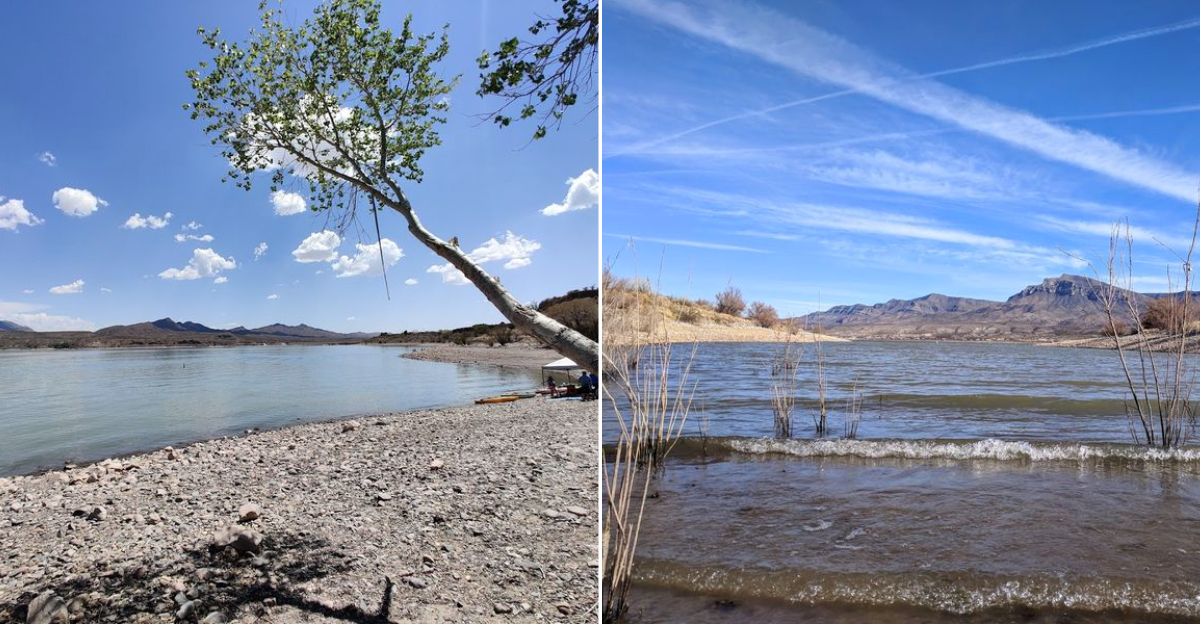
Ever see a reservoir and get the uneasy feeling that the shoreline is telling a bigger story than the water itself? This New Mexico lake has that kind of tension right now, because its startlingly low levels are changing the look of a place that was built to play a major role in the region’s water system.
What makes it especially striking is the contrast. This is a reservoir with a practical purpose, a quieter reputation than some of the state’s busier lakes, and a landscape tied to birds, desert mountains, and even ancient fossil discoveries.
Yet when the water drops, the whole setting starts to feel more fragile. Shallow stretches can vanish, familiar boating areas can turn into marsh or dry ground, and the exposed edges make the reservoir’s instability impossible to ignore.
That gives the place a very different kind of presence. It is still scenic, still useful, and still full of natural interest, but those falling levels make it much harder to look at without wondering what disappears next.
The Reservoir Side Of Caballo Looks Different Now
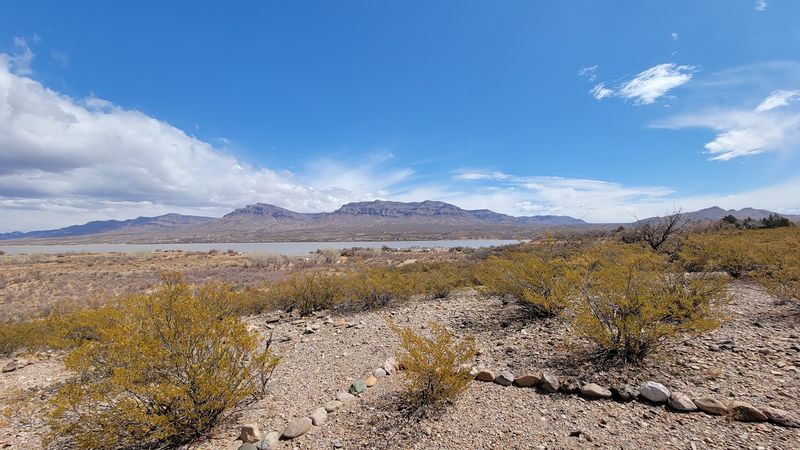
You step out of the car and the quiet hits first, that slow desert hush that makes every rustle of mesquite feel louder than it is. Then the view sinks in, because the main reservoir side of Caballo looks pulled back, like someone tidied the water and set it farther from the road.
You can still see sparkle on the surface, but the broad collar of pale shoreline changes your depth perception and slows your stride.
It is not ugly, just different, and different always makes you curious, right? The water found a smaller shape this season, and the edges tell the story with bands of color and texture that feel almost like tree rings.
Walk a bit and you notice how the breeze grabs less water and more dust, then lays it down in faint ripples across open ground.
I kept thinking about earlier trips in New Mexico when the reservoir felt big and easy, the kind of place where you read the day in how the light moves. Now the day reads you back and asks what you are planning to do.
Do you chase the thinning shoreline, or settle into the new normal and sit with it?
There is still beauty in the angles, especially when the sun slides behind thin clouds and the Caballo Mountains hold the horizon like a calm promise. Even the infrastructure looks surprised by the retreat.
You look at it, it looks back, and you both agree to keep an eye on things.
How Low Water Changed The Shoreline
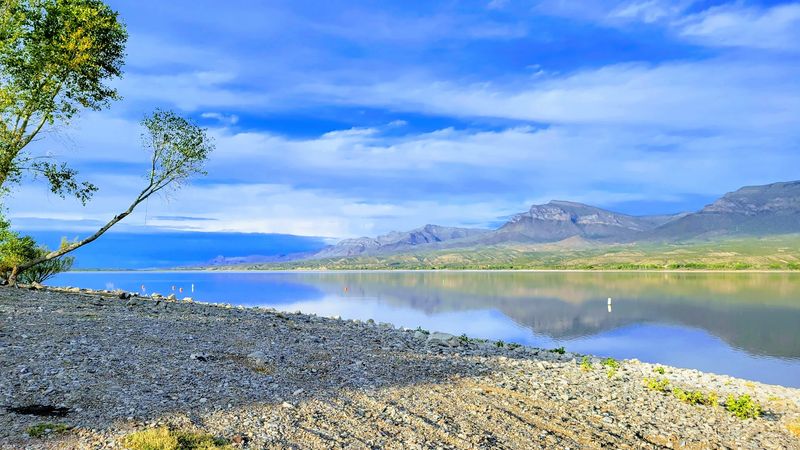
Look at the outline of the lake and you can trace what used to be underwater by color alone. Pale buff sand, then a darker strip where wave action lived, then cracked clay that glints when the sun leans sideways.
It is like a topographic map laid flat and left for you to read out loud, except you whisper because the quiet invites it.
Low water changes how you move here. Instead of hopping from cool shade to shoreline in a few steps, you wander across a shoulder of exposed ground that crunches and sometimes gives a little under your boot.
The path grows longer, and the time it takes to find the water becomes part of the visit, not just the approach.
In New Mexico, you learn to watch lines. Storm lines on the horizon, trail lines across arroyos, and now shoreline lines that mark long pauses in a reservoir’s pulse.
Those gentle rings stack like memory, showing where breezes once pushed chop against the bank.
Does it feel a little stark? Sure, especially when the light goes flat and the colors turn to a soft set of browns and grays.
But there is detail if you slow down, like polished pebbles, tangles of reed roots, and driftwood that looks sculpted by time and patience. The shore might be farther away, yet the story sits right under your feet.
You did not come for that lesson, but here it is, steady and clear.
The Exposed Lakebed Visitors Notice First
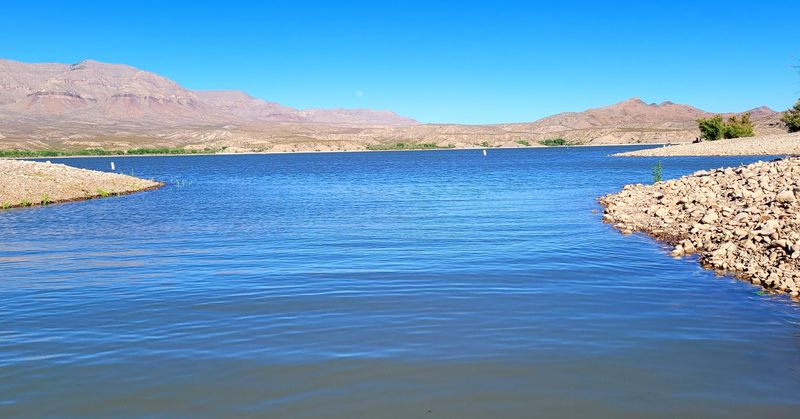
The first thing people point to is the patchwork of the lakebed, because it looks like a puzzle someone almost finished. Plates of dried mud overlaid with lighter silt, a few pale shells, and threads of plant roots twisting up like questions.
It is not dramatic from far away, but up close the lines turn into a small world.
You can tell where tiny waves once combed through, and where the lake idled, heavy and glassy. Now the ground squints in the light, and each step sounds different, some hollow, some crisp.
I always test a little spot before committing, because the surface looks solid until it is not.
New Mexico light is honest. It shows you the scuffs from wind, the new footprints, and the path where last week’s shower ran thin and disappeared.
If you are into textures, this place is a quiet gallery with no signboards, just your own pace and a long horizon.
Does it make you a little protective of the water that remains? It does for me, and that feeling sneaks up, especially when the breeze goes still and the only movement is your shadow moving over the patterned ground.
There is a soft gravity here that has nothing to do with drama and everything to do with time. Stand there a minute, breathe, and you will hear the lakebed settling into the day.
Why This Part Of The Park Feels So Bare
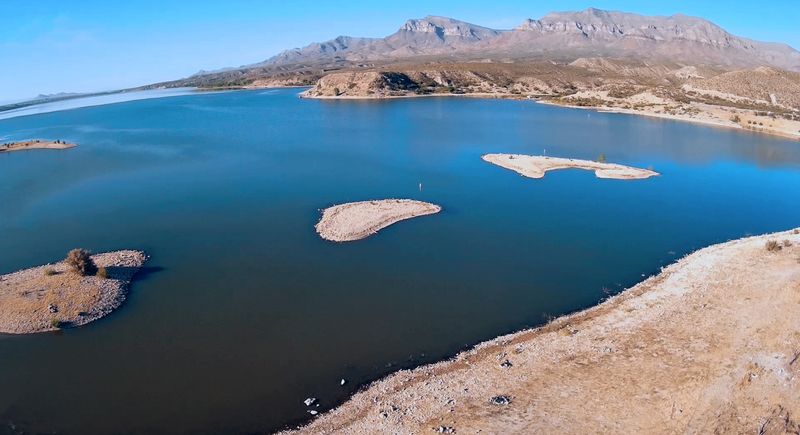
You know that wide open feeling where your eyes keep searching for anchors and keep finding space instead? That is this stretch of the park, where the water pulled back and left big pauses between shade structures and the edge.
The shelters face water that sits farther away, and the scene reads like a sentence with extra commas.
It feels bare because the cues you expect at a lake day got rearranged. The sound of lapping water lives down the slope now, and the breezy chatter that usually floats off the surface sits quieter on the ground.
Even the benches feel a little taller, like they were built for a view that stepped back.
But bare does not mean empty. Look closer and you see dust devils drawing brief sketches, swallows chasing gnats, and a silver seam of water that still carries light between the banks.
New Mexico does subtle really well, and this park leans into that lesson.
Do you miss the fullness? Of course, and that is part of being honest about what low water does to a place you care about.
The trick is to let the quiet teach you, to sit for a moment, and to hear how the wind takes the stage. It is not loss alone, it is a different rhythm, and it asks for patience we do not always bring.
What Falling Water Means For Boat Access
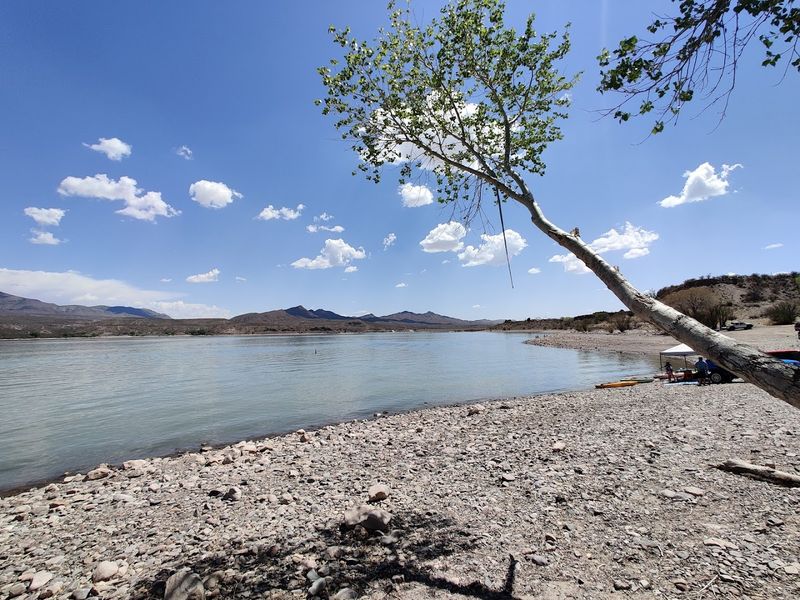
Here is the practical part that hits weekend plans first. Falling water shifts the equation for launching, retrieving, and even deciding which ramp makes sense on a given day.
You stand where trucks used to back in and realize the slope keeps going, and the lake does not meet you where it used to.
Access turns into strategy. You check the angle, the surface, and whether the dock floats or rests a little crooked.
Conversations at the parking area sound like quick planning sessions, with people swapping notes about depth, wind, and how much extra line they brought for tying off farther down.
This is not the only reservoir in New Mexico dealing with the puzzle, and everyone seems to share that mix of patience and gentle humor. You adapt, because that is what water makes you do, and the small wins add up when the bow finally kisses the surface.
Is it still doable? For many folks, yes, with added care and a slower pace, and with attention to park guidance that shifts as the lake shifts.
The moment your hull slides free carries a little more relief than usual, like you earned it by reading the conditions well. That softer launch might change your route once you are out, but it does not have to change your whole day on the water.
The Ramp Changes That Shape A Visit
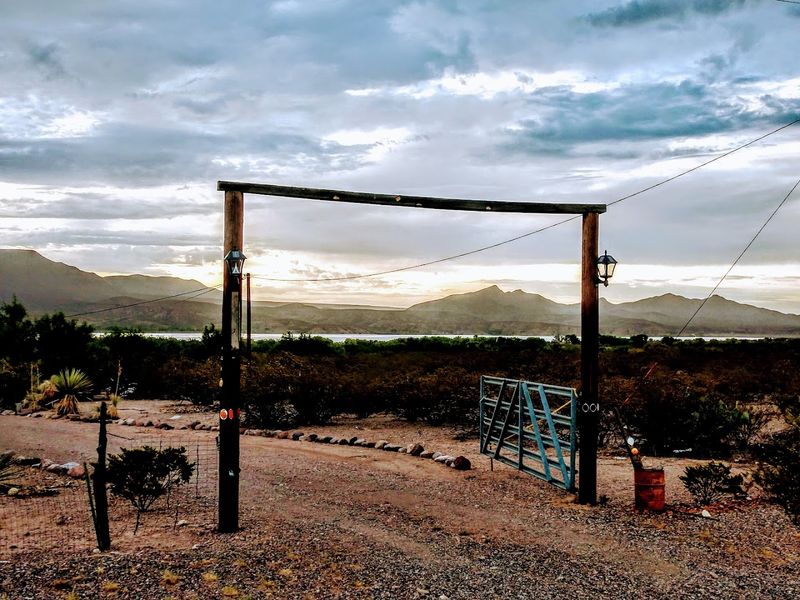
Ramps tell the truth with angles and edges. When the reservoir drops, you see it right there in the way concrete meets earth, and in the improvised fixes that keep people moving.
Some sections look newly scrubbed by air instead of water, and the end of the ramp might sit before the water’s reach.
That changes your day without ruining it. You might park a little higher, walk gear a little farther, and double check the trailer position before committing.
The visit becomes a steady flow of small adjustments that feel normal by lunchtime, even if they were surprises when you pulled in.
Folks here in New Mexico are good at swapping tips without making it a thing. Someone points out a firmer track, someone else offers a quick hand on a strap, and the line keeps inching forward.
You end up with a rhythm that is more cooperative than competitive.
Does the ramp look a bit lonely with the water stepped back? A little, but it also looks resilient, like it is waiting for the lake to breathe in again.
Until then, the concrete just points the way and you finish the distance on your own terms. That simple adjustment reshapes expectations in a quiet, practical way, which is sometimes all a place asks from you when conditions shift.
A Recreation Lake Under Real Pressure
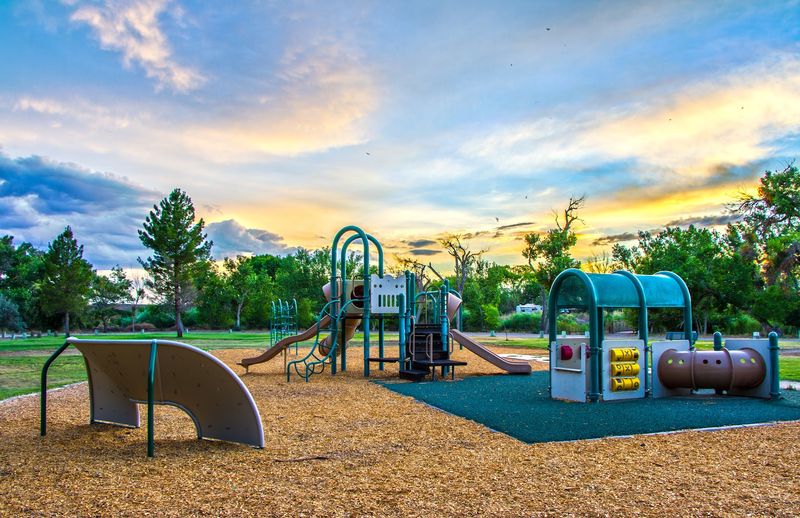
You can feel the squeeze on a busy day, even when the lake looks wide from the hill. Fewer easy coves, tighter lanes, and more people sharing similar stretches remind you that space is not just about size, it is about access.
The mood stays friendly, but you notice how everyone watches the wind and the shallows a little more closely.
Recreation does not stop just because the water sits lower. It adapts, and sometimes it gets smarter, with folks choosing calmer hours, different launch points, or shore plans that skip a boat altogether.
The place still gives what it can, and most days that is still enough to find quiet water if you look.
Across New Mexico, low levels have put pressure on the usual routines, and Caballo feels that chorus. You hear it in the way visitors talk about routes, and in the patient pauses before decisions that used to be quick.
The sky stays wide, yet people tuck into decisions shaped by care.
Are there moments when the squeeze feels heavy? Absolutely, and that is when the slower approach helps.
Take a breath, watch the light, and let the day suggest a plan that fits the lake as it is now. It is not a compromise so much as a conversation, and the water answers more gently when you listen first and move second.
Why The Low-Water Story Still Matters
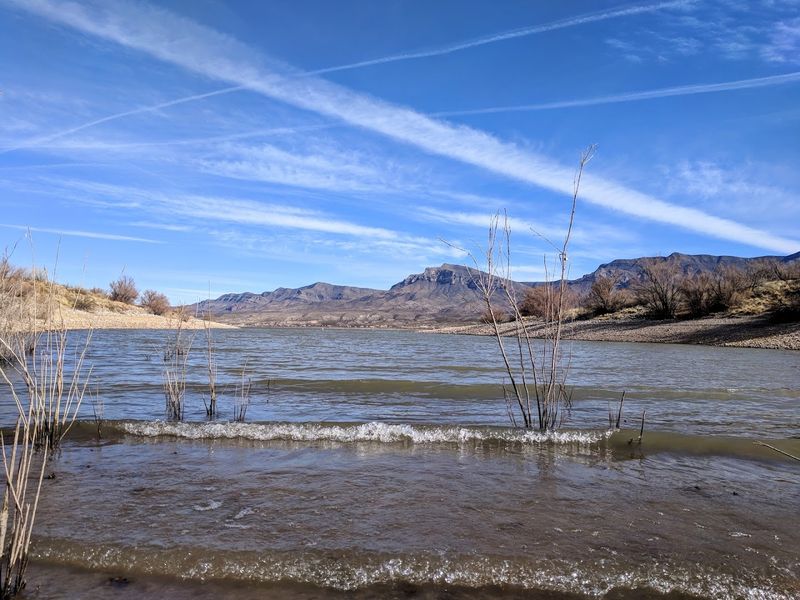
The reason this sticks with me is simple. Water is the thread that stitches a whole stretch of southern New Mexico together, from fields and backyards to the quiet places where birds settle at dusk.
When a reservoir drops, the tug travels beyond the shoreline and into the routines you do not always see.
Standing here, you feel how a lake is not just a place to launch or float. It is also a living gauge, reflecting snowpack far away, storm tracks, and the small choices we add to the pile every single day.
The story keeps unfolding, and pretending it is finished never works for long.
Caballo’s low-water chapter connects to what you hear about other reservoirs across the state, and it stays relevant because it touches how people plan, plant, and rest. Those threads are personal, which is why a quiet shoreline can feel louder than a busy one.
You are not just looking at water, you are looking at time and priorities.
Does it feel big? It is big, but it is also local, and that mix is where attention lives best.
Keep visiting, keep noticing, and keep asking kind questions about how to care for what is here. The answers are not quick, yet days like this make the conversation real, and that is a start worth holding onto.
The Caballo Mountains Framing A Smaller Lake
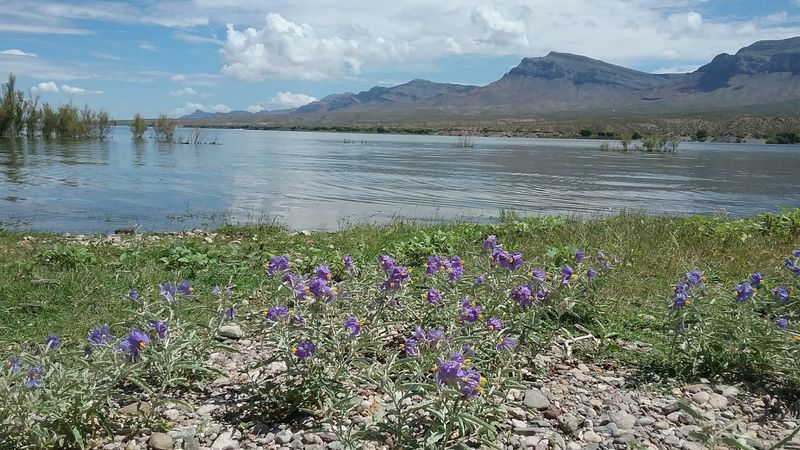
The mountains keep their cool no matter what the lake decides to do. They hold the horizon steady, and that steadiness makes the smaller water feel less like a loss and more like a season.
When the sun slides across those ridges, the lake still picks up a soft ribbon of gold and carries it calmly.
I like how perspective works here. From certain pullouts, the water’s retreat shows clearly, but the scale of the Caballo Mountains sets a wider frame that reminds you this valley has seen cycles before.
You can respect the change and still take in the evening light with an easy breath.
New Mexico does big skies like almost nowhere else, and that helps. Even when the surface area shrinks, the sky stacks color on color and hands the scene a sense of ease.
You watch the last bright patch drift toward shore, and for a moment the worry steps back.
Is it wrong to let the view soothe you? I do not think so, because calm helps you pay better attention.
The trick is to hold both truths at once, the beauty and the concern, and to keep them talking. Here, the mountains handle the beauty part without breaking a sweat, and the smaller lake makes a quiet, important point about care.
A New Mexico Reservoir Still Raising Concerns
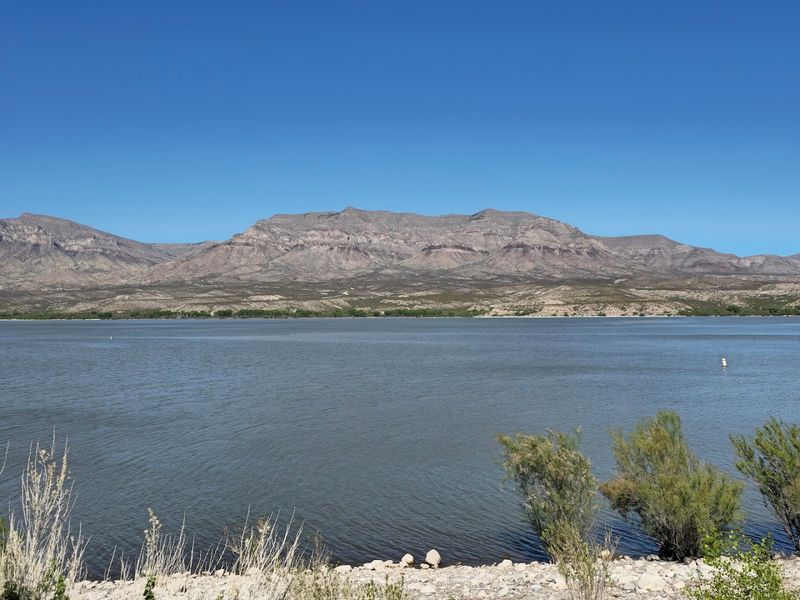
Even after a few good days on the water, the concern does not pack up when you do. It rides with you past the dam, across the valley, and right into the conversations you have about how places change.
Caballo keeps asking gentle questions, and once you hear them, they stick.
There is no single fix tucked behind a sign or a closed gate. What there is, mostly, is attention, and the way attention leads to smarter choices about when and how we use water.
The reservoir is a mirror that shows both the weather’s mood and the patterns we set in motion.
All over New Mexico, people are watching their local water with fresh eyes, and that feels like a step that matters. You see it in community talks, park updates, and the way visitors give each other space on tricky days.
The tone is more careful than fearful, which helps everyone breathe.
Do I think Caballo will stay in this exact shape? Lakes change, seasons move, and patience does real work, but worry has a role when it keeps us present.
The path forward looks like steady care and honest updates, not shortcuts. Keep showing up, keep noticing, and keep the concern kind, because places respond better when that is the spirit guiding the day.
Dear Reader: This page may contain affiliate links which may earn a commission if you click through and make a purchase. Our independent journalism is not influenced by any advertiser or commercial initiative unless it is clearly marked as sponsored content. As travel products change, please be sure to reconfirm all details and stay up to date with current events to ensure a safe and successful trip.
