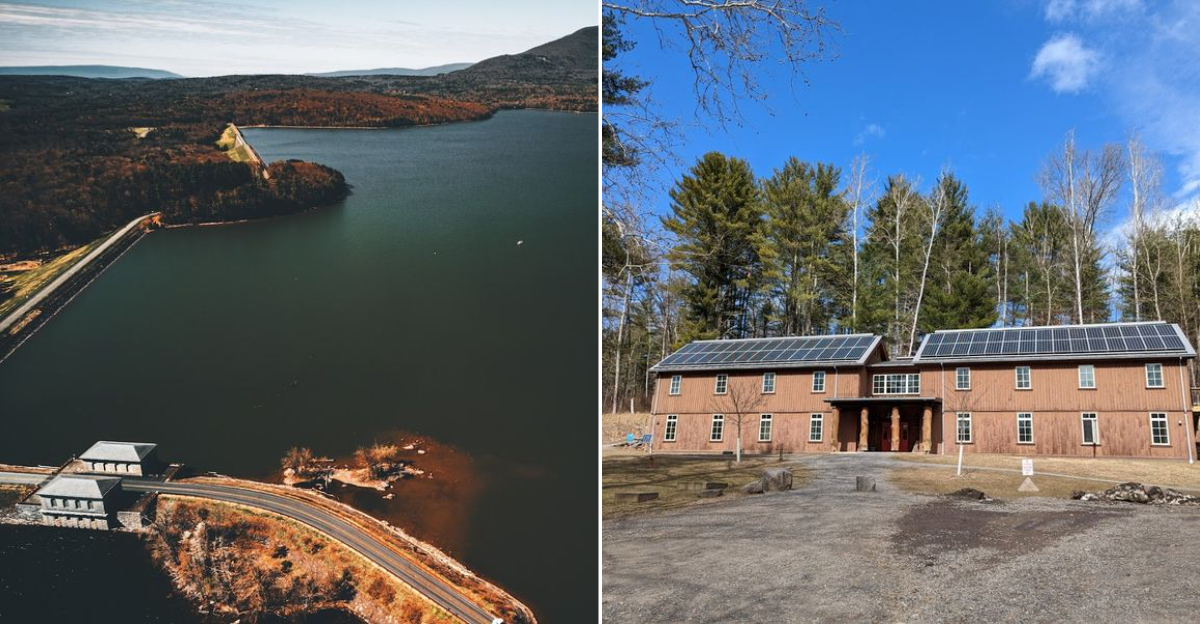
A dozen farming communities, their homes, churches, and mills, now lie beneath the water. Thousands of residents were displaced when the valley was flooded over a century ago.
This New York recreation area holds more than just a reservoir; it holds a submerged history. The name comes from an Iroquois word meaning “place of fish,” a fitting title for a body of water that now provides drinking water to over eight million people.
When the dam was finished in 1911, it was the largest of its kind in the world. Today, the reservoir is the deepest in the city’s water system, reaching 190 feet down.
But not everything buried there is forgotten. A hauntingly beautiful tune, written as an elegy for the end of summer at a nearby music camp, was named after this place and became famous as the theme for a landmark documentary series.
You can walk along the shores, fish, or simply stare across the quiet water. Just remember that beneath the surface, a dozen lost towns are still there, waiting for someone to whisper their names.
A 1907 Project To Quench New York City’S Thirst
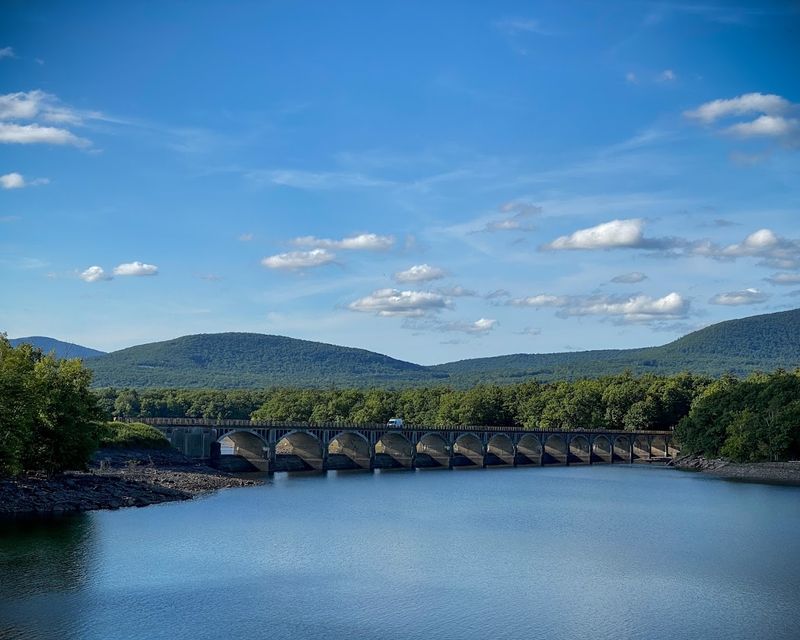
Here’s the thing you feel first: the scale. Standing at the causeway, you can sense the urgency that pushed New York City to reach into these hills, choosing a valley and shaping it into a reservoir that still keeps taps running far away.
You and I look at the glassy surface and think about how choices ripple forward, touching families, neighborhoods, and everything right down to old corner stones.
Walk the paved path and watch how locals use this place with quiet respect. You’ll see cyclists moving steady, anglers studying the waterline from allowed spots, and birdwatchers tracing osprey and herons as if reading a careful script.
The mountains fold behind the water, and it’s easy to forget there were fences, fields, and kitchens exactly where that blue sits.
What gets me is how the reservoir feels both public and private. It serves a whole city, yet it still feels like a conversation between the Catskills and the valley that gave itself up.
If you stop and rest at the railing, the breeze carries a coolness that smells like pine and wet stone, and suddenly you’re part of that longer story.
Twelve Hamlets Lost Beneath The Catskill Waters
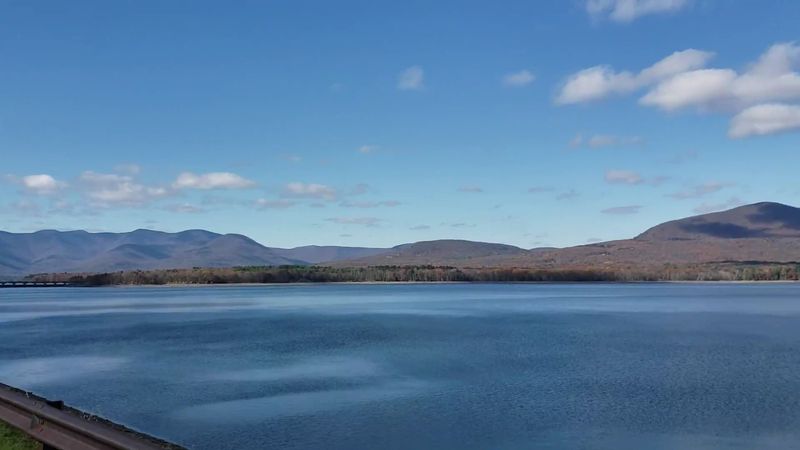
If you’ve ever tried to picture a dozen hamlets all at once, this is where it becomes real enough to sting a little. The reservoir took names that once sat on letterheads and doorframes, all folded into the basin and sealed beneath this steady blue.
You do not need a map to feel those outlines, because the light on the water seems to trace them for you, slow and patient.
Right here near West Hurley you can start the drive that circles the shore, and the sense of what changed grows with each pullout. Ashokan Reservoir, 2080 NY-28A, West Hurley, NY 12491.
The path curves, a heron lifts, and you realize people once counted distances by fences and river bends that no longer exist, except in careful records and family stories.
What always catches you is how ordinary those places must have felt, right until the day they did not. Think about porches where boots waited, and barns where straw choked the afternoon sun, and a post office window that clacked open after chores.
Those little anchors defined home, and then the valley shifted from soil to water, still carrying their names quietly on the breeze.
Four Towns Vanished Completely From The Map
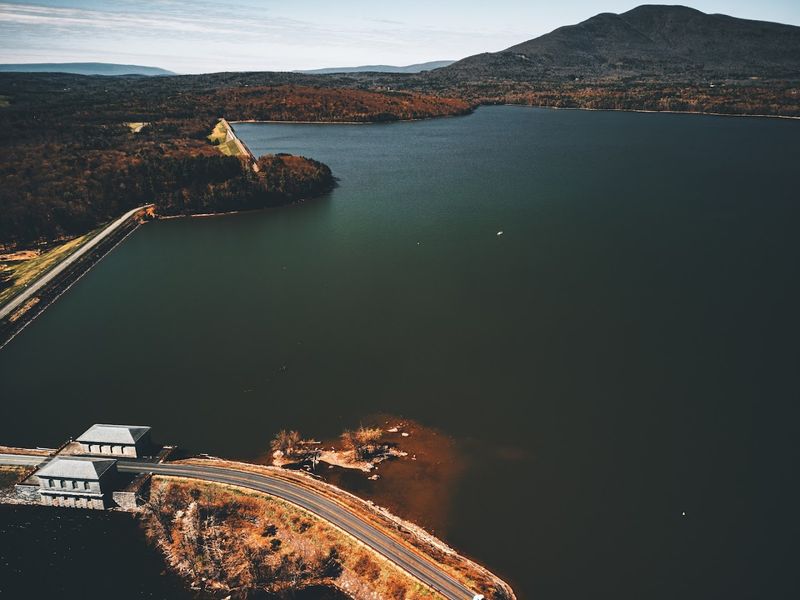
Maps are honest until they are not, and that’s the strange ache you feel looking out here. Whole communities once stitched this valley together, and the red lines that marked their limits eventually melted under water like chalk in a rainstorm.
You can picture mail routes, school boundaries, and little border squabbles dissolving into one calm sheet of blue.
When I say vanished, I do not mean forgotten, because families kept the names alive at kitchen tables and reunions. The Catskills carry memory in a generous way, stretching it across hills and through ravines where the Esopus still talks.
Drive a little, stop at a turnout, and listen for the faint rhythm of something that used to be familiar to a lot of feet.
There is a special kind of quiet when a town stops being a place you can stand in. It shifts into a place you hold in stories, photographs, and the way older neighbors pause before answering a simple question.
Looking across the reservoir, you realize the map did not lie so much as evolve, settling into water that reflects everything around it and almost nothing below.
Eight Other Communities Dragged To Higher Ground
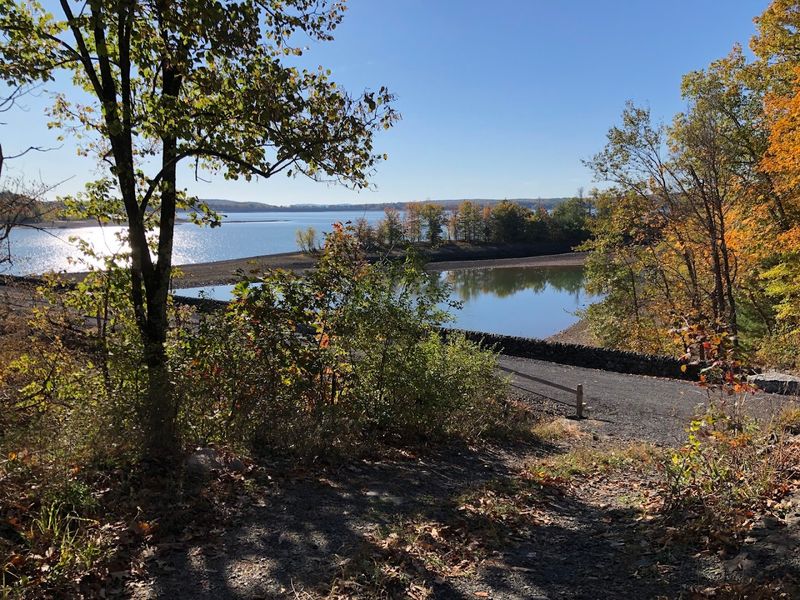
You ever notice how some houses look like they remember another address? Around the reservoir you can spot places that feel gently misplaced, lifted from a valley floor and settled on higher ground with their habits intact.
Porches still face the light just so, as if the old view was taking attendance and might drop by later.
The move was not tidy, and that is what makes it human. Families packed trunks, unspooled clotheslines, and measured new corners against the old ones, telling themselves that a familiar lamp would stitch rooms together again.
In New York, people know how to keep going, and the Catskills gave them a ridge to stand on while they figured out the rest.
Drive the loops around Olive and Hurley and you will feel that quiet persistence. Stone steps sit slightly askew, lilacs lean over fences that learned a second wind, and mailboxes carry names that once stood closer to the creek.
The reservoir holds what could not move, but the hills took the rest in, letting new streets grow from memories that still answer when called.
Two Thousand Residents Forced From Their Homes
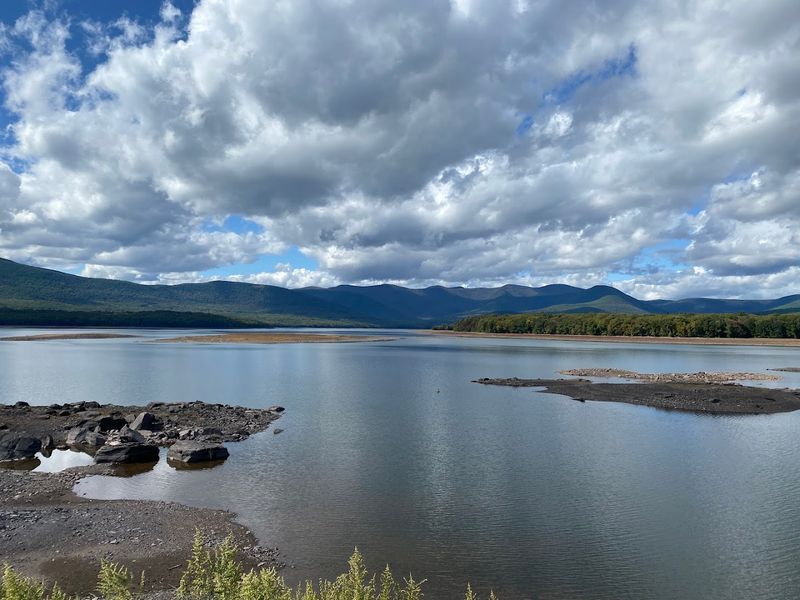
It’s the personal math that stops you, not the official totals. Think about one family at a time, pulling quilts from a line, folding a table, and deciding which cracked mug counts as home.
Then think about neighbors doing the same thing across the valley, each door closing softly so the sound does not scare off whatever courage is left.
Standing near the water, you can almost hear those ordinary decisions stacking up. People chose to lift gardens into new soil, to try different school routes, to rebuild fences in yards that did not yet smell like their own.
That’s the kind of grit New York carries in its backbone, quiet and steady, even when the ground literally changes underfoot.
The reservoir looks peaceful, but you and I know peace usually rides in on sacrifices nobody cheers for. So I like to pause at the railing, look over the blue, and say a quick thank you to the folks who did the heavy lifting.
Their steps still echo in the hills, and the water reflects a sky they once watched from porches that are resting somewhere below.
A Dozen Schools And Ten Churches Demolished
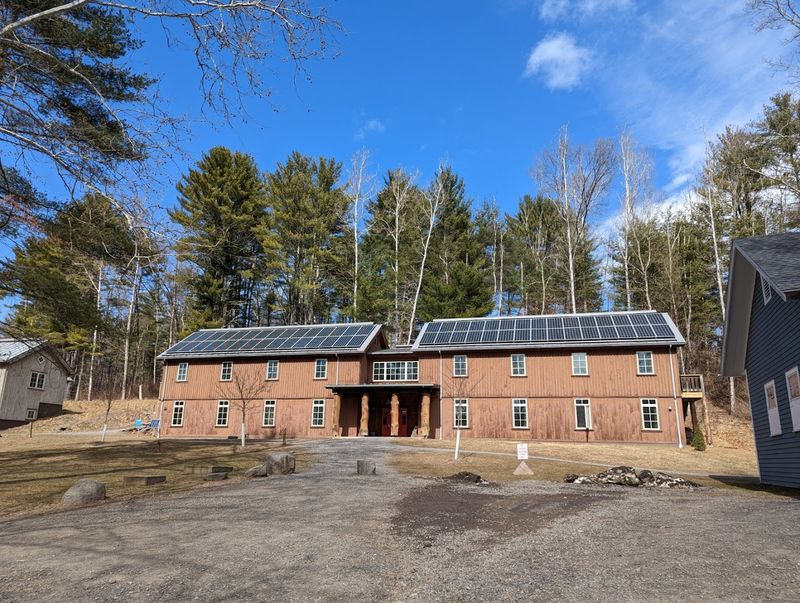
Try to picture the weekday bell and the Sunday bell sharing the same valley air. Classrooms once rattled with boots and chalk dust, while sanctuaries held whispers and hymns that drifted across the fields.
When the valley shifted to water, those buildings did not get a farewell parade, just careful hands and a promise that their purpose would travel on.
I like to imagine teachers packing maps and hymnals sliding into crates, each item carrying fingerprints that knew the rhythm of ordinary days. The Catskills still feel like a campus and a chapel combined, if you walk slowly enough along the shore and listen for the soft click of memory.
In New York, tradition tends to find new walls, whether it is a town hall or a borrowed room.
If you stop by a wayside sign and read the old names, you can almost hear a page turn. It is not nostalgia so much as a nod to the work those rooms did for a long time.
The reservoir holds the silence now, clear and steady, like a long breath kept for something that mattered.
Twenty Six Hundred Graves Relocated Before The Flood
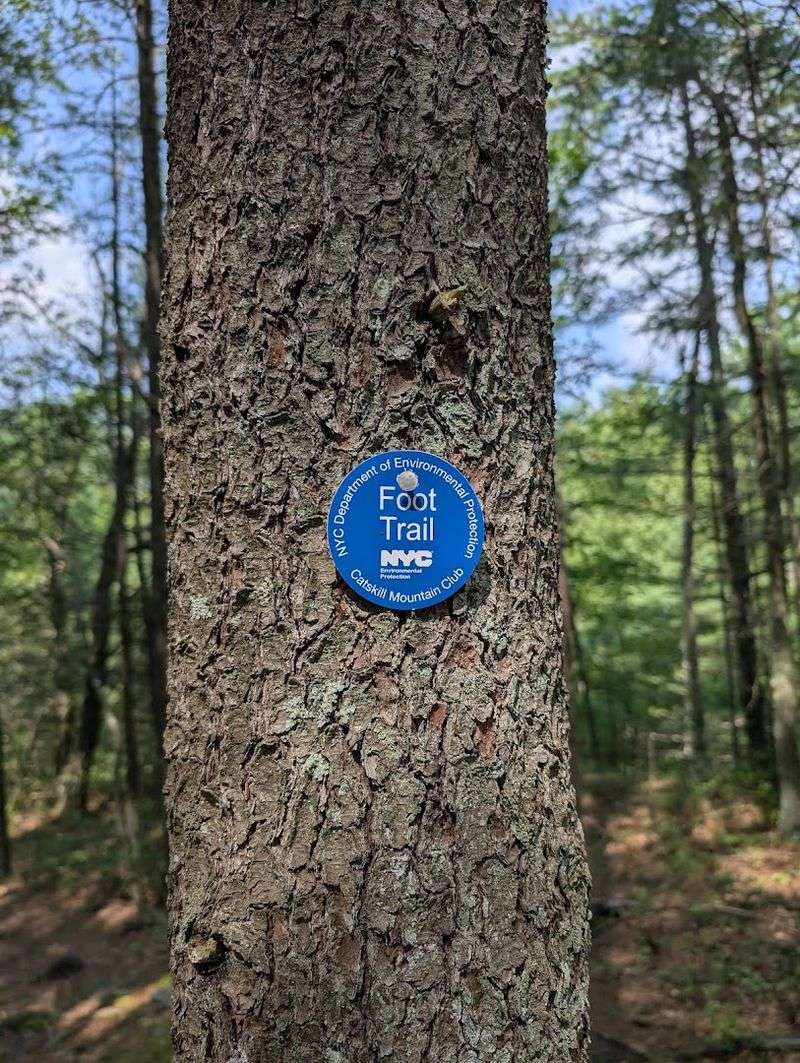
This part always makes me slow down and speak a little softer. The valley did not just hold kitchens and barns, it held ancestors, and moving them took more care than any blueprint could capture.
Families visited hillside plots and valley corners, then agreed to gather everyone higher, where the view could keep watch over the water below.
Walking a cemetery above the reservoir, you feel how deliberate that work was. Headstones share space among pines, robins hop the rows, and the lake glints through branches like a steady witness.
It is the most tender chapter in a long story, carried out with a patience that still lingers on the paths.
When you and I pass by, we do not gawk. We read a few names, touch cool stone, and let the quiet do its job.
This is New York at its most careful, wrapping memory in new ground and trusting the hills to hold what the valley could not.
The Valley Floor Scrubbed Clean Of Every Tree
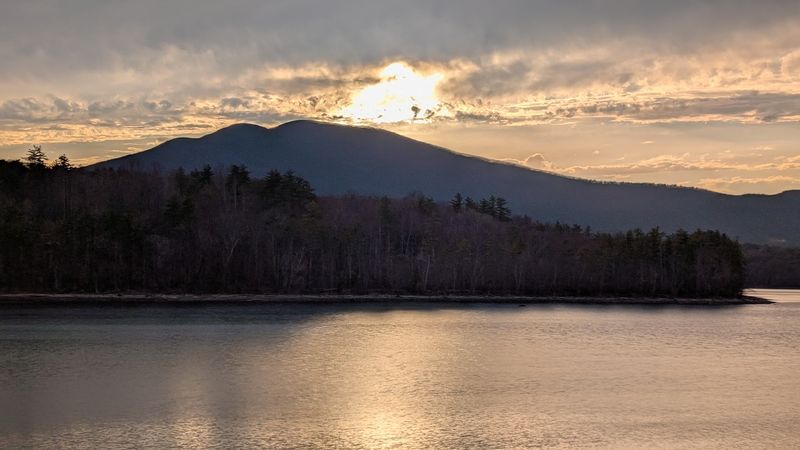
Imagine the sound before the water arrived. Not rushing or lapping, but the steady clatter of teams clearing a whole valley so branches would not snag and rot below the surface.
The goal was straightforward and relentless, to strip the basin down until the water could sit clean and do its job without a tangle in the dark.
Looking across the reservoir now, it is impossible to picture every stump gone, every trunk hauled, every fence lifted out of the way. Yet the smoothness you see is built on that hard sweep, the kind of work that rarely gets a marker.
The Catskills are green all around, and the blue sits in the middle like a well kept promise.
Sometimes the wind carries a woody scent even with no trees in the basin, and I think that is the hills reminding us where the timber went. It rose to new ridgelines, rebuilt barns, and warmed replacements for homes that had to move.
The water settled in, and the forest learned a different outline.
Low Water Years Reveal Old Stone Foundations
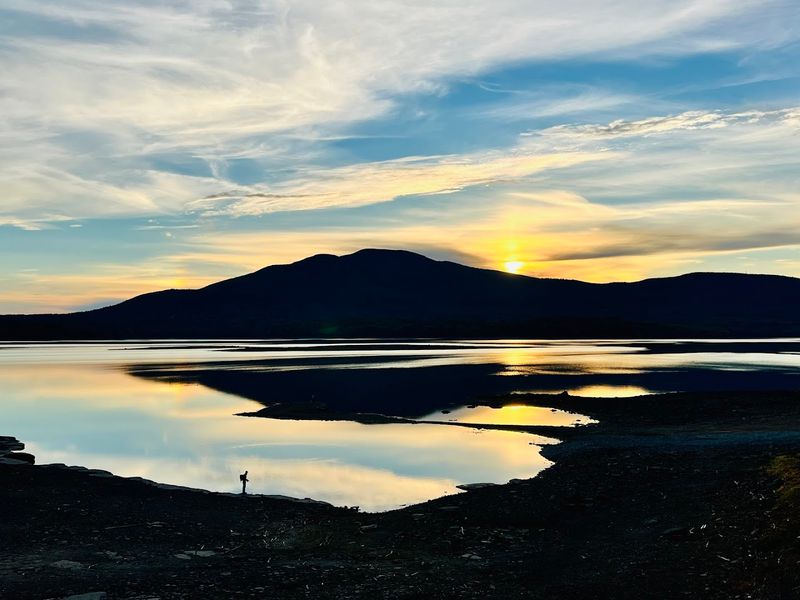
Every so often, when the level slips, the shore gives up a secret or two. You might spot squared stones laid just right, or a footing that knew the weight of a porch and Sunday shoes.
It is a strange, respectful thrill, like the valley is reminding you it still has a heartbeat under the blue.
We never climb out on muddy flats or push past signs, because the rules are there for a reason and the shore can shift underfoot. But from a safe distance you can study the lines and imagine the rest of the room lifting back into place.
Windows find their corners, a door clicks, and in your head you can almost hear the floor complain softly.
This is where the story feels closest, especially when clouds hang low and the water goes still. New York has a way of letting the past flicker for a moment, then tucking it away again before you overthink it.
If you catch a glimpse, take it as a nod from the valley.
One Last Look At The Catskill’S Own Atlantis
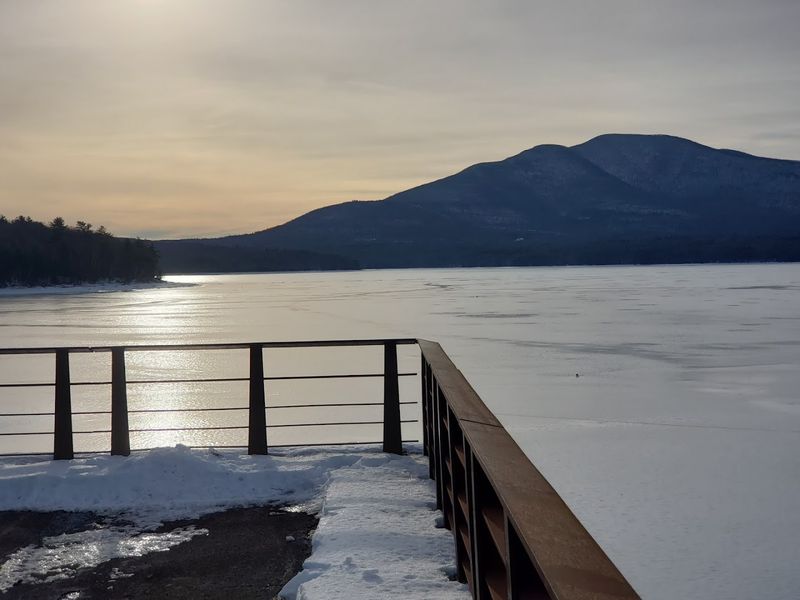
Before we head back, let’s stand here a minute and let the whole picture settle. The Catskills lean in close, the reservoir keeps its calm, and there is just enough breeze to crease the surface.
You can almost see a main street under there, lined with windows that catch the same light you are watching now.
I always leave with a mix of gratitude and ache. Gratitude for the water that still threads its way to New York City, ache for the lives that stepped aside so that promise could be kept.
That balance is the heart of this place, and it is why a simple walk along the railing feels like a conversation you keep returning to.
Call it an atlas turned inside out, or a quiet Atlantis tucked into the hills. Either way, it holds you.
And on the drive out, when the trees lift and the road tilts toward the highway, you feel the story ride along until the mountains finally let you go.
