Roasted cacao has a warm, nutty, slightly fruity scent that sticks with you, and that smell pulled me across the parking lot before I even reached the door. What waited on the other side was a working chocolate factory with glass walls, humming machines, and pipes carrying liquid chocolate overhead like some sweet plumbing experiment.
I came for a snack and ended up staying almost two hours, watching beans get roasted, cracked, and eventually poured into molds. The glass walls let you see every stage of the process, from the roasting drums tumbling the beans to the melangers grinding the nibs into a thick paste.
The guided tour runs about an hour and a half and takes you through the entire bean-to-bar process, with chances to taste chocolate at different stages of production. The air smells like fresh cacao roasting the whole time, and the staff explain each step with a kind of enthusiasm that makes you forget you are in a factory at all.
This North Carolina spot has plenty of places to eat well, but very few let you watch your dessert being built from a raw seed.
The Riverside Building That Hides a Sweet Surprise
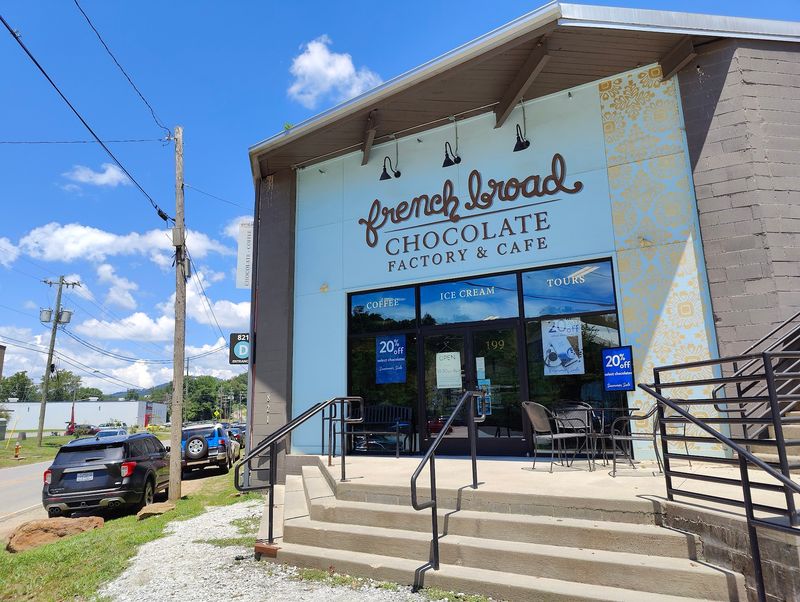
Nothing about the outside screams chocolate. The building sits in a working stretch of Asheville’s River Arts District, near the French Broad River, surrounded by warehouses, gravel lots, and the general clatter of a neighborhood that still makes things.
I honestly drove past it once. Then I rolled the window down and caught that unmistakable roasted cacao smell, which settled the question immediately.
Parking turned out to be easy, which is a small miracle in Asheville. There is a free private lot, plus additional gravel parking just south of the building, so you are not circling downtown blocks hunting for a space.
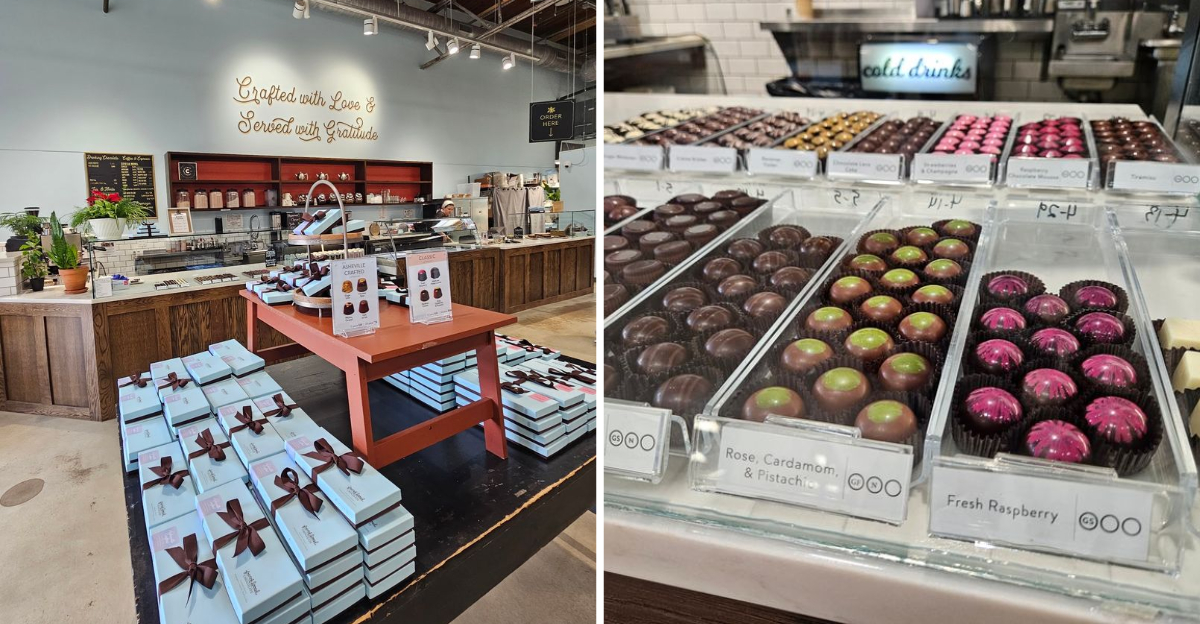
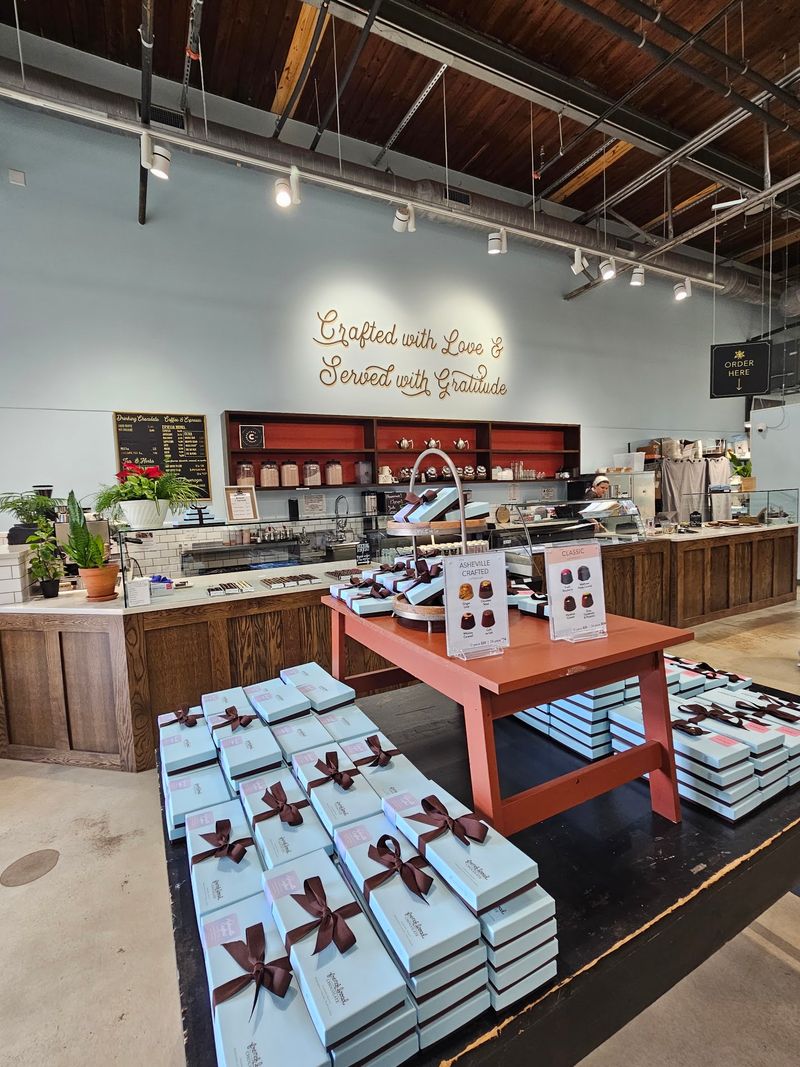
Inside, the mood flips completely. Concrete and steel give way to bright light, wooden counters, glass viewing walls, and shelves of neatly wrapped bars stacked like books in a tiny library.
What struck me most was how open the whole layout feels. You are not tucked into a gift shop pretending to be near a factory.
The production floor sits right there behind glass, visible from the cafe seating, with interpretive signs explaining each machine and each stage.
Bathrooms are single stall with coat hooks, which sounds like a strange detail to mention until you are traveling with a backpack and a coffee.
The contrast is the fun part. An industrial shell on the outside, a genuinely warm and busy chocolate workshop on the inside, with staff moving between the counter, the ovens, and the tempering machines all day long.
Following a Cacao Bean Through Its Long Journey
Chocolate starts as a seed inside a fruit pod, which is something I knew in theory and had never really pictured. Seeing an actual cacao pod up close changed that.
The beans are pale, slippery looking things that need fermenting and drying long before anyone thinks about candy.
French Broad sources fine flavor cacao from farms in places like Nicaragua, the Dominican Republic, and Uganda, working directly with growers and paying attention to fair trade and sustainable practices.
Once the beans arrive in Asheville, the transformation takes days rather than hours. Roasting comes first, and it is where flavor really develops.
Different origins get different roast profiles, the same way coffee does.
Winnowing follows, cracking the beans and blowing away the papery husk so only the nibs remain. Then comes milling and refining, where those nibs are ground down until the gritty texture disappears entirely.
Tempering is the step I found most fascinating. Chocolate has to be heated and cooled through very specific temperatures so it sets with a glossy finish and that satisfying snap when you break a bar.
Skip that step and you get dull, crumbly chocolate that melts on your fingers.
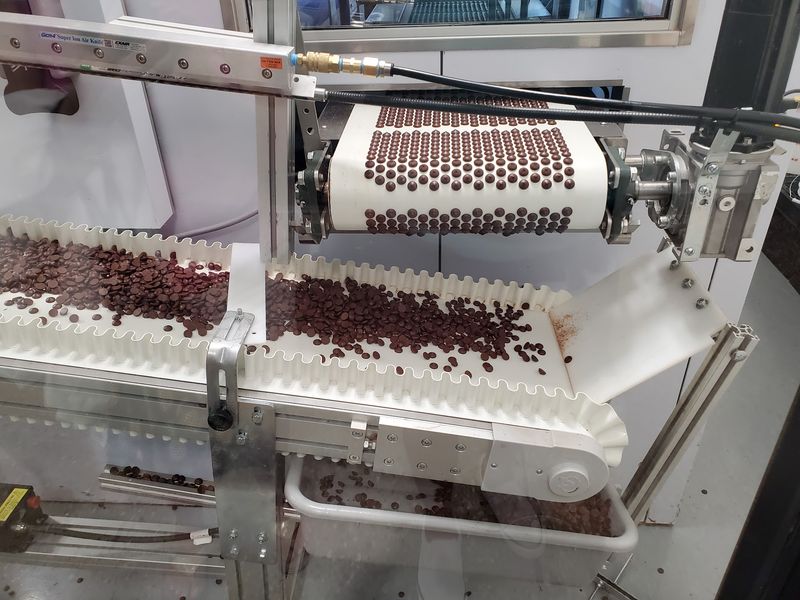
Molding wraps it up, turning tempered chocolate into bars and chips.
Watching each stage laid out in order made me realize how much patience the process demands. A single bar represents weeks of farming, fermenting, shipping, roasting, and grinding, all before it reaches a wrapper.
The 45 Minute Tour That Goes Behind the Glass
Booking ahead matters here. Tours run daily but require reservations, and they fill up, especially on weekends and during leaf season when Asheville gets busy.
The whole thing runs about 45 minutes, which felt like exactly the right length. Long enough to learn something real, short enough that nobody in the group started fidgeting.
Things begin in a classroom style space with a presentation covering cacao pods, farming, harvesting, and the story of how the company started. I expected this part to drag.
It did not, mostly because the guides genuinely seem to enjoy the subject and answer questions without rushing.
Then the group moves out to the viewing windows, where the real show happens. Chocolate travels through pipes overhead, machines rumble, and you can watch whatever is being produced that particular day.
One detail delighted me more than it probably should have. Certain viewing spots have what the staff call an aroma shower, piping the scent of warm chocolate out toward visitors so you smell exactly what you are watching.
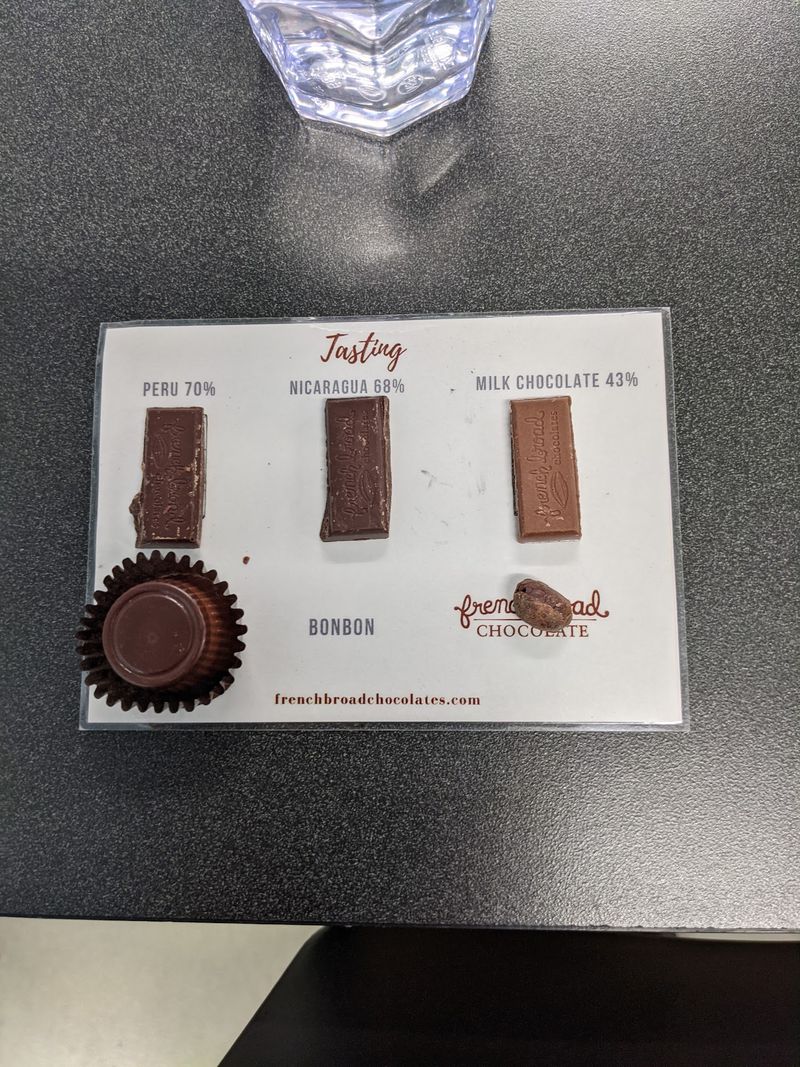
Tastings happen along the way, comparing chocolate from different origins so you can actually notice the difference between them.
Kids do well on this tour. Younger ones stare at the machinery and the moving belts, while older children latch onto the farming and sustainability side of the story.
Bring a little curiosity and you will leave knowing far more about chocolate than when you walked in.
Liquid Truffle, Hot Chocolate, and Other Cafe Temptations
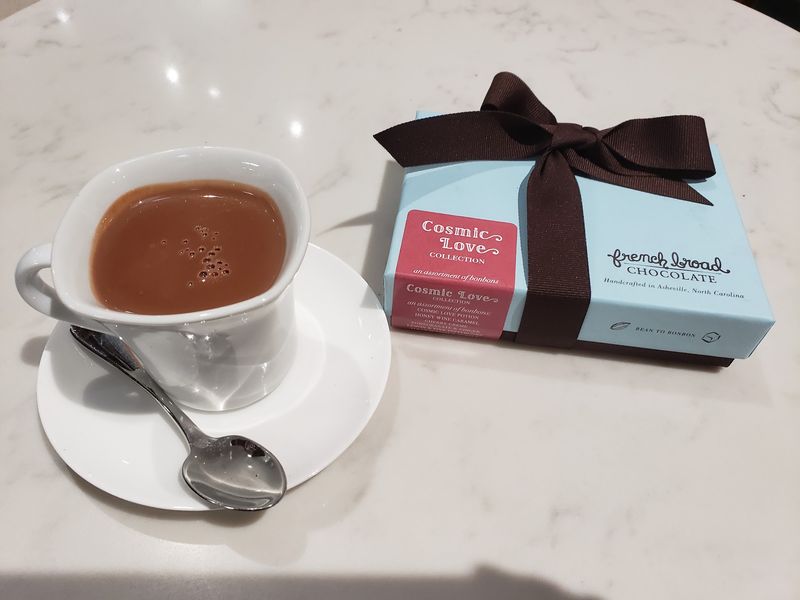
Order the liquid truffle at least once. It arrives in a small cup, thick and glossy, closer to melted chocolate than to any drink you have had before, and it demands to be sipped slowly.
A word of warning from experience: the dark chocolate versions are intense. Very intense.
Keep a glass of water nearby, because richness like that sneaks up on you fast.
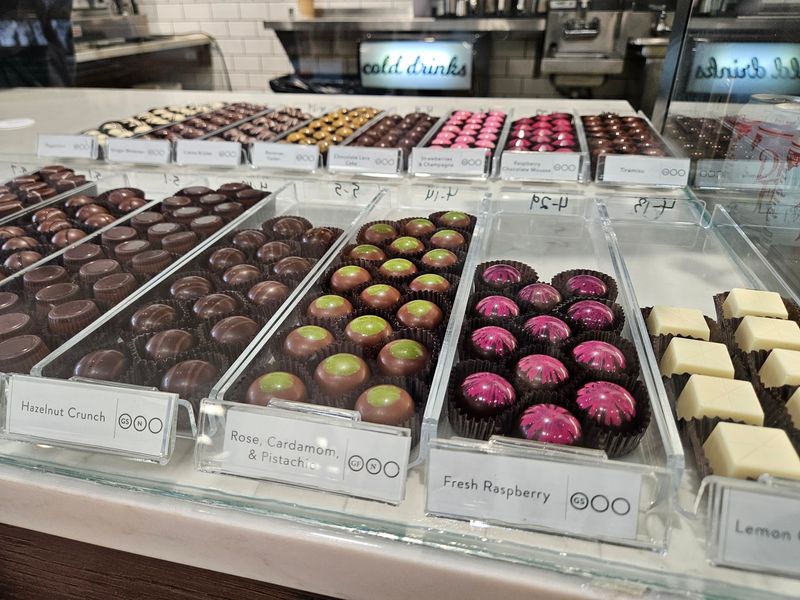
The cafe menu stretches well beyond drinks. Bonbons sit in neat rows behind glass, alongside truffles, caramels, brownies, pastries, cookies, and house made ice cream.
I went with a salted chocolate chip cookie and a coffee, then immediately regretted not also getting the brownie. The salted caramel brownie has a fudgy texture rather than a cakey one, which is exactly how I think a brownie should behave.
Coffee here is treated seriously too. Espresso drinks, cold brew, americanos, mochas, and affogato all share counter space with the chocolate.
Dietary labels are clearly marked on the bonbons and ice cream, noting gluten free, vegan, and gluten sensitive options. That kind of small thoughtfulness makes a big difference when you are traveling with a mixed group.
Seating faces the factory windows, so you can watch production continue while you eat. There is something oddly satisfying about biting into a truffle while machinery grinds cacao twenty feet away.
Walk ins are welcome, no tour required.
How Two Travelers Turned a Costa Rica Trip Into an Asheville Institution
Here is a fun bit of origin trivia. French Broad Chocolate exists because of a trip to Costa Rica, not because of a business plan drawn up in North Carolina.
Founders Jael Skeffington and Dan Rattigan spent time there learning about cacao, seeing how it grows, and understanding what happens between the tree and the bar. They brought that knowledge back and started the company in Asheville in 2006.
Nearly two decades later, that beginning still shapes the place. The emphasis on direct relationships with farmers is not marketing language tacked on afterward, it is the reason the company started at all.
Guides mention the sourcing partnerships during tours, along with the local businesses they work with for ingredients. Hearing how many pieces come together in one bar made me appreciate the finished product differently.
The company also has a downtown lounge location, but only the Riverside factory offers the production views and tours. If you want to actually see chocolate being made, this is the address to write down.
Something I noticed on my visit was how many staff members seemed genuinely invested in what they were doing. Even during a rush with a line out the door, the counter crew kept things moving and stayed friendly.
Craft businesses live or die on that kind of consistency. Two decades in, the care still shows in the details, from the packaging design to the way each bonbon is finished.
Planning Your Visit Without Missing the Good Stuff
Timing makes a real difference here. Doors open at 10:30 AM every day of the week and close at 6 PM, and production runs on weekday schedules, so a morning visit on a weekday gives you the best odds of seeing machines actively working.
Show up on a quiet afternoon and you may find the factory floor still, which is fine but less exciting.
Tour reservations should be handled in advance through the website or by phone at 828-348-5187. Walking in and hoping for a spot is a gamble, particularly during autumn when the mountains fill with visitors.
Give yourself more time than you think you need. Between the tour, browsing the retail shelves, and sitting down with something from the cafe, an hour and a half disappears quickly.
Bars make excellent souvenirs and travel well, though warm car interiors are the enemy. A cooler bag in summer is a smart move if you are buying several.
Families should know the space handles strollers fine and the tour holds attention for kids as young as three, mostly because machinery and chocolate smells are naturally interesting.
Pair the stop with a wander through the surrounding River Arts District, where studios and galleries sit within easy walking distance along the river.
Come hungry, come curious, and leave a little room in your bag.
Address: 821 Riverside Dr, Asheville, North Carolina 28801
