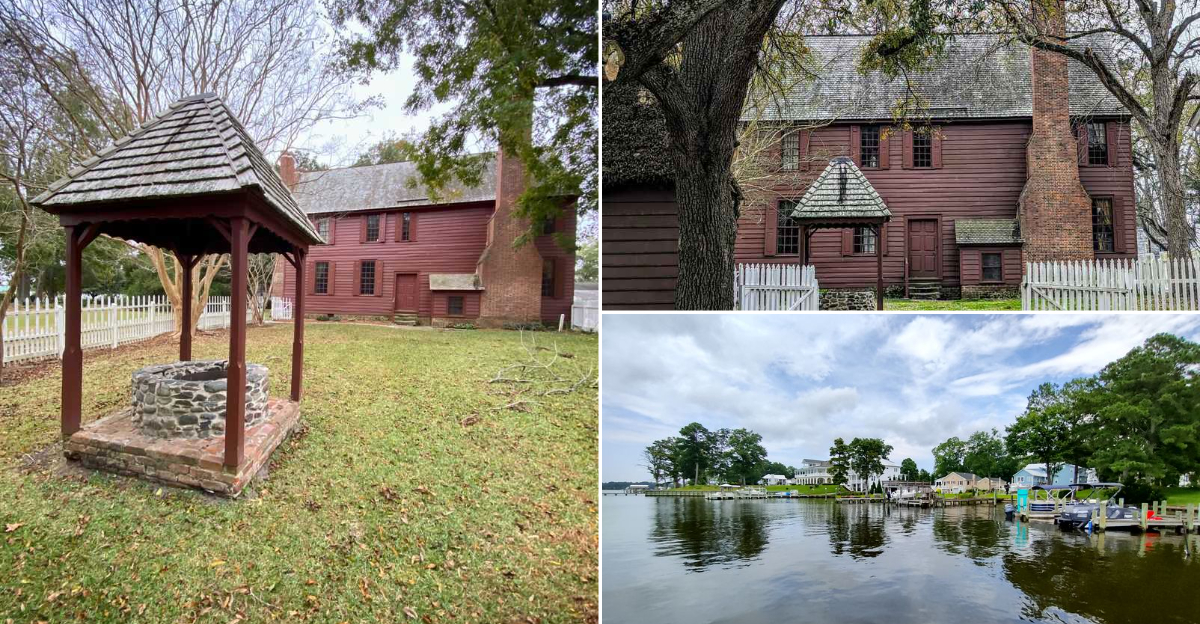
Let me pitch you something a little different for our road trip: Bath, after sunset.
The place gets so quiet that your footsteps feel like they have their own echo. It is not spooky in a movie kind of way, but the stillness wraps around everything and makes the oldest streets in the state feel brand new to your eyes.
If you have ever wanted to hear what silence sounds like, this is where you listen. Porch lights glow without competing traffic, and the river settles into a slow, dark mirror.
You start noticing small things, like the way air moves between houses or how history feels closer at night. It is calm in a way that stays with you long after you leave.
North Carolina’s Oldest Town After The Sun Goes Down
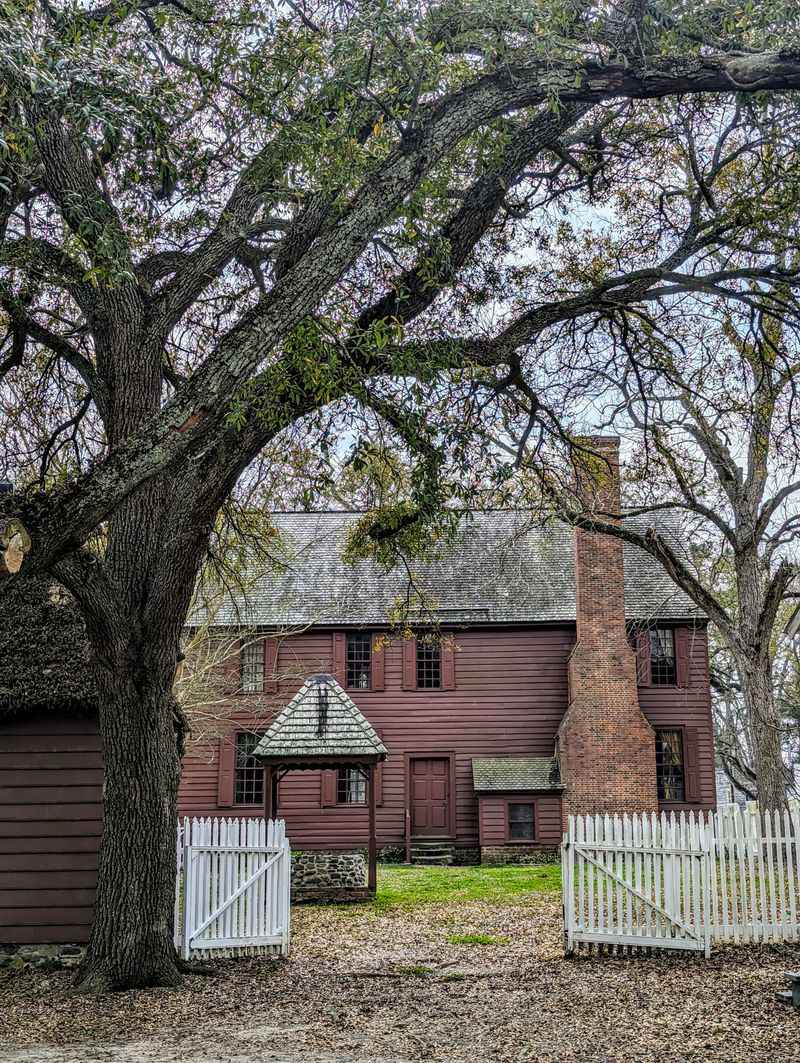
So picture this: we pull into Bath right as the sky slips from pink to deep blue. The river calms down, the trees stop rustling, and the town feels like it lowered its voice even though no one said a word.
Bath sits along the Pamlico River at 207 Carteret St, Bath, and the historic grid feels tiny once the day crowd leaves.
You notice the age in the siding, the handmade angles, the porches built for conversation that are empty now.
What gets me is how the light behaves. It is soft and sparse, and every house casts a shadow that leans across the street like it is stretching.
After dark the timeline compresses.
You are walking a few blocks, but it feels like you are walking through years stacked closely together, house by house.
There is no big glow bouncing off clouds, just a faraway hint from Washington and a hush near the water.
The quiet lands differently here because there is not much to interrupt it.
I would bring a light jacket and patience. Your eyes need a minute to settle, and when they do, the details come out slow and steady.
The old trees along Main St create little tunnels that break up the streetlights. It is not dramatic, just deeply calm and a touch strange in the nicest way.
If you want to understand North Carolina history without reading a plaque, walk these blocks after dinner.
The town does the talking by staying still.
Why Bath Feels So Different At Night
You know how some towns glow even when nothing is happening. Bath does the opposite, and that is why the atmosphere hits harder after dark.
The streets around 100 S Main St, Bath, are narrow with houses sitting close to the curb. That tight spacing means shadows stack up and small sounds seem bigger than they are.
Lighting is another part of it.
There are just enough fixtures to see the curve of the road, not enough to flatten it.
Then there is the scale. These homes are modest, with porches and windows that sit at eye level, so you feel like the street is making eye contact.
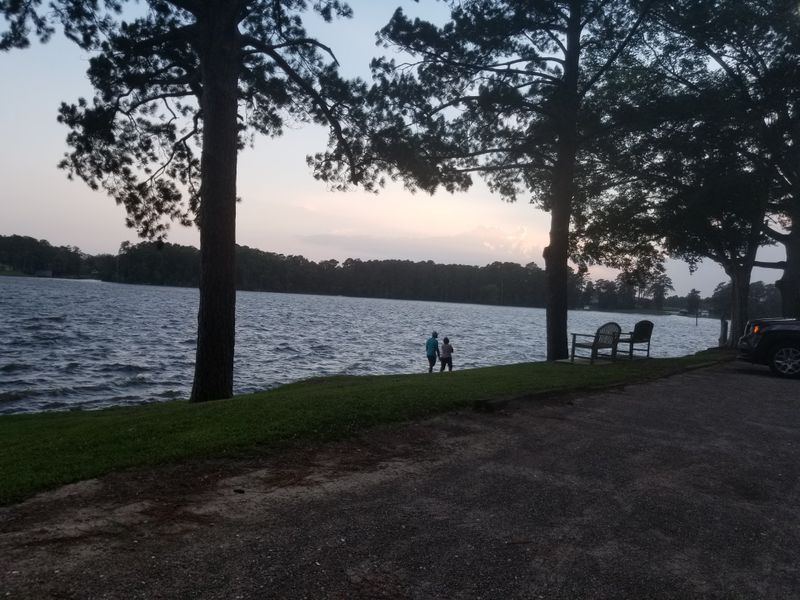
The river adds a hush that you do not notice in the daytime.
At night it is a slow, soft presence, like a blanket across everything east of Main.
Because there is not much nightlife, the rhythm drops off fast. Stores close, porch lights click off, and the blocks breathe out.
Stand by the Bath Town Hall at 102 S Main St, Bath, North Carolina, and listen.
You can actually hear the difference between wind in oak leaves and wind across the water.
It is not eerie because of stories. It is eerie because your senses have nothing to fight, so they turn up the volume on the little things.
A Town Built Long Before Modern Street Design
This place was laid out before anyone thought about wide lanes and bright intersections. You feel that the second you make a turn and the street tightens like a gentle squeeze.
Walk near 104 Craven St, Bath, and look at the way the corners meet.
Intersections are compact, so headlights do not spill far and the dark holds its shape.
Sidewalks come and go. Some stretches are just grass and roots nudging up beside old boards.
That patchwork is part of the charm. It also means your pace slows, because the ground asks you to watch your steps.
Street signs sit small and unassuming.
Without big reflective panels, the edges of the town stay soft at night.
The houses tuck in close, porch to porch. It makes conversation easy during the day and makes silence feel thicker after dark.
Stand by the corner of Craven St and S Main St, Bath, North Carolina, and let your eyes adjust.
Lines stay simple, almost handmade, and the light falls in sheets instead of blasts.
You do not need to chase views here. You just move slowly and let the town show you how streets used to be.
Historic Homes That Sit Close To The Street
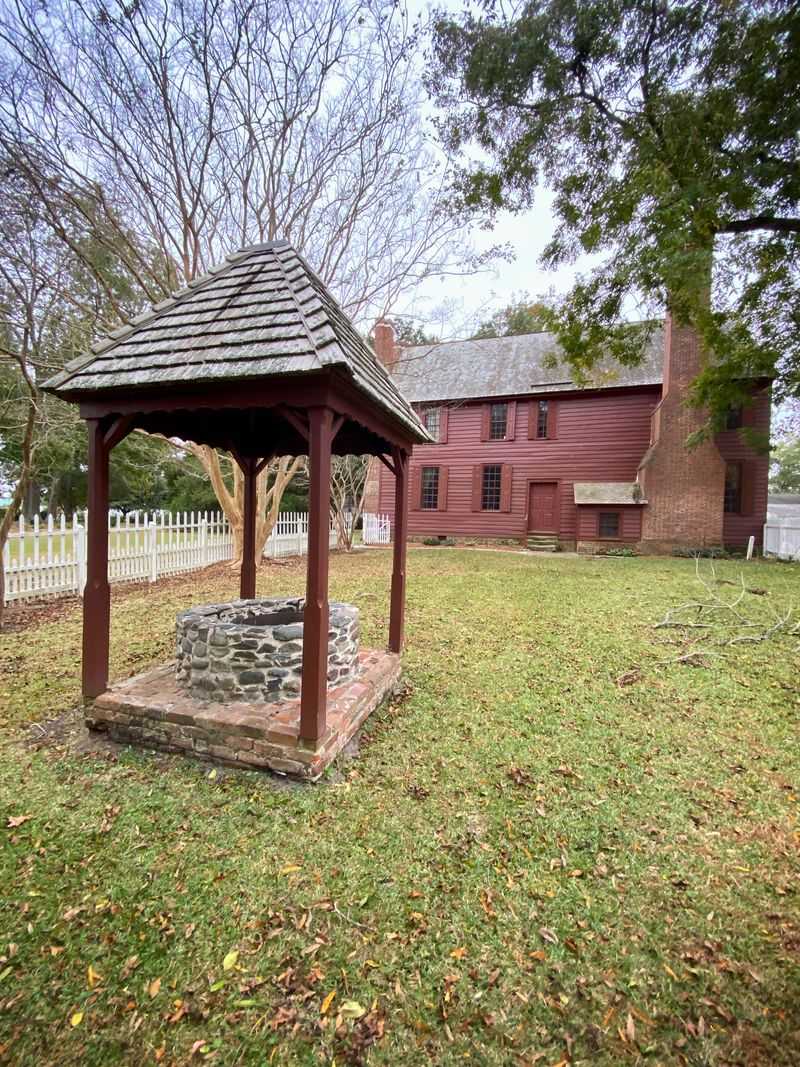
The houses lean in like they want to hear you whisper. That closeness is friendly by day and quietly intense at night.
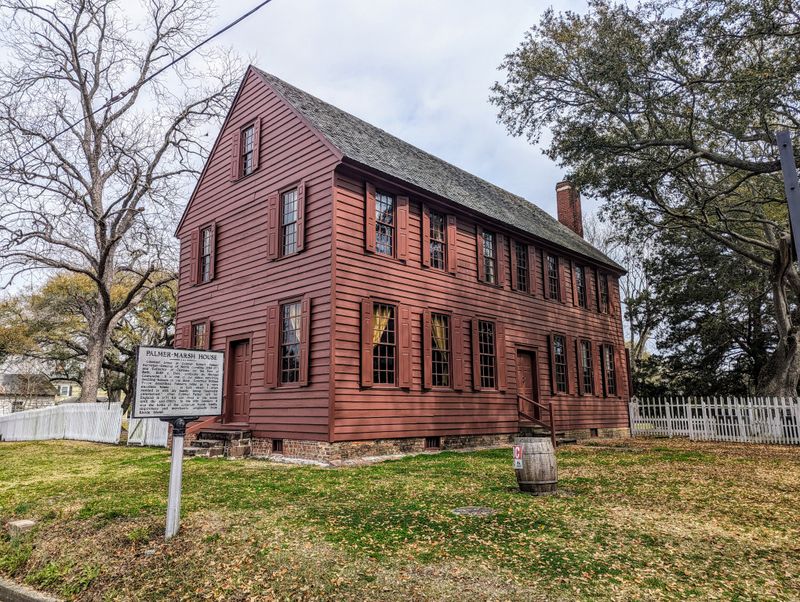
Take the Palmer-Marsh House at 207 Carteret St, Bath. Its porch sits right near the street, and after sunset the columns throw long shadows that stretch across the boards.
Windows sit low, so you notice your own reflection moving. It feels like the house is reminding you that you are part of the scene.
Along Carteret St and Back Creek Rd the rhythm repeats.
Different facades, same closeness, and a lot of character stacked shoulder to shoulder.
Small porch lights, if they are on, glow like candle flames. They do not erase the dark, they just mark the edges of it.
You will catch details you missed earlier.
Handcut trim, old hinges, and steps that sound different from each other.
Stand across from the Bath Historic Site Visitor Center at 207 Carteret St, Bath.
Watch the light break across clapboards in soft bands, almost like water on wood.
None of it feels staged. It is just a neighborhood that never learned the habit of bright nights, and honestly, that is the magic.
When Quiet Becomes The Loudest Feature
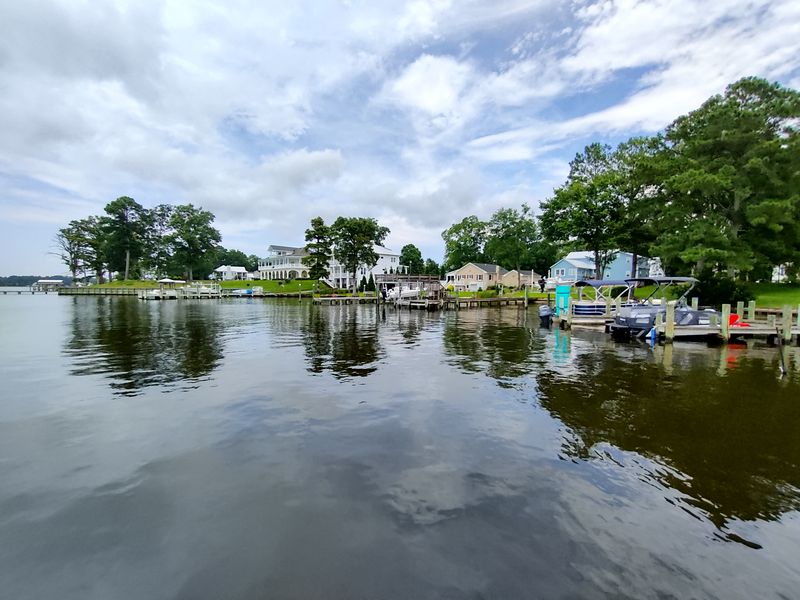
Have you ever noticed how silence gets heavier when there is nothing to compete with it.
Bath makes that feeling the headline act.
Down by the Bath Creek waterfront near 101 S Harding St, Bath, the air seems to land and stay. You can hear a boat line tap a cleat from blocks away.
Street sounds thin out. No hum from a busy road, no thump from late music, just small noises with room to breathe.
It sharpens your focus. You start tracking leaves across the dock like you are following a story.
Even footsteps have a different texture here.
Wooden boards speak in short, polite notes that fade fast.
Stand for a minute without checking your phone. The longer you wait, the more you notice how sound travels across open water.
From the benches near Harding St and Front St, Bath, you can hear a car door far away and then nothing again.
The pause feels big enough to step into.
It is not empty. It is just the kind of quiet that gives everything a border and asks you to listen on purpose.
Why Most Visitors Leave Before Dark
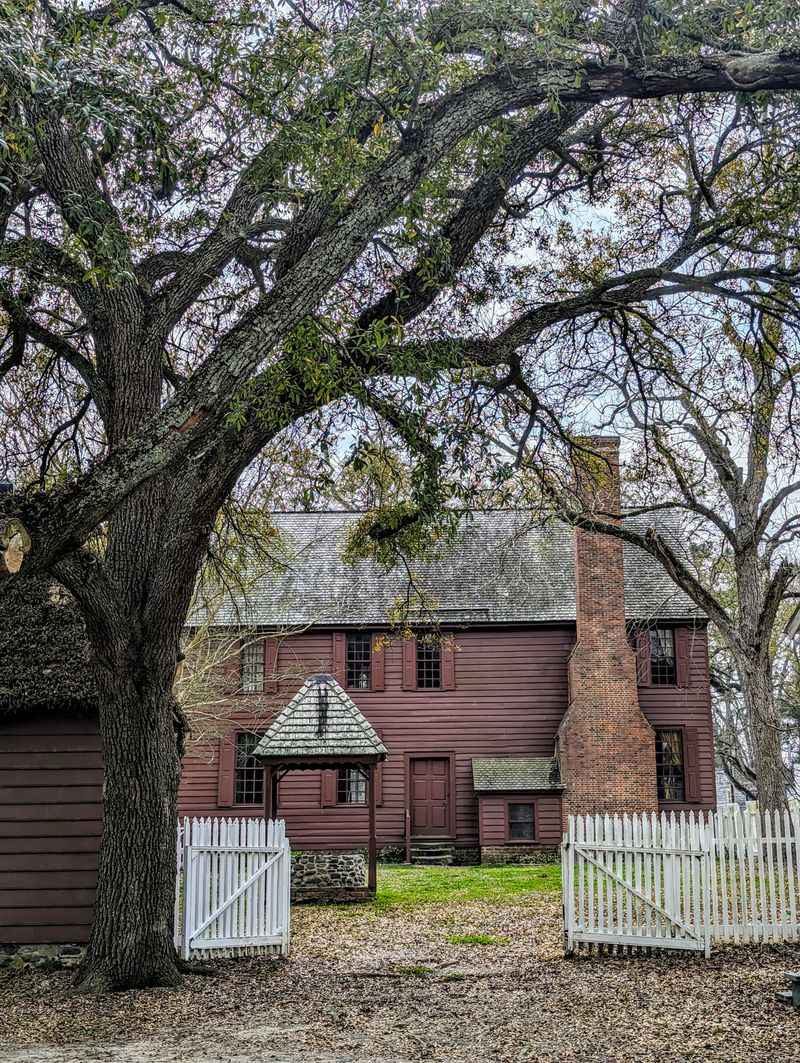
This town runs on a daytime rhythm, and you feel it when the sun drops.
People pack up, the last car door shuts, and the streets dial down without ceremony.
Along 106 S Main St, Bath, storefronts go dim quick. There is no big nightlife pattern to refill the sidewalks after hours.
That is exactly why the atmosphere creeps in. With fewer cars and fewer lights, the bones of the town are the show.
It makes an easy evening plan. Walk a block or two, breathe, and let your eyes catch up with the dark.
If you want company, bring a friend and talk low.
Your voice feels loud even when you are just chatting.
The cadence drives home how old this place is. The quiet respects it and keeps the pace slow and human.
Stand near the Bath General Store area around 106 S Main St, Bath, and look both ways.
The street looks longer than it did earlier because the light no longer stitches everything together.
You end up noticing little things like hinges and mail slots.
That is the gift of North Carolina small towns at night, especially this one.
How Darkness Changes Familiar Streets
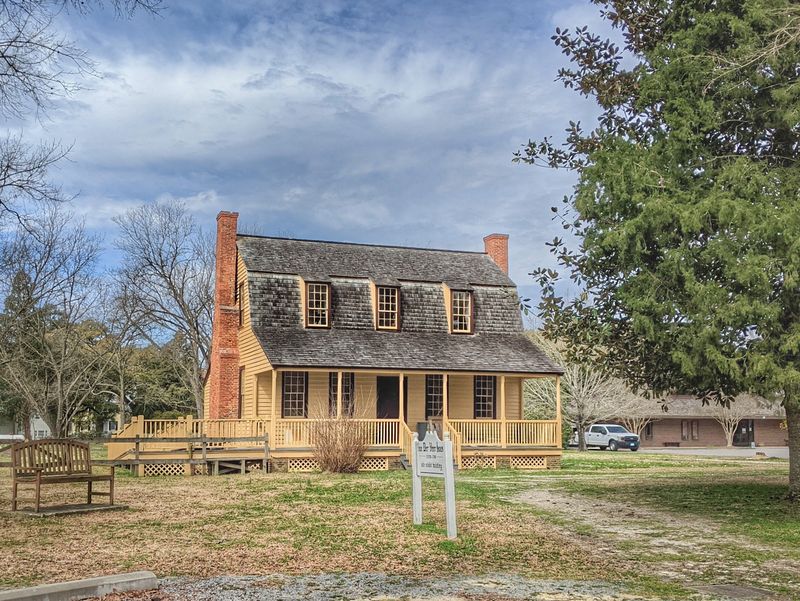
Here is the fun part. The same corner you passed at noon turns into a whole different picture once the light slips away.
At the bend near S Main St and Carteret St, Bath, the trees frame the road like a tunnel.
Headlights carve thin ribbons instead of splashing everything flat.
Shadows redraw edges. Rooflines look higher, porches look deeper, and distances stretch a bit.
Your brain fills gaps with memory. The house you remember in white becomes shapes and angles first, then color catching up later.
It is not a trick. It is just how low light works with old geometry and wood.
Give it a slow walk. You will feel your stride adjust to what you can actually see instead of what you expect.
Stand right where Carteret meets Main in Bath, and face the river breeze.
The air cools the edges and you can almost hear the grid breathe.
By the time we loop back to the car, the route feels learned again.
Same town, same state, but at night it runs on quieter rules.
Dear Reader: This page may contain affiliate links which may earn a commission if you click through and make a purchase. Our independent journalism is not influenced by any advertiser or commercial initiative unless it is clearly marked as sponsored content. As travel products change, please be sure to reconfirm all details and stay up to date with current events to ensure a safe and successful trip.
