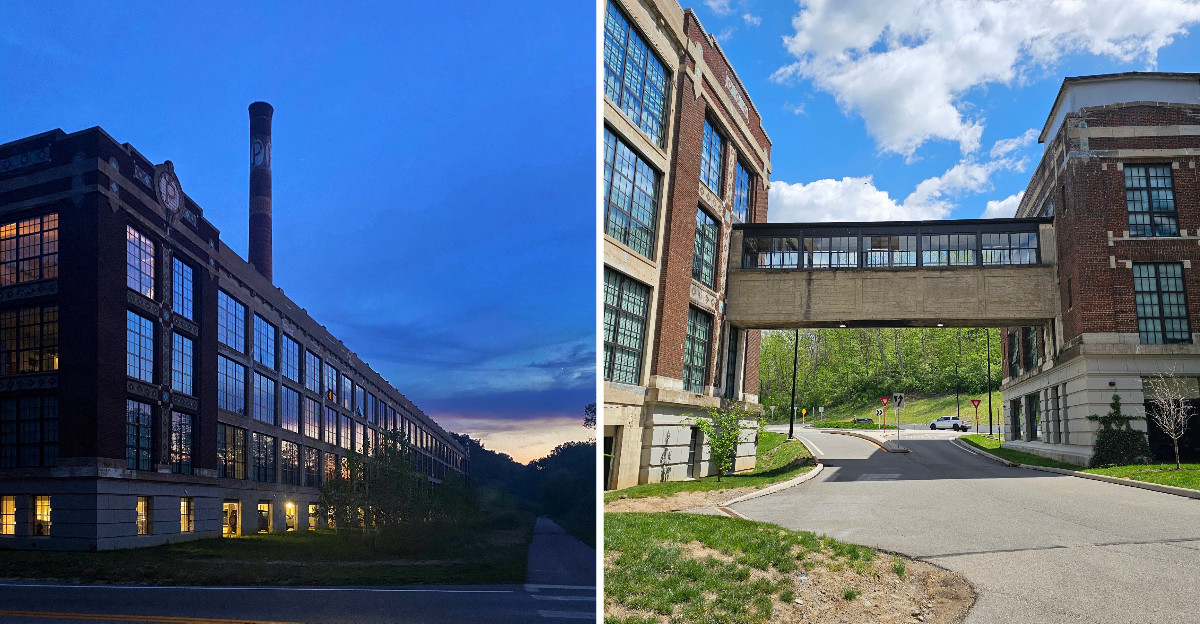
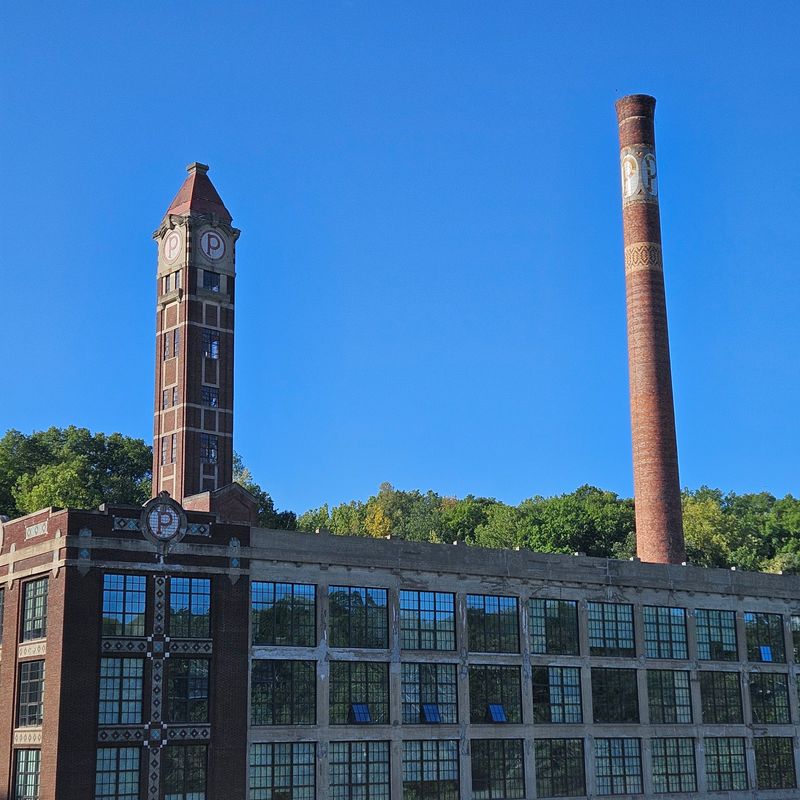
A giant letter P painted near the top of an old brick tower pokes above the treeline like a signature nobody bothered to erase. The tower made ammunition for two world wars, then sat empty and crumbling for half a century while vines climbed through its windows.
A quick photo stop on a quiet Ohio road turned into hours of wandering. Now there are apartments behind those same brick walls, a brewery in the old manufacturing wing, and cyclists rolling past on a trail that follows the river.
Plenty of restored buildings exist, but few carry this much weight and still feel so alive. The brick is stained and pitted, and the windows still hold the shape of the industrial age.
This place does not hide its past; it builds right on top of it. History that stays rough around the edges tends to stick with you, and this one certainly does.
The Shot Tower With the Famous Letter P
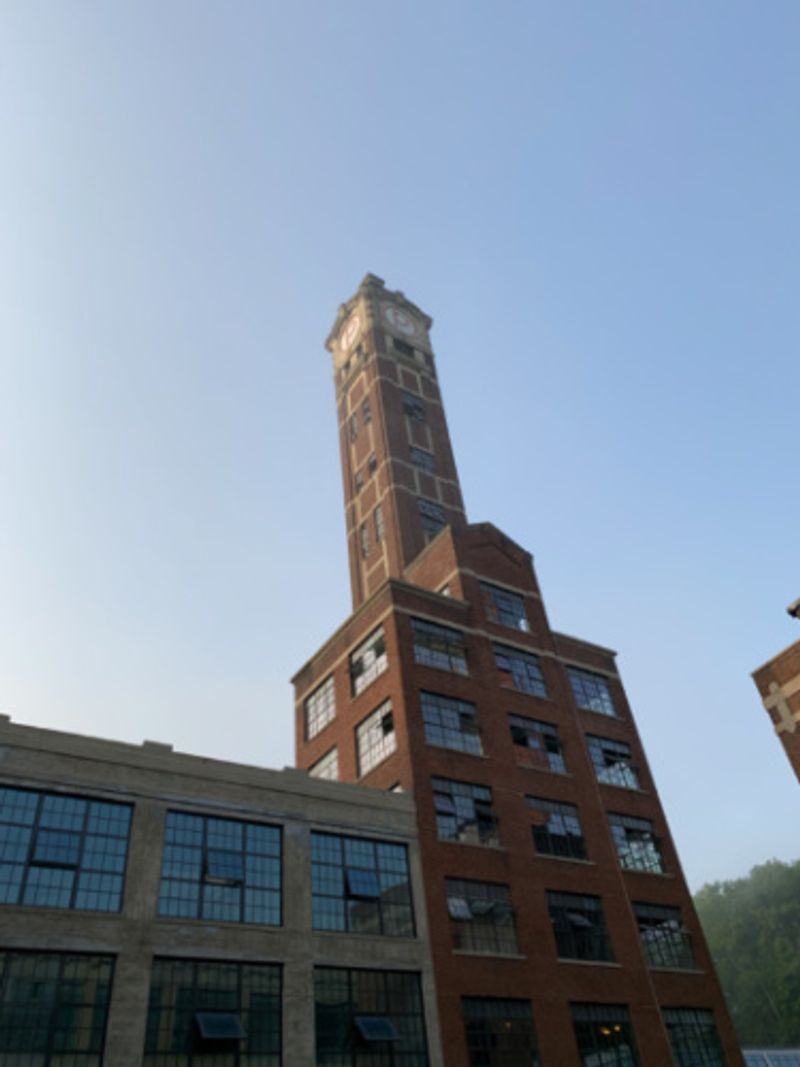
My eyes went straight up, and stayed there. The brick shot tower is the landmark everybody photographs, and the big painted P makes it instantly recognizable even from the bike trail below.
Workers once poured molten lead from the top of a tower like this, letting gravity do the shaping as the droplets fell and cooled into nearly perfect round shot before landing in water at the bottom. An earlier wooden tower stood here first, then was replaced by the brick version you see today, built during the First World War era.
Seeing it in person helped me understand something that a textbook never managed. Height was the technology.
No fancy machine, just a very long drop.
Photographers should know the light hits the tower best in the late afternoon, when the brick warms up and the P really pops against the sky. Morning works too, though the trees on the river side cast longer shadows.
I walked a full loop around the base and found details I had missed from the road, including old window openings and brickwork patched in different shades. Bring a zoom lens if you have one.
How a Small Ohio Company Fed Two Global Wars
Numbers are usually the boring part of a history stop. Not here.
During the First World War, this plant employed more than 3,000 people working around the clock, turning out roughly 1.5 million .30-caliber cartridges every single day.
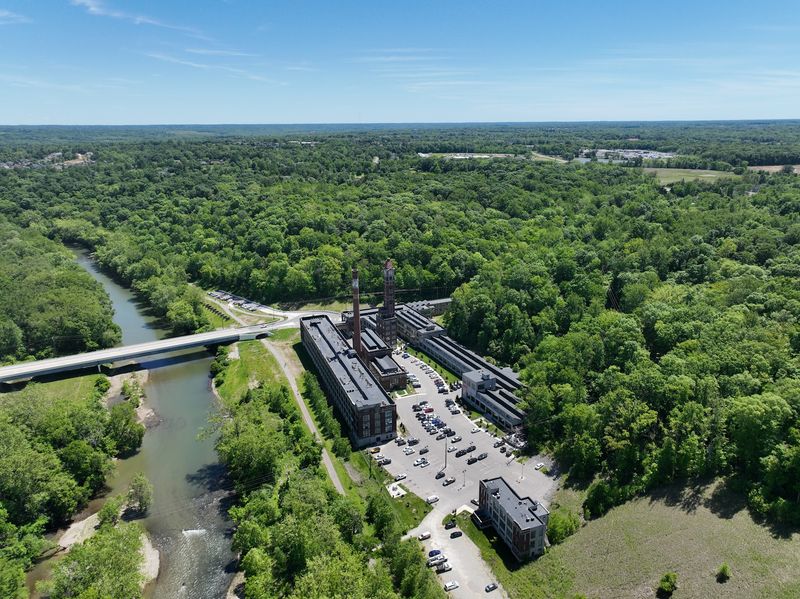
Read that again while standing in the parking lot and the scale starts to sink in. Cincinnati is not far away, and yet this quiet bend of the Little Miami River was supplying Allied armies across an ocean.
The Second World War brought another wave of expansion and more buildings, more shifts, more output. Military production finally stopped in March 1944.
What struck me most was how ordinary the setting feels now. Kids ride bikes past the same walls that once housed a wartime industry, and there is no dramatic monument announcing it.
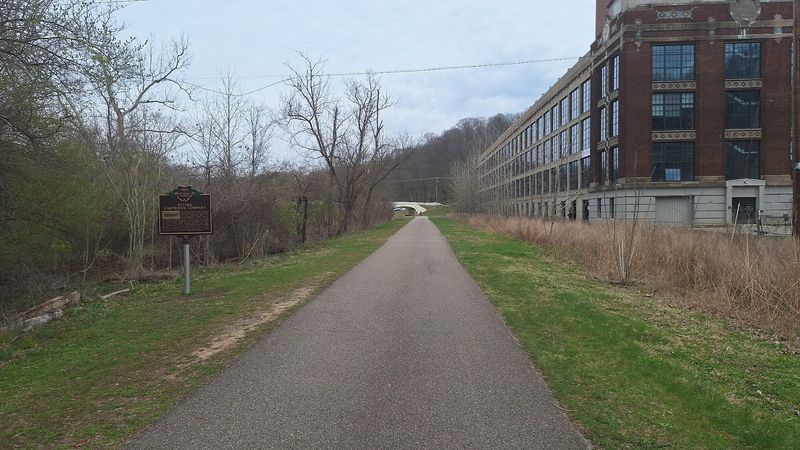
If you want context before you visit, the roadside historical marker nearby gives you the short version in a few minutes of reading. I would suggest doing that first, because the buildings hit differently once you know what happened inside them.
History rarely sits this close to a brewery patio.
Gershom Peters and the Machine That Changed Everything
Founded in 1887, the company came out of the mind of Gershom Moore Peters, a man who had already served as president of the neighboring King Powder Company. He was also an inventor, and a busy one.
Peters held a long list of patents, but the standout was the world’s first fully automatic cartridge-loading machine. That single invention let the company become one of the earliest producers of machine-loaded shotgun shells.
Automation in the 1880s meant something very different from today. It meant fewer hands doing repetitive, dangerous work, and far more product leaving the loading dock each week.
By the early 1900s, the operation had picked up a reputation as the most complete ammunition factory in the world. Bold claim, though the output backed it up.
I find this part of the story more interesting than the war statistics, honestly. One stubborn inventor in southwest Ohio built a machine that reshaped how an entire industry worked.
There is no formal museum on site, so the story lives in markers, local archives, and the brewery’s decor. Read up before you go and the walls feel less like ruins and more like evidence.
The 1890 Explosion That Nearly Ended It All
On July 15, 1890, railway cars loaded with gunpowder collided here. The explosion terminally injured twelve people and flattened buildings, including the offices and the cartridge loading plant.
Standing in that spot now, with birds in the trees and bikes whirring past, the contrast is almost impossible to process. Nothing about the site whispers disaster anymore.
The company rebuilt. That part says a lot about the era and the stubbornness of the people running it.
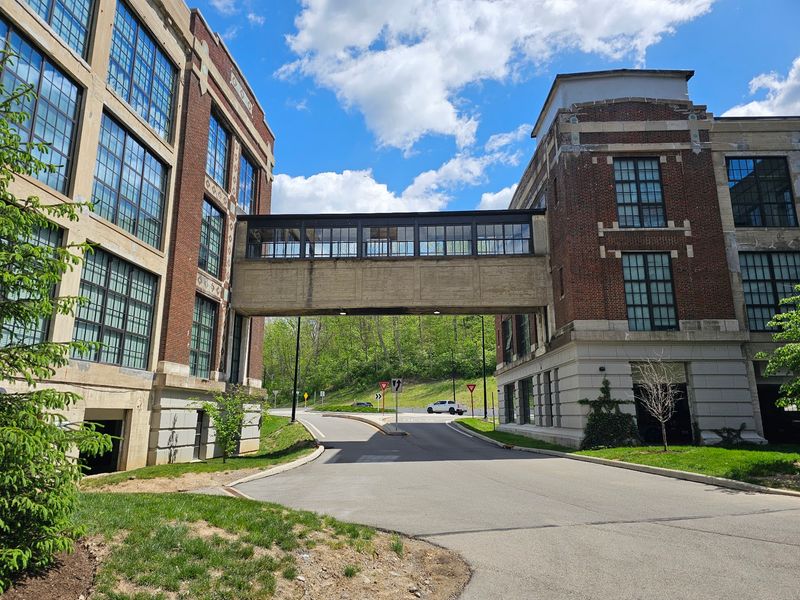
Most of the brick and reinforced concrete structures you see today went up between 1916 and 1919, well after the blast. So in a strange way, the buildings that survived into the twenty-first century exist because of the ones that were destroyed.
I always try to pause for a second at places like this, because the tidy restoration can make you forget the cost. Twelve people is not a footnote.
Tragedy shows up in the history of almost every powder works, and the danger was constant rather than occasional. Workers here handled explosive material every shift, in a time long before modern safety rules existed.
Keep that in mind as you walk the grounds.
Records, Warehouses, and Then Fifty Years of Silence
Here is the twist I did not expect. After military production wrapped up in 1944, Columbia Records bought the factory and used it to press 78 rpm phonograph records until 1949.
Ammunition one decade, music the next. You could not write a stranger second act.
Afterward the buildings were leased out as warehouse storage until 1968, when the whole complex was abandoned for good. Then came the long quiet stretch.
For roughly five decades the site decayed in the open. Vines swallowed brickwork, roofs failed, and the empty halls reportedly filled up with squatters and stray cats, which naturally fed local ghost stories.
The atmosphere got creepy enough that a horror movie was filmed here in 2002. I can absolutely see why, even in the polished version of the property that exists today.
Photos from that era circulate online, and I recommend looking at a few before your visit. Comparing them to what stands now is genuinely startling, especially around the tower and power building.
Very few abandoned industrial sites in Ohio got a rescue this thorough. Most of them simply disappear.
Cleaning Up a Superfund Site, One Truckload at a Time
Decades of making ammunition left a mess in the ground. Heavy metals including copper, lead, and mercury had worked their way into the soil and toward the Little Miami River running alongside the property.
The contamination was serious enough that the site was designated a Superfund cleanup site in 2012. Major remediation work began in 2015.
Crews treated contaminated soil and sediment, finishing that phase by 2017. A year later, in 2018, a 14-acre portion of the property was officially removed from the Superfund National Priorities List.
That step is what made everything else possible. No cleanup, no apartments, no brewery, no reason for anyone to stop here at all.
I mention it because visitors tend to skip past the unglamorous chapter, and it might be the most important one. Restoring old brick is the easy part compared to fixing what leaked into the earth.
The river looks beautiful now, lined with trees and paddled by kayakers in warm months. Knowing what came out of that soil made me appreciate the view a whole lot more.
Preservation, it turns out, involves a lot of dirt.
Loft Apartments, a Brewery, and a Trail Right Out Front
Arriving today, you find something I honestly did not expect from a place once left alone. The historic buildings were added to the National Register of Historic Places back in 1985, and developers Bloomfield/Schon bought the property in 2015.
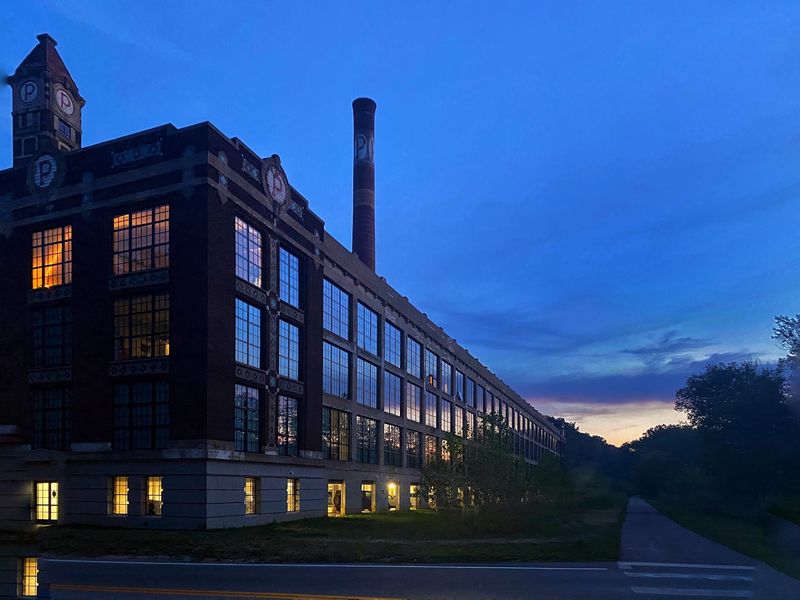
Construction started in late 2018 and carried into 2020. Six original factory buildings were preserved, including the shot tower, the power building, and the smokestack.
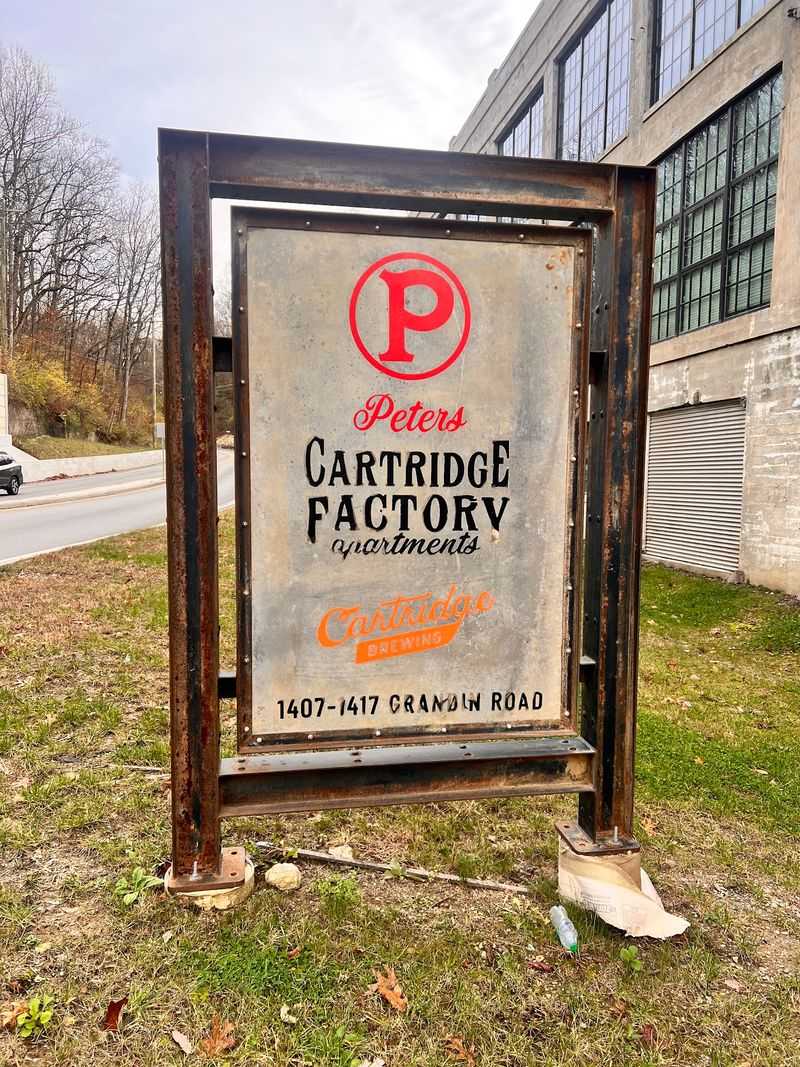
The result is a mixed-use community with residential lofts and commercial space. Cartridge Brewing opened on October 31, 2020, inside the old manufacturing wing, leaning into the industrial theme with its decor.
Residents I read about online mention the same things over and over, the unusual layouts, the scenery, and how close everything sits to the trail. The Little Miami Scenic Bike Trail runs right past the front of the complex.
My advice is simple. Park once, walk the grounds, then follow the trail along the river for a bit before heading back for food on the patio.
Weekday afternoons felt calmest during my visit. Weekends bring far more cyclists.
Address: 1409 Grandin Rd, South Lebanon, Ohio
