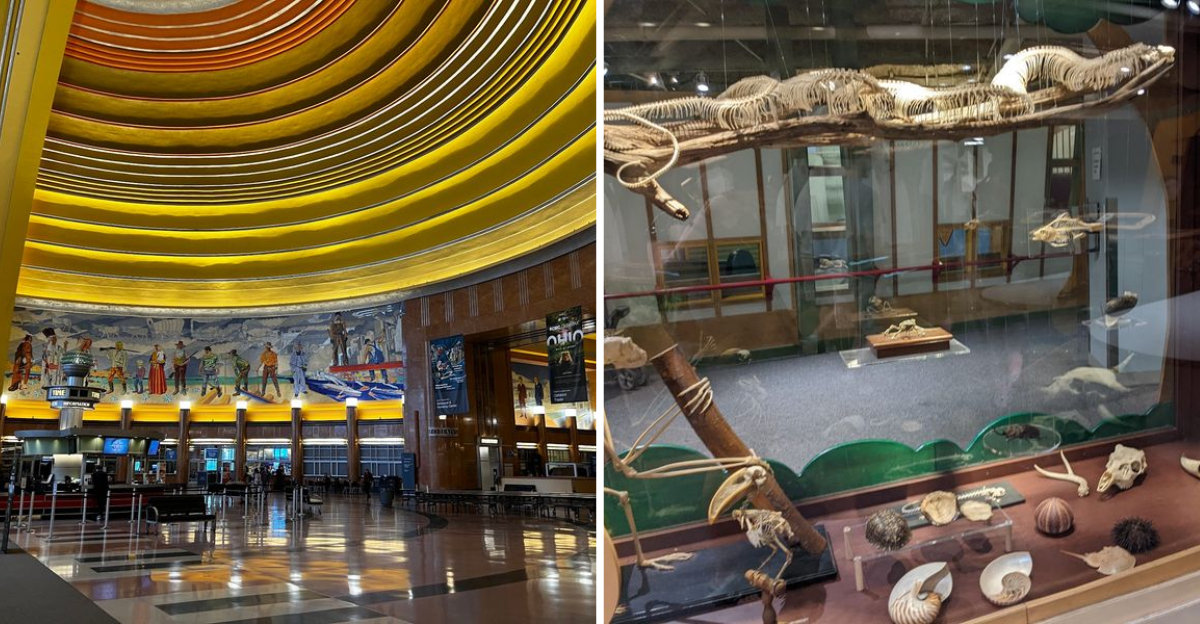
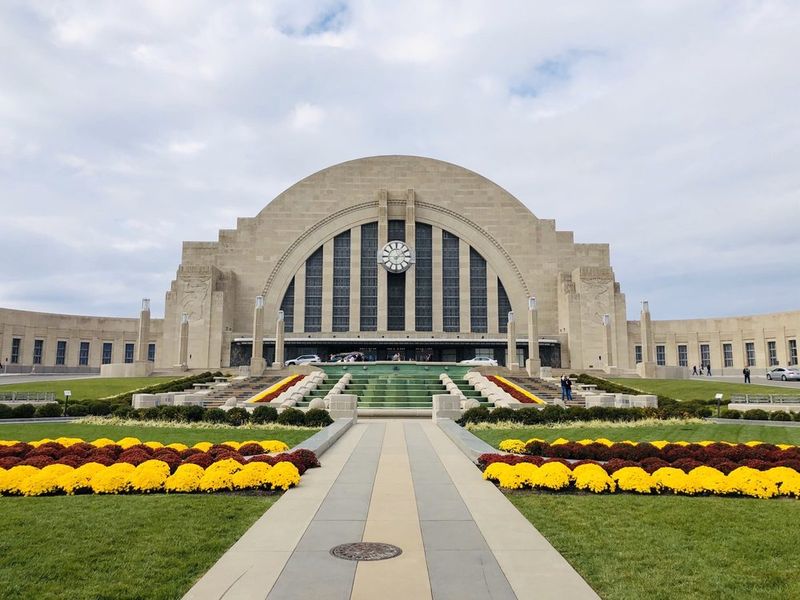
That echo in the limestone rotunda stopped me the moment I stepped inside, voices drifting up and getting lost somewhere near the mosaics. I had pulled up to a massive half-circle of limestone in Ohio expecting a museum, and instead I found a building that looked like something out of an old movie poster.
What surprised me most, though, wasn’t the dinosaurs or the model trains everyone talks about. It was learning that this place quietly cares for tens of thousands of Native American artifacts pulled from the river valley, some of them thousands of years old.
The building itself is a masterpiece of Art Deco design, and the rotunda soars high enough to make you feel small in the best way. I spent a full afternoon here, moving through exhibits that span natural history, local culture, and the stories of the people who have lived along these waterways for millennia.
The artifacts are displayed with care and context, and the quiet reverence of the space made me slow down and pay closer attention. By the time I left, I still had a list of things I had not seen yet.
History that feels close to home rather than far away has a way of sticking with you, and this place certainly does.
A Collection Counted in the Tens of Thousands
Roughly 50,000 artifacts sit inside this museum’s regional archaeology collection, and the number honestly stopped me in my tracks. Most of them came over from the Cincinnati Art Museum back in 1991.
Among that pile are about 26,000 projectile points. Thousands of ground stone tools sit alongside them, everything from grinding stones to polished implements shaped by hand.
What makes the collection unusual isn’t only the size. Nearly all of it comes from this region, meaning the objects were made, used, and buried within the central Ohio River valley rather than shipped in from somewhere far away.
I found that detail oddly moving. The stone in those cases was picked up from creek beds and outcrops that still exist a short drive from downtown Cincinnati.
Only a fraction of the collection can be displayed at any one time, which is normal for museums this size. The rest lives in climate-controlled storage where researchers study it.
If you’re the type who reads every label, budget extra time. The archaeology material rewards slow looking, and the small chips and worn edges tell you more than any summary ever could.
Fort Ancient Culture, Dug Up Just Outside Town
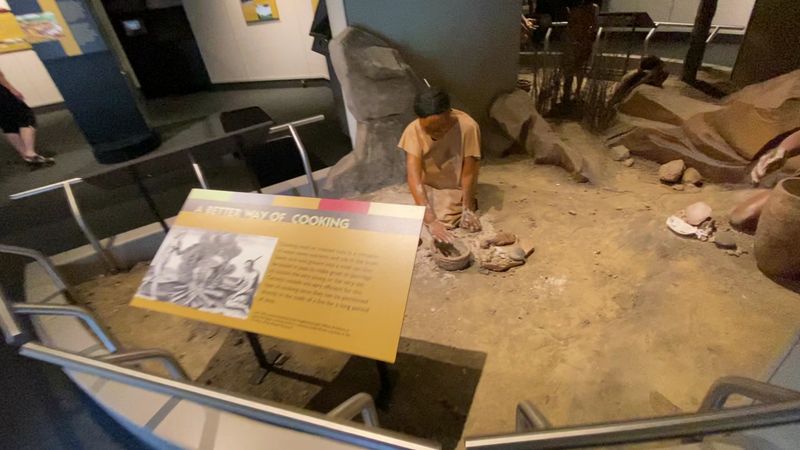
Between roughly A.D. 1000 and 1650, people archaeologists now call the Fort Ancient culture farmed, hunted, and built villages along these rivers. The museum holds excavated material and records from ten of their sites.
Turpin and Guard are two of the better known ones. Together, the sites span the entire time range of Fort Ancient life in the Ohio valley, which is rare for a single collection.
The Hahn Site, near Anderson Township and Newtown, produced a remarkable mix. Pottery, stone tools, food remains, and even the bones of domesticated dogs came out of the ground there, including one drilled canine tooth that was likely worn or traded.
That dog detail is the thing I keep telling people about. It makes an ancient village feel suddenly ordinary and familiar.
Excavation records matter as much as the objects here. Notes, maps, and photographs let researchers reconstruct where each piece sat in the soil, which turns a random artifact into actual evidence.
Reading those interpretive panels changed how I looked at the hills around the city on my drive out.
Nearly a Thousand Mississippian Pottery Vessels
Pottery collectors would lose their minds in this part of the collection. The museum cares for close to 1,000 complete or nearly complete Late Mississippian vessels.
They were gathered in the 1800s from northeastern Arkansas, so they sit slightly outside the local story. That doesn’t make them less compelling.
Mississippian potters worked without a wheel, shaping clay by hand and by coil, then finishing surfaces with incised lines, painted slips, and sculpted forms. Some vessels take the shape of animals or human heads.
Seeing a jar that survived hundreds of years underground fully intact feels a little unfair when I think about how many coffee mugs I’ve broken.
Complete vessels are unusual in archaeology because ceramics crack easily. A group this large gives researchers a chance to compare shapes, decoration styles, and clay recipes across a whole region.
Not all of it is on public view, and displays rotate as exhibits change. Still, when Mississippian pieces are out, take a minute with them.
The craftsmanship holds up against anything made today, and the shapes have a confidence that photographs never quite capture.
Ohi:yo’ Our Home and the New Indigenous Peoples Gallery
Something big is coming to this building. A new permanent exhibition called Ohi:yo’ Our Home, taking its name from the Seneca word for great river, is in development.
The gallery will trace human life in the Greater Cincinnati region from the earliest Native societies through the Tribal Nations still connected to the central Ohio valley today.
More than 150 archaeological and ethnographic objects are planned for display. Technology, historical research, and archaeological evidence will work together to tell the story.
Here’s the part that matters most to me. The museum developed the gallery in cooperation with Tribal Partners, including representatives from the Shawnee Tribe, Miami Tribe of Oklahoma, Peoria Tribe of Indians of Oklahoma, Seneca-Cayuga Nation, and Wyandotte Nation.
That collaboration shapes whose voices frame the exhibit. Rather than presenting these communities as a closed chapter, the gallery emphasizes resilience and continuing presence.
Opening timelines for major galleries can shift, so checking the museum website before a trip is smart if this is your main reason for visiting.
When it opens, I plan to come back specifically for it. Few museums get to rewrite a regional origin story with this much care.
Eight Thousand Pieces of Everyday Life
Beyond the excavated material, there’s an ethnological collection of around 8,000 artifacts. These are objects made and used in the 19th and early to mid-20th centuries, so they’re much closer to the present.
Two regions dominate. The North American Plains, mostly late 1800s, and the American Southwest, mostly early 1900s.
Clothing, tools, containers, and decorative work fall into this category. Beadwork, quillwork, weaving, and pottery from these traditions show techniques passed down through generations rather than lost to time.
What struck me while reading about this collection is how recent it feels. Some of these objects were made by people whose grandchildren are alive right now.
Ethnographic material also raises real questions about how museums acquired things, and thoughtful institutions are increasingly open about that history. Working with Tribal Partners on the new gallery reflects that shift.
Only selected pieces appear in public exhibits at a given time, so what you see depends on when you visit.
If you’re a textile or basketry fan, keep an eye on the museum’s rotating displays and special exhibitions. Southwestern pottery in particular tends to draw a crowd whenever it comes out.
The Birch-Bark Canoe in Shaping Our City
Tucked into the Cincinnati History Museum’s Shaping Our City exhibit sits a birch-bark canoe built in the style Indigenous Peoples used on the Ohio, Little Miami, and Licking rivers between 1700 and 1810.
I nearly walked past it, which would have been a mistake.
Canoes like this were the highways of their day. Long before roads or rail, rivers carried people, food, tools, and trade goods across enormous distances.
Standing near one, the shape makes immediate sense. Light enough to carry around rapids, roomy enough to haul a serious load.
The surrounding artifacts in this section connect Native river travel to later settlement, showing how the same waterways shaped both. It’s a rare exhibit that puts those two stories in the same room instead of separate wings.
Shaping Our City also covers the city’s growth and transportation history, so you’ll find trains and streetcars nearby. The contrast is part of the point.
Give yourself a few extra minutes here even if your group is racing toward the dinosaurs. Understanding why Cincinnati exists where it does starts with the rivers, and this display makes that argument better than any map.
Union Terminal Itself, an Art Deco Showstopper
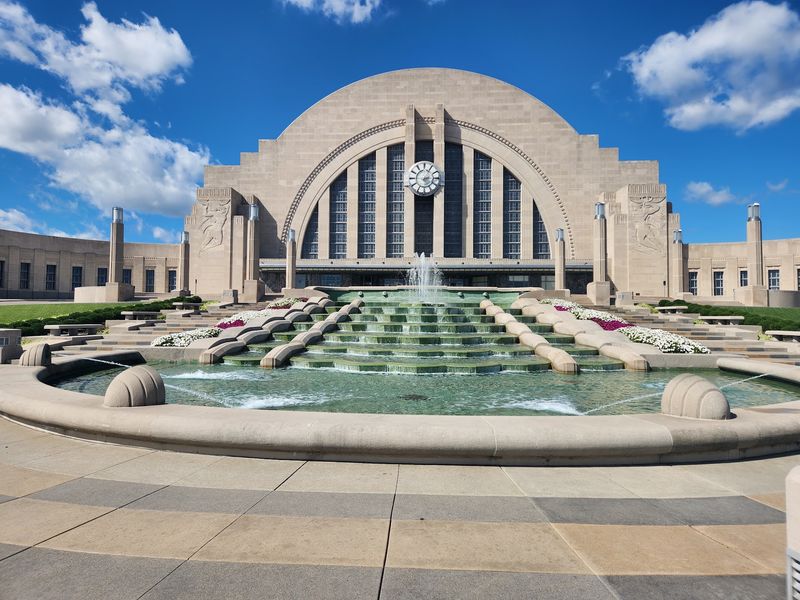
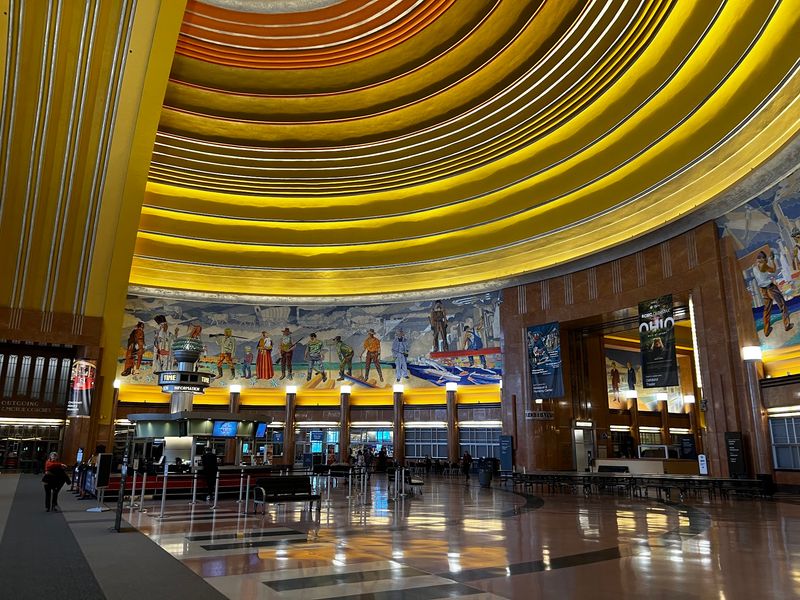
Honestly, the building deserves its own ticket. Union Terminal opened in 1933, and its rotunda stretches 180 feet wide with glass tile mosaic murals by Winold Reiss curving overhead.
Free docent-led rotunda tours are offered, and taking one is the best decision I made that day.
Amtrak still stops here, which I love. A working train station wrapped around a museum complex gives the place a strange double life.
Inside you’ll find the Cincinnati History Museum, the Museum of Natural History and Science, a children’s museum, and the Robert D. Lindner Family OMNIMAX Theater.
Popular stops include The Cave, Dinosaur Hall, the Ice Age Gallery, and the Neil Armstrong Space Exploration Gallery.
Practical notes from experience: doors open at 10 AM and close at 5 PM daily, and seven hours goes faster than you’d think.
Arrive early, grab a map at the desk, and pick two museums rather than trying to conquer all of them. Weekday mornings in summer can fill with school groups.
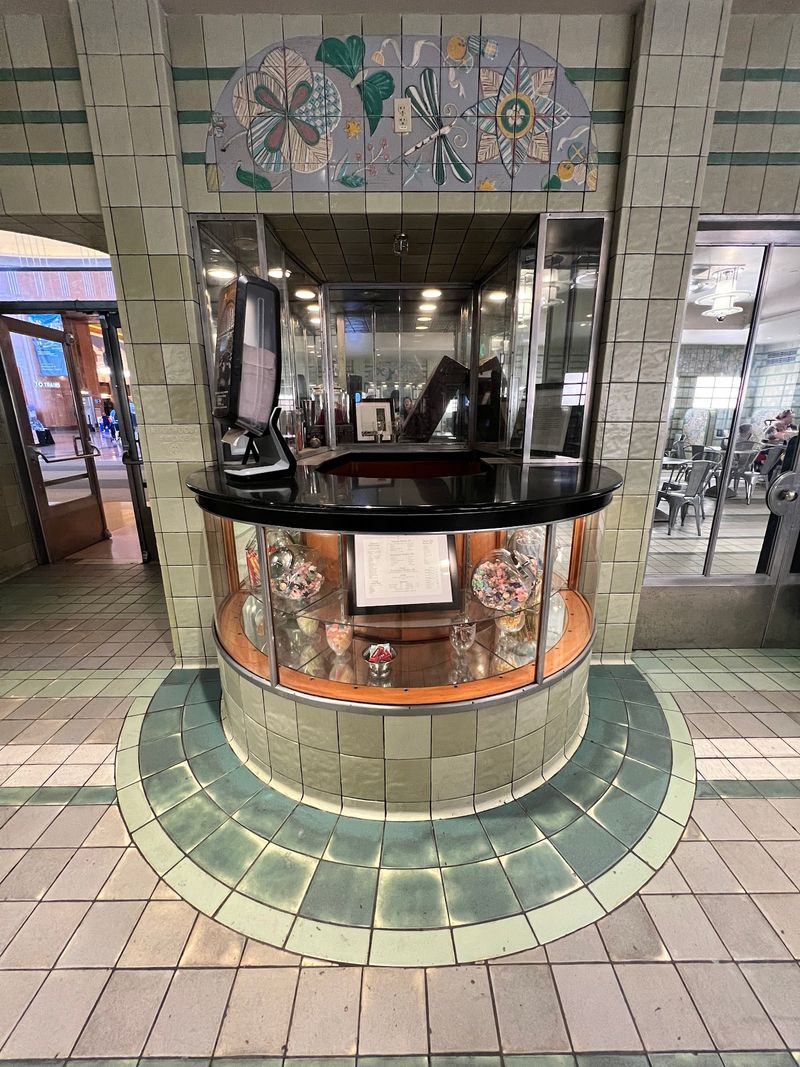
Also, the historic tea room serves ice cream in the afternoon, which is a fine way to end a long walk.
Address: 1301 Western Avenue, Cincinnati, Ohio
