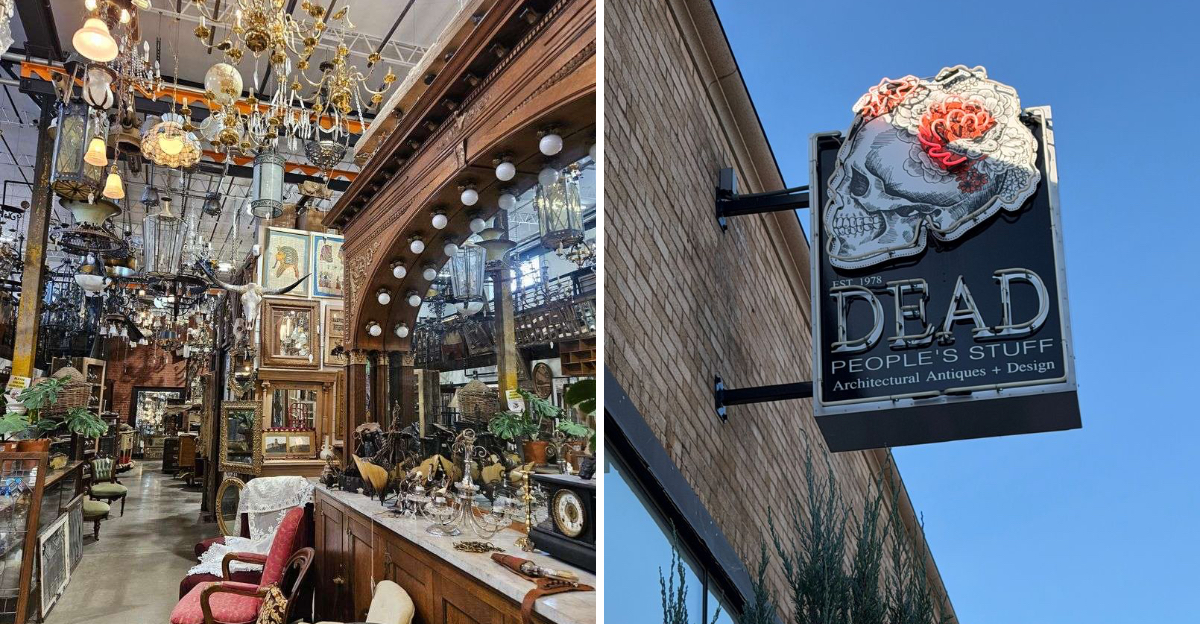
Ever wonder where all those ornate doorknobs, vintage chandeliers, and stained glass windows from demolished mansions end up? Somewhere in Oklahoma City sits a treasure trove with possibly the most memorable name in retail history.
Dead People’s Stuff isn’t trying to be subtle, and honestly, that’s exactly what makes it brilliant. This architectural salvage wonderland is where history gets a second chance, and your boring living room gets the glow-up it desperately needs.
Whether you’re a hardcore interior designer hunting for that perfect Victorian-era fireplace mantel or just someone who appreciates the craftsmanship of a bygone era, this place will make you believe in love at first sight. Forget sterile big-box stores with mass-produced everything.
Here, every piece has lived a life, survived decades, and carries stories you can almost hear whispering through the wood grain.
From movie props that appeared in major Hollywood films to doorknobs that once graced homes built over a century ago, Dead People’s Stuff proves that one person’s estate cleanout is another person’s design dream come true.
A Name That Stops Traffic and Starts Conversations
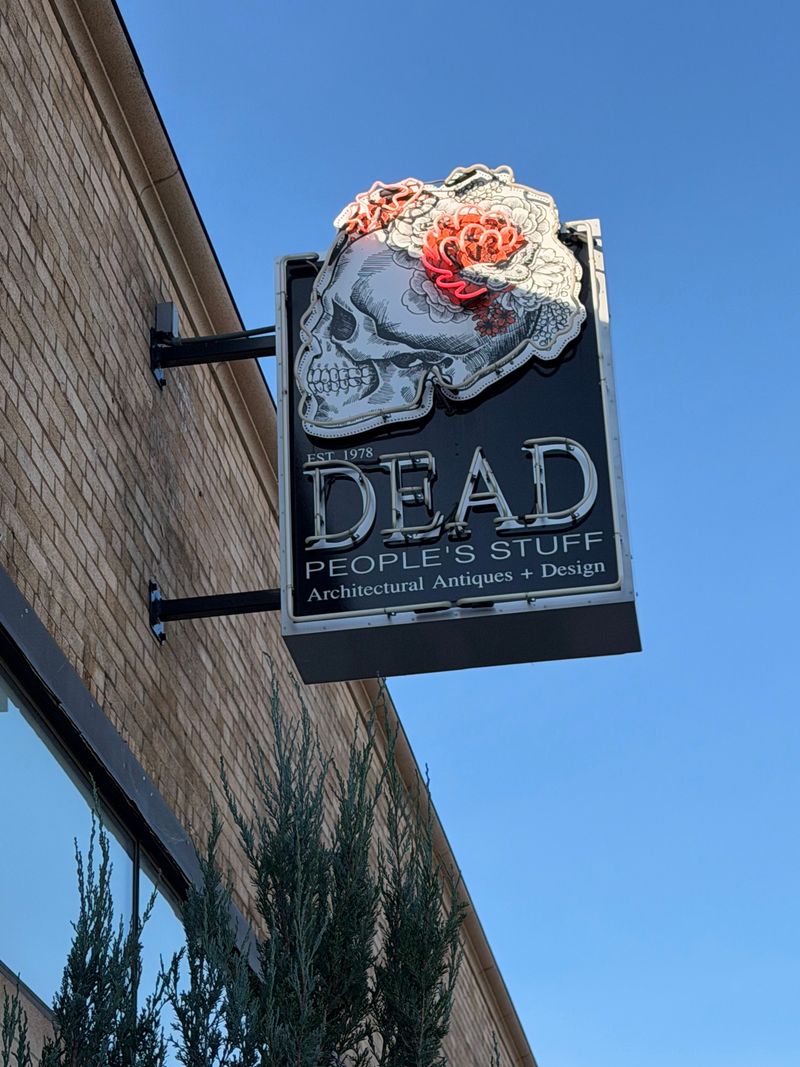
Dead People’s Stuff doesn’t apologize for its blunt honesty, and that’s precisely what makes it unforgettable. The name alone generates more billboard double-takes than any clever marketing campaign ever could.
Travelers cruising along the freeway spot the sign and immediately hit the brakes because curiosity always wins.
Owners embraced the reality of architectural salvage with refreshing candor. Most items sold here once belonged to people who have passed on, leaving behind beautiful remnants of their lives.
Instead of dancing around this fact with euphemisms, the shop celebrates it.
This bold branding choice resonates with customers tired of pretentious antique shops that take themselves too seriously. The name sparks conversations, generates social media buzz, and creates instant word-of-mouth advertising.
People remember it, share it, and inevitably visit just to see if the store lives up to its provocative promise.
Walking through the doors feels less like shopping and more like embarking on an adventure through time. The irreverent name sets expectations for something different, something authentic.
Oklahoma loves businesses with personality, and Dead People’s Stuff delivers personality in spades.
From the moment you see that sign, you know this won’t be your grandmother’s stuffy antique mall. It’s history with a sense of humor, preservation with a wink, and architecture with attitude.
Address: 1900 Linwood Blvd, Oklahoma City, OK 73106
Stained Glass That Tells a Thousand Stories
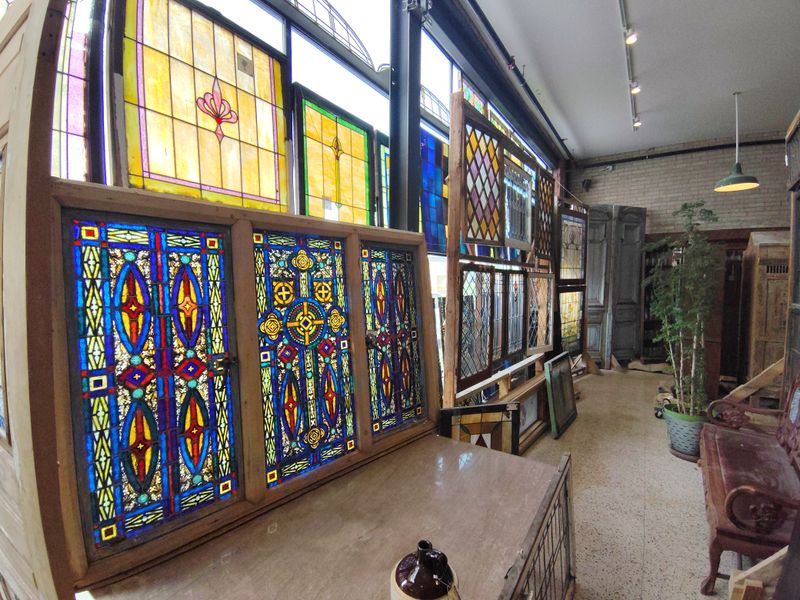
Sunlight streaming through vintage stained glass creates magic that modern materials simply cannot replicate. Dead People’s Stuff houses one of Oklahoma’s most impressive collections of antique stained glass windows, panels, and doors.
Each piece represents hours of meticulous craftsmanship from artisans whose names history forgot but whose work endures.
Victorian-era floral patterns compete for attention with Art Deco geometric designs and Prairie School simplicity. Some panels came from churches being demolished, while others once graced the entryways of grand homes built when Oklahoma was still considered frontier territory.
The variety spans decades of design evolution.
Collectors and designers travel from across the state specifically for this stained glass selection. Finding authentic pieces in good condition has become increasingly difficult as fewer old buildings face the wrecking ball.
This shop serves as a preservation repository where these fragile artworks wait for new homes.
Staff members often know the provenance of individual pieces, sharing stories about the buildings they came from. That knowledge adds depth to each purchase, transforming a simple transaction into a connection with Oklahoma’s architectural heritage.
Imagine installing a window that once welcomed worshippers into a century-old chapel.
Prices reflect the rarity and condition of each piece, but browsing costs nothing. Even window shoppers leave inspired by the kaleidoscope of colors dancing across the showroom floor.
Doors That Once Welcomed Generations Home
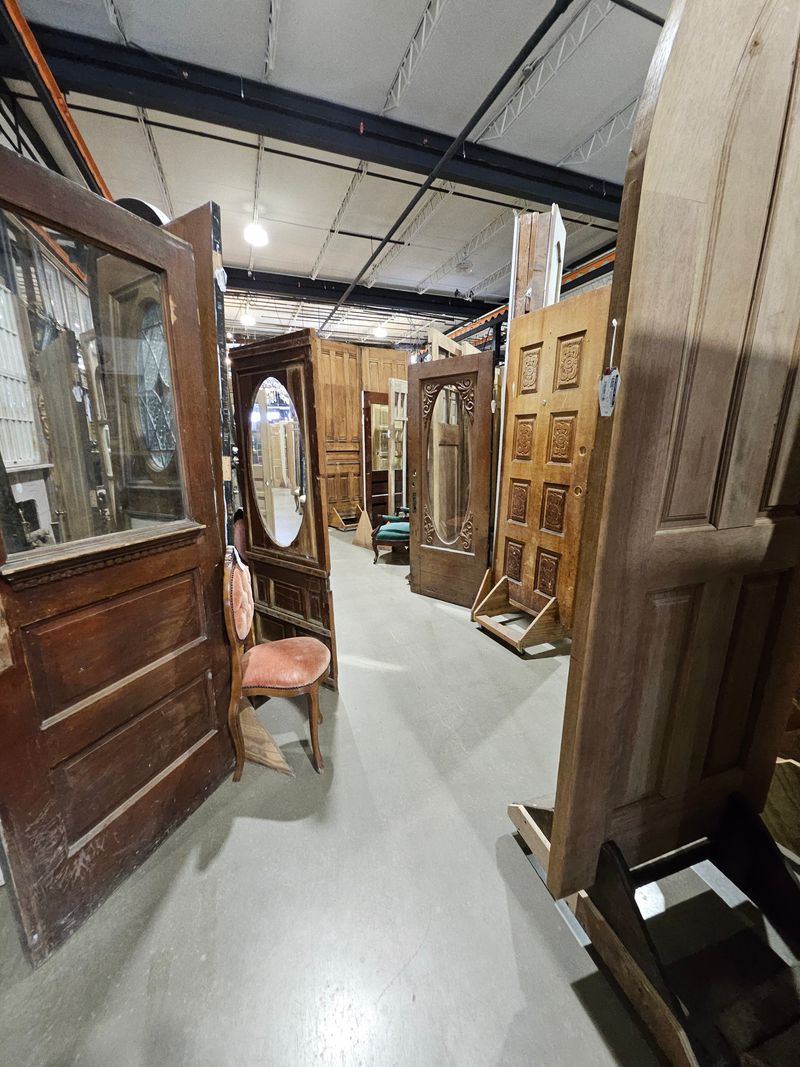
Solid wood doors crafted from old-growth timber stand as monuments to a time when builders didn’t cut corners.
Dead People’s Stuff maintains an extensive inventory of antique doors in styles ranging from simple farmhouse planks to elaborate Victorian entrances with carved details that would cost a fortune to replicate today.
Modern doors pale in comparison to the weight and substance of these vintage beauties. Many feature wood species no longer commercially available, harvested from forests that have long since disappeared.
The craftsmanship shows in every mortise and tenon joint, every hand-planed surface.
Homeowners restoring period properties find perfect matches here for original openings. Interior designers seeking statement pieces discover doors that become focal points rather than afterthoughts.
Some customers repurpose doors as headboards, tabletops, or decorative wall installations, proving that creativity knows no bounds.
The shop even helps with custom modifications, connecting buyers with craftspeople who can adapt antique doors to modern frames without destroying their historic integrity. This service bridges the gap between preservation and practicality, making it possible to incorporate genuine antiques into contemporary homes.
Walking past row after row of doors feels like touring a museum of architectural evolution. Each one represents someone’s threshold between public and private, outside and inside, then and now.
Finding the perfect door becomes an emotional journey as much as a practical shopping trip.
Light Fixtures That Illuminate History
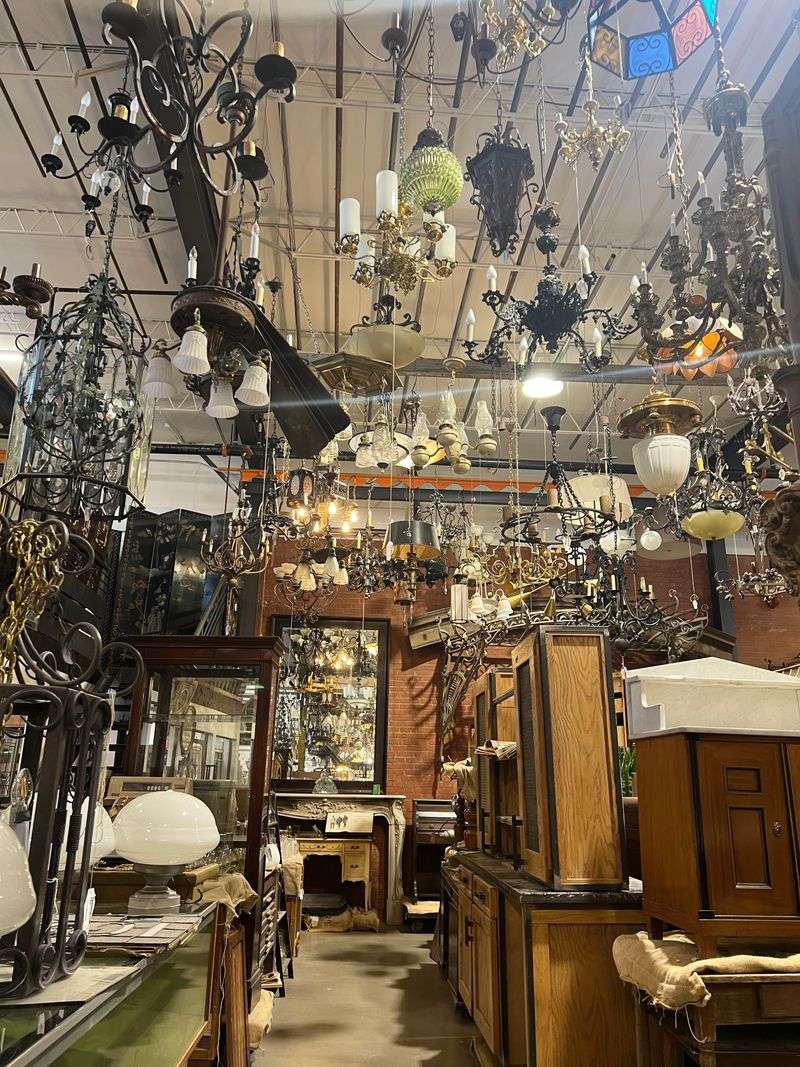
Chandeliers dripping with crystal prisms hang alongside industrial pendant lights and Art Nouveau sconces in what might be Oklahoma’s most dazzling lighting department. Dead People’s Stuff specializes in vintage light fixtures that combine function with sculptural beauty.
Modern lighting manufacturers try to imitate these designs but rarely capture the quality or character.
Many fixtures retain their original wiring, which the shop’s restoration team can update to current safety standards. This onsite expertise means customers can purchase with confidence, knowing their antique chandelier will shine safely in its new home.
The restoration process preserves patina while ensuring functionality.
Designers hunting for that perfect statement piece spend hours examining options. A 1920s theater chandelier might anchor a dining room, while salvaged schoolhouse lights could add vintage charm to a modern kitchen.
The variety ensures that nearly every design aesthetic finds representation.
Some fixtures carry fascinating histories. Staff members love sharing stories about lights rescued from demolished hotels, closed theaters, or razed mansions.
That provenance transforms a simple purchase into a conversation starter that guests will ask about for years.
Browsing the lighting section feels like wandering through decades of design innovation. From gas-to-electric conversions showing early twentieth-century technology to sleek Mid-Century Modern fixtures, the evolution of how humans illuminate their spaces unfolds in three dimensions.
Every bulb socket tells a story about changing tastes and advancing technology.
Hardware That Handled Life’s Daily Rituals
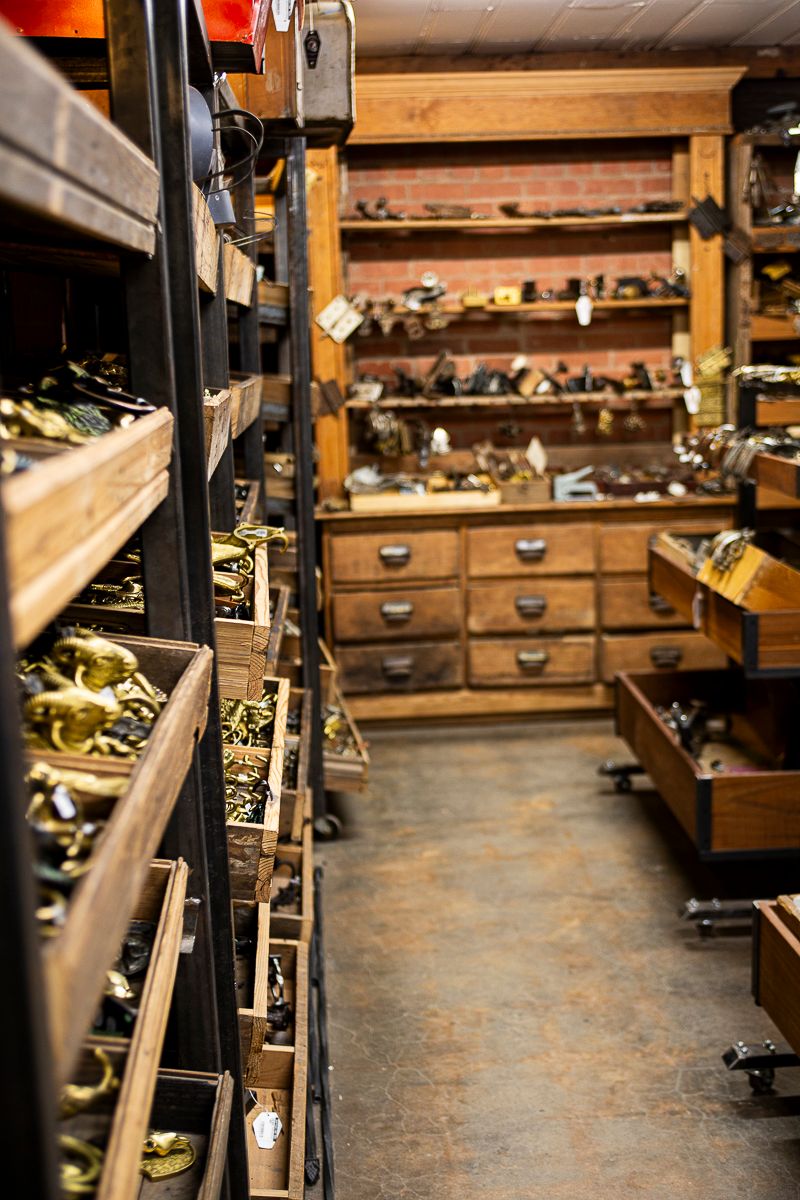
Cabinet pulls, door hinges, window latches, and escutcheon plates might seem like minor details until you compare vintage hardware to modern mass-produced alternatives. The difference in quality and design becomes immediately obvious.
Dead People’s Stuff stocks drawers full of architectural hardware spanning multiple eras and styles, each piece representing the metalworking skills of craftspeople who took pride in their work.
Restoration projects often stall when homeowners cannot find period-appropriate hardware to match existing pieces. This shop solves that problem with inventory organized by style and era.
Whether you need Victorian porcelain knobs, Art Deco backplates, or Mid-Century Modern pulls, chances are good you’ll find matches or complementary pieces.
The tactile pleasure of turning a well-made antique doorknob cannot be overstated. These pieces feature heft and smooth operation that cheap modern hardware lacks.
They transform mundane daily interactions into small moments of appreciation for quality craftsmanship.
Many customers purchase extra pieces just to have them, building collections of favorite styles or finishes. Others hunt for specific items to complete restoration projects years in the making.
The thrill of finally finding that perfect match brings genuine joy.
Staff members understand hardware in ways that surprise casual browsers. They can identify manufacturers, date pieces, and suggest compatible styles.
This expertise helps customers make informed decisions rather than guessing which hardware will work best for their projects.
Movie Props With Hollywood Stories
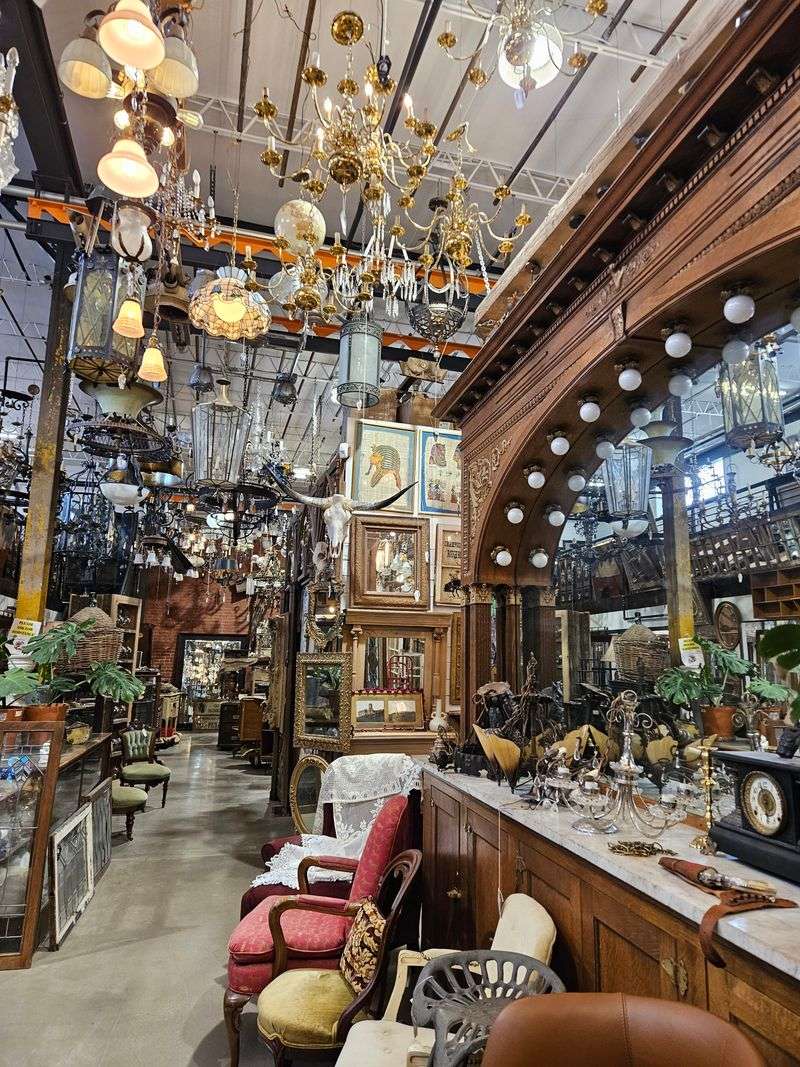
Killers of the Flower Moon brought major film production to Oklahoma, and Dead People’s Stuff played a supporting role by providing period-appropriate props and set pieces.
Now some of those items have returned to the showroom floor, carrying Hollywood provenance alongside their original historical significance.
Customers can purchase actual props that appeared on screen in a major Martin Scorsese film.
This connection to cinema adds another layer of interest to an already fascinating inventory. Imagine telling dinner guests that your vintage credenza appeared in a scene with Leonardo DiCaprio.
That kind of story elevates furniture from functional to legendary.
The shop’s involvement with film production demonstrates the authenticity and quality of their inventory. Production designers choose Dead People’s Stuff because they need genuine period pieces that will look right on camera.
Modern reproductions simply don’t have the patina and character that vintage items naturally possess.
Beyond the Scorsese film, various other productions have sourced props here. Oklahoma’s growing film industry relies on resources like this architectural salvage shop to create believable historical settings.
Each project adds to the store’s reputation and its inventory’s interesting backstories.
Browsing becomes a treasure hunt when you realize any item might have appeared on screen. That chandelier could have lit a pivotal scene.
That door might have been opened by a famous actor. The possibility adds excitement to an already thrilling shopping experience in the heart of Oklahoma.
Restoration Services That Bring Beauty Back
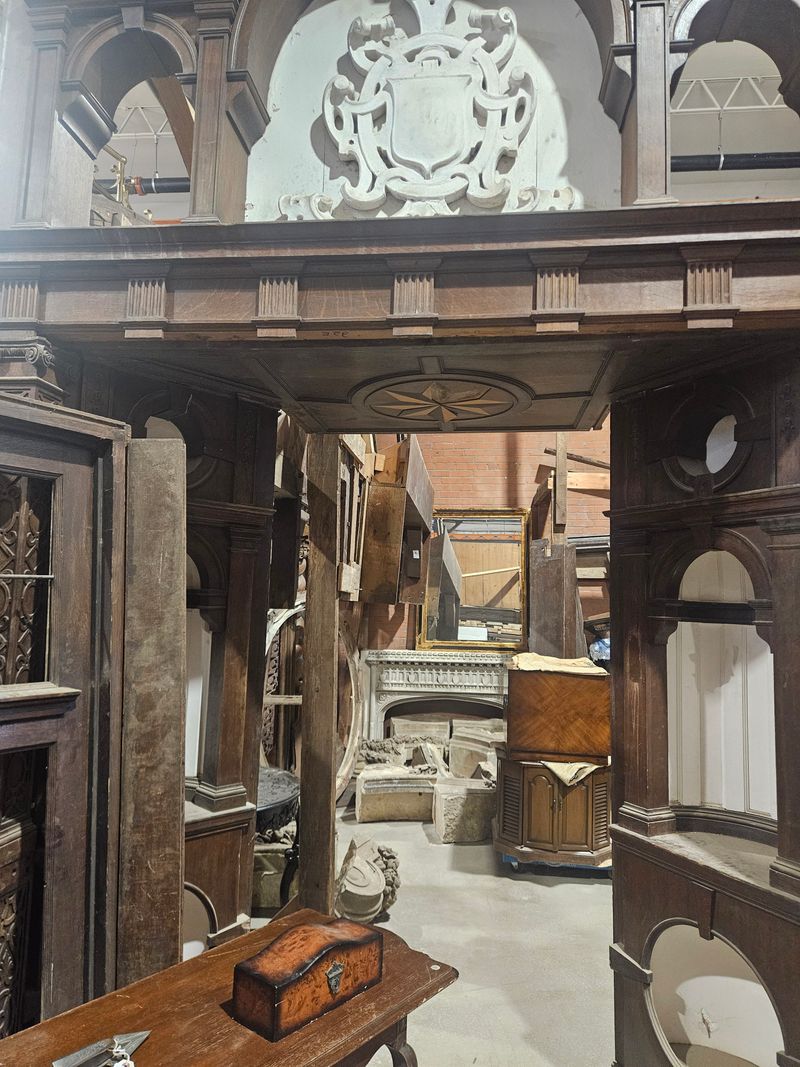
Purchasing a gorgeous but battered antique becomes less daunting when expert restoration services operate right on the premises. Dead People’s Stuff doesn’t just sell salvaged architectural elements; they also repair, refinish, and restore them to functional glory.
This capability sets the shop apart from typical antique dealers who sell items as-is.
The onsite workshop handles everything from furniture refinishing to light fixture rewiring. Craftspeople understand how to preserve original character while making pieces suitable for modern use.
They know which techniques honor historical integrity and which shortcuts compromise value.
Customers can discuss restoration options before purchasing, getting realistic assessments of what’s possible and what it might cost. This transparency helps buyers make informed decisions rather than discovering unpleasant surprises after they’ve committed to a piece.
Watching skilled workers transform damaged items into showpieces provides satisfying entertainment. The shop doesn’t hide its restoration operations; instead, they showcase the process as part of the overall experience.
Visitors gain appreciation for the labor and skill required to save these pieces from landfills.
This commitment to restoration reflects a deeper philosophy about preservation and sustainability. Rather than allowing beautiful craftsmanship to disappear, Dead People’s Stuff actively works to extend the useful life of items that deserve better than demolition debris piles.
Every restored piece represents a small victory against disposable culture.
An Eclectic Mix That Defies Easy Categories
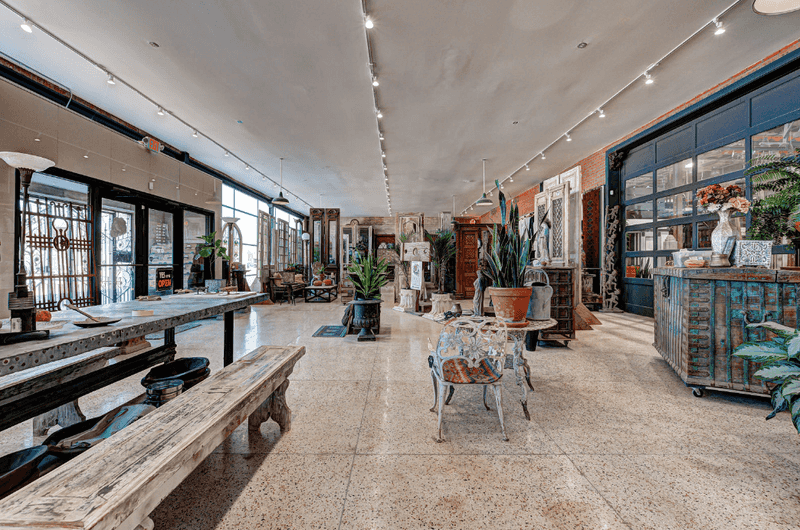
Attempting to categorize everything at Dead People’s Stuff would be like trying to alphabetize a tornado. The inventory embraces glorious chaos, mixing high-end architectural elements with quirky collectibles and everything in between.
One aisle might feature ornate fireplace mantels while the next displays vintage planters and garden statuary.
This eclectic approach means shoppers never quite know what they’ll discover around the next corner. That element of surprise keeps the experience fresh even for repeat visitors.
New inventory arrives constantly as estate sales conclude and demolition projects salvage materials worth saving.
Some customers come with specific shopping lists while others simply wander and see what speaks to them. Both approaches work because the shop accommodates focused hunters and casual browsers equally well.
The layout encourages exploration without becoming overwhelming or confusing.
Staff members embrace the diversity, understanding that one person’s must-have treasure is another person’s curious oddity. They’ve learned not to judge what customers get excited about because passion for vintage items takes many forms.
Enthusiasm is contagious in this environment.
The eclectic inventory reflects Oklahoma’s diverse architectural heritage. From Victorian-era elegance to Mid-Century Modern simplicity, from farmhouse practicality to Art Deco glamour, the state’s building styles find representation.
Walking through the shop becomes a tour through decades of design evolution and changing tastes across multiple generations of Oklahoma residents.
Square Footage Packed With Possibilities
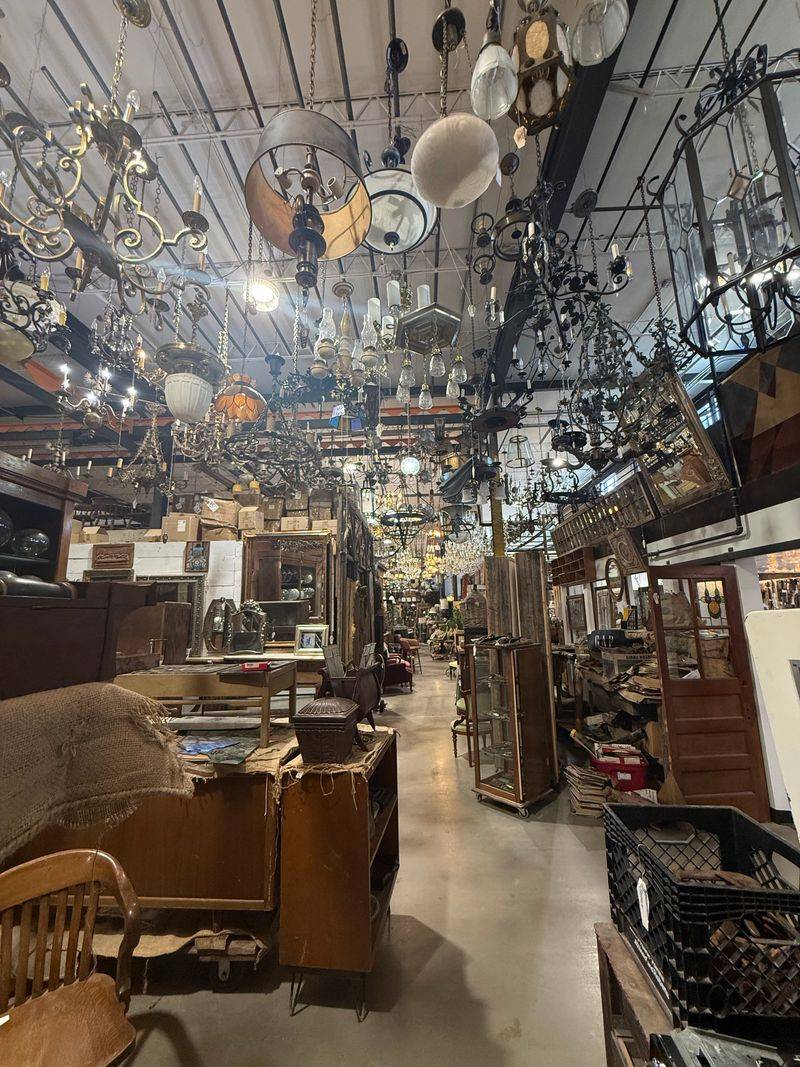
Dead People’s Stuff occupies serious real estate along Linwood Boulevard, and every square foot earns its keep. The sprawling space allows for proper display of large architectural elements like doors, mantels, and entryways that would overwhelm smaller shops.
High ceilings accommodate hanging chandeliers at proper heights.
Navigating the aisles requires time and attention because inventory density runs high. Items stack, hang, lean, and fill every available space without creating claustrophobic conditions.
The organization makes sense once you understand the layout, with similar items grouped together when possible.
First-time visitors often underestimate how long they’ll spend browsing. Two hours disappears quickly when surrounded by decades worth of fascinating objects.
Comfortable shoes become essential equipment for serious shopping sessions. The sheer volume of inventory means multiple visits reveal items missed during initial explorations.
This generous square footage benefits both customers and the business. Shoppers appreciate having room to examine large pieces and visualize how they might work in their own spaces.
The shop can maintain deeper inventory levels, increasing the likelihood that customers find exactly what they need.
Location in Oklahoma City provides easy access for visitors throughout the state and beyond. The Linwood Boulevard address puts Dead People’s Stuff within reach of both urban dwellers and rural residents willing to make the drive.
Adequate parking accommodates customers who arrive with trucks and trailers ready to haul home major purchases.
A Philosophy of Preservation and Storytelling
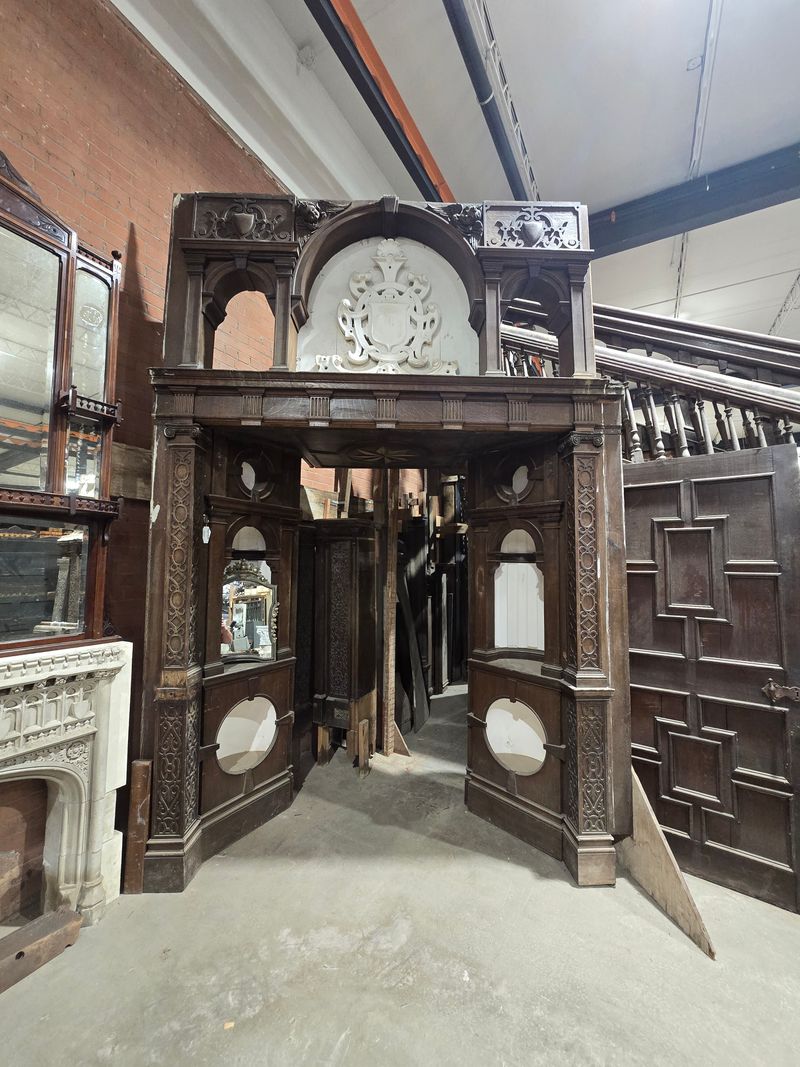
Beyond commerce, Dead People’s Stuff operates as an unofficial museum of Oklahoma’s built environment. Every item represents a piece of the state’s architectural history that might otherwise have ended up in a dumpster.
The shop’s existence creates economic incentive for salvaging rather than demolishing, which benefits everyone who values historic preservation.
Staff members function as storytellers, sharing what they know about where items originated. That door came from a demolished school.
This mantel graced a mansion built by an oil baron. Those pews seated worshippers in a rural church for generations.
Context transforms objects into connections with real people and places.
Customers become part of this preservation story when they purchase items and incorporate them into new settings. A salvaged window finds new life in a contemporary home, continuing its journey rather than ending in a landfill.
These rescued pieces carry forward the craftsmanship and artistry of their original creators.
The shop’s popularity demonstrates that many people crave authenticity and connection with the past. Mass-produced modern goods lack the character and story that vintage items naturally possess.
Shopping here becomes an act of rebellion against disposable culture and planned obsolescence.
Oklahoma’s architectural heritage deserves protection and celebration. Dead People’s Stuff accomplishes both goals while running a successful business.
By making preservation profitable and accessible, they’ve created a model that benefits the community, the environment, and customers who appreciate quality craftsmanship that has stood the test of time.
Dear Reader: This page may contain affiliate links which may earn a commission if you click through and make a purchase. Our independent journalism is not influenced by any advertiser or commercial initiative unless it is clearly marked as sponsored content. As travel products change, please be sure to reconfirm all details and stay up to date with current events to ensure a safe and successful trip.
