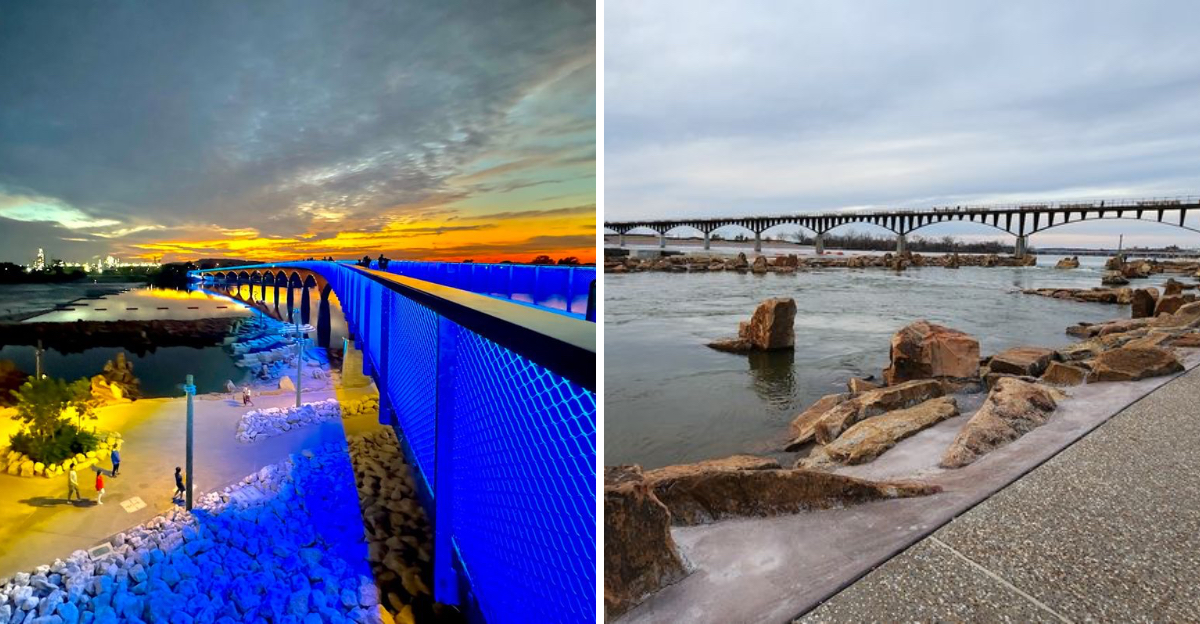
Here is the thing about this Oklahoma bridge. When the river decides to play nice and run low, you can walk across and feel like you are hovering right on top of the water.
Your feet stay dry, but your brain keeps telling you that you should be getting wet. Locals bring their cameras and their kids just to watch the optical illusion play out.
It is not fancy, not famous, just a humble crossing that turns into a magic trick a few times a year. So if you are rolling through Oklahoma and spot a bridge that looks like it is cheating physics, park the car and take a stroll.
Just do it before the river changes its mind.
The Story Behind Williams Crossing Bridge
Not every bridge has a backstory worth telling, but Williams Crossing absolutely does. This pedestrian bridge spans the Arkansas River along the 31st Street corridor in Tulsa, Oklahoma, and it was designed by the acclaimed landscape architecture firm Michael Van Valkenburgh Associates.
What makes this project stand out is its steel plate fabrication system. It was the first bridge of its kind built in the United States using that specific method.
The bridge is part of a broader effort to revitalize Tulsa’s riverside area and connect it more meaningfully to the Gathering Place, one of Oklahoma’s most celebrated public parks. Before this stretch of riverfront was developed, the area had a very different reputation.
The transformation has been dramatic. The bridge opened to real excitement from the local community, and it quickly became a destination in its own right rather than just a way to cross water.
Standing on it, you get the sense that someone genuinely cared about every detail of this structure.
What the Low Water Effect Actually Looks Like
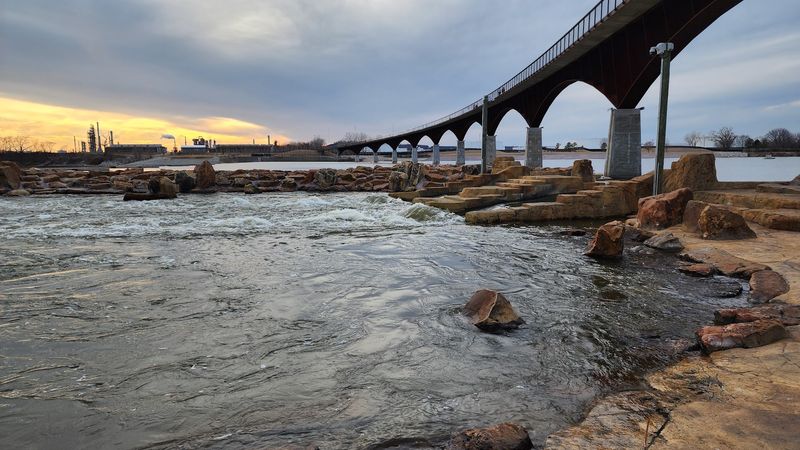
Here is what makes Williams Crossing so visually striking compared to most bridges you have seen. When the Arkansas River drops to a low level, the water spreads wide and shallow across the riverbed, and the bridge deck appears to sit right at the water’s surface.
Walking across it feels surreal. You look down and the river seems close enough to touch, rippling quietly just beneath your feet.
The Arkansas River is known for its dramatic changes in water level throughout the year. During drier months, especially late summer and early fall, the water pulls back and the bridge creates that almost magical illusion of walking or driving through the river itself.
It is not just a trick of the light. The bridge’s low profile was intentional, designed to create a close, intimate relationship between the structure and the water below it.
This is one of those details that separates a well-thought-out design from a purely functional one.
Standing at the midpoint of the bridge on a calm afternoon, with shallow water glinting on both sides, genuinely feels like being suspended inside the river.
The Architecture Is Worth a Closer Look
Most people cross a bridge without stopping to appreciate its bones. Williams Crossing makes that hard to do, because the structure itself is genuinely beautiful.
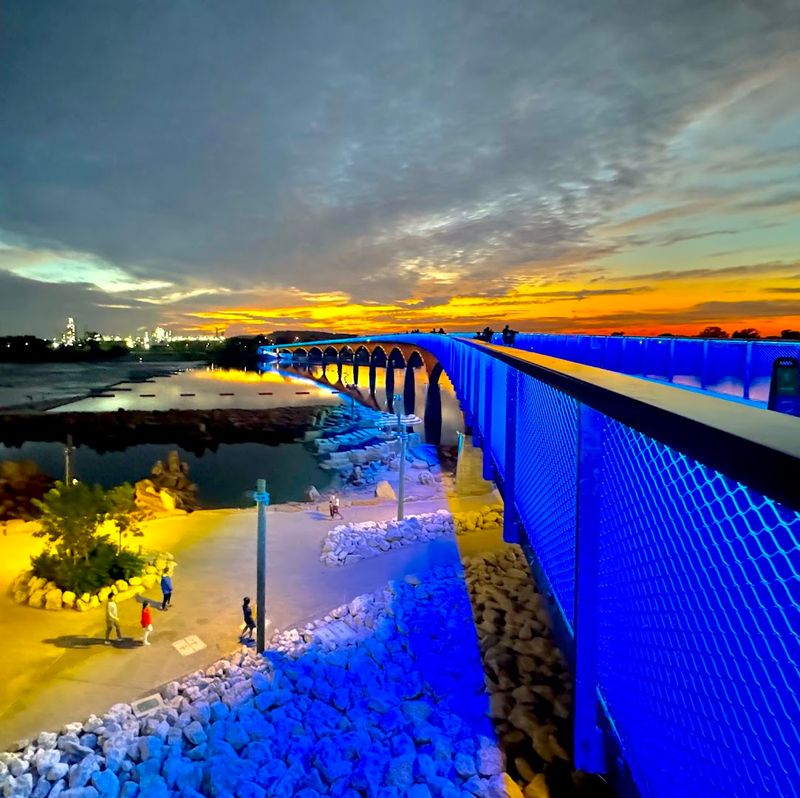
The bridge features a graceful arched form made from steel plate fabrication, a construction technique that had never been used for a pedestrian bridge in the United States before this project. The result is a sleek, flowing shape that feels more like a piece of public art than a piece of infrastructure.
The deck is nearly 18 feet wide, providing plenty of room for both cyclists and pedestrians to share the view without crowding each other.
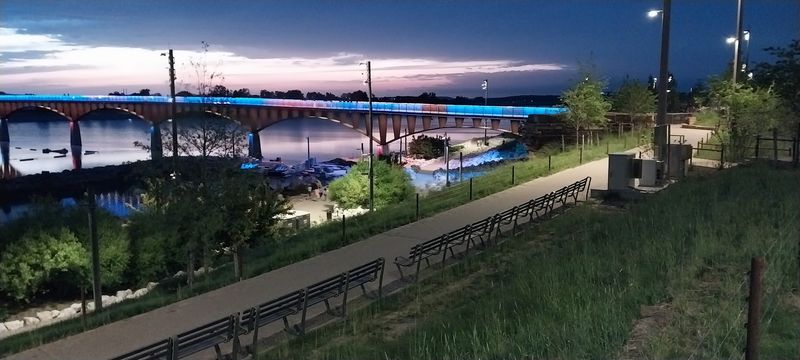
Lighting has been integrated into the design, which means the bridge looks completely different after dark. The steel catches the light in interesting ways depending on the time of day, and the arch casts shifting shadows across the deck as the sun moves.
For anyone who enjoys architecture or urban design, this bridge offers a lot to study. Oklahoma does not always get credit for bold public design choices, but this one earns it.
Sunset on the Bridge Is Something Special
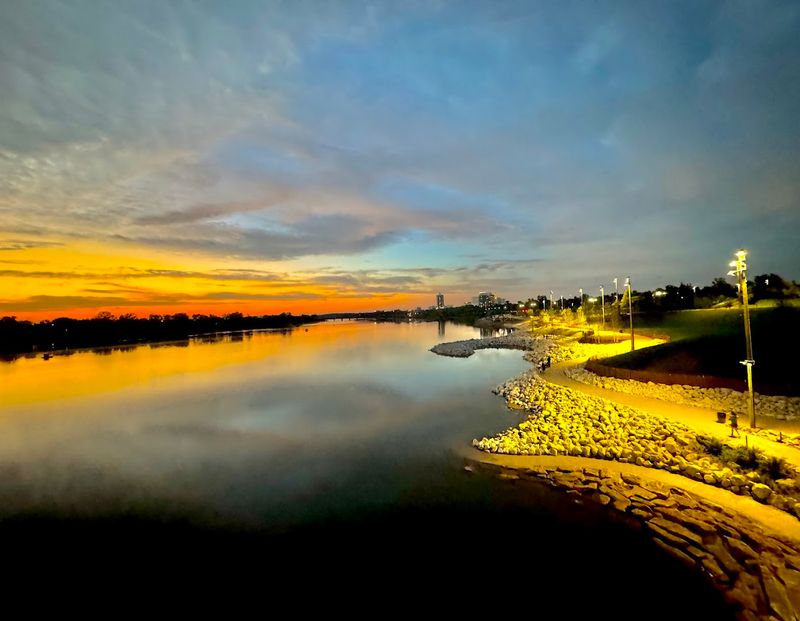
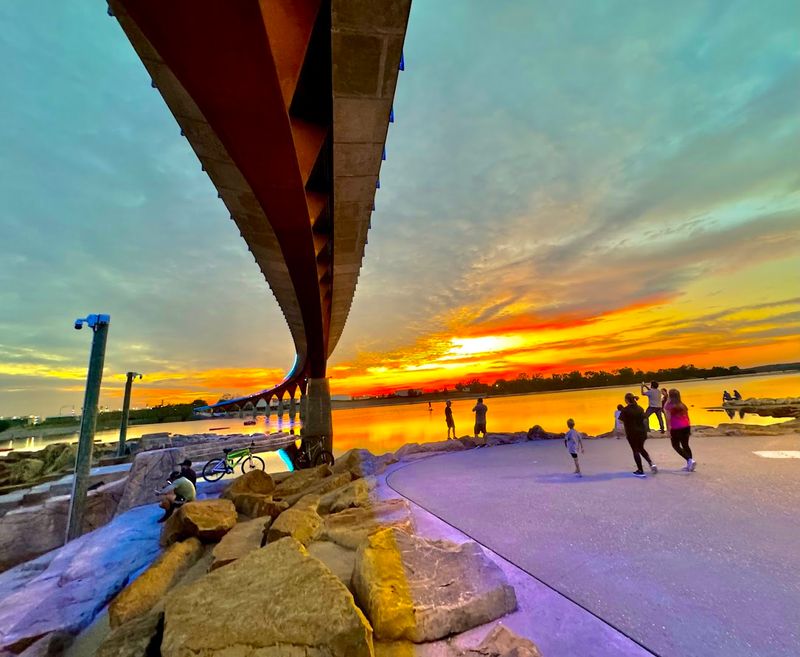
Sunrise and sunset are the two best times to be on Williams Crossing, and sunset edges ahead by a narrow margin. The western sky over Tulsa, Oklahoma lights up in shades of orange, pink, and deep red, and the Arkansas River below catches every bit of that color.
The reflection off the water doubles the visual impact. You get the sky above and the sky below, with the bridge itself framing the whole scene.
Photographers make regular trips here specifically for the golden hour light. The steel arch of the bridge creates a natural frame for the horizon, and the low profile of the structure means nothing blocks the view in either direction.
Getting there about 30 minutes before the sun goes down gives you time to find a good spot and settle in. The light changes fast once it starts, so being early pays off.
Even on evenings when the sky is not putting on a full show, the soft light over the river has a calming quality that is hard to find in the middle of a city. Oklahoma sunsets have a reputation, and this bridge gives you a front-row seat.
The Connection to Gathering Place Park
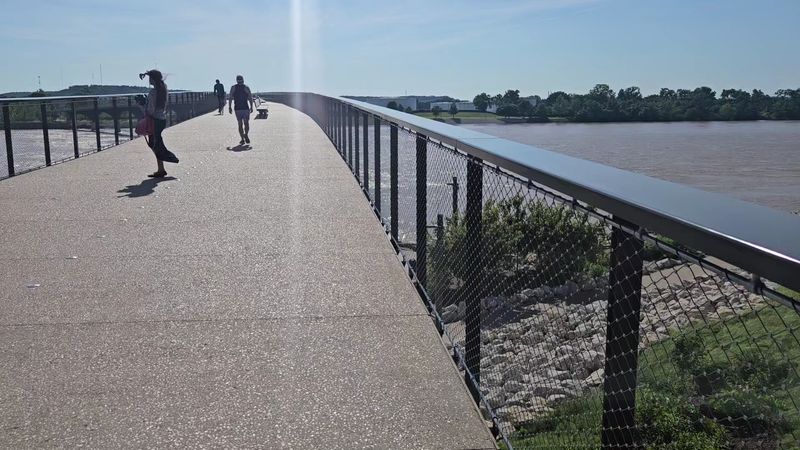
Williams Crossing does not exist in isolation. It sits at the edge of one of Oklahoma’s most impressive public spaces, the Gathering Place, a sprawling riverfront park that transformed Tulsa’s relationship with the Arkansas River.
The bridge serves as a key connector, linking the east bank to the west and making the park accessible from multiple directions. Walking from the park onto the bridge feels like a natural extension of the same experience.
The Gathering Place itself offers playgrounds, trails, open lawns, and event spaces. Pairing a visit to the park with a walk across Williams Crossing makes for a full afternoon without needing to get back in the car.
The design philosophy of both spaces shares a lot of common ground. Both prioritize the pedestrian experience, the connection to nature, and the idea that public space should feel genuinely inviting rather than just functional.
Families, joggers, cyclists, and people out for a casual stroll all move between the park and the bridge with ease. It is the kind of urban planning that makes a city feel more livable, and Tulsa deserves real credit for pulling it off this well.
Practical Tips for Your Visit
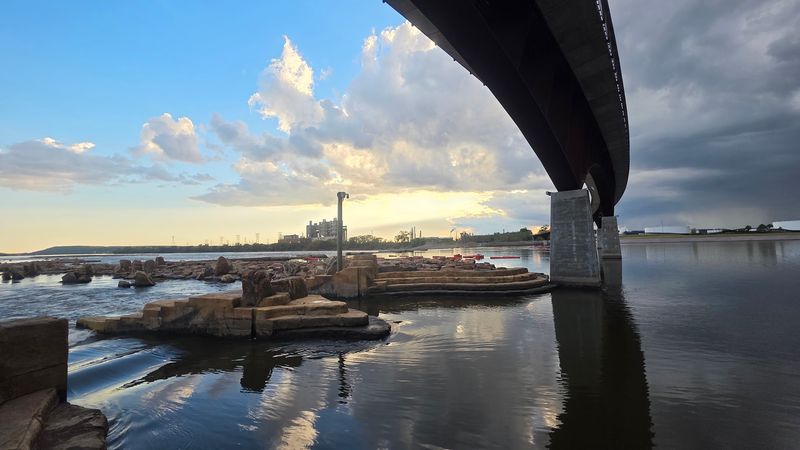
Getting to Williams Crossing Bridge is straightforward during daylight hours. The bridge is located along the Arkansas River near 31st Street in Tulsa, Oklahoma, with the address falling within the 74107 zip code area.
Parking is available nearby, but it does require a bit of attention. Some lots in the area are easier to spot during the day than at night, so arriving before dark on your first visit is a smart move.
The bridge is open 24 hours a day, seven days a week, and there is no entry fee. Bringing comfortable walking shoes is the main practical requirement, along with water during warmer months since there is no shade on the bridge itself.
If fishing is your thing, the riverbanks near the bridge offer decent access to the Arkansas River. A fishing pole and some patience are all you need.
Early morning visits have a quieter, more peaceful character. The light is soft, the foot traffic is light, and the river has a stillness that disappears once the day gets going.
Late afternoon through sunset brings more energy and more people, which has its own appeal depending on what kind of experience you are after.
The Arkansas River and Why It Matters Here
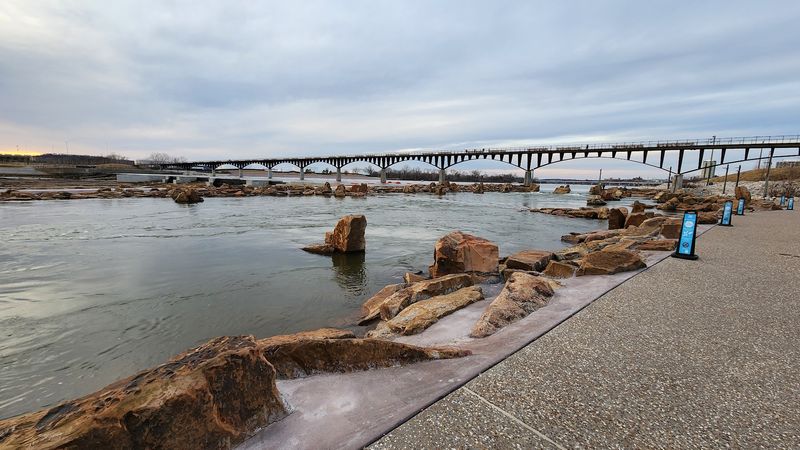
The Arkansas River is central to everything that makes Williams Crossing interesting. Without the river, the bridge would just be a bridge.
With it, the whole experience becomes something much more layered.
The Arkansas runs through the heart of Tulsa, Oklahoma, and its behavior changes significantly with the seasons. In wetter periods, the river fills out and moves with real force.
In drier stretches, it spreads wide and thin across the sandy riverbed, creating that striking low-water look that gives this bridge its most memorable quality.
The river has been part of Tulsa’s identity for a long time. For years, the riverfront was underused and, frankly, not somewhere most people wanted to spend time.
The development of the Gathering Place and the construction of Williams Crossing helped change that narrative entirely.
Today, the river corridor feels like an asset that the city has finally learned to use well. Trails run along both banks, and the water attracts paddlers, anglers, and anyone who just wants to sit near moving water for a while.
Watching the river from the bridge at different water levels is its own kind of entertainment, and Oklahoma’s weather makes sure the river never looks the same twice.
What Morning Light Does to This Place
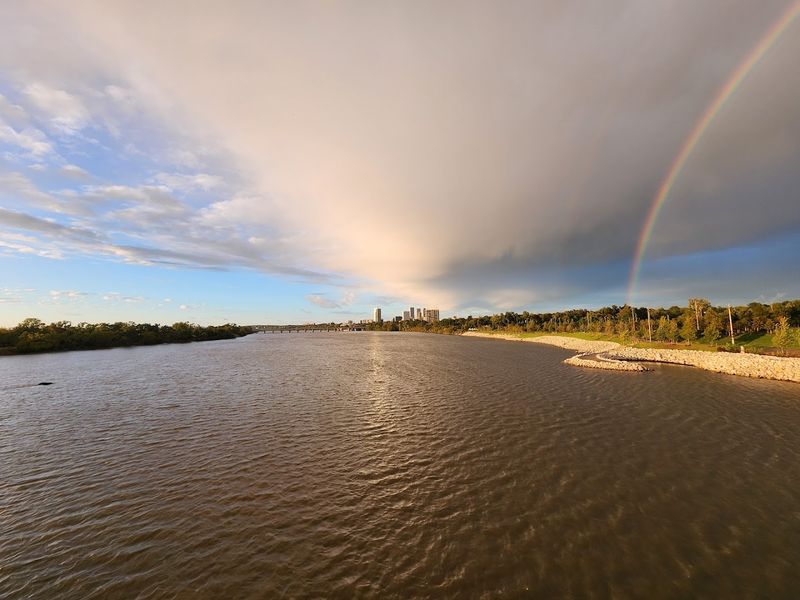
Sunrise at Williams Crossing has a completely different mood from sunset, and it is worth setting an early alarm to experience it at least once. The eastern light hits the steel arch at a low angle and creates long shadows across the deck that you simply do not see at any other time of day.
The river in the morning tends to be glassy and still. Without much wind and without much foot traffic, the reflection on the water is cleaner and sharper than it will be at any other point in the day.
Oklahoma mornings can be surprisingly cool, even in summer, which makes an early walk across the bridge genuinely pleasant. The heat builds fast once the sun climbs, so the window of comfortable morning weather is worth using.
Bringing a camera or even just a phone with a decent camera is worth the effort. The combination of warm light, still water, and the clean lines of the bridge produces the kind of image that is hard to fake with filters later.
There is also something quietly satisfying about having a place like this mostly to yourself for a short window of time, before the rest of the city remembers it exists.
Why This Bridge Represents a Bigger Shift for Tulsa
Williams Crossing is not just a pretty bridge. It represents something larger happening in Tulsa, Oklahoma, a genuine effort to rethink how a mid-sized American city uses its natural resources and public spaces.
For a long time, the Arkansas River was more of a boundary than a destination. People crossed it to get somewhere else.
The idea of going to the river as the actual goal was not really part of the local culture.
That has shifted. The Gathering Place, the riverfront trails, and Williams Crossing have collectively made the river a place people seek out.
The bridge is a physical symbol of that change, a structure that says the river is worth your time and attention.
Oklahoma does not always make national headlines for urban design or public space innovation, but projects like this one are quietly building a case. The city invested in something thoughtful and beautiful, and the result is a space that genuinely improves daily life for the people who live there.
For visitors passing through Tulsa, the bridge offers a window into what the city is becoming. It is a small detour that rewards curiosity with a view you will not quickly forget.
