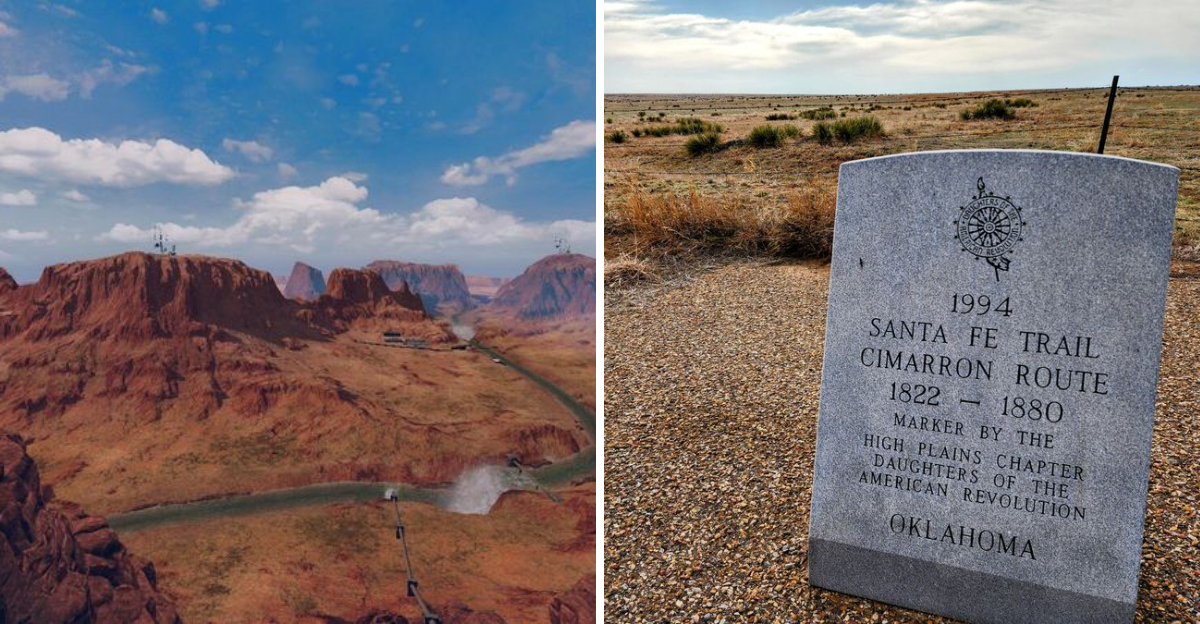
Far out in the Oklahoma Panhandle, where the state stretches westward into high plains and wide skies, Cimarron County sits quietly at the very edge of everything familiar. This is Oklahoma’s westernmost county, a place where tumbleweeds roll across empty highways and the horizon seems endless in every direction.
With fewer than 2,300 residents, it remains the least populated county in the state, a fact that only adds to its wild, untouched appeal.
Visitors who make the journey here discover a landscape shaped by wind, time, and isolation. Mesas rise from flat grasslands, ancient trails cross rocky terrain, and small towns blink to life along lonely roads.
There are no chain hotels or crowded attractions, just honest countryside and the kind of silence that makes you stop and listen.
Cimarron County feels like stepping into another era, where the land still dictates the rhythm of life and travelers are welcomed with genuine curiosity. It’s a place for those who crave solitude, wide open spaces, and the chance to explore a corner of Oklahoma that most people never see.
Whether you’re drawn by history, geology, or simply the desire to disconnect, this remote county offers an escape that feels entirely your own.
Black Mesa Summit and Nature Preserve
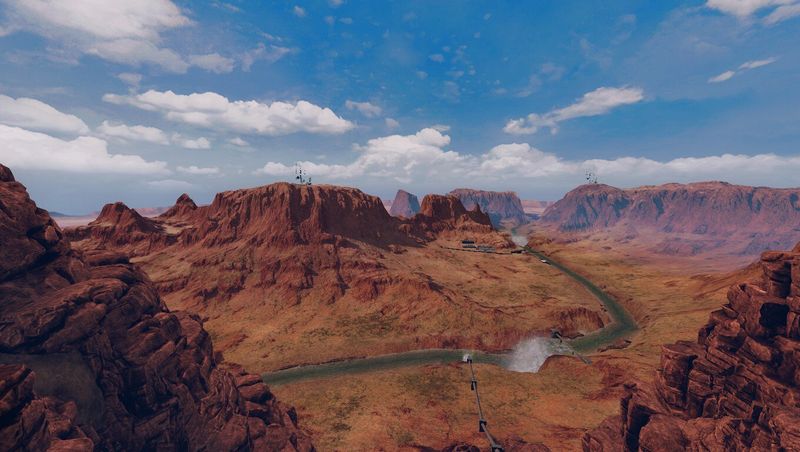
Black Mesa stands as Oklahoma’s highest point, reaching 4,973 feet above sea level in the far northwestern corner of Cimarron County. The mesa itself is a dramatic geological formation, a flat-topped mountain rising above the surrounding plains with layers of rock that tell stories spanning millions of years.
Visitors come here not just for the bragging rights of standing atop the state, but for the stark beauty of the landscape and the sense of remoteness that defines this corner of the Panhandle.
The hike to the summit follows a well-marked trail that stretches roughly 4.2 miles one way, winding through grasslands dotted with yucca and wildflowers before climbing steadily toward the mesa top. Along the way, hikers pass through varied terrain that shifts from prairie to rocky outcrops, with views expanding in every direction.
The trail is moderately challenging, with some elevation gain, but it rewards those who make the trek with panoramic vistas that stretch into New Mexico, Colorado, and Kansas.
At the summit, a stone monument marks the exact high point, and the silence is profound. The wind sweeps across the mesa, carrying the scent of sagebrush and dust, and the sky feels impossibly large.
This is a place where you can see weather systems approaching from miles away, where clouds cast moving shadows across the plains below.
Black Mesa Nature Preserve protects this unique environment, and the area is home to wildlife rarely seen elsewhere in Oklahoma, including pronghorn antelope, roadrunners, and various raptors. Spring and fall offer the most comfortable hiking conditions, though summer mornings can also be pleasant before the heat sets in.
Cimarron River and Scenic Canyonlands
The Cimarron River carves through the county, creating a ribbon of life and greenery that contrasts sharply with the surrounding high plains. This waterway has shaped the landscape for millennia, cutting through rock and soil to form canyons, valleys, and riparian corridors that support diverse ecosystems.
In a region defined by aridity, the river represents a vital resource and a scenic highlight that draws photographers, birdwatchers, and anyone seeking a different perspective on the Panhandle.
Along the river, cottonwoods and willows grow in dense thickets, their roots reaching down to the water that sustains them through dry seasons. These areas become gathering places for wildlife, including deer, wild turkeys, and numerous bird species that migrate through or nest in the cooler, shaded environment.
The contrast between the lush riverbanks and the stark plains just beyond creates a striking visual that captures the essence of this landscape.
Several access points allow visitors to explore the river corridor, though much of the area remains undeveloped and requires some effort to reach. Dirt roads wind down from the mesa tops, leading to spots where the river can be viewed or accessed on foot.
The canyonlands surrounding the Cimarron offer opportunities for hiking and exploration, with layered rock formations revealing geological history and hidden alcoves providing shelter from the wind.
Seasonal flows vary dramatically, with spring runoff sometimes swelling the river while summer and fall see it reduced to a series of pools and trickles. Each season brings its own beauty and challenges, and the ever-changing nature of the river adds to the sense of wildness that pervades Cimarron County.
This is a place where nature still dictates the terms, and visitors must adapt to the conditions they find.
Boise City and the County Seat
Boise City serves as the county seat and the largest town in Cimarron County, though its population barely exceeds 1,000 residents. The town sits at the crossroads of several highways that traverse the Panhandle, making it a natural hub for travelers and a gathering place for the ranching community that defines the region.
Main Street retains a classic small-town feel, with historic storefronts, local businesses, and a courthouse that anchors the town square.
One of Boise City’s most unusual claims to fame involves an accidental bombing during World War II, when a B-17 crew on a training mission mistook the town’s lights for their practice target and dropped six bombs near the square.
Remarkably, no one was injured, and the incident is now commemorated with a monument and remembered with a sense of humor that reflects the town’s easygoing character. The story has become a beloved piece of local lore, retold to visitors who stop to learn about the town’s history.
The Cimarron Heritage Center Museum preserves artifacts and exhibits related to the county’s past, including displays on homesteading, the Dust Bowl, ranching life, and the region’s geological significance.
The museum offers context for understanding how people have adapted to life in this challenging environment, and staff members are often eager to share stories and answer questions.
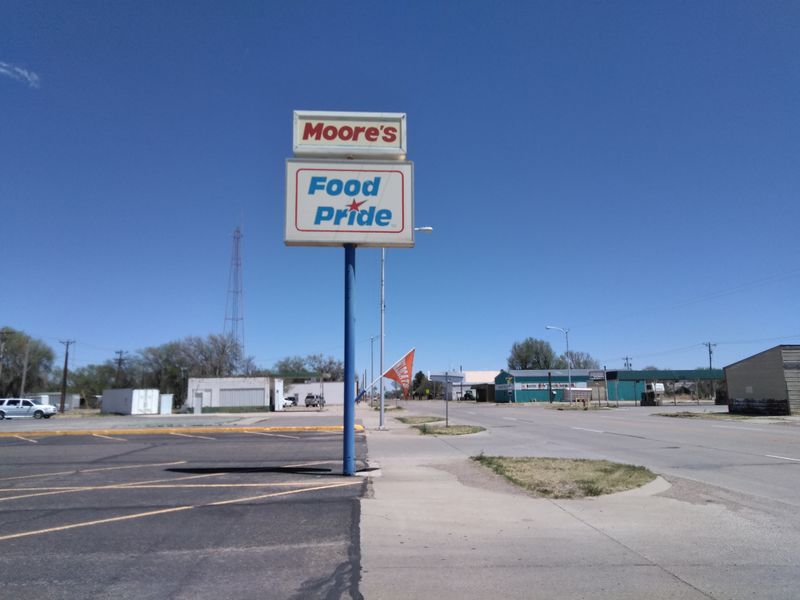
Boise City also provides practical amenities for travelers, including a few motels, restaurants serving hearty meals, and a grocery store for stocking up on supplies.
The town hosts occasional events and gatherings that bring the community together, offering visitors a chance to experience genuine Panhandle hospitality. Despite its small size, Boise City has a warmth and authenticity that make it more than just a stopover.
Dinosaur Tracks and Paleontological Sites
Hidden within the remote reaches of Cimarron County are fossilized dinosaur tracks preserved in ancient rock, remnants from a time when this landscape looked entirely different. These tracks, embedded in stone along creek beds and canyon walls, offer a tangible connection to the Jurassic period when massive creatures roamed across what was then a muddy floodplain.
Finding these sites requires local knowledge and a willingness to venture off the beaten path, but the reward is an intimate encounter with deep time.
The tracks vary in size and clarity, with some showing distinct three-toed impressions while others have been worn by erosion and weathering. Paleontologists have studied these sites, identifying tracks from various dinosaur species that once inhabited the region.
The preservation is remarkable given the age of the formations, and new tracks occasionally emerge as erosion exposes previously buried layers.
Access to these sites is not always straightforward, as many are located on private land or in areas without marked trails. Visitors interested in seeing the tracks should inquire locally, particularly at the Kenton Mercantile or the Cimarron Heritage Center Museum, where staff can provide guidance and, when possible, directions.
Respect for private property and the fragile nature of the fossils themselves is essential, as these are irreplaceable scientific and historical resources.
Beyond the dinosaur tracks, Cimarron County’s geological diversity includes other fossils and rock formations that tell the story of ancient seas, volcanic activity, and shifting climates. Amateur rockhounds and geology enthusiasts find plenty to explore, from colorful chert deposits to petrified wood scattered across the landscape.
The county’s geology is a major draw for those who appreciate natural history and the processes that shape our planet over millions of years.
Santa Fe Trail Traces and Pioneer History
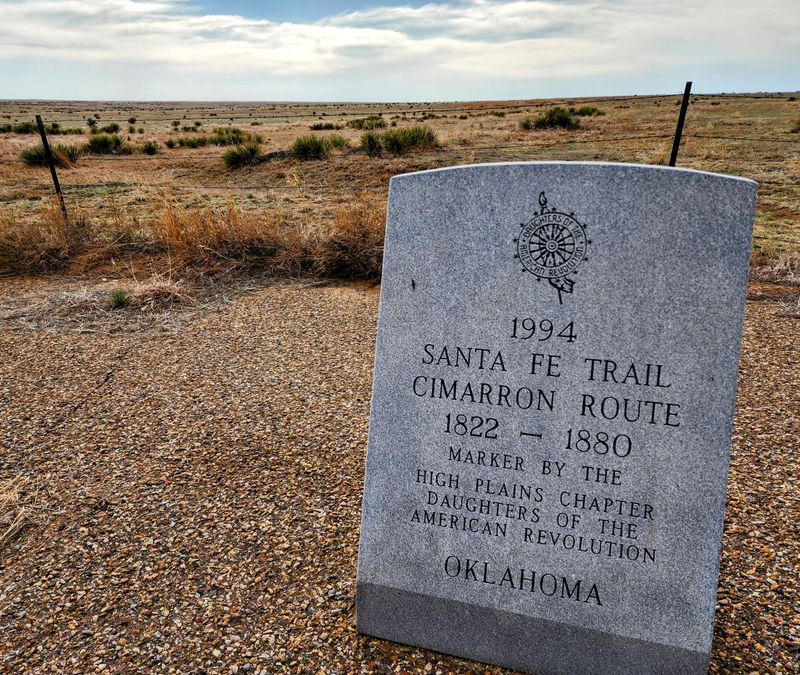
Cimarron County sits along the historic route of the Santa Fe Trail, the legendary trade route that connected Missouri with Santa Fe, New Mexico, during the 19th century.
The trail’s Cimarron Cutoff passed directly through this region, and traces of the old wagon ruts can still be found in certain locations, weathered but visible reminders of the thousands of traders, settlers, and adventurers who crossed this harsh landscape in pursuit of commerce and new beginnings.
Walking near these ruts is a humbling experience, as the shallow depressions in the earth represent countless journeys made under difficult conditions. The trail was notorious for its lack of water and shelter, and travelers faced extreme heat, sudden storms, and the constant threat of getting lost in the featureless terrain.
Those who made the crossing left behind not just physical traces but also stories of endurance and determination that have become part of the region’s identity.
Several historical markers and interpretive sites throughout Cimarron County commemorate the trail and the people who used it. The Autograph Rock, located near Boise City, bears the carved names and dates of travelers who passed through, a form of historical graffiti that provides direct evidence of their presence.
Reading these inscriptions creates a connection across time, bringing the past into sharp focus.
Local museums and historical societies preserve artifacts from the trail era, including tools, wagon parts, and documents that shed light on daily life along the route. Guided tours and self-guided driving routes allow visitors to follow sections of the trail and imagine what the journey must have been like.
Understanding this history adds depth to any visit to Cimarron County, revealing the layers of human experience that have unfolded across this landscape.
Felt and the No Man’s Land Spirit

Felt is another small community in Cimarron County, even tinier than Kenton or Boise City, but it embodies the spirit of resilience that defines life in Oklahoma’s Panhandle.
The town sits along Highway 385, serving as a quiet waypoint for travelers and a home to a handful of families who have chosen to stay in this remote corner of the state.
There’s not much here in terms of infrastructure, but that’s precisely the point for those who appreciate the solitude and simplicity of rural life.
The Panhandle region, including Cimarron County, was once known as No Man’s Land, a strip of territory that belonged to no state or organized territory for several decades in the late 1800s. This lawless status attracted outlaws, adventurers, and those seeking to escape the constraints of settled society.
Though law and order eventually arrived, the independent spirit born during that era persists in places like Felt, where self-reliance and neighborly support remain essential values.
Driving through Felt offers a glimpse of what life looks like when stripped down to essentials. Homes are spread out, often surrounded by windbreaks and working ranches.
The landscape stretches endlessly in every direction, and the wind is a constant companion, shaping the vegetation and weathering everything it touches. It’s a landscape that demands respect and rewards those who take the time to understand it.
Visitors passing through Felt might stop at the small community center or simply pause to take in the surroundings. There’s beauty in the emptiness, a sense of peace that comes from being far removed from the noise and rush of modern life.
Felt represents the enduring human presence in a challenging environment, a testament to the people who call Cimarron County home.
Dear Reader: This page may contain affiliate links which may earn a commission if you click through and make a purchase. Our independent journalism is not influenced by any advertiser or commercial initiative unless it is clearly marked as sponsored content. As travel products change, please be sure to reconfirm all details and stay up to date with current events to ensure a safe and successful trip.
