The drums beat a rhythm that feels older than the building itself. Inside this Shawnee cultural center, a Native nation tells its story through interactive exhibits, ancient artifacts, and a whole lot of heart.
You can trace a historic trail of removal, watch traditional dancers spin colorful regalia, and learn why the tribe calls itself “People of the Place of the Fire.”
The building hums with something you cannot quite name, pride maybe, or resilience, or just the energy of generations refusing to fade away. Kids touch screens to hear elders speak their native language.
Adults linger over photographs of relatives they never met. Everyone leaves a little different than when they arrived.
Bring curiosity and an open mind. The history hits hard but the welcome hits harder.
This is not a dusty museum. This is living, breathing culture running on what locals jokingly call Wattomi power.
Spend an afternoon here and you will feel the current. No doubt. Go see for yourself. The drums are waiting. So are the stories.
The Story Behind the Citizen Potawatomi Nation
Long before Oklahoma was a state, the Potawatomi people were already living a rich and complex life across the Great Lakes region of North America.
Their journey to what is now Oklahoma is one of the most significant chapters in Indigenous American history, and the Cultural Heritage Center tells it with remarkable honesty and care.
The exhibits walk you through the forced removal known as the Trail of Death, which brought the Potawatomi to Kansas and eventually to Oklahoma in the 1800s.
Seeing this history laid out in chronological order, with maps, documents, and visual displays, makes it feel immediate rather than distant.
What impressed me most was how the center frames this story not as a tale of defeat, but as one of extraordinary endurance.
The Citizen Potawatomi Nation today is one of the largest tribal nations in the United States, and that fact carries real weight when you understand the road it took to get here.
Oklahoma holds this history, and this center holds it with pride.
The Museum Exhibits Flow Like a Carefully Written Book
One of the things I appreciated most about this museum is how logically it moves. The exhibits are arranged so that you start at the beginning of Potawatomi history and travel forward through time, arriving eventually at the present-day nation in Oklahoma.
It is a satisfying structure that rewards patience.
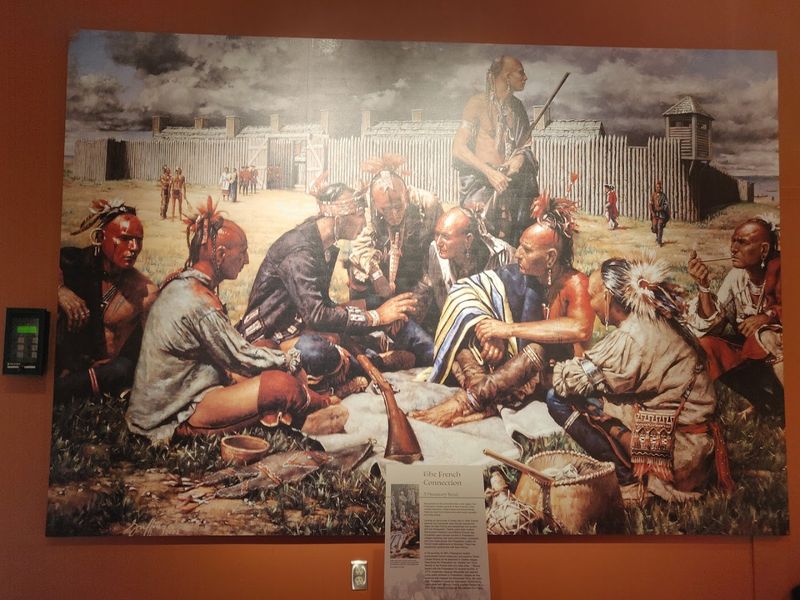
Each section of the museum introduces a new era or theme, from early tribal life and traditions to contact with European settlers, the forced removal period, and the eventual rebuilding of the nation in Oklahoma.
The transitions between sections feel smooth rather than abrupt, which keeps you engaged rather than overwhelmed.
Interactive video panels are placed throughout the space, offering narrated context for photographs and historical documents. These panels are especially helpful for younger visitors or anyone who prefers listening to reading.
The combination of visual displays and audio storytelling gives the museum a layered quality that rewards more than one visit.
By the time I reached the final exhibits, I felt like I had genuinely traveled through time. The museum does not just present facts.
It builds a narrative, and that narrative sticks with you long after you leave Shawnee.
What the Building Itself Tells You Before You Step Inside
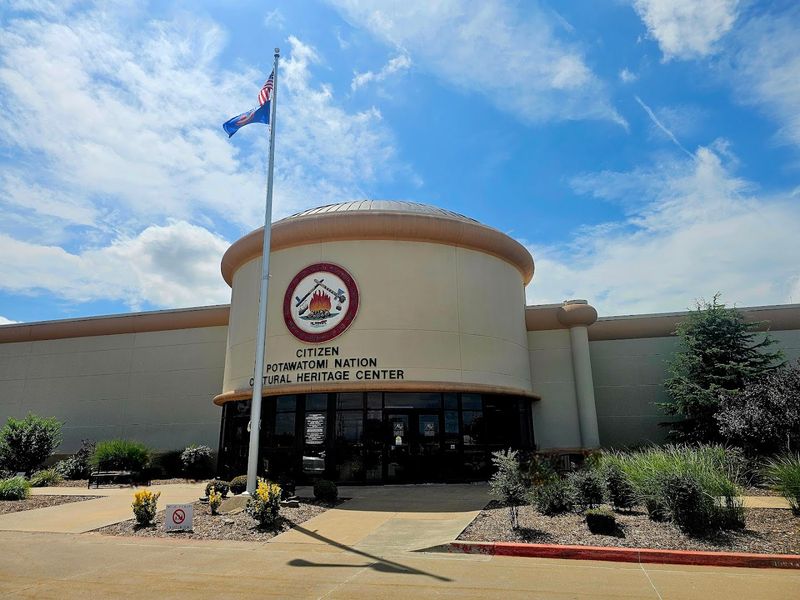
Before you even push open the front door, the Cultural Heritage Center makes a statement. The building sits on a well-maintained campus in Shawnee, Oklahoma, and its design blends contemporary architecture with a sense of purpose that feels deliberate rather than decorative.
The grounds around the center are clean and spacious, giving the whole place a calm, open feel. There are ball fields and open green areas nearby, which hints at the broader community life the Citizen Potawatomi Nation maintains in this part of Oklahoma.
Walking up to the entrance, I noticed how the space seemed designed to welcome rather than impress. It is not trying to be a monument to itself.
Instead, it feels like a living institution, one that exists to serve both its community and curious visitors who show up wanting to learn.
The exterior sets an honest tone for everything inside. No grand gestures, no overwhelming grandeur, just a well-kept space that says the stories within are the main event.
That kind of architectural humility is rarer than you might think, and it made me feel immediately at ease before I even signed in at the front desk.
The Wigwam Exhibit Is a Centerpiece Worth Slowing Down For
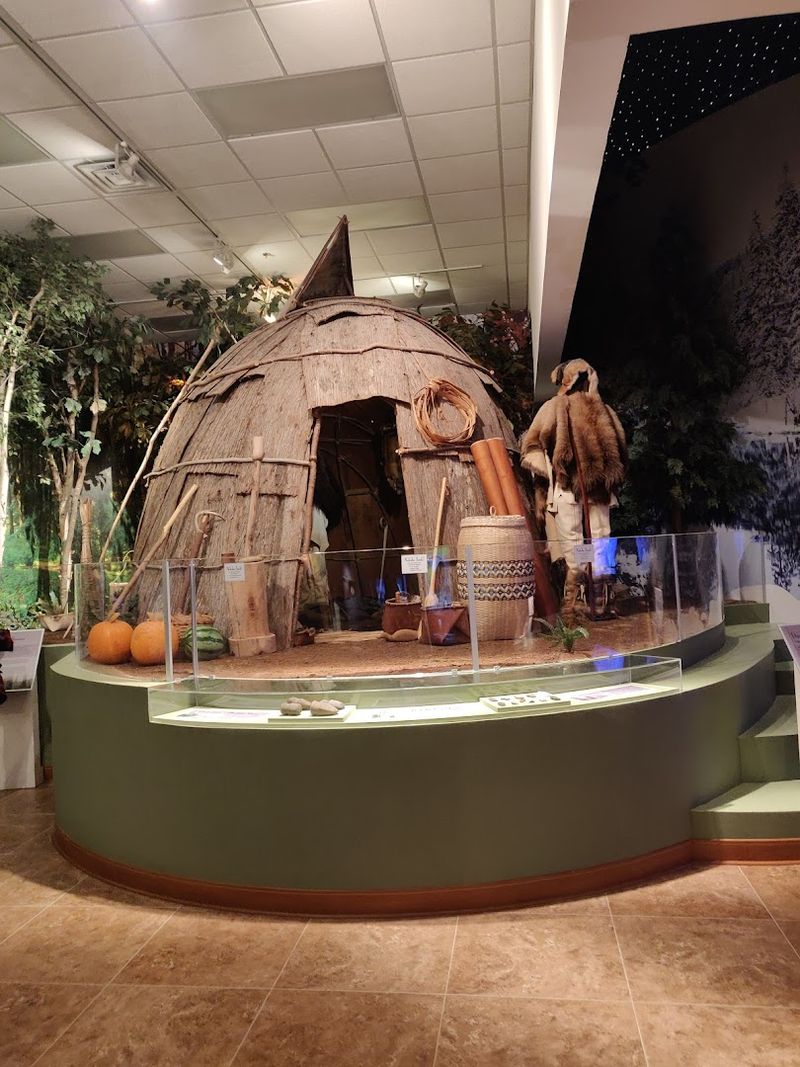
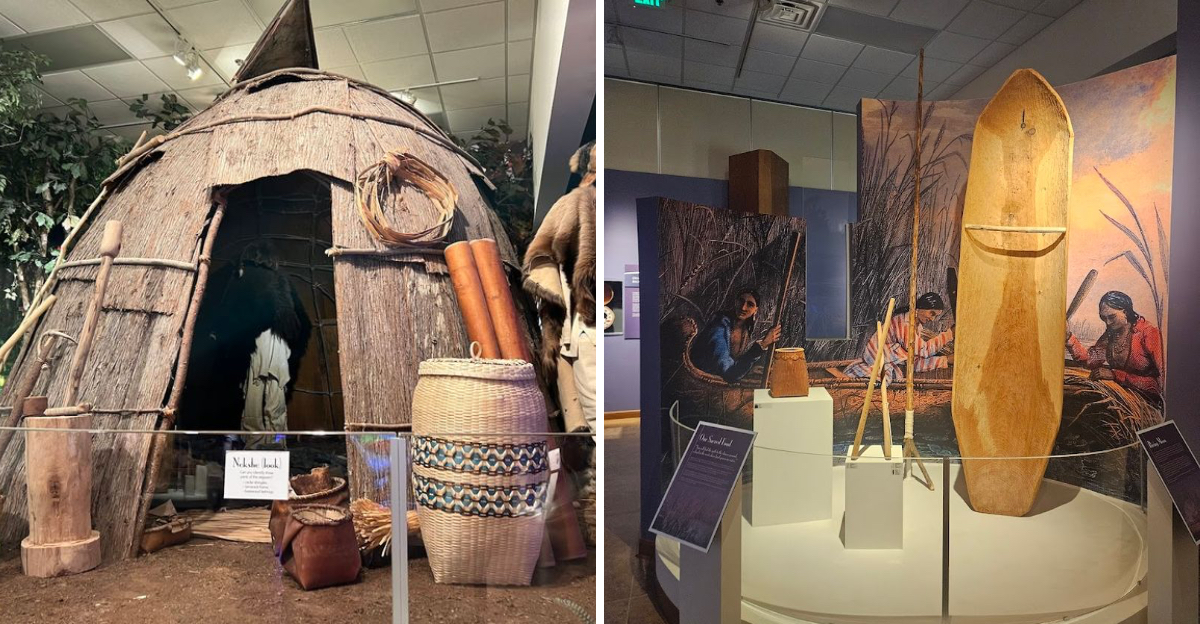
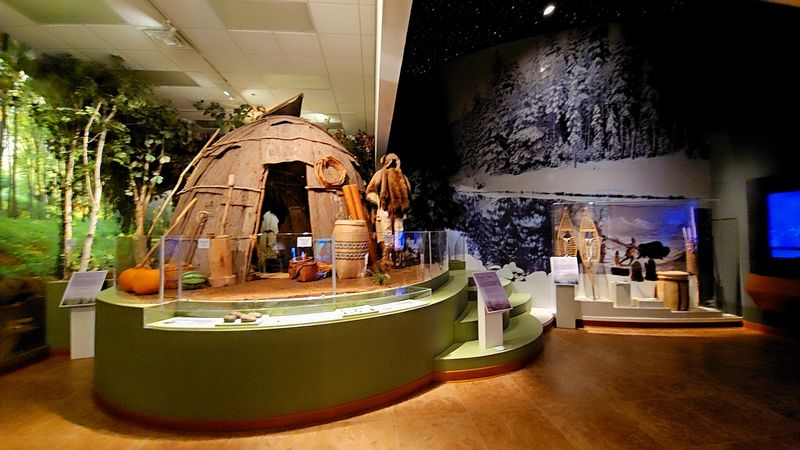
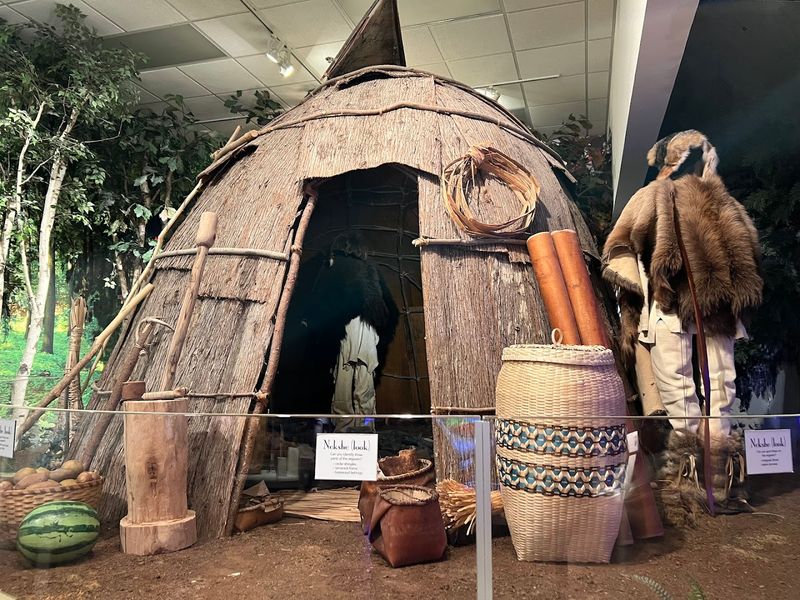
Right in the middle of the museum floor stands one of the most visually arresting exhibits in the entire building: a full-scale reproduction of a traditional Potawatomi wigwam. It stops you mid-step the moment it comes into view, and it deserves every second of the attention it commands.
The wigwam is constructed with careful attention to traditional methods and materials, and the surrounding displays explain its role in everyday Potawatomi life.
You learn about the seasonal nature of these structures, how they were built, and what life inside them would have looked and felt like across different times of year in the Great Lakes region.
What makes this exhibit especially powerful is its scale. Seeing a full-size structure inside a museum space collapses the distance between past and present in a way that reading a text panel simply cannot replicate.
You are not imagining it from a description. You are standing in front of it.
The wigwam has been part of the museum for decades, and it remains one of the most memorable things I encountered during my time in Shawnee. Some exhibits age with the building.
This one only seems to grow more meaningful over time.
The Hand-Carved Canoe Is a Quiet Act of Mastery
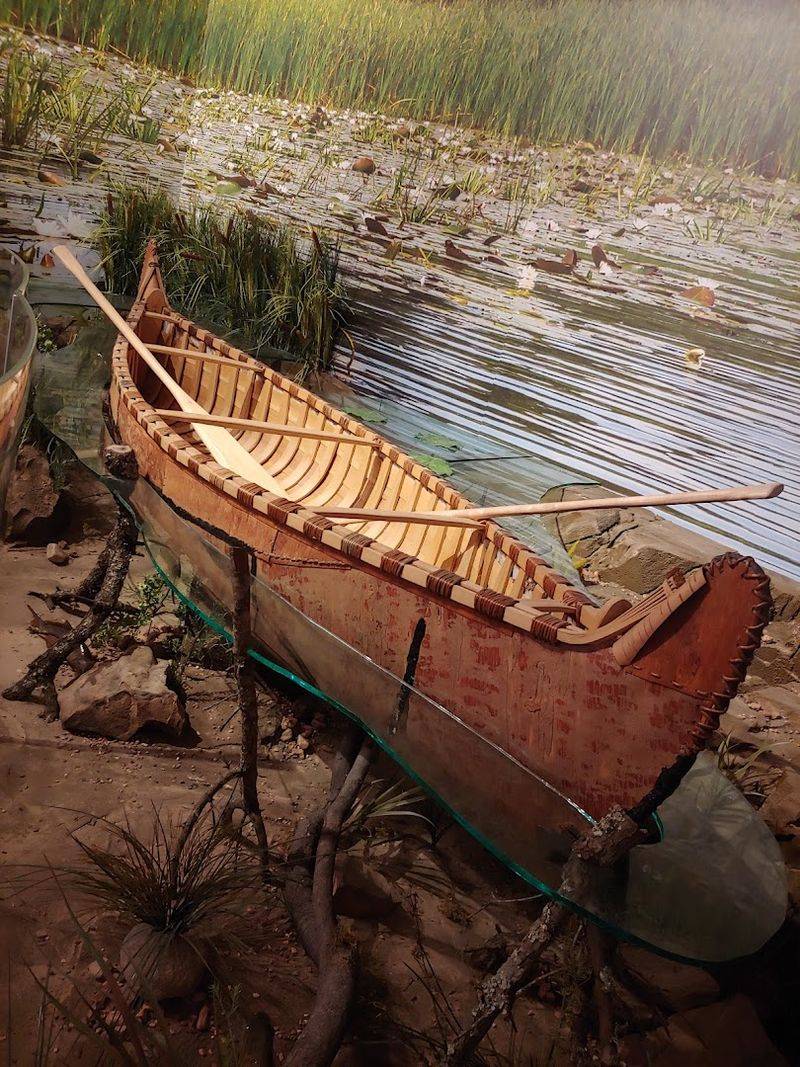
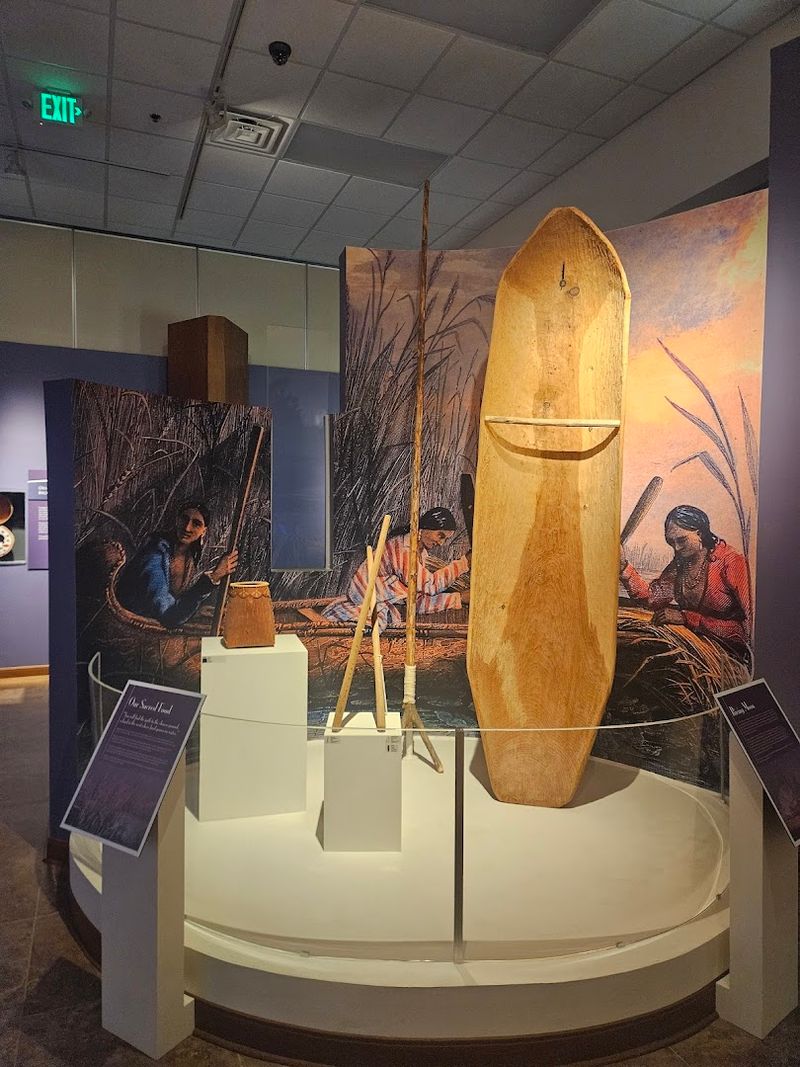
Somewhere between the interactive panels and the timeline exhibits, there is a hand-carved canoe on display that stopped me completely. It is the kind of object that does not need a lengthy explanation to communicate its significance.
The craftsmanship speaks before the label does.
The canoe is accompanied by hand-carved paddles, and together they represent a traditional skill set that required years of knowledge, practice, and patience to develop.
The Potawatomi people were skilled watercraft builders, and seeing this reproduction made it easy to understand why water travel was central to their way of life across the Great Lakes.
What struck me about this exhibit was how it reframes the idea of technology. A hand-carved canoe is not a primitive object.
It is a precision tool built from deep environmental knowledge, shaped by generations of refinement. Seeing it in person makes that argument without needing to state it outright.
The canoe sits in a space that gives it room to breathe, and the surrounding context explains both the construction process and the cultural importance of water in Potawatomi tradition. It is one of those quiet exhibits that lingers in memory long after the louder displays have faded.
The Potawatomi Language Gets Its Own Spotlight
Language is one of the most powerful carriers of culture, and the Cultural Heritage Center treats the Potawatomi language with the respect it deserves.
Woven throughout the exhibits are words, phrases, and linguistic context that invite visitors to engage with the language rather than simply observe it from a distance.
Pay attention as you move through the museum and you will leave knowing at least a few words of Potawatomi. That might sound like a small thing, but it is not.
Language connects you to a living culture in a way that photographs and documents alone cannot quite manage.
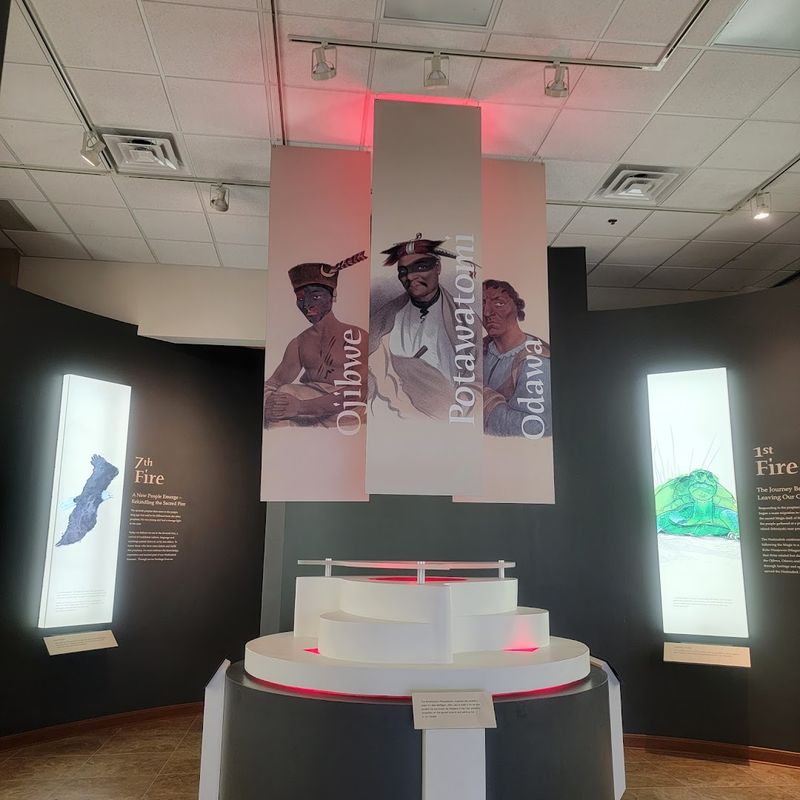
The Potawatomi language belongs to the Algonquian language family and shares roots with Ojibwe and Ottawa.
Seeing those connections laid out in the museum helped me understand the broader web of relationships between Indigenous nations across North America, many of whom share linguistic and cultural ties that predate European contact by centuries.
Efforts to preserve and revitalize the Potawatomi language are ongoing, and the museum reflects that urgency with care.
Oklahoma is home to many Indigenous languages, and watching a community actively work to keep its language alive is one of the most quietly inspiring things I encountered during my visit.
The Eagle Aviary Adds a Remarkable Outdoor Dimension
Just when you think the Cultural Heritage Center has shown you everything it has, the Eagle Aviary enters the picture. Located on the broader Citizen Potawatomi Nation campus near the museum, the aviary offers an experience that is genuinely unlike anything else in this part of Oklahoma.
Eagles hold deep spiritual and cultural significance in Potawatomi tradition, and the aviary exists to honor that relationship while also rehabilitating birds that cannot survive in the wild. The connection between the aviary and the museum is not incidental.
It reflects a worldview in which cultural preservation and care for the natural world are inseparable.
Golden Eagle demonstrations have been offered on the campus, giving visitors a rare opportunity to see these birds up close and to understand their role in Indigenous ceremonial life. Being near a golden eagle is an experience that registers somewhere deep in the chest.
There is a gravity to it that is hard to put into words.
Appointments or scheduled visits may be needed for certain aviary experiences, so checking ahead is a smart move. But if the timing works out, adding the aviary to your visit transforms a great museum day into something closer to a full cultural immersion right here in Shawnee, Oklahoma.
The Gift Shop Rewards the Curious and the Generous
Museum gift shops can feel like an afterthought, but the one at the Cultural Heritage Center is absolutely worth your time and attention.
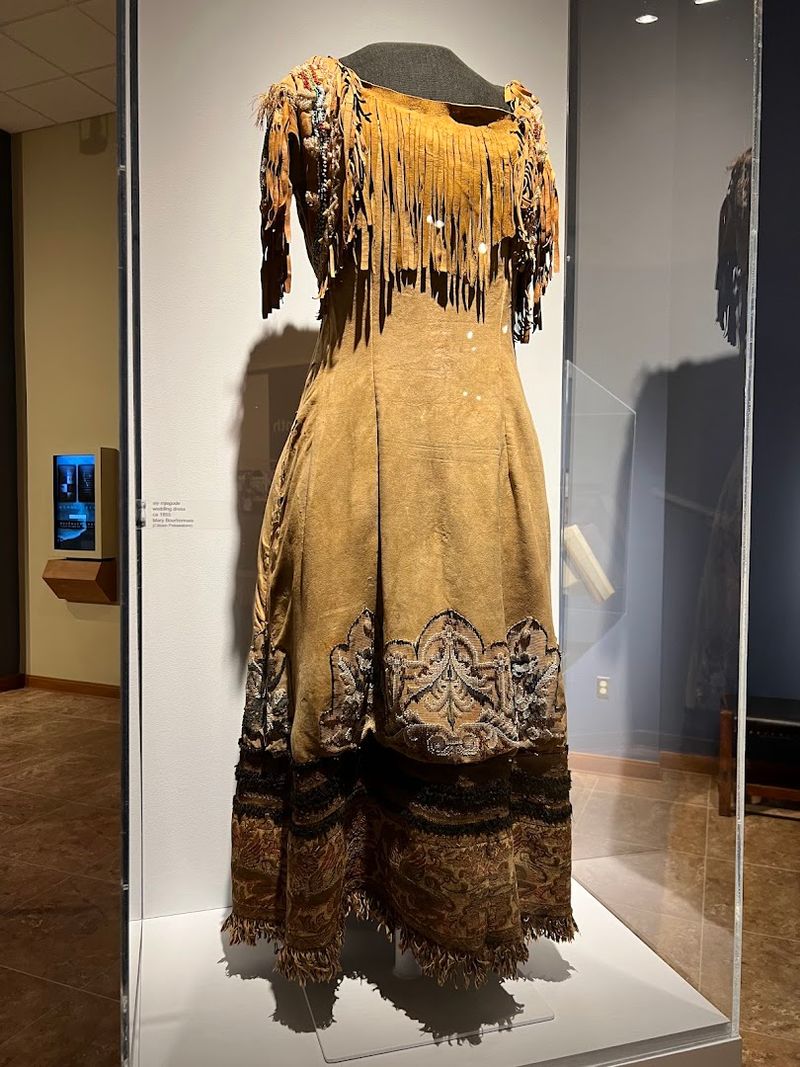
It stocks a wide range of items made by Native artists, from handcrafted jewelry and beadwork to pottery, dolls, lotions, and small collectibles that start at just a dollar or two.
The higher-end pieces are genuinely beautiful, the kind of handmade jewelry and artwork that you would frame or wear with pride rather than tuck into a drawer. But there are also accessible options for every budget, which makes the shop feel welcoming rather than exclusive.
Purchasing from this shop means supporting Native artists directly, which adds real meaning to whatever you bring home. It is not just a souvenir.
It is a small act of cultural support, and the shop makes that easy to understand without being preachy about it.
The whole place carries a faint scent of sweetgrass, which drifts pleasantly through the air and gives the shopping experience a sensory warmth that is hard to forget.
I picked up a few pieces and spent longer browsing than I planned, which is exactly the kind of problem a good gift shop should create for you in the best possible way.
Admission Is Free and Donations Are Welcome
Here is something that genuinely surprised me on my first visit: admission to the Cultural Heritage Center is completely free. In a landscape where museum tickets can easily run into double digits, walking into a space this thoughtfully designed without paying an entry fee feels like a small miracle.
There is a donation box near the entrance, and contributing what you can is a meaningful way to support the center’s ongoing work.
The museum relies on community investment to maintain its exhibits, develop new programming, and keep the doors open for everyone, including tribal members, students, and travelers passing through Shawnee.
The free admission policy is not a marketing gimmick. It reflects a genuine commitment to accessibility, which aligns with the broader values the Citizen Potawatomi Nation has built into this institution.
Knowledge and cultural heritage should not be locked behind a paywall, and this center lives that belief every day it opens its doors.
Operating hours run Monday through Friday from 8 AM to 5 PM, with Saturday hours from 10 AM to 3 PM. The center is closed on Sundays.
Tours are available by appointment, so calling ahead at 405-878-5830 is a good idea if you want a guided experience during your time in Oklahoma.
The Annual CPN Festival Brings the Campus Fully Alive
If the museum alone is impressive, experiencing it during the annual Citizen Potawatomi Nation Festival takes things to an entirely different level.
The festival draws tribal members from across the country back to Shawnee, Oklahoma, turning the entire campus into a living celebration of Potawatomi culture, community, and continuity.
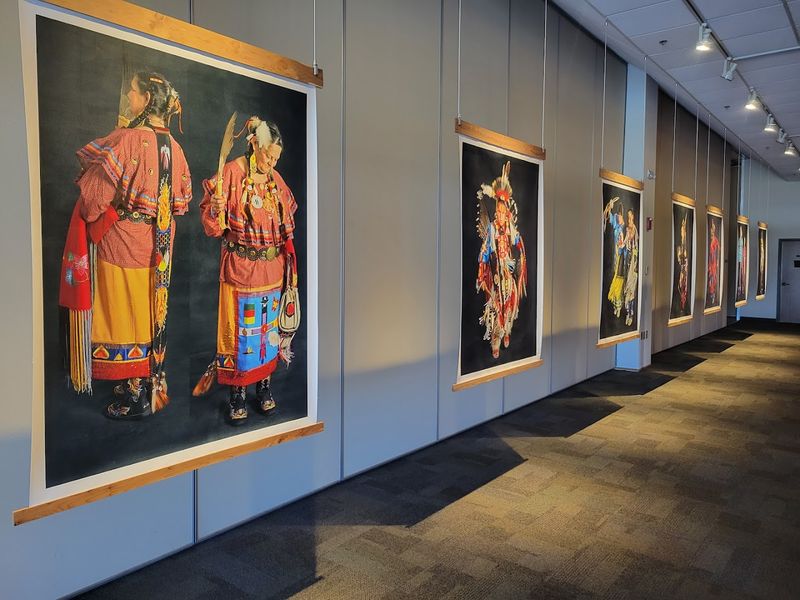
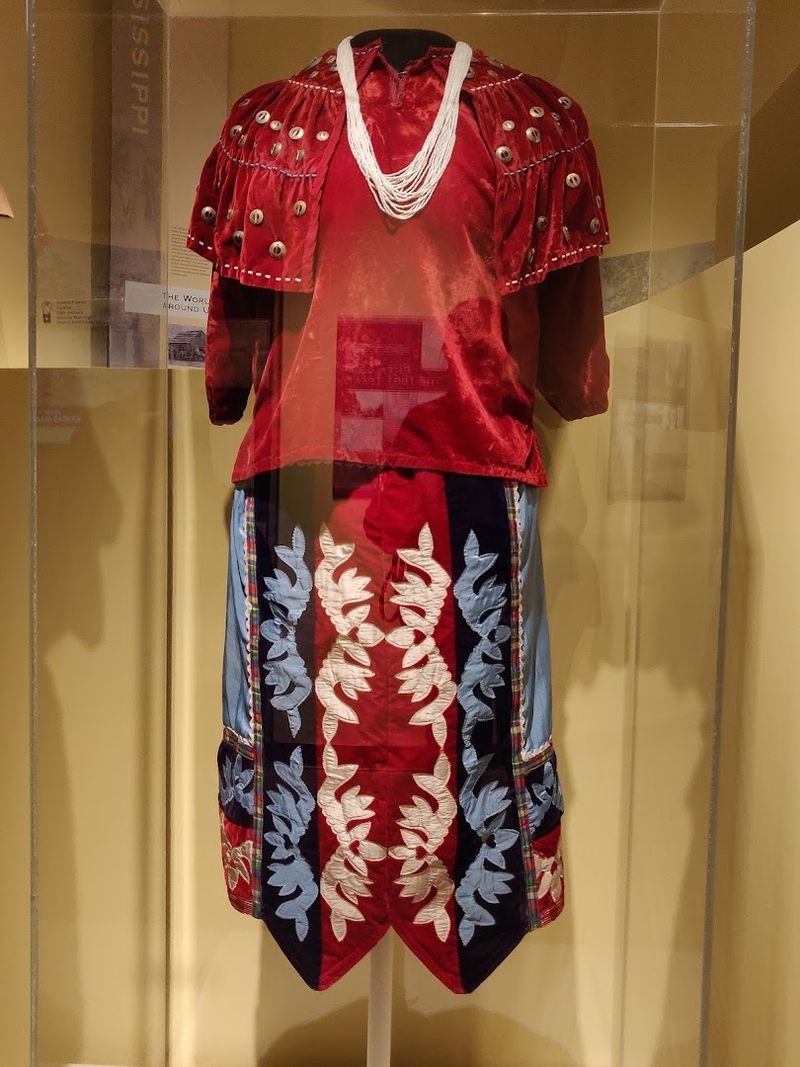
During the festival, the grounds fill with traditional dance, regalia, food, and gatherings that reflect the full breadth of Potawatomi life today. The energy on campus during this period is something the museum exhibits can gesture toward but cannot fully replicate.
Seeing a community come together in celebration of its own heritage is a powerful thing to witness.
The museum itself sees heavy foot traffic during the festival, which is a testament to how central it has become to the community’s sense of identity and pride.
Some visitors make the trip to Shawnee specifically to combine the festival with a museum visit, and that combination makes for an exceptionally rich experience.
Planning around the festival dates is worth the extra effort. The campus transforms in ways that make every corner of it feel charged with meaning, and the sense of joy and cultural pride that fills the air during those days is something Oklahoma rarely puts on display quite so openly or beautifully.
Why This Center Belongs on Every Oklahoma Itinerary
Shawnee, Oklahoma is not always the first city that comes to mind when people plan a road trip through the state, but the Cultural Heritage Center is the kind of destination that earns a detour on its own merits.
The center sits at 1899 S Gordon Cooper Dr, and it is easy to find, easy to park at, and genuinely rewarding from the moment you walk in.
What sets this place apart from other museums is the combination of depth and accessibility. The exhibits are serious without being dense, educational without being dry, and emotionally resonant without being manipulative.
It is a balance that many institutions aim for and few actually achieve.
Oklahoma has a rich Indigenous history that is often underrepresented in mainstream travel narratives, and the Cultural Heritage Center pushes back against that absence with confidence and clarity.
Spending a few hours here gives you a framework for understanding not just the Citizen Potawatomi Nation, but the broader story of Native peoples across the continent.
By the time I stepped back out into the Oklahoma sunshine, I felt genuinely changed by what I had seen. The center does not just preserve history.
It makes history feel relevant, alive, and worth carrying forward, and that is exactly the kind of energy that keeps generations running strong.
