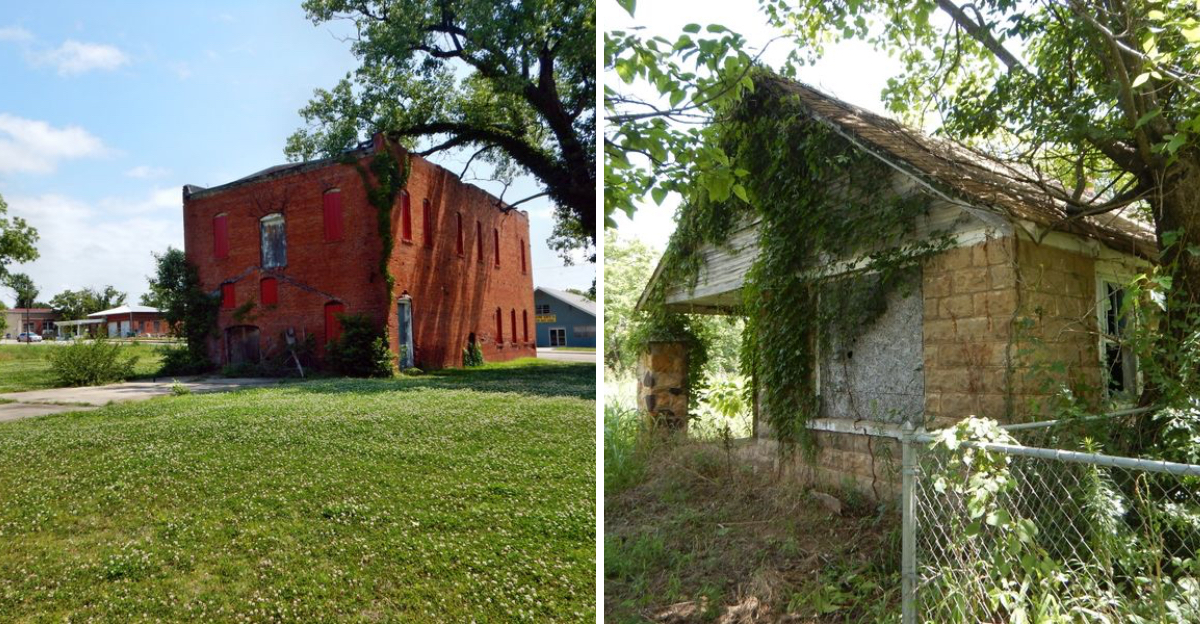
Boley, Oklahoma stands frozen somewhere between yesterday and today, a place where time seems to have paused mid-stride. Founded in 1903 as one of the most prominent all-Black towns in America, this small community in Okfuskee County carries stories in its weathered buildings and quiet streets that feel almost alive.
Walking through Boley is like stepping onto a stage where the actors just stepped out for intermission but left everything exactly where it was.
The town’s rich heritage as a beacon of Black independence and prosperity during the early 20th century still whispers through its architecture, its landmarks, and the determination of those who remain.
Today, Boley feels less like an abandoned ghost town and more like a community holding its breath, waiting for the curtain to rise again. Its annual rodeo, historic buildings, and proud residents keep the spirit burning bright, making visitors feel like they’ve stumbled upon a secret that refuses to fade away completely.
The Historic Downtown District That Still Stands Guard
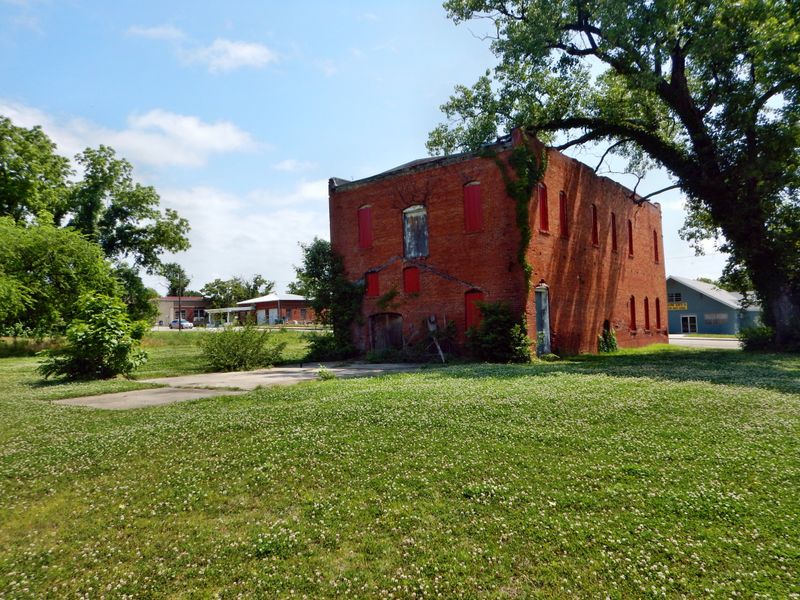
Brick buildings line the main street of Boley like sentinels from another era, their facades telling stories of bustling commerce and community pride. Many structures date back to the town’s founding years when Boley was a thriving center of Black entrepreneurship and self-determination.
The Farmers and Merchants Bank building, once the financial heart of the community, still stands as a testament to the economic independence that made Boley famous across the nation.
Peeling paint and weathered signs create an atmosphere that’s equal parts haunting and hopeful. You can almost hear the echo of footsteps on wooden sidewalks and the chatter of shoppers from a century ago.
Some storefronts remain remarkably intact, with original signage barely visible beneath layers of Oklahoma sun and wind.
Walking these streets feels like browsing through a three-dimensional history book where every corner reveals another chapter. The architecture reflects the aspirations of people who built something extraordinary against tremendous odds.
Unlike many ghost towns that feel completely abandoned, Boley’s downtown maintains a presence, as if the merchants might unlock their doors any morning and resume business as usual.
Photographers and history enthusiasts find endless inspiration here, capturing images that bridge past and present in ways few places can match.
Creek-Seminole College’s Legacy Lives On
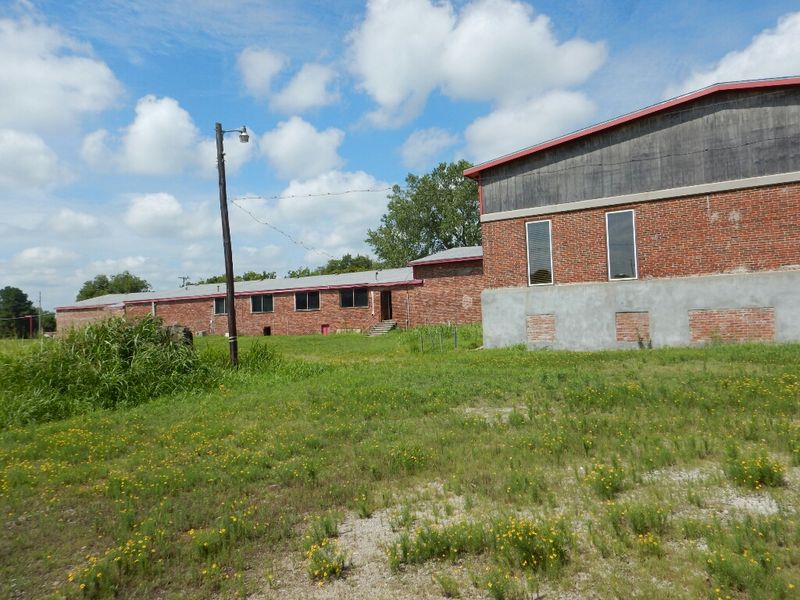
Education formed the backbone of Boley’s success story, and Creek-Seminole College represented the pinnacle of that commitment. Founded in 1906, this institution provided higher learning opportunities for Black students when such access was systematically denied elsewhere across Oklahoma and the South.
The college operated for over two decades, producing teachers, professionals, and leaders who shaped communities far beyond Boley’s borders.
Though the college closed in 1931, its former campus area still carries an air of scholarly purpose. The grounds where students once gathered to learn and dream remain part of Boley’s landscape, marked by historical significance rather than active classrooms.
Local residents speak of the college with reverence, understanding how it elevated their town’s reputation and attracted families seeking better futures for their children.
Visitors exploring this area can sense the weight of those educational dreams that once filled these spaces. The legacy of Creek-Seminole College reminds us that Boley wasn’t just about economic opportunity but intellectual and cultural advancement as well.
Standing where lecture halls once buzzed with discussion, you feel connected to a powerful movement of self-improvement and community building.
This educational heritage distinguishes Boley from typical frontier towns and adds depth to its ghost town mystique.
The Boley Rodeo Brings Spirits Back Every Year
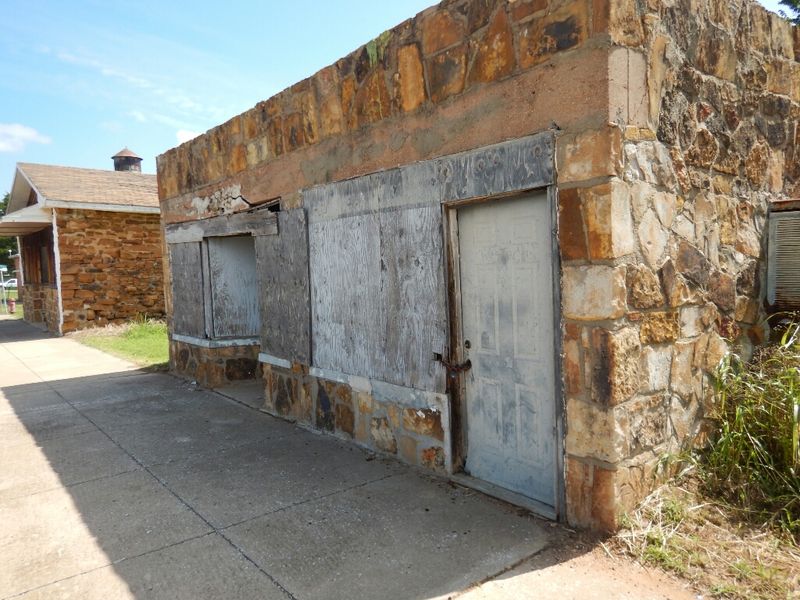
Every Memorial Day weekend, Boley transforms from a quiet town into a vibrant celebration of Black cowboy culture at one of the oldest Black rodeos in America. The Boley Rodeo has been running since 1903, making it a tradition older than Oklahoma statehood itself.
Cowboys and cowgirls from across the country converge here, filling the streets with energy that proves Boley’s spirit never truly died.
Bull riding, barrel racing, and roping competitions showcase skills passed down through generations of Black ranchers and rodeo performers. The event draws thousands of visitors who camp out, reconnect with family, and celebrate a heritage often overlooked in mainstream Western narratives.
Food vendors, live music, and a parade create a festival atmosphere that momentarily turns back the clock to Boley’s glory days.
For those few days, the ghost town illusion completely disappears, replaced by laughter, dust, and the thunder of hooves. Longtime residents and returning descendants fill every available space, proving that community ties remain unbroken despite the town’s diminished population.
The rodeo serves as Boley’s annual heartbeat, a reminder that the town’s soul still pulses strong.
Attending this event gives visitors a rare glimpse of Boley fully alive, bustling with the same pride and independence that defined its founding.
Churches That Still Hold Faith and Memory
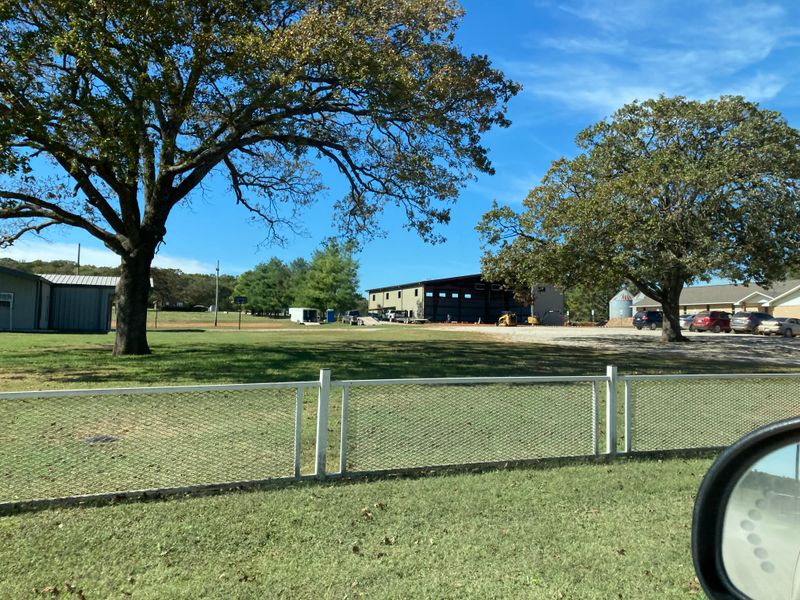
Religious faith anchored Boley’s community from its earliest days, and several historic churches remain standing as monuments to that spiritual foundation. These buildings served as more than Sunday gathering places; they were community centers, meeting halls, and sanctuaries during difficult times.
The architecture ranges from simple wooden structures to more elaborate designs that reflect the congregation’s growth and aspirations.
Some churches still hold occasional services, their doors opening to small but devoted congregations that refuse to let tradition die. The interiors preserve original pews, hymnals, and decorative elements that transport visitors back to simpler times of fellowship and song.
Sunlight streaming through old windows creates an almost ethereal atmosphere that feels both peaceful and poignant.
Walking past these churches, even when they’re closed, you sense the prayers and hopes that filled them over generations. They represent the spiritual resilience that helped Boley’s residents face discrimination, economic hardship, and the slow decline of their once-thriving town.
The churches stand as testament to faith that transcends population numbers or economic prosperity.
For many returning visitors and descendants, these buildings provide the strongest emotional connection to ancestors who built Boley with determination and hope. The churches feel less abandoned than patiently waiting, ready to welcome whoever needs their shelter and solace.
Residential Streets Where Life Once Bloomed
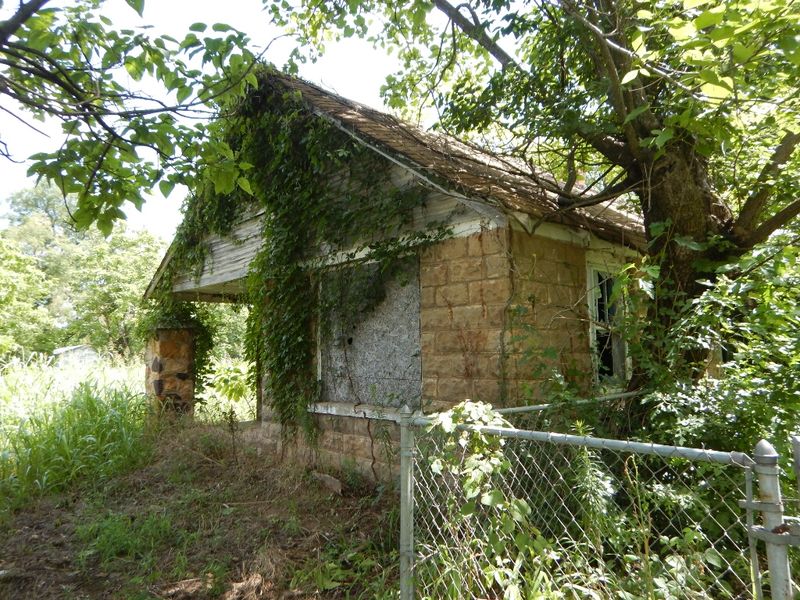
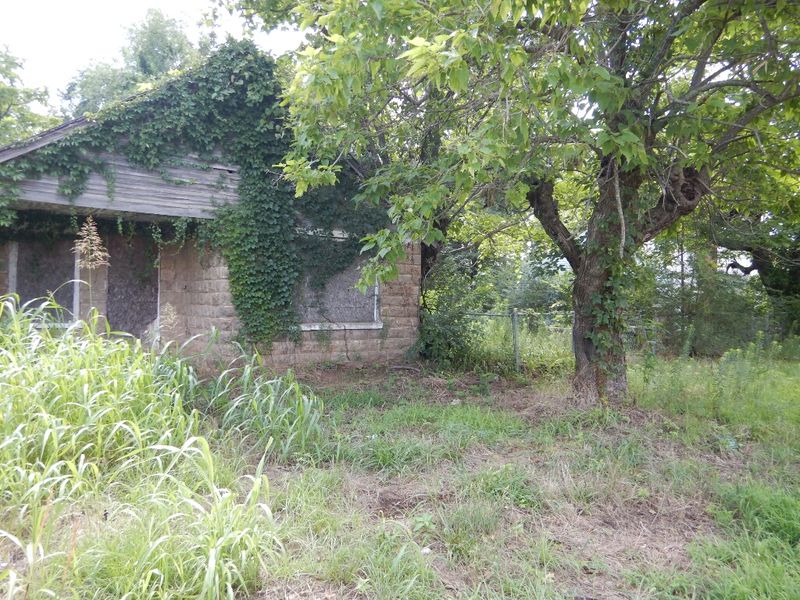
Beyond downtown, Boley’s residential neighborhoods tell intimate stories of families who made this town their home. Houses in various states of preservation line streets shaded by mature trees planted decades ago by optimistic homeowners.
Some residences remain occupied, their yards neatly maintained and porches welcoming, while others stand empty with overgrown gardens slowly reclaiming the land.
The mix of inhabited and abandoned homes creates a uniquely unsettling yet fascinating atmosphere. You might see smoke rising from one chimney while the house next door has windows covered with boards and memories.
This patchwork of presence and absence perfectly captures Boley’s liminal existence between ghost town and living community.
Architectural styles reflect different eras of the town’s development, from simple pioneer homes to more substantial craftsman-style houses built during prosperity. Front porches that once hosted evening conversations now sit silent, though you can almost see the phantom rocking chairs swaying in the breeze.
Children’s toys occasionally appear in yards, reminding visitors that some families continue raising the next generation here.
Walking these streets at dusk feels especially evocative, when lights begin glowing in occupied homes while shadows deepen around vacant ones. The residential areas embody Boley’s ghost town quality more than anywhere else, blending past and present in ways that stir both melancholy and admiration.
The Railroad That Built a Dream
Boley owes its very existence to the Fort Smith and Western Railroad, which established the townsite in 1903 as part of its expansion through Indian Territory. The railroad company specifically promoted Boley as an all-Black town, attracting settlers seeking freedom from the oppressive Jim Crow laws dominating the South.
Trains brought hopeful families, building materials, merchandise, and connections to the wider world that made Boley’s prosperity possible.
Though passenger service ended long ago, the railroad tracks still cut through town, a physical reminder of the lifeline that once sustained this community. Freight trains occasionally rumble past, their whistles echoing through empty streets in a sound that’s both lonely and nostalgic.
The railroad right-of-way provides a timeline of Boley’s rise and decline, from bustling depot to quiet crossing.
Old-timers remember when the train station buzzed with activity, when arrivals and departures marked the rhythm of town life. That station building no longer stands, but its absence speaks volumes about how transportation changes shaped small town fortunes across Oklahoma and America.
The tracks themselves feel like a scar across the landscape, marking where opportunity once flowed freely.
Standing near the tracks, you can imagine the excitement of early settlers arriving to build something unprecedented, carrying suitcases full of dreams and determination that would define Boley’s remarkable history.
The People Who Keep the Story Alive
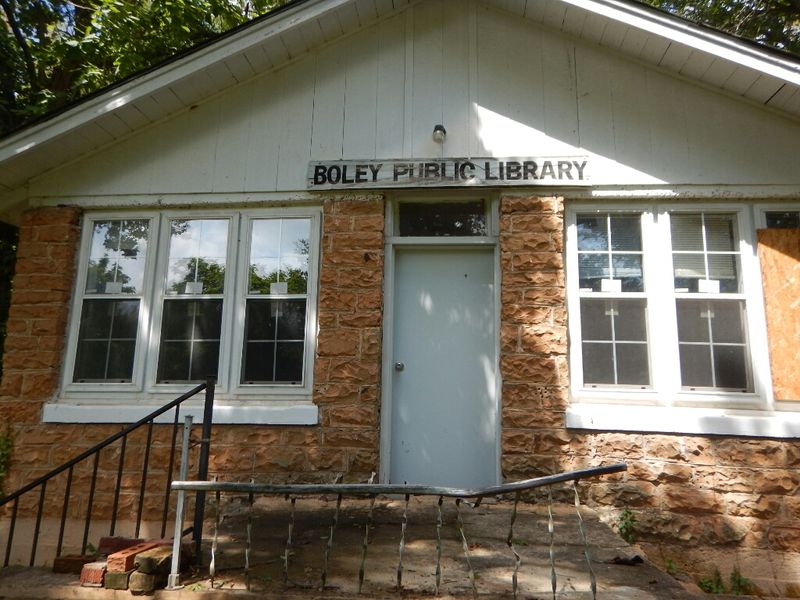
What truly prevents Boley from becoming a complete ghost town isn’t the buildings or history markers but the residents who refuse to abandon their heritage. Roughly 1,000 people still call Boley home, maintaining a community against economic challenges and population decline that would have erased less determined towns.
These residents serve as living connections to Boley’s pioneering past, many descended from original settlers who arrived over a century ago.
Local historians and cultural preservationists work tirelessly to document stories, maintain landmarks, and educate visitors about Boley’s significance in American history. Their passion transforms a simple visit into an educational experience that challenges assumptions about the Old West and Black history.
Conversations with longtime residents reveal layers of pride, struggle, and hope that no history book fully captures.
You’ll find people who grew up hearing firsthand accounts from grandparents who built this town from prairie land, who remember when every storefront thrived and streets filled with activity. Their memories keep Boley’s golden era alive in ways that physical structures alone cannot.
They embody the resilience that defined their ancestors, choosing to stay and honor what was built rather than seeking opportunities elsewhere.
Meeting these residents makes visitors understand that Boley isn’t really a ghost town at all but a community in transition, still writing chapters in an extraordinary American story that deserves to be remembered and celebrated.
Dear Reader: This page may contain affiliate links which may earn a commission if you click through and make a purchase. Our independent journalism is not influenced by any advertiser or commercial initiative unless it is clearly marked as sponsored content. As travel products change, please be sure to reconfirm all details and stay up to date with current events to ensure a safe and successful trip.
