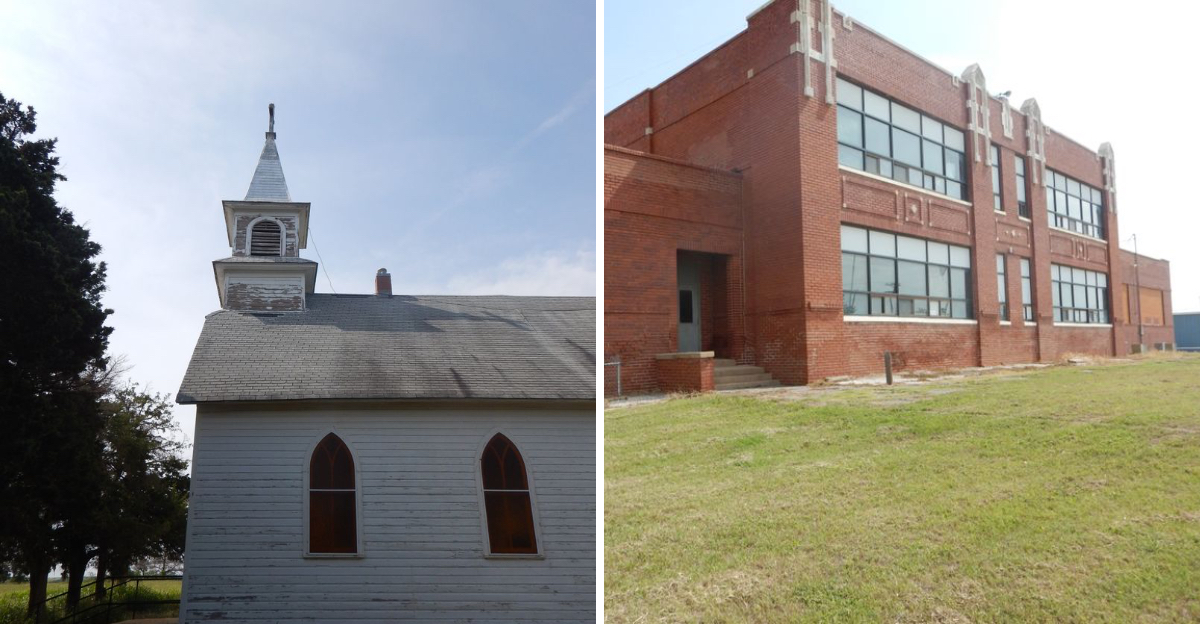
I never thought a place could actually live up to its cinematic namesake until I found myself standing on the empty streets of Hitchcock, Oklahoma. This tiny town in Blaine County has a population that barely cracks triple digits, and when you visit, you might wonder if anyone’s home at all.
The silence here is thick enough to cut with a knife, and the abandoned buildings seem to watch you with hollow window eyes. Named long before the famous director made suspense his trademark, Hitchcock feels like it was destined for this eerie reputation.
The wind whistles through forgotten structures, tumbleweeds roll past boarded-up storefronts, and you can’t shake the feeling that you’ve stepped onto a movie set where filming wrapped decades ago. But this isn’t Hollywood magic.
This is real small-town Oklahoma, fading slowly into history, and it’s absolutely captivating in the most unsettling way possible.
A Town That Time Forgot
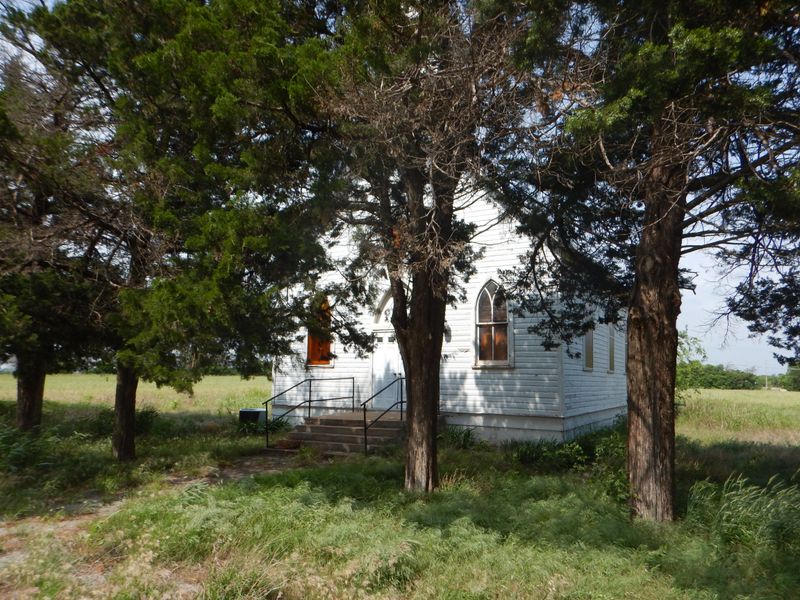
Walking down what used to be Hitchcock’s main thoroughfare feels like traveling backward through decades. The pavement cracks beneath your feet tell stories of better days when this Oklahoma community thrived.
I counted maybe five occupied buildings during my entire visit. The rest stand as monuments to a past that locals barely remember anymore.
Peeling paint, sagging rooflines, and windows that haven’t seen a cleaning in years create an atmosphere that’s equal parts melancholy and fascinating.
Located at coordinates 35.9689282, -98.34840589999999 in Blaine County, Hitchcock sits far enough from major highways that most travelers never stumble upon it. That isolation has preserved its ghostly character perfectly.
The 2020 census recorded just 102 residents, and I’m convinced half of them must be invisible because I barely saw a soul.
What strikes you most isn’t just the emptiness but the stillness. No traffic sounds, no children playing, no dogs barking.
Just wind and the occasional creak of an old sign swinging on rusty hinges. It’s the kind of quiet that makes you whisper even when there’s nobody around to disturb.
The Namesake Nobody Planned
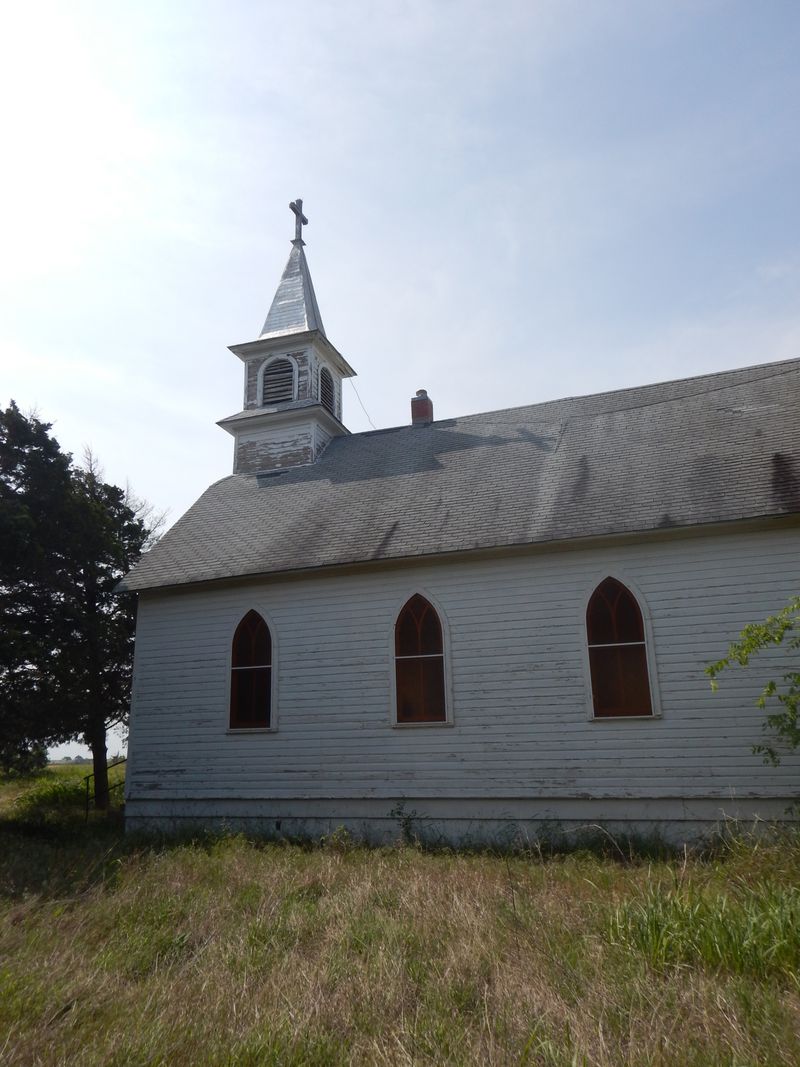
Here’s something that’ll give you chills: Hitchcock, Oklahoma was named decades before Alfred Hitchcock became the master of suspense. Pure coincidence, yet somehow perfectly fitting.
The town took its name from an early settler or railroad official, depending on which local story you believe. Nobody could have predicted that a British filmmaker would later make the name synonymous with psychological tension and carefully crafted dread.
Yet here we are, visiting a place that feels like it borrowed its atmosphere directly from “Psycho” or “The Birds.”
I kept thinking about this irony as I explored. Did the universe have a sense of humor, or does Hitchcock the town somehow channel the spirit of Hitchcock the director?
The empty streets certainly evoke that same unsettling feeling you get watching one of his films, where nothing overtly threatening happens, but you can’t shake the sensation that something’s just slightly off.
Local historians I spoke with found the connection amusing but insisted the town’s decline had nothing to do with its spooky name. Economics and changing trade routes emptied Hitchcock, not supernatural forces.
Still, the coincidence remains deliciously creepy.
The 2020 census counted exactly 102 people calling Hitchcock home. During my visit, I wondered where they were all hiding.
Small-town Oklahoma has seen plenty of communities shrink over the decades, but Hitchcock takes depopulation to another level. I drove through residential streets where one in every four houses looked occupied.
The others sat dark and empty, their yards overtaken by prairie grass and volunteer trees. It’s like watching a town slowly return to the earth.
I did meet a few residents at the local post office, one of the few functioning businesses left. They were friendly enough but seemed resigned to their town’s fate.
One elderly gentleman told me he’d watched Hitchcock’s population drop from over 300 in his childhood to what it is today. He remembered when the school was full, when Saturday nights meant a packed main street, when the future looked bright.
Now the younger generation leaves as soon as they can, seeking opportunities in larger Oklahoma cities like Oklahoma City or Enid. The remaining residents are mostly retirees who’ve lived here their entire lives and can’t imagine leaving, even as Hitchcock fades around them.
Buildings That Watch You Back
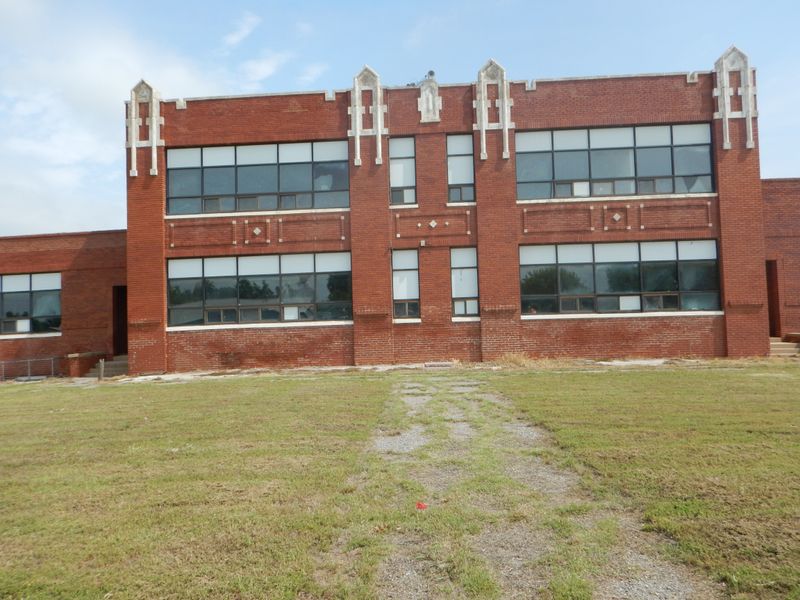
There’s something profoundly unsettling about abandoned buildings with intact windows. They look back at you, or at least that’s how it feels in Hitchcock.
I counted at least a dozen structures in various stages of decay. Some were former businesses with faded signs still visible above their doors.
Others were residences that families simply walked away from, leaving behind pieces of their lives. One house still had curtains in the windows, moving slightly in the breeze that somehow found its way inside.
The old general store particularly caught my attention. Its large front windows were surprisingly unbroken, giving you a clear view into the dusty interior.
Empty shelves lined the walls, and an ancient cash register sat on the counter like it was waiting for a customer who would never come. I half expected Norman Bates to appear in the doorway.
These buildings aren’t just empty structures. They’re time capsules showing how quickly nature and neglect can reclaim human spaces.
Vines crawl up brick walls, roofs sag under the weight of too many Oklahoma winters, and foundations crack as the earth shifts beneath them. Each one tells a story of abandonment and slow decay.
Blaine County’s Forgotten Corner
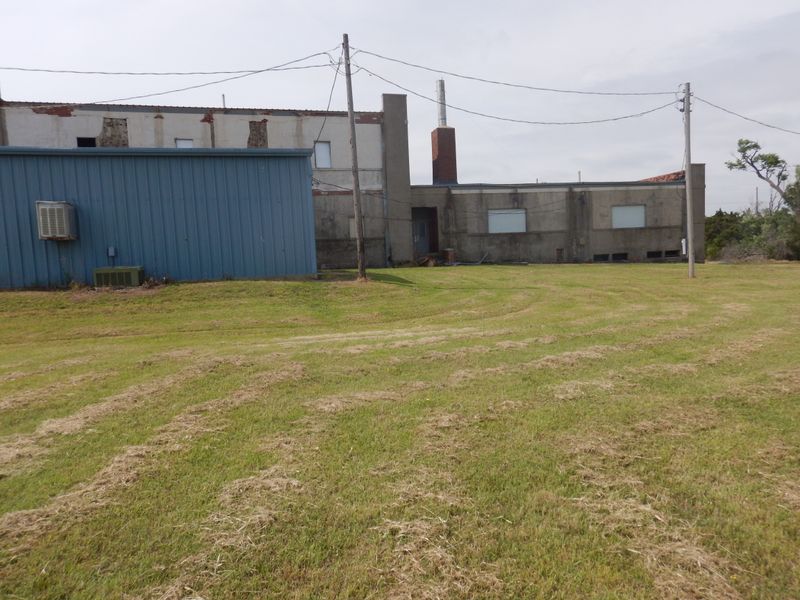
Hitchcock sits in Blaine County, Oklahoma, an area that most state residents couldn’t locate on a map if you gave them three tries. It’s isolated even by rural Oklahoma standards.
Blaine County itself isn’t exactly bustling. The county seat, Watonga, has about 3,000 residents and serves as the regional hub for commerce and services.
But Hitchcock lies far enough from Watonga that it might as well be on another planet. The drive between them takes you through mile after mile of prairie grassland, with farmhouses appearing only occasionally to break the monotony.
This isolation explains a lot about Hitchcock’s decline. When your town isn’t on the way to anywhere and doesn’t offer services that neighboring communities need, people simply stop coming.
Young adults leave for education and never return. Businesses close because there aren’t enough customers.
Schools consolidate with larger districts miles away.
I spoke with a county official who admitted that Blaine County has several communities in similar situations. Hitchcock just happens to be the most dramatic example.
The county provides basic services when needed but can’t justify major investments in infrastructure for towns with populations under 150. It’s a slow death by neglect, not malice.
Where the Silence Has Weight
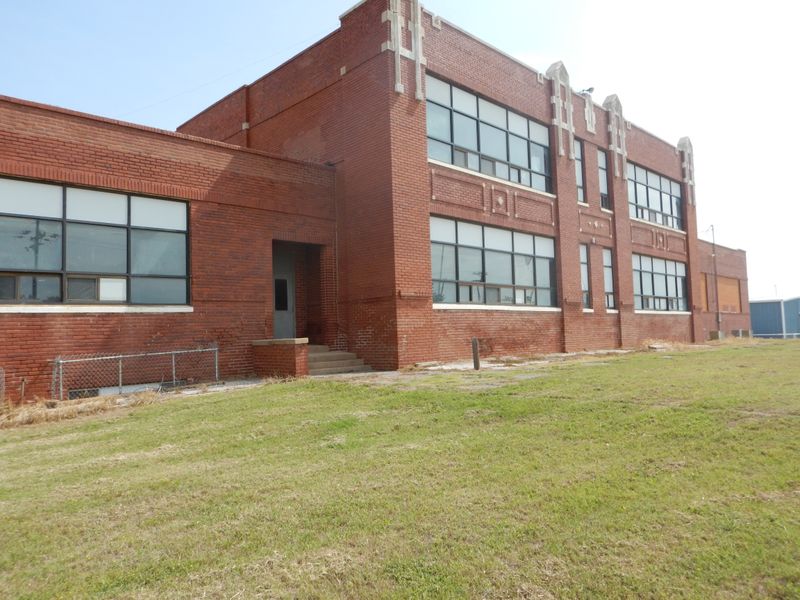
Silence isn’t just the absence of sound. In Hitchcock, it’s a presence all its own, something you can almost feel pressing against your eardrums.
I’m used to quiet places. I’ve visited plenty of small Oklahoma towns where life moves slowly and traffic is minimal.
But Hitchcock’s silence is different. It’s complete, almost aggressive in its totality.
No distant highway hum, no airplane passing overhead, no music drifting from someone’s radio. Just nothing.
Standing in the center of town, I tried an experiment. I clapped my hands sharply, just to hear something break the quiet.
The sound seemed to die instantly, swallowed by the emptiness around me. No echo, no reverberation.
It felt wrong somehow, like the town itself was absorbing every noise that dared disturb its peace.
The wind does blow through occasionally, creating that classic tumbleweed-rolling-down-main-street moment you’ve seen in a hundred westerns. But even the wind seems muted here, more of a whisper than a howl.
It’s the kind of quiet that makes you understand why suspense films use silence so effectively. Your mind fills the void with possibilities, most of them unsettling.
Tumbleweeds as the Main Traffic
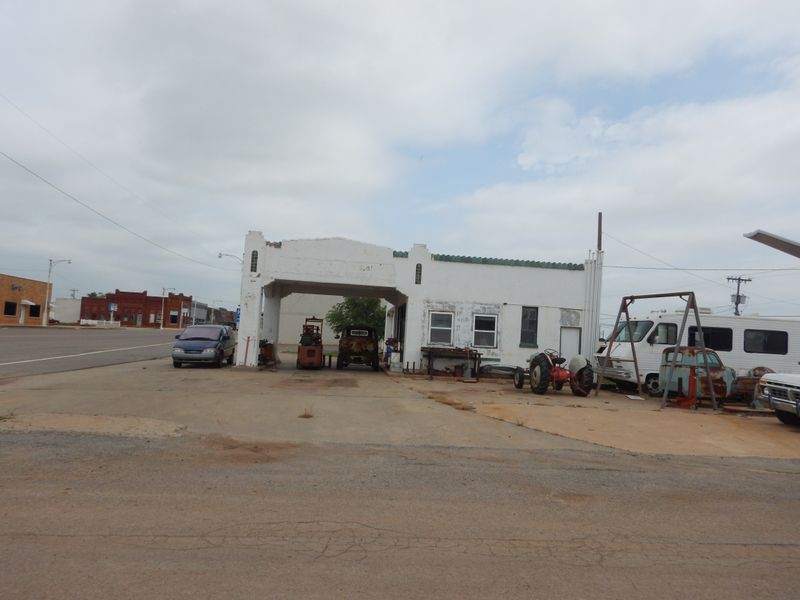
I actually laughed when I saw my first tumbleweed roll across Hitchcock’s main street. It seemed too perfect, too much like a movie cliche.
Then I saw another, and another, and realized this was just normal life here.
Tumbleweeds are actually a species of plant called Russian thistle, and they thrive in Oklahoma’s climate. When they dry out in late summer and fall, they break free from their roots and tumble across the landscape, spreading seeds as they go.
In a place with regular traffic, they get crushed and cleared away. In Hitchcock, they own the roads.
I watched one particularly large specimen roll slowly down the center line of the main street, taking its time, unbothered by any vehicles because there weren’t any. It traveled the entire length of town before catching on a fence post and settling there like it had found its final destination.
The whole scene took maybe five minutes, and it was the most activity I witnessed during my visit.
The symbolism isn’t lost on anyone. Tumbleweeds represent transience, rootlessness, abandonment.
They’re nature’s way of highlighting emptiness. In Hitchcock, they’re not just passing through.
They’re moving in, claiming territory that humans are slowly surrendering.
The Wind That Never Stops Talking
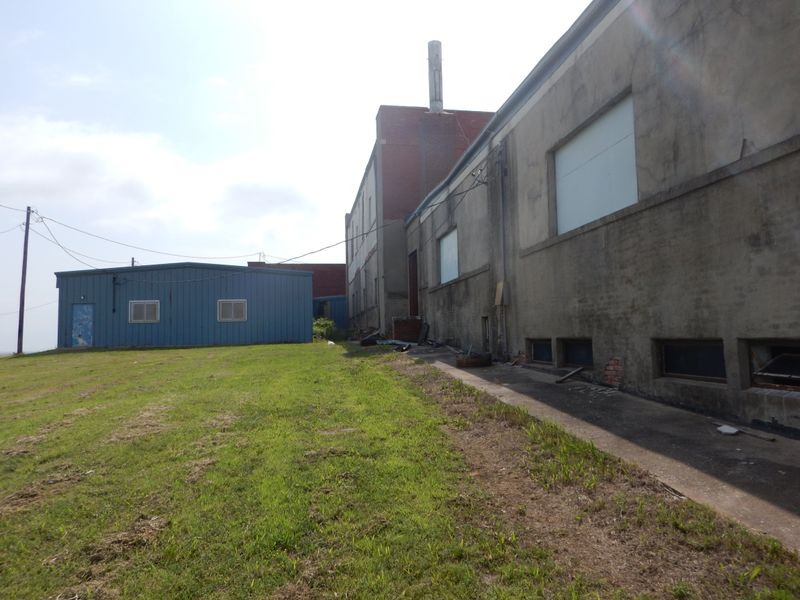
Oklahoma wind is legendary, and in Hitchcock, it’s practically the only resident that never leaves. It blows constantly, varying only in intensity, never in presence.
I visited on what locals assured me was a calm day, yet the wind still pushed against me with enough force to require conscious effort to walk straight. It whistled through broken windows, moaned around corners, and rattled loose siding on neglected buildings.
Every structure became a musical instrument playing its own mournful note in an endless symphony of abandonment.
The wind carries smells too. Dry grass, dust, distant livestock, and something else I couldn’t quite identify but that spoke of emptiness and time passing.
It picks up topsoil from fields that nobody farms anymore and deposits it against buildings in drifts that look almost like snow. Some structures on the windward side of town are literally being buried, their foundations disappearing under accumulated dirt.
Meteorologically, Hitchcock sits in an area where prevailing winds sweep across the plains unobstructed. There’s nothing to slow them down, no hills or forests to break their force.
The wind shaped this landscape long before humans arrived, and it’ll continue shaping it long after the last resident leaves. In a way, the wind is Hitchcock’s true permanent population.
Photography Paradise for the Brave
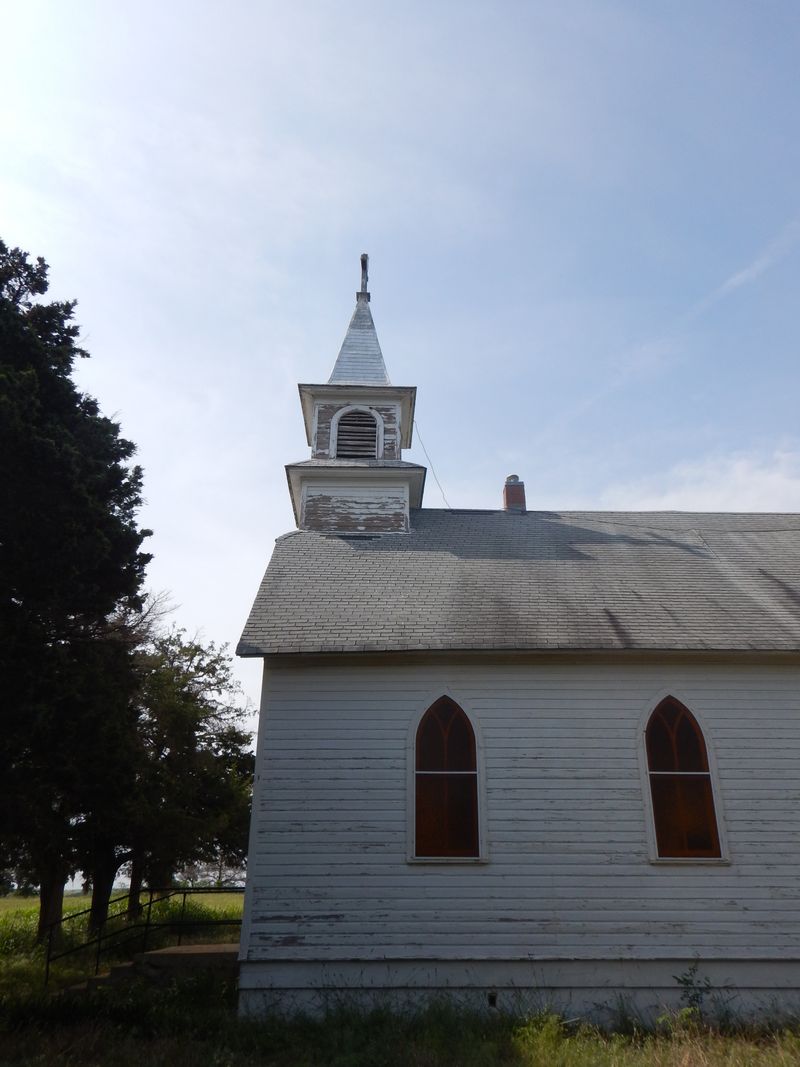
If you can get past the creepy atmosphere, Hitchcock is an absolute dream for photographers interested in decay, abandonment, and the passage of time. I filled two memory cards during my visit.
The textures alone are worth the trip. Weathered wood grain on buildings that haven’t seen paint in decades, rust patterns on metal that create abstract art, broken glass catching light in unexpected ways, and vegetation reclaiming human spaces in slow motion.
Every angle offers something visually compelling, some detail that tells a story about time’s relentless march.
Golden hour photography here is particularly stunning. The low-angle light streaming down empty streets, casting long shadows from the few remaining structures, creates an almost ethereal quality.
I captured images that look like they could illustrate a post-apocalyptic novel, yet they’re just documenting present-day rural Oklahoma.
A word of caution though: respect private property. Some buildings in Hitchcock are still owned, even if they appear abandoned.
I stuck to public spaces and streets, using telephoto lenses when I wanted closer views of private structures. The last thing this dying town needs is trespassing charges against curious visitors.
But if you’re respectful and careful, you’ll leave with portfolio-worthy images that capture something genuinely haunting about America’s forgotten places.
The Future That Probably Isn’t Coming
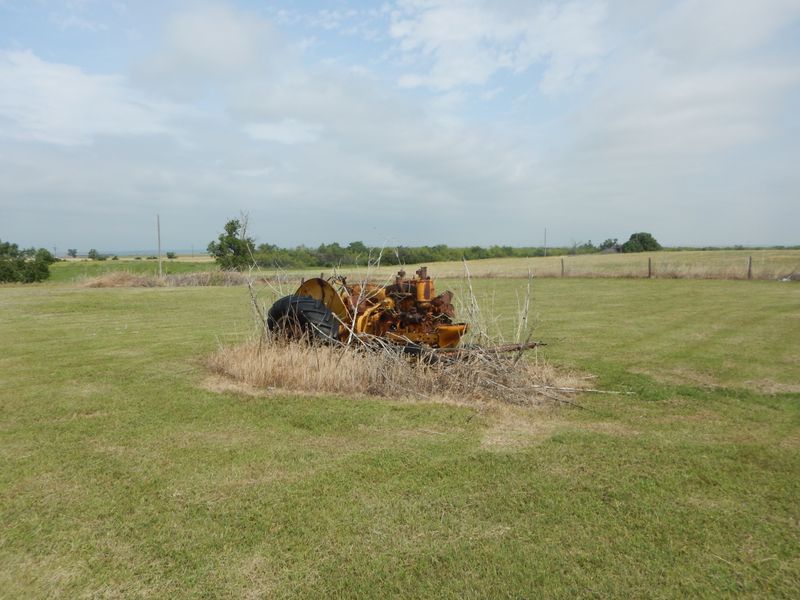
Let’s be honest: Hitchcock probably doesn’t have a future, at least not as a functioning town. The trajectory is clear, and it points toward complete abandonment within a generation or two.
I asked every resident I met whether they thought Hitchcock would survive. The answers ranged from resigned shrugs to flat-out nos.
Nobody expressed optimism about a revival. There’s no industry coming, no tourism draw being developed, no reason for new residents to move in.
The 102 people currently living here are likely the last chapter in Hitchcock’s story.
Some Oklahoma ghost towns have found second lives as tourist attractions or historical sites, but Hitchcock lacks the dramatic history or preserved architecture that draws visitors. It’s just quietly fading, not going out with any bang worth commemorating.
When the last resident leaves, the buildings will continue their slow collapse until eventually nothing remains but foundations and the faint grid pattern of streets returning to prairie.
There’s something profoundly sad about watching a community die in real time. These were people’s homes, their businesses, their dreams.
Now it’s just another dot on a map that future generations will drive past without stopping, unaware that a town once stood here with hopes and plans that never materialized. Hitchcock will become what it already feels like: a ghost story told by the Oklahoma wind.
Dear Reader: This page may contain affiliate links which may earn a commission if you click through and make a purchase. Our independent journalism is not influenced by any advertiser or commercial initiative unless it is clearly marked as sponsored content. As travel products change, please be sure to reconfirm all details and stay up to date with current events to ensure a safe and successful trip.
