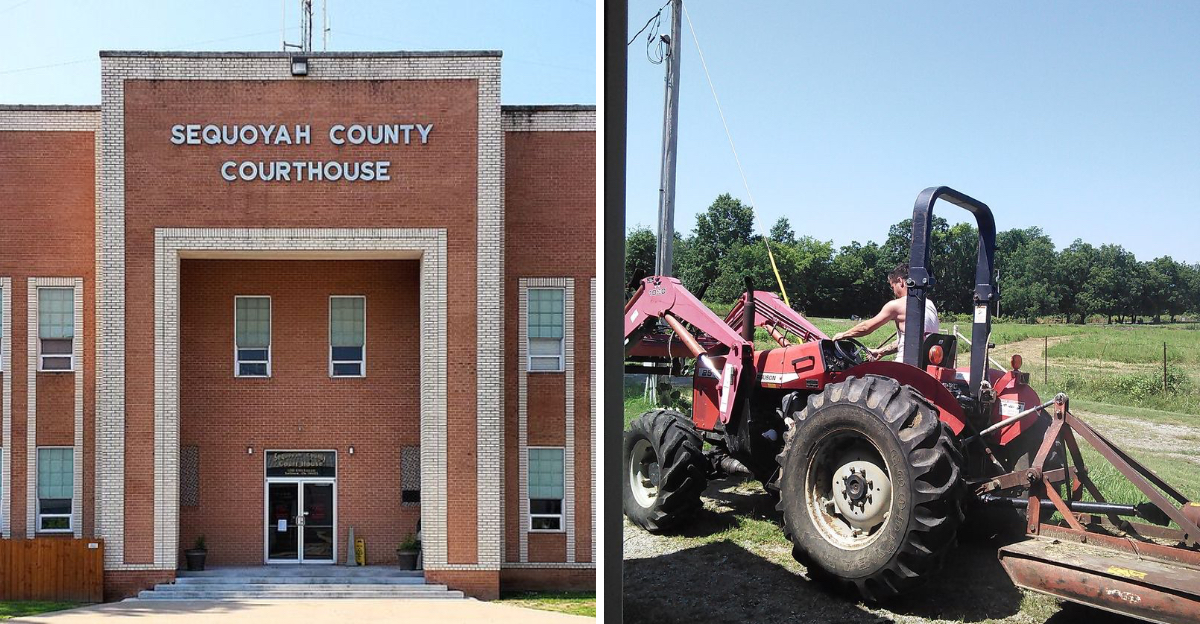
I have driven past Sequoyah more times than I can count, and every time it pulls at me a little harder. This is the kind of place that does not announce itself.
It just sits there, caught between what it used to be and what it has not quite decided to become. One foot in Oklahoma’s past, the other hovering uncertainly over the future, with the highway rushing by like it has somewhere better to be.
Walking through town feels like reading a story with pages missing. You can see where boom years once lived, where the railroad promised opportunity, and where families built lives that never fully moved on.
Some buildings feel frozen in time. Others hint at possibilities that never quite took root.
I found myself wondering how many people left with plans to come back and how many stayed because leaving felt harder than adapting. Sequoyah is not polished and it does not try to be charming.
That is the point. It asks whether grit and honesty still have value in a world obsessed with reinvention.
The longer I stayed, the harder it became to decide if this town is a warning or a quiet opportunity waiting for the right moment.
A Community Frozen in Transition
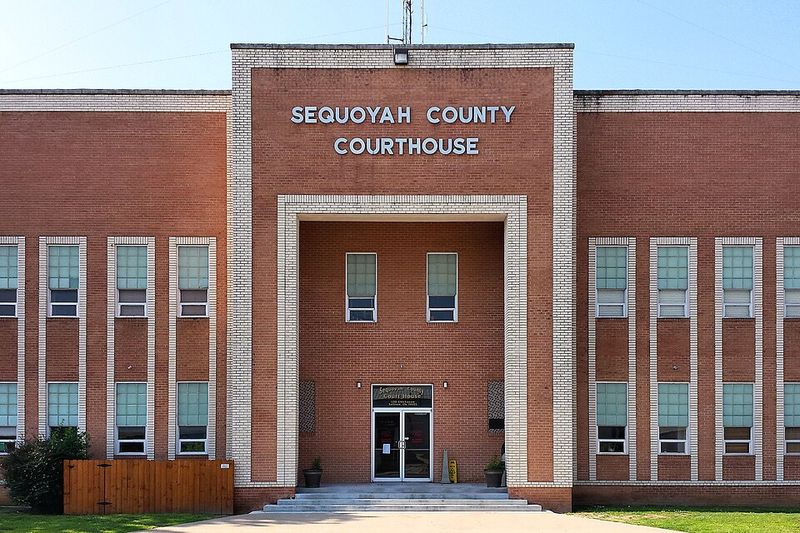
Sequoyah occupies a peculiar space in Rogers County’s landscape, where progress seems to have paused mid-stride. The census designation tells you it’s official, but walking through feels like stepping into a photograph that never quite developed properly.
Buildings from different decades stand shoulder to shoulder, creating an architectural timeline that nobody planned but everyone accepts.
Population numbers hover around 700 souls, give or take depending on which survey you trust. That’s small enough that neighbors know each other’s business but large enough to avoid complete isolation.
The community spreads across land that once witnessed Creek Nation settlements and later attracted settlers chasing railroad dreams.
Main roads cut through with purpose, connecting Sequoyah to larger towns like Claremore and Catoosa, yet the traffic mostly passes through rather than stopping. Local businesses operate on their own schedules, some thriving through sheer determination while others display faded signs that hint at better days.
Church steeples rise above residential streets where homes range from well-maintained to weathered, each telling its own story of perseverance or decline. Oklahoma’s rural character shines through here without filter or pretense, showing both beauty and struggle in equal measure.
Buildings in Sequoyah refuse to conform to a single aesthetic, creating a streetscape that reads like a history book written in brick, wood, and metal. Early structures showcase simple frontier practicality, built when materials were scarce and decoration was considered frivolous.
These survivors lean slightly, their foundations settling into Oklahoma clay over more than a century.
Mid-century additions brought different sensibilities, with ranch-style homes and utilitarian commercial buildings reflecting post-war optimism. Metal siding appeared on structures that once wore wooden facades, practical updates that changed character while extending lifespan.
Newer construction pops up sporadically, modern materials and designs sitting awkwardly among their older neighbors like teenagers at a family reunion.
Nobody planned this architectural collision, but it creates genuine interest for those who appreciate vernacular building traditions. A church built in the 1920s stands near a convenience store from the 1980s, neither acknowledging the other’s existence.
Residential streets show similar variety, where a carefully restored bungalow might neighbor a trailer home or a vinyl-sided ranch.
This unplanned diversity tells the truth about small-town survival, where communities build what they can afford when they need it, creating layers of history that planned developments never achieve.
The Creek Nation Connection
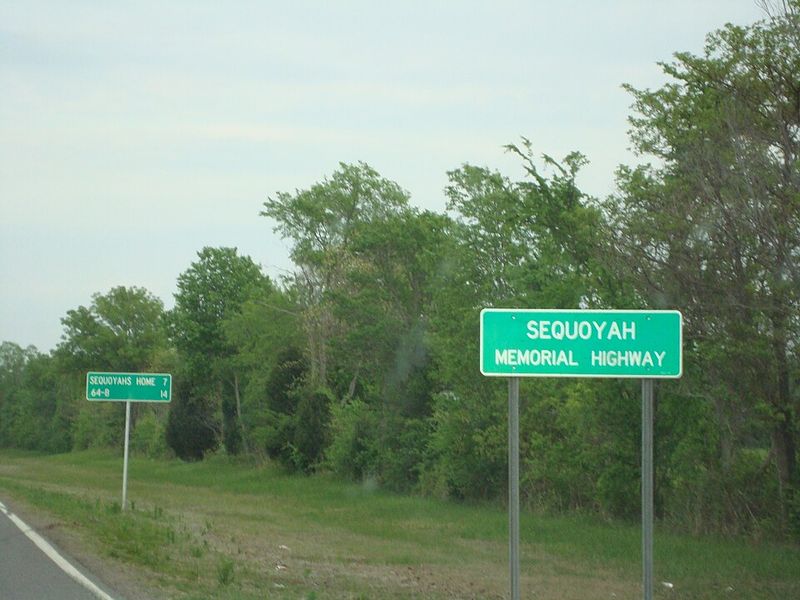
Long before Sequoyah appeared on any official map, this land belonged to the Creek Nation, relocated here during the traumatic removals of the 1830s. The community’s name itself honors Sequoyah, the Cherokee scholar who created the syllabary that gave his people written language.
That choice reflects Oklahoma’s complex indigenous heritage, where tribal histories interweave with settler stories in ways both respectful and problematic.
Creek families established farms and communities across Rogers County, adapting traditional ways to new territory while maintaining cultural identity. The landscape they inhabited showed signs of their presence through agricultural patterns, settlement locations, and sacred sites that later arrivals often failed to recognize or respect.
When railroads and townships arrived, indigenous land became valuable real estate, leading to transactions and transitions that benefited newcomers more than original inhabitants.
Today, Sequoyah sits within a region where Creek Nation influence remains significant through tribal government, cultural programs, and family connections that span generations. The historical layers run deep here, visible to those who look beyond surface appearances.
Understanding this place means acknowledging whose home it was first and recognizing that indigenous presence didn’t vanish when settlers arrived but continued adapting and persisting through profound changes.
Tracks still cut through Sequoyah like promises written in steel, remnants of an era when railroads determined which towns flourished and which faded into memory. The Missouri Pacific Railroad brought hope during the early 1900s, convincing settlers that this junction would become a commercial hub.
Warehouses were built, businesses opened, and families planted roots expecting prosperity to follow the locomotives.
Reality delivered something less dramatic. While trains did run through regularly for decades, Sequoyah never exploded into the bustling center that boosters predicted.
The station that once buzzed with activity now exists only in old photographs and elderly memories. Freight still rumbles past occasionally, shaking windows and reminding residents of what might have been.
Walking alongside these tracks today feels like reading an unfinished novel. Infrastructure remains functional but underutilized, a monument to optimism that didn’t quite pan out.
Some properties backing onto the railway corridor show signs of adaptation, with residents treating the tracks as just another landscape feature rather than an economic lifeline.
The whistle’s lonely call at night carries a melancholy note, echoing through a community that learned to survive without the boom it once anticipated.
Living Between Claremore and Catoosa
Geography places Sequoyah in an interesting position, close enough to larger towns for convenience but far enough to maintain distinct identity. Claremore sits about fifteen miles northwest, offering shopping, medical services, and employment opportunities that Sequoyah cannot provide.
Catoosa lies similar distance northeast, with its own attractions including outlet malls and Route 66 nostalgia tourism.
Many Sequoyah residents commute to these larger communities for work, treating their home as a bedroom community where housing costs less and life moves slower. This arrangement creates a daily rhythm of departure and return, with morning traffic heading out and evening flows bringing workers home.
The pattern sustains Sequoyah economically while preventing it from developing its own robust commercial center.
Proximity to Interstate 44 means the wider world stays accessible without overwhelming local character. Tulsa sprawls just thirty miles away, close enough for major airport access and big-city amenities but distant enough that urban sprawl hasn’t consumed Sequoyah yet.
This positioning between rural isolation and suburban absorption defines much of the community’s current identity. Residents enjoy the best of both worlds when circumstances align, though they also face challenges when distance becomes inconvenient and local services prove insufficient for urgent needs.
Social life in Sequoyah concentrates in a handful of locations where residents cross paths and exchange news. The post office serves as an unofficial community center, where picking up mail provides opportunity for conversation and catching up on local happenings.
Postal workers know everyone by name and often serve as informal information brokers, connecting people who need something with neighbors who might help.
A convenience store functions as another gathering point, especially during morning coffee runs and afternoon school pickups. The parking lot sees more lingering than most retail locations would tolerate, but here it’s understood that people need places to connect.
Conversations happen across truck beds and through open windows, covering everything from weather predictions to county politics.
Church buildings dot the community, representing different denominations that sometimes compete for members in a small population pool. Sunday services bring families together, and church socials provide rare opportunities for larger gatherings.
These institutions hold communities together through shared faith and tradition, offering continuity when economic forces threaten stability. For residents without family nearby, church communities often function as surrogate kinship networks.
Oklahoma’s rural areas depend heavily on these informal social structures, and Sequoyah demonstrates how essential they remain even as modern life pulls people toward screens and away from neighbors.
Economic Realities and Survival Strategies
Making a living in Sequoyah requires creativity since traditional employment options remain limited. Some residents operate small businesses from home, using internet connectivity to serve customers far beyond Oklahoma borders.
Others commute to jobs in larger towns, trading time and fuel costs for steady paychecks. A few manage to find work locally through schools, churches, or service businesses that cater to community needs.
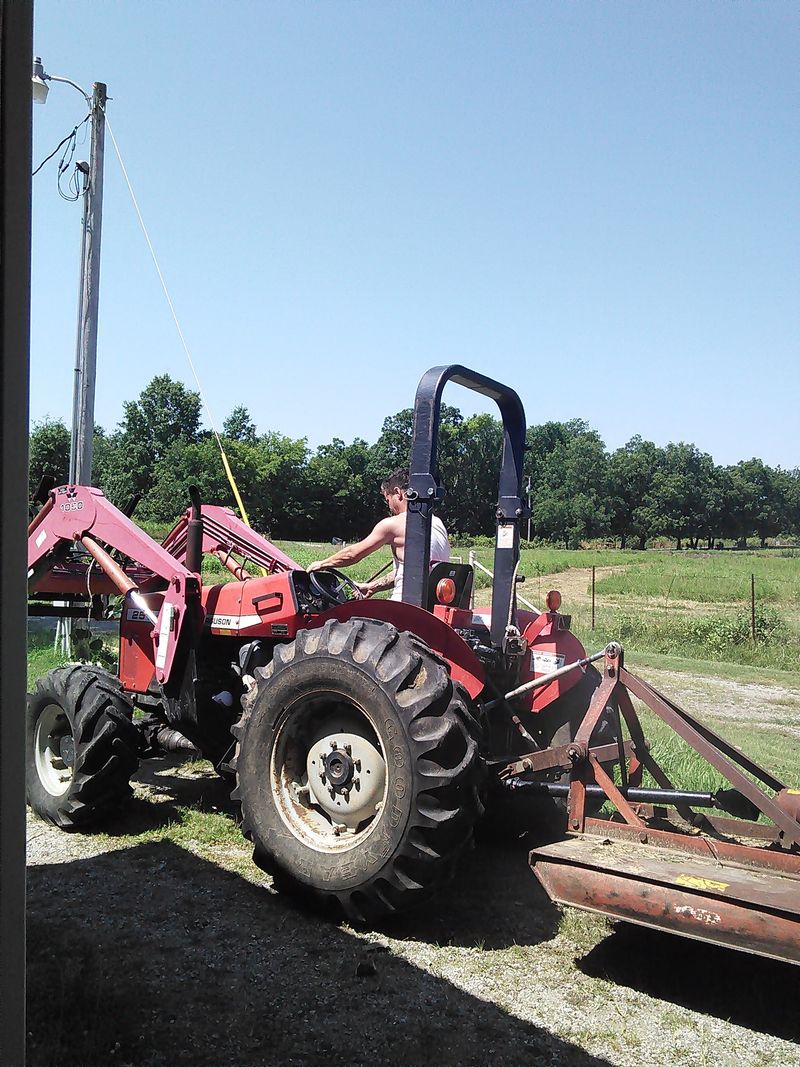
Agriculture still provides income for families with land, though modern farming requires significant capital investment and technical knowledge that previous generations never needed.
Cattle operations dot the surrounding countryside, and some families maintain small-scale farming operations that supplement other income sources.
The romantic notion of self-sufficient rural living crashes against reality quickly when equipment breaks down or commodity prices drop.
Retirement income supports many households, with Social Security checks providing stability that wages cannot guarantee. Older residents who paid off mortgages decades ago can survive on fixed incomes that wouldn’t sustain younger families facing current costs.
This economic diversity creates community resilience but also highlights generational divides. Oklahoma’s rural economy struggles broadly, and Sequoyah shares challenges common across the state’s small towns.
Solutions remain elusive despite good intentions, as forces driving economic concentration toward cities prove difficult to reverse through local effort alone.
Education shapes Sequoyah’s future more than any other factor, determining whether young families put down roots or seek opportunities elsewhere.
The community falls within a school district that consolidates students from several small towns, a common solution in rural Oklahoma where populations can’t support individual systems.
Buses travel considerable distances collecting kids each morning, creating long days for elementary students who board in darkness during winter months.
School quality matters enormously to parents evaluating where to live, and rural districts face persistent challenges attracting teachers, funding programs, and offering opportunities that suburban schools provide easily.
Sports teams and extracurricular activities require dedication from volunteers since budgets rarely cover paid positions.
Success stories emerge regularly, with students from small communities excelling academically and athletically, but the path requires more family support than urban alternatives.
Young people growing up in Sequoyah face decisions their grandparents never considered. College increasingly seems necessary for economic security, yet higher education often leads away from home communities toward cities where jobs match degrees.
The pattern repeats across rural America, gradually draining small towns of educated young adults who might otherwise revitalize local economies. Sequoyah watches its children leave and hopes some return, carrying skills and ambitions that could reshape the community for coming generations.
The Question of What Comes Next
Sequoyah’s future remains unwritten, balanced between competing possibilities that depend on forces both local and far beyond community control. Optimists see potential for revival through remote work trends that free people from urban offices, imagining young families discovering affordable housing and slower pace.
Pessimists note continuing population decline across rural Oklahoma and predict Sequoyah will eventually fade into complete irrelevance.
Reality likely lands somewhere between these extremes, with the community adapting and persisting without dramatic transformation either direction. Residents who love this place will stay, maintaining homes and supporting local institutions through sheer determination.
Some newcomers will arrive, drawn by low costs or family connections, bringing fresh energy that balances departures. The community will look different in twenty years but probably won’t disappear entirely or boom into unexpected prosperity.
What makes Sequoyah worth attention isn’t dramatic success or tragic failure but honest representation of rural American experience. Thousands of communities face similar circumstances, caught between eras and uncertain which direction leads forward.
The answer matters beyond this one small town in Rogers County, touching questions about how we value different ways of living and whether rural communities deserve support or should simply accept decline as inevitable. Sequoyah keeps asking that question without providing easy answers.
Dear Reader: This page may contain affiliate links which may earn a commission if you click through and make a purchase. Our independent journalism is not influenced by any advertiser or commercial initiative unless it is clearly marked as sponsored content. As travel products change, please be sure to reconfirm all details and stay up to date with current events to ensure a safe and successful trip.
