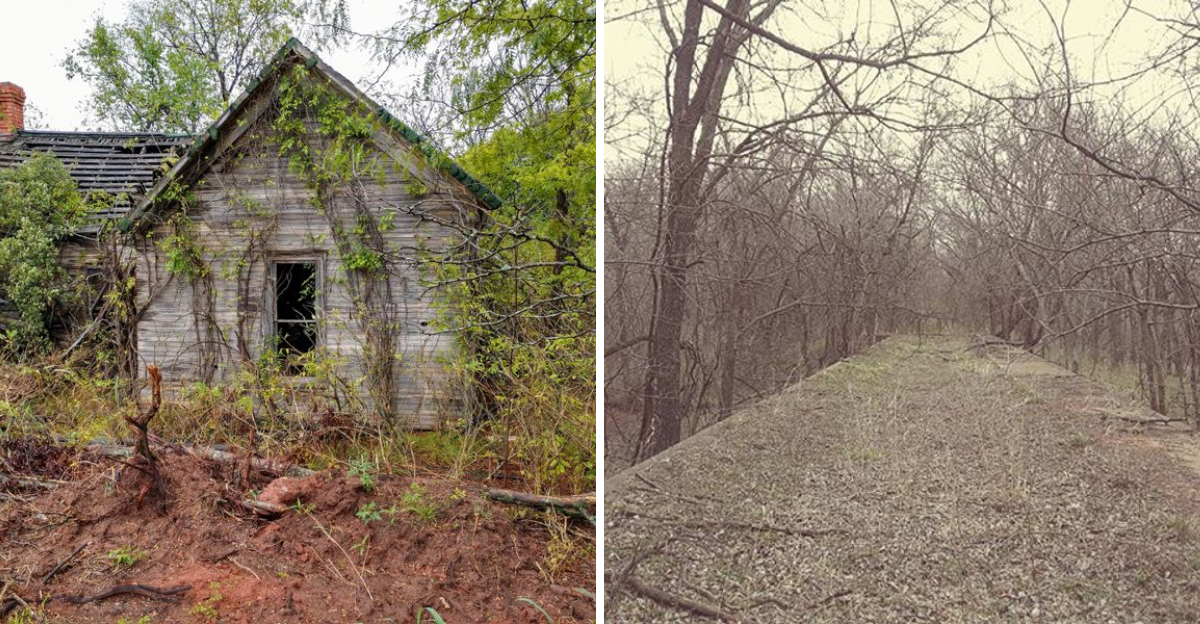
I first heard about Fallis, Oklahoma, while tracing old railroad routes through Lincoln County, and what I discovered was a community that once thrived with promise but couldn’t sustain its momentum.
This tiny town tells a story that countless rural American settlements share: rapid growth followed by equally rapid decline.
With only 21 residents recorded in the 2020 census, Fallis stands as a living reminder of how quickly fortunes can shift in small-town America. The streets still exist, a handful of structures remain standing, and the town is technically still on the map, more a dot on a rural route than a full-service community.
Walking through what remains of Fallis today, I found myself captivated by the resilience of those who stayed and the echoes of what once was.
The Railroad Dream That Built a Town
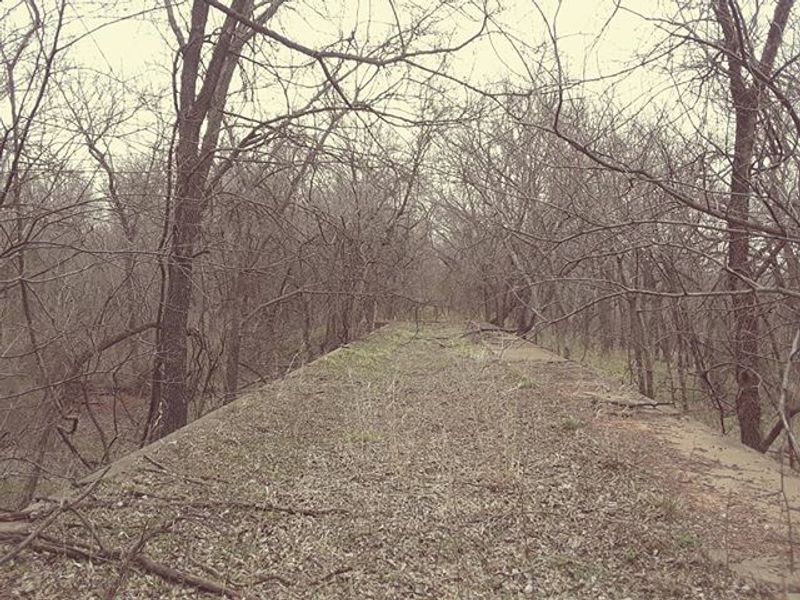
Railroad fever swept through Oklahoma Territory in the early 1900s, and Fallis was born from that very enthusiasm. The town sprang up along the tracks with hopes of becoming a vital shipping point for local farmers and ranchers.
I walked along the old railroad corridor where trains once thundered through daily, imagining the excitement residents must have felt hearing that whistle blow. The railway brought commerce, mail, supplies, and connection to the wider world.
Farmers could finally ship their cotton, corn, and livestock to distant markets without grueling wagon journeys. Businesses opened their doors expecting decades of prosperity ahead.
But railroads proved fickle partners in the settlement game. Routes changed, larger towns offered better facilities, and smaller stops like Fallis gradually lost their strategic importance.
By mid-century, the trains that built Fallis began passing through less frequently. Eventually, many stopped coming altogether.
Standing where the depot once stood, I could almost hear the phantom sounds of commerce and conversation. That railroad dream lifted Fallis up quickly, but when it faded, the town had little else to sustain it.
Population Numbers Tell the Stark Story
Numbers rarely lie, and Fallis’s population statistics paint a picture of steady, relentless decline. The 2020 census counted just 21 souls calling this place home, down from 27 in 2010.
I spoke with one longtime resident who remembered when the school had enough children to fill a classroom. Now, kids get bused to neighboring communities for their education.
Fallis was larger decades ago, when rural towns could still support schools, shops, and daily rail traffic. Back then, Fallis might have had several hundred residents.
Each decade since has seen families move away, seeking employment opportunities that simply don’t exist in a town this small. Young people especially found little reason to stay.
The decline accelerated after World War II, when mechanized farming reduced the need for agricultural labor. Fewer farmhands meant fewer customers for local businesses.
Today, those 21 residents represent the most dedicated holdouts, people with deep roots or nowhere else they’d rather be. Their commitment keeps Fallis technically alive, though just barely breathing on the map of Lincoln County, Oklahoma.
Main Street’s Quiet Transformation
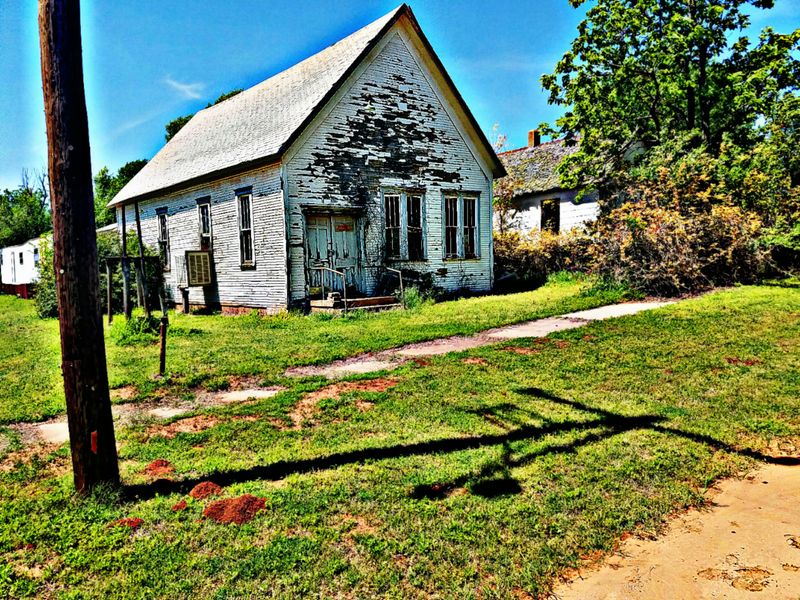
Walking down what passes for Main Street in Fallis today, I encountered more memories than active businesses. The commercial district that once served the community has largely disappeared.
Storefronts that housed general stores, hardware shops, and service providers now stand empty or have been repurposed for storage. Some buildings have collapsed entirely, leaving only foundations.
I found one structure with faded lettering still visible on its weathered facade, advertising goods that haven’t been sold in decades. These ghost signs fascinate me because they’re windows into daily life that once was.
A local told me about the café where farmers gathered for morning coffee and the latest news. That social hub closed sometime in the 1970s, and with it went a vital gathering space.
The post office remains one of the few functioning institutions, though its hours are limited. It serves as the town’s lifeline to the outside world and official proof that Fallis still exists.
Main Street’s transformation from bustling commercial center to quiet memory lane happened gradually, then suddenly. Each business closure made the next one more inevitable in this Oklahoma community.
The School That Closed Its Doors
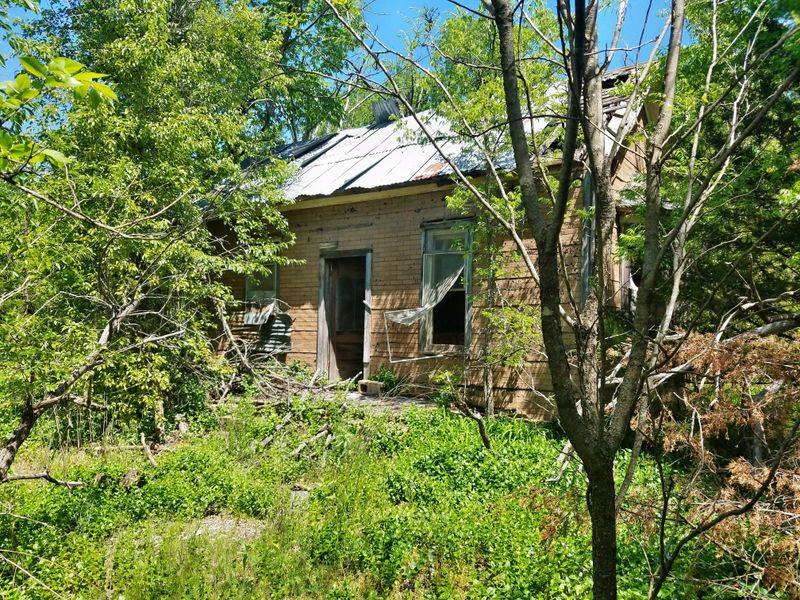
Education served as the heartbeat of small-town life, and Fallis was no exception. The local school brought families together and gave the community purpose beyond mere survival.
I explored the area where the schoolhouse once stood, now just an empty lot with a few foundation stones peeking through the grass. Children’s laughter once filled this space daily.
As families moved away and enrollment dropped, the school closed and students began commuting to neighboring communities. Consolidation with larger district schools became necessary as populations dwindled throughout rural Oklahoma.
Parents had to make tough choices about uprooting their families or accepting long bus rides for their children. Many chose to relocate entirely to towns with better educational infrastructure.
One elderly resident shared memories of spelling bees, Christmas programs, and community gatherings held in the school building. It functioned as much more than an educational facility.
The school’s closure marked a turning point for Fallis, signaling that the town could no longer sustain even basic community institutions. Without children’s voices and activities, a town loses its future and much of its present vitality too.
Agricultural Shifts Changed Everything
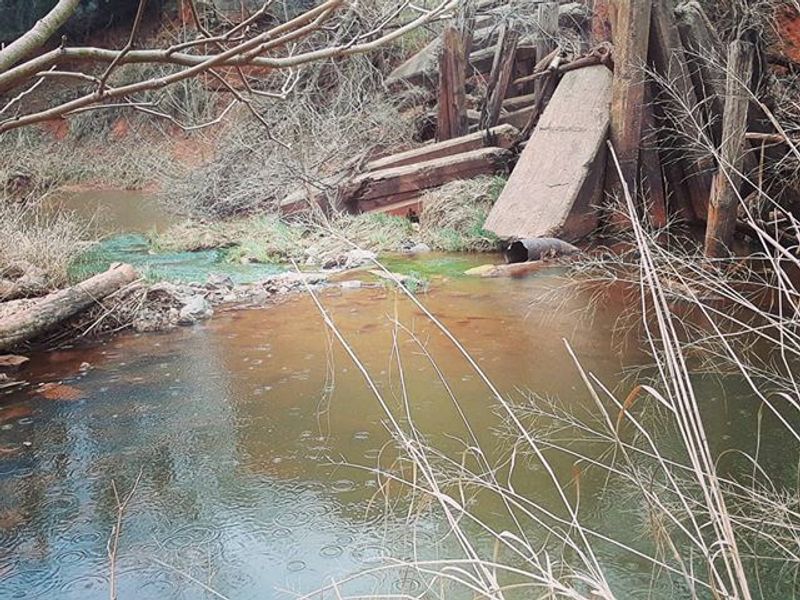
Farming built Fallis, but ironically, changes in agriculture helped dismantle it. I spent time talking with farmers in the area about how their profession transformed over the past century.
Early settlers worked smaller plots with manual labor and draft animals. This labor-intensive approach required many hands and supported numerous families in close proximity.
Mechanization arrived gradually, then accelerated dramatically after World War II. Tractors, combines, and other machinery allowed single operators to work land that previously required dozens of workers.
Suddenly, the economic equation changed completely. Farmers could cultivate more acreage with less help, reducing the need for hired hands and their families living nearby.
Chemical fertilizers and pesticides further increased yields while reducing labor needs. Efficiency improved, but employment opportunities in places like Fallis evaporated.
Modern farming operations in Lincoln County, Oklahoma, are sophisticated businesses requiring specialized knowledge but few employees. The land still produces, but it no longer sustains vibrant rural communities.
Walking through fields surrounding Fallis, I saw productive agriculture continuing. The crops grow tall, but the people who once tended them by hand have long since departed for opportunities elsewhere.
What Remains Standing Today
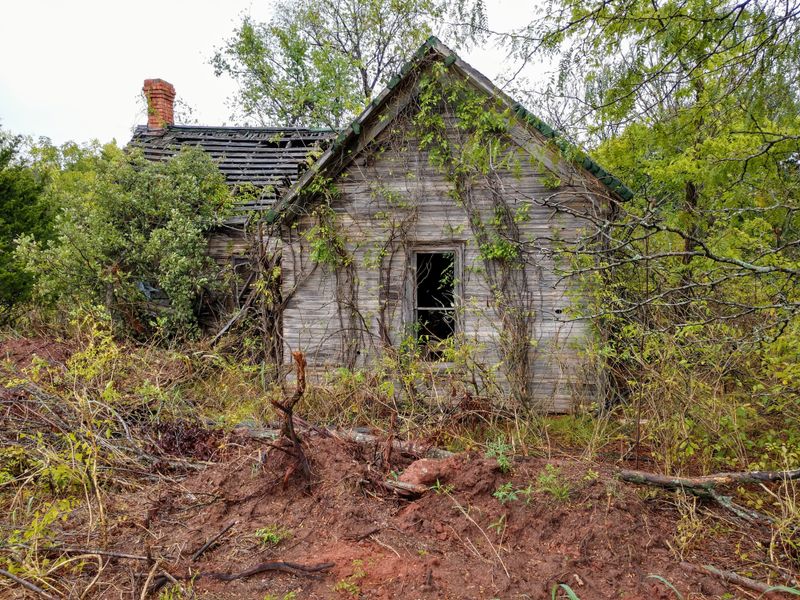
Curiosity about what physically remains in Fallis led me to explore every corner of this diminished community. The landscape tells its own story through absence and persistence.
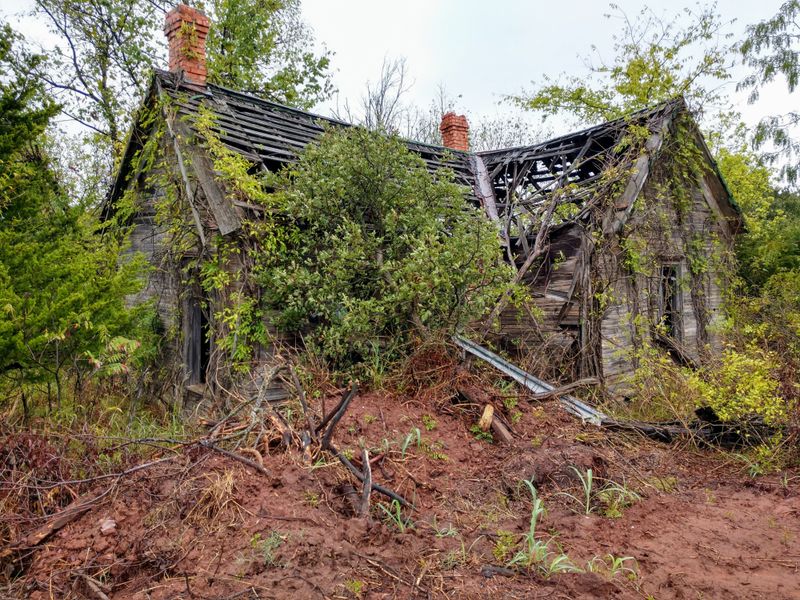
Several residential structures still stand, some occupied by those 21 census-counted residents, others vacant and slowly succumbing to weather and time. These homes range from well-maintained to barely standing.
I noticed how nature reclaims abandoned spaces quickly in Oklahoma. Grass grows through porch floorboards, trees push against foundations, and vines climb walls where paint has long since peeled away.
The street grid remains visible, even where pavement has cracked and crumbled. You can still trace where Fallis once spread across the landscape with optimistic plans for growth.
Utility infrastructure presents an interesting puzzle: some services continue for remaining residents, while abandoned poles and lines create hazards nobody maintains. The cost of serving so few people must be astronomical per capita.
What struck me most was the contrast between the town’s physical footprint and its current population. Fallis occupies space designed for hundreds but houses only dozens, creating an eerie sense of emptiness throughout the entire community in Lincoln County.
The Community That Refuses to Disappear Completely
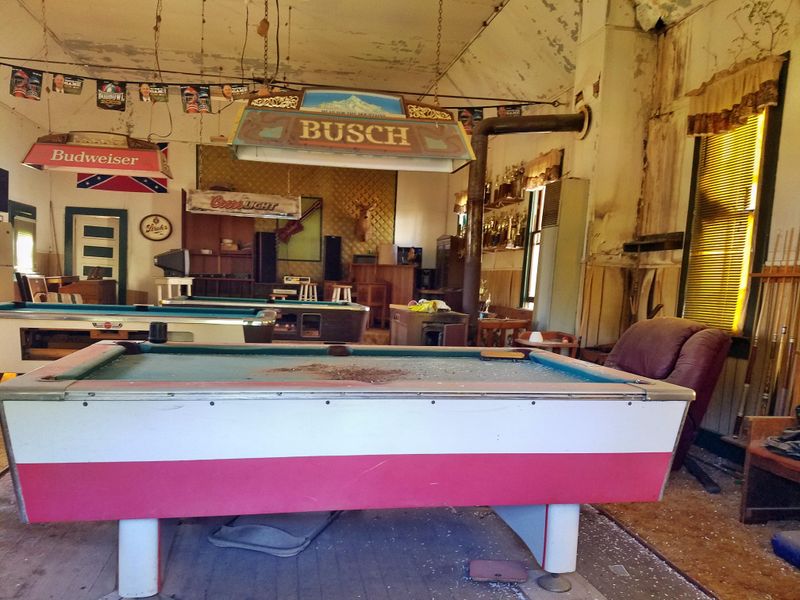
Despite overwhelming odds, Fallis persists on Oklahoma maps and in the hearts of those who remain. This resilience fascinates me more than the decline itself.
I met residents who could easily relocate but choose to stay in this place their families have called home for generations. Their reasons varied from practical to deeply emotional.
Some own property they can’t sell because there’s no market for real estate in a dying town. Others simply love the quiet, the space, and the freedom from urban pressures.
The sense of community among remaining residents seemed stronger than in many larger towns I’ve visited. When you’re down to 21 people, everyone matters and everyone helps each other.
They organize informal gatherings, share resources, and maintain a social network that keeps isolation at bay. Modern technology helps, allowing them to stay connected with the wider world.
Several residents mentioned that living in Fallis requires self-sufficiency and creativity. You learn to fix things yourself, grow your own food, and make do with limited services.
This stubborn persistence prevents Fallis from becoming a true ghost town. As long as people call it home, the community maintains its pulse, however faint.
Lessons from a Town That Couldn’t Recover
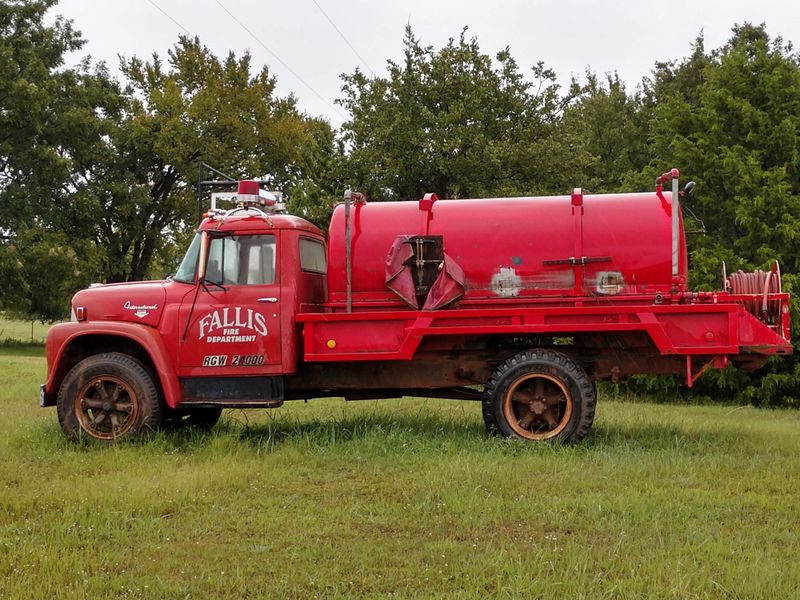
Fallis offers valuable lessons about economic vulnerability, community sustainability, and the forces that shape rural America. I found myself reflecting deeply on what this place teaches us.
Single-industry dependence proved fatal for countless small towns across Oklahoma and beyond. When that one economic engine fails, nothing cushions the fall.
Geographic isolation compounds the problem. Fallis sits far enough from major population centers that commuting isn’t practical, limiting employment options for residents without forcing relocation.
The cycle becomes self-reinforcing: businesses close due to lack of customers, which drives more people away, which causes more businesses to close. Breaking this cycle requires resources small towns simply don’t have.
I learned that timing matters tremendously. Towns that diversified their economies early or attracted new industries before decline accelerated had better survival chances.
Fallis missed those critical windows.
Infrastructure investment favors larger communities, creating disparities that grow over time. Roads, internet, healthcare, and education concentrate where population density justifies the expense.
Fallis demonstrates that some declines may be irreversible without massive external intervention. The question becomes whether preserving every small settlement makes sense or if consolidation is inevitable in modern Oklahoma.
Visiting Fallis in the Present Day
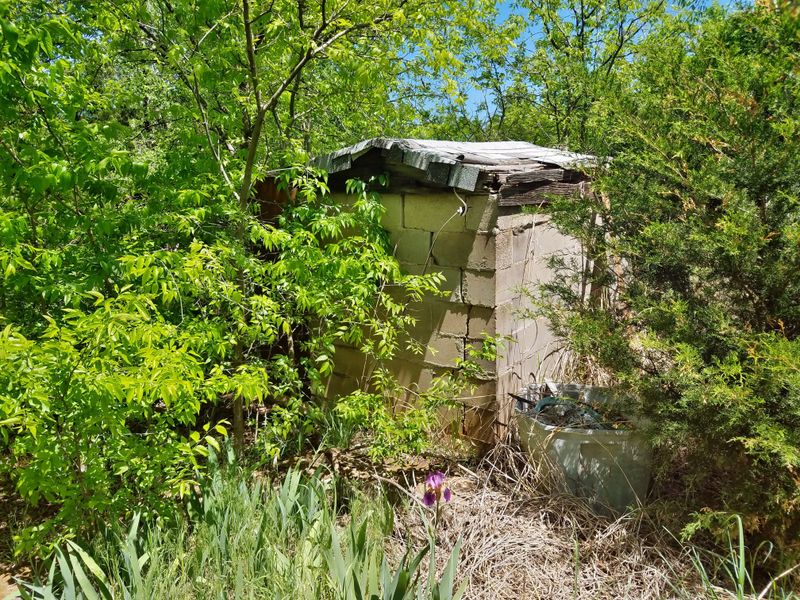
If you’re curious about visiting Fallis yourself, I can offer some practical guidance based on my own experience exploring this Oklahoma community.
The town sits in Lincoln County at coordinates 35.748392, -97.1205871, accessible via rural roads that connect to larger highways in the region. Navigation apps will get you there without trouble.
Don’t expect tourist amenities or guided tours. Fallis doesn’t have restaurants, hotels, or visitor centers.
Bring your own supplies and respect private property throughout your visit.
I found the best approach was simply driving through slowly, observing the landscape and remaining structures from public roads. Photography opportunities abound for those interested in rural decay and persistence.
The handful of residents value their privacy, so avoid trespassing or disturbing occupied homes. A friendly wave acknowledges their presence without intrusion.
Spring and fall offer the most comfortable weather for exploration, though summer heat and winter cold are manageable with proper preparation. The flat Oklahoma landscape provides little shade.
Visiting Fallis takes maybe thirty minutes unless you’re conducting serious research or photography. It’s more of a contemplative stop than a destination, a place to reflect on American history and rural transformation.
Dear Reader: This page may contain affiliate links which may earn a commission if you click through and make a purchase. Our independent journalism is not influenced by any advertiser or commercial initiative unless it is clearly marked as sponsored content. As travel products change, please be sure to reconfirm all details and stay up to date with current events to ensure a safe and successful trip.
