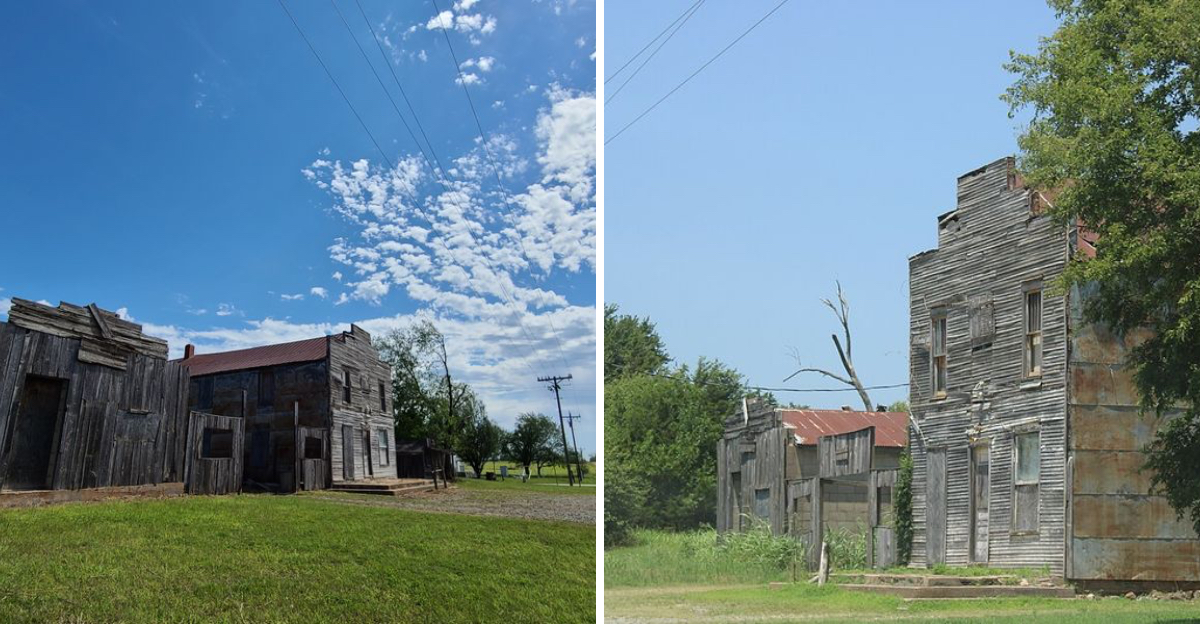
Ingalls sits quiet and nearly forgotten in eastern Payne County, Oklahoma, about nine miles east of Stillwater.
The town emerged from the dust of the 1889 Unassigned Lands run, when settlers rushed to claim their piece of the prairie.
For a brief moment in history, Ingalls thrived with a post office, businesses, and the kind of frontier energy that defined Oklahoma Territory.
Then came September 1, 1893, when gunfire shattered the stillness and turned this small settlement into the backdrop of one of the Wild West’s most violent shootouts.
Today, Ingalls is a ghost town in the truest sense, with only scattered remnants of buildings and a few weathered markers to hint at its storied past.
Yet something about this place refuses to fade completely.
Locals who venture down the gravel roads and dusty trails speak of an atmosphere that feels oddly alive, as though the town never truly emptied.
There are no bustling streets or neon signs, just open land, crumbling foundations, and the wind moving through tall grass.
But visitors often describe a strange sense of presence, a feeling that the past lingers in ways that defy easy explanation.
Whether it’s the weight of history or something more elusive, Ingalls has become a place where curiosity and unease walk hand in hand, drawing those who seek to understand what remains when a town disappears but its spirit does not.
The Doolin-Dalton Gang Shootout Site
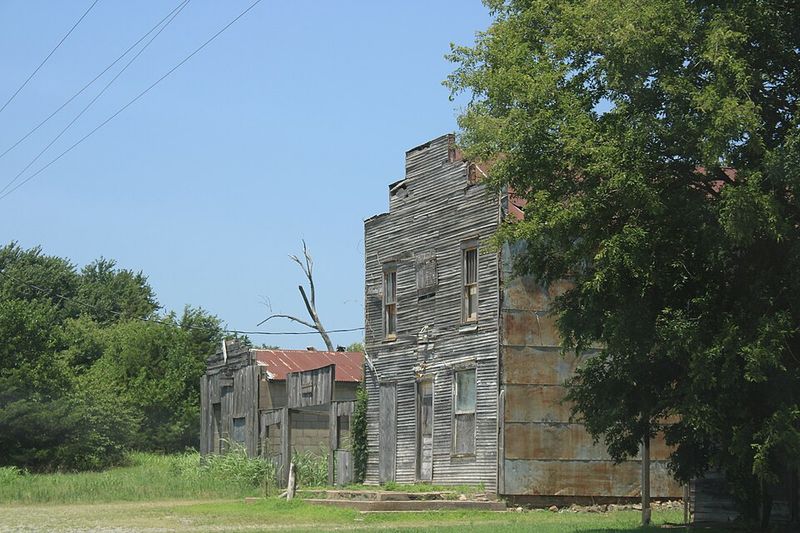
September 1, 1893, brought chaos to the streets of Ingalls when lawmen ambushed the Doolin-Dalton Gang in what became one of the deadliest gunfights in Wild West history.
Bill Doolin, along with outlaws like Bitter Creek Newcomb and Arkansas Tom, had been using Ingalls as a hideout, blending in with locals who either feared them or quietly supported their presence.
Federal marshals and lawmen surrounded the town that morning, and when the shooting started, bullets tore through storefronts and homes.
Three lawmen died in the fight, and several gang members were wounded, though most escaped into the countryside.
Walking the site today feels surreal.
The buildings are long gone, replaced by open fields and a few interpretive markers that describe where the violence unfolded.
Yet many visitors report an unsettling heaviness in the air, a sensation that the gunfire never quite stopped echoing.
Some claim to hear faint sounds like distant shouting or the creak of wooden boards underfoot, even when standing alone on empty ground.
Locals avoid the area after dusk, not out of superstition but because the place carries a palpable tension that words struggle to capture.
Historians have documented the shootout extensively, and the facts are clear.
But facts alone don’t explain why people feel watched or why shadows seem to move at the edge of vision.
The shootout turned Ingalls into a footnote in outlaw history, yet the energy of that violent morning refuses to dissipate.
Standing where lawmen and outlaws once clashed, you can’t help but wonder if some events are simply too intense to fade, leaving an imprint that time cannot erase.
The Abandoned Post Office Ruins
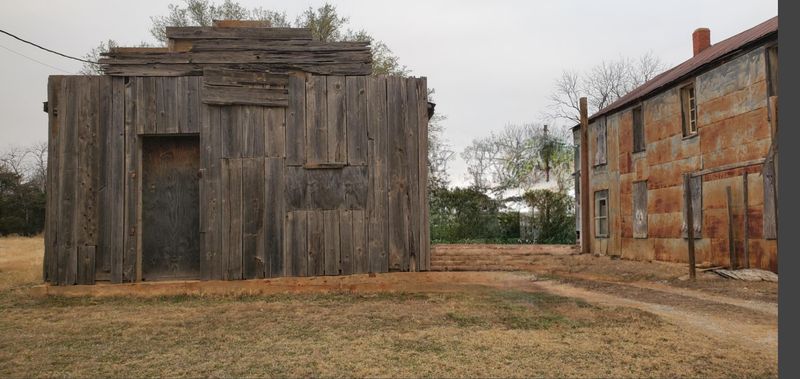
From January 22, 1890, until October 31, 1907, Ingalls had its own post office, a modest building that served as the town’s lifeline to the outside world.
Settlers gathered there to collect letters from distant relatives, conduct business, and exchange news about territorial politics and statehood.
The post office represented stability in a place where survival often felt uncertain.
When Oklahoma achieved statehood in 1907, the post office closed, and Ingalls began its slow fade into obscurity.
The building eventually collapsed, leaving only fragments of foundation stones and scattered bricks half-buried in the soil.
Visitors who search for the post office ruins often describe a strange compulsion to linger, as though the site holds stories it wants to share.
Some report feeling sudden temperature drops, even on warm afternoons, or catching fleeting glimpses of movement near the crumbled stones.
Photographers have captured odd light anomalies in their images, streaks and orbs that weren’t visible to the naked eye.
Skeptics dismiss these as dust or lens flare, but those who experience them firsthand aren’t so sure.
The ruins sit in an overgrown lot, easy to miss if you don’t know where to look.
Wildflowers grow between the stones in spring, softening the decay with bursts of color.
Yet the beauty can’t quite mask the melancholy that clings to the place.
People who grew up near Ingalls remember hearing stories from grandparents about the post office, tales of community and connection that feel impossibly distant now.
The building is gone, but its absence speaks louder than its presence ever did, a reminder of how quickly life can vanish and leave only whispers behind.
The Eerie Silence of Main Street
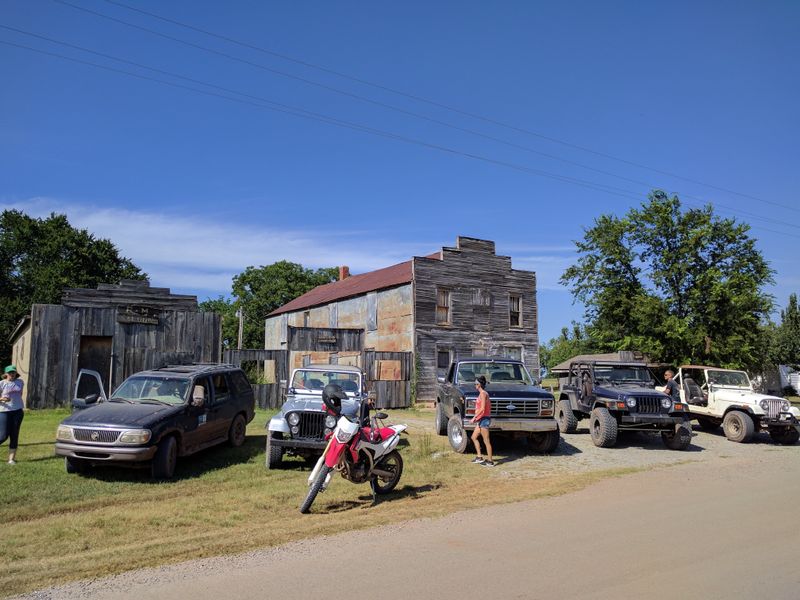
Main Street in Ingalls once bustled with activity, lined with saloons, general stores, boarding houses, and the kind of rough establishments that catered to cowboys, settlers, and outlaws alike.
Horses tied to hitching posts, wagons rolling through the dust, voices calling out prices and greetings, all the sounds of a frontier town trying to carve out a future.
By the early 1900s, the energy had drained away.
Buildings stood empty, their doors swinging open in the wind.
Eventually, they collapsed or were dismantled, leaving nothing but flat land and faint depressions in the earth where structures once stood.
Today, walking what was once Main Street feels like stepping into a void.
The silence is profound, almost oppressive, broken only by the rustle of grass and the occasional birdcall.
Yet many visitors describe the quiet as unnatural, as though sound itself has been muted by something unseen.
Some report hearing phantom footsteps crunching on gravel that no longer exists, or distant laughter that cuts off abruptly when they turn to look.
Others feel a sudden urge to leave, a primal instinct that warns them they’re not alone.
Locals who have spent time in Ingalls speak of the town’s silence as its most unsettling feature.
It’s not the peaceful quiet of nature, but something heavier, more deliberate.
Conversations feel intrusive, as though speaking too loudly might disturb whatever lingers there.
Photographers who visit at dawn or dusk often capture images with strange fog patterns that weren’t visible in person.
The silence of Main Street isn’t just an absence of noise.
It’s a presence, a stillness that feels alive and aware, watching those who dare to tread where a town once thrived.
The Forgotten Cemetery
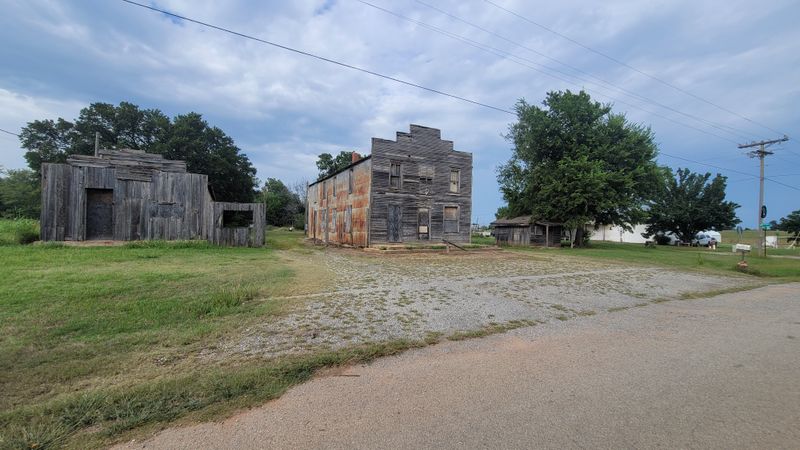
Every frontier town had a cemetery, and Ingalls was no exception.
Settlers, outlaws, and lawmen alike found their final rest in a small burial ground on the outskirts of town.
Wooden markers weathered away decades ago, and many graves went unmarked from the start, their occupants too poor or too infamous to warrant a proper stone.
Over time, the cemetery became overgrown, swallowed by prairie grass and wildflowers.
Only a few tilted headstones remain visible, their inscriptions worn smooth by wind and rain, names and dates reduced to faint ghosts of letters.
Visitors who locate the cemetery often feel an overwhelming sadness, a grief that seems to seep up from the ground itself.
Some describe sudden chills or a tightness in their chest, emotions that vanish as soon as they step away.
Others report seeing shadowy figures moving between the graves at twilight, shapes that dissolve when approached.
Local historians believe at least one of the lawmen killed in the 1893 shootout is buried here, though records are incomplete and conflicting.
The uncertainty adds to the cemetery’s haunting quality, a place where the dead remain nameless and their stories untold.
Photographers have captured strange mists hovering over the graves on clear mornings, and some visitors claim their cameras malfunction or batteries drain inexplicably.
Skeptics attribute these experiences to suggestion and atmosphere, but those who feel the weight of the place know it’s more than imagination.
The cemetery is small and easily overlooked, yet it holds a disproportionate share of Ingalls’ lingering energy.
Death came often and suddenly to frontier towns, and perhaps the souls laid to rest here never quite accepted their fate, clinging to the land they fought so hard to claim.
The Old Saloon Foundation
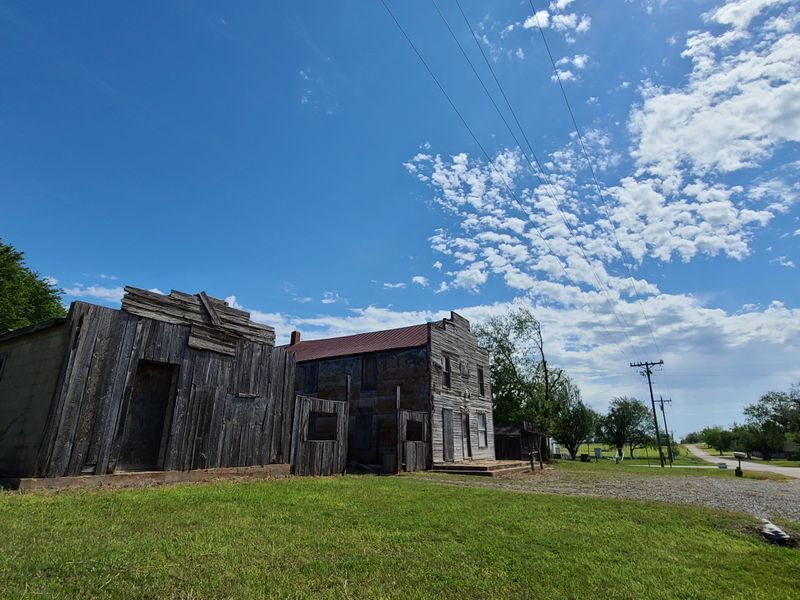
Saloons were the social hubs of Wild West towns, and Ingalls had at least two that served whiskey, beer, and questionable meals to a rough clientele.
The Doolin-Dalton Gang frequented these establishments, drinking and playing cards while keeping an eye on the door for trouble.
One saloon in particular became infamous as the spot where the gang was relaxing when lawmen launched their ambush.
Bullets shattered windows and splintered wood as outlaws scrambled for cover, overturning tables and firing back through the smoke and chaos.
Today, only the saloon’s stone foundation remains, a rectangular outline partially buried in the earth.
Weeds grow through the cracks, and debris from long-collapsed walls litters the area.
Yet visitors consistently report strange sensations when standing on the foundation.
Some hear faint piano music, the kind of tinny, off-key melodies that would have echoed through the saloon on rowdy nights.
Others smell tobacco smoke or the sharp tang of spilled liquor, scents that linger for a moment before vanishing.
A few claim to feel sudden aggression or fear, emotions that don’t belong to them but seem to bleed through from the past.
Local ghost hunters have conducted investigations at the saloon site, recording unexplained electronic voice phenomena and temperature fluctuations.
Skeptics argue these findings are inconclusive, easily explained by environmental factors.
But the people who visit the foundation and feel that sudden rush of adrenaline, or hear voices murmuring in a language just beyond comprehension, walk away convinced that something from the saloon’s violent past still lingers.
The building is gone, but the energy of those desperate, dangerous moments refuses to fade, trapped in stone and soil.
The Windswept Prairie Surrounding the Town
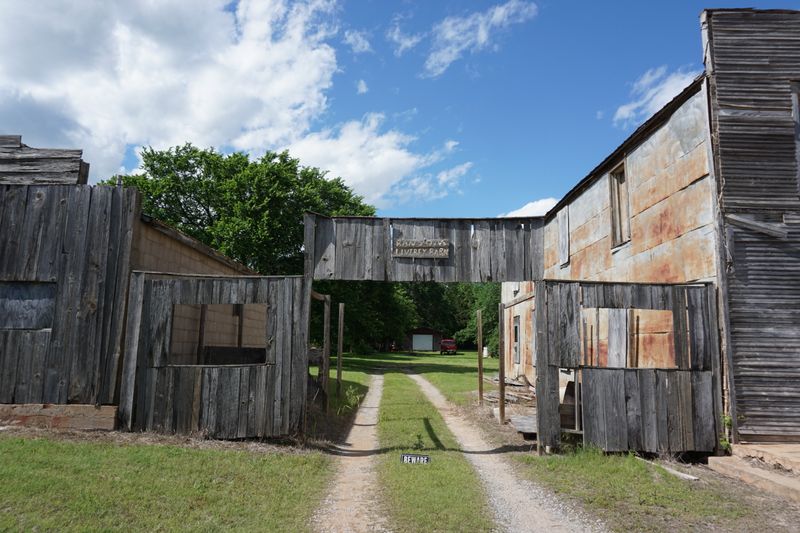
Beyond the scattered ruins of Ingalls lies the vast Oklahoma prairie, an endless expanse of rolling grassland that stretches to the horizon in every direction.
This is the landscape that greeted settlers in 1889, a sea of grass dotted with wildflowers and interrupted only by occasional stands of trees along creek beds.
The prairie shaped the character of Ingalls, offering both opportunity and isolation.
It provided grazing land for cattle and horses, but also exposed the town to harsh weather, droughts, and the loneliness that came with living on the edge of civilization.
Today, the prairie remains much as it was, largely untouched by development.
Walking through the tall grass, you feel the wind constantly, a presence that never quite stops moving.
Locals say the wind carries voices, faint whispers that rise and fall with the gusts.
Some claim to hear their names called when no one else is around, or catch snatches of conversation in languages they don’t recognize.
Scientists would attribute this to the wind’s natural acoustics, the way it interacts with landscape features to create auditory illusions.
But those who experience it find the explanations unsatisfying, unconvincing.
The prairie around Ingalls holds a particular quality at dawn and dusk, when light slants low and shadows grow long.
Figures seem to move in the distance, only to disappear when you try to focus on them.
Photographers capture odd shapes in their images, forms that resemble people or horses but lack definition.
The landscape feels alive, not with plants and animals alone, but with memory, with the imprint of thousands of lives lived hard and fast.
Oklahoma’s prairie is beautiful and brutal, and around Ingalls, it seems to remember everything that ever happened on its soil.
The Lingering Presence That Defies Explanation
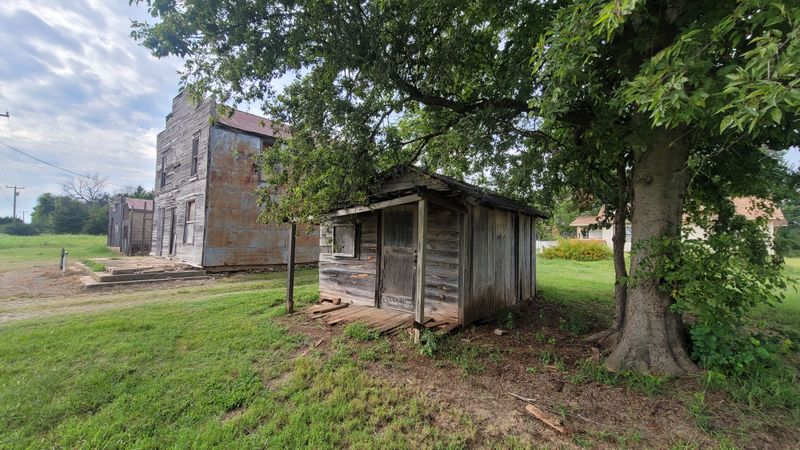
Ask anyone who has spent time in Ingalls, and they’ll struggle to articulate exactly what makes the place feel different.
It’s not just the history or the ruins or the stories of gunfights and outlaws.
It’s something deeper, more visceral, a sensation that you’re being observed by eyes you can’t see.
Visitors report feeling sudden temperature changes, cold spots that appear and vanish without reason.
Others experience a heaviness in their limbs, a fatigue that sets in quickly and lifts the moment they leave.
Some describe a ringing in their ears or a pressure in their chest, physical sensations that have no medical explanation.
Locals who grew up near Ingalls have their own stories, passed down through generations.
Grandparents speak of seeing lights moving through the abandoned town at night, lanterns carried by figures that disappear when approached.
Hunters report their dogs refusing to enter certain areas, whining and pulling away despite no visible threat.
Ranchers occasionally find cattle avoiding specific patches of ground for no apparent reason, as though the animals sense something humans can only feel.
These accounts are consistent across decades, suggesting the phenomenon isn’t new or imagined, but an enduring characteristic of the place.
Scientists might attribute these experiences to infrasound, electromagnetic fields, or psychological suggestion.
But explanations rooted in physics and psychology don’t capture the full experience of standing in Ingalls as the sun sets and feeling, with absolute certainty, that you are not alone.
The town may be empty of living residents, but it’s far from abandoned.
Something remains, whether it’s the accumulated energy of violent deaths, the imprint of intense emotions, or something else entirely.
Ingalls exists in a liminal space between past and present, memory and reality, and those who visit leave with more questions than answers.
Dear Reader: This page may contain affiliate links which may earn a commission if you click through and make a purchase. Our independent journalism is not influenced by any advertiser or commercial initiative unless it is clearly marked as sponsored content. As travel products change, please be sure to reconfirm all details and stay up to date with current events to ensure a safe and successful trip.
