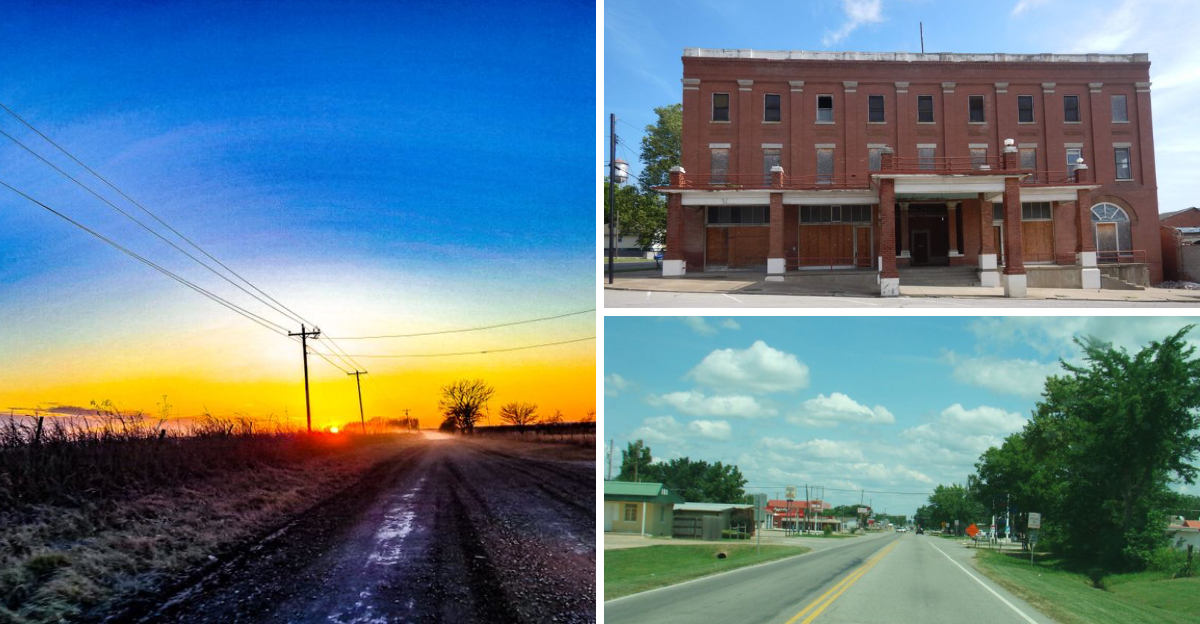
Some places faded overnight, but Nowata, Oklahoma took a different path. This small town in northeastern Oklahoma never quite gave up the ghost, and that half-life existence might be more unsettling than total abandonment.
Walking down streets where a handful of residents still go about their daily routines among empty storefronts and crumbling buildings creates an eerie atmosphere that full ghost towns simply can’t match.
The contrast between lingering life and creeping decay makes Nowata one of the most hauntingly fascinating places in the state, where past and present exist in an uncomfortable coexistence that feels frozen in time.
The Population Keeps Shrinking But Never Reaches Zero
Nowata’s population tells a story of slow decline rather than sudden collapse. From its peak of over 4,000 residents, the town has gradually shed inhabitants decade after decade, dropping to just over 3,700 by 2010 and continuing its downward trajectory into 2025.
What makes this creepy isn’t the numbers themselves but the gradual nature of the exodus, like watching someone slowly fade away rather than disappear in an instant.
Families pack up and leave one by one, businesses close their doors permanently, and yet enough people remain to keep the town technically alive. You’ll see lights on in scattered houses at night, cars parked along mostly empty streets, and the occasional resident walking through what feels like a movie set.
The town square that once bustled with shoppers now sees maybe a dozen people on a busy Saturday. Schools that educated hundreds now serve a fraction of that number.
This gradual abandonment creates pockets of activity surrounded by emptiness, making the remaining residents feel like the last survivors of something that’s already mostly gone. The uncertainty of whether Nowata will stabilize or continue fading adds to its unsettling atmosphere.
Downtown Buildings Stand Half-Occupied and Crumbling
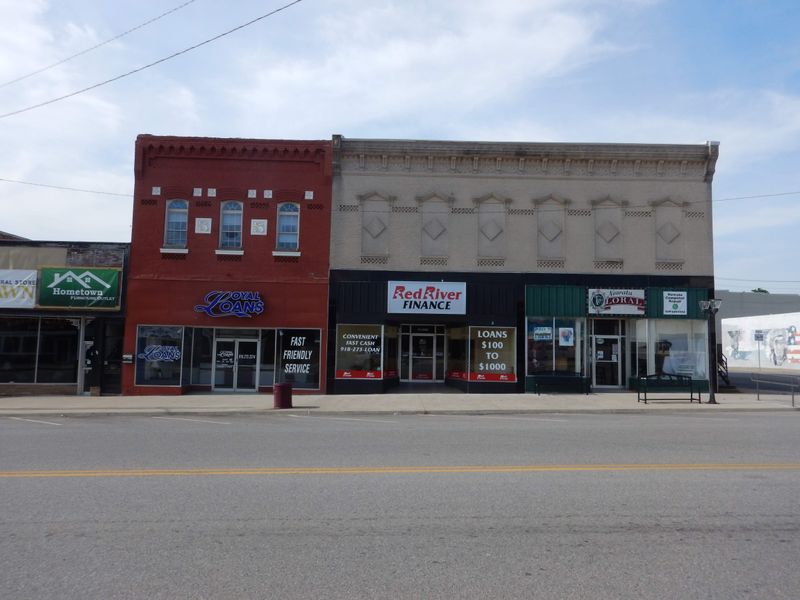
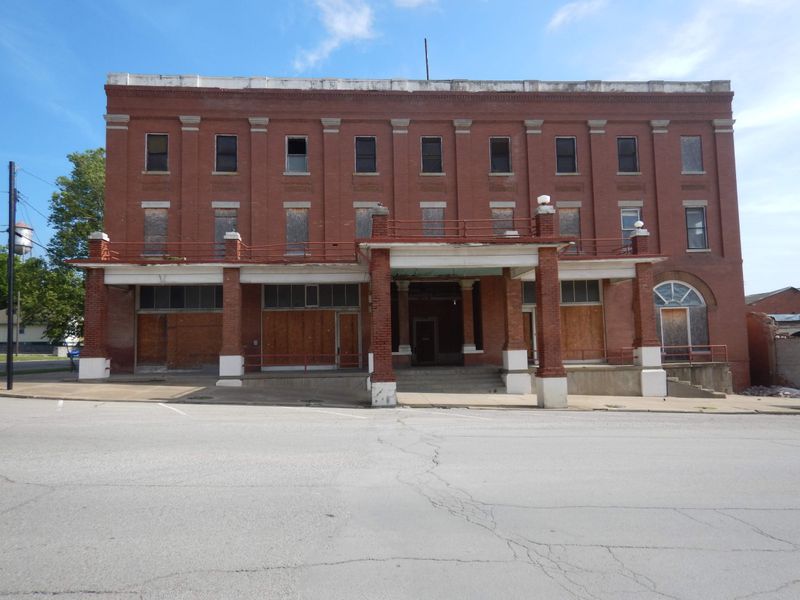
Walking through downtown Nowata feels like exploring a mouth with missing teeth. Historic buildings from the early 1900s line the streets, some still housing operating businesses while their neighbors stand hollow and deteriorating.
A hardware store might be open for business right next to a structure with boarded windows and a caving roof, creating a jarring juxtaposition that’s deeply unsettling.
The architecture reflects Nowata’s oil boom days when money flowed and optimism ran high. Ornate brickwork, detailed cornices, and large display windows speak to a time when this town had big ambitions.
Now those same buildings show water damage, cracked foundations, and peeling paint that reveals decades of neglect underneath.
What’s particularly eerie is entering one of the functioning businesses and realizing you’re surrounded by decay. The pharmacy operates in a building where the upstairs apartments have been abandoned for years.
The diner serves breakfast while the structure next door literally falls apart. This intermingling of active commerce and architectural death creates an atmosphere that feels fundamentally wrong, like the town is operating in denial of its own decline.
The Cherokee Heritage Lingers in Unexpected Ways
Before Oklahoma statehood, Nowata sat firmly within Cherokee Nation territory, and that indigenous history hasn’t completely vanished despite the town’s decline.
Street names, historical markers, and even some architectural elements reflect this heritage, creating layers of abandonment that go back further than the recent economic troubles.
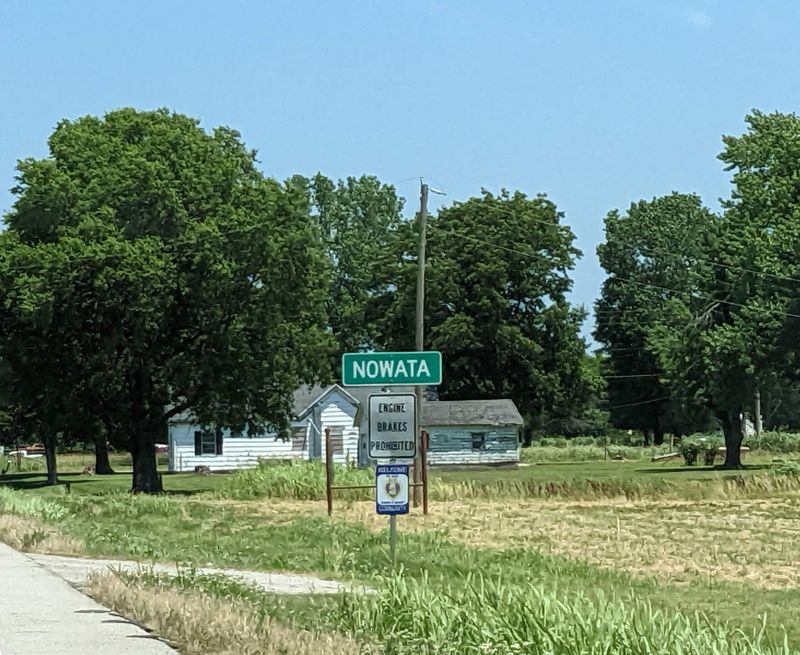
The name Nowata itself comes from a Delaware Indian word meaning “welcome,” though the town’s current state of decline makes that greeting feel bitterly ironic.
Cherokee families were among the area’s first settlers after being forcibly relocated on the Trail of Tears, adding tragic depth to the town’s story of loss and displacement.
You can still find descendants of those original Cherokee families living in Nowata today, their continued presence connecting the town to its deepest roots. Their persistence through multiple waves of change and decline adds another dimension to why this place never fully emptied.
Some residents aren’t just hanging onto a town but maintaining connection to ancestral lands that their families have occupied for nearly two centuries. This layered history of displacement, settlement, boom, and decline creates a complexity that purely economic ghost towns lack.
Oil Derricks Still Dot the Landscape Like Tombstones
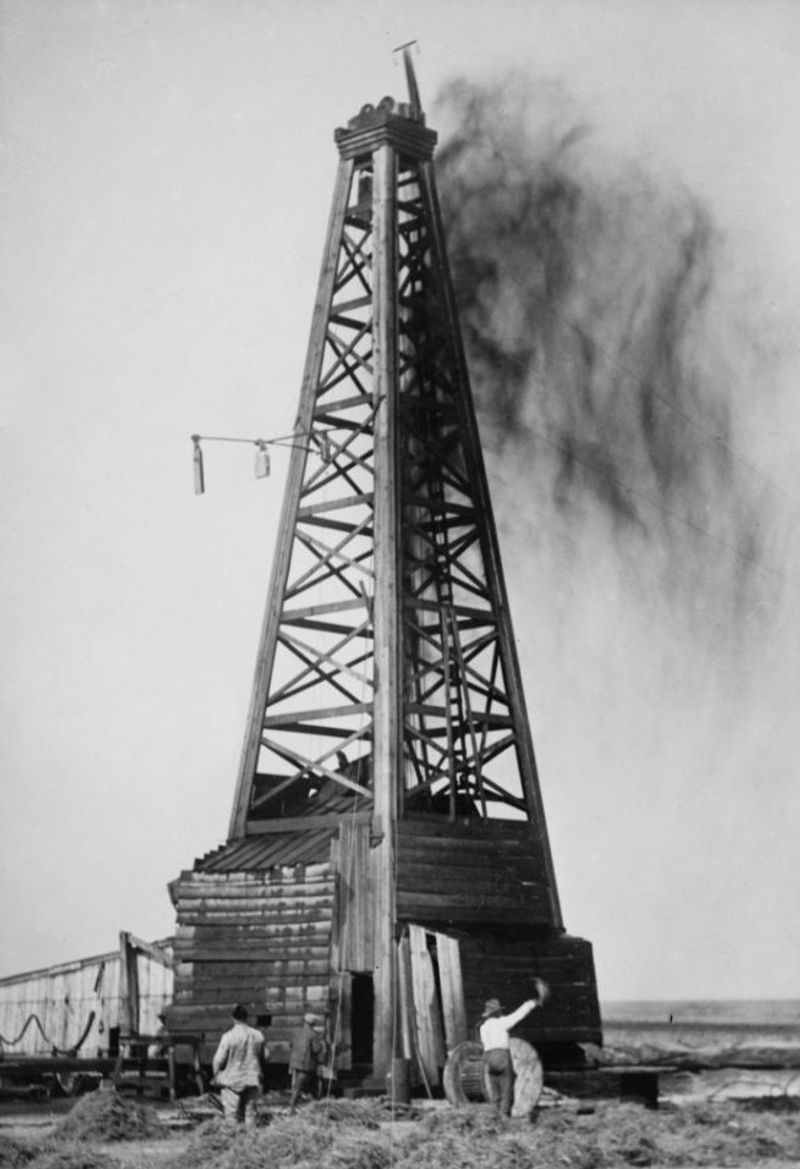
Drive around Nowata County and you’ll spot them everywhere: oil pumps slowly nodding in fields, some still extracting petroleum while others stand motionless like rusted sculptures.
These mechanical remnants tell the story of why Nowata boomed and why it’s now slowly dying, making them perhaps the most visible symbols of the town’s half-life existence.
The oil boom of the early 20th century transformed Nowata from a small agricultural community into a bustling energy town. Derricks sprouted like weeds, money poured in, and the population exploded.
The grand buildings downtown were built with oil money, and the town’s entire identity shifted to serve the petroleum industry.
When production declined and major companies moved operations elsewhere, Nowata lost its economic foundation. Yet small-scale extraction continues even today, with independent operators maintaining wells that produce just enough to justify their existence.
Seeing these active pumps surrounded by abandoned equipment and overgrown facilities perfectly captures Nowata’s current state.
The industry that built the town hasn’t completely left, but it’s operating on life support, keeping just enough activity going to prevent total collapse while being unable to restore former prosperity.
The County Courthouse Still Operates in Near-Empty Surroundings
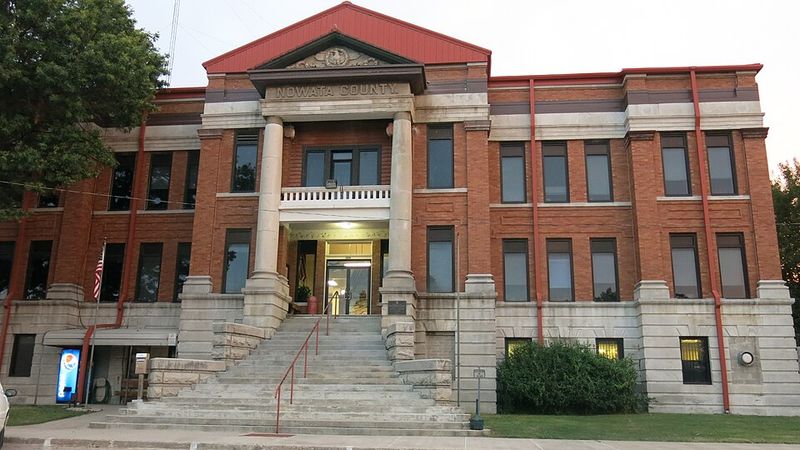
As the county seat, Nowata maintains government functions that keep a baseline level of activity flowing through town. The Nowata County Courthouse stands as one of the few buildings guaranteed to have people coming and going, creating an island of bureaucratic normalcy in an otherwise fading landscape.
Built in a classical revival style, the courthouse represents governmental permanence and authority. County employees show up for work, court proceedings happen on schedule, and official business gets conducted just as it would in a thriving community.
This continuation of normal governmental operations while the surrounding town decays creates cognitive dissonance for visitors.
You might attend a court hearing in a building that’s well-maintained and properly staffed, then walk outside to streets with more closed businesses than open ones.
The contrast highlights how certain institutional anchors keep places like Nowata from completely emptying even when economic logic suggests they should.
Government doesn’t pack up and leave as easily as businesses or families. Address: 229 N Maple St, Nowata, Oklahoma.
The courthouse’s continued operation means Nowata will likely never become a true ghost town, but it also means watching the slow decline happen in real time around an institution that can’t acknowledge its own obsolescence.
Main Street Has More For Sale Signs Than Open Signs
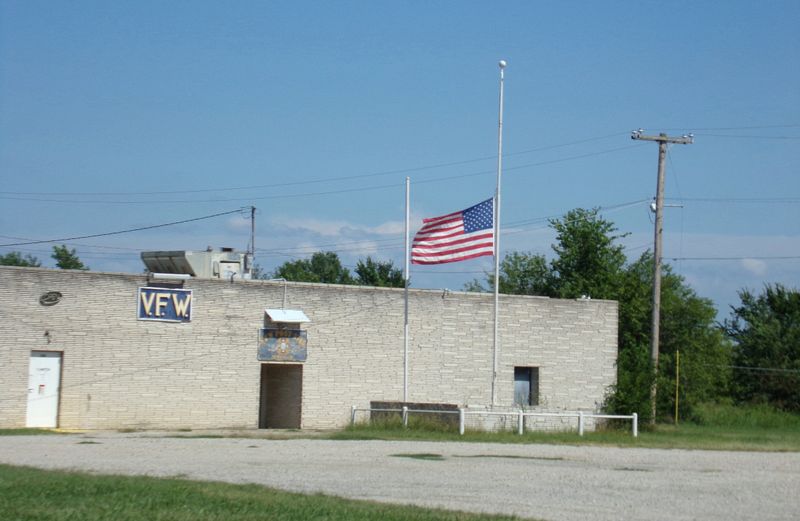
Take a walk down Nowata’s main commercial corridor and count the signs. You’ll find more properties listed for sale or lease than you’ll find businesses actually operating.
Real estate signs have become a permanent part of the streetscape, some so faded and weathered they’ve clearly been hanging for years without generating serious interest.
The asking prices tell their own story, often surprisingly low for commercial buildings with historic character. Property owners have gradually reduced expectations, yet buyers still don’t materialize because there’s no economic foundation to support new businesses.
Why open a shop in a town with a shrinking customer base and no growth prospects?
Occasionally someone does take a chance, opening a business with optimism and determination. These ventures typically last a few years before joining the ranks of the empty storefronts, their signs eventually replaced by another faded For Sale listing.
The cycle repeats, creating layers of failed entrepreneurial dreams visible in the archaeological record of old signage, paint shadows, and mounting hardware that remains after businesses disappear.
This ongoing churn of hope and failure might be sadder than simple abandonment, because it shows people still trying to revive something that the broader economic forces have already decided is over.
Residential Streets Show a Patchwork of Occupied and Abandoned Homes
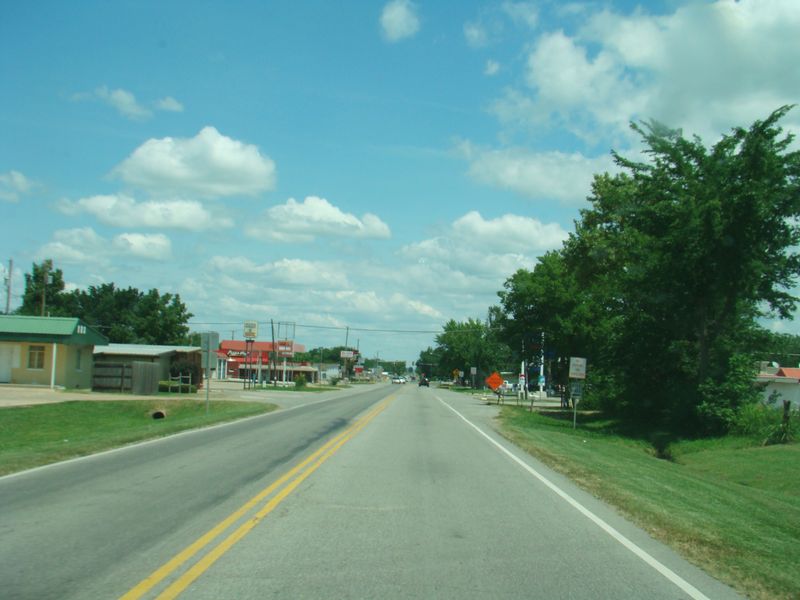
Nowata’s neighborhoods present an unsettling checkerboard pattern. A well-maintained house with a mowed lawn and flowers in the garden sits next to a property with broken windows and waist-high weeds.
Two houses down, another occupied home displays Christmas decorations in December, while its neighbor has clearly been vacant for years with a sagging porch and missing shingles.
This random distribution of occupancy versus abandonment creates a uniquely creepy atmosphere. Unlike neighborhoods that decline uniformly, Nowata’s residential areas force the remaining residents to live immediately adjacent to decay and neglect.
Your morning coffee might be accompanied by a view of your neighbor’s well-kept yard in one direction and a collapsing structure in the other.
The abandoned houses attract the predictable problems: broken windows, graffiti, overgrown vegetation, and sometimes unauthorized occupants. Yet they rarely get demolished because there’s no economic pressure for the land and limited municipal resources for removal.
They simply stand and deteriorate, creating hazards and eyesores that the remaining residents must accept as part of their daily environment. This intimate proximity to abandonment distinguishes places like Nowata from true ghost towns where everyone left together.
The Railroad That Built the Town Barely Runs Anymore
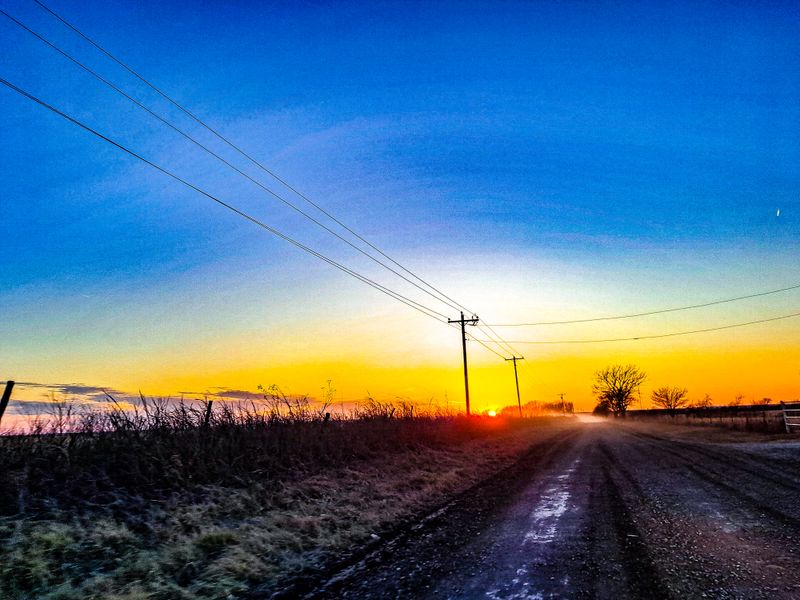
Nowata owes its existence to the railroad that came through in 1899, connecting the area to larger markets and enabling the oil boom that followed. The tracks still run through town, but trains pass infrequently now, and the grand depot that once buzzed with activity has long since closed.
You can still see the railroad infrastructure throughout Nowata, from the tracks themselves to old crossing signals and abandoned sidings where freight cars once loaded petroleum products.
These remnants serve as reminders of when Nowata was a vital link in regional commerce rather than a place trains pass through without stopping.
The decline of railroad service mirrors the town’s broader trajectory. As the local economy weakened, there was less freight to ship and fewer passengers to transport.
The railroad responded by reducing service, which further isolated Nowata and accelerated its decline. This feedback loop of decline is common in small towns across Oklahoma and the Great Plains, but experiencing it in person creates a melancholy atmosphere.
Standing near the tracks when a train does pass, watching it barrel through without slowing, perfectly captures how the wider world has moved on while Nowata remains stuck in place.
Local Businesses Survive Through Sheer Stubbornness
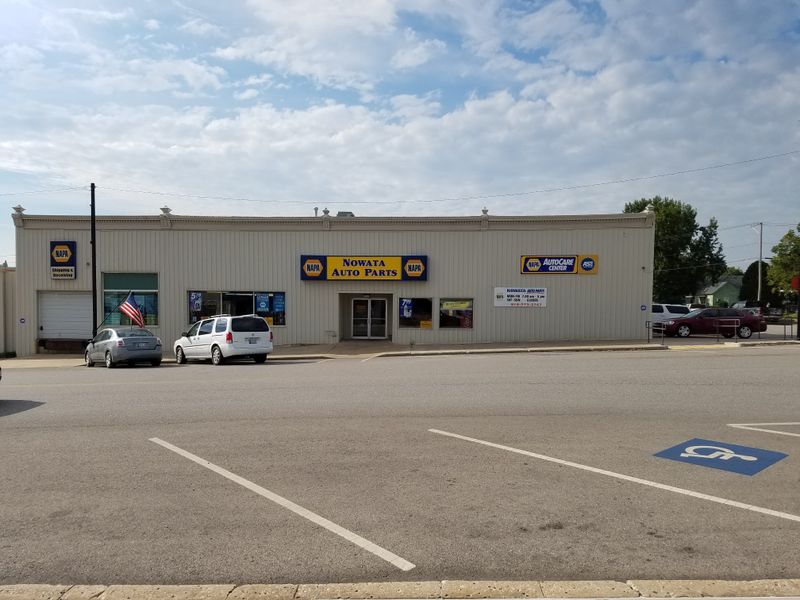
The businesses that remain open in Nowata operate on a different logic than conventional retail economics.
They’re often family-owned operations where the owners have deep roots in the community and continue working despite minimal profits because the alternative means the town loses another service.
The local diner serves breakfast to the same regulars who’ve been coming for decades. The hardware store stocks items for a customer base that shrinks each year.
A small grocery provides essentials so residents don’t have to drive 30 miles to the nearest supermarket. These businesses function as community services as much as commercial enterprises.
Talking to these business owners reveals a complex mix of resignation, pride, and determination. They’re realistic about Nowata’s prospects but feel a sense of duty to keep going as long as possible.
Some plan to close when they retire because there’s no one to take over. Others hope against hope that something might reverse the town’s fortunes.
This persistence in the face of obvious decline adds a human dimension to Nowata’s story that pure ghost towns lack. The businesses themselves become monuments to stubborn hope, operating in slow motion toward an ending everyone can see coming.
The Nowata Historical Museum Preserves a Past Nobody Visits
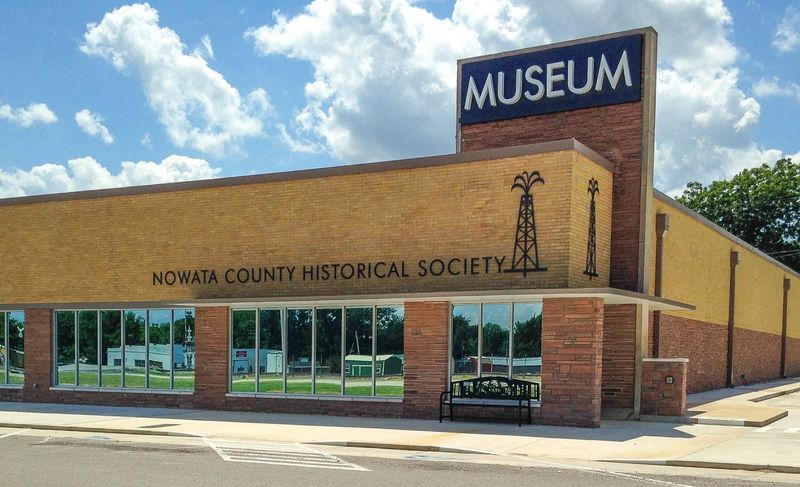
Nowata maintains a small historical museum documenting the town’s heritage from Cherokee settlement through the oil boom to the present decline.
The museum operates with limited hours and minimal staffing, often seeing just a handful of visitors per month, yet it persists in cataloging and preserving a history that fewer and fewer people seem interested in exploring.
Inside you’ll find photographs of downtown when every storefront was occupied, artifacts from the oil industry’s glory days, and documentation of the town’s founding families.
The exhibits tell a story of ambition, prosperity, and community pride that contrasts sharply with the reality waiting outside the museum’s doors.
What makes the museum particularly poignant is its implicit acknowledgment that it’s preserving the history of something that’s dying. The most recent exhibits document the decline itself, creating a strange meta-narrative where the town’s fading becomes part of its historical record.
Volunteers maintain the collection and keep the doors open on designated days, performing cultural preservation work for a community that might not exist in a few more decades.
This dedication to remembering what Nowata was, even as what it is continues to fade, captures the bittersweet determination that characterizes the town’s remaining residents.
Night Falls and the Town Becomes Almost Completely Dark
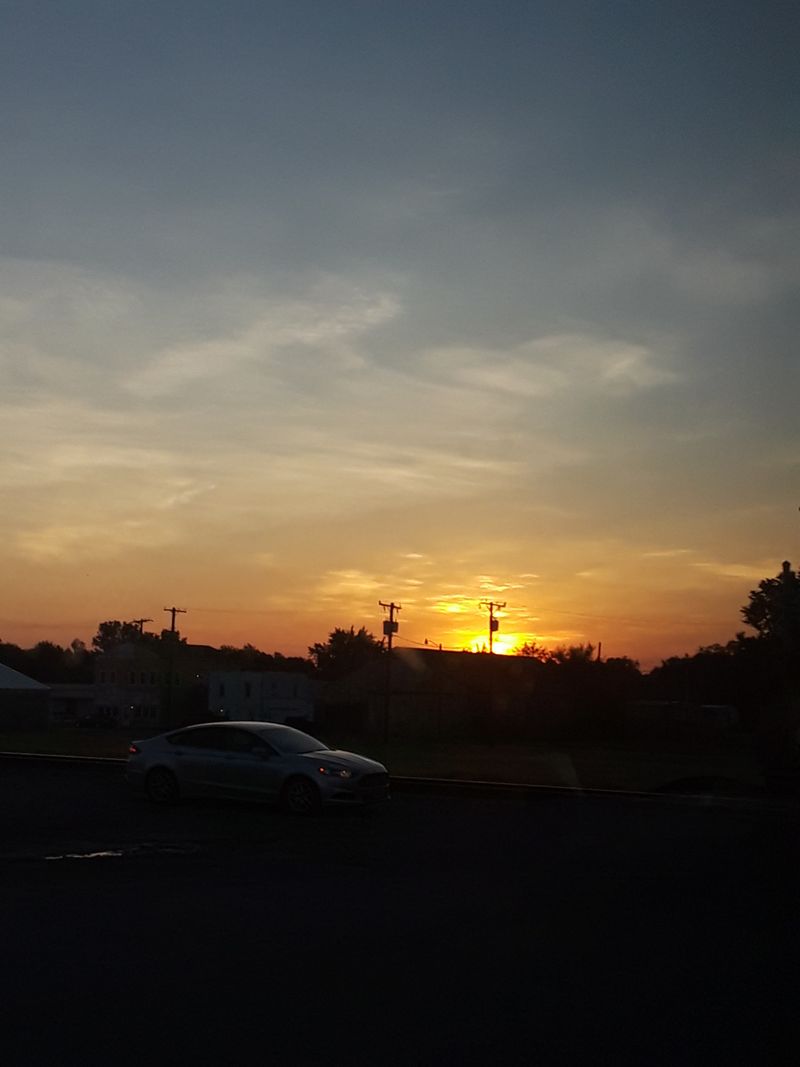
Visit Nowata after sunset and the creep factor intensifies dramatically. Streetlights illuminate empty sidewalks and closed businesses, while residential areas show scattered porch lights and window glow from the occupied houses.
The overall effect is of a town that’s mostly dark, with just enough illumination to highlight how empty it really is.
Walking downtown at night, you might not see another person for blocks. The few businesses that stay open past six o’clock stand out like beacons, their lights seeming almost defiant against the surrounding darkness.
Cars pass infrequently, and when they do, their headlights sweep across empty storefronts and abandoned buildings in a way that feels cinematic.
This nighttime emptiness distinguishes Nowata from thriving small towns where evening activity creates community atmosphere. Here, darkness and silence dominate, broken only occasionally by signs of habitation.
The contrast between the scattered occupied homes and the vast empty spaces between them becomes most apparent at night when lights reveal the pattern.
It’s not quite abandoned enough to be a ghost town, but it’s far too empty to feel alive, creating an in-between state that’s genuinely unsettling for visitors not accustomed to places that exist in this liminal space.
Dear Reader: This page may contain affiliate links which may earn a commission if you click through and make a purchase. Our independent journalism is not influenced by any advertiser or commercial initiative unless it is clearly marked as sponsored content. As travel products change, please be sure to reconfirm all details and stay up to date with current events to ensure a safe and successful trip.
