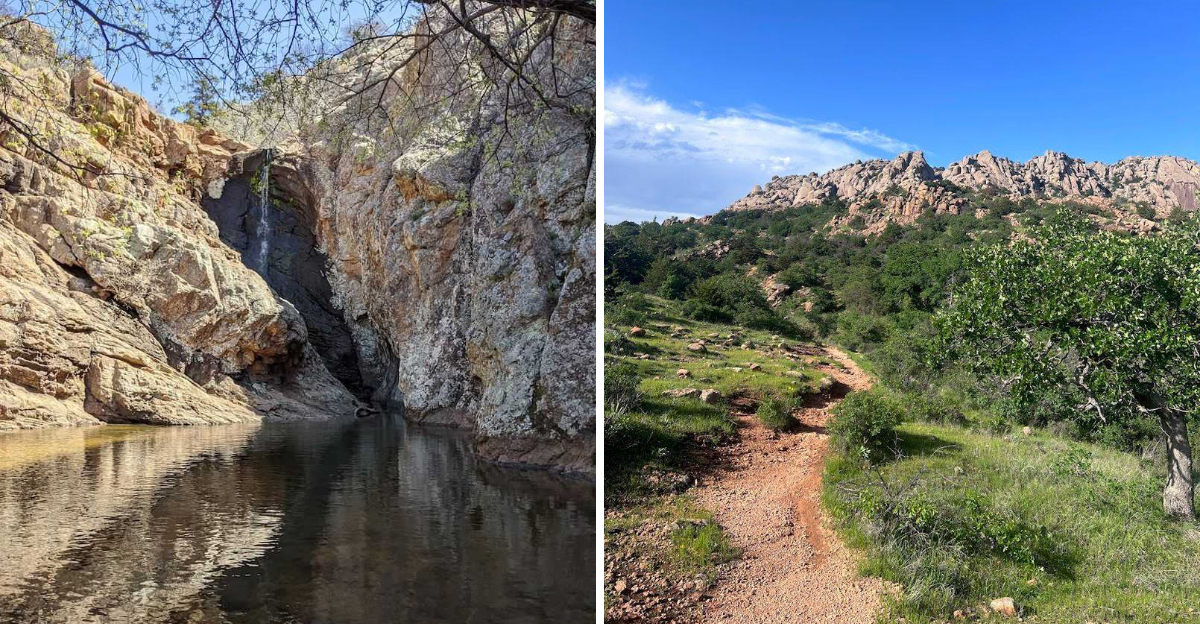
If you have ever wanted a hike that actually delivers on every promise, this trail in Oklahoma is the one to put on your list. This roughly three-mile loop winds past creek crossings, rocky cascades, and finally rewards you with a stunning waterfall framed by ancient granite boulders.
The landscape feels wild and raw in the best possible way, and the whole experience moves at a pace that lets you soak everything in.
Pack your boots, charge your phone for the map, and get ready for one of the most satisfying outdoor adventures southwestern Oklahoma has to offer.
Where the Post Oak Waterfall Hike Actually Begins
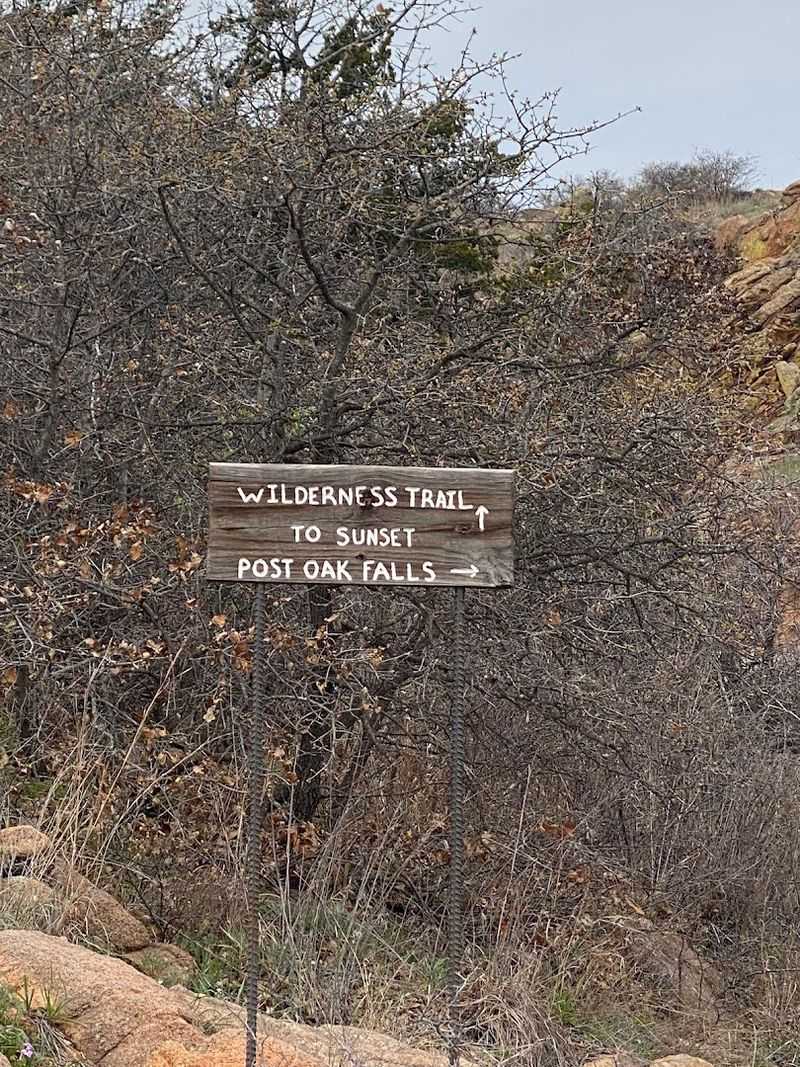
Getting started on the right foot matters more than people realize, and the Post Oak Waterfall hike has a few quirks worth knowing before you lace up your boots.
The trailhead sits within the Wichita Mountains Wildlife Refuge near Indiahoma, Oklahoma.
There are two parking areas to choose from, and many people opt for the south parking lot as a starting point.
Before you leave your car, make sure your phone battery is fully charged, because the trail is not perfectly marked in every section and a downloaded map is genuinely helpful out there.
The refuge is managed by the U.S. Fish and Wildlife Service, which means the land is protected and the rules are straightforward: pack out everything you bring in, and leave the landscape exactly as you found it.
No restrooms and no trash cans are available along the route, so planning ahead for both of those realities will save you a lot of frustration.
Starting smart sets the tone for the whole adventure, and this trail rewards hikers who come prepared with the right mindset from the very first step.
The Wichita Mountains Setting That Makes This Hike Unforgettable
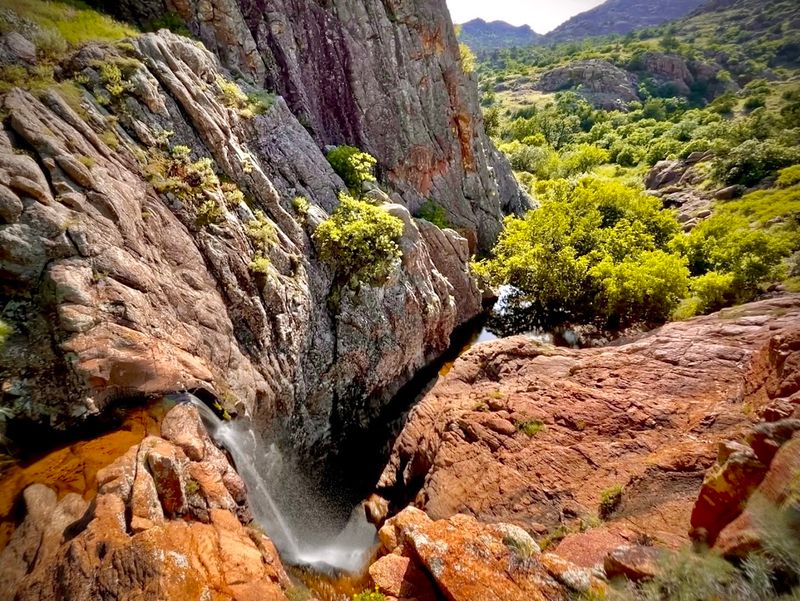
Some landscapes just stop you mid-stride, and the Wichita Mountains are exactly that kind of place.
Rising dramatically from the flat southwestern Oklahoma plains, these ancient granite peaks create a backdrop that feels almost cinematic at every turn of the Post Oak Waterfall loop.
The Wichita Mountains Wildlife Refuge covers over 59,000 acres and is one of the oldest federal wildlife refuges in the United States, which means the wilderness here has been carefully protected for well over a century.
Boulders the size of small houses line the trail corridor, and the exposed rock faces glow in warm amber and rust tones during the golden hour before sunset.
The prairie stretches out between the rocky ridges, and the contrast between open grassland and rugged stone creates a visual variety that keeps the scenery feeling fresh at every bend.
Wildlife sightings are genuinely common here, with bison, longhorn cattle, elk, and wild turkey all calling this refuge home.
Every glance upward or outward reveals something worth pausing for, and that constant visual reward is a big part of what makes this particular Oklahoma hike feel so special from beginning to end.
Creek Crossings That Add Real Adventure to the Route
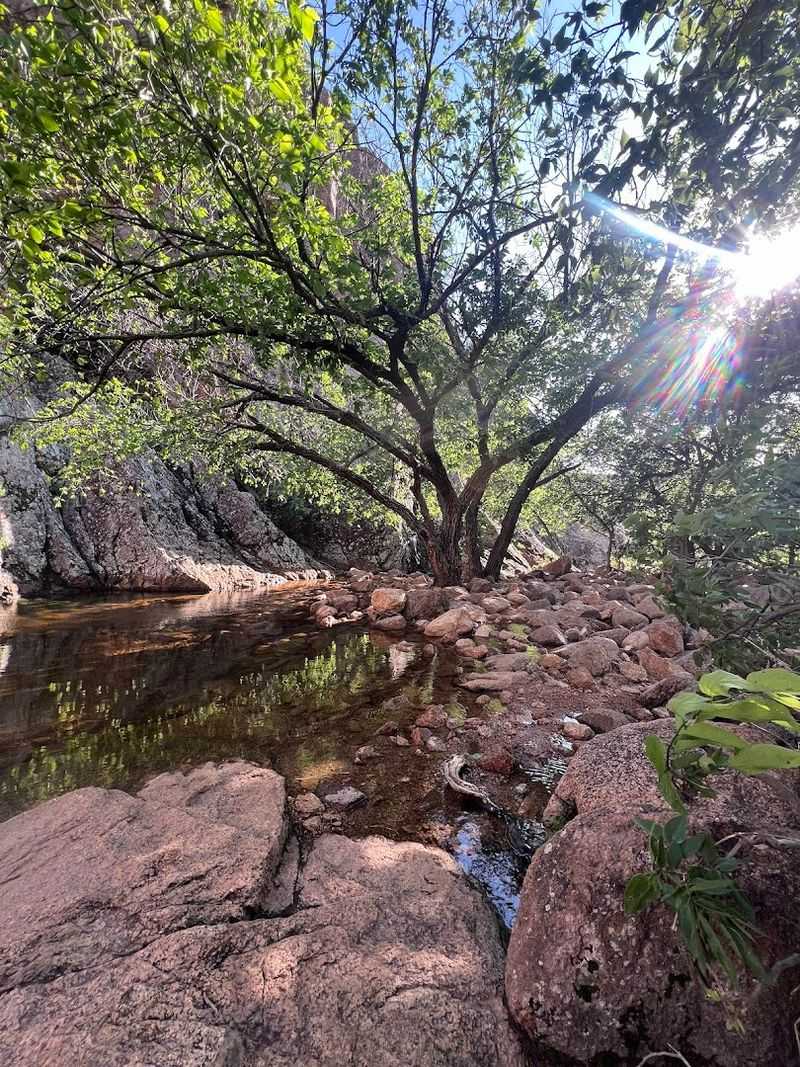
Water crossings have a way of turning a pleasant walk into something that feels genuinely wild, and the Post Oak Waterfall trail delivers several of them along its loop.
Small creeks cut across the path at multiple points, and depending on the season and recent rainfall, these crossings can range from a simple step-over to a careful balancing act across wet, mossy stones.
Non-slip boots are not just a suggestion here; they are pretty much essential gear if you want to stay upright and dry.
The creek beds themselves are beautiful, with clear water running over smooth granite slabs and pooling in shallow basins surrounded by ferns and overhanging branches.
After a good rain, the flow picks up noticeably, and the crossings become both more photogenic and slightly more challenging to navigate without getting your feet wet.
During drier stretches, especially in summer, some of these streams slow to a trickle or disappear entirely, which changes the character of the hike but does not take away from the beauty of the terrain.
Each crossing feels like a small checkpoint on the journey, a moment to pause, look around, and appreciate just how alive this Oklahoma landscape really is.
The Upper Trail Versus the Lower Trail: Choosing Your Path
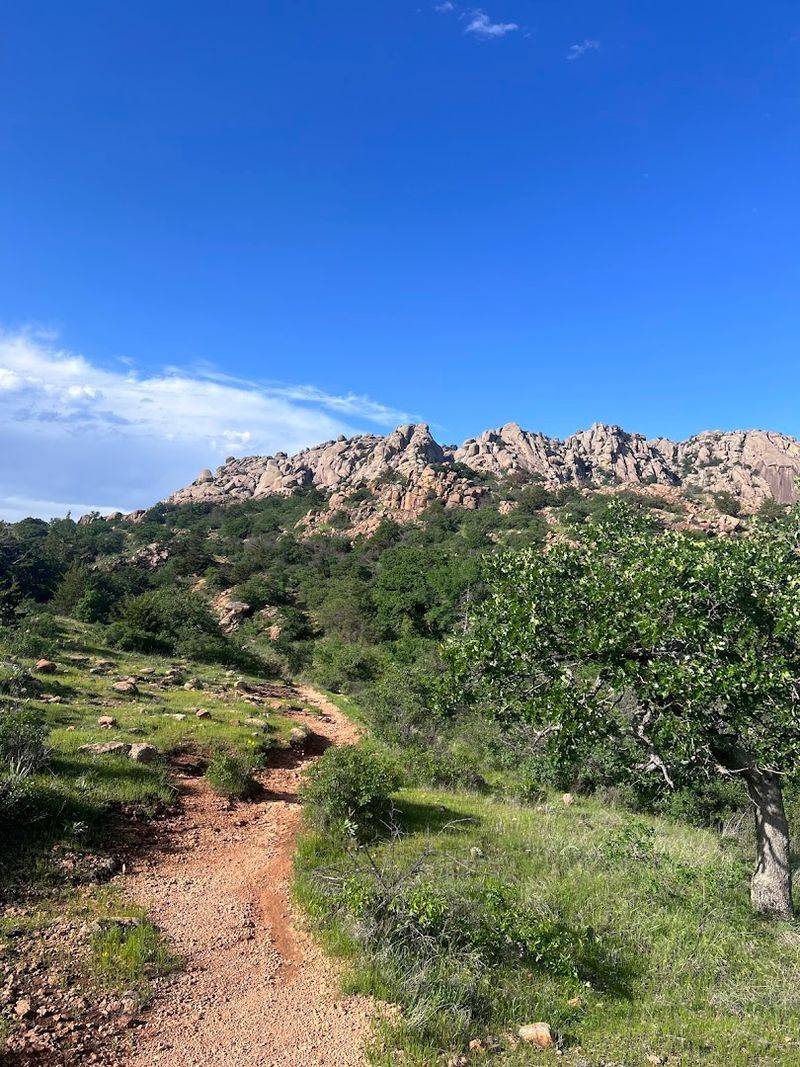
One of the genuinely interesting decisions you face on this hike is whether to take the upper trail or the lower trail, and both options have real personality.
The upper trail is easier underfoot, more open to sunlight, and gives you sweeping views across the surrounding Oklahoma terrain without too much scrambling involved.
It is a solid choice for hikers who want to move at a comfortable pace and take in the wider landscape without worrying about footing on every step.
The lower trail runs closer to the creek bed, which means more shade, cooler temperatures on hot days, and a more intimate relationship with the water and vegetation along the route.
The tradeoff is that the lower path is noticeably rockier and demands a bit more attention from your feet and ankles as you navigate the uneven terrain.
Both trails ultimately connect and lead toward the waterfall, so there is no wrong answer here, just different flavors of the same great experience.
Many hikers choose to take one direction on the way out and the other on the way back, which effectively doubles the variety of scenery and makes the whole loop feel like two distinct adventures packed into one satisfying outing.
Rocky Terrain and Light Bouldering Along the Way
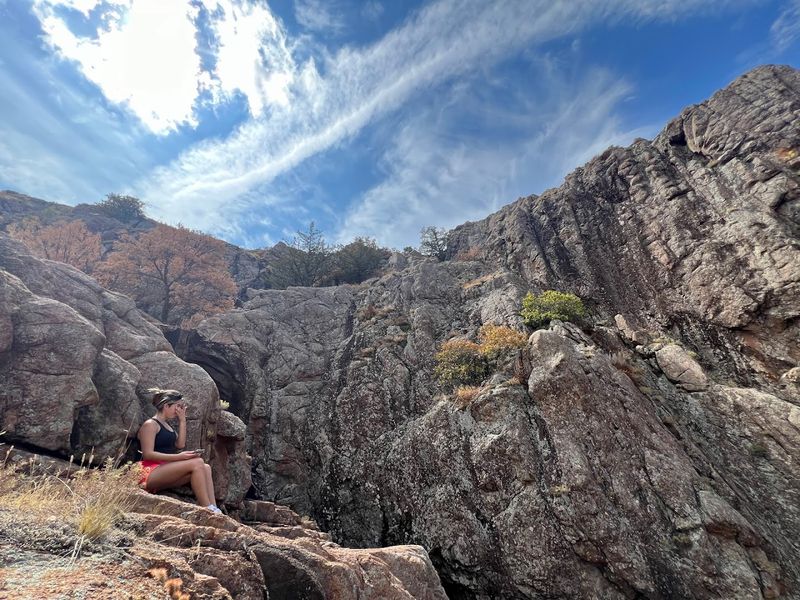
Fair warning: this trail is not a paved path, and that is entirely the point.
The Post Oak Waterfall route includes sections of genuine rocky terrain where you will be hopping between boulders, stepping over exposed roots, and picking your way through stretches that require a little focus and balance.
A small amount of easy bouldering is involved, particularly as you approach the waterfall itself, and that element adds a fun, hands-on quality to the experience that flat trails simply cannot replicate.
Wearing sturdy boots with ankle support makes a meaningful difference on these sections, and pants are a smart call too, since some of the trailside vegetation includes prickly shrubs that will find their way onto bare legs without much invitation.
The rocky character of the landscape is part of what makes the Wichita Mountains so visually striking, and hiking through it rather than just looking at it from a distance gives you a completely different appreciation for the geology here.
The granite formations along this trail are ancient, shaped over hundreds of millions of years, and you can feel that sense of deep time as you place your hands on the warm, rough surface of a boulder.
Slow down and enjoy the scramble, because the payoff waiting at the end is absolutely worth every careful step.
Cascades Along the Trail Before the Main Waterfall
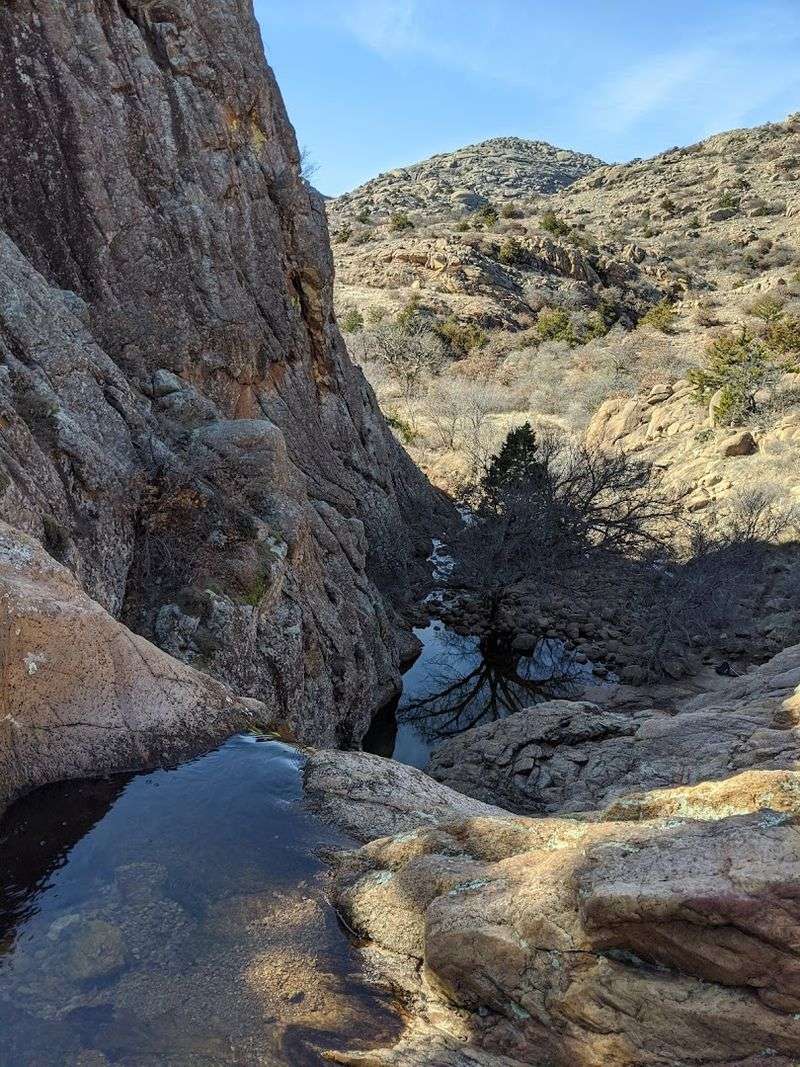
The main waterfall gets most of the attention, but the smaller cascades scattered along the trail are genuinely worth slowing down for.
After a period of rainfall, these secondary water features come alive, spilling over shelves of dark granite and gathering in shallow pools edged with moss and wild grasses.
Each one has its own character: some drop sharply in a short curtain of white water, while others spread wide and slide smoothly across angled rock faces in thin, glassy sheets.
Photographically, these cascades are often more accessible than the main waterfall, and the surrounding vegetation frames them naturally in a way that makes even a phone camera produce stunning results.
The sound of moving water follows you through much of this section of the trail, creating a kind of natural soundtrack that makes the whole experience feel more immersive and peaceful.
During the drier months of summer, some of these smaller features may be reduced or absent, which is one of the strongest arguments for timing your visit to the late fall, winter, or spring when water levels are more reliable.
Think of these cascades as the opening act for the main event still waiting around the next bend in the trail.
Post Oak Waterfall: The Picture-Perfect Payoff
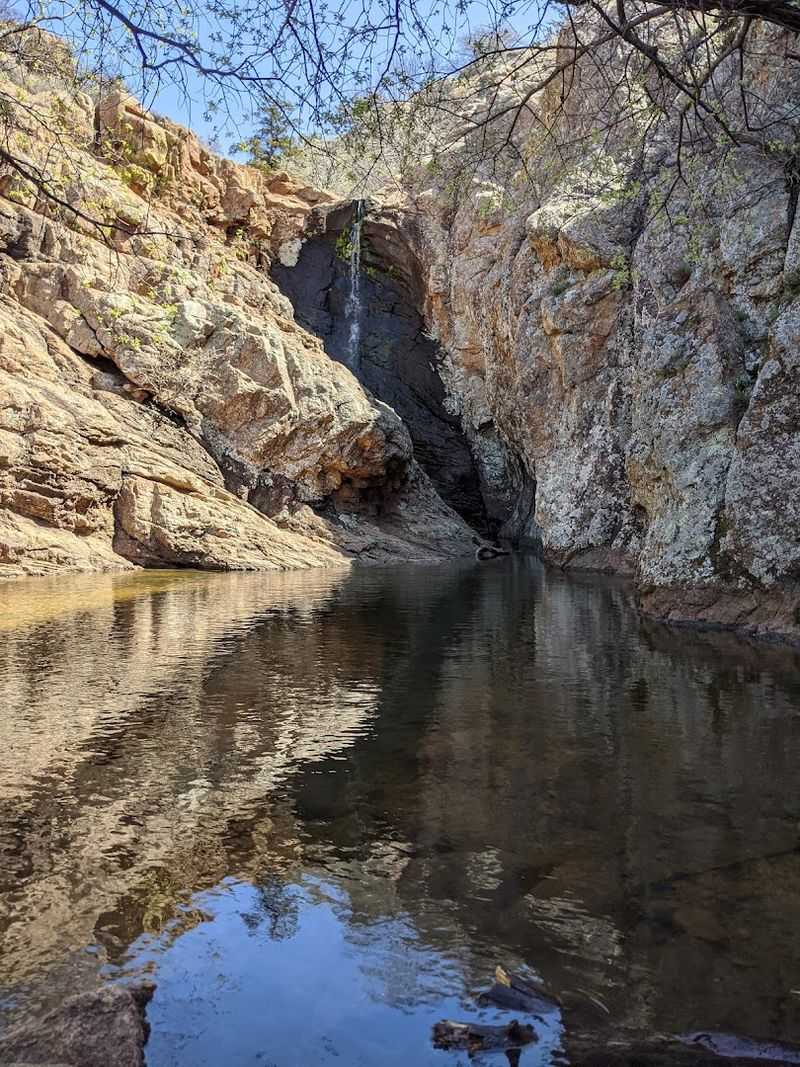
There is a moment on this trail when you round a corner, step through a gap between two large boulders, and suddenly the waterfall appears in front of you, and it genuinely earns every step that came before it.
Post Oak Waterfall drops down a face of dark, striated granite in a clean, photogenic line that looks almost sculpted rather than naturally formed.
The rock wall that frames it rises high enough to make you tilt your head back, and the pool at the base sits in a natural bowl of stone that feels almost deliberately designed for sitting and staring.
When the water is flowing well after a period of rain, the fall has real presence, and the mist it generates keeps the surrounding rocks glistening and the mosses a vivid green.
Getting closer requires a bit of scrambling over steep, slippery rocks near the base, but the up-close view is dramatically different from the standard overlook perspective and absolutely worth the extra effort.
For the best photography conditions, visiting after recent rainfall transforms the scene from pretty to breathtaking, with the water volume and surrounding greenery both at their peak.
This is the kind of Oklahoma waterfall that makes you want to tell everyone you know about it immediately.
Best Time of Year to Visit for the Fullest Experience
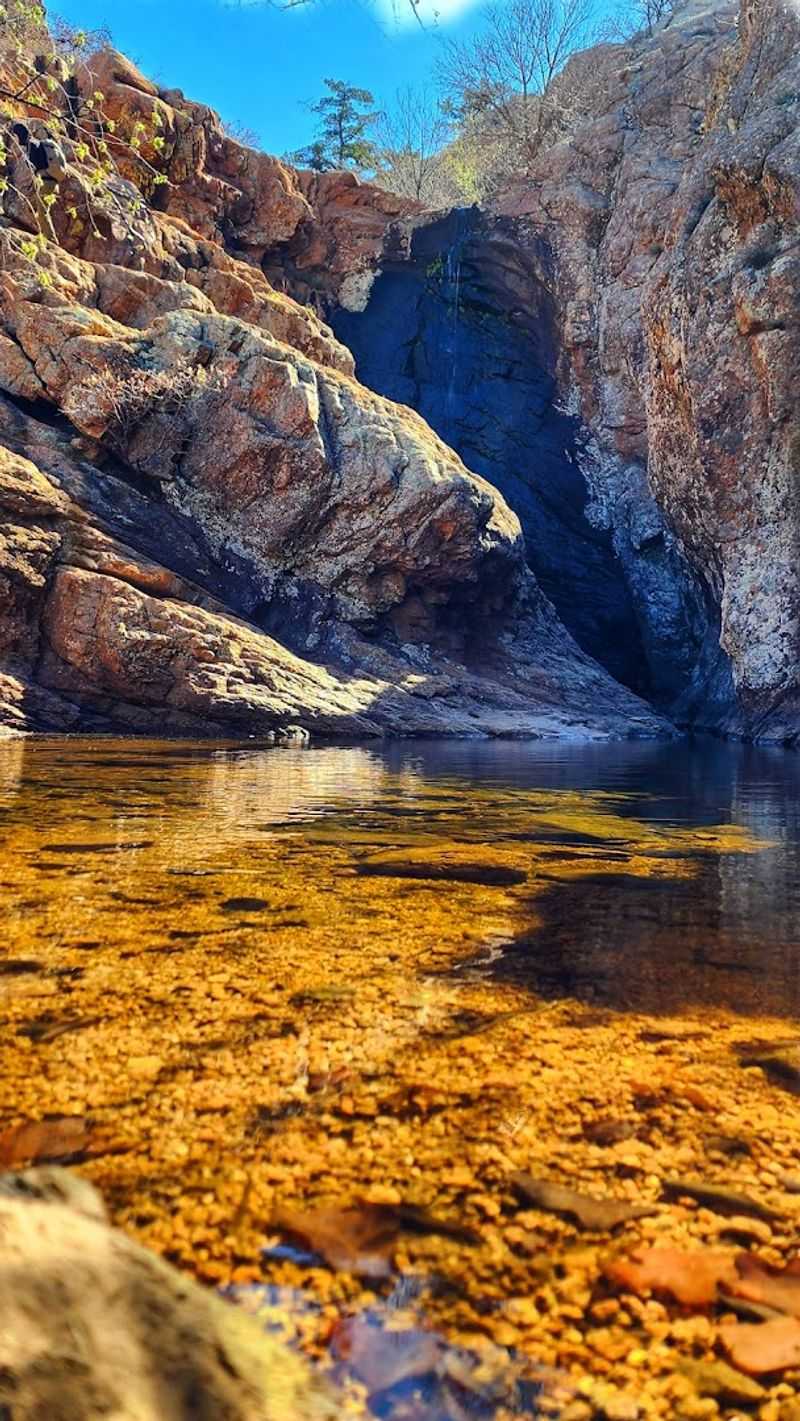
Timing your visit to the Post Oak Waterfall trail can make a dramatic difference in what you actually experience when you get there.
Late fall, winter, and spring are widely considered the most reliable seasons for finding water in the creek crossings and a good flow at the waterfall itself, since Oklahoma summers can be brutally dry and hot.
August in particular is a risky month for this hike if your primary goal is seeing the waterfall in action, as the driest stretches of summer often leave the fall reduced to a trickle or completely dry.
Spring brings the most dramatic water flow, especially after a rainy period, and the surrounding vegetation is at its greenest and most lush during those months.
Fall offers a different kind of beauty, with the oak and cedar trees along the trail shifting into warm amber and rust tones that complement the granite landscape beautifully.
Even in winter, when the waterfall may be dry, the stripped-back scenery reveals the raw geology of the Wichita Mountains in a way that has its own quiet power.
Checking rainfall totals for the Indiahoma, Oklahoma area in the days before your trip is a genuinely useful habit that can help you plan for the best possible conditions.
What to Pack for a Safe and Comfortable Hike
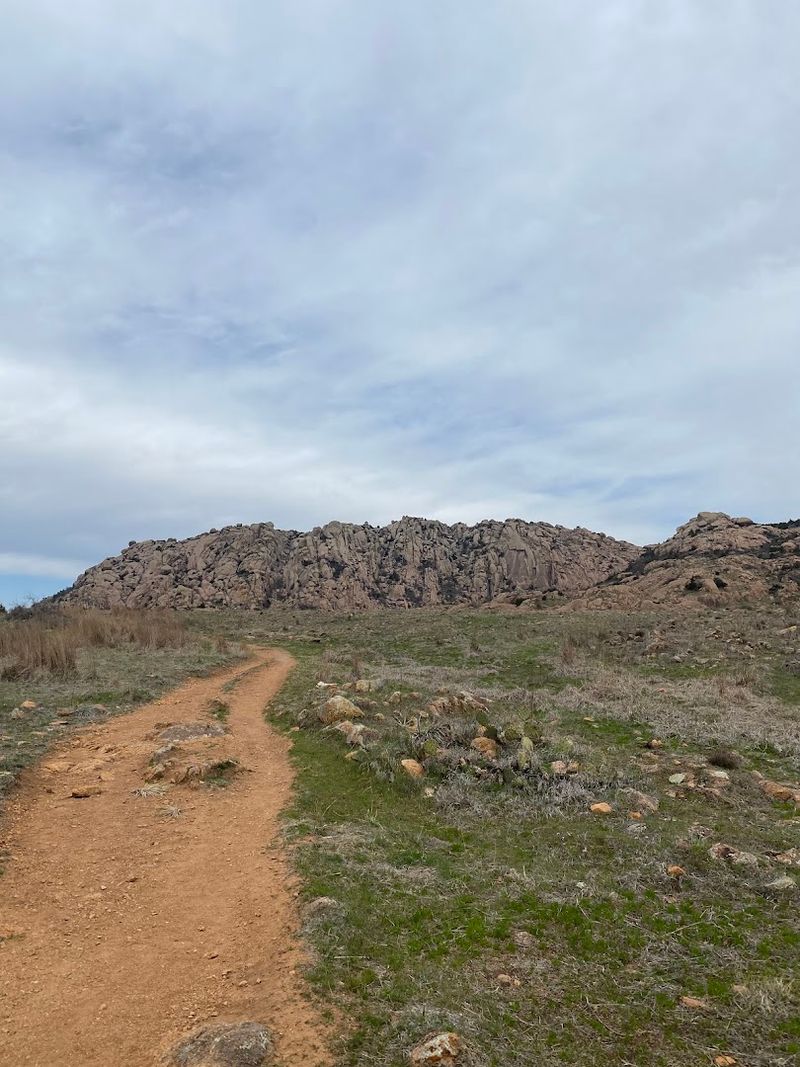
A trail this good deserves to be enjoyed without unnecessary discomfort, and packing the right gear makes all the difference.
Non-slip hiking boots are the single most important item on the list, given the wet rocks, creek crossings, and boulder scrambles that define this route.
Long pants protect your legs from the prickly vegetation along some sections of the trail, and they add a layer of protection against the scratches and scrapes that come with off-trail scrambling near the waterfall base.
Water is essential since there is no drinking water available anywhere along the route, and the physical effort of the hike combined with Oklahoma heat in warmer months means you will go through more than you expect.
Snacks are a smart addition, particularly for anyone hiking with kids, since the roughly three-mile round-trip distance is manageable but still takes a couple of hours at a comfortable pace.
A fully charged phone loaded with an offline map of the trail is genuinely important here, because the path has some sections that are not perfectly marked and a few desire trails that can pull you off course.
Sunscreen and a hat round out the essentials, especially for the upper trail sections that run through open, sun-exposed terrain without much shade cover.
Closing Thoughts on Why This Hike Deserves a Spot on Your List
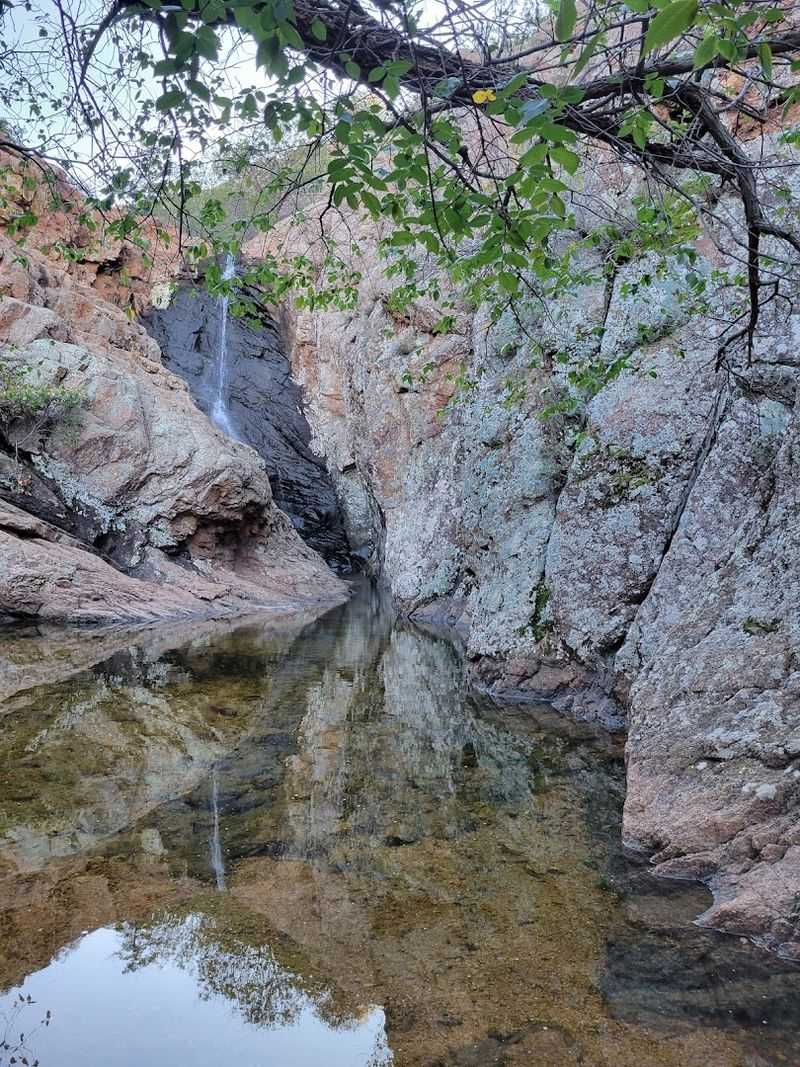
Some hikes are worth doing once just to say you did them, but the Post Oak Waterfall loop is the kind of trail you find yourself planning to return to before you have even finished the first visit.
The combination of creek crossings, cascades, dramatic granite scenery, and a genuinely beautiful waterfall at the end creates a layered experience that feels rewarding at every stage of the route, not just at the destination.
The roughly three-mile round-trip distance keeps it accessible for a wide range of fitness levels, while the rocky terrain and optional scrambling near the falls give more adventurous hikers something to lean into.
The Wichita Mountains Wildlife Refuge as a whole is one of Oklahoma’s most underappreciated natural treasures, and the Post Oak Waterfall trail is one of the best reasons to make the drive out to this corner of the state.
There is something grounding about spending a few hours moving through a landscape this old and this wild, far from pavement and noise and the usual pace of daily life.
Oklahoma surprises people who expect only flat, featureless plains, and this trail is one of the most eloquent arguments against that assumption.
Go after a rain, bring good boots, and let the Wichita Mountains do the rest.
Dear Reader: This page may contain affiliate links which may earn a commission if you click through and make a purchase. Our independent journalism is not influenced by any advertiser or commercial initiative unless it is clearly marked as sponsored content. As travel products change, please be sure to reconfirm all details and stay up to date with current events to ensure a safe and successful trip.
