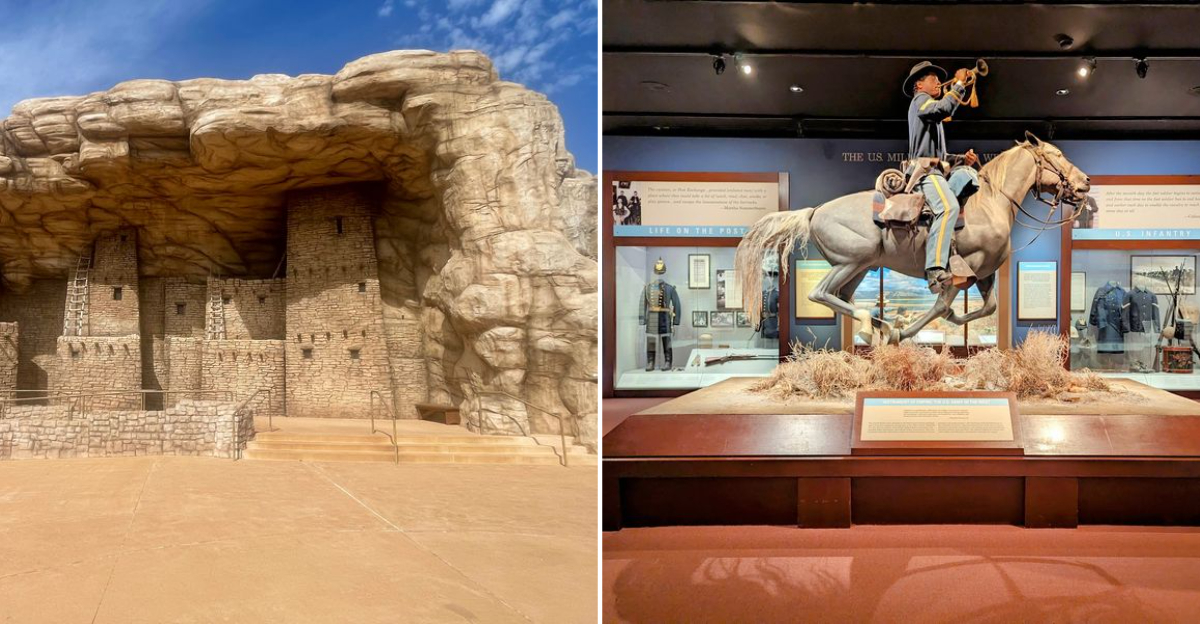
A wooden sidewalk stretches beneath a vaulted ceiling, and the glow of gas lamps spills across false-front storefronts. The general store, the blacksmith shop, and the railroad depot all look like they belong on a dusty prairie, but they are tucked beneath a single roof in Oklahoma.
Forty-foot ceilings and clever lighting make the sky feel real, and the details are so precise that you half expect a horse to clip-clop past at any moment. This is not a film set or a theme park.
It is a fully realized cattle town from the turn of the century, preserved and recreated with the kind of care that makes history feel alive.
The scale is impressive, but it is the quiet atmosphere that sticks with you, a sense of stepping into a moment that has long since faded from the landscape outside.
In Oklahoma, the past is never really gone. It is just waiting indoors.
Prosperity Junction, The Town Inside The Building
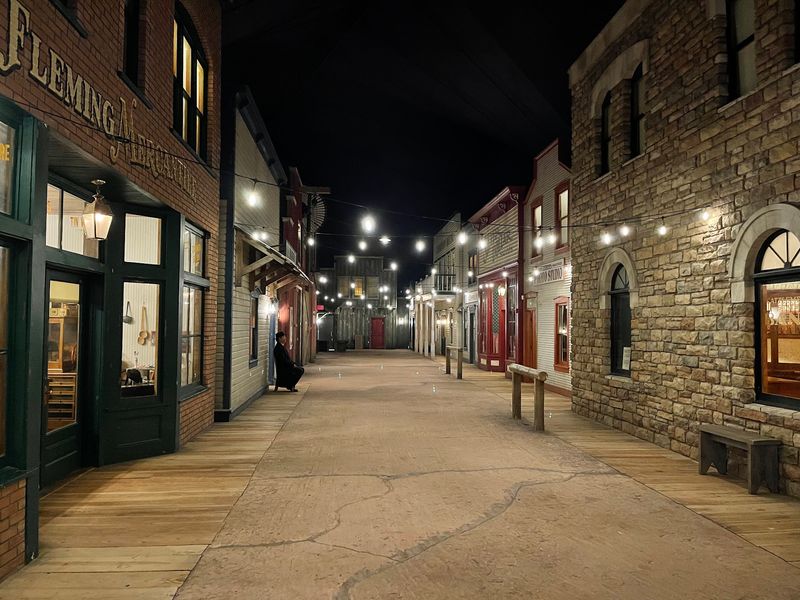
Picture walking through a museum door and suddenly standing on the main street of a cattle town at dusk. That is basically what Prosperity Junction is, and it takes up a huge chunk of the museum floor.
The whole exhibit is a full-scale recreation of a turn-of-the-century Western prairie town, built with real two-story structures rather than flat painted backdrops. The ceilings above it are enormous, which is exactly why the buildings can stand at their proper height without feeling squeezed in.
What makes it work so well is the lighting, because the town is kept in a kind of permanent early evening glow. You get that soft, just-after-sundown feeling the entire time you are walking around, and it does something to your brain that a regular exhibit hall never manages.
Give yourself more time here than you think you need, since people tend to slow way down once they realize they can look into almost every building. If you are bringing kids along, this is usually the part they remember long after the trip is over.
Honestly, it is the reason most folks come, and it lives up to the buildup that Oklahoma locals give it.
Peeking Into The Shops And Storefronts
Here is where the town really earns its keep, because the buildings are not empty shells. You can look into a railroad depot, a hotel, a church, a general store stocked with goods, a doctor’s office, and a blacksmith shop.
Each one gives you a small window into what a normal day looked like for somebody living out on the prairie. The general store is the one that tends to hold people longest, since the shelves are packed with the kind of everyday items that make the past feel suddenly ordinary and real.
The church and the depot are worth a slow look too, because together they tell you a lot about how these towns grew and how people stayed connected to the wider world.
You will find all of this at 1700 NE 63rd St, Oklahoma City, OK 73111, which sits on a hill just off the highway and is easy to spot.
My advice is to read the small signs rather than skipping them, because they explain little details you would otherwise walk right past. It changes how the whole street feels once you understand who used each building.
Western Art That Stops You Mid-Step
Even if you would not normally call yourself an art person, these galleries have a way of pulling you in. The museum holds a serious collection of classic and contemporary Western art, and the walls are lined with paintings that capture cattle drives, horses mid-motion, and wide open country.
Two of the biggest names you will run into are Frederic Remington and Charles M. Russell, both of whom spent their careers painting the American West while it was still changing around them.
What I find interesting is how differently each artist saw the same subject, since some pieces feel heroic and others feel quiet and almost lonely. Standing in front of them back to back really shows you that range.
The contemporary work is worth your attention too, because it proves that Western art never stopped evolving and is still being made today.
If your legs are tired from the town exhibit, these galleries make a good breather since the pace is naturally slower. Find a bench, sit for a minute, and let one painting hold your attention instead of trying to see everything at once.
It is a calmer, more reflective part of the building.
The End Of The Trail Sculpture
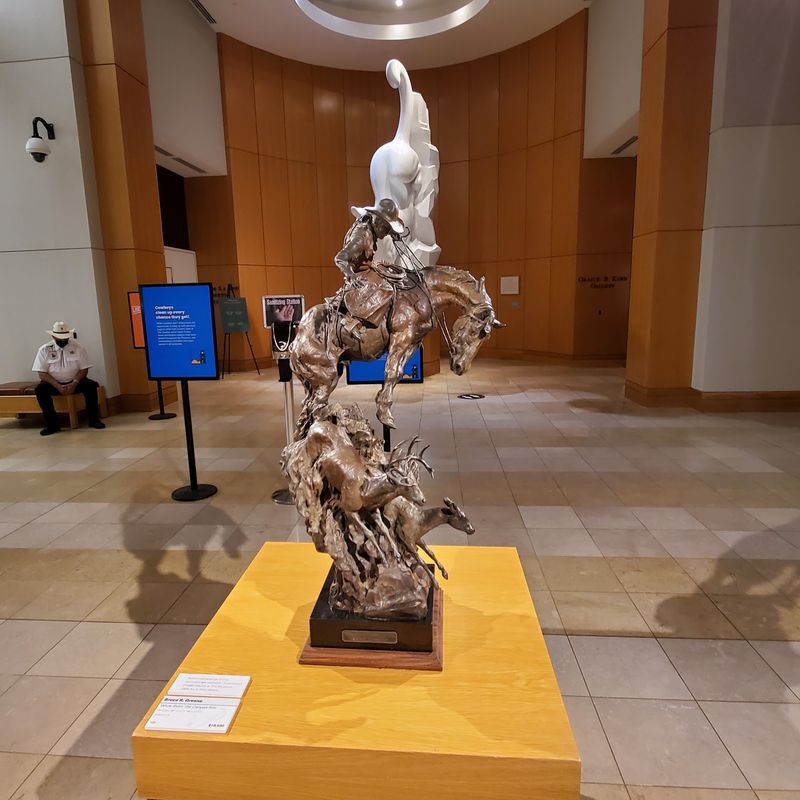
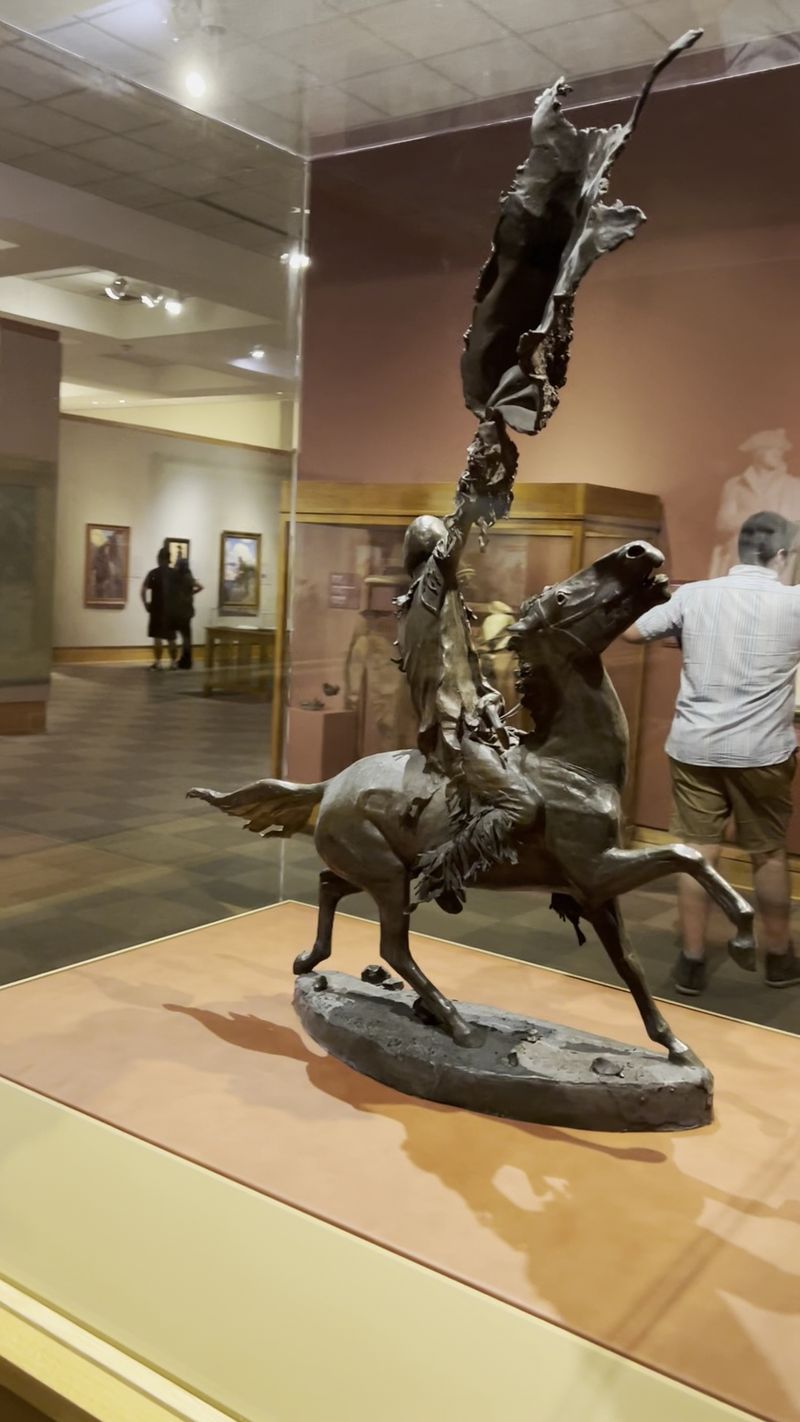
Some pieces of art hit you before you even read the label, and this is one of them. The End of the Trail by James Earle Fraser is a monumental sculpture showing a weary rider slumped forward on an equally exhausted horse.
It is huge, it is pale, and it sits in a space designed to let natural light fall across it, which somehow makes the whole thing feel even heavier.
People tend to go quiet around it without anyone telling them to, and that says a lot about how much emotion Fraser packed into the pose. The sagging shoulders and the drooping head of the horse do most of the work.
The sculpture has become one of the most recognized images tied to the American West, and seeing it at full scale is completely different from seeing it printed in a book.
Take a walk all the way around it if the space allows, because the angles change how the figure reads. From the front it looks defeated, and from the side it looks almost like it is still moving forward.
Give it a few minutes of your time. It is one of the museum’s signature moments.
Where The Working Cowboy Story Lives
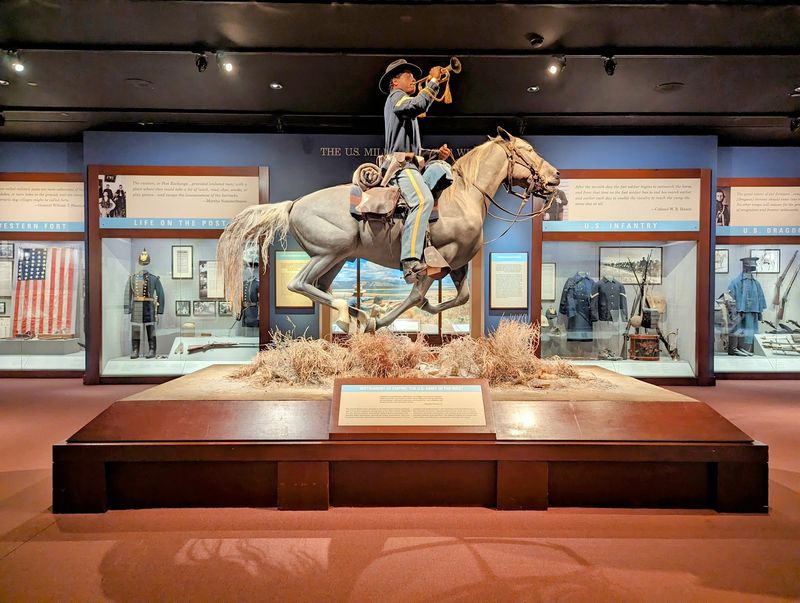
Forget the movie version for a second, because the American Cowboy Gallery is all about the actual job. The displays walk you through ranching history and the real day-to-day work of the people who herded cattle and worked the land.
You get saddles, ropes, chaps, boots, and all the practical gear that made the work possible, plus the stories of who used it and why.
What struck me reading about it is how much the gallery leans into the grind rather than the glamour. Long hours, rough weather, and constant travel were the reality, and the exhibits do not soften that.
It also makes room for the fact that cowboys came from many different backgrounds, which is a part of the story that got flattened out over the years.
If you are visiting with someone who thinks they already know the cowboy story, send them in here first and watch them recalibrate. The gear alone tells you how physical the work really was.
Oklahoma has deep ranching roots, so it makes complete sense that this collection lives here rather than somewhere else.
Plan on lingering, since there is more reading than you expect.
Rodeo Arena Vibes And Hall Of Fame Grit
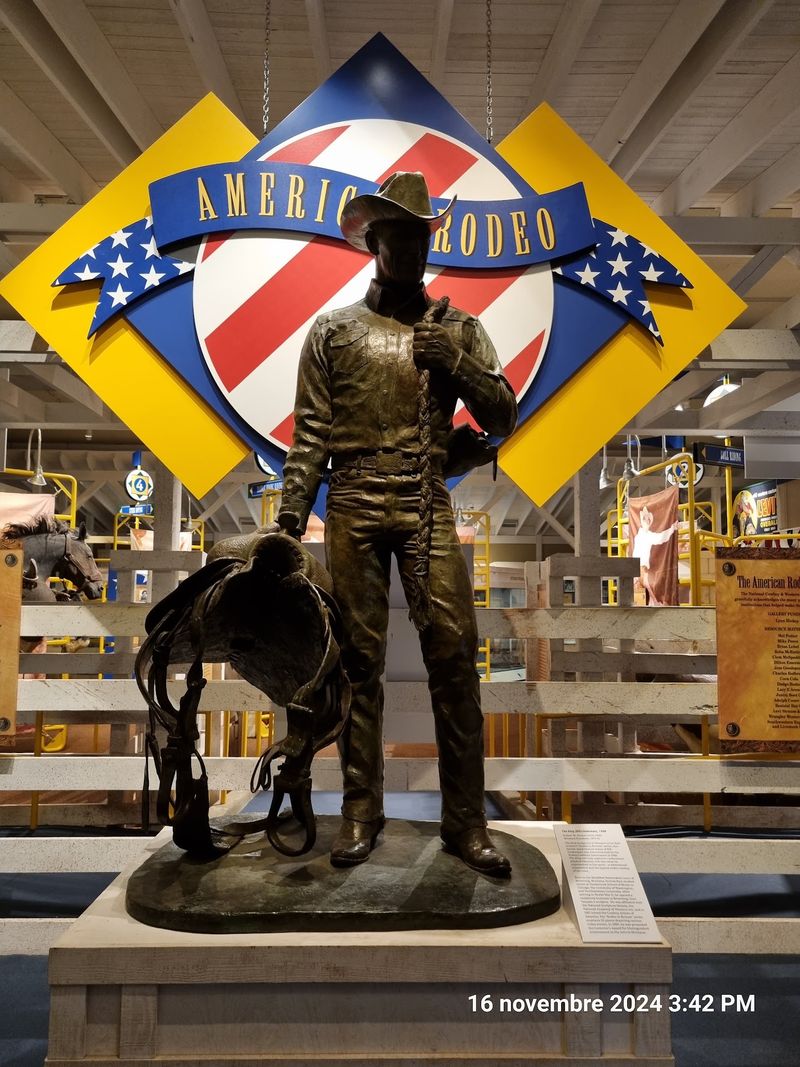
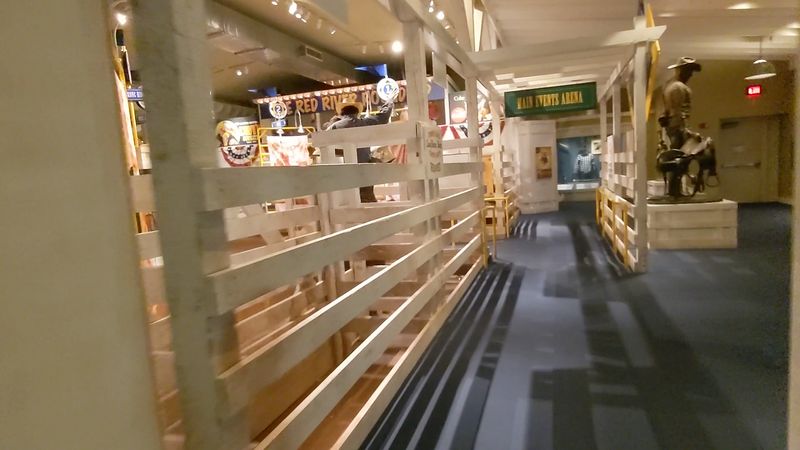
Ever wanted to stand inside a rodeo arena without the dust and the noise? The American Rodeo Gallery is built to look like a vintage arena, and the design alone tells you how much the sport means to people out here.
Inside, you will find the National Rodeo Hall of Fame along with a big collection of photographs, saddlery, and trophies that trace the sport from its rough working origins into a professional competition.
The saddles are the sleeper hit for me, because the tooling and silverwork on some of them is genuinely beautiful craftsmanship. They were made to be used hard and still look incredible.
The Professional Bull Riders Heroes and Legends Hall of Fame is also housed here now, so you get the bull riding side of the story under the same roof.
Reading the names and looking at the faces gives you a sense of how much physical risk these competitors accepted as part of the job.
If you have never watched a rodeo, this gallery is a surprisingly good crash course. And if you have, you will probably recognize a few names on the walls right away.
The Firearms Gallery And Frontier Craftsmanship
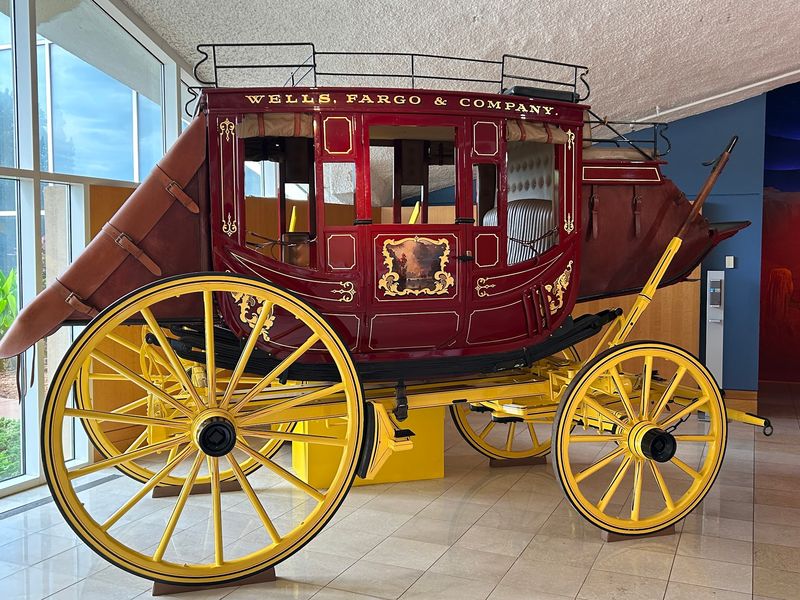
The Weitzenhoffer Gallery of Fine American Firearms is one of those rooms people wander into casually and then stay in much longer than planned. It holds well over a hundred historic firearms, including pieces from makers like Colt, Remington, and Winchester.
What keeps your eyes moving is the engraving work, because many of these were finished with detail that goes way beyond anything functional.
Looking at them, you start to understand how much these tools shaped frontier life, both for better and for worse. They were used for hunting, for protection, and for work, and they turn up in nearly every story told about the West.
The gallery treats them as objects of craftsmanship and history rather than spectacle, which I appreciate, and the labels explain how manufacturing changed over time.
Even if firearms are not your interest at all, the metalwork and the wood finishing are worth a couple of minutes of attention. There is real artistry in the older pieces.
It is also a fairly compact gallery, so it fits easily into a longer visit without eating up your whole afternoon. Consider it a quick, interesting detour.
Hollywood Cowboys And The Silver Screen Room
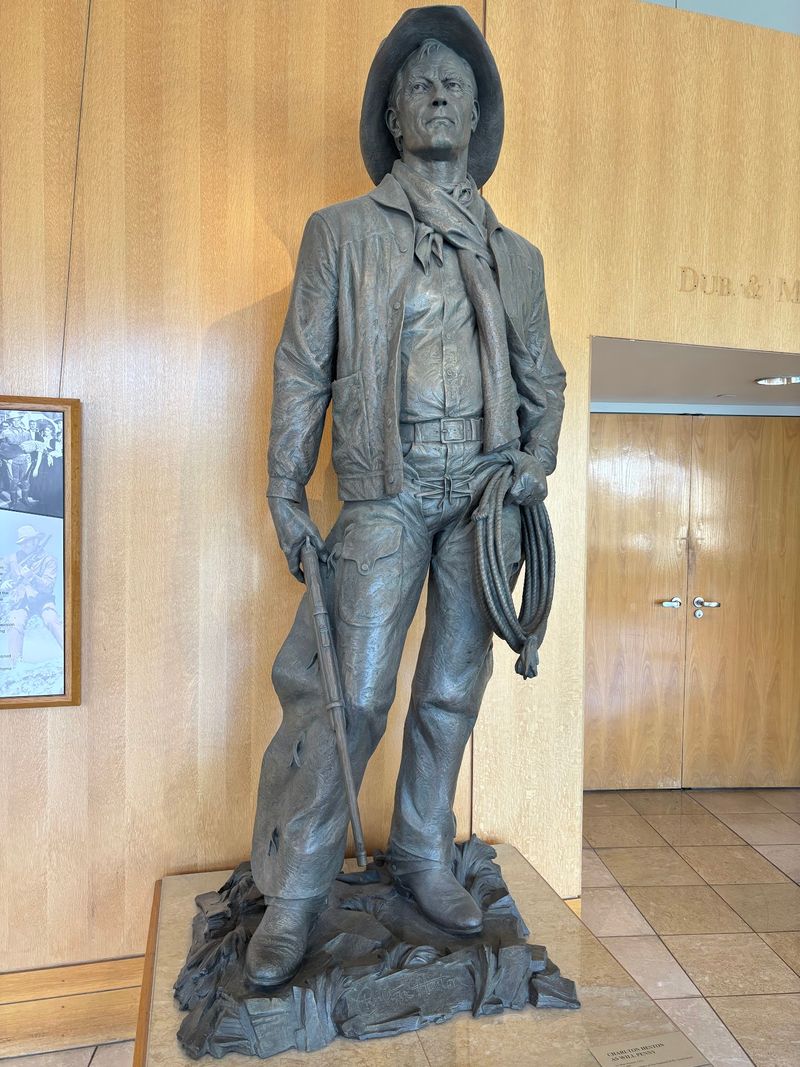
Time for the fun one. The Western Performers Gallery is all about how movies and television took the West and turned it into legend, and it is packed with items connected to stars of the screen.
Costumes, hats, props, and personal pieces are on display, and there is a small cinema running clips so you can actually watch the myth in motion.
What I like about it is the way it sits right next to all the serious history in the rest of the building. You spend hours learning what cowboy life really involved, then walk in here and see how Hollywood reshaped it into something bigger and shinier.
That contrast is kind of the whole point, and the gallery does not pretend otherwise.
Older visitors usually light up recognizing familiar faces, while younger ones get a crash course in why the cowboy hat became such a powerful symbol in the first place.
Grab a seat in the little theater for a bit, since it is a nice change of pace from standing and reading. It is easily the most relaxed room in the museum, and it makes a good spot to regroup mid-visit.
Liichokoshkomo’ And The Immersive Cowboy Journey
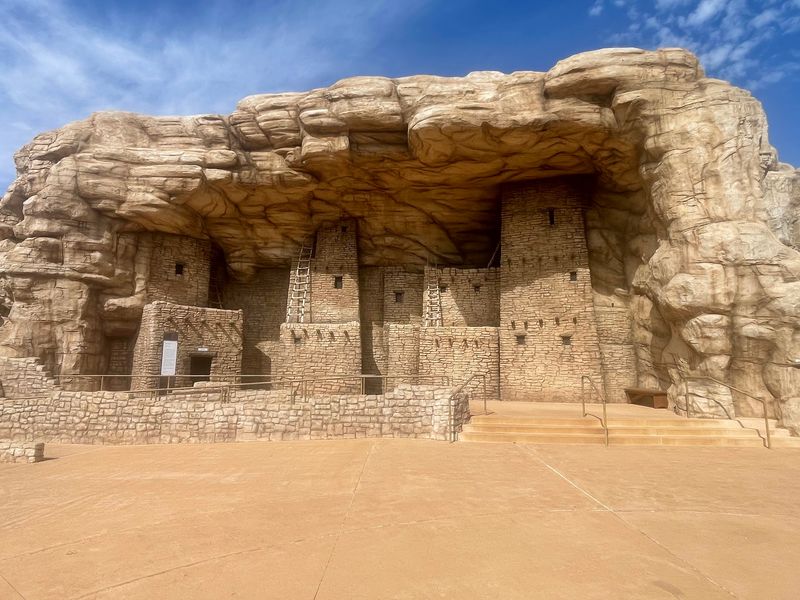
Two more things you should not skip, and they could not be more different from each other. Outside the main building sits Liichokoshkomo’, which means Let’s Play in Chickasaw, and it stretches across an enormous outdoor space built for hands-on learning.
Visitors can grind corn, load a pioneer wagon, and move between areas that celebrate tribal cultures alongside frontier life. Kids run wild out there in the best possible way, and adults end up joining in.
Back inside, there is a newer three-hundred-sixty degree experience called The Cowboy: An Immersive Journey, where projections and layered soundscapes surround you completely.
It follows the journal of a real cowboy who traveled a cattle drive through Indian Territory, which is the land that became Oklahoma, so the story has an actual documented voice behind it.
Pairing those two together is a smart way to end a visit, since one gets you moving and the other gets you sitting still and absorbing.
Check what is running before you go so you can plan your timing around it. Between the town, the galleries, and these two, you could genuinely spend most of a day here without getting bored.
