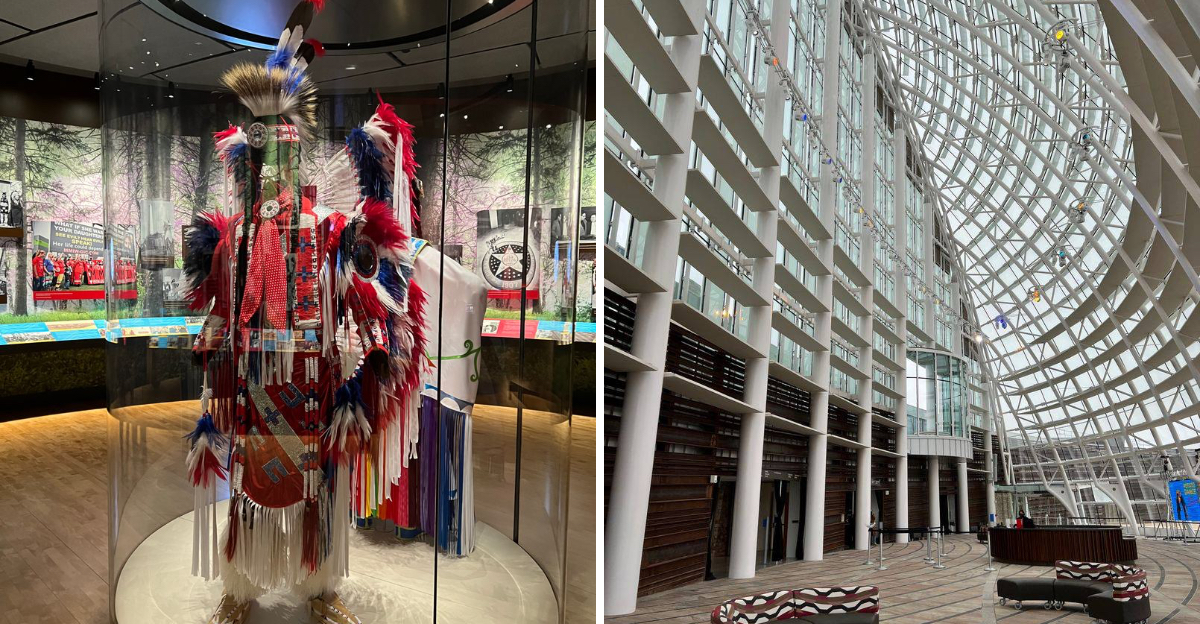
Oklahoma City holds a treasure that most travelers don’t even know exists. Nestled along the banks of the Oklahoma River, the First Americans Museum rises from the landscape like a modern monument to resilience and cultural survival.
This isn’t your typical dusty collection of arrowheads behind glass. It’s a living, breathing celebration of the 39 Tribal Nations that call Oklahoma home, weaving together thousands of years of history with the vibrant cultures that thrive today.
Walking through these halls feels less like a museum visit and more like stepping into the heartbeat of Indigenous America. The architecture itself tells a story, blending traditional earth mound design with sleek contemporary lines that mirror the duality of honoring the past while embracing the future.
Every exhibit, every artifact, every video presentation has been crafted with Indigenous voices at the center, ensuring authenticity in every corner.
Whether you’re a history buff hungry for untold stories or simply curious about the First Peoples who shaped this land long before statehood, this museum delivers an experience that will stick with you long after you leave. Get ready to see Oklahoma through an entirely new lens.
A Museum Built by Tribal Voices, Not for Them
Most museums about Native Americans were designed by people who weren’t Native American. That’s not the case here.
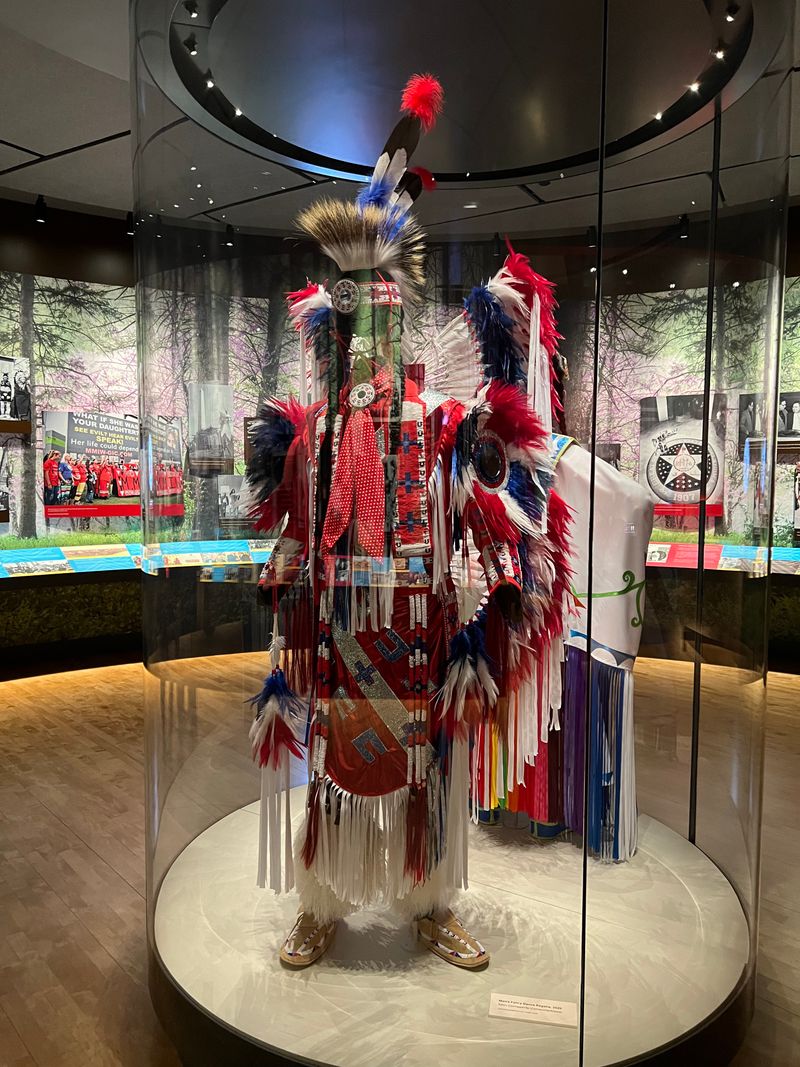
The First Americans Museum was conceived, developed, and curated in partnership with the 39 Tribal Nations of Oklahoma, ensuring that every story told is told by those who lived it. This collaborative approach transforms the entire visitor experience from passive observation to genuine cultural immersion.
You’ll notice the difference immediately. The exhibits don’t speak about Indigenous people in past tense as relics of history.
Instead, they celebrate living cultures that continue to evolve, adapt, and thrive in the modern world. Tribal citizens share their own origin stories through beautifully filmed videos that play throughout the first floor galleries.
The museum doesn’t shy away from difficult truths either. Exhibits covering forced removal, boarding schools, and colonization are presented with unflinching honesty, yet balanced with stories of resistance, survival, and cultural preservation.
This authenticity creates an emotional depth rarely found in traditional museums.
What makes this approach so powerful is the sense of ownership and pride that radiates from every display. These aren’t artifacts borrowed from distant collections.
They’re cultural treasures shared by the communities themselves, making each piece feel personal and sacred rather than simply educational.
The OKLA HOMMA Hall of the People
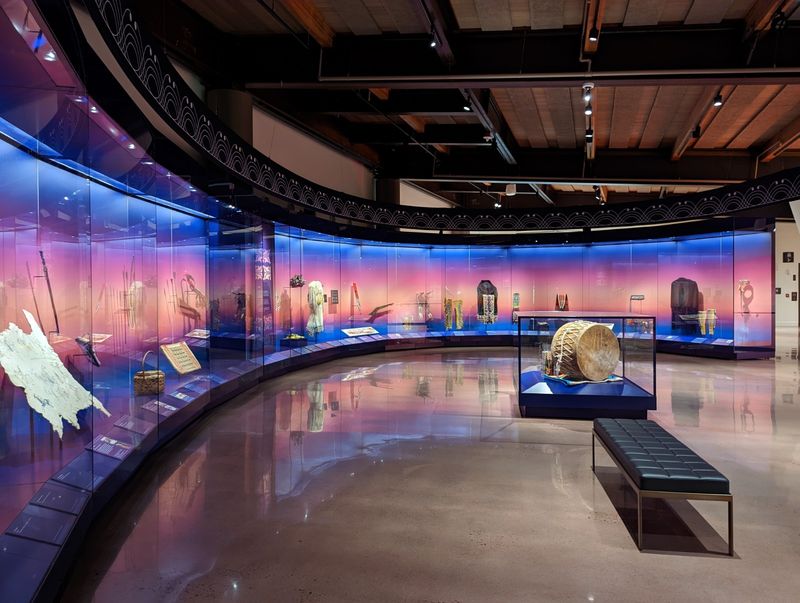
Step into the OKLA HOMMA Hall and you’re immediately surrounded by the collective presence of 39 distinct Tribal Nations. The name itself comes from the Choctaw words meaning “Red People,” which eventually became the state’s name.
This massive gallery serves as the museum’s cultural heart, where each tribe has dedicated space to tell their unique story.
Circular in design, the hall mirrors traditional gathering spaces used by many Indigenous communities for centuries. As you walk the perimeter, you’ll encounter individual tribal displays featuring regalia, historical photographs, language samples, and personal narratives.
The Chickasaw Nation shares their removal story. The Osage display their traditional wedding customs.
The Seminole showcase their distinctive patchwork artistry.
What strikes visitors most is the incredible diversity represented here. Many people mistakenly think of Native American culture as monolithic, but this hall destroys that misconception within minutes.
Each tribe has distinct languages, customs, governance structures, and artistic traditions that have been maintained for generations.
Interactive touchscreens allow you to hear tribal languages spoken by native speakers, a haunting reminder of the linguistic richness that colonization nearly erased. Some of these languages have only a handful of fluent speakers left, making these recordings precious beyond measure.
The Mound: Ancient Architecture Meets Modern Design
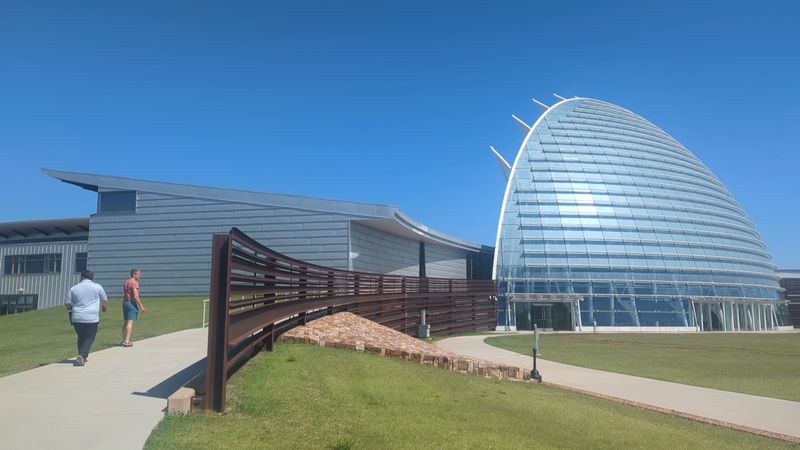
Before you even enter the museum building, you’ll spot the massive earthen mound rising from the landscape. This isn’t just decorative landscaping.
It’s a deliberate architectural choice that honors the ancient mound-building cultures that flourished across North America for thousands of years.
Oklahoma itself sits near the western edge of what archaeologists call the Mississippian culture region, where complex societies built ceremonial mounds as centers of spiritual and political life.
The museum’s mound stands as a contemporary interpretation of this sacred tradition. A winding path spirals up to the summit, inviting visitors to make the climb and experience the landscape from an elevated perspective, just as Indigenous peoples did centuries ago.
The walk takes about ten minutes at a leisurely pace, and the views from the top are absolutely worth the effort.
From the summit, you’ll see downtown Oklahoma City’s skyline rising to the north, creating a striking juxtaposition between ancient tradition and modern urban development.
It’s a visual metaphor for the museum’s entire mission: honoring the past while acknowledging the present reality of Indigenous peoples living in contemporary America.
Many visitors report that the mound experience feels meditative and grounding, offering a moment of reflection before entering the museum proper.
Galleries That Chronicle Survival and Resilience
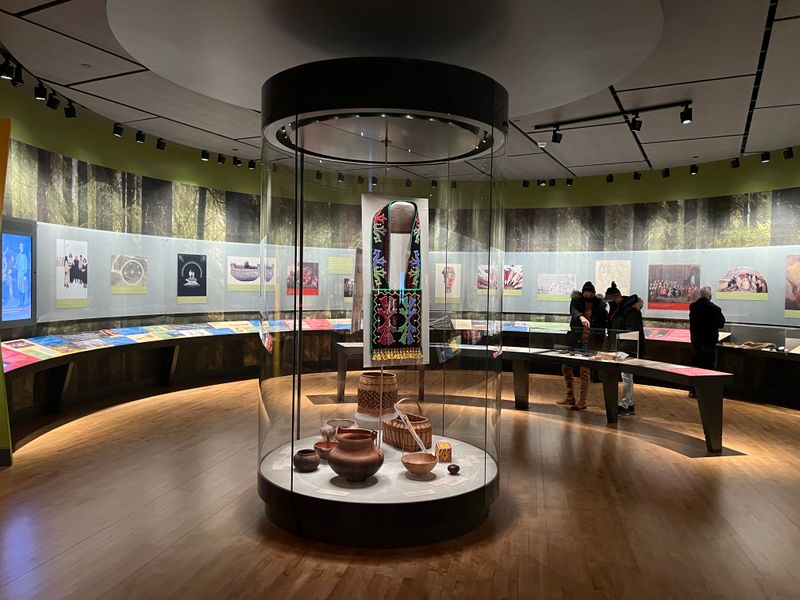
The first floor galleries take you on a chronological journey that doesn’t sugarcoat the brutal realities of colonization, forced removal, and cultural suppression.
You’ll walk through exhibits documenting the Trail of Tears, when thousands of Indigenous people were forcibly marched from their ancestral homelands in the Southeast to what was then called Indian Territory.
Timeline displays show how Oklahoma became home to more tribal nations than any other state, not through choice but through federal policy that treated the region as a dumping ground for displaced peoples.
The irony isn’t lost: the land once designated as unwanted territory is now celebrated as the cultural crossroads of Indigenous America.
But these galleries refuse to present Indigenous peoples as victims frozen in historical trauma. Instead, they emphasize adaptation and resistance.
You’ll see how tribes maintained their governments, languages, and traditions even when federal policies actively tried to eliminate them.
Exhibits on the boarding school era are particularly powerful, showing both the devastating impact of forced assimilation and the creative ways students preserved their identities in secret.
Contemporary displays showcase modern tribal governments, successful businesses, language revitalization programs, and cultural festivals. The message is clear: these nations didn’t just survive—they’re thriving and reclaiming their rightful place in American society.
Art That Speaks Across Generations
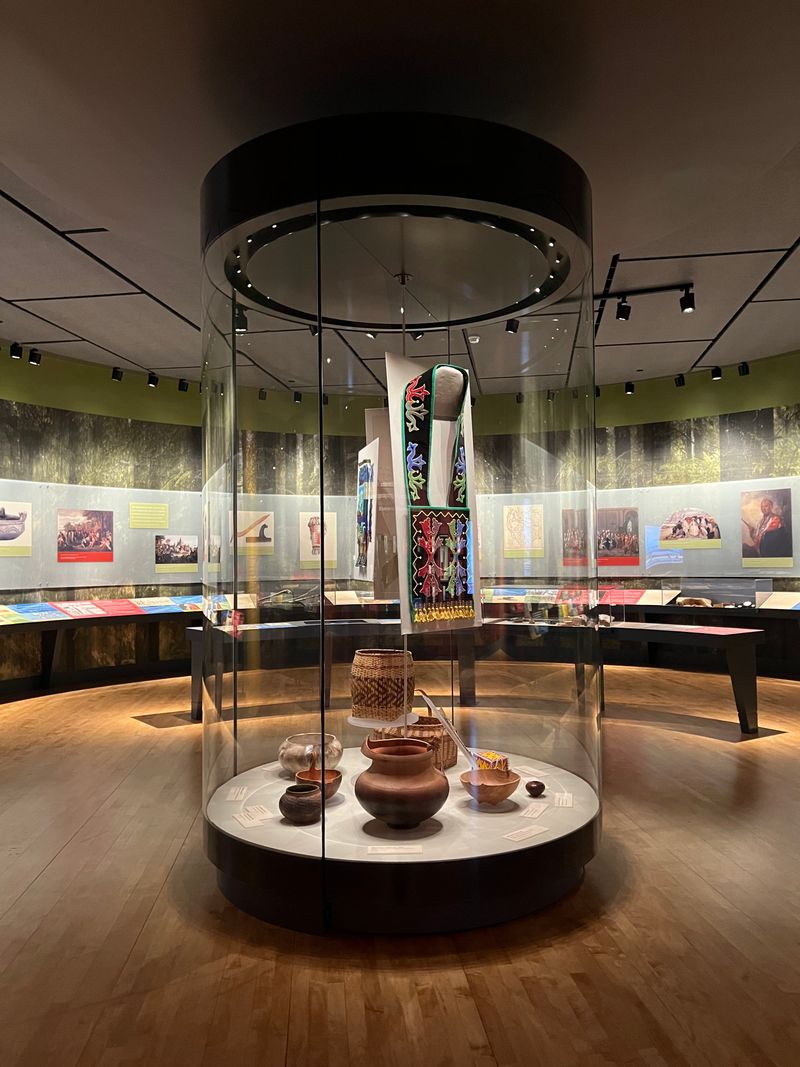
The second floor transforms into an art gallery that would rival any major museum in the country. Here you’ll find both traditional and contemporary works by Indigenous artists, many of them citizens of Oklahoma’s tribal nations.
The collection includes paintings, sculptures, beadwork, pottery, and mixed media pieces that challenge every stereotype about what Native American art should look like.
Some pieces honor traditional techniques passed down through countless generations. Intricate beadwork demonstrates skills that take years to master.
Pottery shaped using methods developed centuries ago sits alongside contemporary ceramic sculptures that push the medium in bold new directions. This side-by-side presentation illustrates how artistic traditions evolve without losing their cultural roots.
Contemporary Indigenous artists featured here tackle modern themes through a Native lens. You might see paintings addressing environmental justice, identity in the digital age, or the experience of navigating between tribal and mainstream American cultures.
These works prove that Indigenous art isn’t stuck in the past but actively engaging with current social and political realities.
The gallery also features rotating exhibitions from the Smithsonian’s National Museum of the American Indian, bringing world-class collections to Oklahoma. Many of these pieces were originally taken from Oklahoma tribes, so displaying them here feels like a homecoming of sorts.
The Family Discovery Room Where Culture Comes Alive
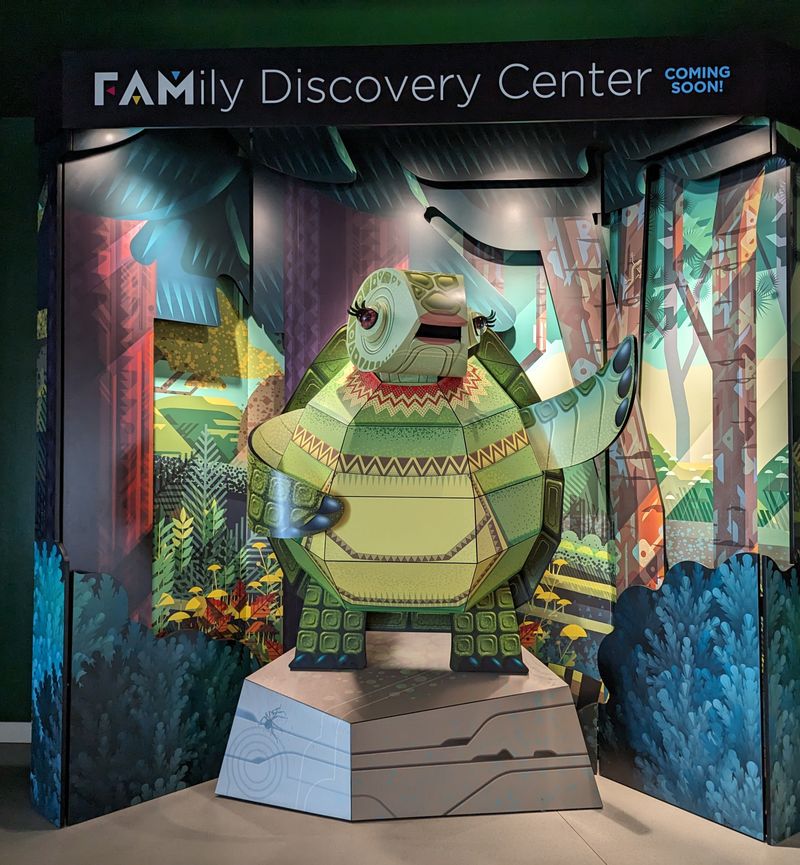
Traveling with kids? The Family Discovery Room transforms cultural education into hands-on play that keeps young visitors engaged for hours.
This isn’t a generic children’s area with random activities. Every element connects directly to Indigenous cultures, allowing kids to learn through doing rather than just looking.
Children can try their hand at traditional games played by tribal children for generations. They’ll discover that entertainment didn’t start with screens and that Indigenous peoples developed incredibly clever toys and games using natural materials.
Building activities teach basic engineering principles behind traditional structures like tipis and wigwams, showing kids that Indigenous architecture was sophisticated and purposefully designed.
Storytelling sessions happen regularly, with tribal members sharing traditional tales that have been passed down orally for centuries. These stories aren’t just entertainment; they encode cultural values, historical knowledge, and spiritual teachings in narratives that stick with children long after the museum visit ends.
The room’s design incorporates natural materials and earthy colors that create a welcoming, comfortable space. Parents appreciate that it’s both educational and genuinely fun, keeping kids entertained while adults explore the main galleries.
Many families report spending well over an hour here, with children reluctant to leave even when it’s time to go home.
Dining with a View at THIRTY NINE Restaurant
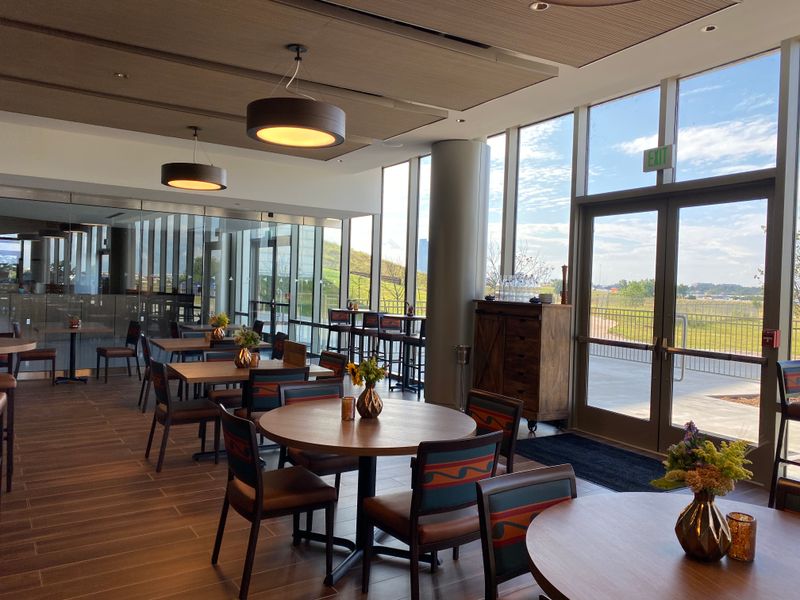
Museum fatigue setting in? Head up to THIRTY NINE Restaurant, named for the 39 Tribal Nations, where Indigenous-inspired cuisine meets spectacular river views.
The menu celebrates traditional ingredients and cooking methods while giving them contemporary twists that surprise and delight modern palates.
You might find bison featured prominently, prepared in ways that honor its sacred status in many Indigenous cultures while showcasing culinary creativity. Three Sisters dishes incorporate corn, beans, and squash, the agricultural trio that sustained Indigenous communities for thousands of years.
Frybread appears in both savory and sweet preparations, acknowledging its complex history as both a symbol of resilience and a reminder of commodity food programs.
The floor-to-ceiling windows offer sweeping views of the Oklahoma River and the surrounding landscape. Watching the water flow while eating foods with deep Indigenous roots creates a meditative dining experience that feels connected to the land itself.
Many visitors time their lunch to catch the midday light streaming across the river.
The restaurant partners with tribal food sovereignty programs when possible, sourcing ingredients from Indigenous producers and farmers.
This commitment ensures that your meal supports contemporary tribal economies, making dining here an extension of the museum’s mission to celebrate living cultures rather than just preserving history.
Special Events That Honor Living Traditions
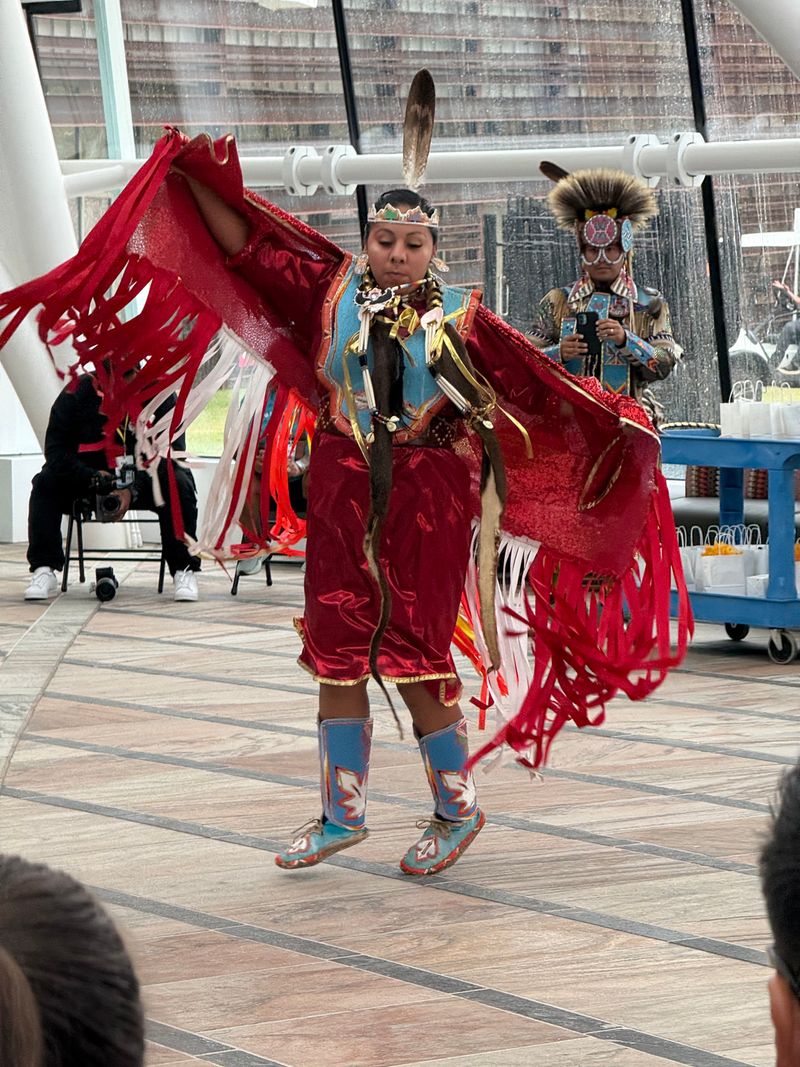
The museum’s calendar pulses with events that bring Indigenous cultures off the walls and into lived experience. Winter Solstice celebrations transform the building into a ceremonial space, with tribal members gathering to mark this significant astronomical event as their ancestors did for millennia.
The architecture itself was designed with the solstice in mind, allowing sunlight to enter the building at specific angles on this shortest day of the year.
Powwows held on the museum grounds showcase the incredible diversity of tribal dance traditions. Fancy dancers whirl in explosive bursts of color and movement.
Traditional dancers move with dignified precision that echoes centuries of practice. Jingle dress dancers create rhythmic sounds that are said to have healing properties.
These aren’t performances staged for tourists; they’re authentic cultural expressions shared generously with visitors.
Artist talks and demonstrations happen regularly, giving visitors chances to meet contemporary Indigenous artists and learn about their creative processes. You might watch a master beadworker create intricate patterns or hear a painter discuss how traditional symbols inform modern compositions.
These intimate interactions humanize Indigenous cultures in ways static exhibits simply cannot.
Check the museum’s event calendar before your visit because timing your trip to coincide with special programming can dramatically enrich the experience. These events often require separate tickets or registration, so plan ahead to avoid disappointment.
Architecture That Tells Its Own Story
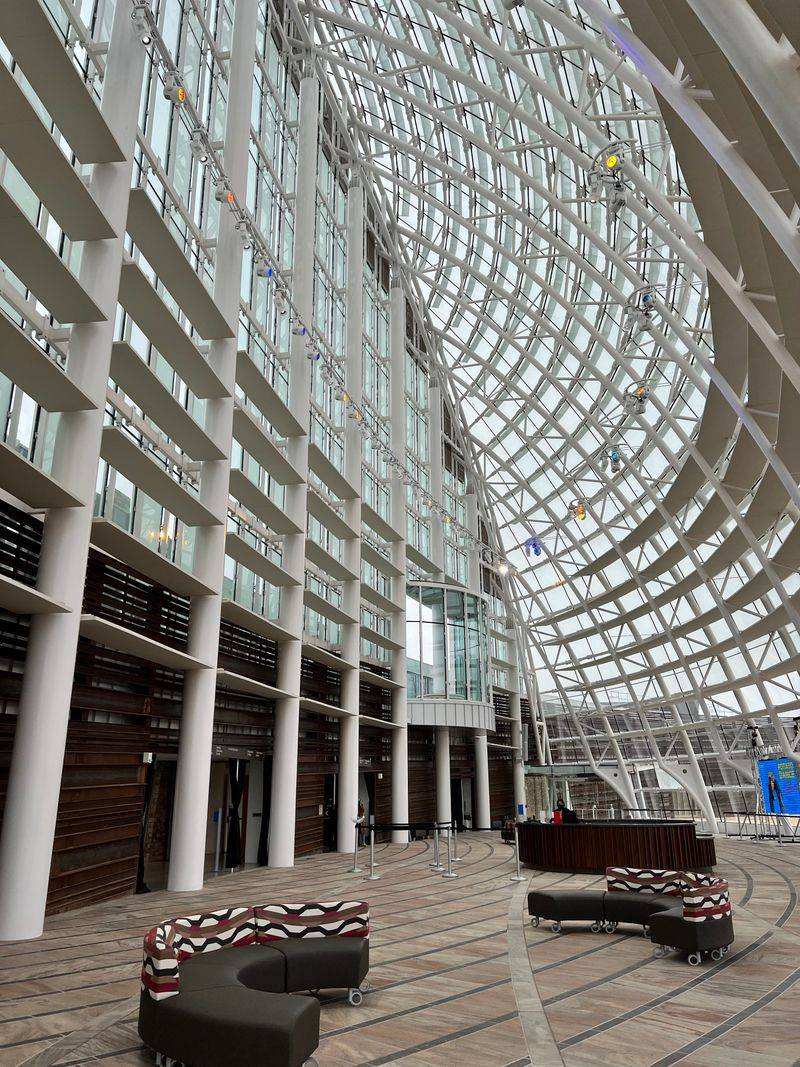
Even if museums aren’t usually your thing, the building itself deserves attention as a masterpiece of contemporary Indigenous architecture. The design team included tribal members and Indigenous architects who ensured that every structural choice carried cultural meaning rather than just aesthetic appeal.
The building’s orientation aligns with cardinal directions significant in many Indigenous cosmologies. Natural materials like wood and stone connect the structure to the earth, while massive windows dissolve the barrier between interior and exterior spaces.
This design philosophy reflects Indigenous worldviews that don’t separate humans from nature but see them as interconnected parts of a larger whole.
Water features throughout the grounds honor the life-giving properties of rivers and streams. The museum’s position along the Oklahoma River isn’t accidental; water has always served as both a physical and spiritual highway for Indigenous peoples.
The landscape design incorporates native plants that have been used for food, medicine, and ceremony for generations.
Architectural details reference specific tribal traditions without appropriating them. The result is a building that feels distinctly Indigenous without relying on stereotypical imagery.
Architecture students and design enthusiasts make pilgrimages here specifically to study how the structure balances modern functionality with cultural authenticity, creating a blueprint for future Indigenous-led projects across the country.
Why This Museum Matters Right Now
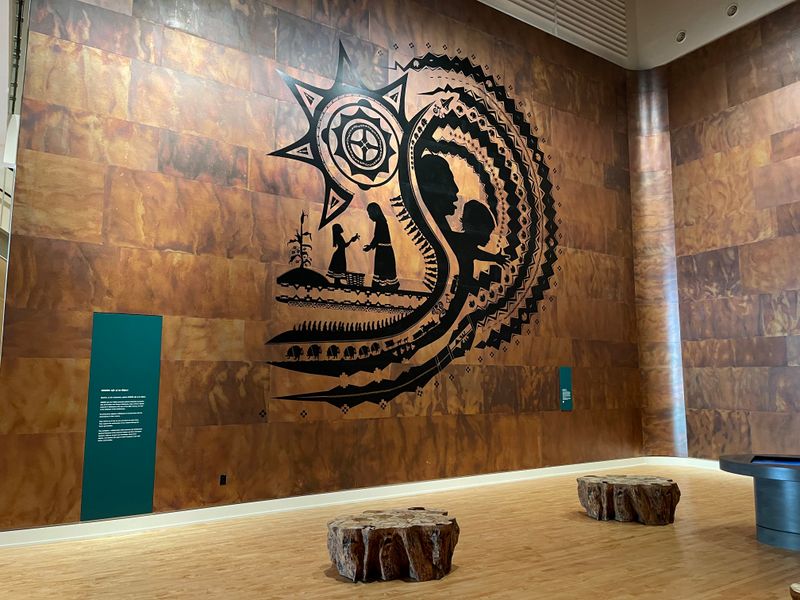
In an era when Indigenous voices are finally being heard after centuries of silencing, the First Americans Museum represents something bigger than just another cultural institution.
It’s a declaration that Indigenous peoples are not historical footnotes but contemporary citizens with vital perspectives on everything from environmental stewardship to social justice.
Oklahoma’s complex history as Indian Territory makes this location particularly significant. This is where the federal government forced dozens of tribes to relocate, attempting to consolidate and control Indigenous populations.
That same geography now hosts a world-class institution celebrating the cultures that were supposed to disappear. The irony becomes empowerment.
Visiting this museum challenges the sanitized version of American history many of us learned in school. You’ll confront uncomfortable truths about broken treaties, stolen land, and systematic attempts at cultural genocide.
But you’ll also leave with hope, having witnessed the remarkable resilience of peoples who maintained their identities despite everything designed to erase them.
The museum’s impact extends beyond its walls. It’s become a gathering place for Indigenous communities across Oklahoma, a source of pride and cultural affirmation.
For non-Native visitors, it’s an essential education in the true history of this land and the peoples who shaped it long before European contact. Pack your curiosity and prepare to see Oklahoma, and America, through entirely new eyes.
Address: 659 First Americans Blvd, Oklahoma City, OK 73129
Dear Reader: This page may contain affiliate links which may earn a commission if you click through and make a purchase. Our independent journalism is not influenced by any advertiser or commercial initiative unless it is clearly marked as sponsored content. As travel products change, please be sure to reconfirm all details and stay up to date with current events to ensure a safe and successful trip.
